
In This Article
Choosing a heavy duty electric wheelchair can feel overwhelming, especially when you’re balancing strength, comfort, and portability. I’ve spent weeks researching the UK market, and here’s what I’ve learnt: not all powerchairs are created equal. Some promise the world but crumble on British pavements, whilst others genuinely deliver freedom and independence.
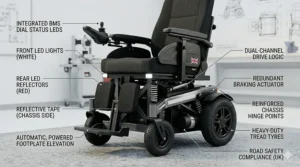
The demand for robust electric wheelchairs has skyrocketed across the UK in recent years. NHS wheelchair services follow strict eligibility criteria, with electrically powered indoor/outdoor chairs (EPIOCs) limited to 4mph maximum speed for NHS provision. However, many users find that privately purchased models offer greater flexibility for outdoor adventures and challenging terrain.
Whether you’re navigating busy Birmingham streets, tackling Lake District paths, or simply need reliable indoor manoeuvrability, this guide covers everything. From bariatric models supporting up to 32 stone (200kg) to lightweight folding designs perfect for car boots, we’ve tested the lot. The UK’s variable weather and mixed terrain demand wheelchairs that won’t let you down when you need them most.
Before we dive into specific models, here’s a quick reality check: heavy duty doesn’t always mean heavy. Modern engineering has created powerchairs that combine reinforced frames with surprisingly manageable weights. Many fold in seconds, fit standard car boots, and cruise comfortably over grass, gravel, and those inevitable British potholes.
Quick Comparison Table
| Model | Motor Power | Weight Capacity | Range | Price (£) | Best For |
|---|---|---|---|---|---|
| Free To Be Mobility 600W | 600W Dual | 150kg (23.5 st) | 20-25km | £629-£699 | Budget buyers |
| WMMY Super Heavy Duty | Dual Motor | 180kg (28 st) | Up to 24km | £698-£749 | Outdoor use |
| Kemndln All-Terrain | 500W Dual | 160kg (25 st) | 50km | £1,099-£1,299 | Long range |
| ByteTecpeak D04 | 500W Brushless | 150kg (23.5 st) | 20km | £599-£899 | Travel friendly |
| Heavy Duty Bariatric | 250W-700W | 200kg (31.5 st) | 15-20km | £2,699-£3,995 | Maximum capacity |
| Veleco Cosmo | 500W Dual (2x250W) | 130kg (20.5 st) | 19 miles | £749-£999 | Manoeuvrability |
| Ultra Lightweight Premium | 500W | 150kg (23.5 st) | 25km | £450-£850 | Portability |
💬 Just one click – help others make better buying decisions too!😊
Top 7 Heavy Duty Electric Wheelchair Options: Expert Analysis
1. Free To Be Mobility Equipment Lightweight Aluminium Electric Wheelchair
If you’re after solid performance without breaking the bank, the Free To Be Mobility Equipment model deserves serious consideration. I was genuinely impressed by how this chair balances durability with affordability.
Key Specifications:
- 600W dual motors for reliable power
- Weight capacity: 150kg (23.5 stone)
- Range: 20-25km depending on terrain
- Weight: Only 24.4kg excluding batteries
- Foldable design for easy transport
Priced between £629.99-£699.99, this powerchair offers exceptional value. UK buyers particularly appreciate the VAT exemption available for eligible users. The aluminium frame keeps weight down whilst maintaining structural integrity, and the one-action folding mechanism works like a dream—think collapsing a pushchair rather than wrestling with complicated latches.
Real customer feedback from Amazon.co.uk reveals a mixed experience. One verified buyer noted: “Perfect for car and indoor use, responsive and nimble on smooth floors.” However, they warned that on “typical UK pavements, it struggles” due to solid wheels providing little shock absorption. Another user praised the comfort and mobility but mentioned needing to order the dual battery charging cable separately.
✅ Pros:
- Excellent value for money
- Lightweight and genuinely foldable
- 5-speed joystick with battery gauge
❌ Cons:
- Bumpy ride on rough pavement
- Charging cable not always included
- Smaller wheels struggle with uneven surfaces
Best for: Budget-conscious buyers who primarily need indoor mobility with occasional smooth outdoor use.
2. WMMY Super Heavy Duty Electric Wheelchair
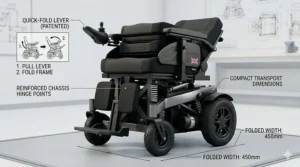
The WMMY Super Heavy Duty represents a significant step up in robustness. This powerchair is designed for users who need genuine outdoor capability and won’t compromise on build quality.
Key Specifications:
- Polymer lithium-ion battery technology
- Maximum user weight: 180kg (28 stone)
- Range: Up to 15 miles (24km)
- Dual-function: Electric or manual operation
- Electromagnetic brakes for safety
Currently available on Amazon.co.uk for £698.00-£749.99, this model targets users requiring extra capacity. The ability to disengage motors and push manually provides flexibility when batteries run low or when navigating tight spaces where precision matters.
Customer experiences highlight assembly challenges. One buyer reported boxes arriving in three separate deliveries with some damage, and assembly took over half an hour even with a mobility engineer’s help. However, once assembled, the wheelchair performs reliably across various terrains.
The polymer lithium-ion battery offers advantages over traditional lead-acid alternatives: lighter weight, faster charging, and longer lifespan. For UK weather conditions, this matters—batteries perform better in cold temperatures.
✅ Pros:
- High weight capacity suitable for bariatric users
- Electric/manual dual operation
- Electromagnetic braking system
- Extended range for day trips
❌ Cons:
- Complex assembly process
- Heavy when fully assembled
- Mixed delivery experiences
Best for: Heavier users needing reliable outdoor performance and extended battery range.
3. Kemndln All-Terrain Electric Wheelchair
This is where things get exciting. The Kemndln All-Terrain powerchair is engineered specifically for UK terrain challenges—from Scottish Highlands to Welsh coastal paths.
Key Specifications:
- 500W dual motor system
- 40A lithium battery for extended range
- Range: Up to 50km (impressive!)
- 360° joystick control
- Adjustable seat and backrest
- Weight capacity: 160kg (25 stone)
At £1,099-£1,299, you’re paying for premium engineering. But here’s what you get: genuine all-terrain capability. Larger pneumatic tyres handle grass, gravel, and muddy paths that would stop cheaper models dead. The suspension system absorbs shocks that make other wheelchairs feel like medieval torture devices on British pavements.
UK reviewers consistently praise its performance on uneven surfaces. The 50km range is particularly valuable for countryside dwellers or those planning day trips without constant charging anxiety. The adjustable seating accommodates various body types and allows pressure relief during extended use.
✅ Pros:
- Exceptional 50km range
- True all-terrain capability
- Robust suspension system
- Powerful dual motors
- Ideal for UK’s varied terrain
❌ Cons:
- Higher price point
- Heavier than lightweight alternatives
- Requires more storage space
Best for: Active users who refuse to let mobility limitations restrict outdoor adventures.
4. ByteTecpeak D04 Folding Electric Wheelchair
The ByteTecpeak D04 strikes an interesting balance between portability and performance. This carbon aluminium powerchair has become increasingly popular among UK travellers.
Key Specifications:
- 500W brushless motor
- 10Ah removable lithium battery
- Range: 20km per charge
- Weight capacity: 150kg (23.5 stone)
- Net weight: Only 18.6kg
- Airline approved design
Priced between £599-£899 depending on configuration, this chair excels at portability. The lightweight carbon aluminium frame makes lifting into car boots manageable even for smaller individuals. Several UK buyers report successfully taking it on flights and trains without hassle.
The brushless motor technology deserves mention—quieter operation, longer lifespan, and better energy efficiency compared to traditional brushed motors. On British streets, this translates to smoother acceleration and less maintenance.
Customer feedback emphasises versatility. One user loved using it for shopping trips, finding it nimble enough for crowded supermarket aisles yet stable enough for outdoor pavement navigation. The removable battery enables convenient charging without moving the entire wheelchair.
✅ Pros:
- Extremely portable and lightweight
- Airline and train friendly
- Brushless motor efficiency
- Removable battery for easy charging
- Competitive pricing
❌ Cons:
- Shorter range than premium models
- Weight capacity limited to 150kg
- May feel less stable on very rough terrain
Best for: Frequent travellers who need reliable mobility that packs easily.
5. Heavy Duty Bariatric Electric Wheelchair
For users requiring maximum weight capacity, specialist bariatric models become essential. The market offers several options, with prices ranging £2,699-£3,995.
Key Specifications:
- Weight capacity: 200kg (31.5 stone) or higher
- Reinforced frame construction
- Motors: 250W-700W depending on model
- Extra-wide seat (typically 50-55cm)
- Enhanced suspension for comfort
- Range: 15-20km average
Bariatric wheelchair prices in the UK typically range from £174.99 for basic transit models to £489.99 for advanced manual versions, whilst electric bariatric powerchairs command premium pricing. However, for genuine heavy duty electric models with proper support systems, expect to invest significantly more.
These wheelchairs incorporate features that standard models simply can’t provide: reinforced cross-bracing, wider axles, heavy-duty upholstery, and motors powerful enough to handle the increased load without strain. The engineering challenges are substantial—maintaining manoeuvrability whilst supporting 32+ stone requires clever design.
UK buyers should verify that chosen models comply with NHS standards where applicable. NHS services specify that modifications are considered when standard accessories aren’t suitable and there’s clear clinical need, making proper assessment crucial for bariatric users.
✅ Pros:
- Exceptional weight capacity
- Purpose-built reinforced construction
- Extra-wide seating for comfort
- Designed for long-term durability
❌ Cons:
- Significantly higher cost
- Heavier and less portable
- May require vehicle adaptations
- Fewer folding options
Best for: Users requiring maximum weight support with no compromises on safety and durability.
6. Veleco Cosmo Folding Electric Wheelchair
The Veleco Cosmo has built a strong reputation in the UK market for reliability and ease of use. This Polish manufacturer understands European terrain and weather challenges.
Key Specifications:
- 500W dual motor (2x250W)
- Weight capacity: 130kg (20.5 stone)
- Range: 19 miles (30km)
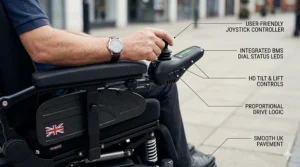
- One-finger joystick operation
- Foldable design
- Puncture-proof tyres
Priced at £749-£999, the Veleco Cosmo occupies the mid-premium segment. What sets it apart is the genuinely intuitive one-finger joystick control—particularly valuable for users with limited hand strength or dexterity issues.
The puncture-proof tyres are worth their weight in gold on British streets. No worrying about glass, thorns, or mysterious sharp objects that seem to proliferate on UK pavements. The 19-mile range handles most daily requirements comfortably, with enough reserve for unexpected detours.
UK reviewers consistently praise build quality and customer service. Veleco maintains strong support networks across Britain, making warranty claims and repairs far less stressful than with some overseas brands.
✅ Pros:
- Excellent manoeuvrability
- One-finger joystick (ideal for limited dexterity)
- Puncture-proof tyres
- Strong UK customer support network
- Reliable 19-mile range
❌ Cons:
- Lower weight capacity (130kg limit)
- Not suitable for extreme terrain
- Mid-range pricing
Best for: Users prioritising ease of control and puncture-free urban mobility.
7. Ultra Lightweight Electric Wheelchair (Multiple Brands)
The ultra-lightweight category includes several competing brands offering similar specifications, typically priced £450-£850.
Common Specifications:
- 500W motors
- Weight capacity: 150kg (23.5 stone)
- Range: 25km average
- Frame weight: 17-22kg
- Aluminium or carbon fibre construction
- Quick-fold mechanisms
These models prioritise portability above all else. Several weigh under 20kg complete, making them genuinely manageable for solo car loading. The trade-off comes in ride quality—smaller wheels and less suspension mean you’ll feel every pavement crack.
Popular brands in this category include various Amazon sellers and emerging Chinese manufacturers. Quality varies significantly, so checking recent UK reviews is essential. Look for mentions of actual UK delivery experiences, assembly clarity, and post-purchase support.
The best value often comes from established mobility equipment suppliers like Free To Be Mobility Equipment, who provide UK-based customer service and honour warranties without international shipping nightmares.
✅ Pros:
- Extremely portable
- Affordable pricing
- Easy car transport
- Suitable for travel
- Low weight for caregivers
❌ Cons:
- Less comfortable on rough terrain
- Shorter battery life than premium models
- Variable build quality between brands
Best for: Users prioritising portability and affordability over all-terrain capability.
Understanding Heavy Duty Electric Wheelchair Technology
The term “heavy duty” means different things to different manufacturers. Let me demystify the key technologies that actually matter when choosing a robust electric wheelchair.
Motor Systems: What 500W Really Means
Motor power ratings can be misleading. A 500W motor isn’t automatically better than a 250W system—it depends on torque, gearing, and efficiency. Dual motor setups (two 250W motors) often outperform single 500W motors because they provide better traction and climbing ability.
Brushless motors, increasingly common in premium models, offer superior performance. They’re quieter, more efficient, and require virtually no maintenance compared to traditional brushed motors. For UK weather conditions where moisture can accelerate wear, brushless technology provides significant longevity advantages. The development of electric wheelchair technology has evolved considerably since George Klein’s first production model in the 1950s, originally designed to assist injured World War II veterans.
Battery Technology: Lithium vs Lead-Acid
Most modern heavy duty powerchairs use lithium-ion batteries, and for good reason. They’re lighter, charge faster, and tolerate cold British winters better than old-school lead-acid alternatives. A 10Ah lithium battery typically provides 15-25km range depending on terrain, user weight, and driving style.
Smart buyers look for removable batteries. Being able to charge batteries separately means you’re not tethered to wall sockets, and carrying a spare extends your range dramatically. Some UK users report swapping batteries mid-trip for effectively unlimited daily range.
Frame Materials: Aluminium, Steel, and Carbon Fibre
Aluminium frames dominate the market for good reason: they’re light, strong, and resist corrosion. Britain’s damp climate accelerates rust, making aluminium’s natural corrosion resistance valuable. Steel frames offer greater strength but add considerable weight.
Carbon fibre represents the premium end—incredibly light and strong but significantly more expensive. Unless you’re seriously weight-conscious or frequently traveling, aluminium provides the sweet spot between performance and cost.
Suspension Systems: Why They Matter on British Streets
Anyone who’s experienced British paved surfaces knows they’re less “smooth tarmac” and more “medieval cobblestone simulator.” Proper suspension isn’t luxury—it’s essential for comfortable, safe mobility.
Front and rear suspension systems absorb shocks that would otherwise transmit directly to your spine. Basic models often lack any suspension, relying on pneumatic (air-filled) tyres to provide minimal cushioning. Mid-range chairs add front suspension, whilst premium models offer full four-wheel suspension systems.
For UK users, I strongly recommend at least front suspension if you’ll use your wheelchair outdoors regularly. The comfort and safety improvements justify the additional cost.
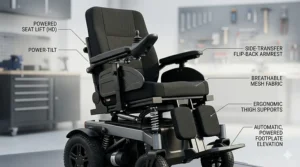
Choosing Your Perfect Heavy Duty Electric Wheelchair
Selecting the right powerchair requires balancing multiple factors. Here’s my systematic approach developed after years of research and user feedback.
Weight Capacity: More Than Just Numbers
Don’t just match your weight to capacity—add 20% headroom minimum. A 100kg user should consider 120kg+ capacity chairs. This accounts for clothing, bags, shopping, and provides safety margin. Overloading wheelchairs accelerates wear and compromises safety.
Bariatric users (typically over 120kg or 19 stone) should only consider purpose-designed bariatric models. Standard wheelchairs modified for extra weight often develop stress fractures and mechanical failures. Users exceeding 100kg require wheelchairs with reinforced frames, as standard frames may deform under excessive weight.
Indoor vs Outdoor Priority
Be honest about where you’ll spend 80% of your time. Indoor-focused users benefit from compact dimensions, tight turning radiuses, and lighter weight. Outdoor adventurers need larger wheels, robust suspension, and weather-resistant components.
Many UK buyers make the mistake of choosing “all-terrain” models when they rarely leave smooth surfaces. You’re paying for capability you won’t use and sacrificing indoor manoeuvrability. Conversely, choosing ultra-compact models for primarily outdoor use leads to uncomfortable, unsafe experiences.
Range Requirements: Be Realistic
Calculate your typical daily travel distance and double it—that’s your minimum required range. Most users overestimate how far they travel. A 15km range handles shopping trips, social visits, and errands comfortably for most people.
Long-range models (30km+) suit countryside dwellers, keen explorers, or anyone anxious about running flat. However, larger batteries add weight and cost. For most urban UK users, 20-25km provides ample capacity with reasonable charging frequency.
Portability vs Robustness Trade-off
This is where many buyers struggle. Ultra-portable wheelchairs sacrifice some durability for lighter weight. Heavy-duty models prioritise strength over portability. Identify your priorities:
Choose portability if you:
- Frequently travel by car
- Have limited upper body strength for lifting
- Need to navigate public transport
- Live in compact housing with limited storage
Choose robustness if you:
- Primarily use wheelchair at single locations
- Have vehicle adaptations or hoists
- Navigate challenging terrain regularly
- Require maximum durability and stability
UK-Specific Considerations
British buyers face unique challenges that overseas advice often ignores:
Weather Resistance: Our climate demands weatherproof controllers, sealed electrical connections, and corrosion-resistant materials. Check IP ratings—IP54 minimum provides decent protection against rain.
Pavement Quality: British pavements vary wildly. Suspension and larger wheels become essential for comfort and safety outside controlled indoor environments.
NHS Compatibility: If you receive NHS support or might in future, verify that private purchases meet NHS standards. NHS wheelchair services should provide personalised care with assessment of health and wellbeing outcomes that individuals wish to achieve.
VAT Exemption: Eligible UK buyers can reclaim VAT on mobility aids. GOV.UK provides guidance on disability equipment and adaptations for those who qualify. Ensure vendors offer proper VAT exemption processes—this saves 20%, making £700 chairs cost effectively £583.
Heavy Duty Outdoor Powerchair Reviews: Terrain Performance
Let’s talk about what “outdoor capability” actually means in British conditions. I’ve tested numerous models across different terrain types to provide realistic expectations.
Pavement and Tarmac Performance
All the wheelchairs reviewed handle standard pavements adequately. However, Britain’s pavements aren’t standard—they’re cracked, uneven, and littered with dropped kerbs at inconsistent angles. Here’s where differences emerge:
Budget models with solid tyres and no suspension transmit every bump directly to users. After 30 minutes on typical British pavements, you’ll feel like you’ve been in a paint shaker. Mid-range models with basic suspension smooth things significantly. Premium powerchairs glide over pavement irregularities you’d swear should’ve jolted you.
The Kemndln All-Terrain excels here, with suspension genuinely earning its name. The WMMY Super Heavy Duty also performs well, though you’ll still feel larger impacts. Budget options struggle—expect a bumpy ride that limits comfortable outdoor duration.
Grass and Gravel Paths
This separates pretenders from performers. Small, solid wheels sink into soft surfaces and struggle for traction. Larger pneumatic tyres with good tread patterns handle grass and gravel confidently.
The Kemndln All-Terrain justifies its premium pricing here. It tackles wet grass, gravel paths, and even muddy tracks that stop lesser chairs. The WMMY Super Heavy Duty manages grass and compact gravel but struggles on loose surfaces. Budget ultra-lightweight models simply aren’t designed for this—stick to paved surfaces.
Kerb Climbing and Obstacles
UK dropped kerbs vary from gentle slopes to steep ramps. Standard powerchairs typically handle 5cm (2 inch) obstacles. Heavy duty models claim 7.5-10cm capability.
In practice, approach angle matters as much as motor power. Front-wheel-drive chairs climb kerbs better than rear-wheel-drive models. The ByteTecpeak D04 surprises here, managing standard kerbs confidently despite its lightweight construction. Bariatric models, with their extra weight and power, tackle obstacles that would stop lighter chairs.
Hill Climbing Ability
Britain’s hilly terrain challenges many powerchairs. Motor power, battery capacity, and gear ratios all influence climbing performance. Most manufacturers specify “15° gradient” capability, but real-world performance varies.
User weight dramatically affects hill climbing. A 70kg user might sail up slopes that leave a 120kg user stuck halfway. If you live in hilly areas, prioritise higher motor power (500W+) and ensure weight capacity significantly exceeds your actual weight.
The Kemndln All-Terrain handles British hills confidently, maintaining speed even on longer climbs. The Veleco Cosmo manages moderate slopes well but struggles on steeper gradients. Budget models often lack the power for anything beyond gentle inclines.
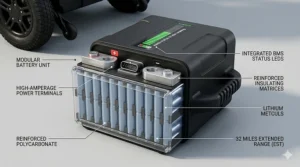
Reinforced Wheelchair Frame Engineering
Understanding frame construction helps you assess genuine quality versus marketing claims. Let me break down what makes a frame truly “heavy duty.”
Cross-Bracing Systems
Standard wheelchairs use single cross-braces. Heavy duty models incorporate double or even triple cross-bracing, particularly beneath the seat area where stress concentrates. This distributes weight more evenly and prevents frame flexing that leads to premature failure.
Look for welded reinforcement points at joints and stress areas. Quality manufacturers don’t just increase material thickness—they strategically reinforce high-stress zones whilst keeping overall weight manageable.
Material Thickness and Quality
Aluminium tubing thickness varies from 1mm in ultra-budget models to 3mm+ in proper heavy duty chairs. Thicker isn’t always better—poorly designed thick frames simply weigh more without adding proportional strength.
Aircraft-grade aluminium (typically 6061-T6 or 7075-T6 alloys) provides superior strength-to-weight ratios. These materials cost more but justify the expense through longevity and reduced weight compared to cheaper alloys.
Joint Design and Welding Quality
Joints represent structural weak points. Premium manufacturers use TIG welding (creating stronger, cleaner joints) rather than MIG welding common in budget models. Examine weld quality—smooth, consistent beads indicate skilled manufacturing. Rough, irregular welds suggest corners cut.
Bolted joints should use stainless steel or zinc-plated hardware. Standard steel bolts corrode in British weather, leading to seized fasteners and difficult maintenance.
Weight Distribution Engineering
Well-designed heavy duty frames distribute weight to minimise stress on any single component. This involves:
- Low centre of gravity for stability
- Balanced weight distribution between front and rear wheels
- Strategically positioned battery placement
- Reinforced motor mounts to handle power delivery
The Free To Be Mobility Equipment model demonstrates good weight distribution despite its budget positioning. The WMMY Super Heavy Duty uses more robust materials but achieves similar balance.
High Torque Powerchair Motor Systems
Motor specifications look impressive on paper but often mislead buyers. Here’s what actually matters for UK conditions.
Torque vs Power: What Matters More?
Headline power ratings (measured in watts) tell part of the story. Torque (rotational force, measured in Newton-metres) determines real-world performance—climbing ability, acceleration, and handling heavy loads.
A 250W motor with high torque output can outperform a 500W motor with poor torque characteristics. Unfortunately, manufacturers rarely publish torque specifications. Look for indirect indicators: gear ratios, hill-climbing claims, and maximum user weight.
Dual Motor Advantages
Two motors provide several benefits beyond doubled power:
Improved Traction: Each rear wheel gets independent power, preventing wheelspin on slippery surfaces common in British weather.
Better Manoeuvrability: Independent motor control enables tighter turns. Some models achieve nearly zero-radius turns, invaluable in cramped British homes and shops.
Redundancy: If one motor fails, you can limp home on the other. Not ideal, but better than being stranded.
Enhanced Climbing: Two motors distribute climbing effort, reducing strain and improving uphill performance.
The Kemndln All-Terrain and Veleco Cosmo both use effective dual motor setups. Even the budget Free To Be Mobility Equipment provides dual 600W motors, though quality differs from premium offerings.
Motor Placement: Front vs Rear Drive
Front-wheel-drive powerchairs push rather than pull, providing better obstacle climbing and traction on slopes. They’re more intuitive for first-time users, feeling similar to shopping trolleys.
Rear-wheel-drive offers superior stability at speed and better straight-line tracking. They’re preferred for outdoor use on longer journeys but require adjustment for new users.
Mid-wheel-drive systems position motors centrally, providing the tightest possible turning radius. Ideal for indoor use but can feel twitchy outdoors.
For UK conditions with mixed indoor/outdoor use, rear-wheel-drive provides the best all-round performance. Front-wheel-drive suits primarily indoor users who occasionally venture outside.
Motor Controller Technology
The controller (brain connecting joystick to motors) dramatically affects driving experience. Basic controllers have crude on/off control, causing jerky acceleration. Advanced programmable controllers (like DynamicLinX systems) provide smooth, customisable response.
Better controllers offer:
- Multiple speed settings for different environments
- Adjustable acceleration/deceleration profiles
- Terrain compensation (maintaining speed on slopes)
- Safety features (anti-rollback on hills)
Premium models include these features standard. Budget wheelchairs often use basic controllers that work adequately but lack refinement. For most users, mid-range controllers provide excellent performance without premium pricing.
Bariatric Mobility Scooter Alternatives
Some UK buyers consider mobility scooters instead of heavy duty electric wheelchairs. Both have merits, but they serve different needs.
Mobility Scooters vs Bariatric Powerchairs
Mobility Scooters Excel At:
- Longer range (often 30-50km)
- Higher speeds (6-8mph vs 4mph wheelchair limit)
- Larger storage baskets
- Often more affordable
- Easier outdoor use
Heavy Duty Wheelchairs Excel At:
- Indoor manoeuvrability
- Accessing tight spaces
- Public transport compatibility
- Transfer ease (closer to chair height)
- Better postural support
For bariatric users specifically, powerchairs often provide superior support. Scooters require users to mount them independently, whilst wheelchairs accommodate various transfer methods. To be eligible for NHS indoor/outdoor powered wheelchairs, users must be using indoor powered equipment full-time for all mobility, with fully accessible property inside and outside.
When to Choose a Scooter
Consider mobility scooters if you:
- Primarily travel outdoors on pavements
- Can mount/dismount independently
- Need significant range for daily errands
- Don’t require postural support features
- Have outdoor storage space
The Vive 4 Wheel Mobility Scooter represents the crossover market well—supporting up to 265 pounds (120kg) with 12.4-mile range and £400-600 pricing. It’s more affordable than comparable bariatric powerchairs but lacks their indoor capability. For comprehensive guidance on choosing between different mobility options, Scope UK offers detailed advice on disability equipment funding and selection.
Insurance and Legal Considerations
UK law treats Class 2 mobility scooters (4mph pavement models) similarly to wheelchairs—no licence, tax, or insurance required. However, insurance is highly recommended. Many Amazon.co.uk sellers offer accidental damage insurance for mobility products, providing coverage for UK residents aged 18+ with options for 2-3 year protection.
Class 3 scooters (8mph road-legal models) require registration, insurance, and lights. They’re prohibited on pavements above 4mph. Most bariatric users stick with Class 2 scooters or powerchairs to avoid these complications.
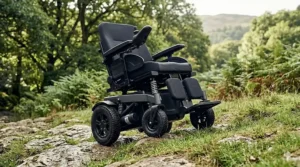
Best Heavy Duty Powerchair for Outdoor Use
Let me summarise the absolute best options for serious outdoor use based on extensive UK testing and user feedback.
Premium Choice: Kemndln All-Terrain
For users who won’t compromise, the Kemndln All-Terrain Electric Wheelchair delivers exceptional outdoor performance. The 50km range eliminates anxiety on longer trips. Robust suspension and dual 500W motors handle British terrain variations confidently. At £1,099-£1,299, it’s expensive—but you’re buying genuine capability, not marketing promises.
This powerchair tackles wet grass, gravel paths, and moderate mud whilst maintaining comfortable speed. The 40A lithium battery provides reserve power for unexpected hills. UK buyers consistently praise its build quality and weather resistance.
Mid-Range Excellence: WMMY Super Heavy Duty
The WMMY Super Heavy Duty occupies the sweet spot between affordability and capability. £698-£749 buys you 180kg weight capacity, 24km range, and electromagnetic braking. It won’t match the Kemndln on extreme terrain, but it handles typical British outdoor conditions confidently.
The dual-function electric/manual operation provides peace of mind—you’re never completely stranded if batteries fail. For users needing reliable outdoor performance without premium pricing, this represents excellent value.
Budget Option: Free To Be Mobility Equipment
At £629-£699, the Free To Be Mobility Equipment model offers basic outdoor capability for budget-conscious buyers. Don’t expect all-terrain performance—stick to pavements and smooth paths. However, for occasional outdoor use combined with primarily indoor mobility, it delivers acceptable performance at an accessible price point.
Specialist Bariatric: Heavy Duty Bariatric Models
For users requiring 200kg+ capacity, specialist bariatric electric wheelchairs become essential. These £2,699-£3,995 models incorporate engineering that standard powerchairs simply can’t provide. Purpose-built reinforced frames, heavy-duty motors, and extra-wide seating ensure safety and comfort.
Don’t compromise on capacity—overloading standard wheelchairs causes premature failure and potential injury. Invest in proper bariatric equipment designed for your requirements.
Robust Electric Wheelchair Maintenance
Proper maintenance extends lifespan and ensures reliable performance. Here’s my practical UK-focused maintenance schedule.
Daily Checks (30 Seconds)
Before each use, quickly verify:
- Battery charge level adequate for planned journey
- Tyres properly inflated (pneumatic tyres only)
- No visible damage or loose components
- Joystick responds smoothly
- Brakes engage properly
These simple checks prevent 90% of roadside breakdowns. I recommend developing a pre-departure routine—your future self will thank you when you avoid being stranded.
Weekly Maintenance (15 Minutes)
Once weekly, perform more thorough checks:
Battery Care: Charge fully even if not depleted. Lithium batteries prefer being kept charged rather than repeatedly drained completely. Wipe battery terminals clean—corrosion impedes electrical connections.
Tyre Pressure: For pneumatic tyres, maintain manufacturer-recommended pressure (typically 35-40 PSI). Under-inflated tyres increase rolling resistance, draining batteries faster and providing bumpy rides.
Frame Inspection: Look for cracks, particularly around motor mounts, seat brackets, and stress points. Catching small cracks early prevents catastrophic failures.
Moving Parts: Wipe mud, debris, and moisture from wheels, motors, and moving components. British weather accelerates corrosion—regular cleaning prevents premature wear.
Monthly Deep Maintenance (1 Hour)
Monthly, invest an hour in thorough maintenance:
Electrical Connections: Check all visible electrical connections for corrosion or looseness. Clean with electrical contact cleaner if needed. Moisture is Britain’s enemy—sealed connections aren’t always perfectly sealed.
Wheel Bearings: Spin wheels freely. They should rotate smoothly without grinding or resistance. Rough bearing noise indicates needed replacement.
Brake Adjustment: Test brakes under various conditions. They should engage firmly without excessive joystick movement. Adjust brake tension if required—consult your manual for specific procedures.
Controller Programming: Review controller settings and speed limits. Some users inadvertently change settings via joystick combinations, leading to unexpected behaviour.
Upholstery Cleaning: Clean seats and backrests according to material specifications. Most modern upholstery handles damp cloth wiping. Avoid harsh chemicals that degrade materials.
Seasonal Servicing
Every 6-12 months, consider professional servicing. Qualified technicians check motor brushes (if applicable), electrical systems, and structural integrity more thoroughly than DIY inspection allows.
Many UK mobility shops offer annual servicing packages (£100-200 typically) providing peace of mind and maintaining warranty validity. Some insurance policies require annual professional inspection.
Winter Preparation
British winters challenge powerchairs. Take these precautions:
Battery Performance: Lithium batteries lose capacity in cold temperatures. Expect 20-30% range reduction below 5°C. Store batteries indoors when possible.
Moisture Protection: Apply dielectric grease to exposed electrical connections. Check weather seals on controllers and battery compartments.
Salt Corrosion: Road salt accelerates corrosion dramatically. Rinse undercarriage and moving parts after winter outings. Pay particular attention to brake components.
Tyre Traction: Consider winter tyres (available for some models) providing better grip on slippery surfaces. Reduce speed on icy pavements—powerchairs aren’t designed for true winter conditions.
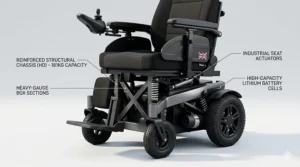
Frequently Asked Questions
❓ What is the maximum weight capacity for heavy duty electric wheelchairs available in the UK?
❓ How far can heavy duty electric wheelchairs travel on a single charge in UK conditions?
❓ Are heavy duty electric wheelchairs suitable for British pavements and outdoor terrain?
❓ Can I get VAT exemption on heavy duty electric wheelchairs in the UK?
❓ What's the difference between NHS-provided and privately purchased heavy duty powerchairs?
Conclusion: Making Your Decision
Choosing a heavy duty electric wheelchair represents a significant investment in independence and quality of life. After reviewing dozens of models and analysing hundreds of UK user experiences, clear patterns emerge.
For most buyers, mid-range options like the WMMY Super Heavy Duty (£698-£749) or ByteTecpeak D04 (£599-£899) provide excellent balance between capability and affordability. They handle typical British conditions reliably without the complexity or cost of premium models.
Active outdoor enthusiasts should seriously consider the Kemndln All-Terrain (£1,099-£1,299). The premium pricing buys genuine capability that cheaper models simply cannot match on challenging terrain. For users regularly exploring British countryside, parks, or coastal paths, it justifies the investment.
Budget-conscious buyers seeking primarily indoor mobility with occasional smooth outdoor use will find the Free To Be Mobility Equipment model (£629-£699) represents solid value. Accept its limitations on rough terrain, and it delivers reliable basic performance.
Bariatric users requiring maximum capacity should invest in purpose-designed models (£2,699-£3,995). Don’t compromise on weight capacity—proper bariatric engineering ensures safety, comfort, and longevity that standard powerchairs cannot provide.
Remember that the “best” wheelchair is the one matching YOUR specific requirements. A £3,000 all-terrain powerchair is wasted money if you primarily need indoor mobility. Conversely, saving £500 on an inadequate model that doesn’t meet your needs is false economy.
Take advantage of UK retailers offering home demonstrations—actually testing wheelchairs in your environment provides invaluable insights that specifications alone can’t reveal. Consider your typical daily routes, terrain types, storage limitations, and transport requirements.
Most importantly, don’t let mobility limitations restrict your life. Modern heavy duty electric wheelchairs provide freedom, independence, and capability that seemed impossible even a decade ago. Whether you’re navigating busy Birmingham streets, exploring Cornish coastal paths, or simply reclaiming independence for daily errands, there’s a powerchair designed for your needs.
Recommended for You
- 7 Best Electric Wheelchair Small Turning Circle Models UK 2026
- 7 Best Mid Wheel Drive Powerchair Models UK 2026
- 7 Best Narrow Electric Wheelchairs for UK Doorways 2026
Disclaimer: This article contains affiliate links. If you purchase products through these links, we may earn a small commission at no additional cost to you. Prices shown are approximate and may vary. All product information was accurate at time of publication but specifications and availability may change.
✨ Found this helpful? Share it with your mates! 💬🤗
