
In This Article
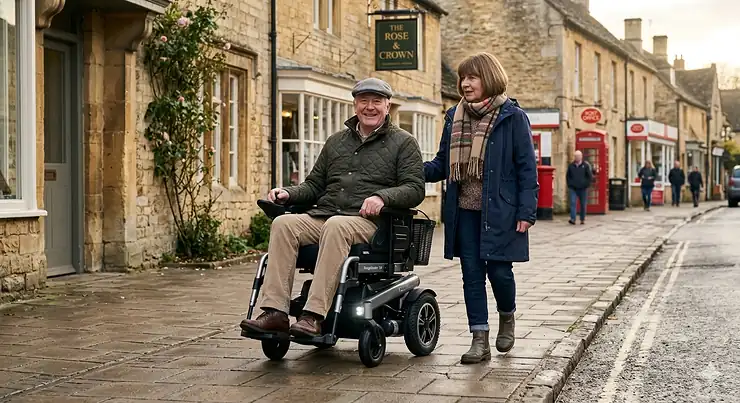
Picture this: you’re halfway through a lovely afternoon at your local park when that dreaded battery warning starts flashing. Not ideal, is it? If you’ve ever experienced range anxiety with a mobility aid, you’ll understand why choosing a long range electric wheelchair isn’t just about convenience—it’s about freedom.
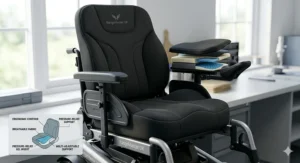
The landscape of electric wheelchair technology has transformed dramatically in recent years, particularly when it comes to battery performance. Modern long range electric wheelchairs can now travel anywhere from 20 to 48 kilometres (12 to 30 miles) on a single charge, thanks largely to advances in lithium-ion battery technology. This means you can confidently plan full-day outings without constantly worrying about finding a charging point.
What exactly qualifies as “long range”? Generally, we’re talking about electric wheelchairs that can cover at least 20 kilometres (12.4 miles) per charge. This is roughly double what standard models offer and enough for most daily activities—shopping trips, visiting friends, or even a proper day out. For context, the average person in the UK travels about 6-10 kilometres daily for routine errands, so a genuine long range powerchair gives you considerable breathing room.
In this comprehensive guide, we’ll explore seven outstanding long range electric wheelchairs currently available on Amazon.co.uk, ranging from budget-friendly options around £416 to premium models approaching £1,800. Whether you’re after maximum range, portability, or all-terrain capability, we’ve got you covered.
Quick Comparison Table
| Model | Range | Battery | Weight | Price (£) | Best For |
|---|---|---|---|---|---|
| ByteTecpeak D03 Gold | 30km (18.6 mi) | 20Ah Lithium | 33kg | £599-£699 | Maximum range |
| ByteTecpeak D04 | 20km (12.4 mi) | 10-12Ah Lithium | 18-20kg | £416-£499 | Best value |
| HomyKing 250W | 25km (15.5 mi) | 12Ah Lithium | 42lbs (19kg) | £459-£509 | Indoor/outdoor versatility |
| ByteTecpeak D06 Ultra | 20km (12.4 mi) | 12Ah Lithium | 18kg | £489-£539 | Ultra-lightweight travel |
| ByteTecpeak 12Ah Standard | 20km (12.4 mi) | 12Ah Lithium | 22kg | £479-£529 | Sturdy construction |
| Free To Be 600W | 25km (15.5 mi) | Dual Battery | 24kg | £899-£999 | Heavy-duty performance |
| SuperHandy GoRide 2 | 20km+ (12+ mi) | Dual Brushless | 19kg | £649-£749 | Advanced features |
💬 Just one click – help others make better buying decisions too! 😊
Top 7 Long Range Electric Wheelchairs: Expert Analysis
1. ByteTecpeak D03 Gold Electric Wheelchair – Premium Range Champion
If sheer distance is your priority, the ByteTecpeak D03 Gold delivers an impressive 30-kilometre range that’ll see you through even the most ambitious day trips. Powered by a robust 20Ah lithium battery paired with a 500W brush motor, this wheelchair represents the sweet spot between performance and practicality.
Key Specifications:
- Range: 30km (18.6 miles) per charge
- Motor: 500W brush motor
- Battery: 20Ah lithium-ion (removable)
- Weight capacity: 150kg (23.6 stone)
- Wheelchair weight: 33kg
The D03 Gold excels on varied terrain thanks to its versatile wheel system—8-inch solid front wheels combined with 12-inch inflatable rear wheels provide stability on everything from smooth pavements to slightly rougher paths. It’s also IPX4 water-resistant, meaning light rain won’t send you scrambling for cover.
UK buyers particularly appreciate the electromagnetic braking system and four-layer aviation aluminium construction, which delivers both safety and durability without excessive weight. The folded dimensions (79 x 64 x 47cm, ±2cm) make it surprisingly manageable for car boot storage despite its robust build.
Customer Feedback: British users report that the 30km range claim holds up well in real-world conditions, with many achieving 25-28km on typical mixed-use days. One reviewer noted: “Perfect for my weekly shopping trips and visiting family across town without range anxiety.”
✅ Pros:
- Exceptional 30km range
- IPX4 water resistance
- Robust construction
- Good value for range provided
❌ Cons:
- Heavier than ultra-lightweight models
- Slightly firmer seat cushioning
Price Range: £599-£699
Best For: Active users needing maximum single-charge range
2. ByteTecpeak D04 Foldable Electric Wheelchair – Best Budget Choice
The ByteTecpeak D04 has become something of a phenomenon in the UK market, and it’s easy to see why. Offering genuine long-range performance at a price point that won’t require a second mortgage, this model delivers exceptional value without cutting corners on essentials.
Key Specifications:
- Range: 20km (12.4 miles)
- Motor: 500W high-performance
- Battery: 10-12Ah lithium (removable)
- Weight capacity: 150kg
- Wheelchair weight: 18-20kg (depending on variant)
What makes the D04 special is its intelligent design choices. At under 19kg including the battery, it’s genuinely liftable by most users or carers—a crucial consideration that heavier “portable” wheelchairs often miss. The 360-degree joystick can be mounted on either side, accommodating left or right-handed operation.
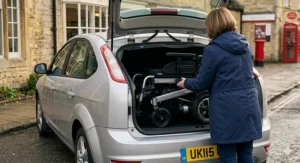
The folding mechanism deserves special mention: it collapses down to roughly the size of a large suitcase (39 x 58 x 86cm) in seconds, no tools required. Several UK reviewers mentioned fitting it easily into Nissan Qashqai and Ford Focus boots with room to spare.
Customer Feedback: With over 4.6 stars from UK buyers, the D04 receives particular praise for its value proposition. One purchaser who ordered in March noted the price dropped from £499.99 to £416 shortly after—proving that patience and watching for deals can pay off. Common themes include comfortable seating, responsive controls, and solid build quality that belies the affordable price.
✅ Pros:
- Outstanding value for money
- Genuinely lightweight (18-20kg)
- Quick, tool-free folding
- Responsive joystick controls
❌ Cons:
- Seat cushioning could be softer (wheelchair cushion recommended)
- Horn volume relatively quiet
Price Range: £416-£499
Best For: Budget-conscious buyers seeking reliable long-range performance
3. HomyKing 250W Electric Wheelchair – Indoor/Outdoor Versatility
The HomyKing 250W (actually featuring dual 250W motors for 500W total) strikes an excellent balance between indoor manoeuvrability and outdoor capability. Its 25-kilometre range sits comfortably in the long-range category whilst maintaining a relatively svelte 19kg total weight.
Key Specifications:
- Range: 25km (15.5 miles)
- Motors: Dual 250W (500W total)
- Battery: 12Ah removable lithium
- Weight capacity: 150kg
- Wheelchair weight: 42lbs (19kg)
This model shines in mixed-use scenarios. The dual-motor configuration provides excellent torque distribution, making it equally confident navigating tight indoor spaces and tackling outdoor inclines up to 12 degrees. UK customers particularly value the electromagnetic braking system that engages automatically when you release the joystick—a genuine safety enhancement for busy pedestrian areas.
The 12Ah removable battery offers flexible charging options: charge it in-situ or detach and charge separately—handy if you live in a flat without ground-floor access. Charging flexibility extends battery longevity too, as you can rotate between two batteries if needed.
Customer Feedback: British buyers consistently praise the HomyKing’s sturdy construction and comfortable seating. One reviewer mentioned: “Great buy. Had a mobility scooter prior to this but this wheelchair is so much better for manoeuvrability in and around stores.” The value proposition resonates strongly—several reviews note it should cost significantly more than the current price.
✅ Pros:
- Excellent indoor/outdoor versatility
- Solid, stable construction
- Comfortable for extended use
- Dual charging options
❌ Cons:
- Slightly heavier than some ultra-light models
- Limited colour options
Price Range: £459-£509
Best For: Users needing balanced indoor/outdoor performance
4. ByteTecpeak D06 Ultra Lightweight – Travel Specialist
For frequent travellers or those prioritising portability above all else, the ByteTecpeak D06 Ultra represents the pinnacle of lightweight electric wheelchair design. At just 18kg, it’s one of the lightest long-range models available whilst still delivering a respectable 20km range.
Key Specifications:
- Range: 20km (12.4 miles)
- Motor: 400W high-performance
- Battery: 12Ah lithium
- Weight capacity: 150kg
- Wheelchair weight: 18kg
The aluminium-magnesium alloy frame achieves an impressive strength-to-weight ratio, allowing for the featherweight construction without sacrificing durability. This wheelchair unfolds in under 3 seconds—genuinely useful when you’re manoeuvring in confined spaces like train carriages or tight car parks.
Airline compatibility is where the D06 really proves its worth. The battery configuration meets most airline restrictions (check with your specific carrier), and the compact folded size fits standard aircraft wheelchair storage. For British users planning European city breaks or domestic flights, this feature alone justifies the investment.
Customer Feedback: The ergonomic seat with thick sponge cushioning receives consistent praise, with users noting genuine all-day comfort. The puncture-proof, shock-absorbing tyres handle UK pavements admirably, from smooth shopping centre floors to slightly rough park paths.
✅ Pros:
- Ultra-lightweight (18kg)
- Folds in under 3 seconds
- Airline-friendly design
- Comfortable cushioning
❌ Cons:
- Slightly lower motor power (400W vs 500W)
- Premium price for the weight class
Price Range: £489-£539
Best For: Frequent travellers and those prioritising portability
5. ByteTecpeak 12Ah Standard – Reliable All-Rounder
The ByteTecpeak 12Ah Standard model offers a well-rounded package that doesn’t chase any particular extreme but instead delivers consistently across all metrics. It’s the wheelchair equivalent of a trustworthy family car—nothing flashy, just dependable performance day in, day out.
Key Specifications:
- Range: 20km (12.4 miles)
- Motor: 500W electromagnetic
- Battery: 12Ah removable lithium
- Weight capacity: 150kg
- Wheelchair weight: 22kg
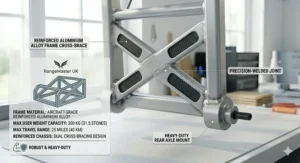
This model features ByteTecpeak’s signature build quality with a durable aluminium alloy frame that requires virtually no maintenance. The shock-absorption system—often overlooked in specifications—makes a real difference on typical British pavements and road crossings, smoothing out bumps that would otherwise jar through the frame.
The 500W motor provides confident power delivery whether you’re navigating gentle inclines or accelerating from a standstill at pedestrian crossings. Combined with the electromagnetic braking and anti-tip wheels, it inspires confidence in varied traffic situations.
Customer Feedback: UK reviewers frequently mention the excellent after-sales support, with one noting: “It arrived a few days later than expected and I was advised by postal letter with apologies and sweets and chocolate! That gives me confidence about any other contact I may need with this company.” The practical touches—like the 5-year warranty (1 year on battery)—demonstrate a manufacturer standing behind their product.
✅ Pros:
- Well-balanced specifications
- Excellent shock absorption
- Strong customer support
- 5-year warranty
❌ Cons:
- Middle-of-the-pack in most categories
- Nothing particularly distinctive
Price Range: £479-£529
Best For: Users wanting proven, reliable performance
6. Free To Be Mobility Equipment 600W – Heavy-Duty Performer
When you need serious muscle and don’t mind paying for premium engineering, the Free To Be Mobility Equipment 600W delivers. With dual battery configuration and uprated 600W motors, this powerchair tackles challenges that would see lesser models struggling.
Key Specifications:
- Range: 25km (15.5 miles) approximately
- Motors: 600W dual system
- Battery: Dual battery supplied
- Weight capacity: 150kg+
- Wheelchair weight: 24kg
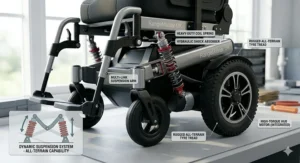
The dual-battery system not only extends range but also provides redundancy—if one battery develops issues, you can potentially limp home on the other. The 600W motor configuration provides exceptional hill-climbing ability and confident performance on grass, gravel, or other challenging surfaces common in rural UK settings.
Build quality reflects the premium positioning. The frame tolerates harder use than budget models, making it suitable for users with more demanding mobility needs or those frequently using their wheelchair in challenging environments.
Customer Feedback: British users appreciate the robust construction and powerful performance, though feedback specifically on this model is more limited given its premium market position. The “supplied by Free To Be Mobility Equipment” designation suggests UK-specific customer support.
✅ Pros:
- Powerful 600W motors
- Dual battery configuration
- Robust construction
- Suitable for challenging terrain
❌ Cons:
- Higher price point
- Heavier than ultra-portable models
Price Range: £899-£999
Best For: Users needing maximum power and durability
7. SuperHandy GoRide 2 – Advanced Technology Package
The SuperHandy GoRide 2 represents the cutting edge of affordable powerchair technology, incorporating dual brushless motors and zero-turn capability—features typically reserved for much pricier models.
Key Specifications:
- Range: 20km+ (12+ miles)
- Motors: Dual brushless motors
- Battery: Lithium-ion
- Weight capacity: 150kg
- Wheelchair weight: 19kg
Brushless motors offer several advantages over traditional brush motors: they’re quieter, more efficient, require less maintenance, and generally last longer. The zero-turn functionality allows the GoRide 2 to pivot on its own axis—tremendously useful in tight indoor spaces like shop aisles or narrow hallways.
The electromagnetic brake system provides immediate, secure stops, whilst the compact folding design maintains portability despite the advanced features. At 19kg, it remains within the “liftable” category for most users or carers.
Customer Feedback: Whilst specific UK reviews are still building for this newer model, early adopters praise the modern feature set and smooth, quiet operation. The brushless motors notably reduce the characteristic “whirr” of electric wheelchairs, which some users find more dignified in public settings.
✅ Pros:
- Advanced brushless motor technology
- Zero-turn capability
- Quiet operation
- Modern feature set
❌ Cons:
- Less established UK presence
- Newer model with fewer long-term reviews
Price Range: £649-£749
Best For: Tech-savvy users wanting latest features
What is a Long Range Electric Wheelchair?
A long range electric wheelchair is a battery-powered mobility device specifically engineered to cover extended distances on a single charge, typically exceeding 20 kilometres (12.4 miles). Unlike standard electric wheelchairs that might offer 10-15km range, these enhanced models incorporate larger capacity batteries and more efficient drive systems to double or even triple typical operating distances.
The defining characteristic isn’t just raw battery capacity—it’s the intelligent integration of several technologies. Modern long range wheelchairs combine high-capacity lithium-ion batteries (usually 12Ah to 20Ah) with efficient brushless motors, lightweight construction materials, and optimised power management systems. According to research from University College London’s Centre for Rehabilitation Engineering, advancements in powered wheelchair technology have significantly improved user mobility and quality of life for those with severe mobility impairments. This holistic approach delivers genuine all-day mobility rather than simply bolting a bigger battery onto an otherwise unchanged design.
In the UK context, a 20-30km range translates to practical freedom: visiting friends across town, spending a full day at a National Trust property, or completing multiple errands without charging anxiety. According to Transport for London data, the average journey length in Greater London is approximately 6.4 kilometres—meaning a genuine long range wheelchair provides 3-5 times this distance, accommodating both planned activities and spontaneous detours.
Understanding Electric Wheelchair Battery Technology
Lithium-Ion vs. Gel Batteries: The Great Debate
The battery debate in electric wheelchairs largely centres on two technologies: lithium-ion (including LiFePO4 variants) and gel batteries (a subset of sealed lead-acid). Each offers distinct advantages that suit different users and usage patterns.
Lithium-Ion Batteries have revolutionised wheelchair technology over the past decade. These batteries pack significantly more energy into less weight and volume—typically offering 2-3 times the energy density of lead-acid alternatives. A quality lithium battery providing 20-30km range might weigh just 2-3kg, whilst an equivalent gel battery could weigh 10-15kg.
The charging characteristics prove equally important. Lithium batteries accept charge faster (typically 4-6 hours for a full charge versus 8-12 hours for gel) and handle partial charging better. You can “top up” a lithium battery during lunch without degrading its lifespan—something that significantly reduces range anxiety in practice.
According to research from battery manufacturers, lithium batteries typically deliver 1,000-2,000 full charge cycles before capacity drops to 80% of original, compared to 300-500 cycles for gel batteries. Translated into real-world terms: a lithium battery might last 4-6 years of daily use, whilst gel batteries typically need replacement after 2-3 years.
Gel Batteries, whilst heavier and slower-charging, offer compelling advantages in specific scenarios. They’re more tolerant of temperature extremes—particularly important for UK users who might store wheelchairs in unheated garages during winter. Gel batteries also cost significantly less upfront (typically £80-£150 per pair versus £250-£400 for lithium equivalents).
The sealed construction prevents spills and makes gel batteries safer in certain failure scenarios. For users on tight budgets or those who rarely need maximum range, gel batteries remain a perfectly viable choice, particularly given their proven track record in the mobility sector.
Battery Capacity and Real-World Range
Understanding amp-hour (Ah) ratings helps decode manufacturer range claims. A 10Ah battery stores enough energy to deliver 10 amps for one hour, or 5 amps for two hours, and so on. Combined with voltage (typically 24V in wheelchair systems), this determines total energy storage measured in watt-hours (Wh).
A 24V 12Ah battery stores 288Wh—just below the 300Wh threshold for airline carry-on without special approval. This explains why many travel-focused wheelchairs cluster around 10-12Ah batteries despite larger capacities being technically feasible.
Real-world range depends on multiple factors beyond pure battery capacity:
- User weight: Each additional stone (6.35kg) typically reduces range by 5-8%
- Terrain: Constant inclines can halve range compared to flat surfaces
- Temperature: Battery efficiency drops roughly 1% per degree Celsius below 15°C
- Tyre pressure: Under-inflated tyres increase rolling resistance significantly
- Driving style: Frequent acceleration/braking reduces efficiency by 10-15%
- Speed setting: Running at maximum speed continuously drains batteries faster than moderate pace
Manufacturer range figures typically assume a 75kg user on flat, smooth surfaces at moderate temperatures—ideal conditions rarely matched in real British weather. Prudent planning suggests expecting 70-80% of claimed range in typical mixed conditions.
Key Features to Consider When Buying
Motor Power and Performance
Motor power, measured in watts, directly influences an electric wheelchair’s capability on inclines, rough terrain, and with heavier users. However, raw wattage only tells part of the story—motor type and configuration matter equally.
Single vs. Dual Motor Systems: Entry-level wheelchairs often feature a single motor driving both wheels through differential gearing. This works adequately on flat surfaces but can struggle with balance on cambers or slopes. Dual-motor systems (like the 2 x 250W or 2 x 300W configurations) provide independent power to each wheel, offering superior control and hill-climbing ability.
Brushed vs. Brushless Motors: Traditional brushed motors (the majority of budget wheelchairs) use physical contact between carbon brushes and a commutator to create rotation. They’re proven, affordable, and easily serviced. Brushless motors eliminate this contact, instead using electronic switching for rotation. The benefits? Quieter operation, better efficiency (extending range by 10-15%), longer lifespan, and reduced maintenance. The trade-off? Higher initial cost and more complex repairs if something fails.
For UK conditions, 500W total motor power represents the sweet spot for most users. This provides adequate performance on typical gradients (the Disability Discrimination Act requires public buildings to limit ramps to 1:12, roughly 8% or 4.5 degrees) whilst not draining batteries excessively. Users in hillier regions—say, the West Country or Scottish Highlands—might prefer 600W+ configurations for confident climbing.
Weight and Portability Considerations
Weight impacts every aspect of wheelchair ownership. Lighter models (under 20kg) can be lifted into car boots by most carers and stored more easily at home. Heavier models (25-35kg) often require two people or a vehicle ramp for loading.
The critical threshold sits around 22-23kg—roughly the limit for safe single-person lifting following manual handling guidelines. Models like the ByteTecpeak D04 (18-20kg) or SuperHandy GoRide 2 (19kg) deliberately target this weight class, prioritising real-world usability over maximum feature sets.
Folded dimensions matter as much as weight. A wheelchair might be acceptably light but still won’t fit certain car boots if it folds to awkward dimensions. Measure your boot space before purchasing—height is often the limiting factor, as boots might be wide and deep but shallow.
Safety Features and UK Compliance
All electric wheelchairs sold in the UK must meet safety standards, but implementations vary. Essential features include:
Electromagnetic Brakes: These engage automatically when you release the joystick, preventing the wheelchair from rolling. Superior to mechanical brakes alone, which require manual activation.
Anti-Tip Wheels: Small wheels mounted at the rear prevent the wheelchair from tipping backwards when ascending steep ramps or kerbs. Essential for UK urban environments with varied street furniture.
Seatbelts: Seems obvious but isn’t universal. A proper lap belt (preferably adjustable) should be standard.
UK/EU Compliance Marking: Look for CE marking (still valid during transition periods) or the newer UKCA marking. This indicates the product meets relevant safety directives for electromagnetic compatibility, low voltage, and machinery safety.
The Equality Act 2010 and associated guidance suggest electric wheelchairs used on pavements should not exceed 4mph (6.4 km/h). Most models include speed limiting to ensure compliance, though some offer higher speeds for private land use.
How to Choose the Perfect Long Range Electric Wheelchair
Step 1: Assess Your Daily Range Requirements
Start with honest self-assessment. Calculate typical daily distances: home to shops, shops to community centre, regular social visits. Add 30-40% buffer for detours, spontaneous stops, and gradual battery degradation over time.
If your furthest regular destination sits 8km away, a 20km-range wheelchair provides comfortable margin. Planning occasional longer outings? A 25-30km range model offers peace of mind.
Step 2: Evaluate Weight Capacity and User Comfort
Most long range wheelchairs specify 150kg maximum user weight, though actual comfortable capacity sits slightly lower. If you’re near the weight limit, prioritise models with robust frames and high-capacity motors.
Seat width matters tremendously for comfort during extended use. Standard seats run 18-19 inches (46-48cm) wide—adequate for most users but potentially restrictive for broader individuals. Some manufacturers offer 20-inch wide-seat variants.
Step 3: Consider Storage and Transportation
Measure your car boot dimensions: width, depth, and critically, height. Many boots accommodate 60-70cm width and 80-90cm depth but restrict height to 50-60cm. Compare against folded wheelchair dimensions carefully.
If you can’t lift 20kg comfortably, either choose an ultra-light model (under 18kg) or plan for two-person lifting. Vehicle ramps or hoists solve the problem but add cost and complexity.
Step 4: Match Battery Type to Usage Pattern
Daily users benefiting from long range should strongly consider lithium batteries despite higher upfront costs. The 3-5 year lifespan and superior performance justify the investment over repeatedly replacing cheaper gel batteries.
Occasional users (2-3 times weekly) might find gel batteries perfectly adequate and more economical. Calculate total cost of ownership over 5 years including battery replacements for accurate comparison.
Step 5: Budget Realistically
Long range electric wheelchairs in the UK span £400-£2,000+. Budget models (£400-£500) deliver impressive value but might compromise on weight, features, or build quality. Mid-range (£500-£800) offers the best balance for most users. Premium models (£800+) justify costs through advanced features, superior components, or exceptional customer support.
Don’t forget ongoing costs: batteries (£150-£400 per replacement), potential servicing (£50-£150 annually), and insurance if desired (£80-£200 annually).

Maintaining Your Long Range Electric Wheelchair
Battery Care and Charging Best Practices
Proper battery maintenance can double usable lifespan. Follow these evidence-based practices:
Charging Discipline: Charge after every use, even for short trips. Lithium batteries particularly benefit from staying topped up rather than running to empty. Avoid storing batteries in discharged states—charge before storage.
Temperature Management: Store and charge batteries in temperature-controlled environments (ideally 15-25°C). UK garages and sheds often drop below this in winter, accelerating degradation. If garage storage is unavoidable, remove the battery and store it indoors.
Charger Compatibility: Always use the manufacturer-supplied charger or approved replacements. “Universal” chargers might not apply proper charge profiles, potentially damaging lithium batteries or undercharging gel batteries.
Monthly Equalisation: Even when not using the wheelchair regularly, charge batteries monthly to prevent deep discharge damage. This single practice prevents more battery failures than any other intervention.
Regular Maintenance Checks
Weekly Quick Checks:
- Tyre pressure (if pneumatic tyres)
- Brake function test (electromagnetic and manual)
- Battery charge indicator accuracy
- Joystick responsiveness
- Frame for obvious damage or loose bolts
Monthly Deeper Inspections:
- Clean wheelchair frame and wheels
- Check all connection points and wiring
- Test battery range on a familiar route to establish baseline
- Inspect seat upholstery for wear
- Verify anti-tip wheels move freely
Annual Professional Service:
Consider annual servicing by a qualified technician, particularly for out-of-warranty models. Typical costs run £80-£150 and cover:
- Complete electrical system check
- Brake adjustment and testing
- Motor and gearbox inspection
- Battery health assessment
- Compliance verification
Many NHS wheelchair services offer servicing for private wheelchairs at reasonable rates—worth enquiring locally.
Long Range Wheelchairs vs. Mobility Scooters: Making the Right Choice
The wheelchair-versus-scooter debate divides opinion, often based more on perception than practical differences. Understanding the genuine distinctions helps make informed choices.
Manoeuvrability and Indoor Use
Electric wheelchairs universally outperform mobility scooters indoors. Compact footprints, tight turning circles, and controlled speed make wheelchairs superior for navigating shops, restaurants, and public buildings. Most doorways accommodate wheelchairs comfortably, whilst scooters frequently require reversing and careful positioning.
Mobility scooters excel in open outdoor spaces—parks, seafronts, wide pavements. The larger platforms provide comfortable seating for extended outdoor use, and higher speeds (up to 8mph for Class 3 scooters) cover distances more quickly.
Access and Acceptance
Wheelchairs enjoy universal access to public transport, taxis, and most venues. Mobility scooters face restrictions on many buses and some venues due to size and weight. Socially, wheelchairs attract less attention—a consideration valued by some users.
Storage and Transport
Folding electric wheelchairs fit most car boots; mobility scooters typically require estate cars, vans, or boot-mounted hoists. For multi-modal journeys combining car, train, or taxi, wheelchairs offer dramatically more flexibility.
Cost Comparison
Entry-level mobility scooters start around £400-£600, similar to budget wheelchairs. However, comparable-range scooters (Class 3 models with 25-30km range) typically cost £1,200-£2,500—double equivalent wheelchairs.
The Hybrid Approach
Some users maintain both: a long range wheelchair for daily mobility and town use, plus a mobility scooter for countryside rambles or coastal trips. Whilst not economical, this combination addresses each device’s limitations.
UK Legal and Safety Requirements
Pavement and Road Use Regulations
The UK categorises electric wheelchairs as “Class 2 invalid carriages” when used on pavements and pedestrian areas. Key regulations include:
Speed Limits: Maximum 4mph (6.4 km/h) on pavements and pedestrian zones. Most wheelchairs include electronic speed limiting to ensure compliance.
Lighting Requirements: No legal requirement for lights when used exclusively on pavements, though advisable for safety. If venturing onto roads (legal but discouraged), lights become essential.
Registration and Insurance: Neither required for Class 2 wheelchairs used appropriately. However, personal insurance covering third-party liability costs just £80-£150 annually and provides worthwhile peace of mind.
Highway Code Guidance: Rule 36-46 address powered wheelchair use. Essentially: use pavements where provided, travel at sensible speeds, give way to pedestrians, and take extra care in shared spaces.
Public Transport Access Rights
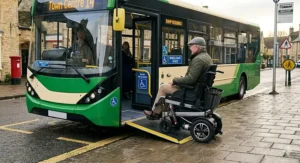
Buses: All UK buses built after 2000 must accommodate wheelchairs, providing ramps and designated spaces. Electric wheelchairs have priority over mobility scooters due to size constraints.
Trains: Wheelchair users can travel on all UK trains. Advance notification (at least 24 hours) helps ensure ramp availability and assistance at unstaffed stations. Most train operators assist free of charge.
Taxis: Licensed taxis must carry wheelchairs without additional charge and provide reasonable assistance. Private hire vehicles aren’t legally obligated but many voluntarily accommodate wheelchairs.
Aircraft: Airlines must accept electric wheelchairs, though battery restrictions apply. Lithium batteries under 300Wh typically travel as cabin baggage (removed from wheelchair) or in checked baggage. Airlines require advance notification (usually 48 hours) to ensure appropriate handling.
VAT Relief Schemes
Qualifying individuals can claim VAT relief on wheelchairs and related equipment. To qualify, you must have a long-term illness, disability, or condition that has lasted or is expected to last at least 12 months.
When purchasing from Amazon or other retailers, look for “VAT relief” options during checkout. You’ll need to self-declare eligibility—retailers aren’t required to verify but HM Revenue & Customs may audit claims. The NHS provides guidance on wheelchair services and equipment, including information about accessing wheelchairs and associated costs.
VAT relief reduces costs by 20%, making the difference between a £500 wheelchair costing £500 or £600 depending on VAT treatment. For larger purchases, savings reach hundreds of pounds. Additionally, NHS England’s personal wheelchair budget scheme allows eligible users to have more choice and control over their wheelchair provision, potentially combining NHS funding with private purchases for higher-specification models.
FAQ Section
❓ What is the average lifespan of a long range electric wheelchair battery?
❓ Can I take my electric wheelchair on UK trains and buses?
❓ How far can I realistically travel on a 20Ah battery in UK conditions?
❓ Are long range electric wheelchairs suitable for outdoor terrain like grass or gravel?
❓ What happens if my wheelchair battery runs flat whilst I'm out?
Conclusion: Reclaim Your Freedom with the Right Choice
Choosing a long range electric wheelchair represents far more than a simple purchase decision—it’s an investment in independence, confidence, and quality of life. The seven models we’ve explored demonstrate that genuine long-range performance needn’t break the bank, with capable options available from £416 upwards.
For budget-conscious buyers, the ByteTecpeak D04 delivers exceptional value, combining 20km range with genuine portability at prices occasionally dropping below £450. Those prioritising maximum range should seriously consider the ByteTecpeak D03 Gold with its impressive 30km capability and robust construction. Frequent travellers will appreciate the ByteTecpeak D06 Ultra’s airline-friendly design and featherweight 18kg frame.
The transformation in electric wheelchair technology over recent years means today’s long range models would have seemed impossible just a decade ago. Lithium battery advances, efficient motors, and lightweight materials combine to deliver genuine all-day mobility without constant charging anxiety.
Remember that the “best” wheelchair varies by individual needs. A retired couple planning day trips values different features than a working professional commuting daily. Honest assessment of your usage patterns, storage limitations, and budget constraints guides you towards the ideal choice.
UK buyers benefit from excellent consumer protection, VAT relief schemes, and improving public access infrastructure. Combined with increasingly affordable long range wheelchairs, the barriers to independent mobility continue falling. Whether you’re replacing an ageing wheelchair, upgrading from a manual model, or purchasing your first electric mobility aid, the current market offers more choice and value than ever before.
Take time to research thoroughly, read UK buyer reviews, and where possible, test models before purchasing. Your perfect long range electric wheelchair awaits—one that’ll reliably carry you through countless adventures, social visits, and daily activities without range anxiety dampening your independence.
Recommended for You
- 7 Best All Terrain Electric Wheelchair UK 2026
- 7 Best Bariatric Electric Wheelchairs UK 2026
- 7 Best Heavy Duty Electric Wheelchair UK 2026
Disclaimer: This article contains affiliate links. If you purchase products through these links, we may earn a small commission at no additional cost to you. Prices shown are approximate and may vary. Always check current prices and availability on Amazon.co.uk before purchasing.
✨ Found this helpful? Share it with your mates! 💬🤗
