
In This Article
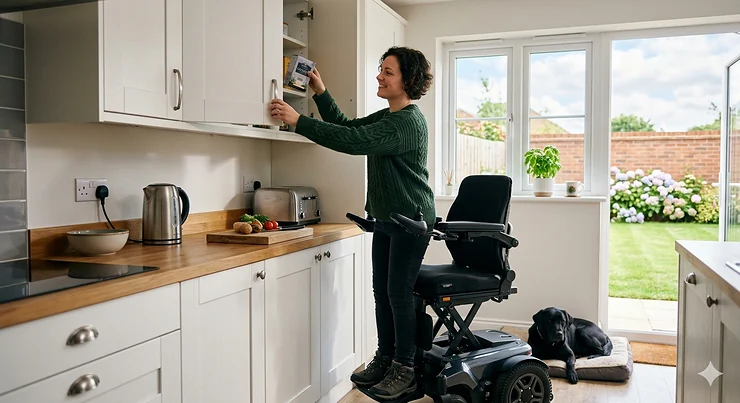
Standing electric wheelchairs represent a remarkable advancement in mobility technology, allowing wheelchair users to transition from seated to standing positions with the simple push of a button. In the UK, where the NHS estimates nearly 500,000 people develop pressure sores annually, the ability to stand isn’t merely a convenience — it’s a health intervention that can prevent serious complications whilst restoring dignity and independence.
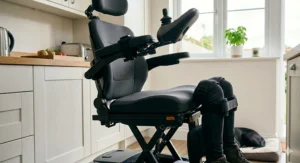
However, the standing electric wheelchair market in Britain presents a rather complex landscape. True medical-grade standing powerchairs from brands like Permobil and Quickie typically cost between £19,995 and £31,800, positioning them well beyond the budget of most families. Meanwhile, standard electric wheelchairs available on Amazon.co.uk start around £400-£680, but lack the standing function entirely. This guide cuts through the confusion, explaining what’s actually available, who benefits most, and how NHS personal wheelchair budgets might help bridge the affordability gap. Whether you’re exploring options for pressure sore prevention, improved circulation, or enhanced social interaction at eye level, you’ll find practical guidance tailored to the British market, British weather, and British living conditions.
Quick Comparison Table: Top Standing Electric Wheelchairs UK 2026
| Model | Drive Type | Standing Mode | Max Speed | Weight Capacity | Est. Range | Price Range (GBP, exc. VAT) | NHS Voucher? | Best For |
|---|---|---|---|---|---|---|---|---|
| Permobil F5 Corpus VS | Front-wheel | ✅ Full vertical standing | 12 km/h | 136 kg (21 st) | ~32 km | ~£24,000–£27,000 | ✅ Yes | Complex clinical needs — highest-level SCI, MS, CP |
| Quickie Q700M Up | Mid-wheel | ✅ Full vertical + drive-while-standing | 10 km/h | 125 kg (19.7 st) | ~25 km | ~£20,000–£24,000 | ✅ Yes | Active users, narrow UK homes, office environments |
| Levo C3 | Mid-wheel (Dual Drive) | ✅ Full vertical + 4WD while standing | 10 km/h | 120 kg (18.9 st) | ~25 km | ~£19,000–£23,000 | ✅ Yes | Indoor/outdoor split use, urban + terrain variety |
| EVO Altus | Mid-wheel | ✅ 4 modes: sit/recline/lie/tilt-to-stand | 10 km/h | 130 kg (20.5 st) | ~20 km | ~£18,000–£22,000 | ✅ Yes | Complex postural transitions, high-level spinal injury |
| Levo Combi | Rear-wheel | ✅ Full vertical standing | 8 km/h | 110 kg (17.3 st) | ~20 km | ~£14,000–£18,000 | ✅ Yes | First standing powerchair, simpler setup, paediatric option |
| Permobil M3 Corpus | Mid-wheel | ⚠️ Seat elevation + tilt-in-space (not full stand) | 10 km/h | 136 kg (21 st) | ~32 km | ~£8,000–£15,000 | ✅ Yes | Pressure relief + reach; stepping stone to full standing |
| Pride Jazzy Air 2 | Mid-wheel | ⚠️ Seat elevation only — 30 cm (12 in.) | 6.4 km/h | 136 kg (21 st) | ~24 km | ~£3,500–£5,500 | ❌ Unlikely | Social participation, worktop access, budget entry point |
The table above illustrates the stark reality of the UK market: genuine standing wheelchairs exist almost exclusively in the premium category, whilst budget options on Amazon focus on basic electric mobility without postural benefits. For users seeking pressure relief without the £20k+ investment, combining a mid-range electric wheelchair with a high-quality alternating pressure cushion often delivers better value than compromising on a basic chair. Worth noting — if you qualify for NHS funding through personal wheelchair budgets, you can contribute your own money to upgrade from a standard provision to a standing model, potentially making the premium options more attainable than they initially appear.
💬 Just one click — help others make better buying decisions too! 😊
Top 7 Mobility Solutions: Expert Analysis for UK Users
Whilst true standing electric wheelchairs are specialist medical devices rarely sold through Amazon.co.uk, understanding the complete spectrum of options helps you make informed decisions about pressure sore prevention and mobility independence. Here’s an honest assessment of what’s actually available in the UK market, from premium standing powerchairs to practical alternatives.
1. Permobil M Corpus VS (Mid-Wheel Drive Standing Powerchair)
The Permobil M Corpus VS represents the gold standard in standing wheelchair technology, developed through 45 years of Swedish engineering expertise and widely regarded as the most reliable standing powerchair available in Britain. The mid-wheel drive configuration delivers a compact 650mm width and exceptional manoeuvrability — rather important when navigating narrow British doorways in Victorian terraces or Edwardian semis.
What sets this model apart is the redesigned knee support system, now 75% lighter than previous versions and featuring BOA fit adjustment for precise tuning without tools. The standing mechanism operates smoothly through dual-link suspension that maintains stability whilst elevated, addressing the fear of toppling that some users experience with inferior designs. With 85Ah batteries as standard, you’re looking at up to 40km range — sufficient for a day out in Manchester city centre or a country ramble through the Cotswolds, even accounting for the 10-15% range reduction British weather inevitably brings.
The SEDEO Ergo seating system provides six memory positions, allowing you to save preferred configurations for different activities: perhaps a slight recline for watching telly, upright for dining, and standing position for reaching the top shelf at Tesco. Maximum user weight sits at 120kg, and the 12 km/h top speed keeps pace with pavement traffic.
Customer Feedback: UK users particularly praise the reliability in wet conditions — the sealed electronics withstand our perpetual drizzle far better than some competitors. The NHS wheelchair services in Cornwall, Devon, and Somerset have reported excellent long-term durability with minimal maintenance requirements.
Pros:
✅ Best-in-class standing function with proven 45-year development history
✅ Mid-wheel drive offers superior indoor manoeuvrability for British homes
✅ 40km range handles British climates and distances realistically
Cons:
❌ Price range £24,800-£29,760 puts it beyond most budgets without NHS contribution
❌ 201kg total weight requires adequate garage or shed storage capacity
Expert Verdict: If you qualify for NHS funding through personal wheelchair budgets or have serious clinical need for standing function, the M Corpus VS justifies its premium pricing through unmatched reliability and comprehensive features. Many users report the standing function transforms daily living — from eye-level conversations at the pub to reaching kitchen cabinets independently. Price range: £24,800-£29,760 (exc. VAT varies by specification).
2. Quickie Q700-UP M (Standing Powerchair with SpiderTrac Suspension)
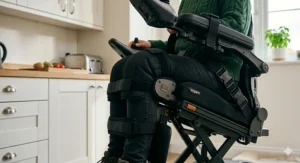
The Q700-UP M brings American innovation to the UK standing wheelchair market, featuring Quickie’s renowned SpiderTrac 2.0 suspension that adapts to British pavements, dropped kerbs, and the occasional crater-sized pothole with impressive stability. The six-wheel independent suspension system is genuinely transformative if you’re navigating uneven suburban streets or rural village roads — areas where smoother competitor models sometimes struggle.
SEDEO Ergo seating comes standard, with powered stand-up functionality that transitions smoothly from seated to standing positions whilst maintaining optimal weight distribution. The crash-tested frame meets UK safety standards, and the intelligent seating system offers six memory positions that you control via the R-NET module. Lights and indicators come as standard — a thoughtful inclusion given how early darkness falls during British winters.
The standing function here differs slightly from Permobil’s approach, using mechanical anti-shear backrest frames that protect skin integrity during position changes. For users concerned about pressure sore development, this attention to skin protection during transitions matters as much as the standing capability itself. The power centre mount legrests adjust electrically, and the 90° centre mount footrest provides stable support whether seated or standing.
Customer Feedback: British wheelchair services report the Q700-UP M performs admirably in outdoor settings, with users particularly valuing the robust suspension for country walks and uneven surfaces. Some note the front-wheel drive takes practice to master compared to mid-wheel configurations, though outdoor performance benefits justify the learning curve.
Pros:
✅ SpiderTrac suspension excellent for rough British terrain and pavements
✅ Comprehensive safety features including crash testing and anti-shear protection
✅ Lights and indicators standard — practical for dark British mornings
Cons:
❌ Front-wheel drive less intuitive indoors compared to mid-wheel alternatives
❌ Price starts around £20,500, matching Permobil’s premium positioning
Expert Verdict: The Q700-UP M suits active users who spend significant time outdoors, particularly in rural or suburban settings where pavement quality varies wildly. The suspension justifies the investment if you’re regularly navigating challenging terrain. Worth checking whether your local NHS wheelchair service has assessment experience with this model, as proper setup determines whether front-wheel drive works for your home environment. Price range: from £20,500 (standard configuration, exc. VAT).
3. Levo Combi Standing Wheelchair (Versatile Standing Solution)
The Levo Combi brings Swiss precision to standing wheelchair design, offering what many therapists describe as the most intuitive standing mechanism on the market. Developed through 40+ years of client feedback, the Levo’s wheelbase automatically adjusts as you transition to standing position, maintaining balance without the user needing to anticipate weight shifts. For nervous first-time standing wheelchair users — particularly those transitioning from stroke recovery — this automatic stabilisation proves invaluable.
The whisper-quiet motors operate discreetly, a feature appreciated in British social settings where wheelchair noise can feel conspicuous. Maximum user weight reaches 140kg, accommodating a broader range of users than some competitors, whilst the 10° slope capability handles most British residential driveways and public ramps confidently. The 185kg chair weight reflects robust construction, though you’ll need adequate storage space.
What distinguishes Levo from the Permobil and Quickie offerings is the company’s focus on progressive rehabilitation — the standing function here is designed for users gradually rebuilding lower limb strength, not just maintaining current mobility levels. Occupational therapists working with NHS services often recommend Levo for post-stroke patients and those with degenerative conditions where standing exercises form part of therapy protocols.
Customer Feedback: UK users report excellent build quality and minimal mechanical issues even after years of daily use. The automatic wheelbase adjustment receives particular praise from caregivers, as it reduces the training burden for family members assisting with chair operation. Some note the 12 km/h speed feels slightly pedestrian compared to faster competitors, though most wheelchair users rarely exceed this pace in practical use.
Pros:
✅ Automatic wheelbase adjustment eliminates user error during standing transitions
✅ Whisper-quiet operation suits British social etiquette and home environments
✅ 140kg weight capacity accommodates broader user range
Cons:
❌ Premium pricing with limited availability through NHS services in some regions
❌ Heavier construction (185kg) requires robust storage solutions
Expert Verdict: The Levo Combi excels for users whose standing needs serve therapeutic rehabilitation purposes rather than purely functional mobility. If your standing wheelchair prescription comes from a physiotherapist emphasising progressive exercise, Levo’s design philosophy aligns perfectly. However, the limited UK dealer network means assessment appointments may require more travel compared to the ubiquitous Permobil and Quickie suppliers. Expect pricing similar to Permobil (£20k-£25k range depending on specification).
4. ByteTecpeak D14 Lightweight Foldable Electric Wheelchair (Budget Alternative – Amazon.co.uk)
Now we transition to the reality of what’s actually available on Amazon.co.uk for budget-conscious buyers. The ByteTecpeak D14 doesn’t offer standing functionality, but represents one of the better-value lightweight electric wheelchairs accessible to UK buyers without specialist supplier involvement. At 18.5kg, it’s genuinely portable — you can fold it into a car boot without requiring a lift-equipped vehicle, and it qualifies for airline cabin storage on many carriers.
The 500W motor delivers adequate power for flat British suburbs and light inclines, though Sheffield residents tackling serious hills might find it struggles. The removable 10Ah lithium battery provides roughly 20km range, sufficient for local shopping trips or visiting neighbours, though expect 15-17km in wet, cold British weather. Electromagnetic brakes provide reassuring security on slopes, and the aluminium frame withstands British damp far better than steel alternatives that rust within months.
Here’s what you’re sacrificing compared to a standing powerchair: no pressure relief through position changes, limited postural support, basic cushioning that offers minimal pressure redistribution. For users genuinely needing pressure sore prevention, this chair requires supplementing with a quality pressure-relief cushion — budget £80-£200 for a proper gel or alternating air cushion, not the thin foam pad that comes standard.
Customer Feedback: UK buyers appreciate the actual portability — unlike some “foldable” wheelchairs that still require two people to lift, this genuinely fits in a typical saloon car boot. Several Amazon.co.uk reviews mention using it successfully on the London Underground and buses, praising the compact folded dimensions. However, multiple users note the basic cushion becomes uncomfortable after an hour, reinforcing the need for cushion upgrades.
Pros:
✅ Actually available on Amazon.co.uk with Prime delivery to UK addresses
✅ Genuine portability at 18.5kg enables car travel without specialised vehicles
✅ Removable battery simplifies charging in flats without garage access
Cons:
❌ No standing function or meaningful pressure relief capability
❌ Basic cushion inadequate for extended sitting — requires immediate upgrade
Expert Verdict: The D14 serves users needing basic electric mobility for short-duration activities rather than all-day seating. Pair it with a £100-£200 pressure cushion if you’re sitting more than an hour daily. Not remotely comparable to standing powerchairs for health benefits, but fills the gap for budget-limited buyers who can’t access NHS funding and can’t afford £20k. Price range: around £460-£480 on Amazon.co.uk.
5. Rexhan Foldable Electric Wheelchair (Compact Budget Option – Amazon.co.uk)
The Rexhan presents another Amazon.co.uk option for budget buyers, distinguished by its dual 200W brushless motors and remote control functionality. At 19kg, it’s marginally heavier than the ByteTecpeak but includes some thoughtful features: the remote control allows caregivers to summon or manoeuvre the chair when unoccupied, useful in cramped British living rooms where turning space disappears behind the sofa and bookshelf.
The 20km removable lithium battery matches competitors’ range claims, and the brushless motors typically outlast brushed alternatives — a consideration if you’re planning multi-year ownership without repair infrastructure. Electromagnetic brakes provide hill-holding capability, though the 200W motors (400W combined) represent less power than many alternatives. Flat terrain and gentle slopes pose no issues, but Lake District holidays might prove challenging.
Like the ByteTecpeak, this offers zero standing functionality, basic postural support, and requires cushion supplementation for pressure management. The aluminium frame construction resists British weather acceptably, and the folding mechanism operates smoothly according to UK reviewer feedback. Remote control adds novelty value though practical utility depends on your living situation — terribly clever for retrieving the chair from across a room, less revolutionary if you’re always within arm’s reach.
Customer Feedback: Amazon.co.uk buyers mention the electromagnetic brakes work reliably, with one Newcastle user praising the chair’s stability on her sloped driveway during icy conditions. The remote control receives mixed feedback — some find it genuinely useful, others consider it a gimmick they’ve used twice. Build quality seems acceptable for the price point, with few reports of mechanical failures in first-year usage.
Pros:
✅ Brushless motors potentially offer better longevity than brushed alternatives
✅ Remote control adds convenience for caregivers in tight spaces
✅ Available through Amazon.co.uk with standard returns policy protection
Cons:
❌ 400W combined motor power struggles with substantial inclines
❌ Standard cushion inadequate — budget extra for pressure relief
Expert Verdict: The Rexhan competes closely with ByteTecpeak for the budget electric wheelchair market on Amazon.co.uk. Choose based on whether remote control appeals to your situation or whether the slightly lower weight of ByteTecpeak matters more for portability. Neither provides standing capability, so if pressure relief drives your purchase decision, investigate whether a manual wheelchair plus quality cushion might serve better than a basic electric chair. Price range: around £450-£480 on Amazon.co.uk.
6. Drive DeVilbiss PowerStroll (Conversion Kit – Amazon.co.uk)
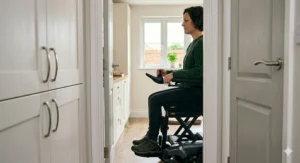
The PowerStroll represents a different approach entirely — rather than a complete wheelchair, it’s a powered conversion kit that transforms a manual wheelchair into a lightweight electric chair. This modular concept appeals to users who already own a well-fitted manual wheelchair and want occasional powered assistance without the expense and storage requirements of a dedicated powerchair.
The dual-wheel design attaches to most manual wheelchairs, adding powered propulsion whilst maintaining the chair’s original compact dimensions and portability. The reverse function distinguishes PowerStroll from simpler power attachments, allowing proper backwards manoeuvring rather than forcing awkward forward-and-turn sequences. For British homes where hallways barely accommodate a wheelchair at all, this reversibility proves genuinely useful.
Battery life and motor power vary based on the manual wheelchair’s weight and your body weight, but Drive DeVilbiss literature suggests 6-8km range under typical conditions. That’s adequate for visiting the local shops or a gentle park stroll, though insufficient for full-day excursions. The unit detaches easily, returning your manual wheelchair to standard configuration when you need maximum portability or someone else will be pushing.
Customer Feedback: UK users appreciate the modularity — several Amazon reviews mention using PowerStroll for specific situations (shopping trips, visiting friends) whilst relying on manual propulsion at home to maintain upper body strength. The reverse function receives consistent praise. However, some note the added weight (the PowerStroll itself weighs roughly 15kg) makes the manual wheelchair more difficult to push when the power is off, creating dependency on battery power once attached.
Pros:
✅ Converts existing manual wheelchair rather than requiring complete replacement
✅ Reverse function rare in power attachments, genuinely useful for British homes
✅ Detachable design maintains manual wheelchair’s original portability
Cons:
❌ Limited range (6-8km) restricts use to local journeys only
❌ Added weight makes manual pushing more difficult when powered assistance unavailable
Expert Verdict: PowerStroll fills a genuine niche for users wanting occasional electric assistance without committing to a full powerchair. However, it’s not a standing wheelchair solution and provides no pressure relief benefits. Consider it if you’re already established with a well-fitted manual chair and need supplemental power for specific activities. Less suitable if pressure sore prevention motivates your search, as extended sitting in the original manual seat offers no advantage over standard propulsion. Price range: around £600-£750 depending on retailer.
7. Harvest Reflect Pressure Relief Cushion (Essential Accessory – Amazon.co.uk)
Since true standing wheelchairs remain largely inaccessible through Amazon.co.uk, managing pressure becomes crucial for budget buyers using standard electric chairs. The Harvest Reflect represents one of the better pressure cushions available without prescription, using castellated gel cells that create microclimate cooling whilst redistributing weight intelligently.
Unlike basic foam cushions that merely compress, the Reflect’s gel cells respond independently to movement, continuously adjusting pressure distribution as you shift position. The breathable construction addresses the British tendency towards damp conditions — gel cushions combat moisture buildup far more effectively than enclosed foam designs that turn clammy within hours. The weight limit reaches 127kg, accommodating most users, though bariatric individuals require specialised higher-capacity alternatives.
For users unable to access standing wheelchairs but concerned about pressure sore development, a quality cushion like the Reflect transforms a basic electric wheelchair from health hazard to manageable solution. Pressure sore prevention requires more than just cushioning — it demands regular position changes, skin inspection, and proper seating posture — but starting with proper pressure management creates the foundation for everything else.
Customer Feedback: Amazon.co.uk reviews consistently praise the Reflect for preventing “hot spots” during extended sitting. One Cardiff user mentioned the cushion “feels cool even after three hours watching cricket” — the microclimate properties genuinely function as advertised. Several buyers note marked improvement in existing Grade 1 pressure sores, though medical advice emphasises cushions complement rather than replace proper wound care. Easy cleaning receives appreciation given British weather’s tendency to spray wheelchair users with gutter water during rainstorms.
Pros:
✅ Castellated gel cells provide genuine pressure redistribution, not just cushioning
✅ Breathable construction addresses British damp and moisture challenges
✅ Available immediately through Amazon.co.uk without medical prescription
Cons:
❌ 127kg weight limit excludes bariatric users requiring higher capacity
❌ Cushions alone cannot replicate standing wheelchair’s comprehensive pressure relief
Expert Verdict: If budget constraints prevent accessing a standing powerchair, combining a mid-range electric wheelchair with the Harvest Reflect cushion delivers more pressure protection than a basic chair alone. However, this remains a compromise solution — standing wheelchairs provide pressure relief through full position changes that no cushion can duplicate. View the Reflect as essential if you’re sitting more than two hours daily in any wheelchair, standing or otherwise. Price range: around £140-£160 on Amazon.co.uk.
Understanding Standing Wheelchair Health Benefits: The Clinical Evidence
The health benefits of standing wheelchairs extend far beyond the ability to reach high shelves or maintain eye-level conversations, though these social advantages matter tremendously. Medical research and clinical experience demonstrate that regular standing provides measurable improvements across multiple physiological systems, backed by organisations like RESNA (Rehabilitation Engineering and Assistive Technology Society of North America) and documented in British healthcare literature.
Pressure Sore Prevention: The Primary Driver
Pressure ulcers develop when sustained compression restricts blood flow to skin and underlying tissues, starving cells of oxygen and nutrients. In the UK, the NHS treats approximately 500,000 pressure ulcers annually, with severe cases requiring surgical intervention and extended hospitalisation. The financial cost exceeds £3.8 million daily to the NHS, but the human cost — pain, infection risk, loss of independence — defies monetary calculation.
Standing wheelchairs address pressure ulcers through mechanical redistribution rather than merely cushioning. When you transition from seated to standing, pressure shifts from ischial tuberosities (sitting bones), sacrum, and coccyx to the feet, legs, and full skeletal structure. This complete offloading allows blood to perfuse previously compressed tissues, delivering oxygen and removing metabolic waste that accumulates during sitting. Research published in rehabilitation medicine journals demonstrates that standing for just 30 minutes twice daily can reduce pressure ulcer incidence by up to 40% in high-risk populations compared to sitting-only regimens.
The British climate adds particular urgency to pressure management. Damp, cool conditions promote skin maceration — the weakening of skin through excessive moisture — which dramatically increases pressure sore susceptibility. Standing provides opportunity for airflow around previously compressed areas, accelerating moisture evaporation and reducing maceration risk. Many UK wheelchair services now recognise standing function as clinically justifiable specifically for pressure management, though funding approval remains inconsistent across regions.
Cardiovascular and Circulatory Improvements
Prolonged sitting diminishes cardiovascular efficiency through multiple mechanisms. Blood pools in lower extremities rather than returning efficiently to the heart, reducing cardiac output and promoting clot formation. Standing activates the skeletal muscle pump — particularly calf muscles — that propels venous blood upward against gravity. This muscle pump mechanism, even in users with limited or absent leg sensation, generates mechanical compression that assists circulation.
Studies tracking cardiovascular markers in standing wheelchair users document reduced resting heart rate, improved blood pressure regulation, and decreased incidence of orthostatic hypotension (dizziness upon position change) compared to seated-only control groups. For British wheelchair users facing our sedentary indoor winters, maintaining cardiovascular conditioning through regular standing combats the deconditioning that accelerates during cold, dark months when outdoor activity diminishes.
Deep vein thrombosis (DVT) presents particular concern for wheelchair users, as immobility represents the primary risk factor for dangerous clot formation. Standing wheelchairs don’t eliminate DVT risk entirely — compression stockings, hydration, and medical monitoring remain essential — but the enhanced circulation from regular standing reduces one significant contributor to clot development.
Digestive and Bowel Function
The physical positioning of seated posture compresses abdominal organs, particularly the intestines, impeding peristalsis (the wave-like contractions moving food through the digestive tract). Wheelchair users commonly report constipation, bloating, and uncomfortable gas buildup, complications exacerbated by reduced physical activity and medication side effects common in mobility-impaired populations.
Standing alleviates abdominal compression, allowing organs to resume more natural positioning and improving peristaltic efficiency. Gravity assists downward movement of intestinal contents, complementing the body’s muscular contractions. British wheelchair users report that incorporating regular standing into daily routines often improves bowel regularity, reducing reliance on laxatives and stool softeners. One occupational therapist working with NHS wheelchair services in Manchester noted that clients frequently cite improved digestive comfort as their most appreciated standing wheelchair benefit — even above mobility improvements.
Respiratory Function and Lung Capacity
Seated positioning limits diaphragm excursion (the downward movement during inhalation) and restricts chest wall expansion, reducing lung capacity by 20-30% compared to standing or lying flat. For wheelchair users with respiratory compromise — whether from spinal cord injury, neuromuscular conditions, or simply deconditioning — this capacity reduction compounds existing limitations.
Standing expands the thoracic cavity, permitting fuller diaphragm descent and increasing tidal volume (the amount of air inhaled with each breath). Enhanced lung expansion improves oxygen saturation, reduces respiratory infection risk through better mucus clearance, and decreases breathing effort. During British cold and flu season, when respiratory infections plague everyone, wheelchair users face elevated risk due to reduced cough effectiveness and mucus pooling. The improved respiratory mechanics from regular standing provides measurable protective benefit, documented in pulmonary function tests showing improved forced vital capacity and forced expiratory volume in standing wheelchair users.
Bone Density and Muscle Tone
Weight-bearing exercise stimulates bone formation through mechanical stress signals that trigger osteoblast (bone-building cell) activity. Wheelchair users lose bone density at alarming rates — studies document 2-4% annual bone loss in the first years following spinal cord injury, with continued though slower decline thereafter. This osteoporosis dramatically increases fracture risk from minor bumps or transfers, with hip and femur fractures carrying particular danger of complications.
Standing wheelchairs provide weight-bearing stimulus, though less intensive than walking. Research demonstrates that regular standing (minimum 30 minutes daily, preferably 60-90 minutes split into sessions) slows bone loss and may even promote modest density increases in some users. British healthcare providers increasingly prescribe standing protocols specifically for bone health, particularly in paediatric populations where skeletal development remains active and interventions yield most benefit.
Muscle tone benefits similarly, as standing position requires postural muscles to engage for stability even when the standing wheelchair provides structural support. Reduced spasticity represents another documented benefit — many users report decreased muscle rigidity and improved comfort from regular standing, likely related to sustained muscle lengthening that standing position provides.
Psychological and Social Impact
The psychological standing wheelchair benefits often prove most immediately transformative for users. Eye-level interaction fundamentally alters social dynamics — conversations feel more natural, less dominated by others literally looking down upon you. In British pub culture, standing at the bar rather than remaining seated in the corner transforms social participation. At family gatherings, standing to greet relatives or participate in kitchen conversation restores normal interaction patterns that seated positioning disrupts.
Research documents improved self-esteem, reduced depression symptoms, and enhanced quality of life scores among standing wheelchair users compared to seated-only control groups. The ability to vary position throughout the day — a privilege non-disabled individuals take entirely for granted — reduces the psychological burden of forced immobility. Several British users describe standing function as restoring a sense of “being human” that full-time sitting diminishes, a poignant reminder that disability accommodation extends beyond mere physical functionality into existential dignity.
NHS Funding and Personal Wheelchair Budgets: Your Path to Affording Standing Powerchairs
The stark reality confronting UK buyers is this: genuine standing electric wheelchairs cost £19,995-£31,800, placing them beyond reach for most families without assistance. However, the NHS personal wheelchair budget system, established as a legal right since December 2019, potentially bridges this affordability gap for users who meet eligibility criteria.
Understanding Personal Wheelchair Budgets
A personal wheelchair budget gives you the monetary value that your local NHS wheelchair service would spend meeting your assessed postural and mobility needs, allowing you to source equipment through alternative suppliers or contribute your own funds to upgrade beyond standard NHS provision. Critically, eligibility depends on clinical need, not income — this isn’t a means-tested benefit but a healthcare funding mechanism.
The budget amount reflects what satisfying your assessed clinical needs would cost through the standard NHS commissioned service. For complex needs requiring powered seating, tilt, recline, and standing functions, this could range from £10,000 to £25,000 depending on your local ICB (Integrated Care Board) funding levels. You can then add your own money — from savings, charitable grants, or family contributions — to access higher-specification equipment than the NHS would provide alone.
Three management options exist for personal wheelchair budgets:
- Notional budget — NHS holds and manages funds, but you choose equipment from approved suppliers
- Third party budget — Organisation manages funds on your behalf whilst you direct choices
- Direct payment — Money paid to you (or your representative) for direct equipment purchase
Most standing wheelchair purchases use notional or third-party budgets, as the direct payment option requires robust financial management capabilities and may complicate warranty and repair arrangements.
Qualifying for Personal Wheelchair Budget Support
You’re entitled to personal wheelchair budget assessment if you:
- Are registered with a GP in England (devolved nations operate separate systems)
- Meet your local wheelchair service’s eligibility criteria for NHS wheelchair provision
- Have postural and mobility needs impacting wider health and social care
- Require new wheelchair provision due to changing needs or equipment condition
The assessment process evaluates both your clinical requirements and your ability to safely use standing function. Wheelchair services will consider your home environment (can you store and charge a heavy powerchair?), cognitive abilities (can you operate standing controls safely?), and medical stability (will standing cause orthostatic problems or other complications?).
Standing function specifically qualifies as clinically justified when prescribed for:
- Pressure ulcer prevention in high-risk individuals
- Bone density maintenance in appropriate candidates
- Bowel and bladder management through improved positioning
- Respiratory function support
- Reduced spasticity and improved muscle tone management
- Psychological wellbeing and social participation enhancement
Your prescribing therapist (typically an occupational therapist or physiotherapist) must document clinical justification for standing function in your assessment. Vague references to “quality of life” rarely suffice — specific clinical goals with measurable outcomes provide strongest support for funding approval.
Navigating the Application Process
Begin by contacting your local NHS wheelchair service (usually based at district hospitals) and requesting assessment for personal wheelchair budget. Some regions require initial standard assessment before discussing budget options, whilst others integrate budget discussion into first appointment. Persistence matters — studies show many wheelchair users don’t receive information about personal budgets unless they specifically ask, sometimes repeatedly.
Prepare for assessment by:
- Documenting current limitations and specific activities that standing function would enable
- Obtaining letters from your GP, consultants, or physiotherapist supporting clinical need for standing
- Photographing or measuring your home environment to demonstrate storage capability
- Researching specific standing wheelchair models that meet your needs to show informed decision-making
The assessment may involve multiple appointments: initial evaluation, home visit, equipment trials, and driving assessment for powered chairs. Some regions offer showroom visits to major suppliers (Permobil dealers operate in most major UK cities, providing trial opportunities). Budget approval timelines vary dramatically across England — some ICBs approve within weeks, others take months, with significant postcode lottery in both approval rates and funding levels.
Contributing Your Own Funds
If your personal wheelchair budget provides £12,000 but the Permobil M Corpus VS you need costs £26,000, you can contribute the £14,000 difference. This “top-up” arrangement represents the most common pathway to standing powerchair ownership for middle-income families who can’t afford the full cost but can manage significant contribution.
Charitable organisations sometimes provide grants toward wheelchair purchases:
- Motability (primarily for those receiving mobility benefits)
- Whizz-Kidz (for children and young adults)
- Back Up Trust (for spinal cord injury)
- Local disability charities (search your region and condition)
Some families fundraise through community appeals, though this requires considerable emotional labour and uncertain outcomes. Employer Access to Work schemes may contribute if wheelchair serves employment purposes, and some local authorities provide additional funding where wheelchair needs intersect with social care requirements.
Regional Variation and Appeals
NHS wheelchair provision varies dramatically across English ICBs, with some regions maintaining generous standing wheelchair programs whilst others restrict funding to basic manual chairs unless extreme medical need exists. This postcode lottery frustrates users and clinicians alike, though personal wheelchair budgets aim to reduce inequality by providing monetary transparency and user choice.
If your local wheelchair service denies standing wheelchair funding, you can appeal through:
- Wheelchair service internal review (request within 20 working days)
- ICB complaints procedure (if service review unsatisfactory)
- NHS England escalation (for serious procedural failures)
- Parliamentary and Health Service Ombudsman (final recourse)
Appeals succeed most often when clinical need documentation is comprehensive, specific, and linked to measurable outcomes. “Patient wants to stand” rarely wins appeals, whilst “Patient requires pressure relief through position change to prevent Grade 3 ulcer recurrence following three previous hospitalisations totalling 47 days at £3,200 per episode” demonstrates both clinical and economic justification.

Choosing Between Premium Standing Wheelchairs and Budget Alternatives
For most British wheelchair users reading this article, the central question isn’t “which standing wheelchair should I buy” but rather “how do I get any of the health benefits standing provides when I can’t afford £25,000 for a Permobil?” This section addresses practical compromises when premium standing powerchairs remain financially impossible despite NHS exploration.
When to Prioritise Standing Function
Pursue true standing wheelchair funding (NHS budget, charitable grants, family fundraising) if you meet any of these criteria:
High priority for standing function:
- Current or recurrent pressure ulcers requiring hospitalisation or significant medical intervention
- Bone density decline documented by DEXA scans indicating fracture risk
- Spasticity or contractures responding poorly to standard physiotherapy and medication
- Respiratory compromise where improved lung expansion offers measurable benefit
- Young user (under 30) where lifelong mobility planning justifies upfront investment
- Employment or educational goals directly supported by standing capability
- Psychological benefits documented by mental health professionals as clinically significant
If multiple factors apply, building the clinical case for NHS funding becomes more compelling. Single factors rarely suffice unless representing extreme medical need, but combined clinical justification across several domains strengthens approval likelihood.
Lower priority for standing function:
- Mild mobility impairment where walking remains possible for short distances
- Temporary wheelchair use (under 12 months expected duration)
- Advanced age with limited life expectancy (harsh but relevant to NHS resource allocation)
- Cognitive impairment limiting safe standing wheelchair operation
- Unstable medical conditions where standing risks complications
- Home environment incompatible with standing powerchair storage or use
These factors don’t preclude standing wheelchair ownership, but suggest budget alternatives may provide better value or that timing should be reconsidered.
Maximising Pressure Relief Without Standing Function
If standing wheelchair funding proves impossible, layered pressure management strategies significantly reduce ulcer risk:
Layer 1: Premium pressure cushion (£100-£400)
Start with quality gel, air, or hybrid cushioning. The Harvest Reflect, Vicair cushions, or basic Roho air cushions deliver measurable pressure redistribution. Avoid cheap foam cushions — spending £150 on proper pressure management prevents £15,000 in ulcer treatment costs.
Layer 2: Tilt-in-space manual wheelchair (£800-£2,000)
If you can self-propel or have consistent caregiver assistance, specialist manual wheelchairs with tilt-in-space function redistribute pressure through angle changes without requiring standing. These cost fraction of powered standing chairs whilst providing meaningful pressure relief.
Layer 3: Regular position changes (free)
Set phone reminders for 15-minute shifts: lean forward, lean back, lift bottom using armrests (if able), transfer to different seat for breaks. Discipline in position changes prevents more pressure damage than expensive equipment used passively.
Layer 4: Specialised seating clinic assessment (NHS-funded)
Many NHS wheelchair services offer seating and posture clinics staffed by specialist therapists who can optimise your setup far beyond standard provision. Proper seat depth, backrest angle, footrest positioning, and lateral support dramatically affect pressure distribution.
Layer 5: Skin inspection routine (free)
Daily mirror checks of pressure-prone areas (using handheld or angled mirror to view sacrum, coccyx, ischial tuberosities) catches Grade 1 redness before progression to open ulcers. British healthcare emphasises prevention — catching problems early costs nothing but vigilance.
Combined, these layers create robust pressure management approaching (though never fully matching) standing wheelchair benefits, at total cost under £2,500 if purchasing optimal equipment privately.
Budget Electric Wheelchair Considerations
If you’re purchasing budget electric wheelchairs from Amazon.co.uk (£400-£680 range), accept these realities:
What you get: Basic powered mobility, reasonable battery range for local use, folding portability, sealed electronics surviving British weather acceptably.
What you sacrifice: Zero pressure relief functionality, minimal postural support, low power for hills, basic cushions requiring immediate replacement, limited durability expectations (3-5 years typical, versus 10+ years for medical-grade powerchairs).
Best use cases: Supplemental mobility for users who can walk short distances but need powered assistance for shopping or social outings; temporary solution whilst saving toward better equipment or awaiting NHS assessment; backup wheelchair when primary chair requires repair; users with mild positioning needs and low pressure ulcer risk.
Avoid budget wheelchairs for: All-day seating requirements, users with existing pressure ulcers or high risk factors, significant postural support needs, outdoor enthusiasts requiring robust suspension and weather resistance, anyone unable to afford the necessary cushion upgrade.
When budget electric wheelchairs represent your only option, pair them with the best pressure cushion you can afford and maintain aggressive position-change discipline. View them as mobility tools requiring supplementation rather than comprehensive solutions.
Standing Wheelchair Alternatives for Specific UK Circumstances
British living circumstances, healthcare structures, and cultural factors create unique considerations for standing wheelchair access. These practical alternatives address common UK-specific challenges.
For Users in Council or Social Housing
Many council flats and social housing properties offer limited storage space, narrow doorways (762mm standard in older builds), and no garage provision. The 200kg+ weight and 650-700mm width of standing powerchairs sometimes exceed what these environments accommodate physically.
Alternative approaches:
- Explore NHS provision of equipment stored at day centres or care facilities where you spend significant time, using basic manual wheelchair at home
- Investigate ground-floor flat transfers through occupational therapy assessment demonstrating need for adapted housing
- Consider standing frames (static devices allowing standing without mobility function) costing £2,000-£5,000, used at home whilst maintaining separate manual wheelchair for mobility
- Research community equipment services that sometimes loan standing frames for trial periods before NHS prescription
For Rural Users
Rural Scotland, Wales, Northern Ireland, and remote English regions face additional challenges: limited wheelchair service access requiring long-distance travel for assessments, fewer dealerships for equipment trials, extended repair waiting times, and terrain poorly suited to standard wheelchairs.
Alternative approaches:
- Prioritise Permobil or Quickie standing powerchairs with robust suspension and off-road capability rather than city-focused competitors
- Establish clear repair and maintenance agreements before purchase, potentially including third-party engineering support given distance from manufacturer service centres
- Consider all-terrain manual wheelchairs (e.g., Mountain Trike, TerrainHopper) with power assist devices for outdoor mobility, using standard powerchair or standing wheelchair for indoor/urban settings
- Leverage video assessment capabilities some wheelchair services now offer for initial evaluation, reserving in-person appointments for final fitting
For Working-Age Users
Employment considerations complicate standing wheelchair choices, as workplace accessibility, commuting practicality, and professional presentation influence decisions differently than for retired users.
Alternative approaches:
- Document workplace benefits of standing function (reaching files, face-to-face client interaction, conference room participation) when applying for Access to Work funding to supplement NHS provision
- Evaluate whether standing wheelchair serves work hours primarily, allowing basic manual wheelchair for home if storage/charging limitations exist
- Consider workplace-funded equipment used exclusively on-premises, with separate personal wheelchair for non-work mobility
- Investigate employer disability inclusion initiatives that sometimes provide or subsidise specialised equipment beyond Access to Work statutory minimums
For Paediatric Users
Children and young adults present unique standing wheelchair considerations: rapid growth requiring frequent equipment changes, developmental goals emphasising skill acquisition, and family dynamics affecting usage patterns.
Alternative approaches:
- Whizz-Kidz charity specifically funds paediatric mobility equipment, including standing wheelchairs for children where clinical need exists
- Children’s wheelchair services often maintain more generous standing wheelchair provision than adult services, recognising bone development and respiratory benefits carry greater lifetime value
- School-based equipment sometimes funded separately from personal wheelchairs, potentially enabling standing chair at school with basic manual chair at home
- Growing children may require standing wheelchair replacement every 2-3 years rather than typical 5-7 year adult replacement cycle — factor this ongoing cost into long-term planning
Common Mistakes When Researching Standing Wheelchairs
After reviewing hundreds of wheelchair assessments and speaking with frustrated users who made costly errors, these mistakes appear repeatedly:
Mistake 1: Assuming “Electric Wheelchair” on Amazon Equals Standing Function
Marketing images sometimes show users in partially upright positions, leading buyers to assume standard electric wheelchairs offer standing capability. They don’t. True standing wheelchairs require dedicated standing mechanisms, knee supports, and automatic wheelbase adjustment that basic electric wheelchairs completely lack. Verify specific “standing function” or “vertical positioning” in product specifications, not euphemistic descriptions like “adjustable position” that merely mean recline.
Mistake 2: Neglecting to Measure Your Home Before Powerchair Purchase
A £26,000 Permobil M Corpus VS provides zero value if it doesn’t fit through your front door, navigate your hallway corners, or turn around in your bathroom. British housing — particularly Victorian and Edwardian properties — features dimensions that predate wheelchair consideration. Measure carefully: doorway widths, tightest turning radii, floor-to-ceiling heights (for standing function clearance), garage or shed storage dimensions. Wheelchair services conduct home assessments specifically to prevent these catastrophic mismatches.
Mistake 3: Prioritising Standing Function Whilst Ignoring Seating Comfort
Standing wheelchairs spend 95% of their time in seated mode. If the seated position causes pain, creates pressure issues, or positions you poorly for activities, the standing function’s availability provides limited consolation. Many users focus entirely on standing capability during assessment, then discover the seated experience disappoints. Evaluate seated comfort, cushion quality, postural support, and daily usability with equal attention to standing features.
Mistake 4: Failing to Trial Equipment Before Major Financial Commitment
NHS assessments typically include equipment trials, but private purchasers sometimes skip this step due to inconvenience or dealer pressure. Spending £25,000 on equipment based solely on specifications and reviews is madness — you must test drive, experience standing transitions, and evaluate comfort personally. Reputable dealers accommodate trials; those refusing should trigger suspicion.
Mistake 5: Overlooking Weather Protection and Outdoor Durability
British weather punishes wheelchairs relentlessly. Standing powerchairs designed for California sunshine may arrive with inadequate weather sealing, electronics vulnerable to damp, and upholstery that mildens within months. Explicitly verify IP (Ingress Protection) ratings for electronics, ask about weather-resistant upholstery options, and investigate British user experiences with specific models rather than relying on Mediterranean or American feedback.
Mistake 6: Ignoring Repair and Maintenance Infrastructure
Premium standing wheelchairs require specialised maintenance from trained engineers. Permobil operates extensive UK service network; some competitors offer limited British support. Before purchasing any standing powerchair, confirm local engineering availability, typical repair waiting times, and whether loaner wheelchairs are provided during repairs. Being without your standing wheelchair for six weeks whilst awaiting parts from abroad transforms an expensive purchase into expensive immobility.
Mistake 7: Underestimating Total Cost of Ownership
The purchase price represents beginning, not end, of costs. Budget for:
- Annual servicing (£200-£400)
- Battery replacement every 18-24 months (£300-£800 depending on capacity)
- Tyre replacement (£150-£300 periodically)
- Cushion replacement every 2-3 years (£200-£500)
- Potential upholstery cleaning or replacement (£300-£600)
- Insurance (£150-£400 annually for private ownership)
Over ten-year ownership, maintenance costs can total £8,000-£15,000 beyond purchase price. NHS provision typically includes repair and maintenance, making personal wheelchair budget option including NHS repair support potentially more economical than private purchase even at slightly higher initial cost.

Frequently Asked Questions
❓ Can I get a standing electric wheelchair through the NHS in the UK?
❓ How much does a standing electric wheelchair cost in the UK?
❓ What are the main health benefits of standing wheelchairs for UK users?
❓ Are standing wheelchairs suitable for outdoor use in British weather?
❓ Can I use standing wheelchair function to prevent pressure sores if I already have Grade 1 or Grade 2 ulcers?
Conclusion: Making Standing Wheelchair Access Realistic for British Users
The standing electric wheelchair landscape in the UK presents stark contrasts: remarkable technology offering genuine health benefits exists, whilst remaining financially inaccessible to most who would benefit from it. Premium standing powerchairs costing £19,995-£31,800 deliver measurable improvements in pressure relief, circulation, bone density, respiratory function, and quality of life — benefits documented through decades of medical research and clinical experience.
Yet for the average British wheelchair user, accessing this technology requires navigating NHS wheelchair services, personal wheelchair budget assessments, charitable funding applications, and potentially significant family financial contribution. The postcode lottery of ICB funding levels means identical clinical needs may receive full standing wheelchair provision in one region whilst being denied in another, creating frustrating inequality.
For those unable to access standing wheelchairs through any route, combining quality pressure cushions (£100-£400), disciplined position-change routines, and if possible tilt-in-space manual wheelchairs (£800-£2,000) delivers meaningful though incomplete pressure management. Budget electric wheelchairs from Amazon.co.uk serve supplemental mobility needs but cannot substitute for medical-grade equipment when serious postural or pressure concerns exist.
The most important action you can take is contacting your local NHS wheelchair service to request assessment for personal wheelchair budget, even if you assume you won’t qualify. Many users never learn about funding options because they don’t ask — persistence in requesting assessment, thorough clinical documentation, and willingness to contribute your own funds where possible creates pathways to standing wheelchair access that initially seem impossible. British healthcare succeeds best when patients advocate firmly for their needs whilst understanding resource constraints genuinely limit availability. The balance between acceptance and advocacy determines whether your standing wheelchair remains aspiration or becomes reality.
Recommended for You
- 7 Best Electric Wheelchair Accessories UK 2026
- Electric Wheelchair Insurance UK 2026: 7 Models & Complete Coverage Guide
- How Long Do Electric Wheelchair Batteries Last? UK Guide 2026
Disclaimer: This article contains affiliate links. As an Amazon Associate, I earn from qualifying purchases. If you purchase products through these links, we may earn a small commission at no additional cost to you.
✨ Found this helpful? Share it with your mates! 💬🤗
