

In This Article
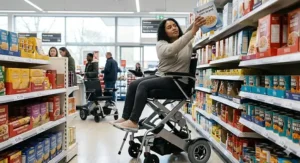
Picture yourself at a family gathering, stuck at knee height whilst everyone else towers above you during conversation. Or imagine reaching for that tin of biscuits on the top shelf at Tesco, knowing it’s just beyond your grasp. For many wheelchair users across Britain, these scenarios happen daily. An elevating seat electric wheelchair solves this rather neatly by raising you up to 30 centimetres at the touch of a button, transforming everyday frustrations into manageable tasks.
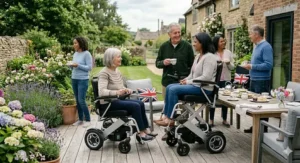
The beauty of a seat lift powerchair lies in its hydraulic or electric lifting mechanism, which raises the entire seat whilst maintaining stability and safety. Unlike standard powerchairs that keep you perpetually at sitting height, these models let you engage face-to-face with standing colleagues, reach kitchen cabinets without assistance, and transfer more easily to beds or chairs. According to Wikipedia, modern electric-powered wheelchairs evolved from George Klein’s pioneering work with the National Research Council of Canada in 1956, developed specifically to assist injured World War II veterans. The technology has matured considerably since those early models arrived in the UK market, with 2026 bringing lighter frames, more powerful motors, and safety systems that reduce speed automatically when elevated.
What most UK buyers overlook about elevating seat wheelchairs is the versatility beyond just reaching high objects. In our typically damp British climate, that extra height means better visibility when navigating crowded high streets or crossing roads in the rain. For those living in compact terraced housing or flats, the ability to reach light switches, door locks, and window handles independently matters enormously. Modern power seat elevation wheelchairs combine these benefits with foldable designs, making them practical for both indoor manoeuvrability and outdoor adventures across Britain’s varied terrain.
Quick Comparison: Top Elevating & Reclining Electric Wheelchairs
| Model | Elevation Height | Price Range (GBP) | Weight Capacity | Best For |
|---|---|---|---|---|
| Pride Jazzy Air 2 | 30cm (12″) | £2,800-£3,400 | 136kg (300lbs) | Eye-level interaction |
| DaoGeSir Compact Transit | Elevating leg rests | £450-£600 | 100kg (220lbs) | Budget-conscious buyers |
| Freedom Elite AFMR | Reclining (no elevation) | £800-£1,200 | 160kg | Comfort seekers |
| CUIOT Foldable Reclining | Automatic reclining | £1,100-£1,400 | 136kg (300lbs) | Travel & portability |
| Etech Mobility Recliner | Manual/auto recline | £600-£900 | 160kg | Value & versatility |
When you study this comparison, the Pride Jazzy Air 2 stands as the premium choice for genuine seat elevation, justifying its £2,800+ price with a full 30cm lift and safe driving at elevated height. Budget buyers should note that most models under £700 offer reclining or elevating leg rests rather than true seat lift mechanisms—a crucial distinction when you’re specifically seeking vertical reach. The DaoGeSir offers elevating leg rests for improved circulation at a fraction of the Jazzy’s cost, making it brilliant for post-surgery recovery or oedema management, though it won’t get you eye-to-eye with standing mates at the pub.
💬 Just one click — help others make better buying decisions too! 😊
Top 7 Elevating Seat Electric Wheelchairs: Expert Analysis
1. Pride Jazzy Air 2 — The Gold Standard Elevating Powerchair
The Pride Jazzy Air 2 represents the pinnacle of seat elevation wheelchair transfer technology in the UK market. This powerchair lifts you a full 30 centimetres in just 11 seconds, faster than you can say “Worcestershire sauce” three times quickly. What genuinely sets it apart from competitors is the Active-Trac suspension system and Mid-Wheel 6 drive design, which maintain stability whether you’re at standard height or fully elevated.
Here’s what the spec sheet won’t tell you: the Jazzy Air 2 drives safely at speeds up to 6.4 km/h (4 mph) whilst elevated, making it the only chair in this price bracket that lets you move about at eye level rather than forcing you to lower before manoeuvring. The 24V battery system provides roughly 25-27 kilometres of range at full weight capacity, though British rain and winter temperatures can reduce this by 10-15%—factor that in when planning your weekly Asana run or countryside ramble. The lower seat-to-floor height (two inches lower than the original Jazzy Air) means you can tuck under standard dining tables and office desks comfortably, something that matters enormously in British homes where space is at a premium.
UK buyers consistently praise the VR2 joystick controller’s precision and the LED floor lights that illuminate your path—rather handy during those dark winter afternoons when sunset arrives at 4pm. The captain’s chair reclines and features adjustable armrests that move in and out, accommodating different body types without requiring aftermarket modifications. One aspect that often surprises new users: the under-seat storage compartment is genuinely spacious enough for shopping bags from M&S or a small rucksack.
Pros:
- Full 30cm elevation with safe elevated driving
- Active-Trac suspension handles British pavements brilliantly
- Lower seat height fits under standard UK furniture
Cons:
- Premium pricing (£2,800-£3,400 range)
- Heavier than folding models, requiring vehicle lift or ramp
Expect to pay in the mid-£3,000s including VAT (or around £2,800 with VAT relief for qualifying buyers). At this price point, you’re paying for engineering that transforms daily life rather than merely assisting it—the sort of investment that justifies itself within months when measured against increased independence and reduced reliance on carers.

2. DaoGeSir Electric Wheelchair with Elevating Leg Rests — Budget-Friendly Compact Option
The DaoGeSir Compact Transit represents the accessible entry point for UK buyers seeking elevation features without the Jazzy Air’s premium price tag. This lightweight folding electric wheelchair weighs just 20 kilograms and features elevating leg rests rather than a full seat lift mechanism. The distinction matters: whilst the seat itself stays at standard height, the leg rests rise to improve circulation and reduce swelling—brilliant for managing oedema or recovering from lower limb surgery.
What works well for British users is the dual-mode functionality (electric or manual push), making it versatile for both independent use and caregiver assistance. The 360-degree joystick can be installed on either the left or right armrest, accommodating different abilities and preferences. The 500W brushless motor provides adequate power for flat terrain and gentle slopes, though you’ll struggle on Sheffield’s hills or Edinburgh’s steep residential streets. Range sits at around 20 kilometres on the 24V 6Ah lithium battery—sufficient for daily errands but not weekend expeditions.
The aerospace aluminium frame folds with a key mechanism, collapsing small enough to fit in most car boots without requiring a vehicle lift. For UK buyers in compact flats or terraced housing, this portability advantage cannot be overstated. However, the 100-kilogram weight capacity limits its suitability for larger users, and the smaller wheels (15cm front, 51cm rear) handle smooth pavements better than cobblestones or gravel paths.
Pros:
- Genuinely foldable for car boot storage
- Elevating leg rests aid circulation
- Budget-friendly pricing around £450-£600
Cons:
- No true seat elevation (only leg rests)
- Limited to 100kg weight capacity
- Smaller wheels struggle on rough terrain
Priced in the £450-£600 range on Amazon.co.uk, the DaoGeSir delivers exceptional value for buyers specifically needing leg elevation rather than full seat lift. Perfect for post-operative recovery or managing chronic swelling, though those seeking eye-level interaction should look toward the Pride Jazzy Air 2 instead.
3. Freedom Elite AFMR Wide-Seat Powerchair — Spacious Reclining Comfort
The Freedom Elite AFMR prioritises comfort over elevation, offering a generous 52-centimetre wide seat with manual reclining functionality. Whilst it doesn’t provide powered seat elevation, the reclining backrest (up to 30 degrees) allows users to adjust positioning throughout the day—rather important during extended outings or when managing pressure relief needs.
British buyers appreciate the extra-wide seating, which accommodates larger body types comfortably without the pinched feeling common in standard 46cm seats. The easy folding mechanism collapses the chair quickly for transport, though at its full weight it requires two people or a vehicle lift for car loading. What distinguishes this model in the UK market is the build quality from aluminium 6061—aerospace-grade material that balances durability with reasonable weight.
The dual motors handle British weather conditions admirably, with puncture-proof tyres that cope with wet pavements and the occasional muddy footpath. Range varies between 20-25 kilometres depending on terrain and user weight, sufficient for most urban journeys but requiring overnight charging for daily use. UK reviewers note the responsive joystick controls and smooth acceleration, making it suitable for nervous first-time powerchair users.
Pros:
- Extra-wide 52cm seat accommodates larger users
- Aerospace-grade aluminium frame
- Reclining function aids pressure relief
Cons:
- No seat elevation feature
- Requires assistance or lift for car loading
- Heavier than ultra-lightweight models
Available in the £800-£1,200 range, the Freedom Elite AFMR represents solid value for buyers prioritising comfort and stability over vertical reach. Those specifically needing seat lift powerchair functionality should explore dedicated elevating models, but for spacious, reclining comfort on British roads, this delivers admirably.
4. CUIOT Foldable Electric Wheelchair with Automatic Reclining — Travel-Ready Versatility
The CUIOT Foldable brings automatic reclining to the mid-price bracket, featuring motorised backrest adjustment at the touch of a button alongside elevating footrests. The 2×250W brushless motors and 20Ah lithium battery combination provides robust performance for British conditions, tackling moderate inclines and extended journeys without the range anxiety common in budget models.
What makes this particularly suitable for UK users is the all-terrain capability via 41cm rear tyres and 25cm front wheels—substantially larger than budget models, handling cobblestones, gravel paths, and uneven pavements with confidence. The waterproof intelligent joystick continues functioning in drizzle (rather important in Britain, where “partly cloudy” often means “intermittent rain”). The automatic reclining backrest adjusts from upright to relaxed positions without manual intervention, brilliant for managing fatigue during longer outings.
The foldable design collapses for car boot storage, though at its full loaded weight, lifting assistance or a boot hoist proves helpful. UK buyers report the seat belt and anti-tip wheels inspire confidence when navigating crowded high streets or crossing cambered pavements. One practical advantage: the 18-inch seat width suits average to larger builds without feeling cramped, whilst remaining narrow enough to navigate standard doorways in older British properties.
Pros:
- Automatic reclining reduces manual effort
- All-terrain wheels handle British roads
- Waterproof controls survive drizzle
Cons:
- No true seat elevation (footrests only)
- Heavier than advertised for car loading
- Higher price than basic folding models
Expect pricing around £1,100-£1,400 on Amazon.co.uk, positioning it between budget folders and premium elevating models. The CUIOT represents a sensible compromise for buyers wanting advanced features (automatic recline, all-terrain capability) without the £3,000+ investment of the Jazzy Air 2.
5. Etech Mobility Reclining Electric Wheelchair — Value-Conscious Comfort
The Etech Mobility reclining range (available in manual and automatic recline options) targets UK buyers seeking comfort features at accessible prices. The manual recline version requires physical adjustment of the backrest angle, whilst the automatic variant provides push-button control—both offering up to 30 degrees of recline for pressure relief and comfort during extended use.
British buyers appreciate the thickened sponge cushion seat that provides genuine all-day comfort rather than the thin padding found on bargain models. The brushless sine-wave motor technology delivers smoother acceleration and quieter operation than older brush motors—rather important when navigating quiet residential areas or using lifts in blocks of flats. The 12.5-inch rear wheels and puncture-proof rubber tyres handle British pavements admirably, though muddy countryside paths prove challenging.
What often surprises Etech users is the build quality at this price point. The dual battery slot option allows extended range (double capacity with two batteries), transforming a standard 20-25 kilometre range into 40-50 kilometres—sufficient for day trips to the countryside or extended shopping expeditions without range anxiety. UK delivery arrives fast and free to mainland addresses, with VAT relief available for qualifying buyers, bringing the effective price down by 20%.
Pros:
- Thickened cushions provide genuine comfort
- Dual battery option doubles range
- Free UK mainland delivery
Cons:
- Reclining only (no seat elevation)
- Manual recline requires physical effort
- Standard features on entry models
Priced around £600-£900 depending on configuration, Etech Mobility delivers remarkable value for UK buyers wanting reclining comfort without the powered seat raise wheelchair premium. Those specifically needing vertical reach should look elsewhere, but for comfortable, reliable daily mobility, this hits the sweet spot between affordability and capability.

6. Rubicon DX11 Reclining Foldable Electric Wheelchair — Long-Range Adventure
The Rubicon DX11 brings impressive range to the reclining wheelchair category, with dual 12Ah lithium batteries providing up to 40 kilometres of travel—amongst the longest-range options available on Amazon.co.uk. The 600W motor (dual 300W configuration) delivers robust hill-climbing ability, tackling British inclines that leave budget models wheezing halfway up.
What distinguishes the Rubicon in UK conditions is the airline-approved battery design, making it suitable for travellers who frequently fly within Europe or beyond. The foldable frame collapses for transport, though the full-fat specification means it’s heavier than ultra-lightweight folders—expect to need boot space equivalent to several large suitcases. British buyers report the reclining mechanism operates smoothly even after months of damp weather exposure, a testament to build quality that holds up in our perpetually moist climate.
The 18-inch seat width accommodates average builds comfortably, with flip-back armrests easing transfers to beds, chairs, or vehicles. UK reviews consistently praise the suspension system’s ability to smooth out British pavement imperfections—those delightful potholes that multiply after each winter’s freeze-thaw cycle. One practical consideration: the extended range means you can venture beyond urban centres without obsessing over battery percentage, opening up countryside walks and coastal paths that shorter-range models make impractical.
Pros:
- Exceptional 40km range with dual batteries
- Airline-approved for European travel
- Strong 600W motors handle hills confidently
Cons:
- Reclining only (no seat elevation)
- Heavier than basic folding models
- Higher price reflects premium specifications
Available in the £1,200-£1,600 range, the Rubicon DX11 targets buyers prioritising range and power over compact weight. For adventurous UK users who explore beyond their immediate neighbourhood, the extended battery life justifies the premium over budget models that tether you to a 20-kilometre radius.
7. KWK D09 Heavy-Duty Folding Electric Wheelchair — Plus-Size Reliability
The KWK D09 addresses a gap in the UK market: a genuinely heavy-duty folding electric wheelchair that doesn’t cost £4,000+. With a weight capacity exceeding 180 kilograms (around 28 stone), this model accommodates larger users whilst maintaining a foldable design for car transport. The robust aluminium frame doesn’t sacrifice portability for strength—it achieves both through intelligent engineering.
British plus-size wheelchair users consistently recommend the KWK D09 as the first proper folding powerchair that doesn’t feel like a compromise. The 52-centimetre seat width provides genuine breathing room, avoiding the squeezed sensation common in standard 46cm seats. What the spec sheet doesn’t mention: the armrest washers can be adjusted to add an extra 5 centimetres of width if needed, accommodating individual body shapes without requiring custom modifications.
One honest caveat from UK users: on cambered pavements (where the surface slopes toward the road), the KWK can drift slightly toward the kerb—a quirk of its weight distribution rather than a design flaw. This matters on British residential streets where uneven pavements are the norm rather than the exception. Despite this limitation, the overall value proposition remains exceptional for buyers who’ve struggled to find heavy-duty powerchairs under £2,000 that actually fold for transport.
Pros:
- Genuine heavy-duty capacity (180kg+)
- Foldable despite robust construction
- Adjustable armrests accommodate individual needs
Cons:
- No reclining or elevation features
- Can drift on cambered pavements
- Heavier than standard folders when loading
Pricing sits around £1,800-£2,200 depending on retailer and VAT relief eligibility. For UK buyers who’ve been told they’re “too heavy” for folding powerchairs, or who’ve been quoted £4,000+ for custom solutions, the KWK D09 delivers genuine independence at an accessible price point. Sheffield Mobility often offers competitive pricing for UK customers, with local service support rather than import-only availability.
✨ Don’t Miss These Exclusive Deals!
🔍 Take your mobility independence to the next level with these carefully selected products. Click on any highlighted item to check current pricing and availability on Amazon.co.uk. These picks will help you find exactly what you need!
Real-World Usage Guide: Maximising Your Elevating Seat Wheelchair in British Conditions
Getting the most from a seat elevation wheelchair transfer system requires understanding how hydraulic and electric lift mechanisms behave in real-world UK conditions. Within your first week of ownership, test the elevation function daily whilst stationary—this builds muscle memory for the control sequence and helps you gauge your chair’s stability at different heights. Most elevating mechanisms reduce driving speed automatically when raised (typically to 3-4 km/h), a safety feature that prevents tipping but feels restrictive initially.
British weather demands specific care routines. After riding through rain (which happens roughly 156 days per year across the UK), wipe down the joystick controls and any exposed electrical connections with a dry cloth. The waterproof rating on most modern powerchairs handles drizzle admirably, but sitting water can seep into connection points over time. Store your chair indoors when possible—British garages and sheds often have condensation issues that accelerate corrosion on aluminium frames and electrical components. If indoor storage isn’t feasible, invest in a breathable waterproof cover rather than plastic sheeting, which traps moisture and creates a greenhouse effect.
For British homes with compact doorways and narrow hallways, practice elevation whilst stationary in wide-open spaces before attempting it in tight quarters. The physics of a raised centre of gravity mean your chair becomes more sensitive to slight steering inputs—perfectly manageable with practice, but potentially alarming during your first attempt to navigate a Victorian terrace’s narrow passage whilst elevated. Most UK users report they rarely elevate whilst moving indoors, instead using the lift function at destination points (kitchen counters, bathroom sinks, light switches) then lowering before driving to the next location.
Case Study: Three UK Users, Three Different Elevating Needs
Margaret, 68, Norwich: Margaret lives alone in a semi-detached house and required an elevating seat primarily for kitchen independence. She chose the Pride Jazzy Air 2 despite its premium pricing because reaching upper cabinets, using the microwave, and preparing meals at counter height restored her sense of self-sufficiency. The investment (around £2,900 with VAT relief) proved transformative—six months in, she values the eye-level social interaction at her book club more than the practical kitchen benefits she originally sought.
David, 42, Sheffield: A photographer needing a powerchair for outdoor assignments, David selected the CUIOT Foldable for its all-terrain wheels and automatic reclining. Whilst it lacks true seat elevation, the elevating footrests reduce leg fatigue during extended shoots. The waterproof controls survive Sheffield’s notorious drizzle, and the foldable design fits his estate car boot. At £1,200, it balanced capabilities with budget constraints, though he acknowledges a true elevating seat would help when photographing from higher vantage points.
Sunita, 55, Croydon: Managing multiple sclerosis whilst working full-time in an office environment, Sunita required a powerchair that handled both commuting and workplace tasks. The Rubicon DX11’s extended range (40km) covers her daily round trip with charge to spare, whilst the reclining function manages pressure relief during her eight-hour office day. She invested £1,400 but notes a true seat lift powerchair would improve workplace interactions—something she’s considering for her next upgrade in two years.
These three profiles illustrate the spectrum of UK elevating wheelchair needs: Margaret prioritises vertical reach above all else, David balances terrain capability with mild elevation features, and Sunita focuses on range and comfort whilst recognising seat elevation’s workplace benefits. Your perfect match depends on honest assessment of which scenarios occur most frequently in your daily routine.
How to Choose an Elevating Seat Electric Wheelchair in the UK
Start with weight capacity—not merely your current weight, but a figure 20-30% higher to accommodate safety margins, additional equipment, and shopping bags. UK regulations classify powerchairs as Class 2 invalid carriages if they remain under 113.4 kilograms unladen weight and 6.4 km/h maximum speed. Exceeding these limits triggers Class 3 requirements (lights, indicators, horn) or “not in class” status that restricts legal usage. Most quality electric wheelchair with rising seat models comply with Class 2 standards whilst offering 100-136 kilogram user capacity.
Elevation height matters less than you might assume. A 20-centimetre lift places you at standard standing person’s chest height—insufficient for eye-to-eye conversation but adequate for most kitchen tasks and transfers. A full 30-centimetre elevation (like the Jazzy Air 2) brings you genuinely eye-level with standing adults, transforming social interactions. Before committing to premium pricing for maximum height, consider which specific tasks require elevation in your daily routine—you may discover that 20cm suffices for 90% of scenarios.
Battery range requires UK-specific calculation. Manufacturers quote ranges based on ideal conditions: smooth terrain, moderate temperatures, minimal stops and starts. British reality includes rough pavements, wet weather (which increases rolling resistance), hilly terrain in many cities, and winter temperatures that reduce lithium battery efficiency by 10-20%. Take the manufacturer’s claimed range and subtract 25% to estimate realistic British performance. If that adjusted figure still covers your daily journeys with 30% reserve, you’ve sized correctly.
Transport compatibility determines whether your chair suits your lifestyle. A genuinely foldable model (DaoGeSir, CUIOT, Rubicon) fits car boots without vehicle modification, enabling spontaneous trips and outings. Non-folding models (Pride Jazzy Air 2, Freedom Elite AFMR) require wheelchair hoists or adapted vehicles—not deal-breakers, but significant ongoing costs and constraints. UK buyers in cities with excellent public transport accessibility may prioritise seat elevation features over foldability, whilst rural users without adapted vehicles need folding capability regardless of other compromises.
Common Mistakes When Buying Elevating Seat Wheelchairs in the UK
The most expensive error UK buyers make is conflating “elevating leg rests” with “elevating seat” functionality. Marketing materials often blur this distinction deliberately, knowing that many buyers skim specifications rather than reading carefully. Elevating leg rests raise your feet and lower legs (brilliant for circulation and swelling reduction) but don’t lift your torso—you remain at standard sitting height. A true power seat elevation wheelchair lifts the entire seat assembly, raising your body vertically. Before purchasing, confirm explicitly whether the elevation applies to the seat or merely the leg rests.
Underestimating British weather’s impact on powerchair longevity proves costly over time. Budget models often feature basic water resistance rather than genuine waterproofing, with exposed electrical connections that corrode after months of drizzle exposure. The upfront savings (£300-400 difference) evaporate when you’re replacing corroded joystick controls or motor connections after one damp British winter. Prioritise models with waterproof joystick ratings (IP54 minimum) and sealed motor compartments if you plan outdoor use year-round.
Ignoring VAT relief eligibility wastes 20% of your budget unnecessarily. UK buyers with long-term conditions (12+ months duration) affecting mobility qualify for VAT exemption on mobility equipment, reducing a £3,000 powerchair to £2,500 instantly. The declaration process requires no medical evidence—merely signing a form confirming your condition meets HMRC criteria. Arthritis, MS, stroke recovery, chronic pain conditions, and most long-term mobility impairments qualify. Always ask retailers about VAT relief before purchasing; reputable mobility specialists handle this routinely, whilst some Amazon.co.uk marketplace sellers may not be familiar with the process.
Overlooking post-Brexit import considerations catches buyers out when purchasing directly from EU manufacturers. Some elevating powerchairs showing “available on Amazon.co.uk” actually ship from EU warehouses, potentially incurring customs charges, extended delivery times, and warranty complications. UK buyers have stronger consumer protection for items dispatched from British warehouses, with easier returns under the Consumer Rights Act 2015. Check the dispatch location before purchasing—”dispatched by Amazon.co.uk” differs significantly from “dispatched by [EU seller]” in terms of delivery speed and post-sale support.
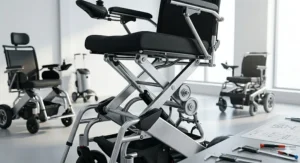
Elevating Seat Wheelchairs vs Standard Powerchairs: The Practical Difference
Beyond the obvious vertical reach advantage, powered seat raise wheelchair models alter your relationship with the built environment in subtle but profound ways. Standard powerchairs position you at roughly 90-100 centimetres eye height—perfect for navigating pavements but awkward for most human-scaled interactions. Automatic teller machines, shop counters, reception desks, and public transport ticket machines all assume standing user height. A 30-centimetre seat elevation brings these everyday interfaces within comfortable reach without requiring assistance.
The psychological impact deserves equal weight alongside practical benefits. Perpetual upward conversation—always looking up at standing speakers—creates subtle social dynamics that reinforce dependency perceptions. Eye-level interaction (enabled by seat elevation) shifts these dynamics measurably, particularly in workplace environments where authority and competence correlate unconsciously with height. UK users report that colleagues address them directly more often when elevated, rather than directing questions to accompanying carers—a small shift with significant dignity implications.
Maintenance and running costs diverge substantially between standard and elevating models. The hydraulic or electric lift mechanism adds mechanical complexity that requires periodic servicing beyond basic powerchair maintenance. UK buyers should budget £150-250 annually for preventive maintenance from qualified technicians rather than attempting DIY servicing. The elevation system’s additional weight also increases tyre wear and battery consumption by approximately 15-20%, translating to more frequent tyre replacements and slightly reduced range compared to equivalent non-elevating models.
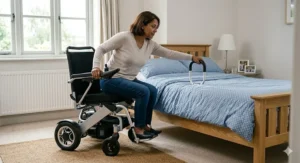
Transfer ease varies dramatically between individuals. Some users find the elevated position simplifies bed and chair transfers by reducing the height differential, whilst others discover the raised seat creates awkward angles for their specific mobility limitations. Before committing to a seat lift powerchair purchase, test the elevation function during transfers if possible—many UK mobility retailers offer demonstration models in their showrooms specifically for this assessment.
Features That Actually Matter (And Those That Don’t)
LED floor lights sound impressive in marketing materials but provide limited practical benefit in British conditions. Our urban areas generally feature adequate street lighting, whilst countryside paths dark enough to genuinely need illumination also tend to be too rough for powerchair navigation regardless of lighting. The LED lights consume battery power that could otherwise extend your range by 2-3 kilometres daily. Unless you frequently navigate dimly-lit indoor spaces (warehouses, exhibition halls), consider this a nice-to-have rather than essential.
Suspension systems matter enormously for British pavements. Our freeze-thaw cycles, heavy lorry traffic, and Victorian-era infrastructure create pavement surfaces that would horrify German or Dutch visitors. Active-Trac suspension (as found on the Pride Jazzy Air 2) and equivalent systems absorb impacts that would otherwise jar your spine on every pothole and uneven slab. Budget models without suspension transmit vibrations directly to the seat, transforming longer journeys into endurance tests. This represents one area where premium pricing delivers tangible daily benefits rather than merely prestige.
Joystick placement flexibility (left or right armrest installation) provides genuine value for users with varying abilities or progressive conditions. What works today may not suit you in two years if your dominant side’s capability changes. Chairs with reversible joystick mounting future-proof your investment, whilst models with fixed left-side-only controls may require expensive aftermarket modifications down the line. UK buyers planning long-term ownership (5+ years) should prioritise this flexibility.
Seat width adjustability through armrest washers matters more than most buyers realise initially. British body diversity means a 46-centimetre seat fits some users perfectly whilst feeling restrictive for others. Models allowing 5-centimetre width adjustment via simple washer additions (like the KWK D09) accommodate weight fluctuations, seasonal clothing layers (winter coats add bulk), and individual comfort preferences without requiring custom seating. This £50 feature potentially saves £500+ in professional seating modifications later.
UK Regulations, Safety Standards & Legal Requirements for Powered Wheelchairs
British powerchair regulations derive from the Use of Invalid Carriages on Highways Regulations 1988—legislation that predates modern lithium batteries, brushless motors, and sophisticated electronics by decades. A 2026 government consultation is reviewing these outdated rules, with the Department for Transport seeking input on modernising mobility device laws, but current regulations remain in force. Class 2 invalid carriages (4 mph maximum speed, under 113.4kg unladen weight) may be used on pavements, pedestrian areas, and roads without requiring lights, insurance, or driving licences. Most elevating seat electric wheelchairs comply with Class 2 specifications deliberately to avoid additional bureaucracy.
UKCA marking replaced CE marking for Great Britain (England, Scotland, Wales) following Brexit, though both remain accepted during transition periods. Quality elevating powerchairs display UKCA or CE certification confirming compliance with medical device safety standards. Northern Ireland buyers should note that EU regulations still apply under the Protocol, meaning CE marking remains relevant for NI purchases. When buying from Amazon.co.uk marketplace sellers, verify UKCA/CE certification explicitly rather than assuming compliance—unbranded imports occasionally slip through without proper certification.
The MHRA (Medicines and Healthcare products Regulatory Agency) oversees medical device safety in Britain. Elevating wheelchairs classify as Class 1 medical devices, requiring manufacturers to self-certify safety through relevant British Standards testing. Whilst this sounds less rigorous than external certification, reputable manufacturers conduct thorough testing and maintain technical documentation proving compliance. UK buyers purchasing from established brands (Pride Mobility, Invacare, Sunrise Medical) generally receive properly certified products, whilst obscure brands on Amazon.co.uk may cut corners on certification to reduce costs.
The January 2026 DfT consultation on powered mobility device regulations may significantly alter these rules by late 2026 or 2027. Proposed changes include removing offensive “invalid carriage” terminology, increasing weight limits to 300 kilograms (benefiting heavier users), and clarifying legal status for modern devices that don’t fit 1988-era categories. UK wheelchair users can still participate in the consultation until 31 March 2026, potentially influencing regulations that will govern your mobility rights for the next decade. The disability charity Wheels for Wellbeing provides excellent guidance resources to help users understand current regulations and submit informed responses.

Long-Term Cost & Maintenance in the UK
Beyond the initial purchase price, elevating seat wheelchair transfer systems require ongoing investment that many first-time buyers underestimate. Annual servicing costs typically run £150-250 for basic models, rising to £300-400 for complex elevating mechanisms requiring hydraulic seal replacement or electric actuator maintenance. UK buyers benefit from choosing brands with established British service networks (Pride Mobility has authorised technicians nationwide) rather than import-only brands requiring specialist sourcing for replacement parts.
Battery replacement represents the single largest ongoing cost. Lithium-ion batteries degrade gradually, losing 20% capacity after roughly 500 charge cycles. For daily users, this translates to replacement every 18-24 months at £200-400 per battery set. The calculation matters: a powerchair used five days weekly requires battery replacement approximately £600 over three years, whilst weekend-only usage extends battery life to 4-5 years, halving long-term costs. When comparing models, factor battery replacement costs into total ownership calculations rather than focusing solely on upfront pricing.
Tyre wear varies dramatically based on terrain and driving style. Smooth urban pavements may deliver 2,000+ kilometres before replacement becomes necessary, whilst rough countryside paths or aggressive cornering can halve tyre life. Budget £80-150 per tyre replacement for quality options, with most powerchairs requiring new tyres every 12-18 months under typical British usage. Puncture-proof tyres (solid or foam-filled) cost more initially but eliminate the disruption and expense of flats—rather important when you’re navigating British high streets littered with broken glass and thorny vegetation.
Insurance typically runs £150-300 annually for comprehensive coverage including theft, accidental damage, and breakdown recovery. Some UK household insurance policies extend to mobility equipment, potentially saving standalone policy costs—check your existing coverage before purchasing separate mobility insurance. British buyers should verify whether policies cover elevating mechanisms specifically, as some insurers classify seat lift systems as “non-standard modifications” requiring additional premiums.
What to Expect: Real-World Performance in British Conditions
British pavements test powerchair suspension systems like nowhere else in Western Europe. Our combination of Victorian-era infrastructure, freeze-thaw damage, and heavy lorry traffic creates surfaces that vary from smooth tarmac to obstacle courses within a single street. Budget elevating wheelchairs with basic suspension transmit every bump directly to your spine, whilst premium models (Pride Jazzy Air 2, higher-end Etech models) absorb impacts that would otherwise make journeys genuinely uncomfortable. The difference becomes starkly apparent after your first hour navigating typical British town centres.
Range claims require substantial downward revision for British reality. A manufacturer’s “25-kilometre range” typically assumes smooth terrain, moderate temperatures (20°C), minimal wind, and a 70-kilogram user. Substitute rough British pavements, January temperatures (5°C), persistent headwinds, and realistic user weight (plus shopping), and that 25km shrinks to 15-18km. Always calculate based on 60-70% of advertised range when planning British journeys—running out of battery halfway home in drizzle whilst still 3 kilometres from your flat is a learning experience nobody needs twice.
British weather’s corrosive effects accelerate without proper care. Our perpetually damp climate (even “dry” days often feature 70%+ humidity) promotes rust on steel components and corrosion on electrical connections. Monthly inspection of exposed bolts, battery terminals, and motor casings catches deterioration early whilst solutions remain simple and inexpensive. British wheelchair users report that five minutes of preventive maintenance monthly saves hundreds in corrective repairs later—wiping salt residue from winter-gritted pavements off wheel hubs particularly matters for longevity.
Indoor manoeuvrability in British properties requires specific consideration. Our Victorian terraces, Edwardian semis, and compact modern flats feature narrower doorways and hallways than American or Scandinavian homes. The Department for Transport’s Inclusive Mobility guidance specifies that wheelchair users require minimum 750mm width for basic passage and 900mm for comfortable navigation. A powerchair’s turning radius matters enormously when navigating a 85-centimetre doorway or executing a 180-degree turn in a 150-centimetre hallway. Mid-wheel drive models (like the Jazzy Air 2) pivot nearly on the spot, whilst rear-wheel drive designs require wider turning circles—brilliant for outdoor stability, frustrating for indoor use in British housing stock.
Elevating Seat Powerchairs for Specific UK Audiences
Urban commuters navigating London, Manchester, Birmingham, or other British cities require different features than rural users. Congestion zones, ULEZ areas, and urban parking restrictions don’t apply to mobility aids, but the chaotic pedestrian density demands precise steering and compact dimensions. The Pride Jazzy Air 2’s tight turning radius suits busy pavements brilliantly, whilst the seat elevation helps navigate crowded tube stations where eye-level visibility prevents collisions in rush hour scrums. Urban users should prioritise models under 65 centimetres width to navigate standard shop doorways and café entrances comfortably.
Countryside dwellers across rural Britain face opposite challenges: rough terrain, limited pavement infrastructure, and longer distances between destinations. All-terrain wheels (like the CUIOT Foldable’s larger tyres) handle bridleways and uneven village paths better than standard urban wheels. Extended battery range matters enormously when the nearest shop sits 5 kilometres away, making the Rubicon DX11’s 40-kilometre capacity genuinely liberating rather than merely convenient. Rural users should also consider weather protection—British countryside receives heavier rainfall than urban areas, requiring robust waterproofing rather than basic splash resistance.
Office workers requiring workplace mobility benefit specifically from true seat elevation features. British office environments assume standing-height interactions: whiteboards, presentation screens, kitchen counters, and printer paper trays all position themselves beyond standard wheelchair reach. The Jazzy Air 2’s 30-centimetre elevation transforms these daily frustrations into manageable tasks, reducing reliance on colleagues for basic workplace functions. Office users should verify their chair fits under standard 72-centimetre desk heights when lowered—the Jazzy Air 2’s reduced seat height specifically addresses this British workplace requirement.
Retired users managing age-related mobility decline rather than specific disabilities often prioritise comfort and ease-of-use over technical specifications. The Freedom Elite AFMR’s reclining function and wide seat suit longer durations in the chair, whilst simpler controls reduce the learning curve for users less comfortable with technology. British pensioners should explore Motability scheme eligibility—this government programme provides powerchairs to qualifying recipients, potentially avoiding out-of-pocket costs entirely. VAT relief applies universally to eligible buyers regardless of age, making premium models like the Jazzy Air 2 more accessible than headline pricing suggests.
FAQ: Your Elevating Seat Electric Wheelchair Questions Answered
❓ Are elevating seat wheelchairs available on the NHS in the UK?
❓ How much does a seat lift powerchair cost in the UK with VAT relief?
❓ Can elevating wheelchairs be used on UK public transport?
❓ Do elevating seat wheelchairs work in the rain and British winter weather?
❓ Can I get an elevating wheelchair through the Motability Scheme?
Conclusion: Finding Your Perfect Elevating Seat Electric Wheelchair in 2026
The British elevating seat electric wheelchair market has matured considerably since early hydraulic models arrived two decades ago. Today’s options range from budget-friendly elevating leg rests (DaoGeSir at around £500) to premium full-elevation powerchairs (Pride Jazzy Air 2 approaching £3,400), with capable mid-range options (CUIOT, Rubicon) delivering solid performance between £1,100-£1,600. Your perfect match depends less on maximum specifications than honest assessment of which features matter daily in your specific British context.
True seat elevation (raising your entire torso 20-30 centimetres) delivers transformative benefits for workplace integration, social interaction, and household independence that justify premium pricing for users whose daily routines genuinely require vertical reach. Conversely, buyers primarily needing reclining comfort or leg elevation for circulation management should resist marketing pressure toward expensive elevation features they won’t use regularly. The DaoGeSir’s £500 elevating leg rests solve specific medical needs brilliantly without the £3,000 investment of full seat elevation systems.
British buyers enjoy substantial advantages unavailable elsewhere: VAT relief slashes prices 20% for qualifying users, Consumer Rights Act 2015 protections exceed American or Asian consumer rights, and established UK service networks from brands like Pride Mobility ensure parts availability and repair expertise locally rather than internationally. Conversely, post-Brexit import complications and UKCA certification requirements mean some European models no longer reach British shores, limiting selection compared to pre-2021 availability.
The 2026 DfT consultation on mobility device regulations promises to modernise antiquated 1988-era laws that frustrate modern wheelchair users. Whatever emerges from this review will shape British powerchair rights for the next decade, making this an opportune moment to participate in the consultation process before 31 March 2026 deadline. Your experiences with current regulations—whether liberating or limiting—deserve inclusion in the conversation shaping future policy.
Whether you’re navigating London’s congested pavements, exploring Peak District trails, or simply reclaiming kitchen independence in your Norwich semi, an appropriately chosen elevating seat wheelchair transforms mobility from assisted dependence toward genuine autonomy. The perfect chair exists somewhere between maximum capabilities and realistic needs—find that balance, and you’ve made the decision that restores independence rather than merely purchasing equipment.
Recommended for You
- 7 Best IoT Electric Wheelchair UK 2026: GPS Tracking & Smart Features
- 7 Best AI Navigation Electric Wheelchairs UK 2026
- 7 Best App Controlled Electric Wheelchair UK 2026
Disclaimer: This article contains affiliate links. As an Amazon Associate, I earn from qualifying purchases. If you purchase products through these links, we may earn a small commission at no additional cost to you.
✨ Found this helpful? Share it with your mates! 💬🤗
