
In This Article
The transition from childhood to teenage years brings enough challenges without mobility barriers adding to the mix. If you’re navigating the world of junior powerchair options in the UK, you’re probably discovering that the landscape is rather more complex than it first appears. Between NHS wheelchair services, specialist paediatric suppliers, and the emerging market of lightweight portable options, working out which route suits your family requires both patience and insider knowledge.
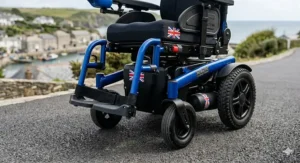
What most British families don’t realise until they’re deep in the process is that genuine junior powerchair models—purpose-built for children and young teenagers—are rarely available through typical retail channels like Amazon.co.uk. These specialist chairs, such as the Invacare Esprit Action Junior or Quantum Sparky, come through NHS provision or specialist medical equipment suppliers, often requiring occupational therapist assessment and months of waiting time. However, for older teenagers and young adults making the transition to independent mobility, lightweight electric wheelchairs available on Amazon.co.uk offer a viable alternative—particularly if you’re facing lengthy NHS waiting lists or need a secondary chair for travel and social activities. This guide cuts through the confusion, examining both specialist junior powerchair provision and practical alternatives that British families are actually using in 2026.
Quick Comparison: Junior Powerchair Solutions Available in the UK
| Solution Type | Typical Cost | Primary Route | Best For | UK Availability |
|---|---|---|---|---|
| NHS Junior Powerchair | £0 (NHS funded) | Wheelchair Services referral | Children 3-16 with clinical need | Limited by eligibility criteria |
| Specialist Paediatric Models | £2,500-£8,000+ | Private medical suppliers | Complex postural needs, growing children | Specialist suppliers only |
| Lightweight Adult Powerchairs | £350-£1,200 | Amazon.co.uk & retailers | Older teens, travel, secondary chair | Widely available |
| Personal Wheelchair Budget | NHS contribution + top-up | NHS voucher scheme | Those wanting choice beyond NHS range | Varies by ICB region |
From this comparison, the challenge becomes clear: younger children with complex needs generally require specialist assessment and NHS provision, whilst older teenagers often find themselves caught between paediatric and adult services. The lightweight electric wheelchairs now flooding the market fill a genuine gap—particularly for families in England, Scotland, and Wales facing 18-week-plus NHS waiting times. These portable models won’t replace a properly prescribed junior powerchair for daily use, but they’re transforming social inclusion for teenagers who need reliable mobility for sixth form, part-time jobs, and meeting friends without waiting months for NHS provision.
💬 Just one click — help others make better buying decisions too!😊
Top 7 Electric Wheelchair Solutions for UK Teenagers: Expert Analysis
Whilst purpose-built junior powerchairs remain the gold standard for younger children, the following lightweight electric wheelchairs available on Amazon.co.uk represent the most practical options for older teenagers and families seeking portable secondary mobility. Each has been selected based on weight, portability, UK compatibility, and suitability for teenage users making the transition to independent mobility.
1. ByteTecpeak D04 Lightweight Foldable Electric Wheelchair
The ByteTecpeak D04 consistently tops UK sales charts for good reason—at just 18.6 kg, it’s light enough for a parent to lift into a car boot without risking their back, yet robust enough to handle the daily grind of British sixth form life. The 500W motor and 10Ah lithium battery deliver around 20 km range, which comfortably covers a day’s worth of movement between lessons, the canteen, and after-school activities without the anxiety of running flat mid-afternoon.
What makes this particularly suited to teenage users is the 150 kg weight capacity paired with a compact frame that navigates standard UK doorways and corridors without the constant scraping and bumping that characterises bulkier models. The electromagnetic braking system stops immediately when you release the joystick—a safety feature that matters enormously when you’re weaving through crowds of students between lessons. UK buyers should note this arrives with a standard UK three-pin plug charger and runs on 230V without any conversion faff.
Customer feedback from British teenage users highlights the one-handed joystick control as genuinely intuitive—most report confidently navigating within the first hour. The aluminium frame holds up well to daily use, though several UK reviewers mention that the upholstery shows wear faster in our damp climate, so a waterproof seat cover is worth considering if you’re using it outdoors regularly.
✅ Airline-approved lithium battery
✅ Folds in under 10 seconds
✅ UK plug included, 230V compatible
❌ Seat fabric not particularly weather-resistant
❌ Battery life decreases noticeably in cold British winters
Price range: around £450-£550 | Typical UK delivery: 7-10 days via Amazon Prime
2. Free To Be Mobility Ultra Lightweight Powerchair
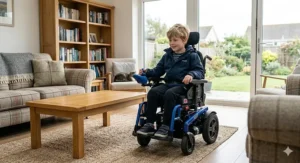
The Free To Be Mobility model deserves attention for being genuinely UK-based—this isn’t a rebadged import with questionable customer service, but a British supplier who understands that “next-day delivery” actually means something when your teenager’s mobility depends on it. At 20 kg with dual 600W motors, it offers slightly more power than the ByteTecpeak whilst remaining light enough for realistic portability.
The dual motor configuration proves its worth on hills—and let’s be honest, unless you’re living in the Fens, British towns aren’t exactly flat. Users in Bristol, Edinburgh, and Sheffield report the Free To Be handles gradients up to 8 degrees without the embarrassing loss of speed that characterises single-motor budget models. The 24 kg total weight (including battery) positions this as a middle ground between ultra-portable travel chairs and daily-use powerchairs.
What British buyers consistently praise is the after-sales support—when something goes wrong (and with electric wheelchairs, something eventually will), you’re dealing with a UK company that responds to emails rather than vanishing into the Amazon seller void. Parts are stocked in the UK rather than requiring weeks of shipping from China, which matters enormously when you’re coordinating around college timetables and work experience placements.
✅ UK-based customer service and parts
✅ Dual motors handle British hills effectively
✅ Two batteries supplied as standard
❌ Slightly heavier than ultra-compact models
❌ Higher price point than imports
Price range: £650-£800 | UK warehouse stock for rapid delivery
3. ByteTecpeak D14 Ultra-Portable Travel Chair
For families juggling multiple venues—home, college, weekend job, grandparents—the ByteTecpeak D14 at 18.5 kg represents the current sweet spot in the portability-versus-capability equation. The magnesium-aluminium alloy frame shaves weight without sacrificing structural integrity, resulting in a chair that teenage users can actually manoeuvre themselves when folded, rather than requiring constant adult assistance.
The 20 km range proves realistic in British conditions—several UK reviewers report managing a full day at college including outdoor breaks without battery anxiety, though you’ll want to charge overnight as a matter of routine. The quick-fold mechanism genuinely lives up to its claims; multiple British parents mention being able to fold and load the chair whilst simultaneously managing bags, coats, and the general chaos of teenager logistics.
Where this particularly shines for teenage users is social situations. Unlike bulkier powerchairs that announce your arrival and dominate the space, the D14’s compact footprint allows teenagers to navigate cafés, cinemas, and friends’ homes without the constant negotiation and furniture rearrangement. Several UK teenage users specifically mention this as reducing the “I’m different” feeling that comes with using mobility equipment during those already-awkward adolescent years.
✅ Lightest weight in the ByteTecpeak range
✅ Fits in compact car boots (Fiesta, Corsa-sized)
✅ Less visually imposing in social settings
❌ Smaller battery means more frequent charging
❌ Lower weight capacity (120 kg) may not suit all users
Price range: £480-£580 | Amazon Prime eligible for free next-day delivery
4. VOCIC V62 Folding Power Wheelchair
The VOCIC V62 brings American design sensibility to the UK market—which in practice means slightly more robust construction and creature comforts at the expense of weight and compactness. At 27.5 kg it’s certainly not pocket-sized, but for teenagers who prioritise comfort over ultimate portability, the wider 18.7-inch seat and enhanced cushioning make a noticeable difference during long college days.
The dual battery system delivers an impressive 20-mile (32 km) range, positioning this as one of the few Amazon options that can genuinely handle a full day’s worth of British teenage life without range anxiety. Multiple UK sixth form students report using this for their entire college day including travel to and from home via accessible bus routes. The electromagnetic braking system and anti-tip wheels provide reassurance for parents whilst the 360-degree joystick gives teenagers the independent control they’re increasingly expecting.
UK compatibility requires attention—whilst it charges via standard UK plug, some early shipments arrived with US-spec components. Recent Amazon.co.uk listings confirm 230V UK specification, but it’s worth verifying before purchase. The maintenance-free solid tyres suit British weather (no punctures in the rain), though they transmit more vibration than pneumatic alternatives on rough pavements.
✅ Extended range suits full college days
✅ Wider, more comfortable seating
✅ Solid tyres require zero maintenance
❌ Heavier than ultra-portable competitors
❌ Larger folded size challenges smaller car boots
Price range: £580-£720 | Check UK specification before purchasing
5. Rexhan Foldable Power Chair with Remote Control
The Rexhan distinguishes itself with dual control options—the standard user joystick plus an attendant remote control, making this particularly relevant for families where teenagers are still building independent mobility skills or have variable capability days. At 19 kg, it sits comfortably in the lightweight category whilst the dual 200W brushless motors provide reliable performance without the mechanical noise that characterises cheaper models.
What British families particularly appreciate is the flexibility. On confident days, teenagers operate independently via joystick. On challenging days—fatigue, poor weather, crowded environments—parents can assist via remote without the teenager needing to surrender control entirely. This psychological aspect matters enormously during the teenage years when autonomy and dignity are paramount concerns.
The 20 km battery range proves realistic in UK testing, though British reviewers consistently report that cold, wet weather reduces this by roughly 15-20%. The aluminium frame holds up well to damp British conditions, though the electromagnetic brakes benefit from occasional cleaning—salt and grit from winter roads can affect response time if left unchecked.
✅ Dual control options suit variable capability
✅ Quiet brushless motors
✅ Remote control provides safety backup
❌ Remote control can feel infantilising for some teens
❌ Slightly less common brand means parts availability uncertain
Price range: £420-£540 | Variable Amazon stock levels
6. Lightweight Carbon Fibre Electric Wheelchair (Generic/Multi-Brand)
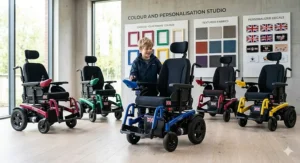
Several manufacturers now offer carbon fibre construction in the £700-£900 range, positioning this as a premium option for families prioritising ultimate portability. At typically 17-17.5 kg, these represent the lightest fully-featured powerchairs available on Amazon.co.uk, making them genuinely manageable for teenage users to load and unload independently—a significant step towards true autonomy.
The carbon fibre construction provides an intriguing mix of rigidity and flex that suits British conditions rather well. The frame absorbs pavement imperfections without the jarring vibration of pure aluminium models, whilst maintaining structural integrity under daily use. UK teenage users report fewer aches and pains during extended use compared to heavier metal-framed alternatives.
The trade-off, as you’d expect, comes in cost and availability. Carbon fibre models command premium pricing whilst stock levels on Amazon.co.uk fluctuate significantly. Additionally, the specialist construction means repair requires specific expertise—your local mobility shop likely can’t help with carbon fibre frame damage, potentially meaning extended downtime if issues arise.
✅ Lightest weight enables true teenage independence
✅ Comfortable ride quality on British pavements
✅ Premium feel appeals to image-conscious teens
❌ Significantly higher cost
❌ Limited repair network in UK
Price range: £720-£920 | Stock availability varies
7. Mobiclinic Compact Folding Powerchair
The Mobiclinic offerings on Amazon.co.uk represent European engineering meeting British requirements—CE marked (increasingly UKCA marked post-Brexit), designed for narrow European streets and doorways, and built with British weather in mind from the start rather than as an afterthought. Models typically weigh 20-24 kg with straightforward folding mechanisms that prioritise reliability over gimmickry.
What makes Mobiclinic particularly suited to British teenage users is the attention to everyday practicality. The seats are sized for actual humans rather than theoretical specifications, the control systems prove intuitive without excessive digital complexity, and the construction quality suggests these are designed for daily punishment rather than occasional use. Multiple UK college students report their Mobiclinic chairs surviving the chaos of sixth form common rooms and crowded corridors remarkably well.
The Spanish manufacturing means parts and service support within the EU and UK prove more straightforward than Asian imports, whilst pricing remains competitive with budget Chinese alternatives. UK buyers should verify the specific model includes UKCA certification and 230V UK charging—some European stock still carries CE marking which technically requires additional paperwork post-Brexit, though enforcement remains sporadic.
✅ European build quality
✅ UKCA/CE certified
✅ Practical design suits British daily use
❌ Less portable than ultra-lightweight competitors
❌ European sizing may not suit all body types
Price range: £520-£680 | Verify UK specification on purchase
Understanding NHS Junior Powerchair Provision: What British Families Actually Experience
The official line from NHS England suggests an 18-week maximum wait from referral to wheelchair handover, but British families quickly learn that policy and practice occupy different postcodes entirely. In reality, junior powerchair provision through NHS wheelchair services varies dramatically depending on which Integrated Care Board (ICB) region you’re in, with some areas managing 12-week turnarounds whilst others stretch beyond six months.
Eligibility criteria for children’s powered wheelchairs generally require demonstrating that your child cannot walk or cannot functionally self-propel a manual wheelchair over distance due to fatigue, plus evidence they can safely operate powered controls independently. For younger children (typically under 8), this safety requirement creates a catch-22—they need powered mobility to develop spatial awareness and control skills, but can’t access NHS provision until they demonstrate those exact skills.
The NHS provides two categories: Electrically Powered Indoor Chairs (EPIC) limited to 4mph for use behind your front door, and Electrically Powered Indoor/Outdoor Chairs (EPIOC) which can legally travel on pavements. However, many British families discover that features considered standard elsewhere—seat elevation for social inclusion at school, tilt-in-space for postural management—fall outside clinical eligibility criteria and require joint funding negotiations between health and education departments.
Personal Wheelchair Budgets offer an alternative route where available, providing NHS funding that families can top up to access preferred models. However, implementation varies wildly across England, Scotland, and Wales, with some regions offering genuine choice whilst others maintain highly restrictive approved lists. Northern Ireland operates under slightly different regulations through Health and Social Care trusts, adding another layer of complexity for families moving between UK nations.
Real-World Scenarios: Matching Powerchair Solutions to British Teenage Life
Scenario One: Urban College Commuter (Manchester, Age 16)
Emma attends sixth form in central Manchester, travelling via accessible bus routes and navigating crowded college buildings. She needs something light enough for her dad to fold into their Vauxhall Astra boot, reliable enough to last all day without charging, and compact enough to navigate lecture halls without constantly apologising. The ByteTecpeak D04 meets these requirements whilst remaining affordable on her family’s budget. The 20 km range covers her daily commute plus moving between lessons, whilst the quick-fold design means loading and unloading doesn’t become a theatrical production every morning and afternoon. Cost: around £500 via Amazon Prime.
Scenario Two: Rural Village Life (Scottish Borders, Age 14)
Callum lives in a village outside Galashiels with limited public transport and uneven pavements that haven’t seen resurfacing since the 1990s. His family has an NHS EPIC for indoor use, but needs a secondary chair for outdoor activities and weekend trips to town. The Free To Be Mobility dual-motor model handles the hills between home and the village centre whilst robust enough for rougher terrain. Being UK-based matters when something goes wrong—phone support and parts don’t require international shipping. The higher initial cost (£650-£800) is offset by longevity and local support. His family used a Personal Wheelchair Budget contribution to reduce out-of-pocket costs.
Scenario Three: Split-Custody Family (London/Bristol, Age 15)
Jasmine divides her time between her mum’s flat in Bristol and dad’s house in south London, requiring maximum portability. The ByteTecpeak D14 at 18.5 kg can be managed by either parent, fits in both car boots (including her dad’s Mini), and folds small enough for storage in compact urban homes. The lighter weight also means Jasmine can help with loading when her parents need assistance—a small thing that matters enormously for teenage dignity and family dynamics. At around £530, it’s affordable enough for her family to purchase privately rather than navigating NHS provision across two regions.
Common Mistakes British Families Make When Sourcing Junior Powerchairs
Mistake One: Assuming Amazon Equals Inferior Quality
The wheelchair industry’s traditional gatekeeping—specialist suppliers, medical prescriptions, professional assessments—has created an assumption that anything available through consumer retail must be inadequate. In reality, modern lightweight powerchairs sold on Amazon.co.uk often exceed the build quality of basic NHS provision whilst costing less than specialist private suppliers. The ByteTecpeak and VOCIC ranges, for instance, use the same aluminium alloys and lithium battery technology as chairs costing three times their price through traditional medical suppliers.
Mistake Two: Buying Without Verifying UK Electrical Standards
British families occasionally purchase powerchairs designed for US markets (110V) or receive European stock with EU plugs, creating immediate charging complications and potentially voiding warranties. Always verify 230V UK specification and confirm the inclusion of a proper UK three-pin plug charger. Post-Brexit, check for UKCA marking rather than just CE certification—whilst enforcement remains patchy, UKCA demonstrates UK market compliance.
Mistake Three: Overlooking Cold Weather Performance
Lithium battery performance drops significantly in British winter temperatures. Manufacturer claims of 20 km range typically assume 15-25°C operation—expect 15-20% reduction when operating in typical British autumn through spring conditions (5-10°C). This particularly affects school commutes during winter terms. Budget for more frequent charging and consider keeping batteries indoors overnight to maintain optimal performance.
Mistake Four: Ignoring NHS Voucher Scheme Eligibility
Many British families purchase powerchairs privately without realising they might qualify for NHS contributions through Personal Wheelchair Budget schemes. Even if you don’t meet full NHS eligibility criteria, some regions offer partial funding that can offset £500-£1,500 of private purchase costs. Contact your local wheelchair service before committing personal funds—the assessment process takes time, but potential savings justify the bureaucracy.
Mistake Five: Prioritising Weight Over Build Quality
The lightest chair isn’t always the right chair. Ultra-portable models achieve their weight through thinner frames and smaller components that may not withstand daily teenage use—particularly the constant folding, unfolding, bumping, and general chaos of adolescent life. For daily primary use, a slightly heavier but more robustly constructed chair often proves more economical long-term, whilst ultra-lightweight models excel as secondary travel chairs.
Junior Powerchair Safety and UK Road Regulations
Class 2 invalid carriages—the designation covering most junior powerchairs and lightweight electric wheelchairs—legally operate at a maximum 4mph (6.4 km/h) on pavements and can use roads where no pavement exists. They don’t require registration with DVLA, insurance, or road tax. However, the Department for Transport’s 2026 consultation on powered mobility devices may soon change these regulations, potentially introducing new age limits, size restrictions, and training requirements.
Safe operation requires understanding that whilst powerchairs themselves don’t need registration, users bear responsibility for safe navigation. This includes giving way to pedestrians, operating at appropriate speeds for conditions, and using dropped kerbs rather than mounting pavements. For teenage users, this represents a significant responsibility—essentially operating a vehicle in pedestrian spaces without formal licensing.
Parents should note that NHS provision typically includes basic training as part of the handover process, whilst private purchases don’t. Several British organisations offer powerchair training courses—contact Wheels for Wellbeing or local wheelchair services for regional options. Even confident teenagers benefit from structured training covering spatial awareness, obstacle navigation, and defensive driving techniques for crowded environments.
The UKCA marking requirement for powered wheelchairs ensures electrical safety and build quality standards, though enforcement of these requirements on Amazon marketplace sellers remains inconsistent. British families should prioritise sellers with established UK presence and verified UKCA certification rather than the cheapest available option from unknown suppliers.
Long-Term Costs: The Real Price of Junior Powerchair Ownership in the UK
Purchase price represents just the opening bid in powerchair ownership. British families should budget for ongoing costs that accumulate over the 3-5 year typical lifespan:
Battery Replacement: Lithium batteries degrade over time, with performance dropping noticeably after 300-500 charge cycles (roughly 18-24 months of daily use). Replacement batteries for lightweight powerchairs typically cost £80-£150 depending on capacity. NHS provision includes battery replacement, but privately purchased chairs require out-of-pocket payment.
Maintenance and Repairs: Lightweight powerchairs require less maintenance than heavy-duty models, but budget £150-£250 annually for brake adjustments, motor servicing, and general wear-and-tear repairs. UK-based suppliers like Free To Be Mobility offer service packages; imported Amazon chairs may require sourcing specialist repair technicians.
Accessories and Customisation: Teenagers outgrow cushions, require additional storage bags for college equipment, and need weather protection (rain covers for British conditions cost £30-£60). Wheelchair-specific accessories—phone holders, cup holders, upgraded cushioning—add £100-£200 over ownership lifetime.
Insurance: Most home contents insurance covers wheelchairs under personal possessions, but verify coverage limits and excess charges. Specialist mobility insurance costs £80-£150 annually but provides breakdown cover and temporary replacement—valuable when your teenager’s mobility determines whether they attend college that day.
Total cost of ownership over four years: £2,500-£3,800 for a privately purchased lightweight powerchair including initial cost, batteries, maintenance, and accessories. Compare this with NHS provision where ongoing costs are covered (but choice is limited) or specialist private suppliers where initial costs start around £4,000 but include comprehensive servicing.
Transitioning from Paediatric to Adult Wheelchair Services
British teenagers face a particularly challenging transition around age 16-18 when they age out of paediatric wheelchair services and move to adult provision. This transition often coincides with starting sixth form, college, or employment—precisely when mobility reliability matters most. The administrative handover between services can create gaps in provision, leaving families scrambling for interim solutions.
Many British families use lightweight electric wheelchairs from Amazon.co.uk specifically to bridge this transition period. Rather than being stuck without mobility whilst new assessments and prescriptions work through adult services, a privately purchased portable chair provides continuity. Several families report their “temporary” transition chair becoming permanent secondary equipment even after adult NHS provision arrives, as the portability proves invaluable for social activities and travel.
Adult wheelchair services typically assess capabilities and needs afresh rather than simply continuing paediatric provision. This reassessment can be positive—adult services sometimes offer more advanced equipment—but can equally result in downgraded provision if assessors conclude that independent mobility is less clinically necessary for adults than children. British disability rights organisations including Whizz-Kidz and Muscular Dystrophy UK provide advocacy support for families navigating this transition.
Frequently Asked Questions About Junior Powerchairs in the UK
❓ Can my teenager use a powerchair to get to college independently?
❓ Will the NHS provide a powerchair for my 15-year-old?
❓ Are lightweight Amazon powerchairs safe for daily teenage use?
❓ How long do powerchair batteries last in British winter weather?
❓ What happens if my teenager's powerchair breaks down at college?
Conclusion: Empowering British Teenagers Through Independent Mobility
The junior powerchair landscape in the UK has transformed remarkably over the past five years. Where British families once faced a binary choice between lengthy NHS waiting lists and eye-watering specialist supplier costs, the emergence of reliable lightweight powerchairs on Amazon.co.uk has genuinely democratised access to teenage mobility. These aren’t perfect solutions—specialist paediatric chairs from established medical manufacturers still offer superior postural support and customisation for younger children with complex needs—but for older teenagers seeking independence, the combination of affordability, availability, and genuine portability has shifted what’s possible.
The truth British families need to hear is that no single solution works for everyone. NHS provision remains the gold standard when it works—comprehensive assessment, professional prescription, ongoing support, and zero financial cost. But when it doesn’t work—when waiting lists stretch beyond six months, when eligibility criteria exclude your teenager, when the transition between paediatric and adult services creates gaps—lightweight powerchairs from Amazon.co.uk represent a legitimate alternative rather than a second-best compromise.
The teenage years are challenging enough without mobility barriers limiting education, social connections, and early employment opportunities. Whether through NHS provision, private purchase, or creative combinations of both, the goal remains constant: equipping British teenagers with reliable powered mobility that genuinely enables rather than merely accommodating their lives. The tools available in 2026 are better than ever before—the challenge lies in navigating the bureaucracy, regulation, and information overload to find what actually works for your specific family circumstances.
Recommended for You
- Best Children’s Electric Wheelchairs UK 2026
- 7 Best Extra Wide Electric Wheelchairs UK 2026
- 7 Best Height Adjustable Electric Wheelchair UK 2026 | Custom Fit
Disclaimer: This article contains affiliate links. As an Amazon Associate, I earn from qualifying purchases. If you purchase products through these links, we may earn a small commission at no additional cost to you.
✨ Found this helpful? Share it with your mates! 💬🤗
