
In This Article
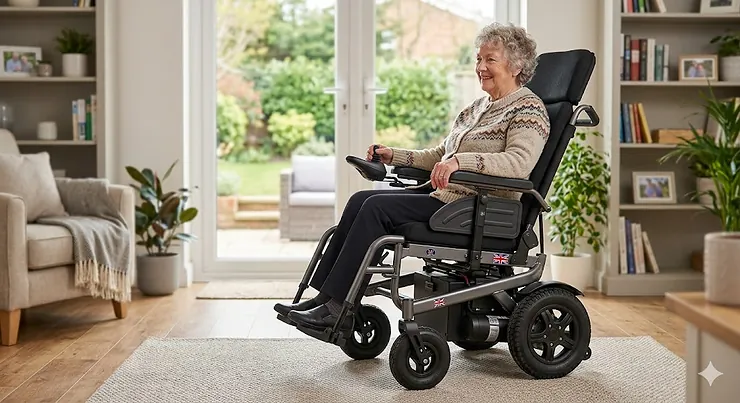
There’s a particular kind of exhaustion that comes with sitting upright for hours. Not the sleepy kind — the grinding, aching pressure that builds in your lower back, creeps up your spine, and quietly ruins what should have been a perfectly good afternoon. For anyone using a powered wheelchair as their primary means of getting around, that discomfort isn’t just an inconvenience. It can become a genuine clinical problem. A reclining electric wheelchair — a powerchair fitted with an adjustable backrest that can tilt from a standard upright position down to a near-horizontal rest angle — exists precisely to address this. And in 2026, the UK market for these chairs has never been better.
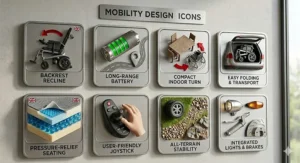
A reclining electric wheelchair is a motorised mobility aid featuring a powered or manually adjustable backrest that reclines from approximately 90° to anywhere between 130° and 180°, combined with an electric drive system for independent movement. These chairs are designed for users who need regular postural relief, pressure management, catheter care positioning, or simply the ability to rest without transferring to another seat entirely.
Whether you’re supporting a family member who spends long hours in their chair, recovering from spinal surgery, managing a progressive neurological condition, or simply finding that standard powerchairs leave your lower back in protest by midday — this guide is for you. I’ve researched the options currently available on Amazon.co.uk, dug into the clinical reasoning behind reclining seating, and cut through the marketing waffle so you can make a genuinely informed decision. In pounds sterling. For British conditions. Let’s get into it. 🇬🇧♿
Quick Comparison: Top 7 Reclining Electric Wheelchairs at a Glance
| Model | Recline Range | Motor Power | Range | Weight Capacity | Price Range (GBP) | Best For |
|---|---|---|---|---|---|---|
| Juodkeo Reclining Electric Wheelchair | 90°–160° | 500W dual | ~25 km | 150 kg | £500–£700 | Best overall mid-range pick |
| Foldable Reclining Powerchair with Headrest | 90°–135° | 500W dual | ~24 km | 130 kg | £400–£600 | Budget-conscious buyers |
| Kemndln All-Terrain Electric Wheelchair | Adjustable | 500W dual | 50 km | 150 kg | £700–£900 | Long-range daily users |
| All Terrain Power Wheelchair (160° Recline) | 90°–160° | 500W dual | ~50 km | 150 kg | £550–£750 | Full-recline & heavy-duty use |
| Reclining Aluminium Travel Powerchair | Adjustable | Dual motor | ~25 km | 120 kg | £450–£650 | Lighter users, city travel |
| WISGING Reclining Electric Wheelchair | 90°–135° | 500W dual | 48+ km | 127 kg | £600–£800 | Long-distance & travel |
| Easwe Reclining Electric Wheelchair | Up to 145° | 400W brushless | ~48 km | 113 kg | £500–£750 | Smooth indoor/outdoor use |
The table above tells you a lot at a glance, but the devil — as always — is in the detail. The Kemndln and WISGING models lead on range, which matters enormously if you’re using a powerchair for full days out rather than short trips to the shops. The Juodkeo and the 160° recline model offer deeper recline angles, making them significantly more suitable for pressure care and catheter management needs. Budget buyers should note that the entry-level reclining models sacrifice recline depth and often range in exchange for a lower price point — a compromise that may or may not matter depending on your specific clinical and lifestyle requirements.
💬 Just one click — help others make better buying decisions too! 😊
✨ Don’t Miss These Exclusive Deals!
🔍 Take your mobility independence to the next level with these carefully selected products. Click on any highlighted item to check current pricing and availability on Amazon.co.uk. These picks will help you find exactly what you need!
Top 7 Reclining Electric Wheelchairs: Expert Analysi
1. Juodkeo Reclining Electric Wheelchair for Adults with Remote Control
The Juodkeo is the sort of reclining electric wheelchair that makes you wonder why anyone would settle for less. It reclines manually from 90° to 160° — a generous range that gets you well past “mildly comfortable” and into genuine rest territory — and pairs that with dual 250W motors (500W combined) and a 12Ah removable lithium-ion battery delivering around 25 km of range per charge.
What that backrest angle actually means in practice: at 160°, you’re approaching a near-horizontal position, which is close enough to flat for effective pressure redistribution across the ischium and sacrum. For anyone managing pressure care, or who needs a reclined position for catheter drainage, this range is clinically meaningful — not just a marketing bullet point. The 150 kg weight capacity is reassuringly substantial, and the three-second fold means it’ll go in most car boots without ceremony.
UK buyers will appreciate the remote control, which allows a carer to assist with positioning without the user needing to reach or twist. Customer feedback on Amazon.co.uk has been broadly positive, with several buyers specifically praising the ease of the recline mechanism and the quality of the headrest. One UK reviewer noted it handled their local pavement reliably, which is about the most honest endorsement you’ll find.
Where it falls short: the 12Ah battery won’t win any prizes for range, and in a damp British autumn — expect perhaps 10–15% less than the manufacturer’s figure once you factor in wet surfaces and inclines.
✅ Generous 160° recline — genuinely useful for pressure reli
✅ 150 kg weight capacity
✅ Carer-friendly remote control
❌ Battery range modest for full-day use
❌ At approximately 27 kg, it needs two people for car loading
Around £500–£700 on Amazon.co.uk; very solid value for the recline depth on offer.
2. Foldable Reclining Electric Wheelchair with Headrest (500W, 12Ah)
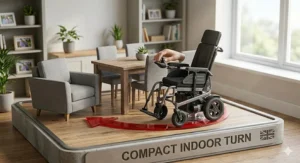
Not every reclining powerchair buyer needs the deepest recline on the market. Sometimes you want adjustable comfort and reasonable range at a price that doesn’t require a difficult conversation with your bank manager. This unnamed-brand reclining model (sold by multiple third-party sellers on Amazon.co.uk) delivers exactly that: a 90°–135° reclining backrest with an adjustable headrest, 500W dual motors, and a 12Ah removable lithium battery for around 24 km range.
The 135° maximum recline is the important nuance here. It’s comfortable — noticeably more so than a fixed-back powerchair — but it won’t deliver the full pressure-redistribution benefits that a 160° or flatter recline can achieve. Think of it as “substantial comfort adjustment” rather than “clinical pressure management tool.” For someone who wants to avoid back pain on longer outings, it’s more than adequate. For someone with complex pressure care needs or spasticity, you’ll want more recline depth from the Juodkeo or the 160° model.
The 130 kg weight capacity is worth checking against the user’s requirements before purchasing; it’s reasonable for most adults, but heavier users should look elsewhere. The aircraft-grade aluminium frame keeps weight to a manageable 27.2 kg. UK buyers report the fold mechanism is genuinely quick, and the adjustable headrest — a detail often skipped on budget models — adds meaningful neck support on longer journeys.
✅ Affordable entry point for reclining powerchairs
✅ Adjustable headrest included
✅ Compact folded dimensions suit most car boots
❌ 135° recline limited for clinical pressure car
e ❌ 130 kg weight limit excludes heavier users
Available in the £400–£600 range — the best value reclining powerchair currently on Amazon.co.uk for buyers with straightforward comfort needs.
3. Kemndln® All-Terrain Electric Wheelchair (500W, 50KM Range, 40A Battery)
The Kemndln is a different proposition from the previous two. Marketed explicitly for UK terrain — and it’s one of the few models on Amazon.co.uk to make that claim with any specificity — this powerchair pairs a 500W dual motor with a substantial 40Ah lithium battery delivering up to 50 km range. That’s a serious number. Most people in the UK aren’t commuting 50 km in a powerchair, but it means real-world range on a wet January day — when batteries underperform — remains genuinely usable without anxiety.
The adjustable seat and backrest offer recline functionality, though the angle isn’t specified with the precision of the Juodkeo. What the Kemndln does better than almost anything in this price bracket is all-terrain confidence: the 360° joystick, robust aluminium frame, and suspension system handle the kind of uneven pavement, dropped kerbs, and soggy public footpaths that characterise an average British outing far better than cheaper alternatives.
The spec sheet won’t tell you this, but a 40Ah battery is, for practical purposes, enormous in a foldable powerchair. Most manufacturers fit 10–15Ah as standard. The trade-off is weight and charge time (expect 8–10 hours to fully recharge), but for someone who needs their chair reliably ready every morning without obsessing over range, it’s a genuine quality-of-life upgrade.
UK customer feedback is notably positive regarding build quality, with the electromagnetic braking system praised for smooth, safe stopping on slopes.
✅ Market-leading 50 km range for daily reliability
✅ Explicitly designed for UK terrain conditions
✅ Robust all-terrain capability for British pavements and paths
❌ Recline angle not specified — verify before purchase
❌ Heavy battery means longer recharge time
In the £700–£900 range on Amazon.co.uk; the premium is justified for daily users who need genuine range.
4. All Terrain Power Wheelchair — 160° Recline, 40A Battery, 150 kg Capacity
Here’s a chair that takes the reclining electric wheelchair brief very seriously indeed. The 160° backrest recline, elevated footrests up to 70°, removable headrest, and a 40Ah battery make this one of the most comprehensively specified models available on Amazon.co.uk for users with genuine clinical or comfort requirements. The combination of deep recline and elevating footrests is particularly significant: according to rehabilitation seating research, the greatest pressure reduction at ischial tuberosities occurs when recline and tilt (or leg elevation) are used together. This chair lets you achieve that without specialist equipment.
The 500W dual motor (2×250W) delivers a top speed of around 6 km/h — measured and safe, appropriate for a heavier chair designed for comfort rather than speed. It climbs slopes up to 13°, which covers the vast majority of British residential streets and park paths. The 150 kg weight capacity is one of the better figures in this segment.
The five-speed adjustment function via 360° joystick is a thoughtful detail, especially for users with limited fine motor control. The USB charging port and LED front light are small additions that matter on a chair you’ll use daily in grey British winter afternoons when it gets dark at half-four.
UK buyers report the recline mechanism is smooth and the footrest elevation genuinely useful for circulation management. The main caveat: at 31 miles (50 km) claimed range, real-world figures will vary with user weight and terrain — expect 35–40 km in typical British conditions.
✅ 160° recline combined with elevating footrests for full pressure relief
✅ 40Ah battery for confident long-range us
✅ LED lighting and USB port for real-world daily use
❌ Heavier than compact travel chairs
❌ Charge time of approximately 8–10 hours
In the £550–£750 range — outstanding clinical value for the features provided.
5.Reclining Lightweight Electric Wheelchair Aluminium Folding Recliner Travel Powerchair (4 MPH)
Sold by Apex Brands Limited and available with stock in Amazon’s UK fulfilment network, this aluminium folding recliner occupies an interesting niche: it’s lighter and more travel-oriented than the clinical heavyweights above, while still offering meaningful backrest adjustment. The aluminium construction keeps weight manageable, and the 4 mph (6.4 km/h) top speed matches UK pavement etiquette perfectly.
What sets this apart is the onboard storage: two side pockets and an underseat bag. It sounds minor. It isn’t. Anyone who’s struggled to carry a bag, phone, water bottle, or medication while managing a powerchair joystick will know that thoughtful storage design is worth more than a dozen marketing bullet points. The reclining function allows seat angle adjustment for personal comfort, and the design suits pavements and pedestrian areas well — precisely where most UK users spend most of their time.
The 120 kg weight capacity is the main limiting factor, placing it in a similar bracket to the Foldable Reclining model above. It’s genuinely suitable for lighter users, elderly passengers, or anyone prioritising compact portability over clinical recline depth. For a Manchester flat or London terraced house with limited storage space, the folded dimensions make a real difference.
✅ Practical onboard storage — genuinely useful, not gimmicky
✅ Lightweight aluminium frame for easier car transfers
✅ Sold by UK Amazon fulfillment — fast delivery available
❌ 120 kg weight capacity limits user profile
❌ Recline angle less deep than clinical models
In the £450–£650 range — a sensible choice for lighter users prioritising portability and everyday practicality.
6. WISGING 2025 New Reclining Electric Wheelchair (30+ Miles, Dual 12Ah Battery, Headrest)
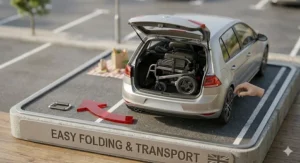
WISGING have been a fixture in the Amazon.co.uk electric wheelchair market for several years, and their reclining model brings their trademark dual-battery configuration to the comfort-focused segment. With two 12Ah lithium-ion batteries delivering a combined 30+ miles (roughly 48 km) of range and a reclining backrest fitted with an adjustable headrest and telescopic handle, this is aimed squarely at users who need both extended independence and postural flexibility.
The dual-battery setup is clever in practice: each battery is individually removable for charging, meaning you can charge one indoors while the other remains in the chair, then swap — effectively halving the range anxiety that plagues single-battery models. For someone living in a flat where charging options require running a cable through a doorway, or anyone who travels frequently by train or air (it’s airline-approved), this flexibility has genuine daily value.
The reclining backrest angle sits in the 90°–135° range, which — as noted above — is comfortable rather than clinical. Paired with the adjustable headrest and telescopic push handle, it works well as an all-day comfort chair. A word of caution: WISGING as a company has faced some post-sale support challenges in the UK market (one Amazon review noted difficulty contacting them after their company restructuring in 2024). Buyers should factor in that Amazon.co.uk’s own buyer protection under the Consumer Rights Act 2015 applies regardless, so purchase confidence remains solid if buying through Amazon directly.
✅ Dual removable batteries for flexible charging
✅ 30+ mile range for full-day independence
✅ Airline-approved for travel
❌ Post-sale brand support has been inconsistent — buy via Amazon for buyer protection
❌ 127 kg weight capacity lower than some competitors
Available in the £600–£800 range — strong value for the range capability, but factor in brand support considerations.
7. Easwe Reclining Electric Wheelchair (145° Recline, 400W Brushless, 30 Miles)
Easwe have built a quietly impressive reputation in the UK market through their official easwe.co.uk presence and their Amazon.co.uk listings, and their reclining model stands out for one unusual specification: a brushless 400W motor. Where most competitors use brushed motors in this category, brushless motors offer longer service life, quieter operation, and reduced maintenance — rather important when you’re relying on a chair every day and the nearest service centre might be an hour’s drive away.
The 145° recline angle with adjustable backrest sits between the modest 135° of budget models and the deeper 160° clinical-grade options. For most users managing comfort fatigue, back pain, or postural variation throughout a long day, 145° is genuinely meaningful — you can shift your weight distribution substantially, rest comfortably, and avoid the postural rigidity that comes from hours in a fixed upright seat. Combined with a 24Ah battery and approximately 48 km range, this is a chair designed for people who use it heavily.
One UK customer review — an older buyer who specifically chose Easwe after comparing multiple options — captured it rather well: the recline feature allowed them to rest without needing to transfer to another seat, while the electromagnetic brakes gave them confidence on slopes. The braking system deserves mention specifically: electromagnetic brakes provide smooth, controlled deceleration, which is far preferable to the abrupt stopping of mechanical systems on wet British pavement.
✅ Brushless motor for longer service life and quieter operation
✅ 145° recline — meaningful comfort without sacrificing structure
✅ Responsive post-sale support from UK-registered brand
❌ 113 kg weight capacity is the lowest in this roundup
❌ 400W motor marginally less powerful for steep inclines than 500W alternatives
In the £500–£750 range — the most refined everyday-use reclining powerchair in this list.
How to Use Your Reclining Electric Wheelchair in the UK: A Practical Guide
Setting Up for the First Time
When your chair arrives — likely via Amazon’s tracked delivery — resist the urge to charge it, sit down, and immediately head out. Take thirty minutes to do this properly.
First, adjust the headrest. It should support the natural curve of the neck without pushing the head forward; the common mistake is fitting it too high, which creates a chin-tuck posture that’s uncomfortable for more than twenty minutes. Second, set the joystick sensitivity. Most models allow speed adjustment through the control panel; begin on the lowest setting and work up — British pavements have more variation than any spec sheet acknowledges, and starting cautiously saves embarrassment (and potential spills) on the first outing.
Charge the battery fully before first use. In damp storage conditions — which includes most UK garages between October and March — a lithium-ion battery that’s been sitting at partial charge can lose capacity. A full initial charge sets the capacity baseline correctly.
Wet Weather — The Distinctly British Problem
Most reclining electric wheelchairs sold on Amazon.co.uk are rated for light rain but not immersion. The practical implication: the electronics, motor connectors, and battery housing need protection in persistent British drizzle. A simple waterproof cover for the joystick and control panel (available for under £15 on Amazon) is a sensible investment. Avoid leaving a damp chair in a cold garage overnight, as condensation in motor housings over time accelerates bearing wear. A dry, covered storage space — even a utility room — significantly extends chair life.
Recline Positioning: Getting the Most from It
Clinically, the greatest benefit from recline comes when you hold the reclined position for at least three minutes — brief shifts don’t allow adequate tissue reperfusion. If you’re using recline for pressure management, set a quiet reminder on your phone to recline for five minutes every hour. Paired with a quality pressure-relief cushion (AUVON and PEPE foam options are well-reviewed on Amazon.co.uk and VAT-exempt for qualifying users), this simple routine dramatically reduces pressure injury risk for long-duration wheelchair users.

Real-World Scenarios: Which Reclining Electric Wheelchair Fits Your Life?
Margaret, 74, Semi-Detached in Shrewsbury
Margaret’s husband does the driving, so boot space matters enormously — they have a Kia Sportage with a reasonably sized boot, but not endlessly so. She uses her chair every day for short trips around the local shops and town centre, and increasingly finds her back aching after more than an hour upright. She doesn’t have complex clinical needs, but comfort and reliability matter more than range.
Best match: The Foldable Reclining Electric Wheelchair with Headrest or the Easwe Reclining model. Both fold compactly, offer meaningful recline without clinical complexity, and land in a price bracket that doesn’t require financial gymnastics. The Easwe’s brushless motor is worth the slight premium for long-term reliability.
James, 52, Leeds, Managing MS
James works part-time from home and uses a powerchair for all outdoor mobility. He experiences spasticity and fatigue, needs regular postural changes throughout the day, and his occupational therapist has flagged pressure management as a priority. His flat has a standard UK doorway width of about 77 cm, which most powerchairs navigate without issue.
Best match: The All Terrain Power Wheelchair (160° Recline) or the Juodkeo. The deeper recline angles and combined footrest elevation make these the clinically appropriate choices. James should also speak with his local NHS wheelchair service about Personal Wheelchair Budgets — which can contribute toward a better chair than standard provision allows. See NHS Wheelchair Services for eligibility information.
Priya, 38, Inner London, Post-Surgery Recovery
Priya is recovering from lumbar surgery and needs temporary powered mobility — she’s active, relatively young, and expects to return to independent walking within six months. She lives in a purpose-built flat with a lift, uses public transport, and needs something airline-approved for a planned trip later in the year.
Best match: The WISGING Reclining model for its dual-battery flexibility and airline approval. The range handles London travel comfortably, and the folded profile fits in standard vehicle boots for taxi use.
How to Choose a Reclining Electric Wheelchair in the UK: 6 Key Criteria
Choosing the right reclining electric wheelchair isn’t simply a matter of picking the most impressive spec sheet. It’s about matching clinical need, lifestyle, environment, and budget with honest precision.
1. Determine the recline angle you actually need. There’s a meaningful difference between 135° (comfort) and 160° (clinical pressure management). If you have complex pressure care needs, spasticity, or use intermittent catheterisation, you need 150°+ recline depth. If you primarily want postural comfort on longer outings, 135° is adequate and available at lower cost.
2. Calculate your realistic range requirement. Most UK users don’t need 50 km range — but they do need enough that 20% battery degradation over two years doesn’t leave them stranded. Add 30% to your typical daily distance when choosing a battery size.
3. Measure your storage space before ordering. UK homes — particularly terraced houses, Victorian conversions, and purpose-built flats — have less storage space than the average Amazon product listing assumes. Know your folded chair dimensions and your available storage footprint before clicking “Buy Now.”
4. Check the weight capacity with room to spare. Manufacturers rate weight capacity at maximum; in practice, running a chair consistently at its rated maximum reduces component lifespan. If you’re 110 kg, choose a chair rated for 130 kg minimum.
5. Consider the weight of the chair for transfers. A 27 kg powerchair that needs lifting into a car boot several times a week is harder than it sounds, especially for older carers. If car transfers are regular, prioritise models under 25 kg or invest in a boot ramp.
6. Factor in VAT relief. UK buyers with a chronic illness or disability that makes walking difficult can purchase mobility equipment VAT-exempt — meaning 20% off the purchase price. This applies to reclining electric wheelchairs and is claimed by completing a simple declaration at checkout. It’s not means-tested. HMRC’s guidance on VAT reliefs has full details.
The Clinical Case for Reclining Powerchairs: Why Recline Isn’t a Luxury
There’s a persistent misconception that reclining in a wheelchair is somehow indulgent — a nice-to-have rather than a clinical necessity. The research says otherwise. According to RESNA’s position on tilt and recline systems, the greatest reductions in pressure at the ischial tuberosities occur when recline and tilt are used together — specifically at tilt of 15–25° with 120° recline, held for at least three minutes.
The NHS estimates that nearly half a million people in the UK develop at least one pressure ulcer in any given year. Pressure ulcers are not merely uncomfortable — they carry genuine clinical risks including infection, hospitalisation, and in severe cases can be life-threatening for immunocompromised individuals. For full-time wheelchair users, the ability to perform a powered or manual recline without requiring a carer transfer is not a convenience feature. It’s a pressure management tool.
Recline also has specific value for users managing bladder function. For those using intermittent self-catheterisation, a reclined position makes the procedure more manageable without transferring to a bed — preserving dignity and independence in settings where bed transfer isn’t practical. This is why the secondary keyword “wheelchair catheter care position” is clinically meaningful rather than niche.
Postural management through recline further benefits users with spasticity, increased tone, or neurological conditions: a regularly adjusted recline angle interrupts sustained spasm patterns that develop in a fixed upright position over hours. For carers, a powered recline means less physical intervention, reducing manual handling risks and — frankly — making caring more sustainable over time.
Reclining Electric Wheelchair vs Standard Powerchair: Is the Upgrade Worth It?
| Feature | Standard Powerchair | Reclining Electric Wheelchair |
|---|---|---|
| Postural relief | Fixed position | Adjustable — significant relief |
| Pressure care capability | Minimal | Strong (at 150°+ recline) |
| Weight | Often lighter (14–20 kg) | Usually heavier (22–30 kg) |
| Price range (GBP) | £300–£800 | £400–£1,100 |
| Travel practicality | Easier folding, lighter lifts | Slightly more complex |
| Catheter care suitability | Poor | Good (with deep recline) |
| Long-duration comfort | Limited | Significantly better |
| Best for | Active users, short trips | Extended use, clinical needs |
The table makes the trade-off clear: reclining powerchairs are heavier and slightly pricier, but for anyone using their chair for more than two or three hours daily, or managing any form of pressure risk or postural complexity, the clinical and comfort benefits are substantial. A standard powerchair is excellent for an active user who’s in and out of their chair throughout the day; a reclining electric wheelchair is significantly better for anyone whose chair is their primary seating environment for most of the day.
The price premium is also smaller than it appears once VAT relief is applied: a chair in the £600 range becomes effectively £500 for qualifying UK buyers, narrowing the gap with budget standard powerchairs considerably.
Common Mistakes When Buying a Reclining Electric Wheelchair in the UK
Ignoring the recline angle specification. “Reclining” means different things on different chairs. Check the listed degrees — 135° and 160° are not interchangeable, and for clinical needs the difference is material.
Buying a US-spec model without checking UK compatibility. Some reclining powerchair models listed on third-party websites are shipped from US or Chinese warehouses with 110V chargers. Amazon.co.uk typically sells UK-compatible stock, but always verify the charger input specification (look for 230V/50Hz) before ordering from unfamiliar third-party sellers.
Overlooking post-Brexit warranty considerations. Some budget powerchairs are manufactured in China and dispatched from EU warehouses. Post-Brexit, warranty claims requiring physical return of a product can attract import duties on re-import. Buying via Amazon.co.uk gives you the protection of the Consumer Rights Act 2015, including a 14-day cooling-off period under the Consumer Contracts Regulations and the right to a repair, replacement, or refund for 6 years if the product is faulty.
Underestimating battery degradation in British conditions. Lithium-ion batteries lose capacity in cold temperatures and with repeated cycling. A chair delivering its rated range in summer may deliver 15–20% less in winter, particularly if stored in a cold garage. This is especially relevant for the UK, where temperatures between November and March regularly sit below 5°C overnight.
Not claiming VAT relief at point of purchase. It’s free money off your purchase price. Twenty percent. HMRC provides a simple VAT relief declaration for disabled buyers — it takes two minutes and most Amazon.co.uk sellers accept it. Don’t forget it.
Long-Term Cost & Maintenance of a Reclining Electric Wheelchair in the UK
The purchase price is only one part of the total cost of ownership. Here’s what to budget for over a typical 3–5 year lifespan:
Battery replacement: Lithium-ion batteries in powerchairs typically last 2–4 years with regular use. Replacement batteries for most Amazon.co.uk models cost £80–£150 depending on capacity. Budget for this from year two or three.
Tyre wear: Puncture-proof tyres need no maintenance but eventually wear smooth. Solid tyre replacement runs £20–£50 per tyre depending on size, and is a job most mobility equipment dealers or even competent DIY users can manage.
Servicing: Most budget powerchairs on Amazon.co.uk don’t come with a UK service network. Independent mobility equipment repairers (search “mobility scooter repair [your town]”) typically charge £40–£80 per hour for powerchair servicing. An annual check is worth doing if the chair is in daily use.
VAT on accessories: Pressure relief cushions, chair covers, and spare batteries purchased by qualifying disabled buyers are also VAT-exempt — something many people don’t realise extends beyond the chair itself.
Over five years, total cost of ownership for a mid-range reclining powerchair sits realistically around £900–£1,400 including original purchase, battery replacement, and basic maintenance. At that figure, even a premium model in the £700–£900 bracket represents very good value for the independence and clinical benefit it provides.
Frequently Asked Questions
❓ Are reclining electric wheelchairs available on VAT-exempt terms in the UK?
❓ What is the best recline angle for pressure care in a powerchair?
❓ Can I take a reclining electric wheelchair on UK trains or airlines?
❓ Will a reclining electric wheelchair fit through standard UK doorways?
❓ How long do reclining electric wheelchair batteries last in the UK?
Conclusion
The reclining electric wheelchair market on Amazon.co.uk in 2026 offers genuinely impressive options across every price bracket — from accessible comfort chairs in the £400–£600 range through to clinically capable models with deep recline, elevating footrests, and long-range batteries in the £700–£1,100 bracket. The key is matching specification to need honestly, rather than defaulting to the cheapest option or the most impressive-sounding spec sheet.
For most users managing comfort fatigue and daily postural variation, the Juodkeo Reclining Electric Wheelchair or the Easwe Reclining model hit the sweet spot of recline capability, reliability, and value. For users with genuine clinical pressure care or catheter management needs, the All Terrain Power Wheelchair with 160° Recline and elevating footrests deserves serious consideration. Long-range users should look hard at the Kemndln All-Terrain model’s 50 km battery.
Remember to claim your VAT relief, check the Consumer Rights Act 2015 protections that apply to any Amazon.co.uk purchase, and — if your needs are complex — speak to your NHS occupational therapist or wheelchair service about whether a Personal Wheelchair Budget could contribute toward a better solution. Independent mobility is worth investing in properly. ♿
✨ Don’t Miss These Exclusive Deals!
🔍 Ready to find your ideal reclining electric wheelchair? Click on any highlighted product to check current pricing and availability on Amazon.co.uk — and take the first step toward proper postural comfort and genuine independence!
Recommended for You
- NHS Powerchair for Children: 7 Best Options & UK Guide 2026
- 7 Best Junior Powerchair Options UK 2026
- Best Children’s Electric Wheelchairs UK 2026
Disclaimer: This article contains affiliate links. As an Amazon Associate, I earn from qualifying purchases. If you purchase products through these links, we may earn a small commission at no additional cost to you. All prices are approximate ranges and exclude VAT where applicable — check current pricing on Amazon.co.uk. Information accurate at time of publication (May 2026).
✨ Found this helpful? Share it with your mates! 💬🤗
