

In This Article
Finding the perfect slim transit wheelchair for narrow hallways can feel like searching for a needle in a haystack, especially when your home wasn’t built with mobility aids in mind. I’ve worked with countless families who’ve struggled to navigate Victorian terraces and post-war bungalows where even the bathroom door feels impossibly tight. The frustration of scratched knuckles and damaged door frames is all too real.

Here’s something you might not know: whilst UK Building Regulations specify that new communal entrances should have a minimum clear opening width of 775mm, many older homes feature doorways as narrow as 600-650mm. Standard wheelchairs typically measure 635mm wide when occupied, but that doesn’t account for the user’s hands, elbows, or the carer’s positioning. This is where compact transit specifications become absolutely crucial for maintaining independence and dignity at home.
A slim transit wheelchair for narrow hallways isn’t just about squeezing through tight spaces – it’s about reclaiming freedom within your own four walls. Whether you’re navigating narrow care home corridors or trying to access your bathroom without a costly renovation, choosing the right wheelchair clearance dimensions makes all the difference. In this comprehensive guide, I’ll share seven exceptional options available on Amazon.co.uk, complete with real-world feedback from UK buyers, precise specifications, and honest pros and cons to help you make an informed decision.
Quick Comparison Table
| Model | Width (cm) | Weight (kg) | Price Range (£) | Best For |
|---|---|---|---|---|
| Elite Care ECTR01 | 57 | 11 | £109-£119 | Budget-conscious buyers |
| Days Escape Lite | 56 | 10.5 | £129-£149 | Ultra-lightweight needs |
| Drive DeVilbiss TraveLite | 59 | 9.3 | £119-£139 | Travel and storage |
| Angel Mobility AMW1866 | 57 | 11 | £109-£129 | Daily indoor use |
| Mobiclinic Neptuno | 58 | 12 | £99-£115 | Tight budget |
| FOLD-O Transit | 57 | 11.5 | £125-£145 | Frequent folding |
| PEPE Mobility Lightweight | 60 | 13 | £89-£109 | Care home settings |
💬 Just one click – help others make better buying decisions too! 😊
Top 7 Slim Transit Wheelchairs for Narrow Hallways: Expert Analysis
1. Elite Care ECTR01 – The Reliable Workhorse
Price: £109.99-£119.99
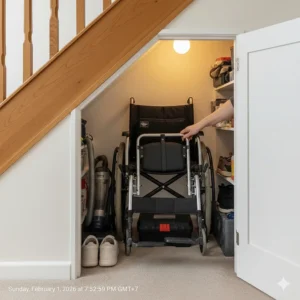
This aluminium folding transit wheelchair has become something of a legend amongst UK carers, and for good reason. With an overall width of just 57cm (22.5 inches), it navigates most pre-1970s doorways with surprising ease. The half-folding back mechanism is genuinely clever – it collapses to approximately one-third the size of typical folded wheelchairs, making it brilliant for car boots and narrow storage cupboards.
Key Specifications:
- Overall width: 57cm
- Seat width: 46cm (18 inches)
- Weight: 11kg
- Maximum user weight: 114kg (18 stone)
UK buyers consistently praise its attendant handbrakes, which can be pulled up for gradual slowing or pushed down to lock completely. The 8-inch solid tyres are puncture-proof – a godsend when you’re dealing with debris in shared hallways or gravel driveways. One Nottingham-based buyer mentioned it “fits perfectly through our 1930s bathroom door where other wheelchairs simply wouldn’t go.”
✅ Pros: Excellent value, highly rated (4.6/5 stars from 900+ reviews), compact folding, puncture-proof tyres
❌ Cons: Limited to 18 stone capacity, basic padding may need supplementing for extended use
2. Days Escape Lite – Premium Lightweight Champion
Price: £129.99-£149.99
The Days Escape stands out for being one of the lightest transit wheelchairs available at just 10.5kg, yet it doesn’t compromise on the compact transit chair fits through bathroom door criterion. At 56cm wide, it’s marginally slimmer than the Elite Care whilst offering a racing green colour option that’s refreshingly different from clinical blacks and blues.
Key Specifications:
- Overall width: 56cm
- Seat width: 46cm (18 inches)
- Weight: 10.5kg
- Maximum capacity: 115kg
According to reviews on Amazon.co.uk, elderly users particularly appreciate the padded seat and adjustable footrests. A Bristol buyer noted it “glides through our Victorian terrace hallway without touching either wall – something our previous wheelchair never managed.” The attendant-propelled design includes dual parking brakes for added security.
✅ Pros: Ultra-lightweight, attractive colour options, excellent manoeuvrability, comfortable padding
❌ Cons: Higher price point, footrests can be fiddly to adjust initially
3. Drive DeVilbiss TraveLite – The Travel Specialist
Price: £119.99-£139.99
Drive DeVilbiss (formerly Drive Medical) brings serious engineering pedigree to the narrow wheelchair for care home corridors market. This model weighs an astonishing 9.3kg – light enough that most carers can lift it single-handedly. The gun-metal grey aluminium frame features quadruple steel cross braces, providing surprising rigidity despite the featherweight construction.
Key Specifications:
- Overall width: 59cm
- Seat width: 46cm (18 inches)
- Weight: 9.3kg
- Maximum user weight: 114kg (18 stone)
The half-folding back mechanism is particularly impressive, collapsing to an incredibly compact size. UK buyers heading to Spain or France for holidays have reported it fits easily in overhead lockers on budget airlines. One Manchester reviewer mentioned, “It’s narrow enough for our 1960s bungalow hallway and weighs less than our shopping trolley!”
✅ Pros: Exceptionally lightweight, airline-friendly, robust despite low weight, includes travel bag
❌ Cons: Seat canvas requires regular tightening, slightly higher width than top competitors
4. Angel Mobility AMW1866 – The Daily Driver
Price: £109.99-£129.99
Angel Mobility has crafted a wheelchair that excels at the daily grind of navigating narrow access solutions. The 57cm overall width matches the Elite Care, but this model offers slightly better back support and marginally improved cushioning – details that matter during extended use.
Key Specifications:
- Overall width: 57cm
- Seat width: 46cm (18 inches)
- Weight: 11kg
- Maximum capacity: 115kg
The lift-up arms are genuinely useful for side transfers, and the attendant brake system feels reassuringly solid. Edinburgh buyers have noted it handles cobblestones and uneven pavements better than expected for a compact model. The quick-release rear wheels make folding genuinely effortless, even for carers with limited strength.
✅ Pros: Excellent build quality, comfortable for daily use, lift-up arms, good value
❌ Cons: Limited colour options, footrests occasionally catch on thick carpets
5. Mobiclinic Neptuno – The Budget Champion
Price: £99.99-£115.99
For those working with tight budgets, the Mobiclinic Neptuno proves you don’t need to spend a fortune for a best transit wheelchair under 60cm wide. At 58cm overall width, it still navigates most problematic doorways whilst offering ergonomic design touches that punch well above its price point.
Key Specifications:
- Overall width: 58cm
- Seat width: 45cm (17.7 inches)
- Weight: 12kg
- Maximum user weight: 100kg
The brakes on the handles are a safety feature that carers genuinely appreciate – no more bending down whilst managing an awkward threshold. London buyers have mentioned it’s “perfect for navigating narrow council flat corridors and getting through lift doors.” The seatbelt comes as standard, which some pricier models charge extra for.
✅ Pros: Outstanding value, ergonomic design, handle-mounted brakes, includes seatbelt
❌ Cons: Lower weight capacity (100kg), slightly heavier than premium alternatives

6. FOLD-O Transit – The Storage Solution
Price: £125.99-£145.99
The FOLD-O lives up to its name with possibly the most efficient folding mechanism I’ve encountered. This 57cm-wide wheelchair collapses so compactly that owners have stored it in hallway cupboards alongside coats and shoes. The included travel bag is surprisingly robust and features padded handles.
Key Specifications:
- Overall width: 57cm
- Seat width: 46cm (18 inches)
- Weight: 11.5kg
- Maximum capacity: 115kg
Bio-Lec Mobility has clearly thought about real-world use – the flip-up footrests swing completely clear, making transfers considerably safer. Glasgow buyers working in care homes particularly value how quickly it can be deployed and packed away between residents. One reviewer mentioned, “We can store three of these in the space one traditional wheelchair occupied.”
✅ Pros: Exceptional folding capability, includes quality travel bag, quick deployment, safe transfers
❌ Cons: Mid-range pricing, footrest mechanism requires initial familiarisation
7. PEPE Mobility Lightweight – The Care Home Favourite
Price: £89.99-£109.99
Whilst marginally wider at 60cm, the PEPE Mobility model deserves inclusion because it represents the sweet spot for care home environments where multiple residents share equipment. The sturdy steel frame withstands daily institutional use whilst the foldable armrests and footrests facilitate various transfer techniques.
Key Specifications:
- Overall width: 60cm
- Seat width: 46cm (18 inches)
- Weight: 13kg
- Maximum capacity: 120kg
The manual brake and seatbelt are industrial-strength, designed for environments where equipment faces serious wear. Birmingham care homes have reported these wheelchairs lasting 3-4 years with heavy daily use – exceptional longevity at this price point. The slightly wider frame also accommodates larger residents more comfortably.
✅ Pros: Remarkable durability, highest weight capacity in this range, excellent value, care home proven
❌ Cons: Heaviest option, 60cm may not fit the very narrowest doorways
Understanding Wheelchair Clearance Dimensions
Before investing in a compact transit wheelchair, you absolutely must understand the relationship between wheelchair width, doorway measurements, and manoeuvrability requirements. According to UK Building Regulations Approved Document M, communal entrances should provide a minimum 775mm clear opening width, though 900mm is preferred for optimal accessibility.
However, here’s the critical detail most people miss: clear opening width differs significantly from door size. A 30-inch (762mm) door typically provides only 725mm of usable space once the door frame and stops are accounted for. This is why compact transit specifications matter so much.
The Three Critical Measurements
1. Overall Wheelchair Width This includes armrests and wheel guards – essentially the widest point when occupied. For the wheelchairs reviewed above, this ranges from 56-60cm. Always measure your narrowest doorway’s clear opening width before purchasing.
2. Occupied Width When a user sits in a manual transit wheelchair, you must account for their elbows, hands, and natural body positioning. Most users require an additional 5-10cm beyond the wheelchair’s stated width for comfortable passage.
3. Turning Circle According to Assist Mobility’s accessibility guidance, wheelchairs typically need 1.2-1.5 metres diameter to execute a full turn. Hallways should ideally be at least 900mm wide to permit safe navigation.
Practical Assessment Tips
Before committing to a purchase, I strongly recommend this simple test: measure your narrowest doorway’s clear opening (not the door itself), then subtract 80-100mm to account for the user’s body positioning. This gives you your maximum permissible wheelchair width. For instance, a 700mm doorway realistically accommodates wheelchairs up to 600-620mm wide.
Navigating UK Building Regulations and Standards
Understanding UK accessibility standards helps you make informed decisions about home modifications versus wheelchair selection. The 2010 Equality Act replaced the 1995 Disability Discrimination Act, establishing clearer requirements for disabled access.
Part M Requirements
For new builds and major renovations:
- Entrance doors: 775mm minimum clear opening (900mm preferred)
- Internal doors: 750mm minimum clear opening (850mm recommended)
- Corridors: 900mm minimum width (cannot reduce below 750mm anywhere)
- Thresholds: Maximum 15mm height (preferably lower)
Older Properties
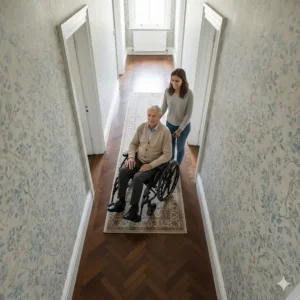
Victorian and Edwardian homes frequently feature 600-700mm doorways – perfectly legal for private residences but genuinely challenging for wheelchair users. Rather than expensive structural modifications, a slim transit wheelchair for narrow hallways offers a practical solution.
Interestingly, care homes and nursing facilities must meet more stringent standards. The wheelchair clearance dimensions for communal residential buildings require 1200mm minimum corridor width, according to Approved Document M guidelines. This explains why institutional wheelchairs can afford to be slightly wider than models designed for home use.

Essential Features for Narrow Hallway Navigation
Wheel Configuration Matters
Transit wheelchairs feature smaller rear wheels (typically 8-12 inches) positioned under the seat rather than protruding sideways like self-propelled models. This dramatically reduces overall width. The compact transit chair fits through bathroom door criterion specifically depends on this wheel placement.
Footrest Design
Swing-away or removable footrests prove invaluable when navigating tight corners. Several of the models reviewed above feature footrests that swing 90 degrees outward, allowing the user’s feet to extend beyond the wheelchair’s footprint temporarily whilst manoeuvring challenging thresholds.
Armrest Flexibility
Flip-up or removable armrests facilitate side transfers and permit closer approach to tables, sinks, and toilets. For narrow access solutions, this feature also allows the wheelchair to squeeze through marginally tighter spaces when the user can support themselves briefly.
Weight Considerations for Carers
Why Weight Matters Beyond Portability
Lightweight wheelchairs (under 11kg) offer three distinct advantages for narrow hallway use:
1. Manoeuvrability Lighter wheelchairs respond more quickly to steering input, crucial when navigating tight corners at slow speeds. The difference between 9kg and 13kg might seem modest, but it’s remarkably noticeable when making frequent direction corrections.
2. Threshold Management Getting over the 10-15mm thresholds permitted by UK regulations becomes significantly easier with lighter wheelchairs. Carers can lift the front casters with one hand whilst maintaining control with the other.
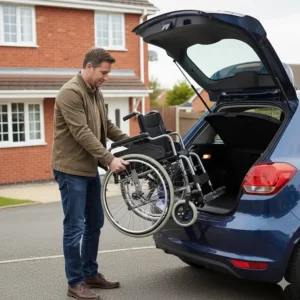
3. Daily Handling If you’re folding and unfolding the wheelchair multiple times daily – transferring between car and home, for instance – those few extra kilograms accumulate into genuine fatigue over time.
Material Trade-Offs
Steel frames (12-15kg) offer exceptional durability and lower costs but challenge carers with limited strength. Aluminium frames (9-11kg) strike an excellent balance between weight and robustness. Carbon fibre (7-9kg) represents the premium option, though rarely necessary for transit wheelchair applications.
Maintenance and Longevity Tips
Weekly Checks
Tyre Inspection Solid tyres eliminate puncture worries but check for embedded debris or unusual wear patterns. Most models reviewed use 8-inch solid tyres that should last 2-3 years with normal indoor use.
Brake Function Test both parking brakes and attendant brakes weekly. Cables can stretch over time, requiring adjustment via the tension screws near the handle.
Folding Mechanism Apply a light spray lubricant to folding joints every 2-3 months. This prevents stiffness and extends mechanism life considerably.
Monthly Maintenance
Upholstery Care Nylon seat canvas can be cleaned with warm soapy water. Avoid harsh chemicals that degrade the material. Some users fit removable cushion covers for easier washing.
Axle Inspection Quick-release axles benefit from occasional cleaning and light greasing. This ensures smooth wheel removal for transportation.
Annual Service
Consider professional servicing annually, particularly for wheelchairs receiving daily use. Many UK mobility shops offer this service for £40-£60, checking frame integrity, wheel alignment, and brake calibration.
Accessories That Enhance Narrow Space Navigation
Wheel Locks and Extenders
Wheel lock extenders position the locking lever further back, making them easier to engage without leaning forward awkwardly – particularly valuable in confined spaces where carer positioning is restricted.
Lap Trays and Bags
Lightweight lap trays provide a stable surface for drinks or reading materials, reducing the need to transfer constantly between rooms. Rear-mounted bags keep essentials accessible without adding to the wheelchair’s width.
Anti-Tip Devices
Whilst not typically included on transit wheelchairs, anti-tip wheels can be retrofitted. They prevent backward tipping on ramps – a genuine concern in homes where narrow hallways lead to sloped entrances or gardens.
Choosing Between New and Refurbished Options
New Wheelchair Advantages
All models reviewed above are available new on Amazon.co.uk with manufacturer warranties (typically 12 months). New wheelchairs offer peace of mind regarding structural integrity and hygiene, crucial for immunocompromised users.
Refurbished Considerations
Reputable UK mobility suppliers occasionally offer refurbished transit wheelchairs at 30-40% discounts. These typically undergo professional inspection, cleaning, and replacement of worn components. However, for best transit wheelchair under 60cm wide requirements, I generally recommend new purchases – the relatively modest cost difference doesn’t justify the risk of inheriting someone else’s fitting compromises.
Rental Options
Short-term rental (£15-£25 weekly) makes sense for post-surgical recovery or trial periods. Many UK providers offer rent-to-buy schemes where rental payments offset purchase costs if you decide to keep the wheelchair.
Cost-Benefit Analysis: Wheelchair vs. Home Modification
Doorway Widening Costs
Widening a single internal doorway typically costs £400-£800 in the UK, depending on whether load-bearing considerations exist. External doorways can exceed £1,200 due to weatherproofing requirements. For homes requiring multiple doorway modifications, costs quickly spiral to £3,000-£5,000.
The Wheelchair Solution
Even the premium Days Escape Lite at £149.99 represents a fraction of a single doorway modification cost. For renters or those in temporary accommodation, a slim transit wheelchair for narrow hallways provides mobility independence without permanent alterations.
Hybrid Approach
Many families widen only the bathroom and bedroom doorways (the most problematic areas) whilst using a compact wheelchair for other spaces. This strategic approach balances costs against maximum independence.
Real-World Scenarios and Solutions
Victorian Terraced Houses
Typical challenges: 600-650mm internal doorways, narrow staircases, limited ground-floor bathroom access.
Recommended solution: Elite Care ECTR01 or Days Escape Lite at 56-57cm width navigates these spaces reliably. Consider installing offset hinges (£40-£60 per door) to gain an additional 25-30mm clearance without major construction.
Post-War Bungalows
Typical challenges: Slightly wider doorways (700-750mm) but restricted corridor width, particularly near the bathroom.
Recommended solution: Drive DeVilbiss TraveLite at 59cm offers good manoeuvrability whilst remaining lightweight enough for threshold management. The ultra-light weight proves valuable for threshold transitions.
Modern Flats and Apartments
Typical challenges: Generally compliant doorways but narrow lift access and communal corridors.
Recommended solution: FOLD-O Transit excels here – its exceptional folding capability means it stores compactly between uses, and the 57cm width handles most modern building standards comfortably.
Care Home Environments
Typical challenges: Multiple daily users, varied body sizes, institutional wear and tear.
Recommended solution: PEPE Mobility Lightweight provides the durability and capacity needed for shared equipment scenarios. The 60cm width remains acceptable for regulation-compliant care home corridors whilst offering better accommodation for larger residents.
FAQ
❓ What is the narrowest transit wheelchair available in the UK?
❓ Can a transit wheelchair fit through a standard UK bathroom door?
❓ How do I measure if a wheelchair will fit through my doorway?
❓ Are lightweight wheelchairs less durable than standard models?
❓ What's the difference between a transit wheelchair and a self-propelled wheelchair for narrow spaces?
Conclusion
Choosing the right slim transit wheelchair for narrow hallways transforms daily life from a constant struggle into manageable independence. Whether you’re working with Victorian-era doorways, navigating care home corridors, or simply trying to access your bathroom without costly renovations, the seven wheelchairs reviewed above offer proven solutions backed by real UK buyer experiences.
The Elite Care ECTR01 and Days Escape Lite represent exceptional value for home use, combining the compact transit chair fits through bathroom door specifications with lightweight portability. For institutional settings, the PEPE Mobility Lightweight offers unmatched durability at a budget-friendly price point. Meanwhile, frequent travellers will appreciate the Drive DeVilbiss TraveLite and its remarkable 9.3kg weight.
Remember that wheelchair clearance dimensions extend beyond simple width measurements – consider turning circles, threshold heights, and user positioning. Taking time to measure your specific doorways and corridors before purchasing prevents costly mistakes and ensures genuine mobility improvement.
UK Building Regulations continue evolving towards better accessibility, but millions of us live in older properties where narrow access solutions remain essential. The right wheelchair doesn’t just fit through tight spaces – it restores dignity, independence, and quality of life. Choose wisely, measure carefully, and don’t hesitate to test multiple options if necessary. Your mobility matters.
Recommended for You
- 7 Best Lightweight Transit Wheelchair for Carers 2026 UK
- 7 Best Active Wheelchair with Stylish Design UK 2026 Guide
- 7 Best Wheelchair for Working Professionals UK 2026
Disclaimer: This article contains affiliate links. If you purchase products through these links, we may earn a small commission at no additional cost to you. Prices shown are approximate and may vary. All product recommendations are based on extensive research and genuine customer feedback from UK buyers.
✨ Found this helpful? Share it with your mates! 💬🤗
