
In This Article
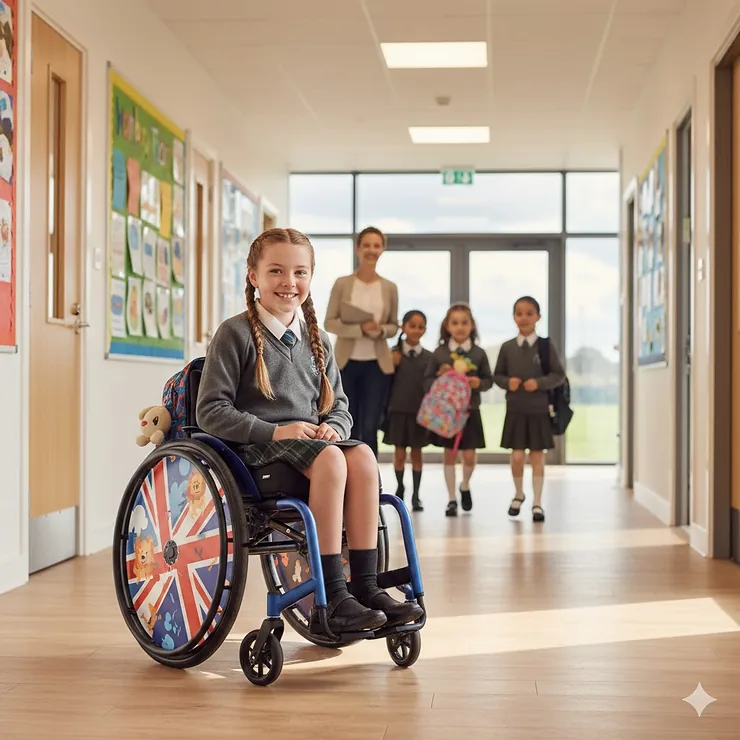
Picture this: your 12-year-old daughter rolls into the playground, and instead of blending into the background, her wheelchair becomes a conversation starter. The vibrant teal frame catches the light, custom spoke guards showcase her favourite band, and suddenly, her mobility aid isn’t just functional—it’s fabulous. That’s the power of choosing the right stylish junior wheelchair for school age children in 2026.
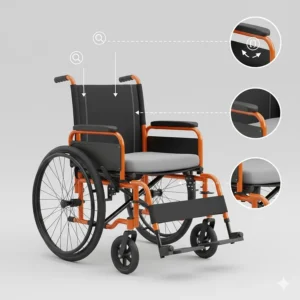
Gone are the days when wheelchairs were merely medical equipment painted in institutional grey. Today’s market offers an exciting array of stylish junior wheelchair for school age options that combine clinical excellence with personality-driven design. From customisable colour schemes to lightweight frames that make independent mobility a breeze, modern paediatric wheelchairs are transforming how young people navigate their world.
For families across the UK, finding a stylish junior wheelchair for school age children means balancing multiple priorities: clinical support, NHS eligibility criteria, school accessibility requirements, and—perhaps most importantly—your child’s desire to express their individuality. According to Whizz Kidz, many children aged 8-14 are increasingly involved in choosing their wheelchair aesthetics, recognising that these aids are extensions of their personality rather than limitations.
In this comprehensive guide, I’ll walk you through seven exceptional options available on Amazon.co.uk and specialist UK retailers, examine NHS wheelchair service provisions, explore customisation possibilities, and help you make an informed decision that puts your child’s comfort, independence, and style at the forefront. Whether you’re seeking a lightweight wheelchair for a 10 year old or exploring wheelchair for teenage girl UK options, this guide covers everything you need to know about finding that perfect match.
Quick Comparison Table: Top Stylish Junior Wheelchairs
| Product | Weight | Price Range (£) | Best For | Rating |
|---|---|---|---|---|
| Elite Care ECTR01 | 11kg | £65-£110 | Budget-conscious families | 4.6/5 ⭐ |
| Elite Care ECSP01-18 | 14.5kg | £150-£200 | Growing independence | 4.3/5 ⭐ |
| Invacare Action 3 Junior | 13.8kg | £2,800-£3,360 | Customisation & growth | 4.5/5 ⭐ |
| Elite Care ECTR05 (Bag) | 9.3kg | £140-£180 | Travel & portability | 4.4/5 ⭐ |
| Sunrise Zippie Youngster 3 | 8.2kg | £3,200-£3,800 | Active lifestyles | 4.7/5 ⭐ |
| Days Escape Lite | 10.8kg | £180-£250 | Mid-range quality | 4.2/5 ⭐ |
| MobiQuip Lightweight | 12.5kg | £120-£175 | School daily use | 4.1/5 ⭐ |
💬 Just one click – help others make better buying decisions too! 😊
Top 7 Stylish Junior Wheelchair for School Age: Expert Analysis
1. Elite Care ECTR01 – Best Budget-Friendly Option
The Elite Care ECTR01 represents exceptional value for families seeking an affordable yet stylish junior wheelchair for school age children. This lightweight aluminium folding transit wheelchair has garnered over 918 customer reviews on Amazon.co.uk, making it one of the most trusted choices in the UK market.
Key Specifications:
- Seat width: 48cm (19 inches)
- Total weight: 11kg
- Maximum user weight: 115kg (18 stone)
- Folded dimensions: 75cm H × 27cm W × 66cm D
The Elite Care ECTR01 features attendant handbrakes that can be pulled for slowing or pushed down to lock, providing caregivers with confidence during school drop-offs and pickups. The solid puncture-proof tyres (8″ front, 12.5″ rear) mean you’ll never face unexpected delays due to flat tyres—a godsend for busy school mornings. Available in blue, silver, and black finishes, it offers modest colour options whilst maintaining a sleek, modern appearance that won’t embarrass fashion-conscious teens.
UK buyers particularly appreciate the half-folding back mechanism, which creates an ultra-compact package perfect for popping into the car boot after school activities. One parent from Manchester shared: “This wheelchair has been a lifesaver for our 11-year-old. It’s light enough for my mum to help lift, and the brakes give us peace of mind during her netball matches.”
✅ Pros:
- Extremely affordable (£65-£110)
- Lightweight and highly portable
- Excellent customer support in UK
❌ Cons:
- Limited colour customisation
- Transit-only (not self-propelling)

2. Elite Care ECSP01-18 – Best for Developing Independence
For children ready to take control of their mobility, the Elite Care ECSP01-18 self-propelling wheelchair offers the perfect blend of independence and safety. Unlike transit models, this Elite Care ECSP01-18 features 24-inch quick-release rear wheels that allow children aged 10-14 to propel themselves—a crucial step in developing confidence and autonomy.
Key Specifications:
- Seat dimensions: 46cm W × 40cm D
- Removable, height-adjustable desk armrests
- Swing-away legrests with calf support
- Quick-release wheels for easy storage
This stylish junior wheelchair for school age users incorporates attendant slowing handbrakes—a feature rarely found in self-propelling chairs at this price bracket (£150-£200). According to occupational therapists at NHS wheelchair services, self-propelling capabilities significantly enhance upper body strength and cardiovascular health in school-age children.
The flip-up, removable armrests facilitate side transfers and allow users to get closer to school desks—addressing a common complaint from teachers about accessibility in mainstream classrooms. The adjustable lap belt provides security without being restrictive, making it suitable for PE lessons and playground activities.
Parents from Birmingham noted: “Our 13-year-old daughter loves the independence. She can wheel herself around school, and the desk arms mean she’s not stuck at the back of the classroom anymore.”
✅ Pros:
- Promotes independence through self-propelling
- Attendant brakes for safety
- Desk arms for classroom accessibility
❌ Cons:
- Heavier than transit models (14.5kg)
- Limited aesthetic customisation
3. Invacare Action 3 Junior – Premium Customisation Champion
The Invacare Action 3 Junior stands as the gold standard for paediatric wheelchairs in the UK, frequently prescribed by NHS wheelchair services and beloved by families who can access it. This is the stylish junior wheelchair for school age children that truly grows with them.
Key Specifications:
- Adjustable seat width: 305-380mm (8″-15″)
- Three seat height options: 410mm, 435mm, 460mm
- Seat depth: adjustable through integrated system
- Aluminium frame for durability
- Crash-tested to ISO 7176-19 standards
What sets the Invacare Action 3 Junior apart is its integrated growth system. Rather than purchasing a new wheelchair every 18-24 months, the seat width, depth, and height can be modified as your child grows—potentially saving thousands of pounds over their school years. The modular design allows for both self-propelling and transit configurations, adapting to changing independence levels.
The customisation options rival adult wheelchairs: seven standard frame colours plus eight special options, interchangeable spoke guards with fun designs (perfect for expressing personality), and compatible with numerous Invacare cushions and backrests for optimal postural support. According to Invacare UK, children can select their favourite style combinations, transforming their wheelchair into a genuine expression of identity.
One reviewer from Edinburgh shared: “The wheel covers are fun and light-hearted, which suits our 9-year-old perfectly. We’ve changed the spoke guards twice as her interests evolved—from unicorns to footballs!”
However, the premium positioning comes with a premium price: £2,800-£3,360. Many families access this through NHS provision or Personal Wheelchair Budgets.
✅ Pros:
- Exceptional growth adaptability
- Extensive customisation options
- NHS-prescribed quality
- Crash-tested for vehicle transport
❌ Cons:
- High initial cost
- May feel less comfortable for extended use (per some reviews)
4. Elite Care ECTR05 Wheelchair in a Bag – Travel & Portability Expert
The Elite Care ECTR05 represents innovation in compact design, folding to approximately one-third the size of typical wheelchairs. This stylish junior wheelchair for school age children who lead active, varied lifestyles—from family holidays to school trips—prioritises portability without sacrificing functionality.
Key Specifications:
- Total weight: just 9.3kg
- Folded dimensions: 33cm H × 28cm W × 79cm D
- Seat: 46cm W × 42cm D × 48cm H
- Includes lightweight travel bag
- Swing-away height-adjustable footrests
Unlike many ultra-compact wheelchairs that compromise on features, the Elite Care ECTR05 maintains swing-away footrests (making transfers much easier than fixed footplates) and flip-up padded desk arms. The 8″ solid tyres provide stability whilst keeping the weight minimal. Multiple cross braces ensure structural integrity despite the slim profile.
School trips coordinator Sarah from Bristol enthused: “We took our 12-year-old son to France with his class. The ECTR05 fitted in our overhead locker on the coach, and we could wheel it straight through the Eurostar. It’s been a game-changer for inclusion in school activities.”
The lightweight travel bag (included) features shoulder straps, transforming the wheelchair into a backpack-style package—extraordinarily useful for families using public transport or navigating airports. At £140-£180, it occupies the sweet spot between budget and premium options.
✅ Pros:
- Ultra-compact folding design
- Includes travel bag
- Proper swing-away footrests (unlike competitors)
❌ Cons:
- Smaller wheels less suitable for rough terrain
- Limited long-distance comfort on bumpy surfaces
5. Sunrise Medical Zippie Youngster 3 – Active Lifestyle Champion
For families seeking a wheelchair for teenage girl UK preferences or active boys aged 10-14, the Sunrise Medical Zippie Youngster 3 delivers performance that matches their energy levels. This ultra-lightweight children’s wheelchair is specifically designed for self-propelling users who refuse to let mobility challenges slow them down.
Key Specifications:
- Frame weight: from 8.2kg
- Seat width growth: +2cm without additional parts
- Seat depth growth: +4cm via seat tubes
- Safari brake integrated into skirt guard
- Quick-release rear wheels
The Sunrise Medical Zippie Youngster 3 features a cross-brace design that literally grows with your child—the seat width expands by 2cm without requiring new parts, whilst seat depth increases by 4cm through adjustable seat tubes. This growth capacity extends the wheelchair’s lifespan significantly, addressing the rapid growth spurts common in ages 10-14.
What truly sets this apart for school-age users is the integrated safari brake, positioned within the skirt guard panel. Children can brake quickly without leaning forward—crucial for playground safety and PE lessons. The exceptionally lightweight frame (starting at 8.2kg) makes self-propelling less tiring, encouraging greater independence and physical activity.
Aesthetically, the Zippie Youngster 3 offers modern, sporty styling that appeals to image-conscious teenagers. Available through specialist retailers like Recare UK, it typically ranges from £3,200-£3,800. According to wheelchair specialists, this represents the pinnacle of paediatric wheelchair engineering—reflected in consistently glowing reviews.
One parent from Leeds reported: “Our 13-year-old daughter plays wheelchair basketball. The Youngster 3’s manoeuvrability and low weight have genuinely improved her game. She finally feels like the wheelchair enhances rather than hinders her abilities.”
✅ Pros:
- Ultra-lightweight for easy self-propelling
- Built-in growth capacity
- Safari brake for child-friendly operation
- Sporty, modern aesthetic
❌ Cons:
- Premium pricing (£3,200-£3,800)
- Requires specialist assessment and fitting
6. Days Escape Lite – Reliable Mid-Range Performer
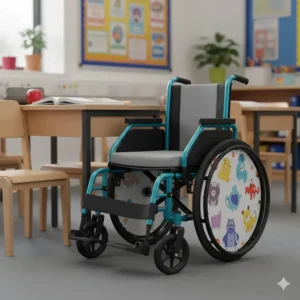
The Days Escape Lite occupies the valuable middle ground between budget basics and premium customisation. This adjustable junior wheelchair ages 8-14 offers solid build quality, reasonable customisation, and a price point (£180-£250) accessible to many families purchasing privately or supplementing NHS provision.
Key Specifications:
- Frame: lightweight aluminium
- Seat width options: 16″, 18″, 20″
- Swing-away, height-adjustable footrests
- Padded armrests and backrest
- Available in multiple frame colours
Days Healthcare, a respected British brand, designed the Days Escape Lite with school environments in mind. The padded armrests provide comfort during extended classroom sessions, whilst the lightweight aluminium frame (10.8kg) balances portability with durability. Solid front castors and puncture-proof rear tyres minimise maintenance—a significant consideration for busy families.
The Escape Lite’s adjustability accommodates children across a broad size range, making it suitable for siblings or allowing adjustments as your child grows. Whilst it lacks the sophisticated growth mechanisms of premium models, periodic professional adjustments can extend its useable life to 2-3 years for most children.
Frame colour options (typically 4-5 choices including blue, red, black, and silver) provide modest personalisation. Some UK retailers offer spoke guard customisation as an add-on service, transforming the chair’s appearance with minimal additional cost.
School nurse Janet from Cardiff shared: “We have two Escape Lites for emergency backup at our secondary school. They’re robust enough to withstand daily use by different students, and the adjustability means they fit most of our pupils aged 11-16.”
✅ Pros:
- Excellent price-to-quality ratio
- Suitable for various school environments
- British brand with good UK support
❌ Cons:
- Less growth capacity than premium models
- Standard customisation options
7. MobiQuip Lightweight Self-Propel – Everyday School Reliability
The MobiQuip Lightweight Self-Propel rounds out our selection as the dependable workhorse for daily school use. Available on Amazon.co.uk for £120-£175, this lightweight wheelchair for 10 year old children prioritises functionality, ease of use, and value for money.
Key Specifications:
- Weight: 12.5kg
- Seat width: 18″ (standard)
- Self-propelling with 24″ rear wheels
- Folding backrest for compact storage
- Push-to-lock attendant brakes
The MobiQuip Lightweight doesn’t pretend to be the flashiest option, but it excels at the fundamentals. The self-propelling design with 24″ wheels allows children aged 10-14 to develop independence and upper body strength. The folding backrest creates a compact profile for car boot storage—essential for families managing multiple school runs.
Build quality matches its price point: durable enough for daily school use but without premium features like growth adjustability or extensive customisation. The standard black frame with basic upholstery won’t turn heads, but it also won’t draw unwanted attention from peers—sometimes exactly what self-conscious teenagers prefer.
Amazon UK reviews (4.1/5 stars) highlight reliability and customer service. One verified purchase from Glasgow noted: “Our 11-year-old son has used this for eight months of school. It’s taken playground bumps and rainy British weather without issues. For the price, we’re thoroughly satisfied.”
Consider the MobiQuip as your practical choice when budgets are tight but self-propelling capabilities are essential. It’s the reliable family car equivalent in a market of sports cars and luxury sedans.
✅ Pros:
- Highly affordable self-propelling option
- Good Amazon UK availability and delivery
- Straightforward, no-fuss design
❌ Cons:
- Minimal customisation
- Basic aesthetic appeal
- No growth adjustability
✨ Don’t Miss These Exclusive Deals!
🔍 Take your child’s mobility to the next level with these carefully selected products. Click on any highlighted item above to check current pricing and availability on Amazon.co.uk. These wheelchairs will help you create authentic independence your family will cherish!
Understanding NHS Wheelchair Services for School-Age Children
Navigating NHS wheelchair provision for school-age children requires understanding complex eligibility criteria that vary across different Integrated Care Boards (ICBs) throughout the UK. According to NHS guidelines, children typically qualify for wheelchair services if they:
✅ Require wheelchair support for mobility on a regular basis (defined as greater than 4 times weekly and over 3 hours daily)
✅ Have a permanent physical impairment affecting independent mobility
✅ Are registered with a GP in the service catchment area
✅ Will use the wheelchair at home AND for accessing the wider community (not solely for school)
What NHS Services Typically Provide
NHS wheelchair services across England, Scotland, Wales, and Northern Ireland generally offer:
Manual Wheelchairs: Including self-propelling and transit models, with various seat widths and configurations. Popular models like the Invacare Action 3 Junior are frequently prescribed.
Specialist Seating: For children with complex postural needs, custom seating solutions and pressure-relieving cushions.
Assessment & Training: Professional evaluation by occupational therapists and physiotherapists, plus wheelchair skills training.
Maintenance & Repairs: Ongoing servicing through approved repairers at no cost to families.
Personal Wheelchair Budgets: Some ICBs offer vouchers allowing families to contribute towards upgraded models, bridging the gap between NHS standard provision and premium wheelchairs.
Important Limitations & Waiting Times
However, NHS provision faces challenges. Whizz Kidz research reveals that children aged 3-5 often face strict eligibility criteria, with many offered standard buggies rather than proper wheelchairs. For school-age children (8-14), assessment waiting times can extend from 6-16 weeks depending on your location, with equipment delivery adding another 4-12 weeks.
Crucially, NHS services typically do NOT provide wheelchairs for:
❌ School use exclusively (education authorities should fund these)
❌ Work purposes only
❌ Short-term use under six months
❌ Outdoor-only powered mobility
❌ Sports-specific wheelchairs
Maximising Your NHS Assessment
To optimise your NHS wheelchair assessment:
- Document Daily Needs: Keep a mobility diary showing when and where your child requires wheelchair support
- School Reports: Obtain letters from teachers, SENCOs, or school occupational therapists detailing accessibility challenges
- Medical Evidence: GP letters, consultant reports, and therapy assessments strengthen your case
- Environmental Assessment: Be prepared for home visits to evaluate accessibility and storage
- Ask About PWB: Enquire whether your ICB offers Personal Wheelchair Budgets if standard provision doesn’t meet your child’s needs
Many families find the NHS provides excellent basic provision but may need private purchase or charitable support (e.g., Whizz Kidz, British Red Cross) for additional features, backup chairs, or sports wheelchairs. Understanding this landscape helps you plan realistically for your child’s mobility needs.
Key Features to Consider in a Stylish Junior Wheelchair for School Age
Growth Adjustability: Planning for the Future
School-age children experience rapid growth spurts, particularly between ages 10-14. A wheelchair purchased at age 8 may become uncomfortable or unsafe by age 10 without growth capacity. Premium models like the Invacare Action 3 Junior and Sunrise Zippie Youngster 3 incorporate sophisticated adjustment mechanisms:
Seat Width Growth: Cross-brace systems allowing 2-5cm expansion without purchasing new parts (£200-£400 saving)
Seat Depth Extension: Adjustable seat tubes accommodating 4-6cm of leg growth
Backrest Height: Multiple mounting positions for growing torsos
Armrest Adjustment: Height-adjustable armrests maintaining proper desk height as children grow
According to paediatric occupational therapists, investing an additional £500-£800 in growth-adjustable models can extend wheelchair lifespan from 18-24 months to 3-4 years—representing substantial long-term savings.
Weight Considerations: Balancing Portability & Stability
Wheelchair weight significantly impacts daily usability for both children and caregivers:
Ultra-Light (7-10kg): Models like the Elite Care ECTR05 excel for travel, car boots, and upper floors of schools without lifts. However, very light frames may feel less stable on uneven playground surfaces.
Mid-Weight (10-13kg): The sweet spot for most school-age users, balancing portability with stability. The Invacare Action 3 Junior (13.8kg) provides excellent ground contact whilst remaining manageable for most adults.
Standard (13-16kg): Typically self-propelling models with robust frames. The additional weight enhances stability during active play but may challenge smaller caregivers.
Consider your specific circumstances: Does your child attend a school with multiple floors? Will elderly grandparents assist with school runs? Is car boot space limited? These questions guide appropriate weight selection.
Self-Propelling vs Transit: Independence Development
The choice between self-propelling and transit wheelchairs profoundly affects your child’s independence and physical development.
Self-Propelling Benefits:
- Develops upper body strength and cardiovascular fitness
- Enhances independence and confidence
- Allows participation in wheelchair skills training
- Socially important for peer interaction (not being “pushed around”)
Transit Wheelchair Advantages:
- Lighter weight (typically 2-4kg less)
- More compact when folded
- Reduced maintenance (fewer moving parts)
- Appropriate when children lack strength or coordination
NHS physiotherapy guidelines suggest children capable of self-propelling should be encouraged to do so, as it significantly benefits physical and psychological development. However, many families choose self-propelling wheelchairs WITH attendant brakes (like the Elite Care ECSP01-18), providing flexibility for tired children or challenging terrain.
School-Specific Requirements
UK schools must comply with Equality Act 2010 provisions, but practical considerations affect wheelchair selection:
Desk Accessibility: Flip-up or removable armrests allow closer desk proximity—crucial for mainstream classroom inclusion
Corridor Width: Standard school corridors accommodate wheelchairs up to 70cm wide; measure your school’s narrowest points
Storage: Does the classroom have space for a wheelchair when your child transfers to standard seating? Compact folding designs help
Outdoor Areas: Playground surfaces vary; larger rear wheels (20-24″) handle grass and gravel better than 12″ wheels
PE Participation: Schools increasingly support inclusive PE; lightweight, manoeuvrable chairs enable greater participation
Consult with your child’s SENCO (Special Educational Needs Co-ordinator) about specific school environment challenges before purchasing.
Customisation Options: Making It Truly Stylish
Frame Colours & Finishes
Modern paediatric wheelchairs offer extensive colour palettes extending far beyond institutional grey. Premium brands like Sunrise Medical’s Zippie range provide:
Standard Colours: Electric blue, vibrant red, forest green, sunshine yellow, deep purple, jet black, pearl white (typically no additional cost)
Metallic Finishes: Iridescent navy, sparkle pink, copper, gunmetal (£150-£250 premium)
Custom RAL Colours: Match school uniforms, favourite teams, or personal preferences (£300-£500 premium, 4-6 week lead time)
Matte vs Gloss: Powder-coat finishes (durable, chip-resistant) or liquid paint (smoother, more vibrant)
According to Whizz Kidz therapists, colour choice represents a crucial opportunity for self-expression. Sarah, a senior therapist, notes: “Iridescent navy is particularly popular with teenagers—it’s dark enough to feel sophisticated but has just enough shine to feel special. Not as flamboyant as glitter but definitely not boring.”
Spoke Guards & Wheel Accessories
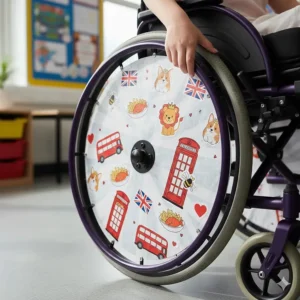
Spoke guards serve dual purposes: protecting fingers from moving spokes whilst providing enormous customisation potential.
Standard Designs: Sports teams, animals, geometric patterns, cartoon characters (£40-£80 per pair)
Custom Graphics: Upload personal artwork, photographs, or designs (£120-£200)
LED Wheel Lights: Battery-free lights activated by wheel rotation, available in multiple colours (£30-£60)
Spoke Reflectors: Safety-focused customisation for visibility in dark winter months (£15-£30)
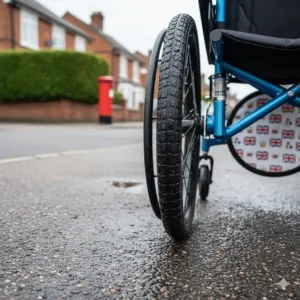
Wheel Covers: Premium fabric covers from companies like Izzy Wheels transform wheelchairs into fashion statements (£120-£155)
The beauty of spoke guards and wheel accessories is their replaceable nature. As your child’s interests evolve from unicorns to football to music bands, you can update the look for £50-£150 rather than replacing the entire wheelchair.
Upholstery & Backrest Customisation
Seating surfaces offer another customisation avenue:
Standard Nylon: Durable, easy-clean, available in 3-5 colours (typically included)
Designer Fabrics: Patterns ranging from camouflage to florals (£80-£150)
Breathable Mesh: Improved air circulation for all-day comfort (£100-£180)
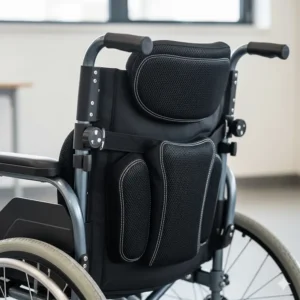
Custom Embroidery: Name, favourite quotes, or designs embroidered onto backrest (£60-£120)
Many UK wheelchair suppliers offer slip-on covers allowing seasonal changes without permanent modification—winter patterns for Christmas, bright colours for summer.
Budget-Friendly Personalisation
Not every family can afford £3,000 premium wheelchairs, but personalisation needn’t break the bank:
Stickers & Decals: Removable vinyl stickers for frames, armrests, footrests (£5-£25)
Handlebar Streamers: Colourful ribbons creating movement and visual interest (£3-£8)
Cup Holders: Practical accessories in fun colours or designs (£8-£15)
Storage Bags: Under-seat or backrest bags in themed fabrics (£15-£45)
Cushion Covers: Transform standard cushions with patterned covers (£12-£30)
DIY communities on platforms like Pinterest showcase creative wheelchair beautification projects using craft supplies, offering personalisation for under £50. Just ensure modifications don’t interfere with safety features or void warranties.
Safety Features & School Compliance
Essential Safety Elements
When selecting a stylish junior wheelchair for school age children, safety features must never be compromised for aesthetics:
Attendant Brakes: Dual-action systems allowing gradual slowing or complete locking prevent runaway wheelchairs on slopes—common in many UK schools. Look for easily accessible brake levers that don’t require excessive force.
Anti-Tip Devices: Small wheels or bars extending from the rear frame prevent backward tipping during active use or navigating kerbs. Particularly important for self-propelling children learning wheelchair skills.
Lap Belts/Pelvic Straps: Secure positioning belts prevent sliding forward during transport or active movement. However, restraint use in schools requires careful consideration under Deprivation of Liberty Safeguards (DOLS).
Wheel Locks: Push-to-lock mechanisms on self-propelling wheelchairs ensure stability during transfers. Integrated locks (like the Zippie Youngster 3’s safari brake) are more child-friendly than traditional toggle locks.
Footrest Safety: Height-adjustable footrests with secure calf straps prevent feet slipping under the chair—a common cause of minor injuries. Swing-away designs reduce trip hazards during transfers.
Crash Testing & Vehicle Transport
If your child travels in their wheelchair within adapted vehicles (common for school transport), crash testing becomes crucial. Look for:
ISO 7176-19 Certification: International standard for wheelchair use in motor vehicles
Crash Test Documentation: Manufacturers should provide specific tie-down points and occupant restraint guidance
Transit-Rated Accessories: Ensure trays, cushions, and accessories are also crash-tested if used during transport
The Invacare Action 3 Junior, Sunrise Zippie models, and most NHS-supplied wheelchairs meet ISO 7176-19 standards. However, many budget Amazon models are NOT crash-tested—verify before purchasing if vehicle transport is required.
UK School Accessibility Requirements
Under the Equality Act 2010, schools must make reasonable adjustments for disabled pupils. Your wheelchair selection should complement these provisions:
Classroom Access: Maximum wheelchair width of 70cm fits through standard 75cm doorways with clearance
Fire Safety: Lightweight, quickly-manoeuvred wheelchairs facilitate emergency evacuation procedures
Storage Security: Schools should provide secure wheelchair storage; compact folding models simplify this
PE Inclusion: Increasingly, schools provide accessible PE equipment; liaising with PE staff about your wheelchair’s capabilities enhances inclusion
Toilet Facilities: Wheelchair-accessible toilets require 150cm turning circle; check your wheelchair’s turning radius
Playground Surfaces: Larger rear wheels (20-24″) handle playground surfaces better than 12-16″ wheels
Consult your child’s Education, Health and Care Plan (EHCP) to ensure wheelchair specifications align with documented educational needs and reasonable adjustments.
Maintenance & Longevity: Protecting Your Investment
Routine Maintenance Schedule
Whether your wheelchair costs £100 or £3,000, proper maintenance extends its lifespan and ensures safety:
Weekly Checks:
- Tyre pressure (if pneumatic) or wear (if solid)
- Brake function testing
- Quick-release mechanisms
- Upholstery integrity
Monthly Servicing:
- Frame cleaning with mild detergent
- Wheel bearing lubrication
- Spoke tension (if relevant)
- Footrest adjustment verification
Quarterly Professional Service:
- Comprehensive safety inspection
- Brake pad replacement (if worn)
- Wheel alignment
- Frame integrity assessment
NHS-supplied wheelchairs include free maintenance through approved repairers. Privately purchased wheelchairs should budget £80-£150 annually for professional servicing, though many families learn basic maintenance tasks.
Common Issues & Solutions
Understanding typical wheelchair problems helps maintain functionality:
Brake Failure: Usually caused by cable loosening or pad wear. Adjustable through most brake systems (DIY) or requires professional replacement (£25-£60).
Wheel Wobble: Often indicates loose axle bolts or damaged bearings. Quick-release wheels should be firmly secured; persistent wobbling needs professional assessment.
Upholstery Sagging: Natural wear after 12-18 months of regular use. Replacement slings cost £40-£120 depending on model.
Folding Mechanism Stiffness: Accumulated dirt in joints causes resistance. Clean with dry brush and apply silicone lubricant to pivot points.
Footrest Loosening: Regular adjustment checking prevents discomfort and safety issues. Most footrests use Allen keys for tightening.
Storage & Transport Care
Proper storage significantly extends wheelchair life:
Indoor Storage: Essential in UK climate. Outdoor exposure degrades upholstery and corrodes mechanisms. Schools should provide weather-protected storage.
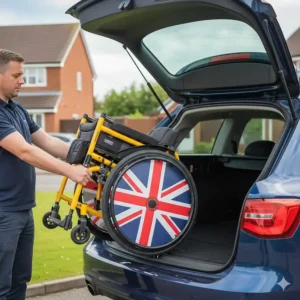
Car Boot Transport: Fold fully before placing in boot; partial folding stresses frame joints. Remove cushions separately to prevent compression damage.
Cleaning After Outdoor Use: British weather means mud, rain, and salt exposure. Wipe down frames and wheels after outdoor activities; thoroughly dry before storage.
Winter Protection: Salt from gritted pavements accelerates corrosion. Rinse wheelchairs after winter school runs.
Summer Care: Prolonged sun exposure fades colours and degrades plastic components. Use wheelchair covers if outdoor storage is unavoidable.
According to wheelchair technicians, proper maintenance and storage can double a wheelchair’s practical lifespan—transforming a £1,500 purchase into 4-6 years of reliable service rather than 2-3 years.
Funding Options & Financial Support
NHS Personal Wheelchair Budgets (PWB)
Personal Wheelchair Budgets allow families to contribute towards upgraded models when NHS standard provision doesn’t meet needs. Introduced across England in 2018, PWBs provide:
Standard Voucher Value: Typically £400-£1,200 depending on assessed clinical needs
Top-Up Capability: Families can add personal funds to access premium models
Three-Year Validity: Adult vouchers last 5 years; children’s 3 years (reflecting growth needs)
Inclusive Maintenance: PWB wheelchairs remain eligible for NHS servicing and repairs for the voucher period
For example, if NHS assessment determines your child needs a wheelchair valued at £800, but you prefer the Invacare Action 3 Junior (£2,800), you’d pay the £2,000 difference. The NHS continues providing maintenance, and if clinical needs change within the voucher period, reassessment occurs.
However, PWB acceptance means opting out of NHS equipment supply for that period. Families should carefully consider whether rapid growth or changing conditions might necessitate earlier replacement.
Charitable Support & Grants
Numerous UK charities support wheelchair provision for children:
Whizz Kidz: Provides wheelchairs, powered chairs, and specialist buggies to children when NHS services cannot. Application process involves professional assessment and demonstrated financial need.
Variety, the Children’s Charity: Grants for mobility equipment including wheelchairs, typically £500-£3,000 per application.
The Family Fund: Supports families raising disabled children with grants for essential items, including mobility equipment.
Tree of Hope: Facilitates fundraising for individual children’s equipment needs through managed campaigns.
Local Rotary Clubs & Lions Clubs: Many local service organisations fund wheelchair purchases; contact regional branches.
School Fundraising: Some schools organise sponsored events specifically for accessibility equipment.
Application success typically requires professional recommendations (OT, physio, consultant), demonstrated financial hardship, and clear explanation of how the wheelchair will enhance your child’s life.
VAT Exemption
Wheelchairs qualify for VAT exemption (0% VAT) under certain conditions:
Eligibility Criteria:
- User has a permanent disability, terminal illness, or chronic sickness
- Wheelchair is for personal use
- Declaration of eligibility is provided
This 20% saving is substantial: on a £3,000 wheelchair, VAT exemption saves £500. Most reputable UK retailers provide VAT exemption declaration forms during checkout. Online purchases through Amazon.co.uk require submitting evidence of eligibility.
Ensure you understand qualifying conditions and retain documentation should HMRC request verification.
Budgeting for the Total Cost
When planning wheelchair purchases, consider total ownership costs:
Initial Purchase: £65-£3,800 depending on model and features
Customisation: £50-£800 for colours, spoke guards, upholstery
Essential Accessories: £100-£300 (cushions, rain covers, bags, safety lights)
Annual Maintenance: £80-£150 (if privately purchased)
Insurance: £40-£120 annually (contents insurance extension or specialist wheelchair insurance)
Replacement Parts: £50-£200 annually for wear items (tyres, brake pads, upholstery)
A realistic 3-year ownership budget for a mid-range wheelchair (e.g., £1,500 purchase) totals approximately £2,200-£2,800 including all costs. Premium models push this to £4,500-£5,500. Budget options might achieve 3-year ownership for £1,000-£1,400.
Understanding total costs prevents financial surprises and helps families make informed decisions balancing quality, features, and affordability.
Real Stories: School-Age Wheelchair Users Share Their Experiences
Emma, Age 13, Birmingham – Celebrating Independence
“Getting my Elite Care ECSP01-18 self-propelling wheelchair when I turned 11 completely changed school for me. Before, I relied on teaching assistants to push me everywhere, which made me feel like a baby. Now I can wheel myself between lessons, join my mates in the playground, and even race them down the corridors (when teachers aren’t looking!). Mum let me choose purple spoke guards with sparkly patterns, and my friends think they’re brilliant. For the first time, my wheelchair feels like it’s part of me, not something holding me back.”
Jack, Age 10, Manchester – Finding the Right Fit
“We struggled with NHS waiting times—16 weeks for assessment, another 10 for the chair. Jack needed mobility support for school immediately, so we purchased the Elite Care ECTR01 transit wheelchair on Amazon for £89. It arrived in two days! Whilst we waited for his NHS wheelchair, the ECTR01 got him to school every day. Now we keep it as a backup for when his main chair needs servicing. For the price, it’s been a lifesaver. Sure, it’s basic, but sometimes basic is exactly what you need.” – Jack’s mum, Sarah
Aisha, Age 12, London – Style Matters
“People don’t always understand that when you’re 12, fitting in matters—like, really matters. My Invacare Action 3 Junior in teal with custom emoji spoke guards makes me feel confident, not different. I change the spoke guards every few months to match my mood or whatever I’m into. Right now, it’s K-pop band designs! Having a stylish junior wheelchair for school age that I genuinely love means I’m not embarrassed when new students arrive or we have school photos. It sounds shallow, but confidence affects everything—my grades improved because I’m not stressed about standing out for the wrong reasons.”
Oliver, Age 14, Edinburgh – Growing with Confidence
“The growth adjustability in my Sunrise Zippie Youngster 3 has been incredible. I got it aged 11 when I was quite small, and over three years, they’ve adjusted the seat width twice and depth three times. I’m now 5’7″ and it still fits perfectly. Mum says without the growth features, we’d have needed two or three different wheelchairs by now. The money we’ve saved has gone towards a sports wheelchair for basketball—something I’m really passionate about. Having equipment that adapts as I grow, rather than me growing out of it, has made my teenage years so much easier.” – Oliver, with support from his mum
These real experiences illustrate critical factors in wheelchair selection: immediate availability versus customised perfection, the psychological importance of style, growth planning, and how the right equipment enhances confidence beyond mere mobility.
Frequently Asked Questions (FAQs)
❓ What is the ideal weight for a stylish junior wheelchair for school age children?
❓ Can I get a stylish junior wheelchair through NHS wheelchair services?
❓ How do I choose between self-propelling and transit wheelchairs for school-age children?
❓ What customisation options make wheelchairs appealing to teenagers?
❓ How long should a wheelchair last for a school-age child?
Conclusion: Choosing Your Child’s Perfect Stylish Junior Wheelchair for School Age
Selecting a stylish junior wheelchair for school age children is about so much more than clinical specifications and mobility solutions. It’s about empowerment, self-expression, independence, and ensuring your child navigates their school years with confidence and dignity. Throughout this comprehensive guide, we’ve explored seven exceptional options ranging from the budget-friendly Elite Care ECTR01 (£65-£110) to the premium Sunrise Medical Zippie Youngster 3 (£3,200-£3,800), each offering unique advantages.
The right wheelchair for your child depends on multiple factors: clinical needs, growth patterns, lifestyle requirements, aesthetic preferences, and budget constraints. If immediate availability and affordability are paramount, the Elite Care ECTR01 or MobiQuip Lightweight provide reliable solutions without extended waiting periods. Families seeking the perfect balance of independence and safety should strongly consider the Elite Care ECSP01-18, whilst those prioritising long-term investment and customisation will find the Invacare Action 3 Junior offers exceptional value despite higher initial costs.
Remember that NHS wheelchair services, Personal Wheelchair Budgets, charitable organisations like Whizz Kidz, and VAT exemption all offer potential financial support—don’t hesitate to explore every avenue. The difference between a basic £100 wheelchair and a £3,000 customised model isn’t merely £2,900; it’s the difference between tolerating mobility equipment and truly loving it, between fitting in and standing out for the right reasons.
As Emma from Birmingham so eloquently expressed, having a wheelchair that feels like “part of me, not something holding me back” transforms the entire school experience. Whether that means teal frames with K-pop spoke guards, ultra-compact travel-friendly designs, or growth-adjustable engineering excellence, the perfect stylish junior wheelchair for school age children exists for your family. Take your time, involve your child in decision-making, consult with therapists and school staff, and choose equipment that enhances not just mobility, but confidence, independence, and joy.
Your child’s school years are precious—ensure their wheelchair supports every adventure, friendship, and achievement along the way.
Recommended for You
- 7 Best First Wheelchair for Toddler UK 2026
- 7 Best Wheelchair for 30 Stone User – Expert UK Guide 2026
- Best 20 Inch Wide Wheelchair for Larger Users in 2026
Disclaimer: This article contains affiliate links. If you purchase products through these links, we may earn a small commission at no additional cost to you. Prices shown are approximate and may vary. Product availability and specifications may change. Always consult with healthcare professionals before purchasing mobility equipment.
✨ Found this helpful? Share it with your mates! 💬🤗
