
In This Article
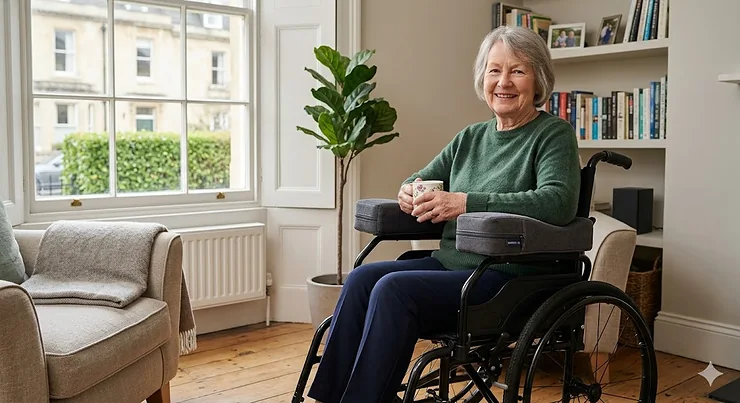
Wheelchair armrest pads are removable foam, gel or sheepskin covers that fit over a wheelchair’s bare armrests to cushion the elbows and forearms, reduce pressure points, and protect ageing or cracked upholstery. They’re one of those products nobody thinks about until the moment they desperately need one — usually around week three of a new wheelchair, when a dull ache in the elbow turns into something you can’t ignore.
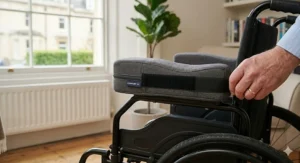
Here’s the thing about stock wheelchair armrests: most are built for durability, not comfort. NHS-issue and budget transport chairs in particular tend to ship with thin, hard plastic or vinyl-wrapped rails that feel fine for a quick trip to the shops and increasingly punishing over an eight-hour day. Swap in a decent set of wheelchair armrest pads, and you’ve solved a problem that the chair manufacturer apparently decided wasn’t worth solving.
This guide rounds up seven real options currently sold on Amazon.co.uk, with honest commentary on who each one suits — whether you’re after a quick foam armrest pad wheelchair fix for under a tenner or a proper gel armrest pad wheelchair user upgrade that’ll outlast the chair itself.
Quick Comparison Table
| Pick | Material | Length | Best For | Price Range |
|---|---|---|---|---|
| EXCEART Armrest Pads | PVC sponge | 14″ full | Everyday budget fix | Under £10 |
| NICENEEDED 4 PCS | Memory foam | Universal | Pairs needing two chairs | £10–£15 |
| QIAMNI Non-Slip Cover | Memory foam | Universal | Office/transport crossover use | £8–£13 |
| Urathon NHS-Style | Polyurethane foam | 12″ (305mm) | NHS-spec chairs | £15–£25 |
| PAIKIUU Sheepskin | Memory foam + sheepskin | Universal | Sensitive or thin skin | £12–£18 |
| TAG543001 (Aftermarket Group) | Foam, black upholstery | 14″ L x 2″ W | Long-term replacement | £20–£30 |
| HERCHR Breathable | Foam, non-slip | Universal | Warm weather / sweaty palms | £10–£16 |
A glance down that table tells most of the story: there isn’t a single “best” pad, just a best pad for your particular armrest and your particular pressure points. The Urathon is the only one engineered specifically to bolt onto NHS-style chairs without modification, which justifies sitting at the pricier end. Meanwhile the EXCEART and QIAMNI options earn their keep on price alone — fine if you’re testing whether padding helps before committing to something sturdier. If you’ve got sensitive skin or you’re managing an existing pressure mark, the sheepskin-lined PAIKIUU is worth the few extra pounds; plain foam alone won’t do what fleece-lined foam does for shear and friction.
💬 Just one click — help others make better buying decisions too! 😊
✨ Don’t Miss These Exclusive Deals!
🔍 Take your wheelchair comfort to the next level with these carefully selected picks. Click through to check current pricing and availability on Amazon.co.uk — stock on the smaller brands moves quickly. 🇬🇧
Top 7 Wheelchair Armrest Pads: Expert Analysis
1. EXCEART Wheelchair Armrest Pads (14 Inch)
EXCEART Wheelchair Armrest Pads are the no-fuss entry point — a pair of PVC sponge covers in the full 14-inch length that simply stretch or strap over your existing rail.
The PVC sponge core won’t match memory foam for plushness, but it does the one job that matters: it stops bare plastic digging into your forearm on a long shopping trip round a British high street. At this price, don’t expect it to survive a daily eight-hour shift — think of it as a stopgap while you decide whether a fuller foam density armrest upgrade is worth the spend.
What stands out: cheapest realistic fix on this list, and genuinely easy to fit without tools.
✅ Pros: Budget-friendly · Tool-free fitting · Wipeable surface
❌ Cons: Thin padding · Not ideal for all-day use
Price range: around £8–£10. For the money, it’s a sensible first step rather than a final answer.
2. NICENEEDED 4 PCS Wheelchair Armrest Covers
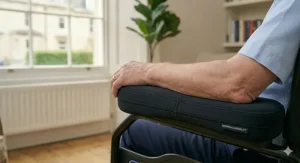
If you’re kitting out two chairs — say, a home chair and a spare for visiting relatives — the NICENEEDED 4 PCS set covers both in one order, which works out cheaper per armrest than buying single pairs twice.
The non-slip memory foam base means the pad stays put rather than sliding round when you push up out of the seat, a small detail that matters more than it sounds once you’ve experienced the alternative. What most buyers overlook is that “non-slip” covers two different problems here: it stops the pad sliding on the rail, and it stops your arm sliding on the pad — useful if you’re prone to slipping during transfers.
✅ Pros: Four-pad value pack · Genuinely non-slip · Washable cover
❌ Cons: Universal fit means looser on very narrow rails
Price range: around £10–£15 for the set, comfortably the best per-pad value here.
3. QIAMNI 1 Pair Wheelchair Non-Slip Armrest Cover
The QIAMNI Armrest Cover sits in that crossover zone between wheelchair and office chair accessory — memory foam padding with a soft outer cover, sized to fit most standard rails without precise measuring.
That dual-purpose design is its real selling point: useful if the chair in question does double duty, say a transport wheelchair that also sits at a desk for video calls. In damp British weather, the fabric cover takes longer to dry than a wipeable vinyl pad would, so it’s not the first choice if the chair lives mostly outdoors.
✅ Pros: Soft, breathable cover · Suits desk and transport use · Easy strap fitting
❌ Cons: Fabric retains moisture · Less durable than vinyl options
Price range: around £8–£13.
4. Urathon Pair of 12″ Replacement Pads for NHS-Style Wheelchairs
This is the specialist on the list. Urathon NHS-Style Armrest Pads are durable, fire-retardant polyurethane foam pads built specifically to bolt straight onto the pre-drilled holes found on most NHS-spec chairs, complete with threaded nuts and bolts supplied.
What most buyers overlook with NHS-style chairs is that generic “universal” pads often don’t actually fit the hole spacing — this is the one on the list built to avoid that headache entirely. The fire-retardant rating is a meaningful UK consideration too, since many care settings and transport providers specifically require it.
✅ Pros: True NHS-chair fit · Fire-retardant foam · Solid, durable build
❌ Cons: Pricier than universal pads · Only suits NHS-style hole spacing
Price range: around £18–£25, but if you’ve got an NHS-issue chair, this is the pad that actually fits rather than the one you hope will.
5. PAIKIUU Wheelchair Armrest Pad Cushion Cover (Sheepskin)
The PAIKIUU Sheepskin Cover pairs a memory foam core with a synthetic sheepskin outer layer, aimed squarely at users managing sensitive skin, early-stage pressure marks, or simply colder hands in a chilly British winter.
The fleece surface reduces friction far more effectively than smooth foam alone, which is the actual mechanism behind why sheepskin-style covers get recommended so often for elbow pressure relief — it’s not just about softness, it’s about cutting the shear forces that cause skin breakdown in the first place. Worth noting: sheepskin-style covers need more frequent washing in humid weather to avoid that slightly damp-wool smell.
✅ Pros: Excellent friction reduction · Warm in cold weather · Good for sensitive skin
❌ Cons: Needs regular washing · Bulkier fit on narrow armrests
Price range: around £12–£18.
6. The Aftermarket Group Wheelchair Armpad (TAG543001)
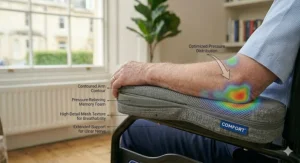
At the premium end sits the TAG543001 Wheelchair Armpad — full length, black upholstered base, built more like an original equipment part than an aftermarket add-on.
This is the one to pick if you’re not interested in replacing the pad again in six months. The black upholstered base resists scuffing better than the thinner PVC options above, and the full 14″ x 2″ sizing matches OEM dimensions closely enough that it looks intentional rather than bolted-on. The trade-off is straightforward: it costs roughly double the budget options for noticeably better longevity.
✅ Pros: Durable, OEM-style build · Smart, low-key finish · Long lifespan
❌ Cons: Higher price · Limited colour options
Price range: around £20–£30 — a long-term replacement armrest pad wheelchair users are less likely to be shopping for again next year.
7. HERCHR 2Pcs Universal Wheelchair Armrest Pads
The HERCHR Universal Pads lean into breathability, with a non-slip, ventilated foam designed to stop the clammy-palm feeling that builds up over a warm afternoon — more relevant in a British summer than you’d think, especially indoors with the central heating left on out of habit.
In practice, the breathable design trades a little plushness for airflow, so it suits users who find dense memory foam too warm against the skin rather than those chasing maximum cushioning.
✅ Pros: Breathable, cooler feel · Non-slip grip · Lightweight
❌ Cons: Less cushioning than dense foam · Universal fit can feel loose
Price range: around £10–£16.
Practical Usage Guide: Fitting, Cleaning & Surviving British Weather
Most armrest pads on this list fit one of two ways — a hook-and-loop strap that wraps under the rail, or a sleeve that slides directly over it. Before ordering, measure your existing armrest’s length and circumference rather than trusting “universal” on the listing; a pad that’s even 2cm too narrow will bunch up at the seam and create exactly the pressure ridge you bought it to avoid.
Once fitted, give the pad a weekly wipe-down if it’s vinyl or PVC, or a gentle hand wash if it’s fabric or sheepskin-style — tumble drying tends to flatten memory foam permanently, so air-dry instead, ideally somewhere with decent airflow given how reluctant British weather is to offer a dry afternoon in autumn. If the chair lives partly outdoors, a damp foam pad left overnight is a fast route to a musty smell, so bring padding indoors when you can rather than leaving it under a rain cover. For users in flats or terraced housing with limited hallway space, a spare set stored flat in a drawer takes up far less room than you’d expect, and means a quick swap when one pair is drying.
Real-World Scenarios: Matching Pads to UK Wheelchair Users
A retired commuter in suburban Manchester, using a manual wheelchair for short trips to the shops and GP, doesn’t need premium durability — the budget EXCEART pad or the NICENEEDED four-pack covers occasional use perfectly well, and the lower cost matters more than longevity here.
A full-time wheelchair user in a London flat, in the chair eight-plus hours daily, is a different case entirely. Here the TAG543001 or the Urathon NHS-style pad earns its higher price through sheer hours of use — a £10 pad compressing after three months ends up costing more than the premium option bought once.
Someone managing an existing pressure mark on the forearm, perhaps recovering from a hospital stay, benefits most from the sheepskin-lined PAIKIUU, where the priority is friction reduction rather than price. In all three cases, the right pad depends less on budget and more on hours of daily use and any existing skin sensitivity — worth honestly assessing before you order.
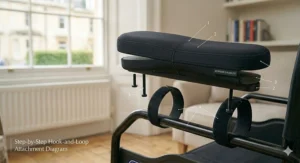
How to Choose Wheelchair Armrest Pads in the UK
- Measure first, browse second. Length, width and rail circumference vary enough between chairs that “universal” doesn’t always mean universal.
- Match the material to your skin, not just your budget. Sheepskin-style covers reduce shear; plain foam mainly adds cushioning thickness.
- Check the fitting method. Strap-on pads suit irregular rails; sleeve-style needs a closer size match.
- Confirm it suits NHS-style chairs if relevant, since hole spacing on those rails is rarely “universal.”
- Factor in hours of daily use. Occasional use favours budget pads; full-time use favours denser, more durable foam.
- Think about cleaning practicality in a flat with limited drying space — vinyl dries faster than fabric or sheepskin.
- Read armrest upholstery replacement listings carefully if your existing rail is cracked, not just padded — a cover won’t fix split plastic underneath.
Common Mistakes When Buying Wheelchair Armrest Pads
The most frequent mistake is buying on price alone for full-time use, then replacing a flattened pad three months later — false economy once you tally the cost across a year. A close second is ignoring hole spacing on NHS-style chairs and assuming a “universal” listing will bolt straight on; it often won’t, leaving the pad zip-tied in place rather than properly fitted. Buyers also tend to skip checking the actual armrest length before ordering, resulting in a pad that overhangs or leaves a bare strip exposed. Finally, plenty of people choose appearance over material — a sleek black finish that turns out to be thin PVC over a hard core, offering barely more cushioning than the bare rail it replaced.
Gel vs Foam vs Memory Foam Armrest Pads
Foam armrest pad wheelchair options — like the EXCEART or HERCHR — are light, breathable and cheap, but compress fastest under sustained weight. Memory foam, used in the NICENEEDED and PAIKIUU pads, moulds to the elbow’s shape and holds that shape longer, at a modest cost increase. True gel armrest pad wheelchair user options aren’t part of this particular line-up, but they’re worth a mention: gel distributes pressure most evenly of the three and stays cooler in summer, though it’s heavier and the priciest option, generally better suited to users managing an active pressure injury under clinical advice.
| Material | Comfort | Durability | Best Suited To |
|---|---|---|---|
| Basic foam/PVC | Moderate | 3–6 months | Occasional use |
| Memory foam | High | 6–18 months | Daily use |
| Gel | Very high | 12+ months | Pressure-sensitive skin |
The table makes the trade-off plain: gel wins on comfort and longevity but costs more upfront, while basic foam is the cheapest way to test whether padding solves your problem at all before committing further.
UK Regulations, Safety Standards & Buying Protections
Wheelchair armrest pads themselves are generally low-risk accessories rather than regulated medical devices in their own right, but if you’re buying a pad bundled with or marketed as part of a medical seating system, it’s worth knowing that medical devices sold in Great Britain fall under MHRA and UKCA marking rules set out on GOV.UK, with CE-marked devices still accepted under transitional arrangements. On the consumer protection side, anything bought online — armrest pads included — comes with an automatic 14-day cooling-off period under the Consumer Contracts Regulations, as explained by Citizens Advice, meaning you can return an ill-fitting pad for any reason, not just a fault.
Pressure relief itself is well covered in NHS guidance: regular repositioning and appropriate cushioning remain the foundation of pressure ulcer prevention for wheelchair users, a point reinforced in clinical literature on pressure sore prevention. Armrest pads play a supporting role here — reducing pressure and shear at the elbow specifically — but they’re not a substitute for a properly assessed seat cushion if pressure injury is an ongoing concern; that’s a conversation for your wheelchair service, not an Amazon listing.
✨ Don’t Miss These Exclusive Deals!
🔍 Browse the full range of wheelchair armrest pads and accessories on Amazon.co.uk — Prime members get next-day delivery on most of the picks above. 🚀
Features That Actually Matter (And Those That Don’t)
Non-slip backing matters — it’s the difference between a pad that stays put and one that migrates round the rail within a week. Fire-retardant foam matters if the chair is used in care or transport settings. Washable covers matter for anyone in a flat with limited laundry options. What matters far less, despite how listings present it, is colour choice or “ergonomic” branding on what’s fundamentally a strip of foam — substance over marketing copy, every time.
Long-Term Cost & Maintenance in the UK
A £9 pad replaced three times a year costs roughly £27 annually before postage; a £25 pad lasting eighteen months works out cheaper per year and saves the hassle of repeat ordering. Maintenance itself is minimal — a weekly wipe for vinyl, a monthly hand wash for fabric or sheepskin — but skipping it shortens lifespan noticeably, particularly in damp UK winters when pads left even slightly wet are more prone to the foam core breaking down early.
Frequently Asked Questions
❓ Are wheelchair armrest pads one size fits all?
❓ Do wheelchair armrest pads come with free delivery on Amazon UK?
❓ Can I wash wheelchair armrest pad covers?
❓ How long do wheelchair armrest pads typically last?
❓ Will armrest pads fit an NHS-issue wheelchair?
Conclusion
There’s no single “best” wheelchair armrest pad — there’s a best pad for your particular chair, your hours of daily use, and how your skin handles pressure and friction. For an occasional-use chair, the budget EXCEART or NICENEEDED options do the job without overspending. For full-time users, the TAG543001 or Urathon NHS-style pad earns its higher price through genuine longevity. And if you’re managing sensitive skin or an existing pressure mark, the sheepskin-lined PAIKIUU is the one worth the extra few pounds. Whichever you choose, remember the 14-day cooling-off period has you covered if the fit isn’t quite right.
✨ Don’t Miss These Exclusive Deals!
🔍 Ready to upgrade your wheelchair’s comfort? Check current pricing and availability for all seven picks on Amazon.co.uk and find the right fit for your chair. 🇬🇧
Recommended for You
- Tension Adjustable Wheelchair Back: 7 Best UK Picks (2026)
- 7 Best Adjustable Wheelchair Backrests UK Users Rate in 2026
- Best Lumbar Support Cushion Wheelchair UK 2026: 7 Top Picks
Disclaimer: This article contains affiliate links. As an Amazon Associate, I earn from qualifying purchases. If you purchase products through these links, we may earn a small commission at no additional cost to you.
✨ Found this helpful? Share it with your mates! 💬🤗
