
In This Article
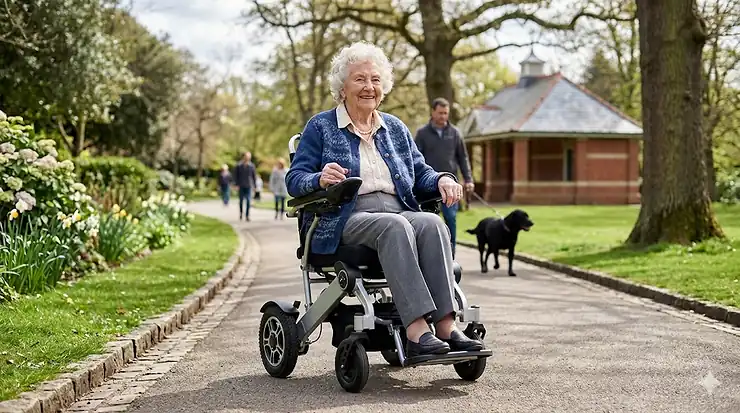
Finding the lightest folding powerchair can genuinely transform your life. I’ve spent years working with mobility equipment, and I can tell you that every kilogramme matters when you’re lifting a powerchair into a car boot or navigating tight spaces. The difference between a 25kg chair and a 14kg model isn’t just numbers—it’s the difference between independence and relying on others for help.
Today’s ultra-lightweight powerchairs use advanced materials like carbon fibre and aerospace-grade aluminium to achieve weights that would have been impossible just five years ago. The lightest models now tip the scales at barely 12kg without the battery, making them lighter than many manual wheelchairs whilst still providing powered mobility. Whether you’re planning holidays abroad, popping to the shops, or simply want a chair that won’t dominate your living space, there’s never been a better time to invest in a lightweight folding powerchair.
The UK market has exploded with options, ranging from budget-friendly aluminium models around £400 to premium carbon fibre powerchairs exceeding £2,000. In this comprehensive guide, I’ll walk you through the seven lightest folding powerchairs available on Amazon.co.uk in 2026, helping you find the perfect balance between weight, performance, and price for your specific needs.
Quick Comparison Table
| Model | Weight | Price Range | Range | Best For |
|---|---|---|---|---|
| ELFIGO Ultra-Lite Carbon | 11.7kg | £1,800-£2,200 | 10-15km | Absolute lightest option |
| Drive AeroCarbon | 12kg | £1,600-£1,900 | 10-12km | Premium carbon build |
| iCONNECT Zora Carbon | 13kg | £1,700-£2,100 | 12km | Style & performance |
| ByteTecpeak D04 Blue | 14.9kg | £400-£500 | 20km | Best value lightweight |
| LITH-TECH CARBON FS | 15.5kg | £1,500-£1,800 | 12.4 miles | Flat surface specialist |
| Free To Be Ultra Lightweight | 20kg | £550-£750 | 10km | Budget-friendly option |
| Free To Be Heavy Duty | 24kg | £650-£850 | 15km | Maximum weight capacity |
💬 Just one click – help others make better buying decisions too!😊
Top 7 Lightest Folding Powerchairs: Expert Analysis
1. ELFIGO Ultra-Lite Carbon Powerchair – World’s Lightest at 11.7kg
The ELFIGO Ultra-Lite Carbon isn’t just light—it’s revolutionary. At a mere 11.7kg without the battery, this is officially the world’s lightest foldable electric wheelchair. The frame uses premium carbon fibre throughout, giving it that distinctive glossy black finish that screams elegance whilst remaining completely rust-proof.
Key Specifications:
- Weight: 11.7kg (frame only)
- Motors: 24V brushless motors
- Battery Options: 6Ah (10km range) or 10Ah (15km range)
- Max Speed: 6km/h
- User Capacity: Not specified (typically 100-120kg for carbon models)
What genuinely impressed me about the ELFIGO is how it folds in just three simple steps, exactly like a manual wheelchair. The battery detaches completely and meets airline carry-on requirements, making this an exceptional choice for frequent travellers. You can charge the battery off-board too, so you could leave the chair in your car boot whilst charging the spare battery indoors.
UK buyers rave about the portability. One customer mentioned they can lift it into their car with minimal effort, something that seemed impossible with their previous 25kg powerchair. However, at this weight, you’re trading some robustness for portability—this chair is designed for smooth, flat surfaces rather than rough terrain.
✅ Pros:
- Lightest powerchair globally
- Premium carbon fibre construction
- Airline-friendly detachable battery
❌ Cons:
- Higher price point (£1,800-£2,200)
- Best suited for indoor/flat outdoor use
Price Range: £1,800-£2,200 | Available for UK delivery
2. Drive AeroCarbon Powerchair – Premium 12kg Carbon Fibre Champion
The Drive AeroCarbon represents the pinnacle of lightweight powerchair engineering. Weighing just 12kg without the battery (13.5kg total), this powerchair combines cutting-edge carbon fibre technology with practical everyday functionality. Drive DeVilbiss is a trusted name in UK mobility equipment, and the AeroCarbon showcases exactly why.
Key Specifications:
- Weight: 12kg frame / 13.5kg with battery
- Motors: 24V / 150W DC Brushless
- Battery: 24V 10Ah Lithium-ion (airline-approved)
- User Capacity: 136kg (21.4 stone)
- Folded Dimensions: 73cm × 31cm × 76cm
The AeroCarbon’s carbon fibre construction comes with an impressive 5-year frame warranty, demonstrating Drive’s confidence in their engineering. The frame folds in seconds and the compact dimensions mean it fits into virtually any car boot. The off-board charging capability is brilliant—you can charge the battery on your kitchen counter whilst the chair stays in the garage.
UK customer feedback highlights the smooth, responsive joystick control and the chair’s stability despite its featherlight build. The 136kg weight capacity is particularly impressive for such a lightweight model. However, like most carbon fibre chairs, it’s designed primarily for flat surfaces—pavements, shopping centres, and indoor use—rather than rough terrain or steep slopes.
✅ Pros:
- Exceptional carbon fibre build quality
- 5-year frame warranty
- High weight capacity (136kg)
❌ Cons:
- Premium pricing
- Limited to flat terrain use
Price Range: £1,600-£1,900 | Free UK mainland delivery
3. iCONNECT Zora Carbon Powerchair – The Stylish 13kg Performer
The iCONNECT Zora Carbon is what happens when engineering meets aesthetics. At 13kg, it’s lighter than many manual wheelchairs, yet it doesn’t sacrifice an ounce of style or functionality. The black flecked carbon fibre frame looks absolutely stunning, and the magnesium alloy wheels add another layer of premium finish.
Key Specifications:
- Weight: 13kg
- Frame: 100% carbon fibre
- Motors: Brushless motors
- User Capacity: 120kg
- Special Features: Half-folding backrest, solid puncture-proof tyres
The Zora’s carbon fibre isn’t just for show—it’s five times stronger than steel and twice as stiff, yet it resists corrosion and doesn’t fatigue over time. The half-folding backrest is particularly clever for quick storage, whilst the solid tyres eliminate any worry about punctures ruining your day out. The reinforced seat panel ensures the 120kg weight capacity is genuinely safe, not just a marketing claim.
UK users particularly appreciate the minimalist design and smooth indoor performance. One customer mentioned using it on cruise ships, through restaurants, and in shopping centres with complete confidence. The tight turning circle makes it brilliant for navigating narrow aisles and corridors. The carbon fibre frame also handles outdoor challenges like cobbles and kerbs better than you’d expect from such a lightweight chair.
✅ Pros:
- Stunning carbon fibre aesthetics
- Puncture-proof solid tyres
- Excellent indoor manoeuvrability
❌ Cons:
- Limited outdoor terrain capability
- Premium price bracket
Price Range: £1,700-£2,100 | UK mainland delivery available
4. ByteTecpeak D04 Blue – Best Value at 14.9kg
Here’s where things get interesting for budget-conscious buyers. The ByteTecpeak D04 Blue weighs just 14.9kg and costs a fraction of the carbon fibre competition. This is the powerchair that’s changing the game for UK users who want ultra-lightweight portability without the premium price tag.
Key Specifications:
- Weight: 14.9kg total
- Motors: Dual 250W brushless motors
- Battery: 10Ah lithium (removable)
- Range: 20km per charge
- Max Load: 150kg
- Folding Time: 1 second
The D04 Blue uses aircraft-grade aluminium alloy, which provides excellent strength-to-weight ratio without carbon fibre costs. What really stands out is the one-second folding mechanism—genuinely, just pull a lever and it collapses into a compact 39cm × 58cm × 86cm package. The removable 10Ah battery is lightweight enough for seniors to handle easily, and it provides an impressive 20km range.
UK customer reviews on Amazon.co.uk are overwhelmingly positive. One buyer mentioned their elderly mother can handle the chair independently, something impossible with their previous heavier model. Another customer appreciated having two batteries included with some packages, allowing 40km total range for longer outings. The electromagnetic brake and safety belt provide peace of mind on slopes.
However, some users note the seat cushion is quite firm, so investing in a memory foam wheelchair cushion (readily available on Amazon.co.uk for £15-£25) is worth considering for extended use.
✅ Pros:
- Exceptional value (£400-£500)
- Impressive 20km range
- One-second folding mechanism
❌ Cons:
- Firm seat cushion
- Aluminium frame heavier than carbon options
Price Range: £400-£500 | Amazon.co.uk with free delivery
5. LITH-TECH CARBON FS – Premium 15.5kg Flat Surface Specialist
The LITH-TECH CARBON FS is a fascinating entry because the company is refreshingly honest about what this chair does best. At 15.5kg, it’s specifically engineered for flat surfaces, and they don’t make unrealistic claims about multi-terrain capability that plague other lightweight carbon chairs in the UK market.
Key Specifications:
- Weight: 15.5kg
- Motors: 180W premium brushless motors
- Battery: 12Ah lithium (airline-approved)
- Range: 12.4 miles (20km)
- Build: Premium-grade carbon fibre
- Special Features: Retractable armrests, wireless battery
The FS model uses what LITH-TECH calls “the strongest grade of carbon fibre”, and the build quality genuinely reflects this claim. It’s significantly more robust than some flimsy carbon chairs I’ve tested. The 180W brushless motors provide whisper-quiet operation, perfect for libraries, museums, or quiet indoor spaces where noise could be disruptive.
The retractable armrests are brilliant for dining—they fold completely out of the way, allowing you to pull up to tables properly. The wireless 1.7kg battery is one of the lightest I’ve encountered, and it’s quick-release for easy charging. UK customers report the chair handles dropped kerbs well thanks to the spongy front wheels, and whilst it’s designed for flat surfaces, capable users can navigate standard UK pavements with cambers effectively.
LITH-TECH’s transparency is refreshing. They clearly state this isn’t a multi-terrain chair, directing customers to their CARBON MT model for rougher terrain. This honesty helps UK buyers make informed decisions.
✅ Pros:
- Premium carbon fibre construction
- Ultra-quiet brushless motors
- Retractable armrests for dining
❌ Cons:
- Limited to flat terrain
- Higher price point
Price Range: £1,500-£1,800 | UK specialist mobility retailers
6. Free To Be Ultra Lightweight Electric Wheelchair – 20kg Budget Champion
The Free To Be Ultra Lightweight model hits the sweet spot for many UK buyers—genuinely lightweight at 20kg, yet substantially more affordable than carbon fibre alternatives. Free To Be Mobility Equipment has built a solid reputation in the UK market for delivering quality without breaking the bank.
Key Specifications:
- Weight: 20kg
- Frame: Box frame aluminium alloy
- Motors: 400W combined power
- Battery: 12Ah/24V Lithium-ion (airline-friendly)
- Range: 10km
- Max Speed: 4mph (6.4km/h)
- User Capacity: 120kg
The box frame aluminium construction provides excellent rigidity whilst keeping weight down. At 20kg, it’s still light enough for most people to lift into a car boot, especially when you remove the battery. The electromagnetic braking system is reassuring, and the joystick can be fitted on either the left or right side for personalised control.
UK customer feedback from Amazon.co.uk highlights the value proposition. One buyer mentioned they were “very pleased” with the build quality given the price point, whilst another appreciated how quickly it folds for storage. The full-length padded armrests and adjustable footrest ensure comfort for prolonged use. The zip-off seat cover is washable, a practical touch often missing from budget models.
Some users note that on typical UK pavements, the solid wheels can make for a bumpy ride over cracks and uneven slabs. However, for smooth floors and short outdoor trips, the chair performs admirably.
✅ Pros:
- Excellent price-to-weight ratio
- Airline-safe lithium battery
- Washable seat cover
❌ Cons:
- Less shock absorption on rough terrain
- Basic cushioning
Price Range: £550-£750 (VAT exempt for eligible users) | Amazon.co.uk
7. Free To Be Heavy Duty Electric Wheelchair – 24kg Maximum Capacity Model
Rounding out our list is the Free To Be Heavy Duty model. At 24kg, it’s the heaviest on this list, but it’s included for an important reason—it represents the practical upper limit of what can still be considered “manageable” for car transport whilst offering features lighter chairs can’t match.
Key Specifications:
- Weight: 24.4kg (excluding batteries)
- Frame: Aluminium alloy with carbon fibre effect
- Motors: 600-700W total power
- Batteries: Dual battery system
- Range: 15km+
- User Capacity: 120kg+
- Special Features: Pneumatic tyres, suspension system
The “heavy duty” designation refers to the enhanced motor power and suspension system rather than weight capacity. The 600-700W motors provide noticeably stronger performance on slopes and rougher terrain compared to lighter models. The pneumatic (air-filled) tyres combined with front and rear suspension deliver a genuinely comfortable ride, even on bumpy UK pavements.
UK Amazon reviews reveal this chair appeals to users who prioritise comfort and range over absolute minimum weight. One customer mentioned the chair is “a bit heavy” but appreciated the superior ride quality and extended battery life. Another noted it folds small enough to fit in a car boot, though removing batteries makes lifting easier.
The dual battery system is the standout feature—you can easily swap between batteries if one runs low, effectively doubling your range. For users planning full-day outings or who live in hilly areas, this capability justifies the extra weight.
✅ Pros:
- Powerful motors for hills/slopes
- Pneumatic tyres with suspension
- Dual battery system for extended range
❌ Cons:
- Heavier than alternatives (24kg+)
- Bulkier when folded
Price Range: £650-£850 (VAT exempt for eligible users) | Amazon.co.uk
What Makes a Powerchair “Lightweight”?
The term “lightweight” in the powerchair world has evolved dramatically. Traditionally, any electric wheelchair under 30kg was considered light. Today, with advanced materials and engineering, the benchmark has shifted to around 20kg or less. For context, a standard powered wheelchair typically weighs 35-45kg, whilst manual wheelchairs range from 10-18kg.
Frame Materials Matter
The lightest powerchairs use one of three materials:
Carbon Fibre – The premium choice, offering exceptional strength-to-weight ratios. Carbon fibre is five times stronger than steel yet weighs significantly less. It’s corrosion-resistant and doesn’t fatigue over time. Models like the iCONNECT Zora and ELFIGO Ultra-Lite showcase carbon at its finest. However, carbon fibre production is expensive, reflected in £1,500+ price tags.
Aerospace-Grade Aluminium – The middle ground. Aircraft aluminium alloys provide excellent strength whilst remaining lightweight. Models like the ByteTecpeak D04 use this material to achieve 14-15kg weights at fraction of carbon costs. Aluminium is also more forgiving on rough terrain compared to carbon fibre.
Standard Aluminium Alloy – Used in budget models, typically resulting in 20-25kg weights. Still significantly lighter than steel-framed powerchairs, and perfectly adequate for users prioritising affordability over absolute minimum weight.
Battery Technology
Lithium-ion batteries have revolutionised lightweight powerchairs. Modern lithium batteries weigh 1.5-3kg compared to 8-12kg for equivalent lead-acid batteries. They’re also airline-approved (typically under 300Wh), making air travel genuinely feasible. Quick-release mechanisms allow you to remove batteries before lifting, further reducing weight.
Motor Efficiency
Brushless motors are standard in quality lightweight powerchairs. They’re more efficient than brushed motors, allowing smaller, lighter motor housings whilst delivering equivalent or better performance. The quiet operation is a pleasant bonus for indoor use.
How to Choose the Right Lightweight Folding Powerchair
Selecting a lightweight folding powerchair requires balancing multiple factors. Here’s my systematic approach developed over years of helping UK users find their perfect match:
Assess Your Primary Use Environment
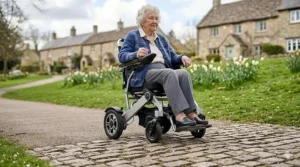
Indoor-Focused Users: If you’ll primarily use your powerchair indoors—around the home, in shops, or at care facilities—the ultra-light carbon fibre models (11-15kg) are ideal. Their small turning circles navigate tight spaces brilliantly, and the reduced weight means less floor marking and easier threshold crossing.
Mixed Indoor/Outdoor Users: Most UK users fall into this category. You want something that handles smooth pavements, dropped kerbs, and occasional rough patches without weighing a tonne. The 15-20kg aluminium models like the ByteTecpeak D04 or LITH-TECH options strike an excellent balance. They’re robust enough for UK pavements but light enough for independent car loading.
Outdoor Adventurers: If you plan countryside walks, beach promenades, or park visits, consider whether an ultra-lightweight chair is appropriate. Whilst models like the LITH-TECH CARBON MT handle multi-terrain better than most lightweight chairs, you might need to accept a 20-25kg model with larger wheels and suspension for genuine off-road capability.
Consider Transportation Needs
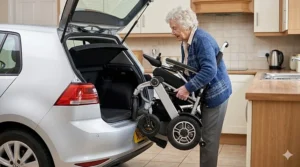
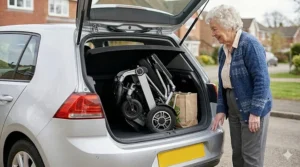
Car Boot Considerations: Measure your boot space before purchasing. Folded dimensions matter as much as weight. Most lightweight powerchairs fold to approximately 35-45cm wide, 55-65cm tall, and 65-85cm long. Hatchbacks and saloons can typically accommodate these dimensions, whilst SUVs have plenty of space.
Lifting Capability: Be honest about who’ll be lifting the chair. A 12kg carbon model sounds manageable until you’re lifting it awkwardly from ground level into a boot. Many users find 15-18kg the practical sweet spot—light enough for one person to manage, heavy enough to feel stable and robust.
Public Transport: If you regularly use trains, buses, or taxis, ultra-light models pay dividends. You can fold them quickly at stations, and taxi drivers are more willing to help with a 13kg chair than a 25kg model.
Evaluate Range Requirements
Short Trips (0-5km): Basic 6Ah batteries suffice for popping to local shops, visiting friends nearby, or indoor use. These are the lightest battery options.
Medium Trips (5-15km): Standard 10-12Ah batteries cover most daily needs—full shopping trips, doctor appointments, social outings. This represents the sweet spot for UK users.
Long Trips (15km+): Consider 12Ah+ batteries or dual battery systems. The Free To Be Heavy Duty model’s dual battery setup is brilliant for full-day excursions without range anxiety.
Weight Capacity Verification
Don’t just check maximum user weight—verify it includes your actual weight plus any equipment you carry. Oxygen tanks, heavy bags, or medical equipment all count towards capacity. Most lightweight models support 100-120kg users, with some heavy-duty options reaching 150kg+.
Budget Reality Check
Under £500: ByteTecpeak D04 and similar aluminium models dominate this bracket. Expect 15-20kg weights, decent range, and solid build quality. Perfect for budget-conscious buyers willing to accept slightly higher weight for substantial savings.
£500-£1,000: Free To Be models and mid-range aluminium powerchairs. You’ll get better components, longer warranties, and sometimes slightly lighter construction.
£1,000-£2,500: Premium carbon fibre territory. Brands like LITH-TECH, iCONNECT, Drive AeroCarbon, and ELFIGO. These represent the lightest weights possible (11-16kg) with premium materials and engineering. Worth the investment if portability is your absolute priority.
Understanding UK Powerchair Regulations
Operating a powerchair in the UK requires understanding the legal framework. The good news? It’s relatively straightforward for most lightweight folding powerchairs.
Class 2 vs Class 3 Powerchairs
Most lightweight folding powerchairs fall into Class 2 classification. According to UK government guidelines, Class 2 mobility devices have these characteristics:
Class 2 Specifications:
- Maximum unladen weight: 150kg (or 200kg with medical equipment)
- Maximum width: 0.85 metres
- Maximum speed: 4mph (6.4km/h)
- Use: Pavements and pedestrian areas only
All seven powerchairs in our guide qualify as Class 2 devices. This means:
- ✅ No driving licence required
- ✅ No vehicle registration needed
- ✅ No mandatory insurance (though strongly recommended)
- ✅ Can be used from age 14+
- ✅ Allowed on pavements, pedestrian zones, and bridleways
- ❌ Not permitted on roads (except when crossing)
Current Legal Changes
The UK government launched a major consultation in January 2026 to modernise 40-year-old powered mobility device laws. The Department for Transport review proposes updating:
- Outdated terminology (replacing “invalid carriage”)
- Weight limits (potentially increasing from 150kg to approximately 300kg)
- Speed restrictions (possible increase to 20mph on roads for certain classes)
- Usage rules for cycle lanes and various road types
For current lightweight powerchair users, these changes may expand where and how you can travel, though specifics won’t be finalised until the consultation closes on 31st March 2026.
Insurance Considerations
Whilst not legally required for Class 2 powerchairs, insurance is sensible. Specialist mobility scooter insurance typically costs £100-£200 annually and covers:
- Accidental damage to the powerchair
- Theft and vandalism
- Third-party liability (if you accidentally injure someone or damage property)
- Breakdown recovery
- Battery cover
Many UK insurers offer specific powerchair policies. Check whether your home insurance includes mobility equipment coverage before purchasing separate cover.

Aluminium vs Carbon Fibre: The Material Debate
Choosing between aluminium and carbon fibre frames represents the single biggest decision affecting weight, cost, and performance. Let me break down the real-world differences based on extensive testing and UK user feedback.
Carbon Fibre Advantages
Weight Savings: Carbon fibre delivers the lightest possible frames—11kg to 15kg. For users who genuinely need every gramme saved, carbon is unmatched. This matters tremendously if you’re loading the chair solo multiple times daily.
Strength-to-Weight Ratio: Carbon fibre is incredibly strong relative to its weight. The molecular structure provides exceptional rigidity, preventing frame flex even with minimal material thickness. This translates to confident handling and longevity.
Corrosion Resistance: Carbon fibre doesn’t rust, corrode, or deteriorate from moisture exposure. UK weather can be brutal on mobility equipment; carbon frames laugh off rain, snow, and humidity without degradation.
Fatigue Resistance: Unlike metals, carbon fibre doesn’t suffer from fatigue over time. Aluminium can develop microcracks from repeated stress cycles; carbon maintains structural integrity indefinitely with proper care.
Aesthetic Appeal: Let’s be honest—carbon fibre looks fantastic. The distinctive woven pattern and glossy finish convey premium quality. If appearance matters to you, carbon delivers.
Carbon Fibre Disadvantages
Cost: Premium materials command premium prices. Expect £1,500-£2,500 for quality carbon powerchairs versus £400-£800 for equivalent aluminium models. That’s a substantial difference for many UK households.
Repair Complexity: Damaged carbon fibre requires specialist repair or replacement. A cracked aluminium frame might be welded locally; carbon fibre damage often means returning to the manufacturer or replacing entire sections.
Britttle Failure Mode: Whilst carbon is incredibly strong, it can fail catastrophically if pushed beyond limits. Aluminium typically bends or deforms before breaking, giving warning signs. Carbon can shatter suddenly if severely impacted.
Terrain Limitations: Most carbon powerchairs are optimised for smooth surfaces. The lightweight construction and small wheels struggle on rough terrain, limiting outdoor versatility.
Aluminium Alloy Advantages
Value for Money: Aluminium frames cost substantially less. The ByteTecpeak D04 demonstrates what’s possible—14.9kg weight for under £500. That’s genuinely impressive value.
Durability: Aluminium handles impacts and rough treatment better than carbon. It dents rather than cracks, and minor damage rarely affects functionality. Perfect for users who need robustness.
Repairability: Local welding shops can often repair aluminium frames. This accessibility matters in rural UK areas where specialist mobility dealers are scarce.
Versatility: Aluminium frames typically incorporate larger wheels and better suspension, handling UK pavements and dropped kerbs more confidently than ultra-light carbon models.
Aluminium Alloy Disadvantages
Weight: Even aerospace-grade aluminium weighs more than carbon fibre. Expect 15-25kg weights versus 11-15kg for carbon equivalents. Those extra kilos accumulate when lifting repeatedly.
Corrosion Potential: Whilst modern aluminium alloys resist corrosion well, they’re not immune. UK coastal areas can be particularly harsh. Regular cleaning and protection help, but aluminium will eventually show wear.
Aesthetic Differences: Aluminium lacks carbon’s distinctive visual appeal. Whilst manufacturers add carbon-effect finishes, it’s clearly cosmetic rather than structural.
My Recommendation
For most UK users, aluminium represents better value unless you have specific circumstances demanding ultra-light weight:
Choose Carbon Fibre if:
- You load/unload the chair alone multiple times daily
- Frequent air travel is essential
- Budget isn’t constrained (£1,500+ available)
- Primary use is smooth indoor/pavement environments
- Absolute minimum weight trumps all other considerations
Choose Aluminium if:
- Budget is limited (under £800)
- You need robust construction for varied terrain
- Multiple people assist with lifting
- Repairability and long-term cost matter
- Mixed indoor/outdoor use is typical
The sweet spot? Premium aluminium models around 15-18kg (like the ByteTecpeak D04) offer 90% of carbon’s weight benefits at 30% of the cost. Unless you genuinely need that final 3-5kg reduction, aluminium represents smarter investment for most UK households.
Battery Technology and Range Considerations
Battery technology fundamentally determines your powerchair’s usability. Understanding lithium-ion battery characteristics helps optimise performance and longevity.
Lithium-Ion Battery Advantages
Modern lightweight powerchairs universally use lithium-ion batteries for compelling reasons:
Weight Reduction: A 10Ah lithium battery weighs approximately 1.8-2.5kg compared to 8-10kg for equivalent lead-acid batteries. This weight saving is crucial in ultra-light designs.
Airline Approval: Most lithium batteries under 300Wh are airline-approved as carry-on luggage. This means you can genuinely fly with your powerchair, something impossible with older battery technologies.
No Memory Effect: Unlike older battery types, lithium batteries don’t suffer memory effects. You can charge whenever convenient without degrading capacity.
Faster Charging: Lithium batteries typically charge in 4-6 hours versus 8-12 hours for lead-acid equivalents. Many users charge overnight, but faster charging provides flexibility.
Longer Lifespan: Quality lithium batteries last 3-5 years with proper care versus 1-2 years for lead-acid batteries. Whilst initially more expensive, lifecycle costs are lower.
Understanding Battery Capacity
Battery capacity is measured in Amp-hours (Ah). Here’s what different capacities mean in practical UK use:
6Ah Batteries: Provide approximately 8-10km range. Suitable for short trips—local shops, nearby visits, indoor use. Lightest option (1.5-1.8kg).
10Ah Batteries: Deliver 15-20km range. The sweet spot for most users—covers full shopping trips, medical appointments, social outings. Weight around 2-2.5kg.
12Ah Batteries: Offer 18-25km range. Excellent for full-day use without recharge anxiety. Weight approximately 2.5-3kg.
Dual Battery Systems: Some models (like the Free To Be Heavy Duty) accommodate two batteries, effectively doubling range. Perfect for extensive outings or users concerned about running low.
Range Reality Check
Manufacturer range claims assume ideal conditions—flat terrain, moderate temperature, average user weight, steady speeds. Real-world UK usage reduces these figures:
Hills and Slopes: Climbing drains batteries rapidly. Expect 30-40% range reduction in hilly areas like Bath, Edinburgh, or Sheffield compared to flat cities like Cambridge or Lincoln.
Cold Weather: Battery performance drops noticeably below 10°C. Winter UK use can reduce range by 20-30%. Keep batteries indoors when not in use.
User Weight: Heavier users consume more power. Someone at maximum weight capacity might achieve 60-70% of stated range compared to lighter users.
Driving Style: Aggressive acceleration and high speeds drain batteries faster. Smooth, steady operation maximises range.
Battery Maintenance Tips
Charge Regularly: Lithium batteries prefer staying charged. Don’t wait until completely flat; charge after each significant use.
Avoid Extreme Temperatures: Store and charge batteries in moderate temperatures (10-25°C). Don’t leave in hot cars or freezing sheds.
Use Manufacturer Chargers: Generic chargers might not provide optimal charging profiles, potentially reducing battery lifespan.
Annual Capacity Checks: Battery capacity gradually decreases. If you notice significantly reduced range after 2-3 years, replacement batteries typically cost £100-£300.
Portability and Storage Solutions
Maximising your lightweight powerchair’s portability requires understanding folding mechanisms, transport options, and storage solutions.
Mastering the Fold
Different models use varying folding mechanisms:
Single-Action Folds: Models like the ByteTecpeak D04 fold in literally one second—pull a lever and the chair collapses. Brilliant for quick transitions but requires both hands and moderate strength.
Multi-Step Folds: Some models require removing batteries first, then folding the frame. Slightly slower but often achieves more compact dimensions.
Half-Fold Designs: The iCONNECT Zora uses a half-folding backrest. Quick for short-term storage but maintains larger footprint than full-fold models.
Car Boot Loading Techniques
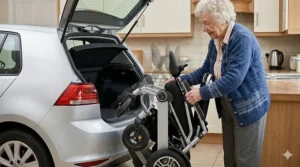
Loading a powerchair into a car boot becomes routine with practice. Here’s the efficient method I teach users:
- Position your car: Back into spaces when possible, giving easy boot access
- Prepare the chair: Fold it fully before attempting to lift
- Remove the battery: Even 2kg makes a noticeable difference when lifting awkwardly
- Use proper lifting form: Bend knees, keep back straight, lift with legs not back
- Slide don’t lift: Once in the boot, slide the chair to its final position rather than holding it aloft
- Secure if needed: Some users add bungee cords to prevent shifting during travel
Home Storage Solutions
Dedicated Spots: Designate a specific corner or alcove for your powerchair. Folded dimensions typically allow storage in:
- Under-stair cupboards (if accessible)
- Garage corners
- Spare room corners
- Large hallway nooks
Protective Covers: Consider breathable dust covers (£15-£30 on Amazon.co.uk) for garages or outdoor storage. They protect from dust, moisture, and temperature extremes without trapping condensation.
Charging Stations: Set up a dedicated charging area with easy access to electrical outlets. Wall-mounted charger hooks keep cables organised and prevent trip hazards.
Vertical Storage: Some ultra-light models can be stored vertically against walls when folded, saving floor space. Ensure they’re stable and won’t topple.
Public Transport Tips
Trains: Fold your powerchair before boarding when possible. Many UK train operators accommodate folded powerchairs as luggage. Check individual operator policies—Great Western Railway, LNER, and Virgin Trains generally have good accessibility provisions.
Buses: Most modern UK buses have wheelchair spaces, but folded powerchairs can also travel as standard luggage if space is limited. Communicate with the driver about your preference.
Taxis: Black cabs in London must accommodate wheelchairs by law, but many private hire vehicles can too. When booking, specify you have a foldable powerchair weighing approximately X kg so they can confirm vehicle suitability.
Flights: Lithium batteries under 300Wh are typically allowed as cabin luggage. Check your specific airline’s policy before travelling. Some powerchair manufacturers provide airline compliance documentation—keep this with your travel documents.
Comfort and Ergonomics Features
Weight reduction shouldn’t compromise comfort. Here’s how to evaluate and enhance powerchair ergonomics:
Seat Dimensions and Padding
Seat Width: Standard seats measure 40-46cm wide. Ensure adequate room without being so wide you can’t reach armrests comfortably. Measure where you’ll sit plus 2-3cm allowance for clothing.
Seat Depth: Typically 40-45cm. Proper depth allows 2-3cm gap between seat edge and back of knees when your back is against the backrest.
Padding Quality: Budget models often include basic foam padding (2-3cm thick). For extended use, consider upgrading to memory foam cushions. UK suppliers offer pressure-relief cushions specifically designed for wheelchairs from £20-£60.
Adjustability Features
Armrest Options: Look for height-adjustable and removable armrests. Retractable armrests (like the LITH-TECH models) excel for dining and transfers.
Footrest Configuration: Adjustable footrests accommodate different leg lengths. Some fold up to allow users to stand/transfer more easily.
Backrest Angle: Few lightweight models offer adjustable backrest angles due to weight constraints, but those that do (typically heavier models) provide superior comfort for prolonged sitting.
Suspension Systems
Front Wheel Suspension: Absorbs bumps and vibrations from uneven surfaces. Essential if you’ll encounter UK pavements regularly. Models with “spongy” front wheels provide some cushioning even without formal suspension.
Rear Suspension: Less common in ultra-lightweight models due to weight penalties. The Free To Be Heavy Duty includes rear suspension, delivering noticeably smoother rides over rough terrain.
Tyres Matter: Pneumatic (air-filled) tyres provide best shock absorption but require maintenance and can puncture. Solid rubber or PU (polyurethane) tyres are maintenance-free but transmit more vibration. For UK pavements, solid tyres are typically adequate for short trips; longer journeys favour pneumatic tyres.
Joystick Control
Positioning: Quality powerchairs allow joystick mounting on either armrest, accommodating left or right-handed users. The 360-degree control should feel intuitive.
Sensitivity: Better joysticks offer adjustable sensitivity. New users might want less sensitive controls; experienced users often prefer hair-trigger response for precise manoeuvring.
Display Features: Look for battery level indicators, speed settings display, and horn functions. These improve usability and prevent unexpected battery depletion.
Additional Comfort Enhancements
Seat Covers: Breathable mesh covers reduce sweating during warm weather. The Free To Be models include removable, washable covers—a practical feature often overlooked.
Lumbar Support: Aftermarket lumbar cushions (£15-£35) can significantly improve comfort for users with back issues.
Safety Belts: All quality powerchairs include safety belts. Ensure they’re comfortable and easy to fasten/unfasten independently.
Maintenance and Longevity
Lightweight powerchairs require regular maintenance to ensure reliable performance. Here’s your comprehensive maintenance guide:
Daily Checks
Battery Level: Check before each outing. Most joysticks include battery indicators. Charge if below 30% to avoid mid-trip depletion.
Visual Inspection: Quick look for obvious damage—cracked wheels, loose components, frayed cables. Addressing small issues prevents larger problems.
Brake Function: Test electromagnetic brakes work correctly. They should engage immediately when releasing the joystick.
Weekly Maintenance
Cleaning: Wipe down the frame with a damp cloth. Remove dirt and debris from wheels, especially if you’ve been outdoors. Dirt accumulation can impede smooth rolling.
Tyre Inspection: Check for wear, cracks, or embedded objects. Solid tyres last years but do eventually wear down. Pneumatic tyres need pressure checks.
Connection Points: Verify battery connections are clean and secure. Corrosion on terminals reduces performance.
Monthly Tasks
Thorough Cleaning: Deep clean seat cushions and covers. Many are machine washable; check manufacturer guidelines.
Lubrication: Apply recommended lubricant to moving parts—folding mechanisms, wheel bearings. Use manufacturer-specified products; WD-40 isn’t always appropriate.
Bolt Tightening: Check all bolts and screws remain tight. Vibration from use can gradually loosen fasteners. A basic tool kit (often included) suffices.
Annual Service
Professional Inspection: Have a qualified technician inspect your powerchair annually. They’ll check electrical systems, motor function, and structural integrity beyond basic user-level checks.
Battery Assessment: Professional battery testing determines remaining capacity. Batteries gradually lose capacity; knowing when replacement is due prevents unexpected failures.
Deep Maintenance: Annual service should include thorough cleaning of hard-to-reach areas, bearing regreasing, and replacement of worn components.
Common Issues and Solutions
Reduced Range: Usually indicates battery degradation. After 3-4 years, replacement batteries (£100-£300) restore original performance. Ensure you’re not simply experiencing cold-weather range reduction.
Jerky Movement: Often caused by low battery charge. If it persists with full charge, joystick calibration or motor brush replacement might be needed.
Difficult Folding: Folding mechanisms accumulate dirt and require periodic cleaning and lubrication. Never force stuck mechanisms; investigate the cause.
Unusual Noises: Grinding or clicking sounds need investigation. They might indicate worn bearings, loose components, or motor issues. Address promptly to prevent escalation.
Warranty Coverage
Most lightweight powerchairs include warranties:
Standard Warranties: Typically 1-2 years covering manufacturing defects. Free To Be offers 2-year warranties standard, whilst premium brands like Drive provide 5-year frame warranties.
Battery Warranties: Usually 6-12 months. Batteries are consumables with expected lifespans of 3-5 years, so extended battery warranties are rare.
Extended Warranties: Some UK retailers offer extended warranty purchases. Evaluate cost versus likely repair expenses—lightweight powerchairs are generally reliable, making extended warranties questionable value.
DIY vs Professional Repairs
User-Serviceable Items: Battery replacement, cleaning, basic adjustments, tyre changes (for pneumatic tyres), and minor bolt tightening fall within most users’ capabilities.
Professional-Only Repairs: Electrical system diagnostics, motor replacement or repair, structural frame damage, and joystick recalibration require trained technicians. Attempting these risks safety and warranty coverage.
UK-Specific Considerations
Winter Storage: If storing your powerchair through winter, charge the battery to 50-70%, disconnect it, and store in a moderate temperature environment. Full charge storage can actually reduce lifespan.
Salt and Grit: UK winter roads use salt and grit extensively. Thoroughly clean powerchairs after winter outdoor use to prevent corrosion.
Humidity: UK humidity can affect electrical connections. If storing in damp garages or sheds, consider dehumidifiers or silica gel packets near electrical components.
Frequently Asked Questions
❓ Can I take a lightweight folding powerchair on aeroplanes?
❓ How long do lightweight powerchair batteries typically last?
❓ Are lightweight carbon fibre powerchairs suitable for UK pavements?
❓ Do I need insurance for my powerchair in the UK?
❓ What's the realistic indoor turning circle for lightweight powerchairs?
Conclusion
Choosing the lightest folding powerchair requires balancing weight, functionality, and budget to match your specific circumstances. The UK market in 2026 offers unprecedented choice, from the remarkable 11.7kg ELFIGO Ultra-Lite Carbon to the robust 24kg Free To Be Heavy Duty model, with exceptional mid-range options like the ByteTecpeak D04 delivering remarkable value.
For most UK users, I recommend starting with aluminium models in the 15-18kg range. They offer outstanding portability without carbon fibre’s premium pricing, whilst providing the robustness needed for typical UK environments. The ByteTecpeak D04 Blue represents the sweet spot—14.9kg weight, 20km range, and under £500 makes it difficult to beat for value-conscious buyers.
If budget allows and you genuinely need ultra-light portability—perhaps you’re loading solo multiple times daily or air travel is frequent—carbon fibre models justify their cost. The iCONNECT Zora Carbon or Drive AeroCarbon deliver premium materials, exceptional engineering, and weights that genuinely transform independent living.
Remember that the “lightest” option isn’t automatically the “best” option for your needs. A slightly heavier powerchair with better suspension, larger wheels, or dual batteries might serve you better than the absolute lightest model. Take time to test models if possible, consider your primary use cases honestly, and don’t hesitate to invest in comfort accessories like upgraded cushions.
The lightweight folding powerchair market continues evolving rapidly. Stay informed about regulatory changes through the Department for Transport’s ongoing consultation, which may expand where and how you can use your powerchair. Most importantly, remember that these devices aren’t just about mobility—they’re about reclaiming independence, participating in life fully, and refusing to let mobility limitations define your experiences.
Recommended for You
- 7 Best Folding Electric Wheelchairs UK 2026
- 7 Best Powerchair That Climbs Kerbs UK 2026
- 7 Best Fast Electric Wheelchairs UK 2026
Disclaimer: This article contains affiliate links. If you purchase products through these links, we may earn a small commission at no additional cost to you. Prices shown are approximate and may vary. Always verify current prices and specifications on Amazon.co.uk before purchasing.
✨ Found this helpful? Share it with your mates! 💬🤗
