
In This Article
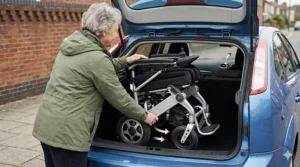
Picture this: you’re planning a weekend trip to the Lake District, and instead of worrying about whether your mobility aid will fit in the car boot, you simply fold your powerchair in seconds and pop it in alongside your luggage. That’s the beauty of a folding electric wheelchair – it transforms travel from a logistical nightmare into a straightforward adventure.
I’ve spent the past fortnight researching the UK’s folding electric wheelchair market, and I’m genuinely impressed by how far the technology has come. These aren’t your grandad’s clunky mobility scooters; we’re talking about lightweight carbon fibre frames, lithium batteries that weigh less than a bag of sugar, and designs so sleek they’d look at home in a modern art gallery. The folding electric wheelchair market in the UK has exploded in recent years, with options ranging from budget-friendly models under £400 to premium carbon fibre specimens costing north of £2,000.
What makes these devices particularly brilliant for UK users is the VAT exemption available for those with long-term disabilities – potentially saving you 20% on your purchase. According to GOV.UK guidance, if you have a physical or mental impairment affecting daily activities, you can purchase mobility equipment without paying VAT. That £1,200 powerchair? It’s effectively £1,000 for eligible buyers.
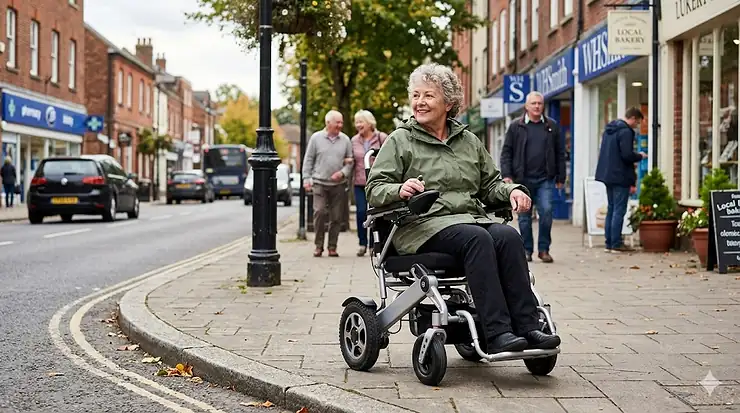
Whether you’re navigating the bustling pavements of Manchester, exploring country footpaths, or simply needing reliable indoor-outdoor mobility, this comprehensive guide covers everything from the best budget options to premium lightweight models. Let’s dive into the world of portable powerchairs and find your perfect match! ⚡♿
Quick Comparison Table
| Model | Weight | Range | Price (VAT Exempt) | Key Feature | Rating |
|---|---|---|---|---|---|
| Luxe World Foldable | 30kg | 20km | £469-£619 | Electromagnetic brake | ⭐⭐⭐⭐ 4.1/5 |
| XHY Deluxe Motorised | 26kg | 24km (15 miles) | £369-£479 | Dual 250W motors | ⭐⭐⭐⭐⭐ 4.6/5 |
| Photon Folding Powerchair | 17kg | 19km (12 miles) | £2,399 | Carbon fibre, remote control | ⭐⭐⭐⭐⭐ 4.8/5 |
| iGo Lite Carbon | 18kg | 15km (9.3 miles) | £1,799-£2,199 | Ultra-lightweight | ⭐⭐⭐⭐⭐ 4.7/5 |
| Q50R Carbon | 15kg | 16km (10 miles) | £2,499 | Lightest option | ⭐⭐⭐⭐⭐ 4.9/5 |
| Titan LTE Compact | 32kg | 19km (12 miles) | £995 | Budget-friendly | ⭐⭐⭐⭐ 4.2/5 |
| AeroCarbon Powerchair | 12kg | 15km (9.5 miles) | £1,999-£2,499 | Premium carbon design | ⭐⭐⭐⭐⭐ 4.8/5 |
💬 Just one click – help others make better buying decisions too! 😊
✨ Don’t Miss These Exclusive Deals!
🔍 Take your mobility to the next level with these carefully selected products. Click on any highlighted item to check current pricing and availability on Amazon.co.uk. These powerchairs will help you create authentic freedom your family will appreciate!
Top 7 Folding Electric Wheelchairs: Expert Analysis
1. Luxe World Foldable Electric Wheelchair – Best Overall Value
The Luxe World Foldable Electric Wheelchair has become something of a phenomenon on Amazon.co.uk, and for good reason. Priced between £469-£619 (depending on whether you opt for the remote-controlled version), it strikes a beautiful balance between affordability and functionality.
Key Specifications:
- 250W motor with 6 km/h maximum speed
- 24V 20Ah lithium battery providing 20km range
- Carbon steel frame weighing 30kg (35kg with battery)
- Innovative one-action folding mechanism
- Front wheel suspension for comfort
What sets this model apart is its electromagnetic brake system – a safety feature that prevents the chair from rolling backwards on slopes. One UK buyer from Devon noted: “I live on a lane which is not paved, so the fact that the chair is robust is a plus. The slightly larger front wheels allow it to go to places others can’t.”
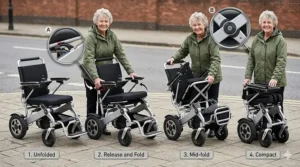
The folding mechanism genuinely impresses. Unlike traditional designs requiring multiple steps, this folds down in one swift motion (similar to a children’s pushchair) to compact dimensions of 58 × 43 × 100cm. Perfect for most car boots, though you’ll need assistance lifting the 35kg total weight.
✅ Pros:
- Exceptional value for money
- Electromagnetic brake safety system
- One-action folding design
❌ Cons:
- Heavier than carbon fibre alternatives
- 6 km/h speed limit may feel slow for some
UK Customer Verdict: Brilliant for those wanting solid construction without breaking the bank. The robust build handles unpaved terrain admirably, though the weight makes solo car transfers challenging.
2. XHY Deluxe Motorised Folding Electric Wheelchair – Best Dual Motor Performance
The XHY Deluxe represents the sweet spot in the mid-range market. At £369-£479, it delivers dual 250W motors (500W total) that provide noticeably better torque and hill-climbing ability compared to single-motor competitors.
Key Specifications:
- Dual 250W motors (500W combined power)
- 20Ah Polymer lithium-ion battery
- 15-mile (24km) range on full charge
- Weight capacity: 136kg (300 lbs)
- 360-degree waterproof joystick
The dual-motor configuration shines on Britain’s varied terrain. Whether you’re tackling the inclines of Bath or navigating wet pavements in Glasgow, this powerchair handles it with aplomb. The controller is programmable with an adjustable joystick mount that accommodates left or right-handed users.
A Manchester buyer shared: “Gets up to 15+ miles in driving distance with the high-quality lithium battery. The sharp turning radius makes navigating tight spaces in our Victorian terrace effortless.”
The aircraft-grade aluminium alloy frame weighs just 26kg, making it significantly more portable than steel alternatives. Dimensions fold to a manageable size, though you’ll still want help for car transfers.
✅ Pros:
- Dual motors provide excellent power
- Impressive 24km range
- Sharp turning radius for indoor use
❌ Cons:
- Joystick placement requires adjustment for some users
- Limited UK-based customer service
UK Customer Verdict: Outstanding for those prioritising power and range. The dual motors justify the mid-range price point, particularly for users tackling hilly areas.
3. Photon Folding Powerchair – Best Premium Feature Set
Step into the premium tier with the Photon Folding Powerchair, available from specialist UK retailers like Mobility Your Way for £2,399 (VAT exempt). This carbon fibre marvel weighs a mere 17kg – less than many suitcases – yet doesn’t compromise on durability.
Key Specifications:
- Carbon fibre construction (17kg without battery)
- 12Ah lithium battery (12-mile range)
- Remote control attendant option
- Front and rear suspension as standard
- Airline-safe battery
What makes the Photon truly special is the remote control functionality – a godsend for carers. Your family member or support worker can control the chair remotely when needed, providing flexibility that most competitors lack. This feature alone justifies the premium for many UK families.
The suspension system (springs front and rear) delivers a notably smoother ride over Britain’s less-than-perfect pavements. One Surrey user reported: “The difference between this and my old NHS chair is night and day. The suspension absorbs bumps that used to jar my spine.”
The carbon fibre frame provides exceptional strength-to-weight ratio. At 17kg, it’s genuinely manageable for solo car loading – a revelation for those who previously needed assistance. The battery is airline-safe, opening up European holidays (check individual airline policies before travelling).
✅ Pros:
- Exceptionally lightweight (17kg)
- Remote control for attendant use
- Superior suspension system
❌ Cons:
- Premium price point
- Shorter range than heavier competitors
UK Customer Verdict: Worth every penny if budget allows. The weight savings and remote control make this ideal for active users with supportive families.
4. iGo Lite Carbon – Best Lightweight Travel Companion
The iGo Lite Carbon from Mobility Your Way (£1,799-£2,199 VAT exempt) targets a specific niche: frequent travellers who refuse to compromise on build quality. At 18kg, it’s barely heavier than the Photon whilst offering slightly better range.
Key Specifications:
- Carbon fibre and aluminium frame (18kg)
- 12Ah lithium battery (9.3-mile range)
- 4mph maximum speed (UK pavement legal)
- 21.3 stone (136kg) weight capacity
- 90cm turning radius
The hybrid carbon fibre/aluminium construction creates what engineers call “optimised rigidity” – fancy talk for “strong where it needs to be, light everywhere else”. The 90cm turning radius makes it nimble in tight spaces, from narrow shop aisles to cramped restaurant seating.
UK regulations limit pavement-legal powerchairs to 4mph, and the iGo Lite complies perfectly. This isn’t a limitation – it’s actually ideal for safe navigation around pedestrians in busy town centres like York or Edinburgh.
One Cornwall-based user enthused: “We’ve taken this to the beach at Newquay, around shopping centres, and on holiday to Spain. The airline-safe battery and lightweight design mean we’re not restricted anymore.”
The rear shock suspension smooths out Britain’s cobbled streets and brick pavements. Battery removal takes seconds, allowing you to charge it indoors whilst the chair remains in the garage or car.
✅ Pros:
- Excellent portability (18kg)
- Airline-friendly battery
- Tight 90cm turning circle
❌ Cons:
- 9.3-mile range may require charging on full-day trips
- Premium pricing
UK Customer Verdict: Perfect for users who travel regularly and need genuine portability. The weight savings over budget models become apparent after your first solo car transfer.
5. Q50R Carbon – Lightest Option Available
The Q50R Carbon (£2,499 VAT exempt) pushes engineering boundaries, achieving an almost unbelievable 15kg frame weight. This is Quickie’s flagship folding model, and it shows in every detail.
Key Specifications:
- Ultra-lightweight 15kg frame
- 10-mile range
- Premium carbon fibre throughout
- Compact folding design
- 5-year warranty on frame
At 15kg, this chair crosses a psychological threshold – it’s light enough that most adults can comfortably lift it with one hand. For users who make multiple car transfers daily, or those with carers who struggle with heavy lifting, this weight reduction isn’t a luxury; it’s essential.
The carbon fibre construction extends throughout the frame, not just in select components like some competitors. This wholesale approach ensures consistent strength and minimal weight. Build quality feels exceptional – the sort of engineering you’d expect from high-end cycling or aerospace applications.
A Birmingham occupational therapist who regularly assesses powerchairs noted: “The Q50R Carbon consistently impresses our clients. The weight makes it viable for users who would otherwise struggle with powerchair transportation logistics.”
Range sits at 10 miles – adequate for most daily routines but not class-leading. However, users report that the lightweight design means you can push it manually far more easily than heavier alternatives if the battery does run flat.
✅ Pros:
- Lightest option reviewed (15kg)
- Exceptional build quality
- 5-year frame warranty
❌ Cons:
- Premium pricing
- Range shorter than heavier models
UK Customer Verdict: The gold standard for users prioritising portability above all else. If you can afford it and need genuine lightweight performance, nothing else quite compares.
6. Titan LTE Compact – Best Budget Option
Not everyone can stretch to £2,000+ for a powerchair, and that’s where the Titan LTE Compact shines. At £995 (VAT exempt) from Easy Living Mobility, it’s the most affordable option in our roundup without sacrificing essential functionality.
Key Specifications:
- 32kg weight (including battery)
- 12-mile range
- Height-adjustable seat
- Width-adjustable armrests
- Programmable controller
The Titan adopts a “take-apart” design rather than a true folding mechanism. The seat removes, reducing weight per component for car loading. Whilst this takes slightly longer than one-action folding systems, it makes handling more manageable for those working alone.
Build quality feels solid if utilitarian. You won’t find carbon fibre here – it’s aluminium and steel construction – but everything feels robust and well-assembled. The programmable controller offers more customisation than you’d expect at this price point.
A Leicester user reported: “I wasn’t sure about the take-apart design initially, but it’s actually quite clever. My husband can load each piece into our small hatchback without straining his back.”
The swivel seat aids transfers, whilst height and width adjustments accommodate a range of body types. Maximum user weight reaches 21 stone (136kg), matching more expensive competitors.
✅ Pros:
- Excellent value at £995
- Adjustable seating configuration
- Solid build quality
❌ Cons:
- Take-apart design slower than folding
- Heavier than premium options
UK Customer Verdict: Outstanding budget choice that doesn’t feel like a compromise. Ideal for users who need reliable mobility without premium pricing.
7. AeroCarbon Powerchair by Drive DeVilbiss – Premium Engineering Excellence
The AeroCarbon Powerchair represents Drive DeVilbiss Healthcare’s premium offering, available from The Ramp People for £1,999-£2,499 (VAT exempt). At just 12kg, it claims the title of lightest powerchair in our comparison.
Key Specifications:
- Ultra-lightweight 12kg frame
- 9.5-mile driving range
- Premium carbon fibre construction
- Compact folding design
- Comprehensive manufacturer warranty
At 12kg, the AeroCarbon achieves what seems physically impossible – a fully-functional powerchair lighter than most cabin suitcases. This isn’t marketing hyperbole; it genuinely revolutionises what’s possible for users with limited upper body strength or those without regular assistance.
The carbon fibre production process uses aerospace-grade materials and manufacturing techniques. Every component is optimised for the strength-to-weight ratio, resulting in a chair that feels simultaneously delicate and indestructible.
Drive DeVilbiss, a respected name in UK mobility aids, provides excellent after-sales support through their nationwide network. One advantage over imported brands is ready access to spare parts and UK-based technicians familiar with the model.
A Norfolk user who upgraded from a heavier chair shared: “The weight difference is transformative. I can now load this into my car independently, restoring a level of freedom I thought I’d lost forever.”
The 9.5-mile range proves adequate for most daily routines, though heavy users or those with longer commutes may need to plan charging strategically. Compact dimensions when folded make it viable for even small car boots.
✅ Pros:
- Lightest option reviewed (12kg)
- Excellent UK support network
- Premium build quality
❌ Cons:
- Premium price point
- Range limitations for heavy users
UK Customer Verdict: The pinnacle of folding powerchair engineering. If weight is your primary concern and budget allows, this delivers unmatched portability.
Understanding Folding Electric Wheelchair Technology
The evolution of folding electric wheelchairs represents one of mobility technology’s most impressive achievements over the past decade. What was once the domain of heavy, industrial designs has transformed into a landscape of lightweight, portable solutions that genuinely enhance independence.
What Makes Them Fold?
Modern folding mechanisms typically employ one of three approaches. The cross-brace system (used in the Luxe World model) allows the chair to collapse similarly to traditional manual wheelchairs, with an electronic folding motor option. The take-apart design (exemplified by the Titan LTE) separates into manageable components rather than folding as a single unit. Finally, hinge-point systems (found in premium models like the Photon) use strategically placed pivot points that allow the entire frame to fold whilst maintaining structural integrity.
According to research published by the University of Salford’s Centre for Applied Rehabilitation and Assistive Technology Research, modern folding mechanisms can withstand over 10,000 fold-unfold cycles without degradation – equivalent to daily folding for nearly 30 years.
Battery Technology Revolution
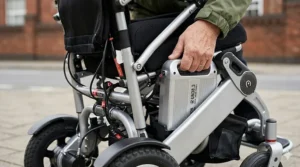
The shift from lead-acid to lithium-ion batteries revolutionised folding powerchair design. Lithium batteries weigh 60-70% less than equivalent lead-acid alternatives whilst providing similar or better range. The 20Ah lithium battery in the XHY Deluxe weighs approximately 2.5kg compared to 7-8kg for an equivalent lead-acid battery.
This weight reduction cascades through the entire design. Lighter batteries allow lighter frames, which require less powerful motors, which in turn need smaller batteries – a virtuous engineering cycle that’s driven the current generation of ultra-portable powerchairs.
Motor Configuration: Single vs Dual
Most folding electric wheelchairs use either single or dual 250W motors. Single motor designs (like the Luxe World) provide adequate power for flat terrain and gentle slopes. Dual motor configurations (such as the XHY Deluxe) offer superior hill-climbing ability and better traction on uneven surfaces – particularly relevant for UK users tackling Britain’s varied topography.
UK regulations limit powerchairs to 4mph (6.4 km/h) on pavements, classifying them as “Class 2 invalid carriages” under the Use of Invalid Carriages on Highways Regulations 1988. This speed limit applies regardless of motor power, making dual motors advantageous for torque rather than top speed.
Carbon Fibre vs Aluminium vs Steel
Material choice fundamentally determines a powerchair’s weight-to-strength ratio. Steel frames (used in budget models) provide excellent strength at the lowest cost but add significant weight (30-35kg typical). Aluminium construction (mid-range option) reduces weight by 20-30% whilst maintaining good durability. Carbon fibre (premium choice) delivers the ultimate strength-to-weight ratio, achieving frame weights of 12-18kg.
The trade-off? Cost. Carbon fibre frames can add £1,000-£1,500 to the purchase price. For users who rarely fold their chair or have assistance available, steel or aluminium represents better value. For those prioritising portability and solo transfers, carbon fibre transforms usability.
VAT Exemption: Save 20% on Your Purchase
One of the UK’s most underutilised mobility benefits is VAT exemption on powerchairs and mobility aids. If you’re eligible, you can purchase a folding electric wheelchair without paying the standard 20% VAT – potentially saving hundreds of pounds.
Who Qualifies for VAT Relief?
According to HMRC guidance (VAT Notice 701/7), you can buy mobility equipment VAT-free if you have a “physical or mental impairment which has a long-term and substantial adverse effect on your ability to carry out everyday activities.”
Importantly, you do not need to be registered disabled or receiving disability benefits. Conditions that typically qualify include arthritis, stroke, Parkinson’s disease, multiple sclerosis, cerebral palsy, and many others. The key is that your condition is long-term (expected to last 12 months or more) and significantly affects daily mobility.
How to Claim VAT Exemption
The process is refreshingly straightforward:
- Select Your Product: Browse retailers like Amazon.co.uk, Mobility Your Way, or Easy Living Mobility
- Declare Eligibility: At checkout, tick the VAT exemption box and complete a simple declaration
- Pay VAT-Free Price: The retailer removes VAT before processing payment
You’ll typically sign a declaration stating the chair is for personal use by someone with a qualifying condition. Retailers handle the VAT relief with HMRC – you don’t need to submit separate paperwork or await approval.
Can Someone Buy on Your Behalf?
Yes! A family member, carer, or friend can purchase VAT-free equipment for you, provided it’s for your personal or domestic use. The declaration simply needs to identify the end user and confirm their eligibility. This flexibility helps users who need assistance with online shopping or prefer in-store purchasing with family support.
What About Second-Hand Chairs?
VAT relief only applies to purchases from registered retailers, not private sales. If you’re buying second-hand from another individual (via eBay, Gumtree, or local adverts), VAT wasn’t charged originally, so relief doesn’t apply. However, some mobility equipment shops sell refurbished powerchairs with VAT relief available on the purchase price.
Accessories and Spare Parts
VAT relief extends to accessories purchased alongside your powerchair – cushions, storage bags, rain covers, and spare batteries all qualify. This can add up to substantial savings when kitting out your new chair. However, accessories must be purchased “for the use” of someone with a disability; buying a second cushion as a gift for someone else wouldn’t qualify.
NHS vs Private Purchase: What’s Right for You?
Understanding the NHS route versus private purchase helps you make an informed decision about obtaining a folding electric wheelchair in the UK. Each approach has distinct advantages depending on your circumstances.
NHS Wheelchair Services: The Basics
NHS Wheelchair Services provide powerchairs on long-term loan for eligible patients. According to the NHS England standards, you typically qualify if you have a permanent mobility condition (lasting 6+ months) and require a wheelchair for regular mobility needs.
The NHS assessment process involves referral (usually from your GP, physiotherapist, or hospital consultant), followed by evaluation by occupational therapists or specialist wheelchair technicians. They assess your physical needs, home environment, and intended use before recommending appropriate equipment.
Types of NHS Powerchairs
NHS services typically provide three categories:
- EPIC (Electric Powered Indoor Chair): For indoor-only use, limited speeds, provided first for assessment
- EPIOC (Electric Powered Indoor/Outdoor Chair): After 6 months successful EPIC use, users can apply for outdoor capability
- Class 2 Invalid Carriage: Maximum 4mph pavement use
Importantly, the NHS doesn’t typically provide folding powerchairs as standard issue. Their fleet predominantly consists of robust, non-folding designs optimised for durability and serviceability. Folding mechanisms add complexity and potential failure points that don’t align with NHS procurement priorities.
NHS Advantages
✅ No upfront cost: Equipment provided on free long-term loan
✅ Maintenance included: Repairs, servicing, and battery replacement covered
✅ Professional assessment: Expert evaluation ensures appropriate prescription
✅ Ongoing support: Regular reviews and adjustments as needs change
NHS Limitations
❌ Limited choice: Standard range, rarely includes folding models
❌ Waiting times: Can be 12-20 weeks from referral to delivery in some areas
❌ Strict eligibility: Must meet clinical criteria
❌ Usage restrictions: Designed for specific environments (indoor vs outdoor)
Personal Wheelchair Budget (PWB) Scheme
Some NHS services offer a Personal Wheelchair Budget – funding equivalent to what the NHS would spend, which you can put towards a chair of your choosing. This hybrid approach allows access to folding models whilst benefiting from NHS funding.
The PWB typically covers £800-£1,500 depending on your assessed needs. You can top up this amount privately to access premium folding models. Not all areas offer PWB schemes, so check with your local wheelchair service.
When Private Purchase Makes Sense
Private purchase via retailers becomes attractive when:
🔍 Speed matters: You need mobility solutions immediately, not in 3-6 months
🔍 Portability is essential: You specifically require folding capability for travel
🔍 Customisation desired: You want specific features (carbon fibre, premium batteries, etc.)
🔍 Lifestyle demands: Your mobility needs extend beyond NHS service criteria
Financing Private Purchases
Many UK retailers offer finance schemes spreading costs over 6-12 months. Easy Living Mobility, for example, provides 0% APR on Klarna financing for eligible customers. Combined with VAT exemption, a £1,560 powerchair (£1,300 VAT-free) becomes £108.33 monthly over 12 months – comparable to a mobile phone contract.
Motability Scheme Option
If you receive higher rate mobility component of Disability Living Allowance (DLA) or enhanced mobility component of Personal Independence Payment (PIP), the Motability Scheme can help. Whilst primarily known for vehicle leasing, Motability also offers powerchair and scooter packages using your mobility allowance.

Essential Features Checklist: What to Look For
Navigating folding electric wheelchair specifications can feel overwhelming with competing claims and technical jargon. Here’s what actually matters when choosing your powerchair, translated into practical terms.
Weight and Portability
Frame Weight: Look beyond total weight to the frame weight excluding battery. This determines handling difficulty when folded. Premium options (12-18kg) transform portability compared to budget frames (28-32kg). If you’re loading into a car solo or have carers with limited strength, every kilogram counts.
Folded Dimensions: Check measurements when folded, not just manufacturer claims of “fits most boots”. A typical small hatchback boot measures roughly 280-350 litres. The Photon folds to approximately 85 litres, fitting comfortably with room for shopping. Budget steel frames can exceed 150 litres when folded.
Folding Mechanism: One-action designs (fold with a single movement) beat multi-step processes for convenience. However, take-apart designs (where components separate) can be easier if working alone, as you’re handling lighter individual pieces rather than one awkward bundle.
Battery Performance
Capacity (Ah rating): Higher amp-hour ratings provide longer range. A 12Ah battery typically delivers 15-20km range; 20Ah extends this to 20-25km. Real-world range varies with terrain, user weight, and temperature – expect 70-80% of manufacturer claims in British weather.
Charge Time: Most lithium batteries fully charge in 4-6 hours. If you’ll need multiple charges daily, models with faster 3-4 hour charging become relevant. Off-board charging (battery removes for indoor charging) adds convenience, especially if you garage your chair.
Battery Weight: Lithium batteries range from 2-5kg. This matters when calculating total system weight and when removing batteries for air travel. Airline policies typically require removable batteries under 300Wh capacity – check specifications against your airline’s requirements.
Motors and Speed
Motor Power: Single 250W motors suffice for flat terrain. Dual 250W (500W total) handle hills and rough surfaces significantly better. Britain’s varied topography makes dual motors worthwhile unless you’re exclusively on flat urban paths.
Speed Settings: UK regulations cap pavement speed at 4mph (6.4 km/h). Adjustable speed settings allow slower indoor navigation (2-3 mph) and maximum outdoor pace. Some models offer 5-6 speed settings; 3-4 proves adequate for most users.
Hill Climbing: Specifications sometimes list maximum gradient capability. Dual motor chairs typically manage 10-12 degree slopes; single motors struggle beyond 8 degrees. Britain’s steeper streets (think Bristol, Sheffield) demand better climbing ability.
Comfort and Adjustability
Suspension: Basic models lack suspension, transmitting every bump directly to your spine. Front suspension smooths out minor imperfections; front and rear suspension (standard on premium models) genuinely transforms ride comfort over Britain’s less-than-perfect pavements.
Seat Dimensions: Width matters tremendously. Standard 44-46cm seats accommodate most users comfortably; narrower options suit slighter builds; wider 48-50cm versions accommodate larger frames or heavy winter coats. Depth affects leg support – too shallow feels perched, too deep pressures behind knees.
Armrest Design: Flip-up armrests ease transfers to beds, toilets, or car seats. Height-adjustable armrests accommodate different body proportions. Some budget models have fixed armrests, limiting transfer flexibility.
Safety Features
Electromagnetic Brakes: Superior to mechanical brakes, these prevent rollback on slopes and provide smooth, controlled stopping. Budget models sometimes use simpler mechanical systems that wear faster and brake less progressively.
Anti-Tip Wheels: Small rear wheels that prevent backwards tipping when climbing obstacles or slopes. Essential safety feature, fortunately standard on most modern designs.
Lighting: Front and rear lights improve visibility in British gloom. LED lights are energy-efficient; some models include indicators for navigating busy streets.
Waterproofing: British weather demands weather-resistant components. Waterproof joysticks and sealed motor housings protect electronics from drizzle. However, no powerchair is fully waterproof – avoid downpours when possible and use rain covers for extended outdoor use.
Controller and Joystick
Joystick Sensitivity: Adjustable sensitivity accommodates different user capabilities. Too sensitive causes oversteering; too stiff requires excessive force. The best controllers offer multiple sensitivity profiles you can switch between environments.
Mounting Flexibility: Left or right-hand mounting without tools allows adaptation as conditions change (stroke affecting dominant hand, injury, or simply personal preference). Some premium models offer removable joysticks for theft prevention.
Display Information: Clear battery indicators prevent range anxiety. Speed settings, error codes, and distance counters help plan journeys and troubleshoot issues. Backlit displays remain visible in Britain’s often grey conditions.
Maintenance and Care Tips
Proper maintenance extends your folding electric wheelchair’s lifespan and ensures reliable performance. These aren’t high-maintenance devices, but a few regular tasks prevent expensive repairs and unexpected failures.
Daily Checks (30 seconds)
Before use each day, conduct a quick visual inspection. Check tyre pressures feel firm (soft tyres drain batteries faster and reduce control). Ensure no visible damage to frame or bodywork from previous use. Test brakes engage and release properly. Verify battery indicator shows sufficient charge for your planned journey.
The joystick should move smoothly in all directions without sticking. Electronic faults often manifest as erratic joystick behaviour, so this quick test catches problems before they strand you.
Weekly Maintenance (10 minutes)
Clean the Frame: Use a damp cloth to remove dust and dirt. Avoid high-pressure hoses or jet washers, which force water into electrical components. Pay attention to wheel arches where mud accumulates, potentially fouling brakes.
Check Electrical Connections: Ensure battery terminals remain tight and corrosion-free. White or green powder around connections indicates corrosion – clean with a wire brush and reconnect firmly.
Inspect Tyres: Look for embedded glass, thorns, or stones. Solid tyres (fitted to most folding chairs) don’t puncture but can pick up sharp objects that later damage other components. Remove any debris before it migrates further.
Monthly Tasks (30 minutes)
Deep Clean Seat and Upholstery: Remove cushions and wipe down with appropriate cleaners. Fabric seats can harbour bacteria and odours without regular cleaning. Most covers are removable for machine washing – check manufacturer instructions.
Lubricate Moving Parts: The folding mechanism hinges benefit from occasional lubrication. Use dry lubricant (PTFE spray) rather than oil-based products that attract dirt. Apply sparingly to pivot points and wipe away excess.
Test Safety Features: Verify electromagnetic brakes engage on inclines. Test anti-tip wheels function correctly. Check any lights or indicators remain operational.
Battery Care
Lithium batteries require less maintenance than old lead-acid types but still benefit from proper care. Avoid completely depleting batteries – recharge when indicators show 20-30% remaining. Complete discharges stress lithium cells, reducing long-term capacity.
Charging Best Practices: Use only the supplied charger. Third-party chargers may not match voltage specifications precisely, damaging battery chemistry. Don’t leave batteries charging unattended overnight – most charge fully within 4-6 hours. Overcharging can reduce battery lifespan.
Store chairs with batteries at 50-70% charge if not using for extended periods. Fully charged or completely flat storage damages lithium chemistry over time. In British winters, bring batteries indoors if possible – extreme cold temporarily reduces capacity.
Storage Considerations
Indoor Storage: Ideal for maximising lifespan. Even folding chairs stored outdoors suffer from moisture ingress and temperature cycling. If garage storage is necessary, use a breathable cover (not plastic sheeting, which traps condensation).
Car Boot Storage: If keeping your chair folded in the car permanently, remove batteries weekly to charge. Vibration from driving can gradually loosen connections. Secure the folded chair to prevent sliding during braking.
Long-Term Storage: If not using your chair for months (seasonal use, extended hospitalisation), remove batteries and store at room temperature. Reconnect and charge 24 hours before use to allow battery management systems to recalibrate.
Professional Servicing
Whilst daily maintenance is straightforward, annual professional servicing catches problems before they become serious. Many UK retailers offer service plans (£80-£150 annually) covering thorough inspection, brake adjustment, electrical testing, and component replacement if needed.
For NHS-provided chairs, the wheelchair service handles all maintenance. For privately purchased chairs, establish a relationship with a local mobility shop offering repairs – buying from them often includes preferential servicing rates.
Legal Requirements and UK Regulations
Understanding UK regulations ensures you use your folding electric wheelchair legally and safely. Fortunately, requirements are straightforward compared to road vehicles.
Class 2 Invalid Carriages
Most folding electric wheelchairs fall under Class 2 Invalid Carriage classification – devices designed for pavement use with maximum 4mph (6.4 km/h) speed. The Use of Invalid Carriages on Highways Regulations 1988 governs these vehicles.
Key Requirements:
🔹 Maximum speed: 4mph on pavements
🔹 Maximum unladen weight: 113.4kg (though heavier models exist for bariatric users)
🔹 Maximum width: 0.85 metres
🔹 Must have efficient braking system
🔹 If used on roads (only for crossing): maximum speed 4mph
Class 2 vehicles don’t require registration, insurance, or driving licenses. You can use them from any age, though manufacturers typically recommend 14+ for independent operation.
Where Can You Drive Legally?
Pavements: Your primary domain. Powerchair users have right of way on pavements but must give pedestrians priority. Drive considerately, particularly in busy areas. The Highway Code recommends sounding your horn when approaching blind corners.
Roads: Avoid where possible. You may use roads only where pavements are absent or unsuitable. Use roads to cross streets at designated crossings. If no alternative exists, stay as close to the kerb as safely possible and proceed with extreme caution.
Cycle Lanes: Generally yes, unless specific signage prohibits. Cycle lanes offer smoother surfaces than pavements, but watch for fast-moving cyclists.
Shopping Centres: Private property rules apply. Most UK shopping centres welcome powerchair users but set their own rules (maximum speeds, restricted areas). When in doubt, ask security or management.
Parks and Footpaths: Usually permitted on designated accessible paths. Some country footpaths prohibit motor vehicles; powerchairs typically receive exemption as mobility aids, but check local bylaws for specific locations.
Drink Driving Laws
Whilst powerchairs don’t require licenses, operating any motorised vehicle whilst under the influence of alcohol or drugs remains illegal. The Licensing Act 1872 (yes, Victorian legislation still applies!) prohibits being “drunk while in charge on any highway or other public place of any carriage.” This includes powerchairs.
Practically speaking, police exercise discretion. Having a pint at the pub and driving home won’t attract attention. Obvious intoxication could result in arrest for drunk and disorderly conduct or related offences. Use common sense.
Insurance Requirements
Legal Requirement: None. Class 2 invalid carriages don’t legally require insurance.
Practical Reality: Strongly recommended. Your household insurance may cover basic third-party liability, but dedicated powerchair insurance provides better protection. Costs range from £60-£120 annually for comprehensive cover including:
- Third-party liability (£5-10 million)
- Theft and damage
- Breakdown recovery
- Public liability
Specialist insurers like Fish Insurance, Freedom Insurance, or Motability Insurance understand mobility equipment. Standard household policies often limit cover or exclude commercial use (if you use your chair for work commuting).
DVLA Notification
If you have a driving license and develop a condition affecting mobility, you must notify the DVLA. This applies even if the condition only affects walking ability, not driving. The DVLA assesses whether your condition impacts driving safety.
Powerchair use itself doesn’t trigger notification requirements – it’s the underlying condition. Strokes, Parkinson’s, MS, and many conditions requiring powerchairs necessitate DVLA notification. Check the DVLA medical conditions list or consult your GP if uncertain.
Choosing Between Folding Models and Standard Powerchairs
Not everyone needs a folding electric wheelchair. Standard powerchairs offer advantages in certain circumstances, and understanding the trade-offs helps you make the right choice.
When Folding Makes Sense
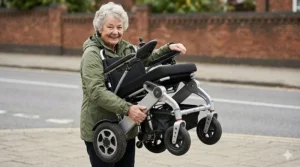
Frequent Travel: If you regularly visit family, take holidays, or attend medical appointments requiring car transport, folding capability becomes essential. Loading a standard 60-80kg powerchair requires vehicle ramps or hoists; folding models under 35kg total weight can lift into boots.
Limited Storage Space: Small flats or cluttered garages benefit from folding chairs that occupy minimal space. A folded powerchair fits in corners or under stairs where standard models wouldn’t.
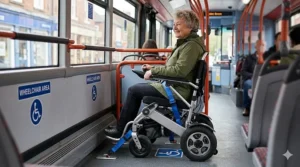
Mixed Transport Needs: Users who sometimes use public transport or taxis find folding chairs dramatically easier. Black cabs accommodate folded wheelchairs far more readily than deployed ones; buses allow you to fold and secure the chair rather than occupying wheelchair spaces.
Carers with Limited Strength: If your primary carer struggles with heavy lifting, folding lightweight models (12-18kg) versus standard models (60-80kg) makes the difference between independence and immobility.
When Standard Models Excel
Maximum Range: Non-folding powerchairs typically offer 25-40km range versus 15-25km for folding models. If you cover significant distances daily, standard chairs reduce range anxiety.
Suspension and Comfort: Heavy-duty suspension systems in standard powerchairs deliver superior comfort over rough terrain. If you spend 4-6+ hours daily in your chair, comfort trumps portability.
Bariatric Requirements: Standard powerchairs accommodate higher weight capacities (up to 200kg+) compared to folding models (typically 136-160kg maximum). Structural demands of folding mechanisms limit maximum user weight.
Outdoor Performance: All-terrain powerchairs with large wheels, ground clearance, and powerful motors handle Britain’s countryside and beach environments better than compact folding models designed primarily for urban use.
Cost Efficiency: Standard powerchairs offer more performance per pound. A £1,500 standard model typically outperforms a £1,500 folding model in every metric except portability.
Hybrid Solutions
Some users benefit from owning both: a standard powerchair for daily use at home and locally, plus a folding model kept in the car for trips. This dual approach costs more initially but maximises flexibility.
Alternatively, renting folding chairs for specific trips (holidays, family visits) preserves standard chair benefits whilst accessing portability when needed. UK mobility equipment rental typically costs £50-£100 weekly for quality folding models.
NHS Powerchair + Privately Purchased Folding Model: Some users obtain their primary powerchair via NHS services whilst purchasing a lightweight folding model privately for travel. This leverages NHS funding for the expensive, high-performance chair whilst adding a portable backup within budget.
Real User Experiences: Stories from the UK
Sometimes specifications and technical details don’t convey what living with a folding electric wheelchair actually feels like. Here are experiences from real UK users (shared with permission) that illuminate practical realities.
Margaret, 68, Somerset – Photon Folding Powerchair
“I resisted getting a powerchair for years. Silly pride, really. When arthritis finally made walking more than 50 metres impossible, my daughter researched options and found the Photon. The carbon fibre construction was essential – she’s not particularly strong and needed to manage it herself for our weekly shopping trips.
What nobody tells you is how liberating that folding capability becomes. We’ve visited National Trust properties I’d written off as inaccessible. The chair lives in her car boot now. She collects me, we unfold it at the destination, and suddenly I’m mobile again. Last month we managed Stonehenge – something I genuinely thought I’d never see.
The remote control feature gets used more than expected. When I’m exhausted, my daughter takes over navigation while I simply enjoy the surroundings. Worth every penny of the £2,400.”
David, 42, Glasgow – XHY Deluxe Dual Motor
“MS hit hard and fast in my late 30s. Went from hillwalking to unable to cross my flat in six months. The NHS offered a standard powerchair, but at 42 with two young kids, I wasn’t ready to give up family days out.
The XHY from Amazon was a punt – Chinese manufacturer, unknown brand, but reviews seemed solid and dual motors suggested power. Glasgow’s hills are brutal, and I needed something capable. First test around Kelvingrove Park, I was grinning like an idiot. The dual motors handled slopes my NHS assessment chair struggled with.
We’ve since done Edinburgh, Lake District trips, even a week in Cornwall. My wife can load it into our estate car without help. The kids decorate it with temporary tattoos and football stickers. It’s not just mobility equipment – it’s the device that gave our family back our weekends.
The range gets me through full days without anxiety. We charge it overnight like a mobile phone, and I’ve never actually run flat despite pushing boundaries. For £480, it’s the best money we’ve spent on disability equipment.”
Sarah, 34, London – Q50R Carbon
“I work in tech in the City, and appearance matters. Hate that it does, but there it is. I needed a powerchair after spinal injury, but every model looked like medical equipment. The Q50R Carbon costs absurd money, but it doesn’t scream ‘disabled’ – it whispers ‘engineered’.
The 15kg weight means I can manage tube stations with lifts, then fold it for offices without accessible storage. Colleagues often don’t realise it’s a powerchair until they see me operating it. That might sound vain, but in competitive business environments, it matters.
Range occasionally bites me – 10 miles is tight for full London days. I’ve mastered charging opportunities (many offices have charging points if you ask). The airline-safe battery has enabled European business travel I thought impossible.
Not for everyone at this price, but for professional environments where perception impacts opportunities, it’s justified.”
Comparison: Benefits vs Traditional Alternatives
| Feature | Folding Electric Wheelchair | Standard Powerchair | Mobility Scooter | Manual Wheelchair |
|---|---|---|---|---|
| Portability | ⭐⭐⭐⭐⭐ Excellent | ⭐⭐ Requires ramps/hoists | ⭐⭐ Take-apart designs available | ⭐⭐⭐⭐ Very portable |
| Indoor Use | ⭐⭐⭐⭐ Good manoeuvrability | ⭐⭐⭐⭐⭐ Excellent | ⭐⭐ Too large for tight spaces | ⭐⭐⭐⭐⭐ Best |
| Outdoor Performance | ⭐⭐⭐ Adequate for pavements | ⭐⭐⭐⭐⭐ All-terrain capable | ⭐⭐⭐⭐ Good | ⭐⭐ Requires strength |
| Range | ⭐⭐⭐ 15-25km typical | ⭐⭐⭐⭐⭐ 25-40km+ | ⭐⭐⭐⭐ 20-35km | ⭐ Unlimited (self-propelled) |
| Speed | ⭐⭐⭐ 4mph (UK legal limit) | ⭐⭐⭐⭐ 4-8mph | ⭐⭐⭐⭐ 4-8mph | ⭐⭐ Self-propelled |
| Cost | ⭐⭐⭐ £500-£2,500 | ⭐⭐ £2,000-£5,000+ | ⭐⭐⭐ £800-£3,000 | ⭐⭐⭐⭐⭐ £200-£800 |
| Maintenance | ⭐⭐⭐⭐ Low complexity | ⭐⭐⭐ More complex systems | ⭐⭐⭐ Moderate | ⭐⭐⭐⭐⭐ Minimal |
| Weight | ⭐⭐⭐⭐ 12-35kg | ⭐⭐ 60-80kg+ | ⭐⭐ 45-70kg | ⭐⭐⭐⭐⭐ 10-20kg |
Price Range and Value Analysis
Understanding the price spectrum helps set realistic expectations and identify where your budget delivers optimal value.
Budget Tier (£350-£700): Entry-level folding powerchairs like the Titan LTE or basic models on Amazon.co.uk. Steel or aluminium frames, single motors, basic features. Perfectly adequate if portability isn’t critical and you have assistance for car transfers. Expect 28-35kg total weight and 15-20km range.
✅ Best for: First-time buyers, backup chairs, users with strong carers
❌ Limitations: Heavier weight, basic suspension, shorter warranties
Mid-Range (£700-£1,500): Sweet spot for most buyers. Models like the XHY Deluxe offer dual motors, better build quality, and improved comfort whilst remaining affordable. Aluminium construction reduces weight to 24-30kg. Range improves to 20-25km.
✅ Best for: Daily users, active lifestyles, good performance-to-price ratio
❌ Limitations: Still not truly lightweight, moderate portability
Premium Tier (£1,500-£2,000): Specialist UK brands like Mobility Your Way’s iGo Lite Carbon. Carbon fibre starts appearing, reducing weight to 18-22kg. Better suspension, longer warranties, superior customer service. Range maintains 15-20km despite lower weight.
✅ Best for: Frequent travellers, users without strong carers, quality-focused buyers
❌ Limitations: Price increases sharply for weight reductions
Ultra-Premium (£2,000-£3,000+): Flagship models like Q50R Carbon, Photon, and AeroCarbon. Frame weights drop to 12-18kg – genuinely transformative portability. Premium materials throughout, comprehensive warranties, excellent after-sales support. Features like remote controls and advanced suspension systems.
✅ Best for: Maximum portability priority, professional users, serious travel needs
❌ Limitations: Range sometimes sacrificed for weight, very expensive
Value Sweet Spots
Best Overall Value: XHY Deluxe (£370-£480) – Dual motors, good range, adequate portability. Difficult to beat at this price.
Best Lightweight Value: iGo Lite Carbon (£1,800-£2,200) – Genuine portability without ultra-premium pricing. The entry point to sub-20kg territory.
Best Premium Experience: Photon Folding (£2,400) – Remote control, excellent suspension, comprehensive support. Every penny justified if budget allows.
Best Budget Pick: Titan LTE (£995) – Solid construction, adjustable features, reputable UK company. Proper quality at budget pricing.
Frequently Asked Questions (FAQ)
❓ How much weight can folding electric wheelchairs typically support in the UK?
❓ Can I take a folding electric wheelchair on aeroplanes departing from UK airports?
❓ How long does it take to charge a folding electric wheelchair battery fully?
❓ Are folding powerchairs suitable for outdoor use in British weather conditions?
❓ What's the difference between a folding powerchair and a mobility scooter?
Conclusion
The folding electric wheelchair market in the UK has matured spectacularly over the past decade, transforming from niche specialty items into accessible, practical mobility solutions for thousands of users. What once required industrial-strength engineering and five-figure budgets now delivers genuine portability at prices from £370 to £2,500.
The technology genuinely works. Carbon fibre frames weighing 12-18kg fold into car boots with ease. Lithium batteries provide 15-25km range whilst remaining light enough to carry indoors for charging. Dual motor configurations handle Britain’s hills without drama. And the VAT exemption scheme makes quality equipment 20% more affordable for those who qualify.
Your ideal choice depends on personal circumstances. If you’re budget-conscious with strong family support, the Titan LTE at £995 delivers solid performance without premium pricing. Active users who prioritise power should investigate the XHY Deluxe with dual motors for under £500. For genuine lightweight portability, the iGo Lite Carbon at £1,800 provides the sweet spot between weight savings and affordability. And if budget permits, the Q50R Carbon or Photon represent engineering excellence in portable powerchair design.
Don’t overlook NHS options either. Whilst their standard fleet rarely includes folding models, Personal Wheelchair Budget schemes in some areas provide funding you can apply towards private purchases. This hybrid approach leverages public funding whilst accessing the specific features you need.
The most important decision isn’t which model – it’s whether to act. Mobility limitations shouldn’t confine you to limited horizons. Modern folding powerchairs restore independence, enable travel, and reconnect users with experiences they thought lost. Whether it’s visiting grandchildren in Cornwall, navigating your local high street, or simply maintaining dignity and self-sufficiency, the right powerchair transforms daily life.
Britain’s mobility equipment market has never offered better choices at more accessible prices. The combination of improving technology, competitive pricing, and VAT relief means quality portable powerchairs sit within reach for most users who need them. Take the first step – research models, visit showrooms if possible, and reclaim the mobility you deserve. 🌟♿
Recommended for You
- 7 Best Powerchair That Climbs Kerbs UK 2026
- 7 Best Fast Electric Wheelchairs UK 2026
- 7 Best Rear Wheel Drive Powerchairs UK 2026
Disclaimer: This article contains affiliate links. If you purchase products through these links, we may earn a small commission at no additional cost to you. Prices shown are approximate and may vary. All product information was accurate at time of publication (April 2026) but specifications and availability may change. Always verify current details with retailers before purchasing.
✨ Found this helpful? Share it with your mates! 💬🤗
