
In This Article
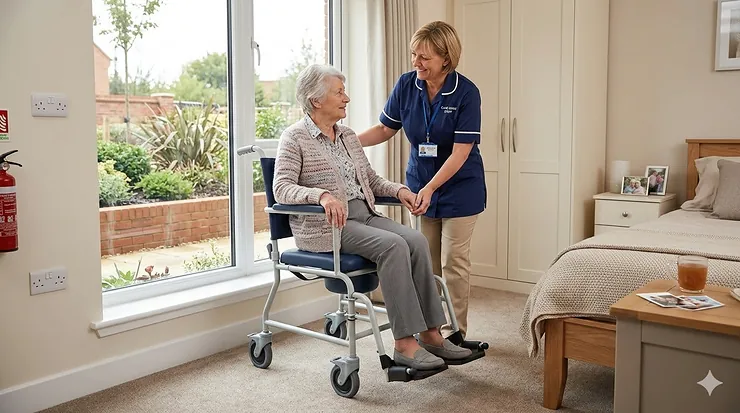
Selecting the right portable commode wheelchair for care home environments can dramatically improve residents’ dignity, comfort, and independence. After evaluating dozens of models available in the UK market, I’ve identified the most practical solutions that combine mobility, toileting functionality, and ease of use for both residents and carers.

These versatile aids have become essential equipment in care facilities across Britain, addressing the dual challenges of limited bathroom access and restricted mobility. A quality portable commode wheelchair for care home use doesn’t just tick regulatory boxes – it transforms daily routines, reduces carer strain, and preserves the autonomy that matters so deeply to residents.
The landscape has evolved considerably since basic static commodes dominated the sector. Today’s carer assisted commode wheelchair UK models feature lockable castors, padded seating, adjustable heights, and waterproof designs suitable for shower use. Whether you’re managing a small residential home or a large nursing facility, understanding which features genuinely enhance care delivery versus marketing fluff will help you invest wisely.
Care Quality Commission standards mandate that equipment must be “clean, secure, suitable and used properly” under Regulation 15 of the Health and Social Care Act 2008. This guide focuses on products that not only comply with these fundamental standards but exceed expectations in real-world care settings.
Quick Comparison Table
| Product Name | Weight Capacity | Key Features | Price Range (£) | Best For |
|---|---|---|---|---|
| HOMCOM 4-in-1 Shower Chair | 150 kg | Waterproof, flip-away footrests, 8L bucket | £85-£125 | Budget-conscious facilities |
| NRS Healthcare Wheeled Commode | 190 kg | Height adjustable, 8L pan, padded seat | £165-£210 | Heavy-duty needs |
| Aidapt Wheeled Mobile Commode | 190 kg | Chrome finish, swing-away footrests, 7.5L | £155-£195 | Mid-range quality |
| HOMCOM Rolling Shower Chair | 136 kg | Compact design, waterproof, rear locks | £75-£110 | Smaller spaces |
| Millercare Wheeled Commode | 160 kg | Detachable arms, adjustable height | £145-£180 | Lateral transfers |
| Drive Glideabout Commode | 140 kg | Pram handle, braked castors, 5L pot | £90-£108 | Easy manoeuvrability |
| Etac Clean Shower Commode | 160 kg | Professional grade, hygiene optimised | £295-£450 | Premium facilities |
💬 Just one click – help others make better buying decisions too! 😊
Top 7 Portable Commode Wheelchair Products: Expert Analysis
1. HOMCOM 4-in-1 Shower Chair with Wheels
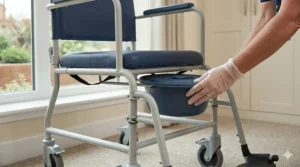
The HOMCOM 4-in-1 represents exceptional value in the transit commode chair with pan category. This versatile unit functions as a bedside commode, shower wheelchair, toilet safety rail, and portable chair – genuinely living up to its multifunctional billing.
Key Specifications:
- Aluminium frame construction with waterproof HDPE and PVC components
- Seat dimensions: 39cm W × 42cm D, positioned 52.5cm from floor
- 8-litre removable bucket with lid
- Four smooth-rolling wheels with individual locks
- Weight capacity: 150 kg (23.6 stone)
UK care homes have praised this model for its flip-away footrests that rotate 90 degrees, significantly easing resident transfers. The waterproof materials simplify infection control protocols, whilst the generous 8L bucket capacity reduces emptying frequency during night shifts.
Customer Feedback: Carers in Kent reported that the padded armrests and backrest provide adequate support for residents with moderate mobility impairments, though very dependent individuals may require additional cushioning.
✅ Pros:
- Excellent price-to-feature ratio
- Genuinely waterproof for shower use
- Tool-free assembly
❌ Cons:
- Armrests not height-adjustable
- Footrest mechanisms can stiffen over time
Price: £85-£125 | Availability: Amazon.co.uk with Prime delivery
2. NRS Healthcare Wheeled Commode (Model S30063)
NRS Healthcare has earned its reputation through decades serving the UK care sector. This wheeled commode exemplifies practical design informed by healthcare professionals who understand institutional demands.
Key Specifications:
- Powder-coated steel frame with light grey vinyl upholstery
- Height adjustable: 46-53.5 cm (18-21 inches)
- 8-litre capacity pan with slide-out access
- Maximum user weight: 190 kg (30 stone)
- Independently braked castor wheels
The standout feature? Real-world durability. Unlike budget alternatives that deteriorate after months of intensive use, this folding commode wheelchair for carers maintains structural integrity through years of daily service. The vinyl-welded upholstery resists bacterial colonisation – a critical consideration for infection prevention.
Customer Feedback: A care home manager in Manchester noted, “We’ve been using these for three years. The armrests stay secure, wheels roll smoothly, and they’re still going strong.”
✅ Pros:
- Exceptional durability in institutional settings
- Proper weight capacity for bariatric residents
- Padded seat genuinely comfortable for extended use
❌ Cons:
- Higher initial investment
- Heavier than aluminium alternatives
Price: £165-£210 | Availability: Amazon.co.uk and specialist mobility retailers
3. Aidapt Wheeled Mobile Commode (Linton Model)
The Aidapt Linton strikes an appealing balance between affordability and professional-grade construction. Its chrome-plated finish not only looks smart but resists corrosion in humid bathroom environments.
Key Specifications:
- Chrome-plated steel frame
- 7.5-litre bucket with comfortable carrying handle
- Swing-away detachable footrests included
- Pram-style push handle for carer control
- Four braked castors for stability
- Maximum capacity: 190 kg (30 stone)
This carer assisted commode wheelchair UK model addresses a common frustration: awkward transfers. The swing-away footrests and removable armrests create ample access space, whilst the pram handle gives carers excellent manoeuvrability in tight corridors and shared bathrooms.
Customer Feedback: Carers appreciate the vinyl-welded cushioning that wipes clean quickly between residents – essential when managing continence care schedules.
✅ Pros:
- Excellent manoeuvrability in confined spaces
- Chrome finish maintains appearance
- Flat-packed for convenient storage
❌ Cons:
- Assembly required (though straightforward)
- Not suitable for wet shower environments
Price: £155-£195 | Availability: Amazon.co.uk and Aidapt dealers
4. HOMCOM Rolling Shower Chair (Compact Edition)
For care homes with space constraints, the HOMCOM Compact Rolling Chair delivers essential functionality in a smaller footprint. Don’t let the modest dimensions fool you – this transit commode chair with pan handles residents up to 136 kg.
Key Specifications:
- Overall dimensions: 57cm W × 78cm D × 94cm H
- Seat size: 43cm W × 43cm D
- Metal frame with foam padding and PU leather
- 5-litre bucket with lid (Ø26 cm)
- Rear wheel locks only
The three-in-one design (commode, shower chair, wheelchair) suits facilities where equipment must serve multiple purposes. Its narrower width navigates standard doorways more easily than wider models, though this comes at the expense of some seating space.
Customer Feedback: A small residential home in Wales reported this works brilliantly for their mobile residents who need occasional assistance, though less suitable for those requiring full support.
✅ Pros:
- Compact design ideal for tight spaces
- Genuinely waterproof construction
- Budget-friendly pricing
❌ Cons:
- Lower weight capacity than alternatives
- Only rear wheels lock (front wheels fixed)
Price: £75-£110 | Availability: Amazon.co.uk
5. Millercare Portable Wheeled Commode Chair
Millercare understands institutional purchasing. This portable commode wheelchair for care home environments comes with thoughtful touches like pre-assembled delivery and included commode liners – small details that matter when equipping multiple units.
Key Specifications:
- Padded seat and backrest for extended comfort
- Adjustable height mechanism with secure locking
- Detachable armrests for lateral transfers
- Four independently braked castors
- Maximum user weight: 160 kg (25 stone)
The detachable armrests represent a genuine advantage over fixed-arm competitors. When transferring residents from beds or other wheelchairs, removing one armrest creates unobstructed access that reduces injury risk for both residents and carers.
Customer Feedback: Care facility equipment managers value the included 20 commode bucket liners, which help control initial setup costs.
✅ Pros:
- Ready assembled on delivery
- Detachable arms enhance transfer safety
- Comfortable padding for dignified use
❌ Cons:
- Mid-range weight capacity may not suit all residents
- Fewer retailer options than major brands
Price: £145-£180 | Availability: Specialist UK mobility suppliers
6. Drive Glideabout Wheeled Commode
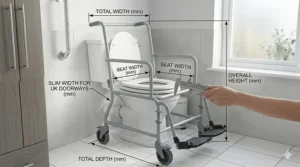
The Drive Glideabout earned its name honestly – this folding commode wheelchair for carers glides smoothly across carpet, vinyl, and tile flooring thanks to well-engineered castors and balanced weight distribution.
Key Specifications:
- Lightweight yet stable tubular steel construction
- Prominent pram-style push bar
- Two large rear wheels with brakes
- 5-litre removable pot with lid
- Flip-up armrests and swing-out footrests
- Maximum capacity: 140 kg (22 stone)
The standout feature? Manoeuvrability. The combination of responsive steering, smooth-rolling wheels, and intuitive push bar makes this a favourite among carers who move residents frequently throughout shifts. The flip-up armrests also facilitate easier sideways transfers.
Customer Feedback: A Scottish care home noted the lightweight design reduces carer strain during resident transport, though some wished for a larger bucket capacity.
✅ Pros:
- Superior manoeuvrability in all environments
- Lightweight reduces carer physical strain
- VAT relief available for eligible purchases
❌ Cons:
- Smaller bucket capacity than competitors
- Lower weight limit excludes some residents
Price: £90-£108 (£89.95 with VAT relief) | Availability: Amazon.co.uk and Mobility Smart
7. Etac Clean Shower and Commode Chair
When budget permits investing in premium care facility equipment, the Etac Clean represents the gold standard. This professional-grade institutional commode wheelchair exceeds basic regulatory compliance by considerable margins.
Key Specifications:
- Designed specifically for carer-controlled operation
- Advanced hygiene features minimise infection risk
- Extensive adjustability for personalised positioning
- Professional-grade materials and construction
- Suitable for intensive institutional use
- Maximum user weight: 160 kg (25 stone)
Swedish manufacturer Etac applies decades of ergonomic research to this design. The height-adjustable frame, multiple positioning options, and thoughtful access features make this ideal for care homes supporting residents with complex needs or challenging behaviours.
Customer Feedback: Premium care facilities report that whilst initial costs run higher, the Etac Clean delivers years of reliable service with minimal maintenance, ultimately proving cost-effective.
✅ Pros:
- Exceptional build quality and longevity
- Optimised for carer-assisted transfers
- Comprehensive adjustment options
❌ Cons:
- Significant upfront investment
- May exceed needs of less dependent residents
Price: £295-£450 | Availability: Specialist healthcare equipment suppliers
✨ Don’t Miss These Exclusive Deals!
🔍 Take your care facility to the next level with these carefully selected products. Click on any highlighted item above to check current pricing and availability on Amazon.co.uk. These tools will help you create authentic dignity-preserving care your residents deserve!
Essential Features in Care Facility Commode Wheelchairs
Weight Capacity Considerations
Don’t underestimate weight ratings. A portable commode wheelchair for care home use claiming 120 kg capacity might technically support that weight, but institutional durability requires generous safety margins. Professional buyers target models rated 160-190 kg to ensure longevity under daily use.
The Health and Safety Executive’s guidance on care home equipment emphasises that weight limits must account for dynamic forces during transfers and movement, not just static sitting weight.
Wheel Configuration and Braking Systems
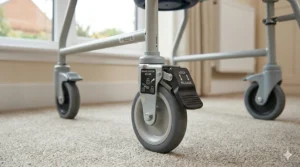
Four-wheel designs with independently lockable castors offer optimal versatility. Front-wheel-only locking creates instability during transfers, whilst fixed front wheels limit manoeuvrability. Quality models feature smooth-rolling castors that don’t snag on carpet edges yet lock firmly when engaged.
Hygiene and Cleaning Protocols
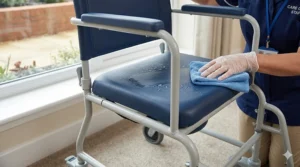
CQC inspections scrutinise equipment cleanliness rigorously. Vinyl-welded upholstery resists bacterial colonisation better than traditionally stitched padding. Waterproof materials enable proper decontamination between users. Removable components that go through thermal disinfection cycles provide the highest infection control standards.
According to HSE guidance on care home equipment, all moving and handling equipment, including shower chairs and commodes, must be regularly maintained and cleaned to prevent pathogen transmission.
Adjustability for Diverse Resident Needs
Height adjustment accommodates residents of different statures and assists carers in maintaining proper ergonomics during transfers. Armrest and footrest flexibility supports various mobility levels and transfer techniques. One-size-fits-all approaches rarely work in diverse care home populations.
Regulatory Compliance for UK Care Homes
The Care Quality Commission’s Regulation 15 mandates that all premises and equipment must be “clean, secure, suitable for purpose and properly maintained.” For commode wheelchairs, this translates to:
Mandatory Requirements:
- Regular cleaning and decontamination protocols documented
- Equipment inspections logged with maintenance records
- Staff training on proper usage and cleaning procedures
- Risk assessments for each resident using equipment
- Appropriate equipment selection based on individual needs
The NHS National Specifications for Cleanliness provides detailed guidance on cleaning frequencies and methods for care home equipment. Wheeled commodes typically require cleaning after each use, with deep cleans scheduled weekly.
Comparing Portable Commodes vs Traditional Alternatives
| Feature | Wheeled Commode | Static Bedside Commode | Standard Wheelchair |
|---|---|---|---|
| Mobility | Excellent | None | Excellent |
| Toileting Function | Integrated | Integrated | Requires transfer |
| Space Efficiency | Moderate | Good | Good |
| Transfer Safety | High | Moderate | Low (requires second transfer) |
| Initial Cost | £90-£450 | £40-£125 | £185-£2,900 |
| Maintenance | Moderate | Low | Moderate |
| Shower Capability | Many models | Rare | Some models |
The integrated approach of a carer assisted commode wheelchair UK model eliminates double-handling – moving residents from wheelchair to commode, then back again. This reduces fall risk, preserves resident dignity, and saves carer time during busy shifts.
Choosing the Right Model for Your Care Facility
Assess Your Resident Population
Facilities supporting primarily mobile residents with occasional toileting needs require different equipment than those providing intensive nursing care. Consider:
- Average resident weight and mobility levels
- Percentage requiring carer-assisted transfers
- Frequency of continence care needs
- Space constraints in bedrooms and bathrooms
- Mix of independent and dependent residents
Budget Versus Longevity Analysis
Cheap institutional commode wheelchairs rarely prove economical. A £75 model requiring replacement after eight months costs more than a £180 unit serving reliably for three years. Factor in:
- Expected service life under institutional use
- Replacement frequency and associated labour costs
- Warranty terms and manufacturer support
- Availability of spare parts
Staff Training and Maintenance Protocols
Even excellent equipment fails without proper usage and maintenance. Establish clear protocols for:
- Carer training on safe transfers and operation
- Daily cleaning procedures between residents
- Weekly deep cleaning schedules
- Monthly mechanical inspections
- Annual professional servicing
Price Ranges and Value Analysis
| Budget Category | Price Range | Typical Features | Best Applications |
|---|---|---|---|
| Budget | £75-£125 | Basic functionality, adequate build | Low-dependency residents, supplementary equipment |
| Mid-Range | £125-£210 | Durable construction, enhanced features | Primary equipment for varied resident needs |
| Premium | £210-£450 | Professional-grade, advanced ergonomics | Intensive nursing care, complex mobility needs |
VAT relief applies to eligible purchases for disabled individuals, reducing costs by 20%. Care homes purchasing equipment for resident use can claim this relief by completing a simple declaration form at checkout.
Common Purchasing Mistakes to Avoid
Underestimating Weight Requirements
Many care homes purchase equipment rated at residents’ current weights without considering: weight fluctuations, dynamic forces during transfers, and safety margins for institutional use. Always exceed minimum requirements by 20-30 kg.
Ignoring Maintenance Accessibility
Equipment with sealed components or proprietary parts creates maintenance headaches. Favour designs using standard fixtures and readily available replacement parts. Check whether local mobility equipment technicians service the brand.
Overlooking Carer Ergonomics
Equipment that’s uncomfortable for carers to operate leads to poor technique and increased injury risk. Evaluate push handle heights, brake accessibility, and transfer space from the carer’s perspective, not just the resident’s.
Choosing Fashion Over Function
Attractive wicker or wooden commodes suit domestic settings but rarely withstand institutional demands. Chrome and aluminium frames, vinyl upholstery, and plastic buckets may look clinical but they’re specified for good reasons: durability, hygiene, and cleanability.
Frequently Asked Questions
❓ How often should care homes replace commode wheelchairs?
❓ Can wheeled commodes be used for showering residents?
❓ What's the difference between self-propelled and attendant-controlled models?
❓ Do portable commode wheelchairs meet CQC requirements?
❓ How do you prevent cross-contamination between residents?
Conclusion: Investing in Resident Dignity and Carer Wellbeing
Selecting the right portable commode wheelchair for care home environments requires balancing immediate costs against long-term value, regulatory compliance, resident needs, and carer safety. The products reviewed here represent the most reliable options currently available to UK care facilities in 2026.
For budget-conscious homes seeking solid functionality, the HOMCOM 4-in-1 delivers remarkable versatility at accessible prices. Facilities requiring robust equipment for heavier residents should seriously consider the NRS Healthcare Wheeled Commode – its 190 kg capacity and proven durability justify the investment.
Premium care environments supporting complex resident needs will find the Etac Clean worth its elevated price through superior ergonomics, longevity, and reduced maintenance demands. Whatever your choice, prioritise proper staff training, establish rigorous cleaning protocols, and maintain detailed equipment records to satisfy CQC requirements.
Remember that these aids serve a profoundly human purpose: preserving dignity during vulnerable moments whilst protecting carer wellbeing. Choose equipment that honours both dimensions of care. The modest investment in quality commode wheelchairs returns dividends through enhanced resident satisfaction, reduced fall incidents, and improved staff retention.
Recommended for You
- 7 Best Self Propel Commode Wheelchairs UK: Independent Living Guide 2026
- 7 Best Wheeled Shower Commode Chairs UK 2026
- 7 Best Wheelchair for Preventing Bed Sores UK 2026 Guide
Disclaimer: This article contains affiliate links. If you purchase products through these links, we may earn a small commission at no additional cost to you. Prices shown are approximate and may vary.
✨ Found this helpful? Share it with your mates! 💬🤗
