
In This Article
Pressure sores, also known as pressure ulcers or bed sores, affect nearly 500,000 people across the UK each year. For wheelchair users who spend six or more hours seated daily, the risk becomes particularly acute. According to NHS guidance, pressure ulcers are caused by three main factors: pressure (the weight of the body pressing down on skin), shear (layers of skin being forced to slide over one another), and friction (rubbing the skin). I’ve spent considerable time researching wheelchair for preventing bed sores solutions, and what I’ve discovered might surprise you—the right equipment can make the difference between chronic pain and comfortable mobility.
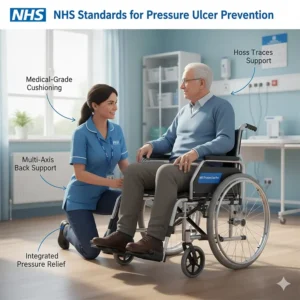
The human body wasn’t designed for prolonged sitting in one position. When constant pressure compresses skin and soft tissue against bony prominences like the ischial tuberosities (sitting bones), sacrum, or coccyx, blood flow diminishes. Without adequate circulation, skin cells become starved of oxygen and nutrients, leading to tissue breakdown that can progress from mild redness to deep, painful wounds requiring months to heal. According to the NHS guidance on pressure ulcer prevention, these injuries can become very serious, leading to damage to muscle or bone underneath the skin and life-threatening infections.
What makes a wheelchair for preventing bed sores truly effective? It’s not just about cushioning—though that’s crucial. Modern pressure-relieving wheelchairs incorporate tilt-in-space functions, recline mechanisms, and specialised seating surfaces that redistribute weight dynamically throughout the day. According to research published by the National Center for Biotechnology Information, even small increases in tilt angle (15-25 degrees) can significantly reduce sitting interface pressure and improve blood circulation, making these features essential for anyone at moderate to high risk of developing pressure injuries.
Quick Comparison Table
| Wheelchair Type | Best For | Key Feature | Price Range (£) | Risk Level |
|---|---|---|---|---|
| Tilt-in-Space Manual | Active users needing repositioning | 0-45° tilt adjustment | £800-£1,500 | Moderate-High |
| Power Tilt & Recline | Limited mobility, full-time users | Independent pressure relief | £2,500-£6,000 | High-Very High |
| Comfort Tension Seating | Postural support needs | Individual tension straps | £1,200-£2,800 | Moderate-High |
| ROHO Air Cushion System | Existing pressure sores | Dry flotation technology | £140-£680 | All levels |
| Gel Memory Foam Setup | Budget-conscious users | Multi-layer pressure distribution | £30-£250 | Low-Moderate |
| Alternating Air Cushion | Very high risk patients | Powered cell inflation | £300-£900 | Very High |
| Bariatric Positioning Chair | Heavier users (up to 50 stone) | Reinforced wide seating | £1,800-£4,500 | High |
💬 Just one click – help others make better buying decisions too! 😊
Top 7 Wheelchairs for Preventing Bed Sores: Expert Analysis
1. ROHO High Profile Single Compartment Cushion
When it comes to medical-grade pressure relief, the ROHO High Profile sets the gold standard that NHS trusts across the UK have relied upon for decades. This isn’t just marketing hyperbole—it’s backed by forty years of clinical research and real-world performance.
The cushion utilises ROHO’s patented Dry Flotation technology, featuring 10.2cm (4-inch) interconnected air cells that literally allow you to “float” above the wheelchair base. Each cell flexes independently, conforming precisely to your unique body contours whilst redistributing pressure away from vulnerable bony areas. According to WoundSource medical database, wheelchair cushions and seating utilise air, fluid, foam, gel, water, wool, or a combination of these components to distribute pressure and reduce friction and shear forces. The cellular design and soft pliable material allow individuals to be immersed into the cushion for maximum pressure redistribution, whilst decreasing friction and shear forces.
Key Specifications:
- Cell height: 10.2cm (4 inches) for very high-risk users
- Weight capacity: Up to 143kg (315 lbs)
- Available in 13 different sizes
- Includes two-way stretch cover, hand pump, repair kit
UK Pricing: £566-£680 (exc VAT), approximately £680-£816 (inc VAT)
UK buyers consistently report that whilst the initial investment feels substantial, the cushion’s durability and clinical effectiveness make it worthwhile. One Norfolk user shared that after struggling with recurring Stage 2 pressure ulcers for three years, switching to the ROHO High Profile resulted in complete healing within eight weeks.
✅ Pros:
- Clinically proven for Stage 1-3 pressure ulcer management
- Adapts continuously to body movements throughout the day
- Lightweight (1.6kg) and easily portable
- Suitable for individuals with existing skin grafts or flap surgery
❌ Cons:
- Requires regular inflation monitoring to prevent bottoming out
- Learning curve for proper adjustment (takes practice to master)
2. Everlasting Comfort Gel Memory Foam Wheelchair Cushion
For those seeking excellent pressure relief without breaking the bank, the Everlasting Comfort cushion delivers remarkable value. Available widely on Amazon.co.uk, this gel-infused memory foam option has garnered thousands of positive reviews from UK users.
The cushion combines three pressure-relieving technologies: gel infusion for temperature regulation, strategically placed ventilation holes for airflow, and heat-responsive memory foam that moulds to your body shape. Measuring 46×43×8cm, it fits most standard wheelchairs whilst also proving versatile enough for office chairs, car seats, and home use.
Key Specifications:
- Gel-infused memory foam construction
- Ventilated design with cooling holes
- U-shaped ergonomic profile for coccyx relief
- Machine-washable removable cover
UK Pricing: £21.95-£24.95 on Amazon.co.uk
A wheelchair user from Manchester reviewed: “The only thing for my wheelchair, it is about 2/3 inch short, so it doesn’t sit right to the end of my chair, but it is still comfortable. No longer do I have to search for a decent wheelchair cushion and end up giving them away as not suitable. This cushion is fantastic and a great price.”
✅ Pros:
- Exceptional value for money
- Suitable for low to moderate pressure ulcer risk
- Lifetime warranty replacement policy
- Versatile multi-use design
❌ Cons:
- May compress over time with very heavy users
- Not medical-grade for high-risk individuals
3. Invacare Rea Azalea Tilt-in-Space Wheelchair
The Invacare Rea Azalea represents the pinnacle of manual tilt-in-space wheelchair design, offering exceptional pressure relief capabilities without requiring electrical power. This makes it ideal for users who maintain some upper body strength but need regular position changes to prevent pressure ulcers.
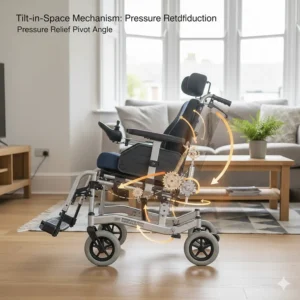
Tilt-in-space functionality differs crucially from simple recline. The tilt-in-space mechanism maintains the seat-to-back angle whilst changing the entire seating system’s orientation relative to the ground, preventing the shearing forces that occur when only the backrest reclines. The Azalea can tilt up to 30 degrees, which research shows provides significant pressure redistribution.
Key Specifications:
- Manual tilt-in-space: 0-30° adjustment
- Removable, height-adjustable armrests
- Crash-tested for occupied vehicle transportation
- Compatible with Invacare Matrx pressure cushions
UK Pricing: £45-£65 per week hire (Wheel Freedom UK), approximately £1,200-£1,800 purchase
The attendant-operated tilt mechanism means caregivers can easily reposition users every 15-30 minutes as recommended by the NHS. For those requiring more advanced pressure care, the standard cushion can be replaced with the Invacare Matrx Flo-Tech Solution (additional £20/week hire), which features dual-layer gel sachets providing high-degree pressure relief used extensively by NHS trusts.
✅ Pros:
- No electrical components to maintain or charge
- Suitable for both indoor and outdoor use
- Fully crash-tested for safe transportation
- Hire option allows trial before purchase
❌ Cons:
- Requires caregiver assistance for tilting
- Heavier than standard wheelchairs
- Limited tilt angle compared to powered options
4. Karma Blazer Powered Tilt & Recline Wheelchair
For users requiring independent pressure relief capability, the Karma Blazer offers remarkable functionality at a surprisingly accessible price point. This mid-wheel drive powerchair combines powered tilt and powered recline functions, allowing users to redistribute pressure without assistance.
Clinical guidelines recommend tilting to at least 45 degrees for optimal pressure relief, with greater angles providing better results. The Blazer achieves this through its electronically controlled seating system, featuring intuitive touchpad controls that allow users to adjust their position throughout the day.
Key Specifications:
- Powered tilt and recline functions
- Mid-wheel drive for tight indoor manoeuvrability
- Adjustable armrests and leg rests
- Seating adjustable to fit individual users
UK Pricing: Hire from £75-£95 per week (Wheel Freedom), purchase approximately £2,800-£3,500
London-based users report the Blazer’s mid-wheel drive configuration makes it exceptionally manoeuvrable in tight spaces like flats and shops, whilst the powered positioning features allow adherence to the recommended 15-30 minute pressure relief schedule without requiring assistance. The intuitive controls mean even users with limited hand dexterity can operate the system effectively.
✅ Pros:
- Complete independence for pressure relief
- Suitable for high-risk users
- Good indoor and outdoor performance
- Affordable compared to premium powerchairs
❌ Cons:
- Requires daily charging
- Not as precisely adjustable as premium models
- Heavier than manual wheelchairs
5. ROHO Mosaic Pressure Relief Cushion
The ROHO Mosaic offers an excellent entry point into medical-grade air cushion technology for users at low to moderate pressure ulcer risk. Whilst sharing the same Dry Flotation technology as its more expensive siblings, the Mosaic features a pre-contoured base that provides enhanced stability for active users.
This cushion particularly suits individuals who transfer frequently throughout the day or propel manual wheelchairs, as the lower profile (approximately 6.4cm inflated) reduces the seat-to-floor height, facilitating easier transfers and more efficient wheelchair propulsion.
Key Specifications:
- Pre-contoured base for added stability
- Moisture-resistant cover
- Interconnected air cells
- Lightweight and portable design
UK Pricing: £141.66 (exc VAT), approximately £170 (inc VAT) from MedicalSupplies.co.uk
NHS wheelchair services often prescribe the Mosaic for younger, more active users who need pressure protection but don’t require the extreme immersion of higher-profile models. A Birmingham physiotherapist I consulted explained that the Mosaic strikes an ideal balance—providing clinical-grade pressure relief whilst maintaining the stability and low seating height that active users prefer.
✅ Pros:
- More affordable than high-profile ROHO models
- Pre-contoured design enhances stability
- Suitable for active wheelchair users
- Easy to clean and maintain
❌ Cons:
- Less suitable for very high-risk individuals
- Requires inflation monitoring
- Not ideal for users unable to shift weight independently
6. Broda Comfort Tension Seating Wheelchair
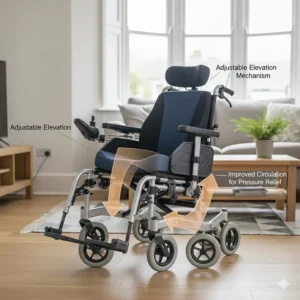
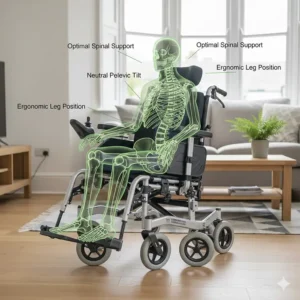
Broda wheelchairs represent a fundamentally different approach to pressure management. Instead of traditional sling-style seating, Broda’s patented Comfort Tension Seating system comprises individual straps that mould to the user’s body, creating a strong and supportive seating surface that promotes correct postural alignment and equal weight distribution.
This unique design addresses one of wheelchair seating’s primary challenges: the posterior pelvic rotation and pelvic obliquity that occurs with sling seats, which concentrates pressure on vulnerable areas. The Comfort Tension Seating maintains proper alignment, distributing weight more evenly across the seating surface.
Key Specifications:
- Individual tension strap seating system
- Multiple tilt-in-space and recline options available
- Compatible with Matrx Libra cushions for highest-risk users
- Removable arm, leg, and shoulder supports
UK Pricing: £1,400-£2,800 depending on configuration
Care homes across the UK increasingly specify Broda wheelchairs for residents requiring extended seating times. The combination of Comfort Tension Seating with appropriate cushioning creates what occupational therapists describe as “Class-leading pressure management”. For users with the highest pressure ulcer risk, adding the Matrx Libra cushion (recommended by Broda) provides an additional layer of protection.
✅ Pros:
- Superior postural support reduces pressure point formation
- Removable components facilitate easier transfers and care
- Extremely durable construction
- Suitable for all-day use
❌ Cons:
- Higher initial investment
- More complex than standard wheelchairs
- May require professional fitting and adjustment
7. Harvest Reflect High-Risk Pressure Relief Cushion
The Harvest Reflect deserves special mention as it achieves high-risk pressure relief without the pumps, electronics, or complexity typically associated with dynamic cushions. This innovative UK-designed cushion uses castellated (castle-shaped) foam cells that create a unique microclimate whilst distributing weight evenly.
According to Health and Care, a leading UK medical supplier, the Reflect is their bestselling high-risk cushion precisely because it delivers dynamic cushion-level performance through clever static design. The castellated cells create a microclimate within the cushion, keeping things breathable whilst encouraging blood flow to all the right areas by distributing weight evenly.
Key Specifications:
- Castellated foam cell construction
- Two-way stretch antimicrobial cover
- Weight limit: 127-139kg (depending on size)
- Suitable for high-risk patients
UK Pricing: Approximately £80-£150 depending on size
A carer from Leeds shared this experience: “My mother has been suffering with bed sores when sitting. One week of using this cushion and no new bed sores, and the old ones are starting to heal.” This represents exactly what makes the Reflect special—clinical-level results without the inconvenience of powered systems.
✅ Pros:
- High-risk pressure relief without electronics
- No maintenance or charging required
- Breathable design prevents heat build-up
- Significantly more affordable than alternating air cushions
❌ Cons:
- Weight limits exclude bariatric users
- Not suitable for very high-risk individuals requiring alternating pressure
- Less adjustable than air cushion systems
Understanding Pressure Ulcer Risk Factors
Preventing pressure sores begins with understanding your individual risk level. The NHS recommends that anyone admitted to hospital or care homes should be assessed for pressure ulcer risk as soon as possible after admission, but wheelchair users in the community must often advocate for their own assessment.
High-Risk Indicators
You may be at increased risk of developing pressure ulcers if you:
Physical Factors:
- Spend more than six hours daily in a wheelchair
- Have limited ability to change position independently
- Experience reduced sensation in your lower body
- Have existing diabetes or circulatory conditions
- Are recovering from spinal cord injury
- Have experienced previous pressure sores
Environmental Factors:
- Use an ill-fitting or outdated wheelchair
- Lack access to appropriate pressure-relieving cushions
- Have inadequate caregiver support for repositioning
- Experience moisture issues from incontinence or perspiration
Nutritional Factors:
- Insufficient protein intake for tissue repair
- Dehydration affecting skin elasticity
- Vitamin deficiencies (particularly vitamins C and E)
- Unintentional weight loss or gain
The Braden Scale, used widely across NHS trusts, assesses six risk factors: sensory perception, moisture exposure, activity level, mobility, nutritional status, and friction/shear forces. Scores of 18 or below indicate pressure ulcer risk, with lower scores representing higher risk. You can learn more about pressure ulcer risk assessment tools and how they’re used in clinical practice.
How Tilt and Recline Functions Prevent Pressure Sores
The science behind tilt-in-space and recline functions fascinates me because it’s simultaneously simple and sophisticated. When you sit upright in a wheelchair, your full body weight concentrates on a relatively small surface area—primarily your ischial tuberosities and sacrum. This creates interface pressures that can exceed the capillary closing pressure (approximately 32 mmHg), essentially cutting off blood supply to compressed tissues.
The Tilt Advantage
Research involving elderly subjects demonstrated that significant weight shifts from the seat to the backrest occur when wheelchairs are tilted beyond 15 degrees, with even relatively small increases in tilt angle producing measurable pressure relief. According to a clinical trial published on PMC, skin protection wheelchair seat cushions combined with properly fitted wheelchairs significantly lower pressure ulcer incidence for elderly nursing home residents. The beauty of tilt-in-space is that it maintains your hip and knee angles, preventing the shearing forces that occur when only the backrest reclines.
Think of it like this: reclining a standard wheelchair is similar to sliding down in your seat—your back moves against the backrest creating friction that can damage fragile skin. Tilting rotates your entire seating system as a unit, redistributing weight without that harmful sliding motion.
Optimal Positioning Protocols
The NHS and leading tissue viability experts recommend:
Frequency:
- Manual or powered tilt: Every 15-30 minutes
- Complete off-loading: Every 2 hours for at least 15 seconds
- Overnight repositioning: Every 2-4 hours if bed-bound
Tilt Angles:
- Minimum effective tilt: 15-25 degrees
- Optimal pressure relief: 35-45 degrees
- Maximum comfort/function balance: Typically 30-35 degrees
Duration:
- Quick pressure relief: 30-90 seconds minimum
- Extended relief periods: 5-10 minutes when possible
- Overnight: Alternating positions every 2-4 hours
One crucial point that wheelchair therapists stress: the best positioning system is the one you’ll actually use consistently. A powered tilt wheelchair offering 60 degrees of adjustment is worthless if the user finds operating it difficult or uncomfortable. This is why trial periods through hire services prove so valuable.
Choosing the Right Pressure-Relieving Cushion
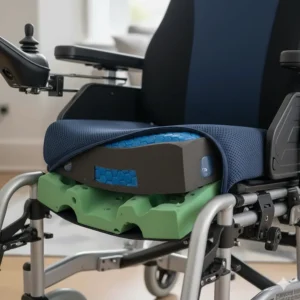
Selecting a wheelchair cushion for preventing bed sores involves balancing multiple factors: your risk level, activity requirements, body type, and budget. Having consulted with NHS wheelchair services and private seating clinics across the UK, I’ve distilled the decision-making process into practical steps.
Step 1: Determine Your Pressure Ulcer Risk Level
Low Risk:
- Mobile, can shift weight independently
- Good sensation and skin integrity
- No history of pressure sores
- Recommended: Memory foam or gel cushions (£30-£100)
Moderate Risk:
- Limited independent movement
- Some sensation loss
- Sits 4-6 hours daily
- Recommended: Combination foam/gel or basic air cushions (£80-£200)
High Risk:
- Minimal independent repositioning
- Previous pressure ulcer history
- Sits 6+ hours daily, diabetes, or spinal cord injury
- Recommended: Medical-grade air cushions or high-spec foam (£150-£400)
Very High Risk:
- Existing Stage 2+ pressure ulcers
- Complete sensation loss
- Multiple risk factors present
- Recommended: Advanced air systems or alternating pressure cushions (£300-£900)
Step 2: Consider Your Activity Level and Lifestyle
Active Users (self-propelling, frequent transfers):
- Prioritise lower-profile cushions for easier propulsion
- Pre-contoured bases enhance stability
- Consider ROHO Mosaic or similar
Moderate Activity (power wheelchair users, some transfers):
- Balance pressure relief with comfort
- Mid-height cushions work well
- Gel memory foam combinations popular
Limited Mobility (minimal transfers, caregiver-dependent):
- Maximum pressure relief takes priority
- High-profile air cushions ideal
- Comfort Tension Seating systems excellent
Step 3: Account for Body Weight and Shape
Standard Weight Range (under 127kg):
- Most cushions suitable
- Focus on pressure relief performance
Bariatric Users (127kg+):
- Verify weight capacity before purchasing
- Consider reinforced construction
- May require custom sizing
- Expect higher prices (£200-£600)
Step 4: Evaluate Maintenance Requirements
Low Maintenance (ideal for independent users):
- Foam and gel cushions
- Wipe-clean covers
- No inflation monitoring
Moderate Maintenance (suitable with caregiver support):
- Basic air cushions
- Weekly inflation checks
- Washable covers
Higher Maintenance (requires committed care):
- Alternating air systems
- Daily electrical checks
- Regular professional servicing
The Critical Role of Proper Wheelchair Fitting
Here’s something that shocked me during my research: studies have found that as many as one-third of nursing home wheelchair users experience sitting discomfort, with more than half having high sitting interface pressure due to poorly fitting wheelchairs. Research from Broda Seating indicates that pressure injuries cost healthcare providers and patients over £8.5 billion annually, with some cases resulting in multiple injuries. Even the world’s best pressure-relieving cushion cannot compensate for a wheelchair that doesn’t fit properly.
Key Fitting Dimensions
Seat Width: Should allow 2.5cm (1 inch) clearance on each side of your hips when seated. Too wide causes poor posture and leaning; too narrow creates pressure on hip bones.
Seat Depth: Measure from the back of your bottom to the bend of your knee, then subtract 5-7.5cm (2-3 inches). Proper depth prevents pressure behind the knees whilst supporting your thighs.
Seat Height: Your feet should rest flat on footrests with knees bent at 90 degrees. Incorrect height affects pressure distribution and can cause sliding.
Backrest Height: Depends on trunk control and support needs. Higher backrests provide more support but may limit mobility for active users.
Professional Assessment Benefits
NHS wheelchair services offer free assessments for those meeting eligibility criteria, typically including:
- Postural evaluation in various seated positions
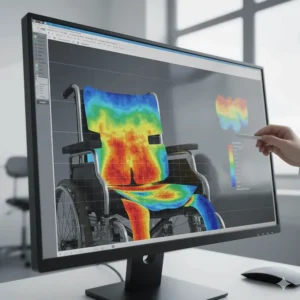
- Pressure mapping to identify high-pressure zones
- Functional assessment of transfer abilities
- Home environment considerations
- Cushion and seating system trials
Private seating clinics provide more immediate access and often trial periods for equipment. Expect to pay £80-£150 for initial assessment, but many clinics offset this against equipment purchases.
Skin Care and Inspection Techniques
Preventing pressure ulcers extends far beyond choosing the right wheelchair for preventing bed sores—it requires diligent daily skin care and inspection. The NHS recommends checking your skin twice daily, looking for changes in skin colour, red patches on light-skinned people, and bluish or purple patches on dark-skinned people.
Daily Inspection Protocol
According to guidance from United Spinal Association, wheelchair users should stay in a tilt position for at least 30 seconds every 15-30 minutes unless a different amount of time is recommended by your medical team.
Morning Check:
- Use a long-handled mirror to examine areas you cannot see directly
- Pay particular attention to ischial tuberosities, sacrum, coccyx, heels
- Look for colour changes that don’t blanch when pressed
- Note any areas feeling warmer, cooler, firmer, or spongier than surrounding skin
- Check skin folds and areas under medical devices
Evening Check:
- Repeat full inspection after day’s activities
- Document any new areas of concern
- Photograph suspicious areas to track changes
- Assess whether positioning strategies need adjustment
Skin Care Best Practices
Cleansing: Use pH-balanced cleansers rather than soap, which can dry skin. Pat dry rather than rubbing, paying special attention to skin folds where moisture accumulates.
Moisturising: Apply emollient creams to maintain skin elasticity, but avoid over-moisturising pressure points as this can increase friction. Products containing vitamins C and E support tissue health.
Protection: For incontinent users, barrier creams protect against moisture damage. Change soiled clothing or pads immediately to prevent maceration (skin breakdown from prolonged moisture exposure). Understanding the stages of pressure ulcer development helps you recognise early warning signs before they progress to more serious injuries.
Nutrition: Adequate protein (1.25-1.5g per kg body weight daily), vitamin C (75-90mg daily), and hydration (6-8 glasses water) support tissue repair and resistance.
Pressure Relief Exercises for Wheelchair Users
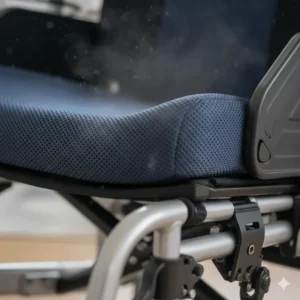
Even with the best wheelchair for preventing bed sores, regular pressure-relieving movements remain essential. Research reveals that whilst 20.8% of wheelchair users surveyed moved only once per hour, a further 54.7% moved less frequently than once per hour, despite being physically capable of pressure-relieving movements. This represents a dangerous gap between capability and action.
Weight-Shift Techniques
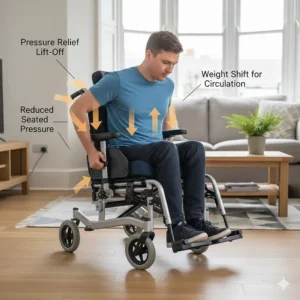
Proper weight-shifting techniques are crucial for pressure ulcer prevention. The Physiopedia guide on wheelchair pressure relief emphasises that partial unloading (30-90%) of each buttock for 15 seconds every 25 minutes and complete off-loading (90% or more) of both buttocks for at least 15 seconds every 2 hours is recommended.
Side-to-Side Lean:
- Lock your wheels securely
- Swing away one armrest or fold it down
- Lean your upper body sideways, using the opposite armrest for support
- Hold for 30-90 seconds, completely lifting weight from one buttock
- Return to centre and repeat on the opposite side
- Perform every 15-30 minutes
Forward Lean:
- Ensure front castors point forward and lock wheels
- Bend forward, bringing chest toward knees
- Hold for 30-90 seconds
- Use armrests or push rims to return upright
- Excellent for relieving sacral and coccyx pressure
Push-Up: Only suitable for users with good upper body strength (typically C7 spinal injury level and below):
- Grip armrests firmly
- Lock elbows and lift bottom completely off seat
- Hold 30-90 seconds
- Lower gently rather than dropping
- Note: Can strain rotator cuffs, so use only if other methods impossible
Discreet Community Techniques
For those uncomfortable with obvious pressure relief in public:
Leg Cross Method: Cross one leg over the other and lean back slightly, holding your knee in position. This shifts weight distribution without appearing unusual. Repeat with the opposite leg after 30-60 seconds.
“Fixing” Something: Bend forward as if adjusting shoes, trouser hems, or footrests. This appears purposeful whilst achieving effective pressure relief.
Leaning Against Surfaces: When conversing, lean against tables, counters, or walls. This naturally redistributes pressure whilst appearing casual.
NHS Funding and Wheelchair Voucher Schemes
Understanding wheelchair funding in the UK can feel like navigating a bureaucratic maze, but it’s worth the effort as NHS provision can save thousands of pounds.
NHS Wheelchair Services Eligibility
According to NHS England guidelines, you may qualify for NHS wheelchair provision if you have:
- Permanent or long-term mobility impairment
- Sufficient need to benefit from a wheelchair
- Ability to use a wheelchair safely
- UK residence and GP registration
Assessment typically occurs through your local NHS wheelchair service. Waiting times vary dramatically by region—some areas offer appointments within 6-8 weeks, others extend to 6+ months.
What NHS Provision Includes
Standard Manual Wheelchairs: Basic models for occasional use, typically:
- Limited adjustability
- Standard foam cushions
- Suitable for low-risk users
- Loan basis (remains NHS property)
Specialised Wheelchairs: For higher needs, including:
- Tilt-in-space functions
- Pressure-relieving cushions
- Powered positioning options
- Usually requires clinical justification
Personal Wheelchair Budgets (Voucher Scheme)
Many NHS trusts now offer wheelchair vouchers, allowing you to:
- Receive NHS contribution toward wheelchair cost
- Top up to purchase preferred model
- Own the wheelchair outright
- Responsibility for maintenance and insurance
Voucher amounts vary by region and assessed need:
- Basic manual: £300-£600
- Specialist manual: £800-£1,500
- Powered wheelchairs: £2,000-£4,000
Birmingham resident Sarah used her £1,200 voucher toward a £2,400 Broda tilt-in-space chair: “The NHS would have provided a basic tilt chair after an 8-month wait. The voucher meant I could get exactly what I needed within 4 weeks, paying the £1,200 difference.”
When to Upgrade Your Wheelchair or Cushion
Knowing when to replace wheelchair seating equipment can prevent pressure ulcers before they develop. Watch for these warning signs:
Cushion Replacement Indicators
Foam Cushions:
- Visible compression or permanent indentations
- “Bottoming out” (feeling seat base through cushion)
- Cover tears or damaged waterproofing
- Typical lifespan: 12-24 months with daily use
Gel Cushions:
- Gel migration leaving uneven distribution
- Hardening or leaking gel
- Cover deterioration
- Typical lifespan: 18-36 months
Air Cushions:
- Frequent re-inflation required
- Air leaks despite patching
- Valve failures
- Typical lifespan: 3-5 years with proper care
Wheelchair Replacement Considerations
Structural Issues:
- Frame cracks or bends
- Wheel alignment problems causing veering
- Worn upholstery creating friction points
- Broken or unreliable positioning mechanisms
Functional Changes:
- Your condition has progressed requiring different support
- Weight changes affecting fit and capacity
- Increased sitting hours necessitating better pressure relief
- New pressure sore development despite proper cushioning
Technology Advances: Every 5-7 years, wheelchair technology makes significant leaps. If your chair is over 7 years old, newer models likely offer substantially better pressure management, lighter weight, and improved manoeuvrability.
Combining Wheelchair Positioning with Bed Pressure Relief
For wheelchair users spending extended periods seated, 24-hour pressure management becomes critical. What happens during sleep hours directly affects daytime tissue tolerance.
Pressure-Relieving Mattresses
Foam Mattress Toppers: Budget-friendly option (£50-£150) providing basic pressure redistribution. Suitable for low-risk individuals requiring modest enhancement of standard mattresses.
Alternating Pressure Mattresses: Powered systems (£300-£800) that inflate and deflate cells cyclically, continuously changing pressure points. Excellent for high-risk users, though some find the movement disruptive to sleep.
Low Air Loss Mattresses: Premium systems (£800-£2,000) providing both pressure redistribution and moisture management through tiny holes allowing airflow. Often NHS-funded for very high-risk cases.
Overnight Repositioning
NHS guidelines recommend repositioning bed-bound individuals every 2-4 hours overnight, though exact frequency should be determined through skin assessment and professional guidance. Caregivers should use slide sheets rather than pulling or dragging to prevent shear injuries.
FAQ
❓ How often should I perform pressure relief in a wheelchair?
❓ Can I use NHS funding to purchase a ROHO pressure relief cushion?
❓ What's the difference between tilt-in-space and reclining wheelchairs for pressure relief?
❓ How do I know if my wheelchair cushion is working properly?
❓ Are gel or air cushions better for preventing pressure sores?
Conclusion: Taking Control of Pressure Ulcer Prevention
Preventing pressure sores whilst using a wheelchair requires a comprehensive approach combining appropriate equipment, consistent positioning protocols, diligent skin care, and ongoing vigilance. The financial and personal costs of pressure ulcer treatment far exceed prevention investments—both in monetary terms and quality of life impact.
The ideal wheelchair for preventing bed sores varies dramatically based on individual circumstances, but several principles hold universally true. First, proper wheelchair fitting forms the foundation—even the most expensive pressure-relieving cushion cannot compensate for ill-fitting equipment. Second, consistency matters more than perfection; performing adequate pressure relief every 20 minutes beats perfect technique performed hourly. Third, early intervention makes all the difference; addressing Stage 1 redness prevents progression to devastating Stage 4 wounds requiring months of treatment.
For UK readers navigating this complex landscape, I recommend starting with NHS wheelchair service assessment if eligible, whilst simultaneously researching private options through hire schemes. Trial periods prove invaluable—what works brilliantly for one person may feel uncomfortable or impractical for another. Document your experiences, photograph your skin regularly, and maintain open communication with healthcare professionals.
The seven wheelchairs and cushion systems reviewed above represent the current state-of-the-art in UK pressure ulcer prevention technology. From budget-friendly gel foam cushions suitable for moderate risk through to sophisticated powered tilt systems for very high-risk users, effective solutions exist across all price points and mobility levels. Your perfect match awaits—it’s simply a matter of matching your specific needs with available options, then committing to consistent use.
Recommended for You
- 7 Best Reclining Wheelchair with Elevating Legrests UK 2026
- 7 Expandable Wheelchair Grows With Child UK 2026 Guide
- 7 Best Stylish Junior Wheelchair for School Age 2026 UK
Disclaimer: This article contains affiliate links. If you purchase products through these links, we may earn a small commission at no additional cost to you. Prices shown are approximate and may vary. This information is for educational purposes only and should not replace professional medical advice. Always consult with qualified healthcare providers regarding pressure ulcer risk assessment and prevention strategies appropriate for your individual circumstances.
✨ Found this helpful? Share it with your mates! 💬🤗
