
In This Article
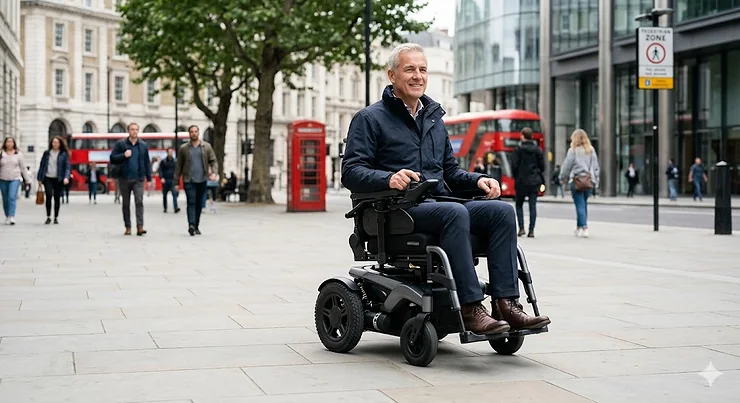
Speed isn’t just about getting from A to B quickly—it’s about freedom, independence, and keeping pace with life. When I first started researching fast electric wheelchairs for clients, I was surprised to learn that many users felt left behind by standard 4mph models. Whether you’re trying to keep up with grandchildren in the park, navigate busy shopping centres, or simply enjoy the outdoors without feeling restricted, a fast electric wheelchair can genuinely transform your daily experience.
In the UK, electric wheelchair speeds are regulated by law, with Class 2 models limited to 4mph (6.4 km/h) and Class 3 models capable of reaching 6-8mph (9.7-12.9 km/h) on roads. According to GOV.UK’s Highway Code, Class 3 vehicles have an upper speed limit of 8mph (12 km/h) and can be used on roads as well as pavements. The difference between a 4mph and 6mph powerchair might seem small on paper, but in real-world use, that extra speed can mean arriving at appointments on time, enjoying longer journeys without fatigue, and maintaining your active lifestyle.
This comprehensive guide examines seven of the fastest electric wheelchairs available in the UK for 2026, comparing everything from top speeds and battery ranges to manoeuvrability and value for money. Whether you’re upgrading from a manual wheelchair or replacing an older powerchair, you’ll find detailed analysis to help you make the right choice.
Quick Comparison Table: Fast Electric Wheelchairs at a Glance
| Model | Top Speed | Range | Drive Type | Price Range | Best For |
|---|---|---|---|---|---|
| Ottobock C2000 | 15 km/h (9.3mph) | 60 km | Front/Rear | £8,000-£12,000 | Outdoor/Off-road |
| Kymco K-Activ | 6mph (9.7 km/h) | 27 miles | Rear-Wheel | £999-£2,995 | All-round versatility |
| Invacare TDX SP2 | 10-12 km/h (6.2-7.5mph) | 19 miles | Mid-Wheel | £1,000-£7,000 | Indoor/Outdoor balance |
| Quickie Q500 M | 6mph (9.7 km/h) | 25 miles | Mid-Wheel | £1,599-£12,000 | Premium manoeuvrability |
| Pride Jazzy 600 ES | 4mph (6.4 km/h) | 15 miles | Mid-Wheel | £1,149-£3,000 | Budget-friendly |
| Lightweight Folding | 4mph (6.4 km/h) | 12-18 miles | Rear-Wheel | £749-£3,499 | Travel & portability |
| Pride Jazzy Carbon | 4mph (6.4 km/h) | 14 miles | Rear-Wheel | £2,000-£4,000 | Ultra-lightweight |
💬 Just one click – help others make better buying decisions too!😊
✨ Don’t Miss These Exclusive Deals!
🔍 Take your mobility to the next level with these carefully selected products. Click on any highlighted item to check current pricing and availability on Amazon.co.uk. These powerchairs will help you regain authentic independence your family will celebrate!
Top 7 Fast Electric Wheelchairs: Expert Analysis
1. Ottobock C2000 – The Speed Champion for Outdoor Enthusiasts
If you’re serious about speed and outdoor performance, the Ottobock C2000 stands as the undisputed champion in the UK fast electric wheelchair market. With a top speed reaching 15 km/h (approximately 9.3mph), this powerchair pushes the boundaries of what’s legally and technically possible for mobility devices.
Key Specifications:
- Maximum speed: 6, 10, or 15 km/h (user-selectable)
- Range: Up to 60 kilometres on a single charge
- Battery capacity: 86 Ah
- Load capacity: Standard 160 kg (upgradeable to 200 kg or 260 kg)
- Climbing ability: 22% gradient
The C2000 features an innovative magic steering system that ensures safety even at extreme speeds, particularly when navigating inclines and challenging 4×4 multi-terrain surfaces from forest tracks to sandy beaches. The full suspension system delivers exceptional driving comfort, making long journeys genuinely pleasurable rather than merely tolerable.
What sets this model apart isn’t just raw speed—it’s the engineering sophistication. Available in both front-wheel and rear-wheel drive configurations, integrated LED lighting and a luggage carrier come as standard equipment. UK buyers should note this is a specialist outdoor powerchair designed primarily for off-road and countryside use.
Pricing: £8,000-£12,000+ (new, depending on configuration)
Customer Feedback: Users consistently praise the C2000’s ability to handle terrain that would stop conventional powerchairs dead. One reviewer mentioned confidently navigating gravel paths and grass fields that were previously inaccessible.
✅ Pros:
- Fastest legal option available in UK
- Exceptional off-road capability
- 60km range eliminates range anxiety
- Highly customisable seating
❌ Cons:
- Premium price point
- Requires Class 3 registration with DVLA
- Larger footprint than indoor-focused models
2. Kymco K-Activ – Best Value 6mph Powerchair
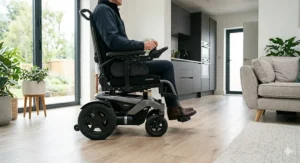
The Kymco K-Activ represents exceptional value in the fast electric wheelchair category, offering genuine 6mph performance without the eye-watering price tag of premium models. As a Class 3 powerchair, it bridges the gap between budget options and luxury performance chairs.
Key Specifications:
- Top speed: 6mph (9.7 km/h)
- Range: 27 miles on a single charge
- Battery: 50Ah capacity
- Weight capacity: Up to 25 stone (available configurations)
- Turning radius: 21.5cm
This rear-wheel drive powerchair features adjustable rear suspension for smoother rides across varying terrain, whilst its 14-inch pneumatic rear tyres and 9-inch puncture-proof front tyres deliver reliable performance. The fully programmable control system allows you to customise the driving experience to match your specific needs and preferences.
Crash-tested to ISO 7176-19 standards when fitted with the optional kerb climber (£75 additional), the K-Activ can be used safely in transit vehicles including buses, eliminating the need for transfers. This feature alone makes it invaluable for users who rely on public transport.
Pricing: £999-£2,995 (refurbished to new)
Customer Feedback: UK buyers particularly appreciate the K-Activ’s adjustable seat width (up to 25 inches), making it suitable for a wider range of body types than many competitors. The 27-mile range receives consistent praise for eliminating the anxiety of running out of power mid-journey.
✅ Pros:
- Excellent price-to-performance ratio
- 27-mile range perfect for day trips
- Crash-tested for vehicle transport
- Highly adjustable to user needs
❌ Cons:
- Pneumatic tyres require maintenance
- Heavier than lightweight folding models
3. Invacare TDX SP2 – Premium Performance with Smart Technology
The Invacare TDX SP2 combines impressive speed capabilities with cutting-edge LiNX smart technology, creating a powerchair that adapts to your driving style and environmental conditions. Upgradeable from 10 km/h to 12 km/h (approximately 7.5mph) with the SSD motor option, it sits comfortably in the premium fast wheelchair category.
Key Specifications:
- Standard speed: 10 km/h (6.2mph), upgradeable to 12 km/h (7.5mph)
- Range: Up to 19 miles
- Weight capacity: Up to 28 stone (180 kg)
- Wheelbase: Available in standard (650mm) or narrow (610mm)
- Turning radius: Exceptionally tight due to mid-wheel drive
The TDX SP2’s standout features include the patented Stability Lock function, ensuring all six wheels remain firmly grounded on uneven terrain, and SureStep suspension technology that negotiates challenging surfaces with remarkable smoothness. The mid-wheel drive design provides unparalleled indoor manoeuvrability whilst maintaining outdoor stability.
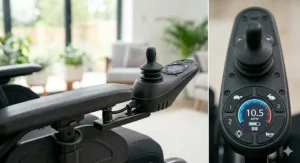
LiNX Smart Technology represents genuine innovation in powerchair control systems. The REM400 remote features an impressive 3.5-inch colour touchscreen requiring minimal force to operate, built-in Bluetooth connectivity for up to three devices simultaneously, and intelligent drive compensation that automatically adjusts for imbalances caused by weight distribution, wear and tear, or manufacturing tolerances.
Pricing: £1,000-£1,500 (refurbished), £7,000+ (new)
Customer Feedback: The TDX SP2’s ability to maintain consistent speed over uneven terrain, cambers, and inclines receives particular praise from UK users. The intelligent control system’s creep control feature proves invaluable when approaching tables or navigating doorways.
✅ Pros:
- Advanced LiNX technology adapts to user needs
- Exceptional stability on rough terrain
- Modular seating system accommodates third-party options
- Mid-wheel drive excellent for indoor use
❌ Cons:
- High price point for new models
- Speed upgrade adds to cost
- Learning curve for advanced features
4. Quickie Q500 M – Manoeuvrability Meets Speed
Sunrise Medical’s Quickie Q500 M perfectly balances superb indoor manoeuvrability with outdoor performance that belies its compact dimensions. With a 6mph top speed and patented all-wheel suspension, this mid-wheel drive powerchair excels in environments where both agility and pace matter.
Key Specifications:
- Maximum speed: 6mph (9.7 km/h)
- Range: 25 miles with 60Ah batteries
- Turning radius: 25 inches
- Base width: Only 26 inches
- Seat height: Just 16.5 inches (420mm)
The Q500 M’s narrow base and tight turning circle allow navigation through standard doorways and around furniture with remarkable ease. The low seat height proves particularly valuable for rolling under tables in restaurants and accessing wheelchair-adapted vehicles (WAVs) without difficulty.
Quickie’s patented six-wheel suspension system works independently on each wheel, absorbing bumps and uneven ground to deliver one of the smoothest rides in its class. Anti-pitch technology locates your weight directly over the drive wheel, maximising traction and safety when travelling over slopes—a genuine safety advantage when navigating hilly UK terrain.
The SEDEO PRO seating system, standard on most configurations, offers exceptional comfort with multiple adjustment parameters. This isn’t merely padding—it’s an ergonomic seating solution designed to maintain proper posture and reduce pressure points during extended use.
Pricing: £1,599-£1,949 (refurbished with warranty), £10,000-£12,000 (new with full specification)
Customer Feedback: UK buyers consistently highlight the Q500 M’s versatility. One user described it as “equally confident navigating tight kitchen spaces and tackling forest paths.” The 25-mile range receives praise for enabling full-day outings without charging anxiety.
✅ Pros:
- Exceptional indoor manoeuvrability
- 25-mile range for extended outings
- Low seat height for table access
- Premium SEDEO seating system
❌ Cons:
- Significant price difference between refurbished and new
- Mid-wheel drive takes adjustment for some users
- Premium features increase cost
5. Pride Jazzy 600 ES – Reliable Mid-Range Performance
The Pride Jazzy 600 ES represents dependable performance from one of the industry’s most trusted manufacturers. Whilst its 4mph top speed doesn’t qualify as “fast” by Class 3 standards, it deserves inclusion as a solid all-rounder that many UK users find perfectly adequate for their needs—and significantly more affordable than premium 6-8mph models.
Key Specifications:
- Top speed: 4mph (6.4 km/h)
- Range: Approximately 15 miles
- Drive system: Mid-Wheel 6 technology
- Turning radius: Exceptionally tight at 20.5 inches
- Weight capacity: 136 kg (21 stone)
The 600 ES features Pride’s Active-Trac suspension system, which provides remarkable stability on uneven outdoor terrain whilst maintaining the precise control needed for indoor use. The mid-wheel drive configuration delivers superb manoeuvrability around corners and in confined spaces—particularly valuable in typical UK homes with narrow hallways and compact rooms.
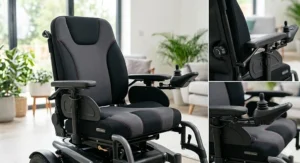
Standard equipment includes a high-back seat with adjustable footrests, built-in cup holder, and storage pouch for essentials. The on-board and off-board charging capability adds flexibility, allowing you to remove the charger for convenient indoor charging when needed.
Pricing: £1,149-£1,500 (refurbished), £3,000+ (new)
Customer Feedback: The Jazzy 600 ES enjoys strong reviews from UK buyers who prioritise reliability over maximum speed. Users appreciate the tight turning circle for shopping centres and supermarkets, whilst the 14-inch drive wheels handle outdoor pavements and mild terrain competently.
✅ Pros:
- Trusted Pride Mobility reliability
- Excellent price point for quality
- Superb indoor manoeuvrability
- Active-Trac suspension for stability
❌ Cons:
- 4mph limits outdoor range vs faster models
- Shorter battery range than premium options
- Basic compared to high-tech alternatives
6. Lightweight Folding Electric Wheelchairs – Portable Performance Options
The category of lightweight folding electric wheelchairs has evolved dramatically, with 2026 models offering impressive performance in remarkably portable packages. Whilst most max out at 4mph to maintain their ultralight credentials, they represent an important option for users who prioritise transportability and convenience.
Representative Specifications:
- Top speed: Typically 4mph (6.4 km/h)
- Range: 12-18 miles (depending on model and battery)
- Weight: From 14.5 kg to approximately 40 lbs (18 kg)
- Folding time: 3 seconds to instant-fold mechanisms
- Motor power: Usually 250W-500W dual motors
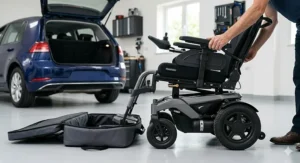
Modern lightweight folders incorporate aerospace-grade aluminium or carbon fibre frames, creating chairs that can be lifted by most adults into car boots without requiring specialised lifting equipment. The instant-fold or quick-fold mechanisms draw inspiration from pushchair technology, allowing single-handed folding in seconds.
Battery technology has improved significantly, with lithium-ion packs offering 12-18 mile ranges whilst remaining removable for separate charging. Many models now feature electromagnetic braking systems that activate within 0.3 seconds when you release the joystick, providing excellent safety credentials.
Solid rubber or honeycomb wheels eliminate puncture concerns, whilst 360-degree joystick controls offer intuitive navigation through tight spaces. Adjustable armrests, foldable footrests, and under-seat storage add practical everyday convenience.
Pricing: £749-£3,499 (depending on features and brand)
Customer Feedback: UK buyers value these models primarily for their portability. Common praise includes “perfect for weekend trips,” “fits in my hatchback boot easily,” and “ideal for flying with relatives abroad.” The main criticism centres on limited range and lower weight capacities compared to full-size powerchairs.
✅ Pros:
- Genuinely portable and car-transportable
- Quick folding mechanisms
- Airline-approved models available
- Good value for occasional use
❌ Cons:
- 4mph speed limits outdoor capability
- Lower weight capacities (typically 100-136 kg)
- Shorter range than full-size chairs
- Less stable on very rough terrain
7. Pride Jazzy Carbon – Ultra-Lightweight with Modern Design
The Pride Jazzy Carbon pushes the boundaries of lightweight powerchair design with its carbon fibre construction, creating what Pride claims as their lightest powered wheelchair at just 14.5 kg. This represents a genuine engineering achievement—combining aircraft-grade materials with functional mobility performance.
Key Specifications:
- Top speed: 4mph (6.4 km/h)
- Weight: 14.5 kg (approximately 32 lbs)
- Folding: One-touch fold release mechanism
- Range: Approximately 14 miles
- Construction: Carbon fibre frame
The carbon fibre technology isn’t merely aesthetic—it creates a frame that’s simultaneously lighter than traditional aluminium whilst maintaining structural integrity for daily use. The one-touch fold release system allows the chair to collapse in seconds, making it genuinely practical for users who transfer between vehicles regularly.
An LED remote display provides clear battery status and control information, representing a modern approach to user interface design. The chair handles indoor spaces confidently, though its lightweight construction means it’s best suited to good-quality pavements and indoor surfaces rather than rough outdoor terrain.
Available in multiple colour options including Black Ice (Glossy), Grape, Jelly Bean, Invacare Blue, Island Blue, Lights Out, Matte Black, and Monster Green, the Jazzy Carbon appeals to users who appreciate personalisation alongside performance.
Pricing: £2,000-£4,000
Customer Feedback: The revolutionary weight receives consistent praise—”I can actually lift this into my car myself” is a common theme from UK buyers. However, some users note the trade-off between weight and stability, suggesting it’s better suited to predominantly indoor use.
✅ Pros:
- Remarkable 14.5 kg weight
- Carbon fibre construction
- Modern LED display
- Multiple colour options
❌ Cons:
- Premium price for 4mph performance
- Best suited to smooth surfaces
- Lower weight capacity than heavier models
Understanding UK Speed Regulations for Electric Wheelchairs
Navigating UK law regarding fast electric wheelchairs requires understanding the classification system that governs their use. These regulations directly impact which models you can legally operate, where you can drive them, and what registration requirements apply.
Class 2 Powerchairs: Pavement-Only Mobility
Class 2 electric wheelchairs and mobility scooters have an upper speed limit of 4mph (6 km/h) and are designed exclusively for pavement use. According to GOV.UK’s Highway Code, manual wheelchairs and Class 2 vehicles are designed to be used on pavements. These vehicles may use roads only where pavements are unavailable or when crossing is necessary.
No registration, tax, or insurance is legally required for Class 2 vehicles, though insurance remains strongly recommended for third-party liability coverage. Users must not exceed 4mph on pavements or pedestrian areas under any circumstances.
Class 3 Powerchairs: Road-Legal Performance
Class 3 represents the fast electric wheelchair category most readers are interested in. Class 3 vehicles have an upper speed limit of 8mph (12 km/h) and are equipped to be used on the road as well as the pavement.
Critical Requirements for Class 3 Operation:
- Must be registered with the DVLA (though this is free of charge)
- Must display a valid tax disc (also free, but legally required)
- Must have a device limiting speed to 4mph when used on pavements
- Must be equipped with lights, indicators, horn, and mirrors for road use
- User must be at least 14 years old
- Cannot be used on motorways under any circumstances
When operating on roads, Class 3 powerchairs can travel at their full 8mph capability. However, they should not be used on unrestricted dual carriageways exceeding 50mph speed limits unless equipped with a flashing amber beacon—and even then, this is strongly discouraged for safety reasons.
For comprehensive information, consult the GOV.UK Highway Code for powered wheelchairs and the Department for Transport mobility scooters guidance.
Proposed Regulatory Changes for 2026-2027
The UK Government launched a consultation in early 2026 examining potential modernisation of mobility device regulations. The Department for Transport consultation looks at how to modernise rules for mobility vehicles, with advocacy groups recommending potentially doubling the existing 8mph road speed limit whilst also increasing the maximum weight allowance.
These proposals reflect the evolution of modern powerchair technology, which has outpaced legislation dating from 1988. If implemented, changes could enable newer, heavier powerchairs with advanced features to be used legally on UK roads and pavements. However, any regulatory changes would take considerable time to implement and would require comprehensive safety assessments.
6mph vs 8mph Powerchair: Understanding the Practical Difference
Many prospective buyers struggle to understand whether the jump from 6mph to 8mph justifies the additional cost and complexity. Let’s examine the real-world implications.
Speed in Context
To put these speeds in perspective, the average UK walking pace is approximately 3mph according to pedestrian studies. A standard Class 2 powerchair at 4mph travels slightly faster than walking pace. A 6mph powerchair (such as the Kymco K-Activ or Quickie Q500 M) offers 50% more speed than walking, whilst an 8mph model effectively doubles pedestrian pace.
Journey Time Savings
For a 2-mile trip:
- At 4mph: 30 minutes
- At 6mph: 20 minutes
- At 8mph: 15 minutes
That 10-15 minute difference might seem modest, but it compounds over multiple journeys. For users making several outings weekly, the time savings become significant—potentially an extra hour or more of independence weekly.
Battery Consumption Considerations
Higher speeds consume battery power more rapidly. The relationship isn’t linear—driving at 8mph doesn’t simply use twice the battery of 4mph. Wind resistance and motor strain increase exponentially with speed, meaning an 8mph powerchair might achieve 60-70% of its rated range when consistently driven at top speed, compared to 80-90% range at moderate speeds.
Legal and Practical Limitations
The 8mph capability comes with legal obligations. Class 3 vehicles must be registered with the DVLA and equipped with lights, indicators, and mirrors. The registration process, whilst free, adds administrative requirements. Additionally, 8mph chairs typically weigh more and cost considerably more than 6mph alternatives.
Recommendation: For most UK users, a quality 6mph powerchair offers the optimal balance. It provides meaningful speed advantages over Class 2 models, remains manageable for indoor use, and avoids the weight and cost premiums of specialist 8mph models. Reserve 8mph chairs for users with specific outdoor or distance requirements, or those living in rural areas where road travel is essential.
High Speed Outdoor Powerchair Features: What Makes Them Different?
Fast electric wheelchairs designed for outdoor performance incorporate specific engineering features that differentiate them from standard indoor-focused models. Understanding these elements helps you identify genuine high-performance chairs versus marketing claims.
Suspension Systems
Premium outdoor powerchairs employ sophisticated suspension technology. The TDX SP2 uses patented SureStep suspension technology that enables a smooth ride while negotiating challenging surfaces. This isn’t merely comfort padding—it’s active suspension that allows wheels to independently absorb impacts, maintaining contact with the ground for traction and stability.
Invacare’s Stability Lock function ensures all six wheels stay firmly grounded even on severely uneven terrain, preventing dangerous pitching or tipping. This becomes critical at higher speeds where terrain irregularities could otherwise cause instability.
Motor Power and Torque
High-speed powerchairs require more powerful motors to maintain speed whilst climbing gradients and carrying user weight. The Kymco K-Activ features 450W motors—significantly more powerful than basic 250W systems found in lightweight folders. This extra power translates to confident hill climbing and consistent speed even on inclines.
Battery Capacity and Range
Faster chairs consume more power, necessitating larger battery packs. The Ottobock C2000’s 86Ah battery capacity dwarfs the 20-35Ah typical of budget models, enabling its impressive 60-kilometre range. UK users should consider whether the extra weight of larger batteries justifies the extended range for their typical usage patterns.
Wheel Size and Tread Design
Larger drive wheels—typically 12-14 inches on outdoor chairs versus 8-10 inches on lightweight models—provide better obstacle clearance and more stable high-speed handling. Pneumatic tyres with aggressive tread patterns offer superior traction on grass, gravel, and uneven surfaces, though they require periodic inflation and are vulnerable to punctures.
Braking Systems
Electromagnetic brakes that engage within 0.3 seconds provide essential safety at higher speeds. These systems automatically activate when the joystick returns to neutral, preventing uncontrolled rolling on slopes—a critical feature when descending hills at 6-8mph.
Fastest Powerchair Available: Balancing Speed with Practical Use
Whilst the Ottobock C2000’s 15 km/h (9.3mph) capability makes it technically the fastest powerchair legally available in the UK, “fastest” and “best” are far from synonymous. Your optimal choice depends on where and how you’ll primarily use the chair.
Indoor vs Outdoor Priorities
If you spend 70% of your time indoors navigating home, shops, and indoor venues, a mid-wheel drive chair like the Quickie Q500 M or Invacare TDX SP2 offers better manoeuvrability than faster rear-wheel drive outdoor specialists. The ability to turn on the spot in your kitchen or reverse in tight bathroom spaces often proves more valuable than maximum outdoor speed.
Conversely, users in rural areas or those who regularly travel longer outdoor distances benefit enormously from 6-8mph capability and extended range. The time and energy savings over multiple weekly journeys make the investment worthwhile.
Weight and Portability Trade-offs
The Ottobock C2000, whilst fastest, weighs considerably more than mid-range alternatives and requires substantial vehicle space for transport. Users without adapted vehicles should carefully consider whether they can practically transport their chosen model before purchasing based solely on speed specifications.
Maintenance and Running Costs
Higher-performance powerchairs typically cost more to maintain. Pneumatic tyres need replacement periodically, larger batteries eventually require costly renewal, and specialised components may need professional servicing. Budget £100-£300 annually for routine maintenance on premium models.
Powered Wheelchair Speed Limit: Staying Legal and Safe
Understanding and respecting speed limits isn’t merely about legal compliance—it’s fundamental to safe operation and maintaining good relationships with the broader community.
Pavement Speed Restrictions
According to the Highway Code, powered wheelchairs and scooters must not travel faster than 4mph (6 km/h) on pavements or in pedestrian areas. This applies to all powerchairs regardless of their maximum capability. Class 3 chairs must have a mechanism to limit speed to 4mph when operating on pavements.
Users should further reduce speed when:
- Approaching blind corners or doorways
- Navigating crowded shopping areas
- Passing elderly pedestrians or young children
- Operating in narrow spaces where pedestrians cannot easily step aside
Road Speed Considerations
Whilst Class 3 powerchairs can legally travel at 8mph on roads, users should assess whether this is safe given specific road conditions:
- Traffic speed: On roads where traffic regularly exceeds 30mph, 8mph feels very slow and vulnerable
- Road width: Narrow country lanes make overtaking difficult for following vehicles
- Visibility: Ensure other road users can see you clearly before joining traffic
- Gradient: Descending steep hills at 8mph requires confidence in your braking system
Courtesy and Community Relations
Speed restrictions exist partly to maintain pedestrian confidence and comfort. Aggressive or inconsiderate powerchair operation damages public perception and risks prompting calls for even tighter restrictions. Demonstrating courteous, safe operation helps maintain the freedoms the mobility community currently enjoys.
How to Choose a Fast Electric Wheelchair: 7 Essential Steps
Selecting the right fast electric wheelchair requires methodical evaluation of your specific needs, circumstances, and budget. Follow this structured approach to make an informed decision.
Step 1: Assess Your Primary Usage Environment
Document where you’ll use the chair for a typical week:
- Indoor (home, shops, offices): ___%
- Smooth pavements and paths: ___%
- Rough outdoor terrain (parks, countryside): ___%
- Road travel: ___%
If indoor and smooth pavement use exceeds 60%, prioritise manoeuvrability over maximum speed. If rough terrain exceeds 30%, invest in robust suspension and larger wheels.
Step 2: Determine Required Speed and Range
Calculate your longest typical journey distance. Add 25% for battery degradation over time and unexpected detours. This determines minimum required range.
For speed, consider whether you genuinely need 6-8mph or whether 4mph with other advantages (lighter weight, lower cost, better manoeuvrability) better serves your needs. Many users overestimate their speed requirements.
Step 3: Evaluate Physical Dimensions and Weight Capacity
Measure doorways, hallways, and tight spaces where you’ll manoeuvre. Note the narrowest point. Compare with powerchair base widths—chairs exceeding your narrowest space by more than 2 inches will cause daily frustration.
Confirm the chair’s weight capacity exceeds your weight by at least 2 stone (13 kg) to ensure optimal performance and longevity.
Step 4: Consider Transport Requirements
If you’ll transport the chair in a vehicle:
- Measure your vehicle boot/storage dimensions
- Confirm you can lift the chair weight (or afford lifting equipment)
- Verify whether the chair disassembles or folds
Non-folding chairs require adapted vehicles or trailers—factor this cost into your decision.
Step 5: Review Seating and Comfort Features
You’ll spend hours in this chair. Test seats for:
- Adequate width between armrests
- Proper back support at your shoulder height
- Comfortable armrest height for relaxed shoulders
- Footplate positioning that doesn’t force knee hyperextension
Don’t compromise comfort for speed—discomfort undermines independence.
Step 6: Calculate Total Ownership Cost
Beyond purchase price, budget for:
- Annual servicing: £100-£300
- Battery replacement (every 12-24 months): £100-£400
- Tyre replacement if pneumatic: £50-£150
- Insurance: £100-£300 annually
- Possible adaptations or accessories: Variable
A £1,000 refurbished chair might cost similar overall to a £3,000 new chair with longer warranty and lower maintenance.
Step 7: Arrange Home Demonstrations
Never purchase based solely on specifications. Arrange demonstrations in your actual home environment. Test:
- Turning in your kitchen
- Navigating hallways
- Accessing bathrooms
- Approaching tables and workspaces
- Outdoor performance on your typical routes
Most reputable UK suppliers offer free home demonstrations—insist on this before committing.

Frequently Asked Questions
❓ How fast can electric wheelchairs legally go in the UK?
❓ Do I need a licence to drive a 6mph or 8mph electric wheelchair?
❓ What's the difference between 6mph and 8mph powerchairs in practical use?
❓ Can I use a fast electric wheelchair indoors and outdoors?
❓ How much does a fast electric wheelchair cost in the UK?
Conclusion: Finding Your Perfect Fast Electric Wheelchair
Selecting the right fast electric wheelchair represents a significant investment in your independence, mobility, and quality of life. The difference between a well-matched chair and a poor choice affects your daily experience for years to come.
For most UK users, the sweet spot lies in quality 6mph Class 3 powerchairs like the Kymco K-Activ or Quickie Q500 M. These models deliver meaningful speed advantages over basic 4mph chairs without the weight, cost, and complexity of specialist 8mph outdoor models. The combination of 25-27 mile range, excellent manoeuvrability, and proven reliability serves the broadest range of users effectively.
Users with specific outdoor requirements or those living in rural areas where road travel is essential should consider premium options like the Invacare TDX SP2 with its upgradeable speed and advanced LiNX technology, or even the specialist Ottobock C2000 for genuine off-road capability.
Conversely, if portability ranks as your priority and your usage primarily involves smooth pavements and indoor spaces, lightweight folding models or the Pride Jazzy Carbon offer remarkable convenience despite their 4mph limitation.
Remember that speed represents just one element of a successful powerchair choice. Comfort, manoeuvrability, reliability, and total cost of ownership often matter more in daily use than maximum speed specifications. A 4mph chair you use confidently every day provides more independence than an 8mph model that stays in the garage because it’s too cumbersome.
Utilise free home demonstrations ruthlessly. Test chairs in your actual environment, on your typical routes, navigating your specific obstacles. Specifications on paper transform into lived experience only through hands-on testing.
The UK’s fast electric wheelchair market in 2026 offers exceptional choice across all price points. Whether your budget stretches to £999 for a refurbished K-Activ or £12,000 for a fully-specified Q500 M, options exist that can genuinely transform your mobility and independence. Take the time to choose wisely—your future self will thank you.
Recommended for You
- 7 Best Rear Wheel Drive Powerchairs UK 2026
- 7 Best Long Range Electric Wheelchairs UK 2026
- 7 Best All Terrain Electric Wheelchair UK 2026
Disclaimer: This article contains affiliate links. If you purchase products through these links, we may earn a small commission at no additional cost to you. Prices shown are approximate and may vary. All product specifications and prices were accurate as of April 2026 but may change. Always verify current specifications with manufacturers and retailers before purchasing.
✨ Found this helpful? Share it with your mates! 💬🤗
