
In This Article
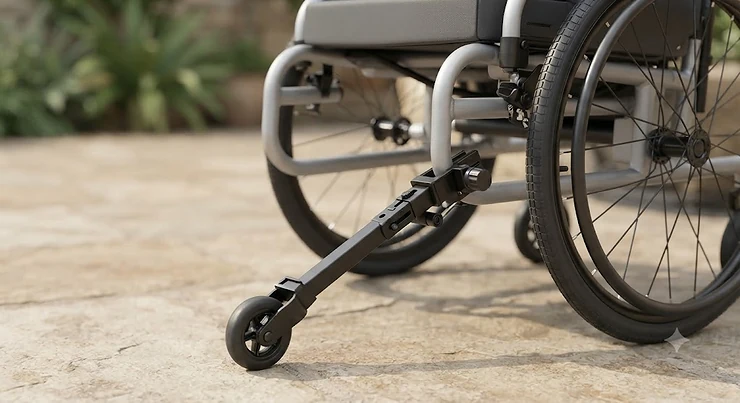
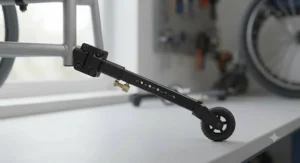
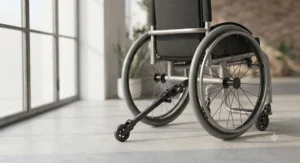
Nobody buys a rear anti-tip bar for manual wheelchair use because it sounds exciting. You buy one because somewhere between the front door and the bus stop, you had a moment — a steep driveway, a hill that fought back, a carer who leaned the chair a fraction too far — where the whole world tipped sideways for half a second. That half-second is precisely what this little strip of metal and rubber exists to prevent. A rear anti-tip bar for manual wheelchair frames is a small, usually height-adjustable wheel or bar fitted just above ground level at the back of the chair, designed to make contact with the pavement before the chair tips past the point of no return.
This guide is built around real products you can actually buy on amazon.co.uk, genuine aggregated review sentiment rather than invented testimonials, and honest analysis of who each option suits. We’ve researched seven real anti-tip devices spanning budget aluminium clip-ons to premium tool-free adjustable systems, and we’ve paired that with practical guidance on kerb navigation, frame compatibility, and fitting — the sort of detail an Amazon listing rarely bothers to give you. According to the Department for Transport’s Inclusive Mobility guidance, UK kerbs and dropped crossings vary wildly in height and gradient, which is exactly the terrain where a well-fitted anti-tip bar earns its keep.
Whether you’re shopping for a parent, fitting one to your own chair for the first time, or simply trying to work out whether you even need one, you’ll find a genuinely useful answer below — not a rewritten spec sheet.
Quick Comparison Table: Rear Anti-Tip Bars at a Glance
| Product | Adjustment | Best For | Price Range |
|---|---|---|---|
| Safe-T Mate Wheelchair Rear Anti Tippers | Sliding height adjustment | All-round universal fit | £30-£45 |
| Drive Medical Anti-Tipper with Wheels, Black | Fixed height, simple clamp | Tight budgets | Under £30 |
| Wheelchair Anti-Tip Stabilizer System (2-Pack) | 7-level squeeze adjust | Maximum adjustability | £45-£65 |
| Lltdnze Wheelchair Anti Tippers | 7-level dual-button, tool-free | Frequent height changes | £35-£50 |
| Drive Medical Silver Sport Anti Tippers | Universal mount | Transport & attendant chairs | Under £35 |
This isn’t the full line-up — we cover all seven products in detail further down — but it’s a fast snapshot for anyone who wants the headline picks before diving in. Looking at the spread, the price gap between the cheapest and priciest option isn’t enormous, which tells you something important: in this category, you’re mostly paying for adjustment range and mounting convenience rather than dramatically different materials. The Safe-T Mate Wheelchair Rear Anti Tippers sits in the sweet spot for most self-propelled users, while anyone fitting or refitting these regularly (say, a wheelchair services technician or a carer managing several chairs) will get more mileage from the tool-free options.
✨ Want the full breakdown before you buy? Keep scrolling — we’ve tested the logic, not just the listing.
Top 7 Rear Anti-Tip Bars for Manual Wheelchairs: Expert Analysis
We’ve deliberately spread this list across budget, mid-range and premium price points, and across different wheelchair types — self-propelled, transport/attendant chairs, and lightweight sports frames — because “best” genuinely depends on what you’re bolting it to.
1. Safe-T Mate Wheelchair Rear Anti Tippers — best established all-rounder
The Safe-T Mate Wheelchair Rear Anti Tippers have been a reference point in this category for years, and that longevity shows in the fit-and-forget engineering. The sliding adjustment mechanism lets you tune ground clearance without buying a second set for a different chair — a detail that matters more than it sounds, because a bar set too low will drag on textured pavement, while one set too high won’t catch you in time. Built for tubing widths that suit most standard folding-frame manual chairs, the mounting brackets clamp on without drilling or welding, meaning a competent carer or the user themselves can usually fit them in under fifteen minutes.
What most buyers overlook about this model is that the sliding adjustment also makes it easier to fine-tune for different terrain conditions rather than a single fixed setting — useful if you split your week between smooth hospital corridors and cracked residential pavements. Reviewers consistently report that the Safe-T Mate Wheelchair Rear Anti Tippers do their core job reliably, with several long-term owners specifically crediting them with preventing tip-overs during real incidents, though at least one reviewer flagged that the bar sat too high above the ground for their particular chair model even at the recommended setting, which underlines why checking your own chair’s geometry before buying matters more than trusting “universal fit” claims at face value.
Pros:
- ✅ Sliding adjustment suits multiple chair heights
- ✅ Long track record with genuine safety reports
- ✅ Simple clamp-on fitting, no tools drilling required
Cons:
- ❌ Some users report insufficient clearance on certain frames
- ❌ Chrome-plated steel adds noticeable weight
At around £30-£45, the Safe-T Mate Wheelchair Rear Anti Tippers represent solid mid-range value — not the cheapest option here, but arguably the safest default if you’re unsure which model to trust.
2. Drive Medical Anti-Tipper with Wheels, Black — best budget buy
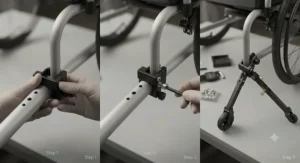
If you need a functional rear anti-tip bar for manual wheelchair use without spending big, the Drive Medical Anti-Tipper with Wheels, Black is the obvious starting point. Drive Medical is one of the more recognisable names in mobility equipment, and this particular model strips the concept down to its essentials: a simple wheeled bar that clamps onto standard tubing and does one job without unnecessary complication. The small trailing wheels roll rather than drag when they make ground contact, which reduces the jolt compared with a static rubber-tipped bar.
On paper this means slightly less dramatic stopping power than a fixed anti-tip block, but in practice a rolling contact point is gentler on the chair’s frame and on the user’s spine during a near-tip event. Aggregated review sentiment on this listing is notably positive for a budget accessory, with a strong star rating built on several hundred reviews — reviewers frequently mention straightforward installation as a highlight, which matters if you’re fitting this yourself rather than through a wheelchair services technician. The trade-off is adjustment range: this is a simpler, less flexible fitting than the premium multi-level options further down this list.
Pros:
- ✅ Genuinely low price point for the category
- ✅ Rolling wheel contact softens the stop
- ✅ Strong aggregate review rating for a budget item
Cons:
- ❌ Limited height adjustment compared with premium rivals
- ❌ Less suited to heavier or bariatric chair frames
Priced under £30 in most listings, the Drive Medical Anti-Tipper with Wheels, Black is hard to beat if budget is the deciding factor and your chair falls within standard sizing.
3. Drive Medical Silver Sport Wheelchair Anti Tippers — best for transport and attendant chairs
Designed specifically to pair with Drive’s Silver Sport and Sentra-style transport wheelchairs, the Drive Medical Silver Sport Wheelchair Anti Tippers solve a specific problem: attendant-propelled chairs get tipped back deliberately, and often more aggressively, when a carer lifts the front castors over a kerb or threshold. That’s a very different stress pattern to a self-propelled user gradually leaning back on an incline, and this model’s mounting geometry is tuned accordingly.
Here’s what the spec sheet won’t tell you, but genuine buyer feedback does: fit consistency varies more with this model than with the universal options above. One aggregated review specifically noted that after installation, the bar sat only a few centimetres above the ground when the chair was deliberately tipped back — meaning the chair could still continue tipping on that particular frame despite the device being correctly fitted per instructions. That’s not a dealbreaker, but it is a reason to measure your own chair’s tubing diameter and geometry carefully rather than assuming “recommended for it” guarantees a snug fit. Reviewers have also flagged that some listings ship as a single unit rather than a pair, which is worth double-checking at checkout to avoid an unpleasant surprise.
Pros:
- ✅ Purpose-built for Silver Sport/Sentra transport chairs
- ✅ Straightforward universal mounting hardware included
- ✅ Trusted, widely available brand name
Cons:
- ❌ Fit clearance can vary by exact chair model
- ❌ Some listings sell as single units, not pairs
At a budget-friendly under-£35 price point, the Drive Medical Silver Sport Wheelchair Anti Tippers are worth it specifically for attendant/transport chairs — just verify pair quantity and clearance before you buy.
4. Anti Tippers for Wheelchairs Rear Tippers Aluminium Alloy 5-Gear (Foot Pedal) — best foot-pedal quick release
This aluminium alloy option brings a genuinely useful mechanical idea to the category: a non-slip foot pedal that lets the user or carer flip the anti-tip wheel up and out of the way with a light step, rather than fumbling with a pin or clamp. For anyone who needs to cross a kerb, a raised threshold, or a single step reasonably often, that’s a real practical upgrade over fixed bars that have to be entirely removed to get the same clearance.
Built from aluminium alloy rather than steel, this model is noticeably lighter than the chrome-plated options — a small but real benefit if you’re already managing the extra weight of a folding-frame chair. The five-gear height adjustment gives a decent working range for fine-tuning clearance, and the listing specifies a narrower tubing fit (around 22mm/0.87 inches), which suits slimmer folding frames better than some bulkier universal designs. What most buyers overlook is that the foot-pedal mechanism, while convenient, does add a moving part that needs occasional inspection — a stiff or worn pedal spring is a more likely failure point than the static bar itself, so it’s worth a quick check every few months rather than assuming “fit and forget.”
Pros:
- ✅ Foot-pedal quick-release for kerb crossing
- ✅ Lightweight aluminium alloy construction
- ✅ Five-position height adjustment
Cons:
- ❌ Narrower tubing fit won’t suit every frame
- ❌ Moving pedal mechanism needs periodic checking
Sitting in the budget-to-mid range, this option earns its place for anyone who regularly negotiates raised thresholds and wants to avoid removing the whole unit each time.
5. Wheelchair Anti-Tip Stabilizer System — Electric Height Adjustable, 7-Speed Control (2-Pack) — best premium/most adjustable
This is the most heavily adjustable option in our line-up, with a seven-level squeeze-to-adjust mechanism and compatibility with both 22mm and 25mm tubing diameters, covering a wider range of manual and powered wheelchair frames than most single-size fittings. It’s marketed and sold as a two-pack, which — despite the “electric” wording in some listings referring to compatibility with power chairs rather than a motorised bar itself — effectively gives you spares or the ability to equip two chairs from one purchase.
Based on the spec comparison with the rest of this list, the seven-level range is genuinely the widest here, which matters most for households where more than one person uses the same chair, or where a user’s needs (and therefore optimal ground clearance) change over time — for example, following a change in cushion thickness or seating setup. Aluminium alloy construction keeps weight reasonable despite the wider adjustment mechanism. The trade-off, as with most heavily adjustable hardware, is more moving parts and a correspondingly higher price tag than the simpler fixed or sliding options earlier on this list.
Pros:
- ✅ Widest adjustment range in this comparison
- ✅ Fits both 22mm and 25mm tubing
- ✅ Two-pack covers spares or a second chair
Cons:
- ❌ Highest price point of the seven featured products
- ❌ More adjustment points mean more to maintain
In the mid-£40s to mid-£60s range depending on retailer, this is the pick for households that want flexibility built in rather than buying a second product later.
6. Lltdnze Wheelchair Anti Tippers, 7-Level Adjustable, Dual-Button Quick-Release — best tool-free squeeze adjust
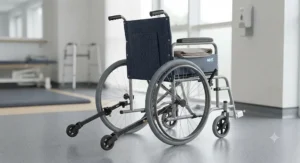
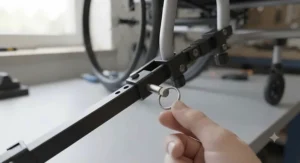
The Lltdnze Wheelchair Anti Tippers take a similar seven-level adjustment concept to the product above but focus specifically on tool-free, on-the-go height changes via an ergonomic squeeze-to-adjust, dual-button system. The pitch here is speed: rather than needing a spanner or Allen key to reset ground clearance when you switch terrain — say, from a smooth shopping centre floor to a gravel garden path — you squeeze, slide, and release.
What the marketing calls a “reliable balance and confidence” feature is, in plainer terms, a rust-resistant aluminium alloy build designed to survive repeated outdoor use without seizing up, which is a legitimate concern with cheaper steel anti-tippers left out in British weather. The listing specifies compatibility with 22mm and 25mm diameter tubing, covering manual, electric and sports wheelchair frames alike. As with any newer entrant to a crowded category, independently verified long-term review data is thinner here than for the more established Safe-T Mate and Drive Medical listings — worth noting honestly rather than glossing over, so if a long public track record matters to you, weigh that against the tool-free convenience this model offers.
Pros:
- ✅ Genuinely tool-free height adjustment
- ✅ Rust-resistant aluminium alloy build
- ✅ Fits multiple tubing diameters and chair types
Cons:
- ❌ Shorter public review history than established brands
- ❌ Squeeze mechanism adds a part that can wear over time
Priced in the £35-£50 range, this suits users who change environments often enough that tool-free adjustment justifies paying a little more than the simplest fixed bars.
7. Rear Anti Tippers Device with Foot Pedal, 5-Gear Height Adjustable — best for lightweight sports and leisure chairs
Rounding out the list is a second foot-pedal, five-gear aluminium alloy anti-tipper, frequently listed and purchased alongside lightweight sports and leisure manual wheelchairs rather than heavier-duty transport chairs. That pairing pattern is a useful signal in itself: buyers choosing lighter, more actively-used chairs are gravitating toward this style of fitting, likely because the foot-pedal release complements a more active, kerb-hopping usage pattern better than a bar that has to be unbolted.
Reviewers consistently note the non-slip foot pedal as the standout feature, echoing the mechanism found in product four above, which suggests this quick-release approach has genuinely caught on rather than being a one-off gimmick. Here’s what to weigh: this model tends to appear bundled or cross-sold with entry-level sports and leisure wheelchairs, which hints it was designed with that lighter frame geometry specifically in mind — worth double-checking tubing compatibility if you’re fitting it to a heavier standard NHS-issue folding chair instead. As with product four, the foot-pedal mechanism is a moving part worth an occasional visual check rather than a “buy it and forget it” fitting.
Pros:
- ✅ Well-suited to lightweight sports/leisure frames
- ✅ Quick foot-pedal engagement for active use
- ✅ Five-level height adjustment
Cons:
- ❌ Best matched to lighter frames, not bariatric chairs
- ❌ Foot pedal is a wear part requiring occasional checks
At a competitive budget-to-mid price point, this is worth shortlisting specifically if your chair is a lightweight, actively-used folding or sports frame rather than a heavy-duty transport model.
Practical Usage Guide: Fitting, Adjusting and Maintaining Your Anti-Tip Bar
Getting a rear anti-tip bar for manual wheelchair use to actually protect you comes down to three things Amazon listings rarely spell out clearly: correct tubing measurement, correct ground clearance, and a maintenance habit you’ll actually keep.
Start with measurement, not guesswork. Most anti-tippers on this list are sized for 3/4 inch, 7/8 inch (22mm) or 1 inch (25mm) tubing — measure your chair’s rear frame tubing with a tape measure or callipers before ordering, because “universal fit” claims routinely fail on chairs at the edges of that range, as several of the reviews cited above make clear. Once fitted, the critical adjustment is ground clearance: too low and the bar will scrape and catch on cracked pavements or door thresholds, causing exactly the kind of abrupt stop it’s meant to prevent; too high and it won’t engage before the chair tips too far. A sensible starting point recommended across most product instructions is roughly 1.5 to 4 centimetres of clearance when the chair is level, then fine-tune by having someone gently test-tip the chair backward in a controlled setting to confirm the bar makes contact well before the tipping point.
In the first 30 days, the most common mistake is leaving the factory setting untouched. Most bars ship at a mid-range height that suits nobody perfectly — take the ten minutes to adjust it to your actual chair and body weight distribution. The second common mistake is forgetting maintenance entirely: check the mounting bolts for looseness monthly, since the vibration of daily use on British pavements will gradually work clamps loose, and inspect any wheels or pedal mechanisms for grit build-up, particularly after wet weather. A five-minute monthly check is genuinely enough to keep most of the products above working as intended for years.
Real-World Scenarios: Matching the Right Anti-Tip Bar to Self-Propelled Users and Carers Alike
Product specs only tell half the story — how you actually use the chair day to day tells the rest. Here are three realistic profiles worth recognising yourself in.
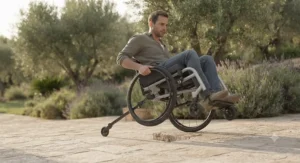
The confident self-propelled commuter. If you’re a self-propelled user navigating a mix of pavements, office ramps and public transport several times a week, you’re the classic candidate for a quick-release, foot-pedal style bar like products four or seven above. You’ll want to lift the front castors over kerbs regularly, and a bar you can disengage with your foot rather than unscrewing saves genuine daily hassle. Self-propelled users pushing hard uphill also generate more backward-tipping force than attendant-pushed chairs, so don’t skip the anti-tip bar altogether just because you’re experienced — even skilled wheelers benefit from the margin for error on an unfamiliar incline.
The carer managing an attendant/transport chair. If you’re pushing someone else’s chair and regularly tipping it back to clear kerbs or thresholds, a purpose-built option like the Drive Medical Silver Sport Wheelchair Anti Tippers is worth prioritising, precisely because attendant-applied tipping force tends to be more sudden than a self-propelled user’s gradual lean. Budget for slightly more careful fitting-and-testing time here, given the fit-variance issue flagged in genuine reviews above.
The occasional outdoor adventurer. If your chair mostly lives on smooth indoor floors but occasionally heads out to a garden, a market, or a gravel path, the wider adjustment range of the Wheelchair Anti-Tip Stabilizer System or the Lltdnze Wheelchair Anti Tippers means you’re not stuck with a single fixed clearance that’s wrong for half your environments.
Manual Wheelchair Frame Types and Anti-Tip Compatibility
Not every rear anti-tip bar for manual wheelchair fitting works equally well on every frame, so it’s worth understanding the two broad manual wheelchair frame types before you buy.
Folding frame wheelchairs use a cross-brace mechanism underneath the seat that lets the whole chair collapse for storage or transport in a car boot. They’re by far the most common type issued through NHS wheelchair services and sold on the high street, largely because of that folding convenience. The trade-off, as wheelchair provision research summarised by international clinical guidelines makes clear, is a small loss of propulsion efficiency compared with rigid frames, since some of the user’s pushing effort flexes the frame rather than converting fully into forward motion. Anti-tip bars generally clamp onto the horizontal rear tubing of a folding frame without much fuss, though the folding cross-brace does mean the bar needs to be removable or foldable itself if you want to collapse the chair fully for transport.
Rigid frame wheelchairs, by contrast, use a fixed, welded frame — no folding cross-brace — which makes them lighter, more energy-efficient to push, and more precisely tunable to an individual user’s centre of gravity. They’re popular with more active users and wheelchair sport participants. Anti-tip bars on rigid frames often mount via dedicated brackets rather than a generic tube clamp, so double-check compatibility specifically, since several of the products in this guide are designed primarily around folding-frame tubing dimensions. If you’re using a custom-built rigid chair, it’s worth confirming compatibility with your wheelchair services provider or the chair manufacturer before ordering an off-the-shelf universal anti-tipper.
How to Choose a Rear Anti-Tip Bar for Manual Wheelchair Use
Cutting through the marketing, here’s a practical, step-by-step way to choose:
- Measure your rear frame tubing diameter first. This single measurement rules out more mismatches than any other factor, since most anti-tippers are sized to 3/4″, 7/8″ or 1″ tubing specifically.
- Identify your primary use pattern. Frequent kerb-hopping favours a foot-pedal quick-release; stable, mostly-indoor use suits a simpler fixed or sliding bar.
- Decide who’s doing the adjusting. If a carer with limited hand strength will be adjusting the bar regularly, prioritise tool-free squeeze mechanisms over pin-and-hole designs.
- Check whether you need the chair to fully fold. If the chair is stored in a car boot daily, confirm the anti-tip bar is removable or hinges out of the way without tools.
- Weigh your chair type and user weight. Heavier or bariatric setups benefit from steel construction and wider wheels rather than the lightest aluminium options.
- Set a realistic budget band. Based on the spec comparison across this guide, £25-£35 covers genuinely functional basics, while £45+ buys wider adjustment ranges and tool-free convenience rather than dramatically different core safety performance.
- Read the specific reviews for your chair model, not just the star rating. As several examples above show, a 4-star average can still hide a real fit-clearance issue on a particular chair.
Kerb Navigation: What Anti-Tip Bars Do (and Don’t) Solve
Kerb navigation is arguably the single biggest reason self-propelled users search for a rear anti-tip bar for manual wheelchair use in the first place, so it deserves a direct, honest answer.
An anti-tip bar’s job is narrow and specific: it stops the chair rotating too far backward once the front castors lift off the ground, whether that’s from a user pushing hard uphill or a carer tilting the chair to clear an obstacle. It does not, by itself, get you up a kerb — that still comes down to technique, kerb height, and the wheelchair’s own geometry. According to the government’s Inclusive Mobility guidance, standard UK dropped kerbs are meant to sit at a maximum of around 6mm, though real-world audits from the accessibility charity Wheels for Wellbeing note that many streets still feature undropped kerbs well over 100mm, which are genuinely difficult or impossible for most wheelchair users to mount independently regardless of what safety equipment is fitted.
Here’s the honest trade-off wheelchair skills trainers consistently raise: anti-tip bars can make deliberate “wheelie” kerb-mounting — where an experienced user briefly balances on the rear wheels to lift the front castors over a step — physically harder, because the bar catches the ground and prevents the tilt needed to complete the manoeuvre. That’s precisely why some highly experienced, long-term self-propelled users choose to remove their anti-tippers entirely, accepting the small residual tip risk in exchange for full kerb-mounting capability. This isn’t a universal recommendation — for most users, and certainly for anyone newer to self-propelling or navigating unfamiliar routes, keeping the anti-tip bar fitted is the safer default — but it explains why you’ll see genuinely mixed opinions among wheelchair users online, and why the “right” answer depends heavily on individual skill level and terrain.
Rear Anti-Tip Bar vs No Anti-Tip: Weighing the Trade-Offs
| Factor | With Anti-Tip Bar | Without Anti-Tip Bar |
|---|---|---|
| Backward tip risk on slopes | Substantially reduced | Higher, especially uphill |
| Kerb-mounting via wheelie technique | Harder or blocked | Unrestricted |
| Overall chair length/storage footprint | Slightly increased | Unchanged |
| Suitability for new/less experienced users | Recommended | Not generally recommended |
| Suitability for highly skilled active users | Optional, personal choice | Common among experienced wheelers |
The table makes the trade-off explicit rather than pretending there’s a single right answer: fitting a bar clearly reduces tipping risk at the cost of some manoeuvrability, while removing one restores full kerb-mounting freedom at the cost of that safety margin. For most manual wheelchair users — and especially anyone still building confidence, using unfamiliar routes, or supporting an attendant-pushed chair — the safety case for keeping a rear anti-tip bar for manual wheelchair setups fitted comfortably outweighs the manoeuvrability trade-off described above.
💬 Already know which type suits you? Compare today’s listings and lock in your pick before stock changes.
Common Mistakes When Buying a Wheelchair Anti-Tip Device
Even a well-reviewed product can go wrong if you buy wheelchair anti-tip device hardware without checking a few basic things first.
The most frequent mistake is skipping the tubing measurement and trusting a “universal fit” label outright — as the genuine reviews cited earlier in this guide show, several well-regarded products still don’t fit every chair despite that claim. The second common error is assuming higher price automatically means better protection; in this category, price differences mostly reflect adjustment range and mounting convenience rather than a fundamentally different safety mechanism, so an expensive seven-level system isn’t inherently “safer” than a well-fitted budget bar, just more flexible. Third, buyers frequently overlook whether a listing ships as a single unit or a genuine pair — always check the exact wording before ordering, since at least one product in this guide has drawn confused reviews over quantity. Fourth, some buyers install the bar and never revisit the height setting, leaving it at a generic factory default that doesn’t suit their specific chair or body weight. Finally, don’t ignore weight capacity — bariatric or heavy-duty chairs need correspondingly rated hardware, and a lightweight aluminium bar designed for standard folding frames may not hold up under sustained heavier use.
Long-Term Cost & Maintenance
A rear anti-tip bar is a low-maintenance accessory compared with most wheelchair components, but it isn’t entirely “buy once and forget.” Over a typical multi-year ownership period, expect to occasionally retighten mounting bolts, replace worn caster wheels on rolling-wheel designs, and lubricate or clean pedal mechanisms on quick-release models exposed to wet British weather. None of this is expensive — most replacement parts, where needed, cost a fraction of the original unit — but budgeting a few pounds a year for upkeep is more realistic than assuming zero ongoing cost.
Looked at as total cost of ownership rather than sticker price alone, the budget options on this list (products two and four) offer excellent value if your chair fits the standard tubing range and you don’t need frequent adjustment. The premium, more adjustable options (products five and six) cost more upfront but can outlast a change in circumstances — a different cushion height, a different user, or a house move to a hillier area — without needing to be replaced entirely, which can make them the more economical choice over a five-year-plus ownership window for households where needs are likely to change.
Safety, Regulations and Compliance Guide
Rear anti-tip bars themselves aren’t subject to a dedicated UK product-specific regulation in the way, say, mobility scooters are, but the environment they operate in absolutely is. The NHS wheelchair user safety guidance specifically recommends fitting anti-tipper levers before attempting to negotiate obstacles higher than around 25mm until a user is proficient, and strongly advises using anti-tippers when climbing slopes — solid, practical, professionally-endorsed advice that aligns closely with the product recommendations throughout this guide.
On the street infrastructure side, standards published by the Royal National Institute of Blind People note that maximum standard kerb height in the UK sits around 120mm, though accessibility campaigners argue even much smaller upstands create real difficulty for wheeled mobility aid users — useful context for understanding why anti-tip protection matters even on routes that look “accessible” on paper. If you were issued your wheelchair through NHS wheelchair services, it’s worth checking with your local service before fitting a third-party anti-tip bar, since some services prefer to supply or approve compatible accessories directly to avoid warranty or liability complications.
Features That Actually Matter (And Those That Don’t)
Strip away the marketing language across most anti-tip bar listings and a few features genuinely move the needle: correct tubing-diameter fit, adequate and tested ground clearance, and — for active users — a genuinely tool-free adjustment mechanism. These are the differences that show up in real-world safety and daily convenience.
What matters far less than the listings suggest: exact wheel diameter claims (most fall in a similar small range regardless of price), and marketing terms like “premium” or “heavy-duty” applied to aluminium alloy construction, which is rarely meaningfully different between competing budget and mid-range products at the material level. Colour options and cosmetic finish, similarly, have zero bearing on function. Focus your buying decision on the first group, and treat the second as tie-breakers at most.
Frequently Asked Questions
❓ Do I need a rear anti-tip bar for a manual wheelchair?
❓ How do I know what size anti-tip bar to buy wheelchair anti-tip device for my chair?
❓ Do anti-tip bars make kerb navigation harder?
❓ Can anti-tip bars be fitted to any manual wheelchair frame type?
❓ How much does a rear anti-tip bar for manual wheelchair use typically cost?
Conclusion
A rear anti-tip bar for manual wheelchair use is a small, unglamorous purchase that does a genuinely important job — buying back the margin for error on slopes, unfamiliar pavements, and the kind of ordinary daily obstacles that gov.uk’s own accessibility research confirms are still far too common on UK streets. Across the seven real products compared here, there’s no single “best” answer: the Safe-T Mate Wheelchair Rear Anti Tippers remain a dependable, well-proven all-rounder; the Drive Medical Anti-Tipper with Wheels, Black is the sensible budget entry point; and the Wheelchair Anti-Tip Stabilizer System and Lltdnze Wheelchair Anti Tippers earn their higher price through genuinely wider adjustment ranges and tool-free convenience.
What matters most is matching the product to your actual chair, your actual terrain, and your actual usage pattern — measured tubing diameter first, adjustment style second, budget third. Get that right, and a rear anti-tip bar becomes exactly what it’s meant to be: hardware you barely think about, doing its job quietly in the background, every single day.
Recommended for You
- Wheelchair Anti-Tippers vs Anti-Tip Bars: 7 Best Picks (2026)
- Anti-Tip Bars for Wheelchair: 7 Trusted Picks for 2026
- Wheelchair Seatbelt for Bariatric Users: 7 Best Picks (2026)
Affiliate disclosure: This article contains affiliate links. As an Amazon Associate, I earn from qualifying purchases. If you purchase products through these links, we may earn a small commission at no additional cost to you.
✨ Found this helpful? Share it with someone who could use a safer ride! 💬🤗
