

In This Article
Nobody tells you this at the wheelchair assessment: the belt is often an afterthought. The chair gets measured, the cushion gets fitted, the footplates get adjusted to the millimetre — and then someone hands over a standard-issue strap that was clearly designed with a much smaller frame in mind. If you or someone you care for needs a wheelchair seatbelt for bariatric users, you already know that “one size fits most” rarely fits at all. A wheelchair seatbelt for bariatric users is a reinforced safety strap — typically 60 to 72 inches of webbing with a heavy-duty buckle — built to secure larger-bodied wheelchair occupants without digging in, slipping loose, or snapping under load. It sounds like a simple bit of kit. It isn’t. Buckle strength, webbing width, stitching density and buckle placement all change the equation once you’re working with a higher body weight and a wider seat pan. This guide walks through seven genuinely available options — from straightforward extenders to fully padded harness-style belts — with honest analysis of who each one suits, what the aggregated review sentiment says, and where the compromises sit. We’ll also cover the practical side: fitting, maintenance, common buying mistakes, and the safety framework that governs how these belts should actually be used in the UK. Nothing here is guesswork; it’s drawn from manufacturer specifications, UK clinical guidance and genuine aggregated customer feedback, presented plainly so you can make a confident, informed choice.

Quick Comparison Table
Before the deep dive, here’s the scannable version. Every belt below is a real, currently available product, and “Best For” reflects the scenario each one handles best — not a generic sales pitch.
| Product | Belt Length | Closure Type | Best For |
|---|---|---|---|
| Drive Medical Bariatric Wheelchair Seat Belt STDS855 | Up to 60″ | Auto push-button buckle | All-round bariatric replacement belt |
| ACC Parts Heavy-Duty Wheelchair Seatbelt | Adjustable, premium webbing | Push-button with steel tongue | Buyers who want the toughest hardware |
| Drive Medical Hook-and-Loop Bariatric Seat Belt | 60″ | Hook-and-loop (Velcro) | Users with limited hand strength/dexterity |
| New Solutions SB022 Positioning Belt | 72″ | Auto push-button, mounted grommets | Extra-wide bariatric or dual-axle chairs |
| AliMed Bariatric Seatbelt Extender | Adds 12″ | Clips onto existing buckle | Users just outside a standard belt’s range |
| Vive Wheelchair Harness for Adults | Adjustable, up to ~300 lb capacity | Padded quick-release buckle | Users who also need light torso support |
| DMI Wheelchair Seat Belt and Safety Harness | 45″, adjusts to 41″ | Padded strap buckle | Smaller-frame bariatric users, budget entry |
Looking at the spread, the pattern is clear: length and closure type do most of the heavy lifting when it comes to fit, while padding and webbing quality decide how the belt actually feels after two hours of sitting. The New Solutions SB022 stands out for sheer coverage at 72 inches, but that’s overkill if you only need a couple of extra inches — which is exactly the gap the AliMed Bariatric Seatbelt Extender fills far more cheaply. Meanwhile, anyone weighing up dexterity issues alongside body size should note that push-button buckles and hook-and-loop closures solve very different problems, and we’ll unpack that trade-off properly in the sections below.
💬 Just one click — help others make better buying decisions too!😊
Top 7 Bariatric Wheelchair Seatbelts: Expert Analysis
Every product here was chosen to cover a genuine gap in the bariatric market: budget replacements, premium hardware, adaptive closures, extenders, and padded harness-style options. Specs are followed by what they actually mean day to day, because a number on a spec sheet is useless until you know what it does for the person sitting in the chair.
1. Drive Medical Bariatric Wheelchair Seat Belt STDS855 — 60-inch auto-style buckle for wide seat pans
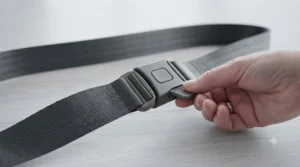
The standout here is the auto-style, car-seatbelt-style closure — a single push of the button releases it, which matters enormously for carers working under time pressure. This belt extends up to 60 inches, making it compatible with most bariatric manual and powered wheelchairs on the market, and it comes with pre-positioned mounting holes so it can bolt directly onto existing frame points rather than needing custom drilling. In practical terms, that 60-inch span typically accommodates waist measurements well beyond what a standard 45-inch belt can manage, without the strap running out of adjustment halfway through fastening. This is the belt we’d point most people toward first: it’s a straightforward like-for-like replacement rather than a specialist product, which means less guesswork about compatibility with your existing chair. Aggregated review sentiment across mobility retailers consistently flags the auto-buckle as faster and easier to operate one-handed than the older metal-clasp designs it replaces, particularly for carers managing multiple transfers a day. A recurring theme in feedback is that the webbing itself, while sturdy, isn’t padded — so users who sit for long stretches sometimes add a slip-on pad separately.
Pros:
- ✅ 60-inch length suits most bariatric frames
- ✅ Auto push-button buckle is fast to release
- ✅ Pre-drilled mounting holes for easy fitting
Cons:
- ❌ No integrated padding on the webbing
- ❌ Auto buckles can wear faster than manual clasps
Expect to pay in the £15-£25 range at the time of research, and given the universal mounting design, it represents strong value as a first upgrade from a factory-standard belt.
2. ACC Parts Heavy-Duty Wheelchair Seatbelt — premium webbing with a stainless-steel tongue
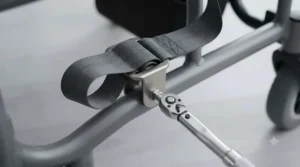
What immediately sets this apart is the stainless-steel buckle tongue rather than the painted or plated metal used on cheaper belts — a small detail that stops corrosion from becoming a failure point over years of use. The webbing is described as premium-grade, and the easy-release push-button buckle pairs with a loop-end design that makes retrofitting onto an existing wheelchair frame simpler than belts requiring specific mounting hardware. Based on the spec comparison with the Drive Medical option above, this is the belt for someone prioritising longevity over lowest price — the stainless hardware is the kind of upgrade that only pays off after a couple of years of daily wheel-and-fold use, when lesser buckles start to stick or discolour. It’s also explicitly rated for stretchers and mobility scooters as well as wheelchairs, so it suits households managing more than one piece of equipment. Reviewers on mobility-equipment retailers note the loop-end fitting as genuinely universal, working across brands where some “wheelchair-specific” belts don’t. The trade-off is that this isn’t a padded belt, and the premium webbing, while strong, sits slightly stiffer than softer nylon alternatives until it’s broken in.
Pros:
- ✅ Stainless steel tongue resists corrosion long-term
- ✅ Loop-end fitting works across multiple wheelchair brands
- ✅ Rated for stretchers and scooters, not just wheelchairs
Cons:
- ❌ Stiffer webbing feel until broken in
- ❌ No padding included as standard
At around £18-£28, it sits a notch above the entry-level STDS855, and for anyone who’s replaced a corroded buckle before, that difference is easy to justify.
3. Drive Medical Hook-and-Loop Bariatric Seat Belt — 60-inch Velcro closure for low hand-strength users
The standout feature is the closure mechanism itself: hook-and-loop fastening instead of a mechanical buckle, which removes the fine-motor coordination that push-button clasps demand. At 60 inches long, it covers the same size range as its auto-buckle sibling from Drive Medical, but the fastening method changes who it’s genuinely suited for. What most buyers overlook about hook-and-loop belts is that the fastening strength depends entirely on overlap area — a wider overlap means a stronger hold, so correct sizing matters even more here than with buckle belts, since an over-length adjustment reduces the contact patch. This is the belt worth considering for arthritic hands, tremor conditions, or carers who find repeated buckle-clicking genuinely tiring across a full shift. Aggregated feedback on this style consistently highlights ease of one-handed application as the main draw, alongside a common complaint that the loop material can accumulate lint and hair over time, which very slightly reduces grip strength unless it’s cleaned periodically. It’s not the belt for anyone who needs maximum tamper-resistance, since hook-and-loop closures are, by design, easier for a determined user to release independently — which for some households is a feature, and for others a drawback.
Pros:
- ✅ No fine-motor coordination required to fasten
- ✅ Fast one-handed application for carers
- ✅ Same 60-inch bariatric-length coverage as the buckle version
Cons:
- ❌ Loop material needs periodic cleaning to maintain grip
- ❌ Less tamper-resistant than a mechanical buckle
Pricing sits close to its buckle counterpart, typically in the £15-£25 range, so the decision really comes down to hand dexterity rather than budget.
4. New Solutions SB022 72-Inch Positioning Belt — the longest strap on this list
Seventy-two inches of webbing is the headline here, and it’s a meaningful jump over the 60-inch belts above — this is the option for genuinely extra-wide or dual-axle bariatric chairs where a standard-length belt simply won’t reach around the seat pan and frame mounting points. It uses the same auto-style push-button buckle as the Drive Medical STDS855, built from 2-inch-wide black nylon with a mounting grommet at each end, designed to bolt directly to the chair frame rather than loop around it. Here’s what to weigh: this is technically classed by its manufacturer as a positioning belt rather than a certified transit safety restraint, meaning it’s built to stop a user sliding or drifting out of position in the seat, not as a crash-tested vehicle restraint — an important distinction if the wheelchair is ever used in a vehicle. For static, everyday indoor and outdoor use on an extra-large frame, though, it does the length job that shorter belts can’t. Reviewers managing dual-axle bariatric wheelchairs specifically call out the grommet-mounting design as more secure over time than belts that rely purely on stitched loops, since the metal grommet spreads load across a wider area of webbing.
Pros:
- ✅ 72-inch length covers extra-wide and dual-axle frames
- ✅ Metal grommet mounting spreads stress load evenly
- ✅ Auto push-button buckle matches easier belts to release
Cons:
- ❌ Not certified as a vehicle transit restraint
- ❌ Overkill length for standard bariatric seat widths
Expect a price in the £20-£30 bracket — a reasonable premium for the extra 12 inches of coverage that some bariatric chairs genuinely need.
5. AliMed Bariatric Seatbelt Extender — adds 12 inches without replacing anything
This one solves a completely different problem: rather than replacing the whole belt, it clips onto an existing buckled wheelchair seatbelt and adds 12 inches of extra length, with no tools required for fitting. If you’re only a few inches short of a comfortable fit — rather than needing a full bariatric-length replacement — this is the far cheaper, far quicker fix, and it’s the product most directly answering the “wheelchair seatbelt extender” search that brought a lot of readers here in the first place. Based on the spec comparison with full-length replacement belts, the extender’s real advantage is speed of fitting: no drilling, no rethreading through frame mounts, just an add-on connector piece. The catch, and it’s worth being upfront about it, is compatibility — this particular extender is designed for AliMed’s buckled seatbelt system specifically, so always check your existing belt’s buckle type before ordering, since mismatched buckle designs won’t lock securely. What the spec sheet won’t tell you, but clinical-supply feedback consistently notes, is that extenders are a genuinely popular interim solution while waiting on a full wheelchair-service reassessment, buying time without committing to new hardware that might change again once dimensions are formally reviewed.
Pros:
- ✅ Adds 12 inches without replacing the whole belt
- ✅ No tools needed for installation
- ✅ Far cheaper than a full replacement belt
Cons:
- ❌ Only compatible with matching buckle systems
- ❌ Doesn’t address webbing width or padding issues
At roughly £15-£20, this is the smart first call for anyone who suspects they’re only marginally outside standard belt range.
6. Vive Wheelchair Harness for Adults — padded torso and waist support with bariatric-rated capacity
The standout advantage is dual coverage: this isn’t just a lap belt, it’s a harness combining waist support with light upper-body positioning, built with a padded quick-release buckle rated for bariatric users up to roughly 300 lb (around 136 kg). The padding is the real differentiator versus the plain-webbing belts earlier in this list — for anyone spending most of the day seated, a padded contact strip against the abdomen or chest reduces the pressure-point irritation that thin nylon webbing causes over hours of use. Here’s what most buyers overlook about torso-support harnesses: they’re not a substitute for a correctly fitted lap belt, and shouldn’t be tightened so far that they restrict breathing or become a postural restraint rather than a safety aid — that distinction matters both practically and, in care settings, legally. This product suits users who lean forward or list to one side and need gentle repositioning support alongside basic seatbelt security, more than it suits someone who simply needs a straightforward lap strap. Aggregated customer sentiment repeatedly praises the padded buckle as noticeably more comfortable against bare skin than metal alternatives, while a recurring criticism is that the multiple straps take longer to adjust correctly on first fitting than a single-strap lap belt.
Pros:
- ✅ Padded buckle reduces pressure-point irritation
- ✅ Bariatric-rated to approximately 300 lb capacity
- ✅ Combines waist and light torso positioning support
Cons:
- ❌ More straps mean a longer initial fitting process
- ❌ Not a substitute for a dedicated lap-only belt
Typically priced in the £25-£35 range, it’s the pricier option here, but the padding and dual-support design justify it for users with positioning needs beyond simple restraint.
7. DMI Wheelchair Seat Belt and Safety Harness — 45-inch padded strap, budget entry point
At 45 inches long and adjustable down to 41 inches, this is the shortest belt on the list — worth flagging honestly, because it sits at the very edge of what most people searching for a wheelchair seatbelt for bariatric users will need, and won’t suit larger frames without pairing it with an extender. What it does offer is 1.75 inches of padded webbing thickness, genuinely easier to install than most on this list, and a price point that makes it an accessible starting option for smaller-frame bariatric users or as a spare belt for a second chair. Based on the spec comparison with the longer bariatric-specific belts above, this product is really aimed at users just above standard sizing rather than at the higher end of the bariatric weight range — pair it with the AliMed extender covered earlier if the fit falls short. Reviewers consistently describe the fitting process as the quickest of any belt they’ve tried, with the trade-off being a noticeably narrower size range than the 60-inch and 72-inch options elsewhere on this list. It’s honest, unglamorous kit — not the belt for someone needing maximum coverage, but a sensible, low-cost option for a specific, smaller slice of the bariatric market.
Pros:
- ✅ Simple, fast installation process
- ✅ 1.75-inch padded webbing for added comfort
- ✅ Budget-friendly entry point
Cons:
- ❌ Shortest length on this list, limited bariatric range
- ❌ May need pairing with an extender for larger users
Priced around £10-£18, it’s the cheapest belt here — genuinely good value, provided your sizing needs sit within its narrower range.
Top 7 Products: Specs, Price Range & Rating Snapshot
| Product | Length | Padding | Price Range | Aggregated Rating Trend |
|---|---|---|---|---|
| Drive Medical STDS855 | 60″ | No | £15-£25 | Consistently positive on ease of use |
| ACC Parts Heavy-Duty Belt | Adjustable | No | £18-£28 | Praised for hardware durability |
| Drive Medical Hook-and-Loop | 60″ | No | £15-£25 | Strong for dexterity-limited users |
| New Solutions SB022 | 72″ | No | £20-£30 | Favoured for extra-wide frames |
| AliMed Extender | +12″ add-on | No | £15-£20 | Popular as an interim fix |
| Vive Wheelchair Harness | Adjustable | Yes | £25-£35 | Liked for comfort, mixed on fitting time |
| DMI Seat Belt & Harness | 45″ (to 41″) | Yes | £10-£18 | Praised for simplicity, limited size range |
Read across this table and a clear pattern emerges: padding and price range move together, while length and closure style are largely independent variables you choose based on the chair, not the budget. If comfort over long sitting periods is the priority, the Vive Wheelchair Harness and DMI Wheelchair Seat Belt and Safety Harness are your padded options, while anyone chasing maximum coverage for an extra-wide frame should look straight to the New Solutions SB022. The two Drive Medical belts sit in the middle as genuinely interchangeable choices, with the closure mechanism — not the price — being the real deciding factor between them.
Benefits vs Traditional Standard Wheelchair Seat Belts
| Factor | Bariatric-Specific Belt | Standard/Traditional Belt |
|---|---|---|
| Typical Length | 60″-72″ | 30″-45″ |
| Buckle Load Rating | Higher rated hardware | Lighter-duty hardware |
| Mounting Options | Grommets/pre-drilled holes for wide frames | Fixed mounting points |
| Best For | Larger-bodied users, extra-wide chairs | Standard adult wheelchair users |
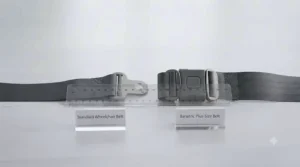
A standard belt isn’t a smaller version of a bariatric one — it’s a different product entirely, built with lighter hardware that simply wasn’t designed to be stretched to its adjustment limit day after day. Reviewers and clinical suppliers alike note that using a maxed-out standard belt on a larger frame accelerates buckle wear and stitching fatigue far faster than using a correctly sized bariatric belt from the outset. The upshot: buying the right length from the start, even if it costs a little more upfront, tends to outlast a standard belt used at its extreme range by a wide margin.
Practical Usage Guide: Fitting and Maintaining Your Bariatric Wheelchair Seat Belt
Getting the belt right isn’t just about buying the correct length — fitting and upkeep matter just as much. Start by measuring the seated waist circumference with a soft tape while the person is sitting in their usual wheelchair position, not standing, since seated girth is typically larger than standing waist measurement. Add roughly two inches to that figure for a lap belt that sits snugly without digging in; too tight and it becomes a pressure-injury risk, too loose and it defeats the point entirely. When mounting, the belt should sit low across the pelvis — not across the soft abdomen — at roughly a 45-degree angle down toward the seat, mirroring how a car lap belt sits across the hip bones rather than the stomach.
For maintenance, check stitching and buckle mechanisms monthly if the chair is used daily; webbing that’s frayed at the mounting point or a buckle that no longer clicks firmly shut should be replaced immediately, not “watched for a bit longer.” Most manufacturers recommend hand-washing nylon webbing in cool water rather than machine washing, since repeated agitation weakens stitched seams over time. A common mistake in the first 30 days is over-tightening to compensate for a belt that’s actually the wrong length — if you find yourself cinching a belt to its absolute maximum adjustment every single day, that’s a strong signal you need a longer belt or an extender, not a tighter habit.
Real-World Scenarios: Matching the Belt to the Person
Picture three genuinely different households, because “bariatric wheelchair seatbelt” covers a much wider range of actual situations than the search term suggests.
First, a retired warehouse worker recovering from knee surgery, self-propelling around the house daily, whose main complaint is a standard belt that’s simply too short. For him, a straightforward length upgrade — the Drive Medical Bariatric Wheelchair Seat Belt STDS855 — solves the problem without adding complexity he doesn’t need.
Second, a care home resident with early-stage arthritis in both hands, who needs a carer to assist with fastening but ideally could manage it herself on a good day. The Drive Medical Hook-and-Loop Bariatric Seat Belt removes the fine-motor barrier a buckle presents, letting her retain some independence.
Third, someone whose existing belt is almost right but falls just short after a recent equipment reassessment increased the wheelchair’s seat width — rather than replacing the whole belt and going through a fresh procurement process, the AliMed Bariatric Seatbelt Extender bridges the gap immediately, cheaply, and without tools.
None of these people need the same product, which is exactly why “just buy the biggest one” is bad advice — fit, dexterity and use-case matter more than raw size.
Problem → Solution: Common Bariatric Seatbelt Issues
Problem: The belt won’t reach around the frame mounting points. Solution: measure the actual mounting-point-to-mounting-point distance, not just body girth — a belt like the New Solutions SB022 at 72 inches solves genuine frame-width shortfalls that a 60-inch belt can’t.
Problem: The buckle is hard to operate with reduced hand strength. Solution: switch to a hook-and-loop closure such as the Drive Medical Hook-and-Loop Bariatric Seat Belt, which removes the pinch-grip motion a push-button buckle demands.
Problem: The webbing digs in or causes skin irritation after long periods seated. Solution: a padded option like the Vive Wheelchair Harness for Adults distributes pressure across a wider, softer contact area than plain nylon webbing.
Problem: The belt is nearly the right length but falls just short. Solution: rather than a full replacement, the AliMed Bariatric Seatbelt Extender adds 12 inches for a fraction of the cost.
Problem: Buckle hardware is corroding or sticking after a year or two of daily use. Solution: upgrade to stainless-steel hardware such as the ACC Parts Heavy-Duty Wheelchair Seatbelt, which resists the corrosion that plated metal buckles are prone to.
How to Choose a Wheelchair Seatbelt for Bariatric Users
- Measure seated, not standing. Seated girth is almost always larger than standing waist measurement, and it’s the figure that actually matters for fit.
- Check the mounting-point distance on your specific chair. A belt’s advertised length needs to match your frame’s actual anchor spacing, not just the user’s body size.
- Decide on closure type based on hand function. Push-button buckles are faster for carers; hook-and-loop suits limited dexterity; consider who will actually be fastening the belt daily.
- Prioritise padding if sitting time is long. Anyone seated most of the day benefits from padded webbing over bare nylon, reducing pressure-point discomfort.
- Confirm hardware material for longevity. Stainless steel buckle components resist the corrosion that shortens the working life of plated alternatives.
- Consider an extender before a full replacement. If the shortfall is small, an extender is cheaper and faster than swapping the whole belt.
- Reassess after any change in chair or weight. A belt that fit correctly a year ago may not fit correctly now — treat it as equipment that needs periodic review, not a one-off purchase.
Bariatric Wheelchair Weight Capacity Explained
Weight capacity ratings on bariatric equipment aren’t a marketing number — they’re a genuine engineering limit that includes a safety margin, and understanding how that margin works helps explain why a “bariatric” belt costs more than a standard one even when the webbing looks similar. Clinically, a bariatric patient is generally defined as someone with a body mass index over 40, or roughly 40kg above their ideal weight for height, a definition drawn from NICE guidance and used across NHS trusts when assessing equipment needs, as outlined in NHS bariatric patient care guidance. What that means practically for a seatbelt buyer is that the safe working load of the belt, buckle and mounting hardware all need checking as a system — a strong belt bolted to a weak mounting point is only as safe as its weakest link. Reinforced stitching and wider webbing both raise the load a belt can bear before failure, which is precisely why bariatric-specific belts use denser stitch patterns and thicker nylon than standard equivalents, even at the same visible width. If a wheelchair’s own weight rating has been upgraded — say, from a standard 18-stone limit to a bariatric-rated 40-stone-plus frame — the seatbelt fitted to it should be reassessed at the same time, since an original-equipment belt was very likely rated for the chair’s original, lower capacity.
Wheelchair Seatbelt Extender vs Full Replacement Belt: Which Do You Need?
This is one of the most common points of confusion, and it’s worth settling clearly. An extender is a short add-on piece that clips onto an existing buckle system and adds a fixed amount of extra length — typically around 12 inches, as with the AliMed Bariatric Seatbelt Extender. A full replacement belt swaps out the entire strap, buckle and mounting hardware for a longer, often stronger, unit built specifically for bariatric use, such as the Drive Medical Bariatric Wheelchair Seat Belt STDS855 or the New Solutions SB022.
The decision hinges on two things: how much extra length you actually need, and whether the existing belt’s hardware is still sound. If you’re only a few inches short and the current buckle and webbing are otherwise in good condition, an extender is the cheaper, faster fix — no drilling, no rethreading, no waiting on a fresh procurement order. If the shortfall is significant, or the existing belt shows wear at the stitching or a stiff, sticking buckle, a full replacement is the safer long-term call, because an extender is only ever as strong as the original belt it’s attached to. Mixing a premium extender with a worn-out base belt doesn’t fix the weak point — it just moves it.
Padded Wheelchair Safety Strap: Why Comfort Matters as Much as Security
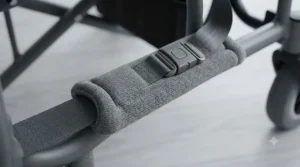
It’s tempting to treat a seatbelt purely as a safety component and ignore comfort altogether, but for anyone seated for six, eight, ten hours a day, comfort and safety are the same problem viewed from different angles. An uncomfortable belt gets loosened by the user or a well-meaning carer trying to ease irritation — and a loosened belt is a less effective belt. A padded wheelchair safety strap, like the one on the Vive Wheelchair Harness for Adults, spreads contact pressure across a wider surface area than bare webbing, reducing the localised rubbing that causes skin breakdown over repeated use, particularly relevant for bariatric users who may already be at higher risk of pressure-related skin issues. The DMI Wheelchair Seat Belt and Safety Harness, at 1.75 inches of padded thickness, takes a similar approach at a smaller scale. What most buyers overlook is that padding thickness and webbing width both affect fit calculations slightly differently than plain webbing — a padded belt often needs to be measured with a touch more allowance than an unpadded one, since the padding itself takes up a few millimetres of the adjustment range.
Reinforced Stitching and Extra-Length Webbing: What the Spec Sheet Doesn’t Tell You
“Reinforced stitching” sounds like marketing language until you understand what it actually changes: a denser stitch pattern at the load-bearing points — where webbing meets buckle, and where webbing meets mounting grommet — distributes tension across more thread and more fabric contact points, rather than concentrating it on a single seam that can tear under sudden load. This is precisely why belts like the ACC Parts Heavy-Duty Wheelchair Seatbelt and the New Solutions SB022 use grommet-and-reinforced-seam mounting rather than a simple folded-and-stitched loop — the grommet spreads mechanical stress across a wider area of webbing than stitching alone can manage.
Extra-length webbing solves a different problem entirely, and it’s worth not conflating the two. A belt can have excellent reinforced stitching and still be the wrong choice if it’s simply too short to reach the mounting points on a wide bariatric frame — length and strength are independent specifications, and a buyer needs both figures, not just one. The practical takeaway: when comparing bariatric belts, check the webbing length against your specific chair’s mounting-point distance first, then check stitching and hardware quality as the second filter — reversing that order risks buying a beautifully reinforced belt that simply doesn’t reach.
Common Mistakes When Buying a Bariatric Wheelchair Seatbelt
The single most common mistake is measuring body girth alone and ignoring the wheelchair’s actual mounting-point distance — the two numbers aren’t the same, and a belt that’s technically long enough for the body can still be too short to bolt onto a wide frame. A close second is assuming “bariatric” automatically means “one universal size” — as this guide has shown, bariatric belts range from 45 to 72 inches, and picking blindly from that range wastes money either way. Buyers also frequently overlook buckle material, focusing entirely on webbing strength while ignoring that a cheap plated buckle is often the actual point of failure over time, not the fabric. Finally, a genuinely common and understandable mistake is treating the belt as a one-off purchase rather than equipment that needs periodic reassessment — weight, chair, and mobility needs all change, and a belt that fit perfectly at initial assessment may need revisiting a year or two later.
Safety, Regulations & Compliance Guide
In the UK, manual handling involving equipment like wheelchairs and their restraint systems falls under the Manual Handling Operations Regulations 1992, which require employers and care providers to assess and reduce injury risk wherever handling — including securing and repositioning a wheelchair user — takes place; the HSE’s guidance on manual handling law sets out these duties in detail for anyone working in a care or clinical setting. It’s worth understanding that most of the belts covered in this guide are positioning and safety belts intended for use in a stationary or self-propelled wheelchair context — not all are certified as vehicle transit restraints, and that distinction genuinely matters if a wheelchair is ever transported inside a vehicle without the user transferring to a proper vehicle seat. Always check a specific belt’s certification before relying on it during vehicle transport. For anyone accessing a wheelchair through an NHS wheelchair service, equipment including seating accessories is typically assessed and, where necessary, replaced as part of ongoing care — details on that process are available via the NHS guide to getting a wheelchair. If you’re purchasing privately rather than through an NHS assessment, it’s still worth applying the same “does this system meet the actual weight and dimension of the user” logic that clinical assessments use, rather than guessing from a general size chart.
Long-Term Cost & Maintenance
Thinking purely in upfront price misses the real cost picture. A £10 belt that needs replacing every eight months because the buckle wears out costs more over three years than an £25 belt with stainless hardware that lasts the full period. Using the ACC Parts Heavy-Duty Wheelchair Seatbelt as an example: at roughly £18-£28, spread across an expected multi-year lifespan thanks to corrosion-resistant hardware, the cost-per-use drops well below a cheaper belt requiring annual replacement. Maintenance costs are mostly a matter of time rather than money — a monthly check of stitching and buckle function takes a few minutes and catches problems before they become safety issues, while genuinely reducing the odds of an unplanned, urgent replacement. Washing nylon webbing by hand rather than machine-washing also extends working life meaningfully, since repeated machine agitation is one of the more common causes of premature seam failure reported in aggregated user feedback.
Buyer’s Decision Framework
If your existing belt simply doesn’t reach, choose a full-length bariatric replacement like the Drive Medical Bariatric Wheelchair Seat Belt STDS855 or, for extra-wide frames, the New Solutions SB022, because length is a hardware problem an extender can only partially solve. If your current belt is close but just short, choose the AliMed Bariatric Seatbelt Extender, because it’s the fastest, cheapest fix for a small shortfall. If hand dexterity is the barrier rather than length, choose the Drive Medical Hook-and-Loop Bariatric Seat Belt, because closure mechanism matters more than webbing length in that scenario. If comfort over long sitting periods is the priority, choose a padded option — the Vive Wheelchair Harness for Adults or the DMI Wheelchair Seat Belt and Safety Harness — because unpadded webbing becomes the limiting factor long before length does. And if longevity matters more than upfront price, choose hardware quality first, which points toward the ACC Parts Heavy-Duty Wheelchair Seatbelt and its stainless-steel tongue.

FAQ
❓ What length wheelchair seatbelt do I need for a bariatric user?
❓ Can I just add a wheelchair seatbelt extender instead of buying a new belt?
❓ Is a padded wheelchair safety strap worth the extra cost?
❓ How do I know if a wheelchair seatbelt is rated for bariatric weight capacity?
❓ How often should a bariatric wheelchair seatbelt be replaced?
Conclusion
There’s no single “best” wheelchair seatbelt for bariatric users, because the honest answer depends on your chair’s mounting points, the user’s hand dexterity, how many hours a day they’re seated, and how much of a length shortfall you’re actually working with. What’s consistent across every product covered here is that fit and hardware quality matter more than any marketing claim — a belt that reaches the mounting points with strong, corrosion-resistant hardware will outperform a cheaper option every time, regardless of brand. If you’re only slightly short on length, start with the AliMed-style extender before committing to a full replacement. If dexterity is the real barrier, prioritise closure type over raw strength. And if you’re supporting someone through an NHS wheelchair service reassessment, organisations like Scope’s wheelchair advice service offer practical, independent guidance alongside whatever your local wheelchair service provides. Whichever belt you land on, treat it as equipment worth periodically reassessing, not a single set-and-forget purchase — bodies, chairs and needs all change, and the right belt today may need revisiting down the line.
✨ Don’t Miss These Exclusive Deals!
🔍 Take your wheelchair seatbelt search to the next level with the picks above. Click through to check current pricing and availability, and confirm the length matches your specific chair before you buy. The right belt makes a genuine daily difference for comfort and safety.
Recommended for You
- Quick-Release Wheelchair Seatbelt: 7 Best Picks UK 2026
- Wheelchair Lap Belt vs Harness: 7 Best Options for 2026
- Best Wheelchair Seatbelt 2026: 7 Safest Picks Compared
Disclaimer: This article contains affiliate links. As an Amazon Associate, I earn from qualifying purchases. If you purchase products through these links, we may earn a small commission at no additional cost to you.
✨ Found this helpful? Share it with your friends! 💬🤗
