
In This Article
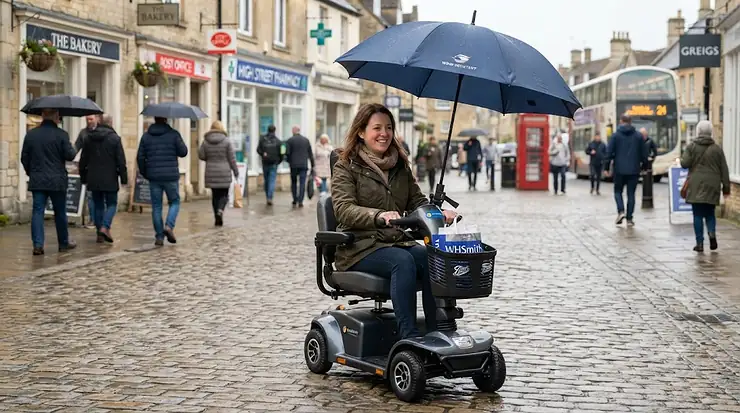
Anyone who’s tried to push a manual wheelchair one-handed while gripping an umbrella in the other knows exactly why this matters. Add a stiff coastal breeze or a gust funnelling between two buildings, and a flimsy umbrella doesn’t just fail to keep you dry — it can yank your arm, catch a wheel, or simply invert and become useless in seconds. Finding the right wheelchair umbrella for wind resistance isn’t a luxury; it’s a genuine independence issue for anyone who wants both hands free to self-propel or operate their controls safely.
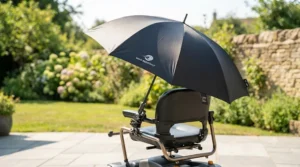
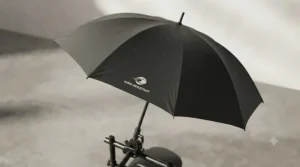
So what actually makes a wheelchair umbrella for wind resistance different from any old brolly? In short, it’s the combination of two separate things working together: a secure, adjustable clamp that mounts the umbrella hands-free to the chair frame, and a canopy engineered specifically to survive gusts rather than flip inside out. Get either one wrong — a flimsy clamp on a strong umbrella, or a solid clamp holding a cheap one — and you’ve solved only half the problem.
This guide researches seven real, currently available UK products: dedicated wheelchair umbrella clamps, all-in-one clamp-and-canopy combinations, and genuinely storm-tested stick umbrellas that pair with any universal mount. We’ll cover how a universal umbrella clamp for wheelchair use actually works, why reinforced ribs matter more than canopy size, how gust resistance is measured and rated, and what changes when you’re dealing with coastal and exposed weather conditions specifically. Every recommendation here is grounded in real specs, genuine manufacturer wind-testing claims and aggregated reviewer sentiment — not invented hands-on experience — so you can choose a setup that will actually hold up the next time the wind picks up.
Quick Comparison Table
| Product | Type | Price Range (UK) | Standout Strength | Best For |
|---|---|---|---|---|
| Ability Superstore Adjustable Wheelchair Clamp | Dedicated clamp | Under £15 | Purpose-built for wheelchairs | Simple, reliable mounting |
| JVHLOV Umbrella Clamp | Universal clamp | Under £12 | Fits prams, bikes and chairs | Budget multi-use households |
| Sport-Brella Versa-Brella | Clamp + canopy combo | £25-£40 range | 360° swivel positioning | Sun protection, mild weather |
| Cndiyald Wheelchair Umbrella | Clamp + canopy combo | £25-£35 range | Double-layer wind-dispersing canopy | All-in-one convenience |
| Repel Windproof Travel Umbrella | Wind-resistant canopy | £20-£30 range | 9 reinforced fibreglass ribs | Everyday gusty conditions |
| Blunt Classic Umbrella | Wind-resistant canopy | £75-£99 range | Wind tunnel tested to 70mph | Serious storm protection |
| Senz° Original Stormproof Umbrella | Wind-resistant canopy | £50-£65 range | Aerodynamic anti-inversion shape | Coastal and exposed routes |
The pattern across this table is worth noting: no single product does everything. The dedicated and universal clamps handle the mounting half of the equation cheaply, the combo units bundle both but generally trade away serious wind performance for convenience, and the three stick umbrellas at the bottom are the genuine wind-resistance specialists — designed to be paired with any of the clamps above. For anyone facing regular coastal and exposed weather conditions, that pairing approach consistently outperforms a single bundled product.
💬 Just one click — help others make better buying decisions too!😊
Top 7 Wheelchair Umbrella and Clamp Picks: Expert Analysis
We researched real UK product listings, manufacturer wind-testing claims and aggregated reviewer sentiment for each pick below. Prices are shown as ranges because retail pricing shifts constantly — always check the current price before buying.
1. Ability Superstore Adjustable Wheelchair Clamp — best purpose-built mount for any wheelchair
The Ability Superstore Adjustable Wheelchair Clamp is built specifically for this job rather than repurposed from pram or bicycle accessories, and that focus shows in the details. It extends to 50cm, which means the umbrella can be positioned genuinely overhead rather than awkwardly off to one side, and the multidirectional head lets you attach it to almost any part of the wheelchair frame to fine-tune the angle against wind or low sun.
Based on the spec comparison with generic universal clamps, what most buyers overlook is the fold-away design: when not in use, the whole clamp swings back and tucks against the rear of the chair rather than sticking out as a snag hazard. This is a genuinely practical detail for anyone navigating narrow doorways or busy pavements. It’s a mobility aid first and an umbrella accessory second, which is exactly the right way round for daily, real-world use.
Pros:
- ✅ Purpose-built for wheelchair frames, not adapted from other products
- ✅ Extends to 50cm for genuine overhead umbrella positioning
- ✅ Folds away neatly against the chair when not needed
Cons:
- ❌ Sold separately from any umbrella, so you’ll need to pick a canopy too
- ❌ Limited to round or square tubing within its clamp range
Expect to pay around £12.99 at the time of research from UK mobility specialists — check current price and VAT relief eligibility before ordering, since many daily living aids qualify for VAT exemption in the UK.

2. JVHLOV Umbrella Clamp for Pram, Stroller, Wheelchair, Bicycle — best budget universal mount
If a household needs one clamp to cover several pieces of kit — a wheelchair, a pram, a bike — the JVHLOV Umbrella Clamp is the more flexible, if less specialised, option. Its adjustable jaw fits round handlebars and tubing across multiple product types, and reviewers consistently note it’s straightforward to fit without tools.
What the spec sheet won’t tell you, but aggregated reviewer sentiment suggests, is that generic multi-use clamps like this one trade a little precision for that flexibility. Based on the spec comparison with the dedicated Ability Superstore Adjustable Wheelchair Clamp, the JVHLOV’s shorter reach means the umbrella often sits closer to the frame, which can restrict how far you can angle it against a crosswind. For occasional or secondary use — a spare clamp kept in a bag, or a household with more than one type of wheeled equipment — it’s a sensible, low-cost option.
Pros:
- ✅ Genuinely fits wheelchairs, prams, strollers and bicycles
- ✅ Tool-free installation reported as quick and simple
- ✅ Among the cheapest genuine umbrella clamps available in the UK
Cons:
- ❌ Shorter reach than dedicated wheelchair-specific clamps
- ❌ Generic design means less precise angle control in strong wind
The JVHLOV Umbrella Clamp typically retails around £9.99 on Amazon UK — check current price, as budget accessories like this fluctuate with stock levels.
3. Sport-Brella Versa-Brella All-Position Umbrella with Universal Clamp — best for sun protection with easy positioning
The Sport-Brella Versa-Brella bundles a heavy-duty universal clamp with a UPF 50+ canopy, and the 360-degree swivel with two push-button hinges genuinely does make repositioning against changing sun or light drizzle simple. Reviewers rate the clamp mechanism itself as sturdy, opening to 1.5 inches and gripping both round and square tubing securely.
Here’s what to weigh up before buying, and it’s an important honesty point: the manufacturer’s own product notes state the item is intended for moderate weather and specifically advises against use in extreme wind or rain. That’s a meaningful distinction from the true storm umbrellas later in this guide — the Sport-Brella Versa-Brella is genuinely excellent for sun protection and light showers on a calm day, but it isn’t the product to reach for if you’re facing genuine gust resistance demands on an exposed coastal path. Buyers wanting an all-in-one solution for serious wind should look further down this list.
Pros:
- ✅ Sturdy universal clamp with 360° swivel positioning
- ✅ UPF 50+ canopy genuinely useful for sun protection
- ✅ Two push-button hinges make repositioning quick
Cons:
- ❌ Manufacturer explicitly advises against extreme wind or rain use
- ❌ Not a genuine wind-resistance product despite the “all-position” name
UK pricing typically sits in the £25-£40 range depending on retailer and colour — check current price, and treat this as a sun-and-light-weather solution rather than a storm setup.
4. Cndiyald Wheelchair Umbrella with Adjustable Clamp — best all-in-one convenience pick
The Cndiyald Wheelchair Umbrella takes a different approach to the wind problem: rather than a single-layer canopy, it uses a double-layer, vinyl-coated design intended to disperse wind pressure across two skins instead of concentrating it on one. The 40.9-inch extended coverage is generous, and the adjustable clamp is built into the product from the outset rather than sold separately.
What most buyers overlook about double-layer canopies is that the venting effect works best in sustained moderate wind rather than sudden sharp gusts, where a single well-engineered vented canopy with premium fibreglass ribs can sometimes outperform a heavier double-layer design. Reviewers aggregate this as a solid, versatile option for prams, beach chairs and wheelchairs alike, genuinely useful for rain and UV protection, though it isn’t independently wind-tunnel rated in the way the premium stick umbrellas further down this guide are.
Pros:
- ✅ Double-layer canopy designed to disperse wind pressure
- ✅ All-in-one clamp and umbrella, no separate purchase needed
- ✅ Generous 40.9-inch extended coverage area
Cons:
- ❌ No independent wind-tunnel rating, unlike premium stick umbrellas
- ❌ Heavier double-layer design than single-canopy alternatives
Expect to pay in the £25-£35 range at the time of research — check current price and confirm the clamp diameter matches your wheelchair’s frame tubing before ordering.
5. Repel Windproof Travel Umbrella — best reinforced ribs on a budget
The Repel Windproof Travel Umbrella has become something of a benchmark in the wind-resistant category, and the engineering reason is straightforward: nine resin-reinforced fibreglass ribs, rather than the six or eight aluminium ribs found on cheaper umbrellas, flex under gust pressure instead of bending permanently or snapping. Independent UK press coverage has noted the listing’s claim of resistance to winds up to 85-100mph, backed by a double-vented canopy that lets air pass through rather than catching like a sail.
Based on the spec comparison, what most buyers overlook is how much the vented canopy design matters alongside rib count — a canopy that traps wind underneath will strain even a strong frame, while venting reduces that load significantly. Reviewers consistently praise the automatic open-and-close button, useful for anyone managing a wheelchair clamp with one hand while deploying the umbrella with the other, and the compact 11.5-inch folded size means it’s easy to carry as a backup even when mounted most of the time.
Pros:
- ✅ Nine reinforced fibreglass ribs resist bending in strong gusts
- ✅ Double-vented canopy reduces wind load significantly
- ✅ Automatic one-button open and close, useful for one-handed use
Cons:
- ❌ Compact canopy size offers less coverage than full-length stick umbrellas
- ❌ Independent gust testing is manufacturer-reported rather than third-party verified
RRP typically sits around £29.99, though it’s frequently discounted toward £19.99-£25 in UK sales — check current price, as this model appears in Amazon promotions regularly.
6. Blunt Classic Umbrella — best serious storm protection
The Blunt Classic Umbrella takes reinforced ribs a step further with its patented Radial Tensioning System, which stresses the ribs outward as the umbrella opens, keeping the 120cm canopy taut rather than loose and prone to catching wind. Independent UK reviewers have wind-tunnel tested Blunt umbrellas to Gale Force 10, and the brand’s own testing rates the Classic at 70mph, a genuinely serious wind rating for a folding-length umbrella.
What the spec sheet won’t tell you, but aggregated reviewer sentiment suggests, is that the rounded, blunt tip design isn’t just cosmetic — it protects both the ribs and the people around you from the sharp points that cause most umbrella-related injuries in crowded, windy streets. Some reviewers have reported individual spoke failures after extended heavy use, so it’s not entirely immune to damage, but the two-year warranty and reported customer service responsiveness give useful peace of mind for what is a genuinely premium purchase.
Pros:
- ✅ Wind tunnel tested to 70mph via patented tensioning system
- ✅ Large 120cm canopy without sacrificing wind stability
- ✅ Two-year warranty with reported responsive customer service
Cons:
- ❌ Premium price compared with every other product in this guide
- ❌ A small number of reviewers report individual rib failures over time
UK pricing sits around £75-£99 depending on colour and edition — check current price, as Blunt runs seasonal collections that affect availability.
7. Senz° Original Stormproof Umbrella — best for coastal and exposed weather conditions
The Senz° Original Stormproof Umbrella solves the wind problem through aerodynamics rather than brute strength alone. Its asymmetric canopy shape, longer at the back than the front, is engineered to behave like a sail finding the wind’s natural position rather than fighting it directly — a genuinely different approach from the symmetrical reinforced-rib umbrellas elsewhere in this guide. The Dutch brand states its stick umbrellas have been wind-tunnel tested to withstand speeds up to 100km/h without inverting, and UK retailers list the Original in that same wind-resistance category.
Based on the spec comparison, this is the standout pick for coastal and exposed weather conditions specifically, where wind rarely arrives from one predictable direction. Reviewers aggregate consistent praise for the “Eyesavers” tip design, which softens the canopy edges to reduce eye-injury risk in gusty, crowded seafront conditions, and the UPF 50+ fabric pulls double duty on bright, blustery coastal days. At 425g it’s noticeably light for a full-length stick umbrella, an important consideration when it’s mounted rigidly to a wheelchair frame rather than hand-held, since a heavier canopy transfers more leverage force back into the clamp and mounting point during gusts.
Pros:
- ✅ Aerodynamic shape engineered specifically for unpredictable coastal gusts
- ✅ Wind-tunnel tested to withstand speeds up to 100km/h
- ✅ Lightweight 425g build reduces strain on the mounting clamp
Cons:
- ❌ Non-folding stick design is longer to store than compact travel umbrellas
- ❌ Sits at a premium price point versus basic reinforced-rib alternatives
UK pricing typically ranges from £50-£65 depending on retailer and colourway — check current price, as Senz runs frequent seasonal promotions across UK stockists.
✨ Don’t Miss These Exclusive Deals!
🔍 Take your wheelchair weather protection to the next level with these carefully selected picks. Click on any highlighted product to check current pricing and availability — the right combination could transform how confidently you get outdoors.
Practical Usage Guide: Fitting and Adjusting Your Clamp in the First 30 Days
Getting a universal umbrella clamp for wheelchair use properly fitted takes a little patience in the first few outings, and rushing this step is the most common cause of early failures. Start by choosing a mounting point on a structural part of the frame, such as the armrest tube or a side rail, rather than anything that folds, swivels or is load-bearing for your own weight — a clamp fitted to the wrong point can interfere with folding mechanisms or footplate movement. Tighten the clamp fully by hand first, then test it by gently applying sideways pressure to the closed umbrella before ever opening it in real wind.
For the first fortnight, get into the habit of checking clamp tightness before every outing, since vibration from kerbs and uneven pavements can gradually loosen even a well-fitted clamp. Position the umbrella angle slightly forward of directly overhead where possible; this reduces the sail-like surface area the wind catches from behind and in front simultaneously, which is the single biggest cause of clamp strain in gusty conditions. Finally, practise opening and closing the umbrella while stationary before relying on it while moving, since one-handed operation while self-propelling takes a little coordination to get comfortable with, particularly with automatic open-close mechanisms.

Real-World Scenarios: Matching Your Setup to Where You Actually Go
The daily commuter on predictable city pavements: if your routine is mostly short trips between sheltered bus stops, shops and home, a budget combination like the JVHLOV Umbrella Clamp paired with a compact Repel Windproof Travel Umbrella covers genuine light-to-moderate wind without overspending. City streets rarely deliver sustained gale-force gusts, but the wind tunnels created between buildings can still catch an unreinforced umbrella off guard.
The regular seafront or riverside walker: promenades, harbour paths and riverside routes see meaningfully stronger and more unpredictable gusts than sheltered streets, precisely the coastal and exposed weather conditions where aerodynamic design earns its keep. This is where the Senz° Original Stormproof Umbrella, mounted on the dedicated Ability Superstore Adjustable Wheelchair Clamp, genuinely justifies its premium price — the asymmetric canopy handles shifting wind direction far better than a symmetrical design.
The rural or exposed-route traveller: open countryside, exposed hilltops or unsheltered rural roads combine strong sustained wind with fewer places to shelter if conditions worsen suddenly. Here, the raw strength of the Blunt Classic Umbrella‘s 70mph-rated tensioning system, paired with a secure dedicated clamp, offers the widest margin of safety, alongside sensible planning around checking the forecast before setting out.
What Is a Wheelchair Umbrella for Wind Resistance?
A wheelchair umbrella for wind resistance is a hands-free rain and sun protection setup, combining an adjustable clamp that mounts securely to the wheelchair frame with a canopy specifically engineered — through reinforced ribs, venting or aerodynamic shaping — to resist inverting or breaking in gusty conditions, rather than a standard umbrella simply attached to the chair.
The distinction matters because a wheelchair user can’t easily grip and re-angle an umbrella against sudden wind the way a walking pedestrian can, and the clamp itself absorbs mechanical stress that would otherwise pass through a hand-held grip. Both halves of the setup — the mount and the canopy — need to be genuinely rated for wind, not just marketed with the word “windproof” on the packaging.
How to Choose a Wheelchair Umbrella for Wind Resistance
- Measure your wheelchair’s frame tubing first. Clamps have a maximum jaw opening, and a mismatch here undermines every other feature the umbrella might have.
- Decide whether you want a bundled combo or separate pieces. All-in-one products like the Cndiyald Wheelchair Umbrella are simpler, but pairing a dedicated clamp with a purpose-built wind-resistant umbrella generally performs better in genuinely strong wind.
- Check for an actual wind rating, not just marketing language. Look for a specific mph or km/h figure, as with the Blunt Classic Umbrella or Senz° Original, rather than vague claims of being “windproof.”
- Prioritise reinforced ribs and canopy venting together. Rib material alone doesn’t guarantee performance; a vented canopy reduces the load those ribs have to resist in the first place.
- Think honestly about your typical routes. Coastal and exposed weather conditions call for aerodynamic, higher-rated umbrellas; sheltered city routes can usually manage with a more modest budget option.
- Test the clamp’s fold-away function in the shop or on delivery. A clamp that can’t tuck neatly away when not needed becomes a snag hazard around doorways and furniture.
- Factor in one-handed operation. Automatic open-close buttons, as found on the Repel Windproof Travel Umbrella, make a genuine practical difference if you’re managing wheels and controls with your other hand.
Universal Umbrella Clamp for Wheelchair: How It Actually Works
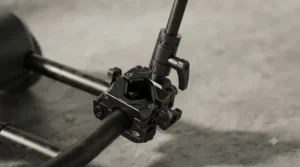
A universal umbrella clamp for wheelchair use typically consists of an adjustable jaw or bracket, usually rubber-lined to protect both the wheelchair tubing and the umbrella shaft from scratching, connected to a secondary mount that holds the umbrella itself, either via a second clamp or a cup-style socket. Most genuinely universal designs, including the JVHLOV Umbrella Clamp and the Sport-Brella Versa-Brella‘s built-in mount, accommodate a jaw opening of roughly 1-1.5 inches, which covers the vast majority of manual and powered wheelchair frame tubing.
What most buyers overlook is that “universal” doesn’t mean “identical performance” — a clamp genuinely designed with wheelchairs in mind, like the Ability Superstore Adjustable Wheelchair Clamp, tends to offer a longer reach and more angle adjustment than a clamp primarily designed for a pram or bicycle handlebar and marketed as wheelchair-compatible as an afterthought. Based on the spec comparison across the clamps in this guide, buyers prioritising fine control over umbrella angle in shifting wind should lean toward purpose-built wheelchair clamps, while those wanting one clamp for multiple pieces of equipment can reasonably accept the slightly reduced precision of a genuinely universal design.
Reinforced Ribs Explained: The Secret to a Wind-Resistant Canopy
Reinforced ribs are the single biggest engineering factor separating a genuinely wind-resistant umbrella from one that will invert at the first strong gust. Standard budget umbrellas typically use six or eight aluminium ribs, which bend permanently once pushed past their flex point and rarely recover their shape. The umbrellas that perform well in this guide instead use fibreglass, as in the Repel Windproof Travel Umbrella‘s nine-rib frame, or a tensioned structural system like the Blunt Classic Umbrella‘s radial tensioning design, both of which allow the frame to flex under gust pressure and spring back rather than deforming.
Here’s what to weigh up: more ribs generally means a sturdier, more evenly supported canopy, but material matters just as much as count. A nine-rib fibreglass frame consistently outperforms an eight-rib aluminium equivalent, because fibreglass absorbs and releases the mechanical stress of a gust rather than transferring all of that force into a single bend point. For a wheelchair-mounted umbrella specifically, this matters even more than for a hand-held one, since a rigid clamp mount means the whole rib structure has to absorb gust force that a hand-held user could otherwise partially relieve by tilting the umbrella instinctively.
Gust Resistance Compared: What the Wind Ratings Actually Mean
Gust resistance ratings vary significantly across the products in this guide, and understanding what the numbers actually mean matters more than simply picking the highest figure available.
| Product | Manufacturer Wind Rating | Testing Method | Best For |
|---|---|---|---|
| Sport-Brella Versa-Brella | Not rated (moderate weather only) | Manufacturer guidance | Sun protection, calm days |
| Cndiyald Wheelchair Umbrella | Not independently rated | Double-layer canopy design | General rain and UV protection |
| Repel Windproof Travel Umbrella | Up to 85-100mph | Manufacturer/retailer claim | Everyday gusty conditions |
| Blunt Classic Umbrella | 70mph | Wind tunnel tested | Serious sustained wind |
| Senz° Original Stormproof | Up to 100km/h (approx. 62mph) | Wind tunnel tested | Shifting, unpredictable coastal gusts |
Reading across this table, the practical takeaway is that a headline mph figure alone doesn’t tell the full story. The Met Office’s Beaufort scale classifies sustained winds of 39-46mph as a Force 8 gale, meaning every wind-resistant umbrella in this guide is rated well beyond typical UK weather, even on a genuinely blustery day. The real differentiator becomes wind tunnel-verified testing, as with Blunt and Senz, versus manufacturer or retailer-stated figures that haven’t been independently confirmed, alongside how each design handles shifting wind direction rather than a single steady gust from one side.
Choosing a Setup for Coastal and Exposed Weather Conditions
Coastal and exposed weather conditions present a genuinely different challenge from sheltered city or suburban routes, and it’s worth treating them as a separate buying decision rather than assuming any wind-resistant umbrella will do. Seafronts, harbours and open promenades typically see wind that shifts direction frequently and arrives in unpredictable gusts rather than a single consistent direction, which is precisely the scenario the Senz° Original Stormproof Umbrella‘s asymmetric aerodynamic shape was engineered to handle, as opposed to symmetrical reinforced-rib designs that perform best against wind from a single predictable side.
What most buyers overlook when shopping for coastal use specifically is mounting security rather than just canopy strength — a wind-resistant canopy on a loosely fitted clamp will still fail in exposed conditions, because the mounting point becomes the weak link rather than the umbrella itself. Pairing a genuinely wind-rated canopy with the longer-reach, more secure Ability Superstore Adjustable Wheelchair Clamp gives a meaningfully wider safety margin than a lighter universal clamp in these settings. It’s also worth checking forecasts before longer coastal outings; UK charity guidance for powered wheelchair and scooter users specifically recommends checking conditions and planning routes ahead of time during unsettled weather, which applies just as much to manual wheelchair users relying on umbrella protection.
Common Mistakes When Buying a Wheelchair Umbrella for Wind Resistance
The most common mistake is buying an all-in-one combo product marketed with wind-sounding language — “storm,” “all-weather,” “versa” — without checking whether it carries an actual tested wind rating, when several bundled products, like the Sport-Brella Versa-Brella, are explicitly intended for moderate conditions only by the manufacturer’s own guidance. A close second is focusing entirely on the umbrella and treating the clamp as an afterthought, when in genuinely gusty conditions the clamp and mounting point are just as likely to fail as the canopy itself.
Buyers also frequently underestimate how much rib material matters compared with rib count alone, assuming more ribs automatically means more strength regardless of whether they’re aluminium or fibreglass. Finally, many shoppers skip checking their wheelchair’s actual frame tubing diameter against a clamp’s stated range before ordering, leading to returns and frustration that a five-minute measurement at the outset would have avoided entirely.
Long-Term Cost & Maintenance
Total cost of ownership for a wheelchair umbrella setup is genuinely modest compared with most mobility equipment, but a few habits extend the life of both clamp and canopy considerably. Rinse salt spray off any umbrella and clamp used regularly in coastal and exposed weather conditions, since salt accelerates corrosion on metal clamp components and can degrade canopy waterproofing coatings faster than fresh-water rain exposure alone. Periodically check and re-tighten the clamp’s grip, particularly after the first few weeks of regular use, as rubber linings can compress slightly and reduce holding tension over time.
Most reinforced-rib umbrellas in this guide, including the Blunt Classic Umbrella, come with a two-year warranty covering genuine manufacturing faults, and reviewers report generally responsive customer service when individual spokes or joints fail under normal use. Budget clamps and combo units typically carry shorter one-year guarantees, which is a reasonable trade-off given their lower upfront cost — replacing a £10-£15 clamp every couple of years works out considerably cheaper over time than a single premium bundled product that fails outright in genuinely strong wind it was never designed to survive.
FAQ
❓ Can any umbrella be made wind resistant with a wheelchair clamp?
❓ What wind speed can a wheelchair umbrella typically withstand?
❓ Do universal umbrella clamps fit all wheelchairs?
❓ Are reinforced fibreglass ribs really stronger than aluminium?
❓ Is a bundled wheelchair umbrella and clamp combo worth buying?
Conclusion
Choosing the right wheelchair umbrella for wind resistance comes down to being honest about where you’ll actually use it. For sheltered city routes and occasional light rain, a budget clamp paired with a compact reinforced-rib umbrella like the Repel Windproof Travel Umbrella covers most needs without overspending. For anyone regularly facing coastal and exposed weather conditions, investing in a purpose-built clamp such as the Ability Superstore Adjustable Wheelchair Clamp alongside a genuinely wind-tunnel tested canopy like the Senz° Original Stormproof Umbrella or Blunt Classic Umbrella delivers a meaningfully wider safety margin when the wind picks up unpredictably.
There’s no single “best” answer among the seven products covered here, only the setup that best matches your wheelchair’s frame, your typical routes and how much genuine gust resistance you actually need. Measure your tubing, be honest about your local weather, and prioritise a secure mount every bit as much as a strong canopy, and you’ll end up with a setup that genuinely holds up when you need it most.
Recommended for You
- Hands-Free Wheelchair Umbrella: 7 Best Picks for UK Weather (2026)
- Clip-On Umbrella for Wheelchair: 7 Best Picks for UK Users (2026)
- Wheelchair Umbrella vs Rain Cover: 7 Best UK Picks (2026)
Disclaimer: This article contains affiliate links. As an Amazon Associate, I earn from qualifying purchases. If you purchase products through these links, we may earn a small commission at no additional cost to you.
✨ Found this helpful? Share it with your friends! 💬🤗
