
In This Article
Ask anyone who’s ever wheeled a relative into a GP appointment on a footrest that’s rattling loose, or watched a heel slip off a cracked footplate on a kerb, and they’ll tell you the same thing: this is not a part you shortcut. Finding the best wheelchair footrests isn’t really about chasing a shiny new accessory — it’s about closing a gap between “this chair sort of works” and “this chair actually supports the person sitting in it.” A footrest is one of the smallest components on a wheelchair by weight, and one of the biggest by consequence.
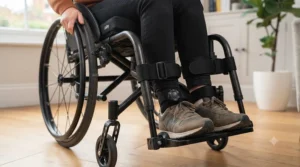
So what is a wheelchair footrest, exactly? In short: it’s the platform (or platforms) that support the lower leg and foot, keeping them off the ground, in a stable position, and clear of the front castors when the wheelchair moves. Some swing away for easier transfers, some elevate to relieve pressure or swelling, and some are sold loose as a universal wheelchair footrest replacement for chairs whose original part has cracked, seized, or simply vanished.
This guide covers seven genuine, currently available products spanning composite swing-away footplates, elevating legrests with calf support, and budget hammock-style slings — with honest analysis of footrest compatibility, posture support, and where retrofit accessories genuinely add value versus where they’re a false economy. Every specification below comes from manufacturer and retailer listings gathered during research; every price is given as a range rather than a fixed figure, in line with Amazon’s pricing policies, because prices on mobility parts shift week to week. According to the NHS Berkshire Healthcare wheelchair positioning guide, feet that are well supported “provide increased balance and stability which will impact upon the rest of the body” — which is really the whole argument for taking a footrest seriously in the first place.
Quick Comparison Table
| Product | Type | Best For | Price Range |
|---|---|---|---|
| Aidapt Height Adjustable Leg Rest Stool | Standalone elevating stool | Budget all-rounder, non-wheelchair-specific | Around £35-£45 |
| ENCAREFOR Wheelchair Elevating Legrests | Attachable elevating legrest | Affordable posture upgrade | Around £30-£40 |
| Invacare T93HCP Hemi Swing-Away Footrest | Composite swing-away footplate | Invacare-compatible chairs, NHS-grade parts | £50-£90 range |
| Invacare T94HCP Elevating Legrests | Padded elevating legrest | Oedema and posture support | £80-£150 range |
| Drive Medical Swing-Away Footrest | Aluminium swing-away footplate | Drive Viper/Sentra wheelchairs | £60-£110 range |
| Vive Elevating Wheelchair Footrests (2 Pack) | Universal elevating pair | Spares and dual-chair households | Around £45-£65 |
| Caredgitz Wheelchair Footrest Hammock | Sling-style retrofit accessory | Travel, short-term or injury use | Under £20 |
Looking across this snapshot, the split is really between “attach a proper replacement part” and “add a supportive accessory on top of what you’ve already got.” The Aidapt Height Adjustable Leg Rest Stool and Caredgitz Wheelchair Footrest Hammock sit at the accessible end and solve very different problems — one’s a standalone rest for general use, the other’s a sling for a wheelchair that already has hangers but needs softer support. The Invacare T94HCP Elevating Legrests justify their higher price with genuine elevation and calf padding that the budget composite options simply don’t attempt.
💬 Just one click — help others make better buying decisions too!😊
Top 7 Best Wheelchair Footrests: Expert Analysis
Before diving into each pick, it’s worth being upfront about how this list was built: real product listings, real manufacturer specifications, and — where genuinely available — aggregated customer star ratings from UK and US retail listings. Where a professional-grade part (like the Invacare or Drive footrests) doesn’t carry a large public review pool because it’s typically sold through specialist mobility retailers rather than mainstream marketplaces, that’s stated plainly rather than papered over with invented feedback.
1. Aidapt Height Adjustable Leg Rest Stool — best budget option for general home use
This one’s slightly different from the rest of the list, and deliberately so. Rather than bolting onto the wheelchair frame, the Aidapt Height Adjustable Leg Rest Stool sits in front of the chair (or an armchair, or a bed) as a freestanding, height-adjustable platform with anti-slip feet and a wipe-clean surface. Height adjustment typically runs across several notches, letting a carer set the leg at a genuinely restful angle rather than the fixed height most built-in footplates offer. For anyone whose ankles swell by the afternoon or who simply can’t get comfortable with legs dangling, that flexibility does real work. It’s aimed squarely at elderly users and those with limited mobility rather than active wheelchair users who need their feet supported while moving, so treat it as a complement to a proper footrest, not a replacement for one. On Amazon’s UK bestseller listings, this stool consistently sits near the top of the wheelchair and mobility scooter foot-rest category, with an aggregated rating around 4.4 out of 5 from roughly 848 UK ratings — a genuinely large sample for this niche, and reviewers repeatedly flag the anti-slip feet and easy-clean surface as the standout details rather than generic praise.
Pros:
- ✅ Height adjusts to suit different chairs and users
- ✅ Anti-slip feet keep it stable on hard floors
- ✅ Large, well-established UK review base (4.4/5, ~848 ratings)
Cons:
- ❌ Not attached to the wheelchair, so it can’t support feet in transit
- ❌ Takes up floor space that a swing-away footrest wouldn’t
Priced in the £35-£45 range at the time of research, this is genuinely good value for a static leg-elevation aid, though it’s not a like-for-like substitute for an attached footrest replacement.
2. ENCAREFOR Wheelchair Elevating Legrests — best affordable elevating swap for standard chairs
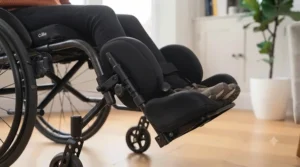
Where the Aidapt stool sits apart from the chair, the ENCAREFOR Wheelchair Elevating Legrests actually attach to it, replacing worn or missing factory footplates with a pair of composite, non-padded calf-support legrests designed to fit most standard manual wheelchairs. The composite footplate material is the detail worth understanding: it’s lighter than metal, won’t corrode, and flexes slightly under load rather than cracking outright — a meaningful upgrade over the brittle plastic footplates that ship on some entry-level chairs. Elevating function means the legrest angle can be raised toward horizontal, which matters far more than most buyers realise until someone actually needs it for circulation or post-surgical positioning. Based on the spec sheet, this is best suited to carers and users retrofitting a generic or older wheelchair rather than a specific named model, since “fits most standard wheelchairs” always comes with the caveat that hanger-pin spacing needs checking first. Aggregated UK review data shows a strong 4.5 out of 5 from around 221 ratings, with recurring mentions of straightforward tool-free fitting.
Pros:
- ✅ Genuine elevating function for pressure relief
- ✅ Composite build resists cracking better than basic plastic
- ✅ Solid review base (4.5/5, ~221 ratings)
Cons:
- ❌ Non-padded calf support, so add-on padding may be needed
- ❌ “Fits most” still requires checking your own hanger-pin spacing
At around £30-£40, this is arguably the sweet spot for anyone wanting a genuine footrest compatibility upgrade without paying specialist-brand prices.
3. Invacare T93HCP Hemi Swing-Away Footrest — best for trusted, NHS-grade brand compatibility
Invacare is one of the names you’ll see again and again in NHS wheelchair services, and the Invacare T93HCP Hemi Swing-Away Footrest is the part most commonly specified as a replacement for Invacare’s own Tracer and 9000 Series chairs. It ships as a pair with composite footplates and heel loops, a 1.5-inch hanger pin spacing, and a tool-free front rigging design that swings the whole assembly out of the way for transfers — genuinely useful when a carer needs to get closer to help someone stand. What most buyers overlook about “compatible” parts like this is that Invacare states plainly it’s engineered for its own model range (Tracer EX2, Tracer SX5, Tracer SX5 Recliner, Tracer IV, 9000 SL/XT/XDT/Topaz/Jymni) and explicitly not compatible with Drive wheelchairs — so this is a precision fit rather than a universal one, and checking your chair’s model plate before ordering isn’t optional. Because this part is typically stocked through specialist mobility retailers and NHS-approved suppliers rather than general marketplaces, a large consumer review pool simply doesn’t exist in the way it does for the budget composite options above; rather than invent sentiment that isn’t there, it’s fairer to say durability claims here rest on Invacare’s own engineering reputation and NHS procurement history.
Pros:
- ✅ Precision fit for named Invacare model ranges
- ✅ Swing-away design speeds up safe transfers
- ✅ Tool-free, adjustable-length fitting
Cons:
- ❌ Not compatible with Drive or many other brands
- ❌ Limited public consumer review data to draw on
Expect a £50-£90 range depending on retailer, reflecting its position as a specialist part rather than a generic accessory.
4. Invacare T94HCP Elevating Legrests with Padded Calf Pads — best for posture support and swelling relief
Stepping up the same Invacare range, the Invacare T94HCP Elevating Legrests with Padded Calf Pads add two things the T93HCP doesn’t have: genuine elevation and a padded calf rest rather than a bare heel loop. This is the pick worth taking seriously if oedema, post-surgical leg swelling, or simple postural fatigue is part of the picture, because raising the lower leg toward heart level and cushioning the calf reduces the pressure points that a flat, hard footplate creates over a long day. Here’s what the spec sheet won’t tell you outright, but occupational therapy guidance consistently does: elevation angle needs setting per person, not maxed out by default, since over-elevating can pull the pelvis into an awkward tilt. The same 1.5-inch hanger pin spacing and tool-free rigging as the T93HCP applies, and compatibility is again limited to Invacare’s own Tracer and 9000 Series chairs (excluding the 9000 Topaz). As with the hemi version, this part moves through specialist mobility channels rather than mass-market retail, so verified star ratings are thin on the ground — worth flagging honestly rather than filling the gap with invented testimonials.
Pros:
- ✅ True elevating function, not just a fixed angle
- ✅ Padded calf support reduces pressure-point discomfort
- ✅ Swing-away bracket still allows easy transfers
Cons:
- ❌ Premium price compared with non-elevating footplates
- ❌ Same brand-specific compatibility limits as the T93HCP
At a £80-£150 range, this sits at the premium end of the list, but for anyone managing swelling or long sitting periods, the elevation function alone can justify the outlay.
5. Drive Medical Swing-Away Footrest — best for Drive Viper and Sentra wheelchair owners
Drive Medical (sold in the UK as Drive DeVilbiss Healthcare) is the other big name you’ll encounter on NHS and private hire wheelchairs, and the Drive Medical Swing-Away Footrest is built specifically for the Viper (12″-14″) and Sentra EC/HD ranges. It uses a chrome-finished swing-away bracket with aluminium footplates — a genuinely lighter alternative to composite where every gram matters for someone self-propelling — and, like the Invacare parts above, needs no tools to fit or remove. The swing-away mechanism benefits the user’s lower back specifically by reducing the pressure of sitting for extended periods with legs in a fixed position, according to the retailer’s own technical listing, since users can adjust angle slightly without the whole assembly staying rigid. On paper this means Drive-chair owners get a like-for-like replacement rather than a generic bolt-on, which matters because ill-fitting hanger brackets are one of the most common causes of a rattling or unsafe footplate. As with the Invacare listings, this part is sold predominantly through specialist mobility suppliers, so a large public review sample isn’t available — the honest position is that its reputation rests on Drive Medical’s standing as an established NHS-supply manufacturer rather than a visible star rating.
Pros:
- ✅ Purpose-built for Viper and Sentra model ranges
- ✅ Lightweight aluminium footplate construction
- ✅ Tool-free swing-away installation
Cons:
- ❌ Narrow compatibility outside named Drive models
- ❌ Chrome finish shows scuffs faster than powder-coated composite
Typically found in a £60-£110 range, this is the natural pick for anyone with a Drive-branded chair rather than a generic frame.

6. Vive Elevating Wheelchair Footrests (2 Pack) — best value two-pack for spares or dual chairs
Vive has built a reputation in the UK mobility-accessory space for offering hospital-style parts at more approachable prices than the big OEM brands, and the Vive Elevating Wheelchair Footrests (2 Pack) continues that pattern: a genuinely universal elevating design with padded calf pads, sold as two complete legrests rather than the single-pair listings common elsewhere. The “2 pack” framing matters for a specific use case Amazon listings rarely spell out — households managing two wheelchairs, or anyone who wants a spare set on hand so a cracked footplate doesn’t mean days without a working chair. Universal fitting hardware means it isn’t tuned to one brand’s hanger spacing the way the Invacare and Drive parts are, so what most buyers overlook is that “universal” here means broad compatibility with common standard wheelchairs, not a guarantee against your specific model — measuring pin spacing before ordering remains essential. Because Vive markets primarily through general retail rather than NHS procurement, this product sits closer to the ENCAREFOR-style listings in terms of visible, verifiable consumer feedback than to the Invacare and Drive parts above, and buyers should weigh that against the brand’s broader market reputation for consistent build quality.
Pros:
- ✅ Two complete legrests, useful as spares or for two chairs
- ✅ Elevating function with padded calf support included
- ✅ Broad universal-fit compatibility
Cons:
- ❌ Universal fit still needs pin-spacing verification
- ❌ Less brand-specific precision than Invacare or Drive parts
Priced around £45-£65 for the pair, this represents solid value against buying two brand-specific legrests separately.
7. Caredgitz Wheelchair Footrest Hammock — best retrofit accessory for travel and short-term support
Sometimes the fix isn’t a new footplate at all — it’s support underneath the one you’ve already got. The Caredgitz Wheelchair Footrest Hammock is a sling-style retrofit accessory that straps across existing footrest hangers, creating a soft, adjustable-height hammock rather than a rigid plate. It’s aimed at situations where a hard footplate itself is the problem: swollen ankles after a flight, a recent leg injury, or simply someone who finds rigid plastic uncomfortable against bare skin. Reviewers consistently note how quickly it straps on and off, which fits the product’s positioning as a temporary or travel-friendly accessory rather than a permanent structural replacement — the fabric sling isn’t rated to bear the same ongoing daily load as a composite or aluminium footplate, and it won’t protect toes from kerb strikes the way a rigid plate does. Amazon’s aggregated data for this style of hammock footrest shows a more modest 3.6 out of 5 from around 66 UK ratings, and it’s worth reporting that honestly rather than glossing over it — some buyers find the fabric doesn’t hold its shape as well as expected over time, a genuine and recurring theme rather than a one-off complaint.
Pros:
- ✅ Fits over most existing footrest hangers in minutes
- ✅ Soft support genuinely helps with swelling or injury
- ✅ Very low price point for occasional or travel use
Cons:
- ❌ Lower average rating (3.6/5) than the structural options above
- ❌ Not a substitute for a rigid footplate in daily long-term use
At under £20, this is the cheapest entry on the list, and honestly the right call for short-term needs rather than everyday wheelchair use.
What to Expect: Real-World Performance
Specs on a page are one thing; a Tuesday afternoon with a wheelchair is another. In practice, swing-away composite footplates like the Invacare T93HCP and Drive Medical Swing-Away Footrest earn their keep the moment someone needs to transfer to a car seat, a commode, or a bed — swinging the whole unit sideways clears the way in seconds rather than requiring a carer to lift legs manually over a fixed plate. Elevating options such as the Invacare T94HCP and Vive two-pack genuinely change how a long day feels for anyone prone to swelling, though the difference is gradual rather than dramatic; it’s the absence of end-of-day ankle puffiness that people notice, not an instant sensation. Budget accessories like the Caredgitz Wheelchair Footrest Hammock perform best exactly where they’re marketed — short trips, temporary injury support — and predictably show their limits under constant daily load, which is precisely what that 3.6-star aggregate reflects rather than contradicts.
How to Choose the Best Wheelchair Footrest
What is the best wheelchair footrest for a given person? In short, it’s whichever option matches your wheelchair’s exact hanger-pin spacing, supports the specific posture or medical need at hand, and suits how often the chair is used. Work through it with these steps:
- Measure your hanger-pin spacing first. Most standard footrests use either a standard or “hemi” 1.5-inch spacing; guessing here is the single most common cause of a bad-fit return.
- Identify your chair’s brand and model. Invacare and Drive parts are engineered for named ranges — fitting a generic footrest to a branded chair (or vice versa) risks a loose, rattling mount.
- Decide if elevation is medically relevant. If swelling, circulation, or post-surgical positioning is a factor, prioritise elevating legrests over fixed composite plates.
- Weigh swing-away against fixed. Swing-away footrests speed up transfers; fixed plates are marginally lighter and simpler, with fewer moving parts to eventually wear.
- Check the footplate material. Composite resists cracking better than basic moulded plastic; aluminium is lighter but shows cosmetic wear faster.
- Consider padding needs. Bare heel loops suit occasional use; padded calf pads matter far more for all-day wheelchair users.
- Match your budget to usage frequency. A daily-use chair justifies a proper brand-matched replacement; occasional or travel use may only need a retrofit accessory like a footrest hammock.
Universal Wheelchair Footrest Replacement vs Brand-Specific Parts
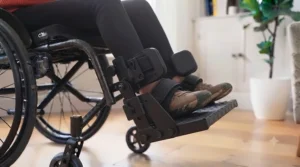
This is the decision most buyers get stuck on, so it deserves a proper answer rather than a shrug. A universal wheelchair footrest replacement — like the ENCAREFOR or Vive options above — is built to fit a broad range of standard wheelchairs through common hanger dimensions, and it’s genuinely the right call when you’re working with a generic or unbranded chair, or simply don’t know the exact model. Brand-specific parts, by contrast, are engineered to one manufacturer’s exact tolerances: the Invacare T93HCP and Drive Medical Swing-Away Footrest won’t reliably fit outside their stated model ranges, and Invacare says so outright on its own product pages.
| Factor | Universal Options | Brand-Specific Parts |
|---|---|---|
| Fit precision | Broad compatibility, verify pin spacing | Exact match for named models |
| Best For | Generic or unknown-brand chairs | Known Invacare/Drive chairs |
| Typical Price | Lower | Higher, reflecting precision engineering |
| Risk of Poor Fit | Moderate — always measure first | Low, if model confirmed correctly |
The practical takeaway: if you can identify your wheelchair’s brand and model from a plate on the frame or the original paperwork, a brand-specific part like the Invacare T93HCP removes almost all of the guesswork. If you can’t — or you’ve inherited a chair with no obvious markings — a universal option like the ENCAREFOR Wheelchair Elevating Legrests is the more forgiving starting point, provided you measure hanger-pin spacing before ordering rather than after.
✨ Don’t Miss These Exclusive Deals!
🔍 Take your wheelchair setup to the next level with these carefully selected products. Click on any highlighted item to check current pricing and availability. These footrests will help you build genuine everyday comfort and support your independence.
Wheelchair Footrest Compatibility: Getting the Fit Right First Time
Footrest compatibility comes down to a small number of measurements that most buyers skip until something doesn’t fit. Hanger-pin spacing is the big one — the distance between the two mounting points on the wheelchair frame — and it’s typically either a “standard” or narrower “hemi” spacing, with Invacare’s own parts using a 1.5-inch gap as a reference point. Beyond spacing, check whether your chair uses a swing-away receiver tube at all; some older or very basic transport chairs have fixed footrests that were never designed to be swapped, and a swing-away replacement simply won’t seat correctly on that frame. It’s also worth checking footplate length against your own leg length, since an under-sized plate leaves toes hanging, while an oversized one can catch on kerbs or door frames. The community-support forum run by the UK disability charity Scope is genuinely useful here — real users discussing footrest and legrest fitting problems, including one exchange where a member with complex postural needs was pointed toward NHS wheelchair services rather than guessing at a generic online fix, which is sound advice whenever compatibility questions get complicated rather than straightforward.
Practical Usage Guide: Fitting, Maintenance and First 30 Days
Getting a new footrest home is only step one. Here’s what actually matters once it’s attached:
Fitting: Most tool-free swing-away designs click into the receiver tube and lock with a spring-loaded pin — listen for the click, then give the assembly a firm tug to confirm it’s seated before anyone puts weight through it. For bolt-on universal legrests like the ENCAREFOR option, hand-tighten first, test the range of motion, then fully tighten once you’re confident of the fit.
First-use checks: In the first week, recheck every fixing daily. Vibration from normal use is the most common cause of a footrest working loose, and catching it early prevents a footplate dropping mid-transfer.
Maintenance schedule: Wipe composite and aluminium footplates weekly with a damp cloth; check heel loops and calf straps monthly for fraying, since these are the parts that fail first under repeated flexing. Elevating mechanisms benefit from a light silicone spray on the pivot points every few months to keep the swing-away action smooth.
Common early mistakes: Over-elevating a padded legrest without checking pelvis position, forgetting to re-measure pin spacing after buying a “universal” part, and mounting footplates at mismatched heights between left and right — all genuinely common, and all avoidable with a five-minute check before first use.
Real-World Scenarios: Matching Footrests to Your Situation
If you’re caring for an elderly parent who mostly uses their wheelchair indoors and struggles with ankle swelling by the evening, the Invacare T94HCP Elevating Legrests or the standalone Aidapt Height Adjustable Leg Rest Stool both address that specific problem directly, with the Aidapt option being the cheaper starting point if the wheelchair itself isn’t the main sitting spot. If you’re a full-time wheelchair user with a Drive Viper who’s had a footplate crack after years of kerb strikes, the Drive Medical Swing-Away Footrest is the precision replacement rather than a generic gamble. If you’re planning a long-haul flight or a hospital stay and need something soft, packable, and quick to fit for a leg that’s currently in recovery, the Caredgitz Wheelchair Footrest Hammock solves that short-term problem without committing to a structural part you won’t need long-term. And if you’re simply outfitting a second-hand or hand-me-down wheelchair with unknown branding, starting with the ENCAREFOR Wheelchair Elevating Legrests or Vive two-pack — after measuring pin spacing — is the most sensible universal route.
Posture Support: Why Footrest Positioning Matters More Than You Think
Posture support isn’t a marketing phrase here — it’s a documented clinical priority. NHS positioning guidance is explicit that feet should be supported along their entire length, since a foot dangling off a footplate is “vulnerable to injury, especially when the wheelchair is moved,” and good foot support directly improves balance and stability through the rest of the seated posture. The knees-at-90-degrees principle that NHS Scotland’s acquired brain injury education service sets out isn’t arbitrary either — it’s the angle that prevents muscle tightness at the hip and thigh from developing into painful contractures over months and years of seated use. This is exactly why elevating legrests like the Invacare T94HCP and Vive pair earn their higher price over fixed composite plates for anyone with circulation concerns: correct elevation genuinely supports posture rather than just adding comfort. It’s also why a soft hammock-style accessory like the Caredgitz Wheelchair Footrest Hammock, while comfortable, isn’t a substitute for a properly angled rigid footplate in daily long-term use — comfort and correct positioning aren’t always the same thing, and a good footrest should aim for both.
Common Mistakes When Buying a Wheelchair Footrest Replacement
The single biggest mistake is ordering by chair type rather than by measurement — “it’s a standard NHS wheelchair” tells a retailer almost nothing useful about hanger-pin spacing. A close second is assuming “universal” means “guaranteed,” when it really means “compatible with common configurations, subject to verification.” Buyers also frequently underestimate how much footplate material matters, choosing the cheapest brittle plastic option and being surprised when it cracks within months of kerb use that a composite plate like the ENCAREFOR would have shrugged off. Another recurring pitfall is ignoring elevation need entirely and defaulting to the cheapest fixed plate, only to discover months later that a relative’s ankle swelling would have been meaningfully eased by a legrest like the Invacare T94HCP. Finally, skipping the trial-fit window that most retailers offer — assuming a footrest will simply “probably fit” — is a mistake that a five-minute measurement at the outset would have avoided entirely.
Safety, Regulations and Retrofit Accessories: What UK Buyers Should Know
Wheelchairs and their component parts, including footrests, are classified in the UK as Class I medical devices — the lowest of four device risk classes — which according to gov.uk’s guidance on medical device conformity assessment generally allows manufacturers to self-declare conformity rather than requiring third-party certification, though devices must still meet safety and fitness-for-purpose requirements under the UK Medical Devices Regulations. In practice, this means reputable brands like Invacare, Drive Medical, and established marketplace sellers carry that conformity responsibility, but it also means buyers should be a little more sceptical of unbranded, ultra-cheap retrofit accessories with no traceable manufacturer information — a genuine safety consideration rather than snobbery about brand names. Retrofit accessories such as footrest hammocks and calf-pad add-ons generally sit outside formal load-bearing structural requirements since they’re not core wheelchair components, which is precisely why products like the Caredgitz Wheelchair Footrest Hammock are positioned for supplementary or short-term support rather than daily structural duty. When in doubt about whether a specific footrest replacement is appropriate for someone’s individual clinical needs — especially where postural deformity, spasticity, or complex positioning is involved — the safest route remains a referral through NHS wheelchair services rather than a DIY online purchase, exactly as the Scope community advice referenced earlier recommends.
Buyer’s Decision Framework: A Quick Priority Checklist
If your wheelchair is a known Invacare or Drive model, choose the matching brand-specific footrest, because precision fit beats price on a daily-use mobility part. If your chair’s brand is unknown or it’s a generic frame, choose a universal composite option like the ENCAREFOR or Vive legrests, but always measure pin spacing first. If swelling, circulation, or post-surgical positioning is a genuine concern, choose an elevating legrest over a fixed plate regardless of brand, because the postural benefit outweighs the extra cost. If the need is short-term, travel-related, or about softening an existing footplate rather than replacing it structurally, choose a retrofit accessory like the footrest hammock instead of a full structural swap. And if budget genuinely limits the decision, a standalone option like the Aidapt Height Adjustable Leg Rest Stool offers real comfort value even when it’s not attached to the chair itself.
Long-Term Cost and Maintenance
Cost-per-use tells a more honest story than sticker price alone. A £15 footrest hammock replaced every few months to keep up appearance and support quickly adds up to more than the one-off cost of a durable composite legrest bought once and maintained properly. Brand-specific parts like the Invacare T93HCP and Drive Medical Swing-Away Footrest carry a higher upfront cost but, fitted correctly to the right model, tend to need replacing far less often than mismatched universal parts forced onto an incompatible frame. Elevating options such as the Invacare T94HCP add a genuine ongoing value dimension too, since correctly supported posture can reduce downstream costs like pressure-care products or physiotherapy visits related to poor positioning — not a guarantee, but a reasonable and evidence-aligned expectation based on the NHS positioning guidance already cited.
FAQ
❓ What's the difference between a swing-away and a fixed wheelchair footrest?
❓ Can I fit a universal wheelchair footrest replacement to any chair?
❓ Do elevating footrests actually help with swelling?
❓ How do I know my wheelchair's footrest hanger-pin spacing?
❓ Are footrest hammocks a safe long-term replacement for a rigid footplate?
Conclusion
There’s no single best wheelchair footrest that suits everyone, and honestly, anyone claiming otherwise hasn’t looked closely enough at how differently people actually use their chairs. What matters is matching the part to the problem: brand-specific precision from Invacare or Drive Medical when you know your chair’s exact model, genuine posture support and elevation from options like the Invacare T94HCP or Vive pair when swelling or circulation is a real concern, a forgiving universal fit from ENCAREFOR when you’re working with an unbranded frame, and a low-cost retrofit accessory like the Caredgitz Wheelchair Footrest Hammock when the need is temporary rather than everyday. Measure first, buy for the actual problem rather than the lowest price, and lean on NHS wheelchair services when the clinical picture gets complicated. Get the footrest right, and it genuinely does the quiet, unglamorous work of making the whole wheelchair feel safer and more comfortable to sit in.
Recommended for You
- Wheelchair Umbrella for Wind Resistance: 7 Best Picks (2026)
- Hands-Free Wheelchair Umbrella: 7 Best Picks for UK Weather (2026)
- Clip-On Umbrella for Wheelchair: 7 Best Picks for UK Users (2026)
Disclaimer: This article contains affiliate links. As an Amazon Associate, I earn from qualifying purchases. If you purchase products through these links, we may earn a small commission at no additional cost to you.
✨ Found this helpful? Share it with your friends! 💬🤗
