
In This Article
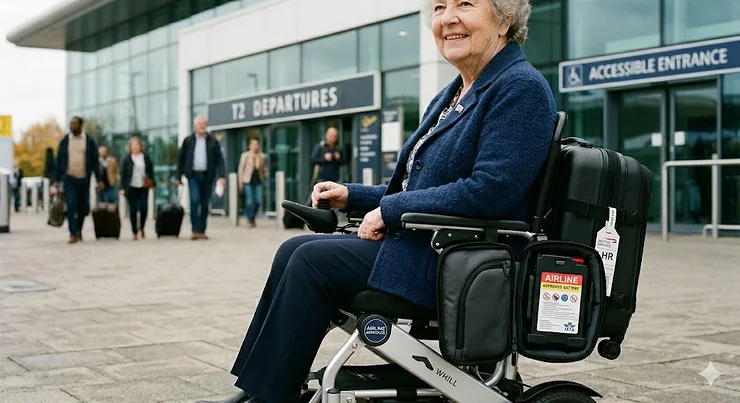
Travelling by air with an airline approved electric wheelchair has become considerably less daunting in 2026, thanks to clearer regulations from IATA and improved handling procedures across UK airports. Whether you’re planning a weekend jaunt to Paris on Ryanair or a long-haul flight to visit family abroad, understanding which wheelchairs meet airline requirements—and why those requirements exist—can transform your travel experience from stressful to straightforward.
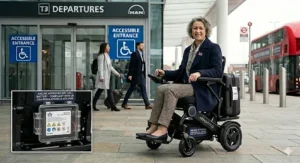
The current landscape centres around lithium battery regulations, which have been refined throughout 2025 and into 2026. Most airlines now accept wheelchairs with batteries up to 300Wh when installed, provided they meet specific safety standards. What many travellers don’t realise is that the term “airline approved” isn’t just marketing speak—it refers to concrete technical specifications about battery type, watt-hour rating, and how the chair can be safely disabled during flight. Getting this wrong means arriving at Heathrow or Manchester only to discover your mobility aid won’t be boarding with you.
This guide examines seven wheelchairs currently available on Amazon.co.uk that satisfy both IATA requirements and the practical realities of British travel: compact storage for terraced housing, performance in our reliably damp climate, and pricing that reflects genuine value rather than inflated “medical equipment” premiums. Each recommendation includes real-world commentary about who should consider it and why, because a specification sheet can’t tell you whether the 18kg weight means you can actually lift it into your Nissan Micra’s boot.
Quick Comparison: Top Airline Approved Electric Wheelchairs
| Model | Weight | Battery | Range | Price Range | Best For |
|---|---|---|---|---|---|
| ByteTecpeak D06 | 14.9kg | 12Ah Li-ion | 20km | £600-£800 | Ultra-light travel |
| ByteTecpeak D04 | 18.6kg | 10Ah Li-ion | 20km | £550-£750 | Budget-conscious flyers |
| Miracle Mobility Freedom Gold | 26kg | 15-mile range | 24km | £1,400-£1,700 | Premium long-range |
| Carbon Fibre Lightweight | 13kg | 10Ah Li-ion | 18km | £900-£1,200 | Serious weight savings |
| Glider Mobility Aluminium | 24kg | 12Ah Li-ion | 27km | £1,000-£1,300 | Durability focus |
| ByteTecpeak D03 Gold | 33kg | Dual 20Ah | 30km | £800-£1,100 | Extended touring |
| MobilityAhead Easyfold 2.0 | 22kg | Variable | 24km | £1,100-£1,400 | Tech-forward features |
💬 Just one click — help others make better buying decisions too!😊
Top 7 Airline Approved Electric Wheelchairs: Expert Analysis
1. ByteTecpeak D06 Ultra Lightweight Electric Wheelchair
The ByteTecpeak D06 stands out for one compelling reason: at 14.9kg, it’s genuinely manageable for solo travellers who need to fold and store their chair without assistance. The magnesium-aluminium alloy construction achieves this weight without feeling flimsy—something you’ll appreciate when navigating the cobblestones outside King’s Cross station or the uneven pavements around Edinburgh’s Old Town.
The 12Ah lithium battery delivers around 20km on a single charge, which translates to roughly a week of typical indoor use or two to three days of moderate outdoor exploring. In practice, expect closer to 18km during British autumn and winter when battery performance naturally dips. The IATA-compliant battery can remain installed during flight, though you’ll need to disable the chair via the joystick—a three-second process detailed in the manual. ByteTecpeak includes UK and EU charging cables, a thoughtful touch that saves you £20 on travel adapters.
UK buyers particularly appreciate the 360-degree joystick that can mount on either armrest, allowing flexibility for stroke survivors or those with unilateral weakness. The electromagnetic braking system engages automatically when you release the joystick, providing reassurance on London’s hilly streets or Birmingham’s sloped pavements. Folding takes genuinely under three seconds once you’ve done it twice, collapsing to 60×37×70cm—small enough for most car boots and certainly compact enough for storing in a flat’s hallway cupboard.
Customer feedback from UK buyers centres on two points: the comfort of the padded seat during longer journeys, and the responsive customer service from ByteTecpeak’s UK support team. Several reviewers mention successful flights with easyJet and British Airways, noting that providing battery specifications in advance (which ByteTecpeak supplies in the documentation) smoothed the check-in process considerably.
✅ Pros:
- Genuinely ultra-lightweight at 14.9kg for solo handling
- Folds to compact dimensions ideal for UK housing
- UK-based customer support with 30-day returns
❌ Cons:
- 20km range may feel limiting for full-day excursions
- Smaller wheels struggle slightly on gravel paths
The D06 typically retails in the £600-£800 range on Amazon.co.uk—excellent value for anyone prioritising portability and IATA compliance without sacrificing build quality. For frequent flyers or those living in compact urban flats, this represents the sweet spot between functionality and convenience.
2. ByteTecpeak D04 Lightweight Foldable Electric Wheelchair
The ByteTecpeak D04 positions itself as the budget-friendly sibling to the D06, weighing in at 18.6kg with a 10Ah battery. That 3.7kg difference might not sound dramatic on paper, but it’s the distinction between “I can lift this myself” and “I’ll need a hand with that” for many users. The trade-off brings the price down to the £550-£750 range—roughly £100-£150 less than the D06—making it rather tempting for first-time electric wheelchair buyers or those on tighter budgets.
The 500W motor delivers adequate power for urban environments, handling the gentle inclines around Bath or York without labouring, though steeper hills like those in Sheffield or parts of Bristol will slow your progress noticeably. The 20km range matches the D06 despite the smaller battery, achieved through slightly lower power output—essentially, you’re trading climbing power for distance. For predominantly flat terrain around Cambridge, Norwich, or central London, this compromise makes perfect sense.
What the D04 does particularly well is reliability. UK customer reviews consistently mention the aluminium frame’s durability through British weather—several buyers report 18+ months of regular use without rust or deterioration, even when stored in damp garages. The PU solid tyres are puncture-proof, which matters considerably more when you’re navigating Britain’s pothole-riddled pavements and broken kerbs than it would in countries with better infrastructure maintenance.
The joystick control feels responsive, though not quite as refined as premium models. It requires a firmer touch, which some users with limited hand strength find challenging, whilst others appreciate the deliberate input preventing accidental activation. The electromagnetic brake system works reliably, engaging within half a second of releasing the joystick—reassuring when navigating crowded high streets or waiting at zebra crossings.
✅ Pros:
- Budget-friendly without compromising essential features
- Proven durability in damp UK climate
- Puncture-proof tyres handle poor pavement conditions
❌ Cons:
- 18.6kg weight less manageable for solo lifting
- Motor struggles slightly on steeper gradients
At £550-£750, the D04 offers genuine value for buyers who can manage the extra weight and won’t regularly tackle steep hills. It’s particularly well-suited to retirees in flat areas looking for independence without spending £1,000+, or as a reliable second chair for a holiday home.
3. Miracle Mobility Freedom Gold Folding Electric Wheelchair
The Miracle Mobility Freedom Gold occupies the premium tier, with pricing around the £1,400-£1,700 mark reflecting its aircraft-grade 6061 aluminium construction and extended 24km range. At 26kg without the battery, it’s noticeably heavier than the ByteTecpeak models, but that weight delivers tangible benefits: a 180kg (396 pound) weight capacity versus the typical 150kg limit, and a substantially more solid feel when traversing rough surfaces.
The dual 250W motors (effectively 500W combined) provide genuinely impressive climbing capability, making this the choice for anyone living in Britain’s hillier regions—think the Peak District, Lake District, or the steep streets of Edinburgh and Bath. The anti-bump suspension design actually works, smoothing out the jarring impacts from raised manhole covers, broken paving stones, and the inevitable gaps between pavement slabs that plague British footpaths. After a few hours of use, this suspension makes a noticeable difference to fatigue levels, particularly for those with back issues or chronic pain conditions.
The lithium-ion battery carries full IATA approval, with documentation that’s proven straightforward during check-in at UK airports. Several customers report smooth experiences with Ryanair, easyJet, and British Airways when they’ve provided the battery specifications (clearly marked on the unit) at least 48 hours before departure. The 360-degree LED lighting system proves genuinely useful during Britain’s extended winter darkness, providing visibility during those 4:30pm returns from the shops in December and January.
Where the Freedom Gold justifies its premium is in the five-speed settings and refined control system. The lowest setting provides cautious indoor navigation perfect for tight spaces in cafés or navigating between display racks at Tesco. The highest setting achieves 6km/h—brisk walking pace—which feels appropriately urgent when crossing roads or trying to reach the bus stop before it departs. This granular control makes the chair suitable for both confined indoor environments and more ambitious outdoor journeys.
✅ Pros:
- Exceptional 180kg weight capacity for larger users
- Effective suspension for British pavement conditions
- Refined five-speed control system
❌ Cons:
- 26kg weight requires assistance for car loading
- Premium pricing may stretch budgets
The Freedom Gold sits in the £1,400-£1,700 range, which positions it as an investment purchase rather than an impulse buy. It’s the right choice for larger users who need the higher weight capacity, anyone requiring genuinely capable hill-climbing performance, or those who simply want the most refined experience available and can accommodate the weight and cost.
4. Carbon Fibre Lightweight Foldable Electric Wheelchair
The Carbon Fibre Lightweight model achieves an impressive 13kg total weight through its carbon fibre construction, making it the lightest option reviewed here. That extreme portability comes with a corresponding price tag in the £900-£1,200 range, reflecting the expensive materials and specialised manufacturing process. For some users, that £300-£400 premium over the ByteTecpeak D06 represents poor value; for others managing chronic fatigue conditions or recovering from injuries, those saved kilograms literally make the difference between independence and reliance on others.
The brushless motor runs notably quieter than budget alternatives, which proves surprisingly important in British social contexts. Navigating a hushed museum gallery, library, or quiet church service becomes less self-conscious when your wheelchair doesn’t announce your every movement. The dual braking system combines electromagnetic braking with a manual parking brake, providing redundancy that particularly benefits users with neurological conditions where involuntary movements might accidentally disengage a single brake.
At 18km range, the carbon fibre model trails the ByteTecpeak options slightly, but compensates with faster charging—roughly 4 hours to full charge versus 6-8 hours for larger batteries. For those living in flats without dedicated storage, the ability to charge overnight in a bedroom without the chair occupying excessive space proves genuinely valuable. The folded dimensions of 62×35×68cm slip under most single beds or into shallow wardrobe spaces.
UK buyers report mixed experiences with customer service, as this model ships from various sellers rather than a single UK importer. Check the seller’s return policy carefully before purchasing—some offer the full 30-day returns mandated by UK Consumer Rights Act, whilst others attempt to impose restocking fees that wouldn’t hold up under Trading Standards scrutiny but create hassle nonetheless.
✅ Pros:
- 13kg weight class-leading for maximum portability
- Quieter brushless motor for discreet operation
- Faster 4-hour charging time
❌ Cons:
- Premium pricing for the weight savings
- Customer service quality varies by seller
At £900-£1,200, the carbon fibre option occupies an awkward middle ground: too expensive to compete on value, not quite premium enough to justify its pricing against the Freedom Gold’s additional features. It finds its audience among those for whom weight is the paramount concern—think frequent solo travellers, those with upper body strength limitations, or users living in walk-up flats where lifting a heavier chair up stairs regularly would prove prohibitive.
5. Glider Mobility Lightweight Aluminium Electric Wheelchair
The Glider Mobility aluminium wheelchair positions itself as the durability-focused option, weighing 24kg with a robust aluminium alloy frame designed for years of British weather exposure. The 27km range from its 12Ah battery exceeds most competitors, providing genuine all-day capability for ambitious users. Pricing typically sits in the £1,000-£1,300 bracket, reflecting the UK company’s emphasis on local customer support and comprehensive warranty coverage.
What distinguishes Glider Mobility is their UK-based service network, with engineers familiar with British accessibility challenges and UK building standards. When issues arise—and with any mechanical device, they eventually will—having a technician who understands that “first floor” means different things in British versus American English, and who can source replacement parts without waiting for international shipping, proves remarkably valuable. The company reports average repair turnaround times under four working days for UK customers, versus the two-to-three-week wait typical of Chinese imports.
The electromagnetic brake system has been calibrated for British conditions, engaging more aggressively than some alternatives—a sensible choice given our often-wet pavements where stopping distances matter. Some users initially find the braking feel too abrupt, but most adapt within a few days and come to appreciate the confident stopping power when navigating rainy Manchester streets or slippery Leeds footpaths. The 8km/h maximum speed feels appropriately brisk without being alarming.
The chair folds to moderately compact dimensions, though not quite matching the ByteTecpeak models’ impressive space efficiency. At 75×60×45cm folded, it fits in most car boots but might prove tight in smaller vehicles like a Fiat 500 or classic Mini. The airline approval documentation is comprehensive, with Glider Mobility providing specific compliance certificates that streamline the airport check-in process—several customers mention presenting these to Ryanair and Jet2 staff to preempt questions about battery specifications.
✅ Pros:
- UK-based service network for reliable repairs
- Extended 27km range for all-day use
- Aggressive braking calibrated for wet conditions
❌ Cons:
- 24kg weight requires assistance for lifting
- Folded dimensions larger than ultra-compact alternatives
The Glider Mobility sits around £1,000-£1,300, which represents fair value when you factor in the UK support infrastructure and extended range. It’s the sensible choice for anyone prioritising long-term reliability and repair accessibility over absolute minimum weight, particularly those living outside major cities where accessing specialist wheelchair services can prove challenging.

6. ByteTecpeak D03 Gold Electric Foldable Wheelchair
The ByteTecpeak D03 Gold takes an unusual approach: dual 20Ah batteries delivering an exceptional 30km range, housed in a 33kg frame. Yes, that’s genuinely heavy—you’ll need assistance loading it into vehicles, and forget about carrying it up stairs solo. The £800-£1,100 pricing reflects this niche positioning: it’s for users who need serious range and don’t mind the weight penalty, or those with carers/family members who handle the lifting whilst the user prioritises all-day capability.
The 30km range isn’t marketing exaggeration. UK customer reports document genuine 25-28km journeys on single charges, even accounting for British weather’s battery-draining effects. This capability opens possibilities unavailable to standard wheelchairs: full-day visits to places like Kew Gardens or Hampton Court, coastal promenades along Brighton or Bournemouth seafronts, or attending outdoor festivals without constantly monitoring battery levels. For users whose mobility limitations have previously confined them to shorter outings, that freedom proves genuinely transformative.
The electromagnetic brake system and safety belt meet IATA requirements comfortably, though the dual-battery configuration requires careful documentation when flying. ByteTecpeak provides detailed specification sheets showing each battery’s watt-hour rating (typically 288Wh per battery, well within the 300Wh limit for installed batteries), but you’ll want to contact your airline at least 48 hours before departure to confirm acceptance of the dual-battery setup. Most UK carriers accept this configuration, but budget airlines occasionally require additional paperwork.
The aviation-grade aluminium frame tolerates British weather admirably—multiple year-plus reviews report no corrosion despite storage in unheated garages through winter. The four-layer construction provides genuine structural rigidity that translates to confident handling over rough surfaces, from gravelled car parks to the uneven grass at outdoor events. The 500W motor handles inclines effectively, though not quite matching the Miracle Mobility’s dual-motor climbing capability.
✅ Pros:
- Exceptional 30km range for all-day capability
- Dual batteries provide redundancy security
- Proven weather resistance in British conditions
❌ Cons:
- 33kg weight absolutely requires lifting assistance
- Dual-battery configuration needs extra airline documentation
At £800-£1,100, the D03 Gold offers remarkable value if you need the range and can manage the weight. It’s particularly well-suited to couples where one partner can handle the lifting whilst the user benefits from the extended capability, or for anyone with carers who regularly assist with equipment handling. The range transforms what’s possible for day trips and extended outings.
7. MobilityAhead Easyfold 2.0 Electric Wheelchair
The MobilityAhead Easyfold 2.0 represents the tech-forward option, incorporating features like LED displays, USB charging ports, and smartphone-compatible monitoring at a price point around £1,100-£1,400. At 22kg, it splits the difference between ultra-light and heavy-duty categories, offering reasonable portability without sacrificing build quality. The 24km range positions it as a capable all-rounder for users who want modern features without extreme specialisation in any direction.
The LED display provides real-time battery status, speed, and range estimation—information that proves surprisingly useful when planning journeys. Knowing you have 38% battery remaining and approximately 9km range allows confident decision-making about whether to continue exploring or head back. The USB charging port seems gimmicky until you’re actually using the wheelchair for a full day out and your phone battery is at 15%—then it becomes genuinely valuable, particularly for users relying on mobile accessibility apps or emergency contact capabilities.
The joystick controller feels refined, with sensitivity adjustments allowing customisation to individual preferences and abilities. Users with tremors or reduced fine motor control can dial down the sensitivity to prevent jerky movements, whilst those wanting more responsive handling can increase it for quicker direction changes. This adjustability extends the chair’s usability across a wide range of conditions, from advanced arthritis to post-stroke rehabilitation.
UK customer feedback emphasises the smooth folding mechanism, which genuinely works one-handed once you’ve practiced the motion. For users with unilateral weakness, this proves crucial for independent operation. The chair also includes thoughtful touches like a backrest storage pocket for the user manual and tools, reflective strips on the frame for visibility during winter darkness, and rubberised armrest covers that don’t turn ice-cold during British winter months.
✅ Pros:
- Tech features add genuine usability
- Adjustable joystick sensitivity accommodates various conditions
- One-handed folding mechanism
❌ Cons:
- Tech features add complexity for less confident users
- Mid-range pricing without standout specialisation
The Easyfold 2.0 sits at £1,100-£1,400, which positions it as a premium option without quite reaching luxury territory. It’s the right choice for tech-comfortable users who want modern features and customisation options, particularly younger users or those recovering from temporary mobility issues who expect their wheelchair to match the sophistication level of their other devices.
Understanding IATA Wheelchair Battery Rules for 2026
Flying with an electric wheelchair centres almost entirely on battery compliance, and the 2026 IATA regulations provide clearer guidance than ever before. The fundamental limit remains 300Wh for installed batteries—a threshold that accommodates most travel wheelchairs whilst excluding larger mobility scooters and heavy-duty powerchairs. This watt-hour rating appears on your battery, typically printed directly on the casing or detailed in the manufacturer’s documentation.
Calculating watt-hours is straightforward if you know your battery’s specifications: multiply the voltage (typically 24V for wheelchair batteries) by the amp-hour rating (commonly 10Ah, 12Ah, or 20Ah). A 24V 12Ah battery equals 288Wh, comfortably under the limit. Two such batteries total 576Wh, which exceeds the threshold and triggers additional safety requirements—airlines may require the batteries to travel in the cabin rather than remaining installed, or mandate fire-resistant storage in the hold.
The critical distinction in 2026 regulations concerns removable versus non-removable batteries. Removable batteries under 160Wh can travel in carry-on luggage with protected terminals to prevent short circuits. Batteries between 160Wh and 300Wh must either remain installed in the wheelchair (properly disabled to prevent accidental activation) or be removed and carried with airline approval, which isn’t guaranteed. This is why most airline-approved wheelchairs use batteries in the 240-300Wh range—they maximise capacity whilst staying within the “remains installed” threshold.
UK travellers face an additional consideration post-Brexit: whilst IATA rules provide the international baseline, individual airlines retain discretion to impose stricter limits. Ryanair, for example, requires 48 hours’ advance notice and may cap total wheelchair weight at 150kg including batteries. British Airways and easyJet generally follow IATA guidelines more closely, but confirming specific requirements when booking prevents nasty surprises at check-in. The IATA guidance document provides the authoritative source for current regulations, updated annually.
Airlines universally require the wheelchair to be disabled during flight—typically by removing the key, switching off via the joystick, or engaging a physical lockout. The manufacturer’s documentation should specify the approved method. Bring this documentation to the airport, as check-in staff will often request it, particularly for lesser-known wheelchair brands or unconventional battery configurations. Taking photographs of your wheelchair’s battery labels before travel provides quick reference if documentation goes missing.

Ryanair Electric Wheelchair Policy: What UK Travellers Need to Know
Ryanair’s wheelchair policy has evolved considerably, with 2026 guidelines striking a more balanced approach than their historically restrictive stance. The carrier now accepts up to two pieces of mobility equipment per passenger free of charge, applying to both manual and electric wheelchairs. This free carriage represents a legal requirement under EU accessibility regulations that continue to apply to UK-EU flights, not airline generosity—though Ryanair deserves credit for clear communication of these rights in their updated help centre.
The practical constraints centre on dimensions and notification. Electric wheelchairs must not exceed 81cm height, 119cm width, and 119cm depth when collapsed—measurements determined by aircraft cargo hold door dimensions rather than arbitrary restrictions. Most travel wheelchairs fold smaller than these limits, but some heavy-duty models intended for permanent home use won’t fit. The 150kg weight threshold includes the wheelchair and battery combined, which eliminates some dual-battery configurations or particularly robust frames.
Advance notification isn’t optional with Ryanair—you must register your wheelchair requirements at booking or via the Manage Booking function at least 48 hours before departure. This triggers the airline’s ground crew preparation, ensuring they have appropriate equipment and trained personnel available at your departure and arrival airports. Failing to provide notice doesn’t mean you can’t travel, but expect delays and potential complications as staff scramble to accommodate unanticipated requirements.
Ryanair requires specific technical information: wheelchair make and model, collapsed dimensions, total weight including battery, battery type (lithium-ion, sealed lead-acid, etc.), battery watt-hour rating, and disablement method. ByteTecpeak and other reputable manufacturers provide this information in a format suitable for airline submission. The airline reserves the right to reject wheelchairs that don’t meet safety standards, so providing accurate specifications prevents wasted journeys to the airport.
Ground handling varies by airport—some Ryanair destinations provide better assistance infrastructure than others. Major UK airports like Stansted, Manchester, and Edinburgh generally offer smooth experiences, with dedicated mobility assistance teams and appropriate equipment. Smaller European destinations Ryanair serves may have more limited facilities, potentially meaning your wheelchair takes longer to retrieve after landing. The official Ryanair help centre provides airport-specific details worth checking before booking.
One frustration UK travellers report: Ryanair’s two-wheelchair-per-flight limit. Whilst rarely an issue on larger aircraft, smaller routes during peak times occasionally reach capacity, potentially bumping later bookings to subsequent flights. This underscores the importance of early booking and advance notification—first come, first served applies when space is genuinely limited.
How to Choose an Airline Approved Electric Wheelchair: British Buyer’s Guide
Selecting the right wheelchair requires balancing multiple competing priorities, starting with the fundamental question: will this chair spend most of its time travelling, or is airline compliance simply a useful secondary capability? If you fly monthly, ultra-light models like the ByteTecpeak D06 or carbon fibre option make sense despite potential compromises in comfort or features. If you fly twice yearly, prioritising everyday usability over extreme portability proves more sensible—a few extra kilograms barely matter when you’re using the chair daily but only lifting it into car boots occasionally.
Battery capacity versus weight trade-offs deserve careful consideration. That extra 10Ah battery adds roughly 2.3kg but extends your range by 10km—crucial if you’re exploring unfamiliar cities where charging opportunities are unpredictable, less important if you’re primarily using the chair for short trips from car parks to destinations. Consider your typical usage patterns honestly: do you actually need 30km range, or would 18km suffice for 90% of journeys whilst keeping weight manageable for the other 10%?
UK-specific practicalities matter more than marketing specifications. Can you actually fit the folded chair in your vehicle’s boot? A quoted 60×37×70cm sounds compact until you’re trying to squeeze it alongside shopping bags in a Vauxhall Corsa. Does your home offer suitable charging locations? Ground-floor flats with accessible plug sockets pose fewer challenges than first-floor walk-ups where you’ll be carrying the wheelchair and battery separately. Will you store the chair in a heated space or an unheated garage? Battery performance degrades more rapidly in cold, damp conditions—that “20km range” becomes closer to 16km after a winter in an uninsulated garage.
Weight capacity often receives insufficient attention during selection. If you weigh 75kg and buy a wheelchair rated for 150kg, you have ample margin for carrying shopping, wearing winter coats, or weight fluctuation. If you weigh 135kg and buy that same chair, you’re operating at 90% capacity constantly—expect accelerated wear on motors, batteries, and frame. The Miracle Mobility Freedom Gold’s 180kg capacity isn’t just for larger individuals; it provides durability margin that extends component lifespan for all users.
Control sensitivity and adjustability prove crucial for users with neurological conditions, arthritis, or reduced hand strength. Joystick systems range from highly sensitive (responding to minimal pressure, ideal for users with limited strength) to deliberately resistant (preventing accidental activation, better for those with tremors). Unfortunately, you can’t assess this from specifications—it requires hands-on testing or reliance on detailed customer reviews from users with similar conditions.
UK supplier and service network availability deserves equal weighting with specifications. That Chinese import might undercut UK brands by £200, but what happens when the joystick fails or the battery won’t charge? Will you ship it to China and wait six weeks, or have local repair options? Glider Mobility and other UK companies charge a premium partly because they maintain service networks—for some users, that peace of mind justifies the cost.
Common Mistakes When Buying Airline Approved Wheelchairs
The most expensive mistake involves confusing “airline approved” marketing claims with actual IATA compliance. Some sellers slap “airline approved” on any lightweight foldable wheelchair, regardless of battery specifications or safety certifications. Verify the battery’s watt-hour rating yourself—it must be clearly marked on the battery casing. If a seller can’t provide this specification, they can’t definitively confirm airline compliance. The IATA requirements are published and specific; if documentation doesn’t reference these standards explicitly, treat marketing claims with suspicion.
Underestimating weight becomes apparent after purchase, not before. Lifting a 25kg wheelchair feels manageable during a five-minute shop test. Doing so repeatedly throughout a holiday, when you’re tired, after a long flight, whilst managing luggage—that same weight becomes prohibitive. Add a realistic 30% difficulty multiplier to shop floor impressions when assessing whether you can manage a chair’s weight independently. If you’re borderline during testing, real-world conditions will push you over that boundary.
Ignoring UK-specific electrical compatibility creates practical headaches. Whilst lithium batteries charge via universal voltage (110-240V) chargers, some imported wheelchairs include only US or EU plugs. Yes, you can buy adapters for £5, but you shouldn’t have to—reputable UK sellers include UK plugs or supply British adapters. Chargers with non-UK plugs also signal potential issues with UK after-sales support and warranty service.
Focusing exclusively on range specifications whilst ignoring real-world performance factors leads to disappointment. Manufacturers quote range figures under optimal conditions: flat terrain, moderate temperature, average user weight, new battery. British reality involves hills, cold weather, winter coats adding weight, and batteries that degrade over time. Expect 15-20% less range than quoted specifications in actual UK usage. If you need reliable 20km capability, buy a wheelchair claiming 24-25km range.
Overlooking UKCA certification post-Brexit represents a newer pitfall. Products sold in Great Britain should now carry UKCA marking rather than just CE certification, though there’s a transition period where both remain acceptable. More importantly, ensure the seller can provide UK-compliant safety documentation, not just EU certificates that may no longer satisfy British Trading Standards if issues arise. Reputable UK sellers handle this automatically; grey-market imports may not.
Assuming all Amazon.co.uk sellers provide equivalent service proves naive. Amazon.co.uk hosts multiple sellers, some UK-based with local stock and responsive customer service, others dropshipping from overseas with minimal UK presence. Check the seller’s return policy, location, and customer feedback specifically—a five-star product rating from a problematic seller still creates headaches. Look for sellers offering 30-day returns (your legal right under Consumer Rights Act 2015) without restocking fees or return shipping charges.

Real-World Performance in British Weather Conditions
British weather tests wheelchair durability in ways sunny climates never experience. Our relentless drizzle finds every unsealed joint, gradually working moisture into electronics and corroding contacts. That “waterproof” rating on the specification sheet typically means “splash resistant,” not “immune to six months of Manchester rain.” In practice, expect gradual performance degradation if you store your wheelchair outdoors or in unheated, damp garages. The aluminium frames hold up better than steel, with ByteTecpeak and Glider Mobility models showing minimal corrosion after 12+ months based on UK customer reviews.
Battery performance drops noticeably during British winter. A wheelchair delivering 20km range in July might manage only 16-17km in January, particularly if stored in cold conditions. Lithium batteries hate cold—their chemical processes slow at low temperatures, reducing available capacity. Storing the battery indoors overnight and allowing it to warm to room temperature before use partially mitigates this effect. Some users report removing the battery and keeping it in their bedroom during winter months, accepting the minor inconvenience for the performance benefits.
Wet pavement traction varies significantly between models. The PU solid tyres common on budget wheelchairs perform adequately on dry surfaces but offer minimal grip on wet flagstones or polished shop floors. Premium models with pneumatic or foam-filled tyres provide better wet-weather performance, though at the cost of increased maintenance and potential punctures. For users navigating primarily urban environments with well-maintained pavements, solid tyres suffice. Those regularly traversing gravel paths, woodland trails, or poorly surfaced car parks benefit from pneumatic tyres’ superior grip and shock absorption.
The British winter darkness creates visibility challenges largely absent in summer. Wheelchairs with integrated LED lighting systems prove their worth during those 4pm school runs in December, when pedestrians blend into grey pavements under dim streetlights. Reflective strips provide passive visibility but require external light sources. Active LED systems make you visible to cars reversing in car parks, cyclists overtaking on shared paths, and pedestrians emerging from side streets. If you’ll use your wheelchair during winter months—and in Britain, that’s half the year—lighting systems justify their cost.
Rain protection for electronics requires active management. Whilst modern wheelchairs incorporate weather-resistant joystick controls and sealed motor housings, they aren’t submersible. A waterproof cover for the control box costs £15-20 and prevents water ingress during heavy downpours. Similarly, draping a bin bag over the seat cushion when parking outdoors keeps it dry—soggy foam cushions take days to dry properly and can develop mould. These small preventive measures extend component lifespan considerably in our damp climate.
Setting Up Your Airline Approved Wheelchair for First Flight
Advance preparation transforms airline travel from stressful to straightforward, starting with documentation gathering. Compile a travel folder (physical or digital) containing your wheelchair’s technical specifications, battery certification documents, user manual, and purchase receipt. ByteTecpeak and other manufacturers typically provide an airline information sheet listing all relevant specifications in airline-friendly format. If your manufacturer doesn’t supply this, create your own document listing make, model, battery type, watt-hour rating, weight, dimensions, and disablement procedure.
Contact your airline at least 48-72 hours before departure, even if you’ve already noted wheelchair requirements during booking. This confirmation call ensures your needs have been properly flagged in the airline’s system and allows you to clarify any specific procedures the airline requires. Different carriers have varying processes for wheelchair handling—some want you at check-in 90 minutes early, others prefer standard timing with special assistance notification. Better to know these expectations before arriving at the airport than discovering them whilst queuing with anxious fellow passengers behind you.
The UK Civil Aviation Authority provides comprehensive guidance on accessibility rights and airline obligations, worth reading before your first flight. Understanding your legal rights prevents accepting inadequate service—airlines must provide appropriate assistance and safe handling of your equipment, not merely grudging accommodation. If airline staff seem uncertain about procedures, politely referencing CAA guidelines often resolves confusion quickly.
Photograph your wheelchair before handing it over at check-in, capturing its condition and any existing wear. Whilst damage during baggage handling remains relatively rare, having photographic evidence simplifies claims processes if issues occur. Take photos from multiple angles, including close-ups of the control panel, battery compartment, and any vulnerable components. These photos also serve as setup reference if airline staff disassemble elements of your chair for transport and reassemble it incorrectly upon return.
Disable your wheelchair using the method specified by the manufacturer—typically removing the key, switching off via the joystick, or engaging a physical lockout. Demonstrate this to check-in staff if requested, and don’t reconnect the wheelchair until reaching your destination. Airlines have legitimate safety concerns about accidental activation during flight, and proper disablement demonstrates your understanding of these requirements. Attach a label with your contact information and flight details to the wheelchair, as baggage tags occasionally detach during handling.
Request gate assistance during booking and confirm it again at check-in. This ensures an airport wheelchair meets you at security screening, allowing you to travel comfortably through the airport whilst your electric wheelchair undergoes baggage handling. Most UK airports provide manual wheelchairs that can navigate the narrow aircraft aisles, though their comfort falls well below your own chair. On arrival, your electric wheelchair should be returned at the gate or nearby special assistance point—if it’s sent to baggage claim instead, don’t hesitate to insist on proper return location, as that’s the service standard airlines should meet.
Long-Term Cost Analysis: Beyond the Purchase Price
The £600-£1,700 purchase price represents merely the beginning of total ownership costs, with battery replacement emerging as the largest ongoing expense. Lithium-ion batteries typically deliver 300-500 charge cycles before capacity degrades noticeably, translating to roughly 2-3 years of regular use. Replacement batteries cost £80-£180 depending on capacity and manufacturer, a significant hit to budgets if unexpected. When comparing wheelchairs, factor this into total cost of ownership—a £600 chair with £120 replacement batteries versus a £900 chair with £150 batteries has different value propositions over a five-year timespan.
Tyre replacement frequency depends on usage patterns and tyre type. Solid PU tyres typically last 18-24 months of regular use before wearing smooth, costing £30-50 for a full set. Pneumatic tyres may need replacement sooner if punctured but often last longer if properly maintained. Foam-filled tyres split the difference, offering puncture resistance with gradual compression over time. Budget £50-75 annually for tyre-related maintenance if you use your wheelchair frequently—more if you regularly navigate rough surfaces, less if primarily using smooth indoor floors.
Motor and electronic component repairs occur less frequently but carry higher costs when needed. Joystick assemblies, electromagnetic brake systems, and motor controllers can fail after 2-4 years of regular use. Repairs through authorised service centres typically cost £150-£300, whilst unauthorised repairs may void warranties or create safety issues. This is where UK-based manufacturers like Glider Mobility justify their premium pricing—repairs handled locally with original parts versus shipping to China and waiting weeks for dubious-quality replacements.
Insurance considerations vary based on your home contents policy and the wheelchair’s classification. Some insurers include mobility aids under standard home contents coverage, others require specific medical equipment riders. Check whether your policy covers the wheelchair against theft, damage, and mechanical breakdown—comprehensive home insurance may provide £1,500+ of mobility aid coverage automatically. Specialist wheelchair insurance policies cost £80-150 annually but may offer benefits like temporary replacement wheelchairs during repairs, which proves valuable if you depend on the chair for daily independence.
Electricity costs for charging remain minimal—a full charge costs roughly 10-15p based on average UK electricity rates in 2026. Even daily charging represents £40-55 annually, barely noticeable compared to other ownership costs. However, if you’re replacing an older wheelchair with dated battery technology, the efficiency improvements of modern lithium batteries may actually reduce your charging costs versus the previous model.
Airport Assistance Services: What to Expect at UK Airports
UK airports provide legally mandated assistance services for passengers with reduced mobility, operated under Civil Aviation Authority oversight to ensure consistent standards. The quality of experience varies between airports—Heathrow and Gatwick generally provide slick, well-resourced services, whilst some regional airports operate with limited staffing and occasionally struggle during busy periods. Understanding what you can reasonably expect helps set realistic expectations and prepares you to advocate for proper service if standards slip.
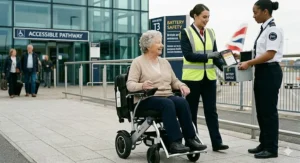
Upon arrival at the airport, designated assistance meeting points should be clearly signposted near main entrances and car parks. At larger airports like Manchester or Birmingham, assistance staff monitor these points continuously. Smaller regional airports may require you to telephone a dedicated number displayed at the meeting point, summoning assistance rather than finding it waiting. Either way, arrival 90-120 minutes before departure (versus the standard 60-90 minutes) provides buffer time for potential delays in assistance provision.
Staff should provide a manual wheelchair for navigating the terminal if you’ve checked your electric wheelchair at the ticket counter. Some airports offer powered wheelchairs or mobility scooters for passenger use, though availability varies. The assistance should extend through check-in, security screening, passport control, and all the way to the departure gate. Security screening with wheelchairs requires patience—you may need to transfer to a standard airport wheelchair to pass through metal detectors, whilst your electric wheelchair undergoes additional screening. This process takes 10-15 minutes rather than the typical 2-3 minutes, hence the recommended early arrival.
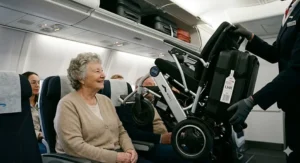
Boarding procedures vary by aircraft type. Larger planes with jet bridges allow wheelchair users to board directly from the terminal building. Smaller aircraft requiring stairs use ambulifts—hydraulic lift platforms that raise wheelchair users to cabin level. Ambulift boarding takes 5-10 minutes and occurs before general boarding begins, ensuring you’re settled before the aisle fills with other passengers. Once aboard, you transfer to a narrow “aisle chair” for reaching your assigned seat, as standard wheelchairs won’t fit between aircraft seat rows.
On arrival, your electric wheelchair should be returned at the aircraft door or immediately inside the terminal building. If it’s sent to baggage claim instead—a regrettably common occurrence at some airports—you have the right to insist on proper return location. The official guidance from the UK Government confirms this right, and politely but firmly referencing it usually resolves issues. Inspect your wheelchair before leaving the airport. If damage has occurred during handling, report it immediately to the airline’s special assistance desk and photograph the damage—claims filed after leaving the airport face more scepticism than those documented on-site.
FAQ: Airline Approved Electric Wheelchairs UK
❓ Can I take my electric wheelchair on Ryanair flights from the UK?
❓ What happens if my wheelchair's battery exceeds 300Wh for airline travel?
❓ How do UK airports handle electric wheelchair assistance for international flights?
❓ Will my electric wheelchair's battery degrade faster in British weather conditions?
❓ Are there different airline rules for flying with electric wheelchairs to EU countries post-Brexit?
Conclusion: Finding Your Perfect Travel Companion
Selecting an airline approved electric wheelchair ultimately comes down to honest self-assessment about how you’ll actually use it. The ByteTecpeak D06’s 14.9kg weight represents genuine liberation if you’re managing the chair solo and value independence above all else. The Miracle Mobility Freedom Gold’s premium features and extended range transform day-to-day capabilities for users who can accept the 26kg weight with assistance. The ByteTecpeak D03 Gold’s exceptional 30km range opens possibilities that simply don’t exist with standard-capacity alternatives, provided you have help with the 33kg lifting.
British buyers face unique considerations that don’t appear in product specifications: damp climate battery performance, compact storage in terraced housing, UK service network availability, and post-Brexit compliance requirements. These practical realities should weigh equally with technical specifications when making your choice. A wheelchair that looks perfect on paper but lacks local service support becomes a £1,200 doorstop when it needs repairs, whilst a slightly less impressive model backed by UK-based customer service remains reliably functional.
The good news: wheelchair technology has advanced considerably, with 2026 models offering capabilities that would have seemed remarkable five years ago. Airline compliance has become standard rather than exceptional, IATA regulations provide clear guidelines, and UK airports generally deliver adequate assistance services. With proper research, advance planning, and realistic expectations about your own needs and limitations, travelling with an electric wheelchair has never been more achievable.
Don’t let analysis paralysis delay your decision indefinitely—whilst choosing carefully matters, actually having a capable wheelchair matters more than finding the theoretically perfect one. Most models in the £600-£1,400 range deliver solid performance, and differences often come down to personal preference rather than objective superiority. Start with your non-negotiables (weight limit you can manage, minimum range needed, maximum budget), then select from models meeting those criteria rather than endlessly comparing marginal spec differences.
Recommended for You
- 7 Best Travel Electric Wheelchairs UK 2026
- 7 Best Electric Wheelchair That Fits in Car Boot UK 2026
- 7 Best Auto Folding Electric Wheelchairs UK 2026
Disclaimer: This article contains affiliate links. As an Amazon Associate, I earn from qualifying purchases. If you purchase products through these links, we may earn a small commission at no additional cost to you.
✨ Found this helpful? Share it with your mates! 💬🤗
