
In This Article
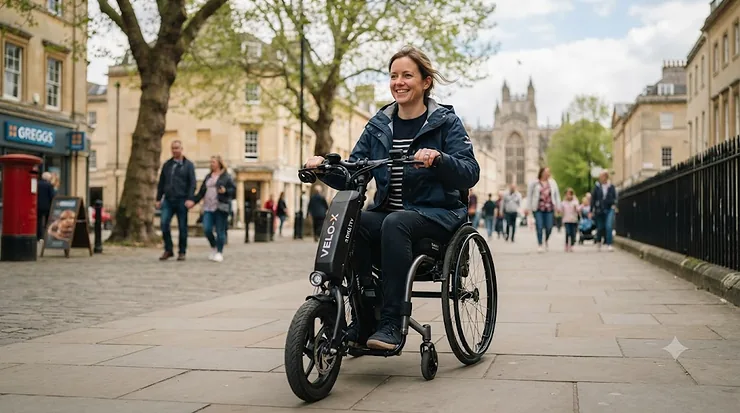
There’s a particular kind of freedom in cresting a hill under your own steam, wind doing something rude to your hair, without a single soul having pushed you there. That’s the promise behind a handbike attachment wheelchair setup — clip a front wheel and a set of hand cranks (or a small electric motor) onto your existing chair, and suddenly cobbles, gravel, grass and that one relentless hill on the way to the shops stop being quite so relentless. 🚴
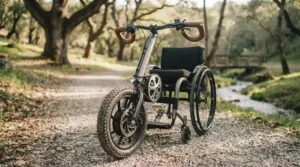
This isn’t a niche gadget category any more. Handbike attachments have quietly become one of the most genuinely life-changing pieces of kit in UK mobility retail, precisely because they don’t ask you to buy a whole new wheelchair — they upgrade the one you’ve already got fitted to you. This guide looks honestly at seven real attachments currently sold to UK buyers, spanning pure manual hand-crank systems through to fully electric front drives, with specs pulled from manufacturer data and independent UK mobility comparisons rather than sales copy.
Getting this decision right matters, because these aren’t impulse buys — most sit in the hundreds to several thousand pounds range, and the “right” one depends heavily on your wheelchair type, your strength and dexterity, and what your local NHS wheelchair services guidance says about funding routes available to you. We’ll cover real specs, honest comparisons, fitting logistics, and the mistakes that trip up first-time buyers before they even get out the front door.
Quick Comparison Table
| Attachment | Drive Type | Speed / Range | Best For |
|---|---|---|---|
| Batec Manual | Arm-crank (manual) | User-powered, no motor | Pure arm-powered exercise |
| Rio Mobility Dragonfly 2.0 | Arm-crank, 8-speed (manual) | User-powered, geared | Varied terrain, hill control |
| FreeWheel | Non-motorised push wheel | User-powered, no crank | Simplest budget terrain fix |
| Rio Firefly 2.5 | Electric | Up to 12 mph, ~15 miles | Lightweight, portable electric |
| Triride | Electric | Up to 20 mph*, ~30 miles | Lightest electric, off-road capable |
| Batec Electric (base) | Electric | Up to 20 km/h, 27-50km | Robust everyday electric handbike |
| Batec Hybrid 2 | Manual + electric hybrid | Up to 25 km/h, ~50km assisted | Exercise with power-assist backup |
*Some Triride variants reach higher speeds depending on model and local regulations — always check the specific model’s rating.
There’s a genuinely useful pattern buried in that table: the drive type dictates almost everything else about a machine, from its weight to its price to whether you’ll break a sweat using it. A pure manual crank like the Batec Manual or Rio Mobility Dragonfly 2.0 gives you a proper upper-body workout and total independence from charging cables, while the electric options trade that physical effort for range and hill-flattening convenience. The Batec Hybrid 2 tries to have it both ways, and mostly succeeds.
💬 Just one click — help others make better buying decisions too!😊
Top 7 Handbike Attachments for Wheelchairs: Expert Analysis
1. Batec Manual — best pure arm-powered handbike attachment
Strip away the battery, the motor and the LCD screen, and what’s left is the Batec Manual — a handbike attachment that runs on nothing but the strength in your arms and shoulders. It uses Batec’s Easy-Fix anchoring system, the same quick-release mechanism found across the brand’s electric range, which the manufacturer states lets users dock and undock in under three seconds without needing anyone else’s help.
Based on the spec comparison with Batec’s powered models, stripping out the motor and battery shaves a significant chunk of weight off the whole unit, which matters enormously if you’re loading it into a car boot solo on a regular basis. What most buyers overlook about pure manual handbikes is that they’re not just a cheaper alternative to electric — for people who want genuine cardiovascular and upper-body conditioning, a motor genuinely defeats the point. The crank-and-chain drive works exactly like a bicycle for your hands, and Batec’s ergonomic adjustments (handlebar height, depth, and grip options tailored for hemiplegic, paraplegic or quadriplegic users) are built into the whole handbike range, not bolted on as an afterthought.
Reviewers consistently note that the Batec anchoring system feels notably solid compared with rival brackets, though it does require a permanent clamp fitted to the wheelchair frame — a one-time modification worth discussing with your wheelchair supplier before committing, particularly if your chair is on lease or under NHS provision.
Pros:
- ✅ Genuine arm-crank propulsion for real cardiovascular exercise
- ✅ Lightweight compared with Batec’s electric and hybrid siblings
- ✅ Adjustable handlebar and grip options for different injury levels
Cons:
- ❌ Requires a permanently fitted clamp on the wheelchair frame
- ❌ No motor assistance, so hills and long distances demand real effort
The Batec Manual typically sits in the low-to-mid thousands price bracket, positioning it as a serious option for anyone whose priority is genuine arm-powered cycling rather than powered convenience — check current pricing directly with a UK Batec dealer, as most models are sold following a fitting consultation rather than an off-the-shelf checkout.

2. Rio Mobility Dragonfly 2.0 — best geared manual handcycle for varied terrain
Where the Batec Manual keeps things simple, the Rio Mobility Dragonfly 2.0 brings genuine bicycle engineering to the table — specifically a Shimano Nexus 8-speed internal gear hub, the kind of drivetrain you’d expect on a proper touring bike rather than a wheelchair accessory. That gearing range is the standout feature here: a low gear for grinding up an incline, a high gear for cruising along the flat, and everything in between.
The back-pedal coaster brake is a clever detail worth dwelling on — pedal backwards and you stop, with no brake cables running through the handles to snag or wear out. Based on the spec comparison with fixed single-speed manual attachments, the geared hub genuinely changes what terrain feels manageable; a hill that would otherwise demand standing-up-out-of-the-seat effort on a single-speed crank becomes a controlled, seated climb in a lower gear. What the spec sheet won’t tell you, but the manufacturer’s own installation guidance stresses, is that initial setup is a genuine 30-to-60-minute technical job best handled by a wheelchair or bicycle mechanic — this isn’t a five-minute DIY fitting on day one, even though it docks and undocks in seconds every time after that.
Reviewers and users describe the sense of finally being able to propel themselves at a proper cycling pace rather than the slower push-rim pace of a standard manual wheelchair, which for many people reframes the whole activity from “getting around” into “actually going for a ride.”
Pros:
- ✅ Genuine 8-speed gearing for real control over hills and flat terrain
- ✅ Back-pedal coaster brake needs no cables running through the handlebar
- ✅ Frame and handles remove tool-free for car, plane or storage transport
Cons:
- ❌ Initial professional fitting takes considerably longer than a simple clamp-on system
- ❌ Not compatible with wheelchairs that have swivelling (rather than fixed) front legs
The Rio Mobility Dragonfly 2.0 typically sits in the low-thousands price range — a considered investment for wheelchair users who want proper cycling-grade gearing rather than a single fixed resistance.
3. FreeWheel — best simple, budget terrain fix
Not every handbike-adjacent purchase needs a crank or a battery, and the FreeWheel proves it by doing exactly one job supremely well: lifting your front casters clean off the ground so a single large wheel takes their place. It’s worth being upfront about what this actually is — there’s no hand crank here, so it’s not a true “handbike” in the pedal-powered sense, but it solves the exact same underlying problem that sends people shopping for handbike attachments in the first place: small front casters that catch, snag and stall on grass, gravel, cobbles and curbs.
Made from aircraft-quality aluminium and weighing well under 2.5kg, it clamps onto the solid footrest of a rigid-frame wheelchair in seconds once the initial 15-minute setup is done. Based on the spec comparison with every powered or geared option on this list, the FreeWheel‘s entire appeal is its simplicity and price — there’s no battery to charge, no gearing to learn, and nothing mechanically complex enough to need a service. What most buyers overlook is the detent mechanism that keeps the wheel tracking straight until you apply slight pressure to turn, a small engineering detail that makes the difference between a wobbly add-on and one that genuinely tracks true over rough ground.
Reviewers consistently praise how compact it is for transport, with several noting it fits into a bag or the back pocket of a wheelchair and stores on an included “perch” bracket when not needed — genuinely useful for anyone who wants terrain capability only some of the time.
Pros:
- ✅ Lightweight aircraft-aluminium build, under 2.5kg
- ✅ No battery, gearing or motor to learn, charge or maintain
- ✅ Compact enough to stow on the back of the chair when not needed
Cons:
- ❌ Not a true crank-powered handbike — provides terrain lift only, no propulsion assistance
- ❌ Footrest height and angle restrictions mean it won’t fit every wheelchair
Sitting comfortably at the budget end of this list, the FreeWheel typically costs a fraction of the electric options here — genuinely excellent value for anyone whose main frustration is terrain rather than propulsion effort.
4. Rio Firefly 2.5 — best lightweight, portable electric attachment
If you’ve read anything about wheelchair power attachments in the UK, you’ve likely already heard of the Rio Firefly 2.5 — it’s one of the most widely distributed electric options in the country, and the reasons are fairly obvious once you look at the numbers. At roughly 22 pounds (about 10kg), it’s genuinely light enough to lift into a car boot solo, and it reaches speeds up to 12mph with a range of around 15 miles per charge.
The steering hinge is a double-edged detail worth understanding before you buy: it allows the whole unit to lift and drop onto the wheelchair’s brackets, but because the hinge moves freely, several reviewers note it takes a bit of practice to “lift and drop” cleanly the first few times. Based on the spec comparison with the heavier Batec Electric below, the Rio Firefly 2.5 trades some raw ruggedness for portability and a genuinely lower price point — a sensible trade if your daily terrain is mostly pavements and smooth paths rather than off-road tracks. The LCD display is a standout feature here, tracking current speed, distance travelled, and even historical max and average speeds, appealing to anyone who likes a bit of data with their independence.
A detailed head-to-head published by a UK wheelchair review site found the Rio Firefly 2.5 noticeably easier for first-time users to get comfortable with than a rival electric attachment, largely because the throttle and lift-on mechanism feel more intuitive on day one, even if the attachment itself carries fewer standard features than pricier alternatives.
Pros:
- ✅ Genuinely lightweight at around 10kg, easy to lift solo
- ✅ Detailed LCD display tracking speed, distance and historical stats
- ✅ Widely available across UK mobility retailers with demo options
Cons:
- ❌ Steering hinge takes some practice to attach smoothly at first
- ❌ Lower ground clearance than off-road-focused rivals like the Triride
Prices for the Rio Firefly 2.5 typically start from around the low-£2,000s ex VAT — and given that these are usually zero-rated for VAT-eligible disabled buyers, that’s often the price you’ll actually pay rather than a starting figure with tax still to add.
5. Triride — best lightest electric attachment for varied terrain
Weighing in at under 10kg, the Triride claims the lightest-in-class crown among electric handbike attachments on this list, and it does so using a stainless-steel frame rather than the aluminium builds common elsewhere. Its smaller 14-inch wheel is the trade-off for that lightness — noticeably less sturdy over genuinely rough ground than the Batec’s larger 20-inch wheel, but easier to sling into a car boot without a second pair of hands.
A Lithium battery delivering around 50km of range on a 4-5 hour charge is a genuinely strong number in this category, and Triride‘s patented coupling system is worth calling out specifically — it’s one of the few attachment mechanisms on this list with an actual approved patent, which speaks to a level of engineering rigour behind what looks, on the surface, like a fairly simple docking clamp. Based on the spec comparison against the Rio Firefly 2.5, Triride pulls ahead on off-road versatility and top-line range, while trailing slightly on outright portability once you factor in the full system weight with battery attached.
What most buyers overlook is the sheer breadth of optional extras Triride offers compared with rivals — easels to assist coupling for users with severe mobility limitations, a cyclocomputer, mirrors, a basket, and even an attachable trailer rated to carry up to 75kg. That’s a genuinely different philosophy to the Rio Firefly 2.5‘s more streamlined, fewer-frills approach, and it’s worth factoring into your decision if you know you’ll want to expand the setup later rather than buy everything up front.
Pros:
- ✅ Lightest electric attachment on this list at under 10kg
- ✅ Patented coupling system with genuine approved engineering credentials
- ✅ Wide range of optional accessories including a load-rated trailer
Cons:
- ❌ Smaller 14-inch wheel is less capable on genuinely rough terrain than larger-wheeled rivals
- ❌ Fewer features included as standard compared with pricier packages
The Triride typically commands a price in the low-to-mid thousands range depending on chosen accessories — a strong pick for buyers who value light weight and terrain range over raw ruggedness.
6. Batec Electric (base model) — best robust everyday electric handbike
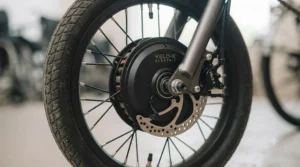
Where the Rio Firefly 2.5 and Triride chase portability, the Batec Electric base model plants its flag firmly on robustness. Its 20-inch double-walled aluminium wheel with ultra-grip tyres is noticeably larger than the Triride‘s 14-inch alternative, and the 900W brushless motor (peak power) delivers a genuinely strong top speed of around 20km/h alongside a real 27-50km range depending on which of the three available battery sizes you choose.
Based on the spec comparison across this whole list, the Batec’s biggest structural difference is its permanently fitted clamp system — the Batec Easy-Fix anchor requires a bracket welded to the wheelchair’s underframe, a one-time modification that trades a small amount of setup inconvenience for what reviewers consistently describe as a noticeably more solid, confidence-inspiring attachment feel than clip-on rivals. What the spec sheet won’t tell you, but a detailed UK head-to-head comparison found, is that this makes attaching and detaching genuinely easier for users with limited hand dexterity or strength, since there’s no free-moving hinge to wrestle with the way there is on the Rio Firefly 2.5.
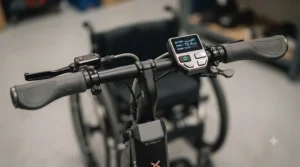
Standard features here run deeper than the base Rio Firefly 2.5 package too — a “Safe Feet” stand frame with integrated tail lights, a 200-lumen front LED, dual USB charging ports, and a display showing both battery level and speed rather than battery alone. The trade-off, honestly assessed, is weight: at roughly 15.7kg before the 4kg battery and 5kg of optional traction weights, this is a considerably heavier unit to lift than either the Rio Firefly 2.5 or the Triride.
Pros:
- ✅ Larger 20-inch wheel copes better with rough terrain than smaller-wheeled rivals
- ✅ Choice of three battery sizes to match your typical daily range needs
- ✅ Permanently anchored clamp feels notably solid, easier for limited dexterity
Cons:
- ❌ Considerably heavier overall than the Rio Firefly 2.5 or Triride once battery is included
- ❌ Permanent clamp modification to the wheelchair frame is a one-time commitment
The Batec Electric typically sits in the low-to-mid thousands bracket depending on battery size chosen, positioning it as a strong pick for buyers who prioritise stability and daily-use robustness over ultimate portability.
7. Batec Hybrid 2 — best hybrid for exercise with electric backup
Occupying a genuinely clever middle ground, the Batec Hybrid 2 lets you pedal for the workout when you want one and lean on the 250W motor when you don’t, switching between the two without needing to detach anything or restart a system. A torque sensor provides assistance without requiring a quarter-turn of the pedals first — a detail that sounds technical but translates into a very practical benefit: starting on an uphill slope from a dead stop, which is precisely where pure manual cranks and even some hybrid systems tend to struggle.
Weighing around 20.6kg without battery or optional traction weights, it’s honestly the heaviest unit on this list, which is the direct trade-off for genuinely offering two distinct propulsion modes in one frame. Based on the spec comparison with the pure manual Batec, the Hybrid 2 adds real electrical complexity — a trigger throttle, a signal cut-off brake sensor, and a Batec Shift Lever system — but that complexity buys you something genuinely valuable: the ability to train hard on a good day and lean on the motor on a tired one, all without swapping equipment.
What most buyers overlook is the quadriplegic-specific version, which includes Batec’s “Magic Lever” crank arm release system, letting users switch into a genuinely zero-effort assisted mode without needing fine motor control over a conventional crank grip — a meaningful accessibility detail that few competing hybrid systems on the market currently match.
Pros:
- ✅ Genuine dual-mode propulsion — pedal for exercise, throttle for assistance
- ✅ Torque sensor enables uphill starts without a quarter-pedal-turn requirement
- ✅ Quadriplegic-specific version available with Magic Lever assisted release
Cons:
- ❌ Heaviest unit on this list at roughly 20.6kg before battery and weights
- ❌ Genuinely more complex system with more components that could need servicing
The Batec Hybrid 2 commands a premium price typically in the mid-to-high thousands range — a considered investment for anyone who genuinely wants both a workout option and a powered safety net in one machine.
What Is a Handbike Attachment for a Wheelchair?
A handbike attachment wheelchair setup is a front-mounted device that clips or clamps onto a manual wheelchair, adding a third wheel driven either by hand-cranked pedals, an electric motor, or both. It lifts the front casters off the ground, converting the chair into a tricycle-style vehicle for smoother, faster travel.
That’s the tidy definition — but the practical reality splits into two genuinely different product categories that are worth separating clearly. True handbikes use a crank-and-chain (or crank-and-gear-hub) drive powered by your arms, turning the whole exercise into something closer to hand-cycling than wheelchair pushing. Powered attachments swap that crank for a throttle and a motor, trading physical effort for speed and range.
Power Handbike Wheelchair Add-On vs Manual Handbike: Which Drive System Suits You?
This is genuinely the first fork in the road for anyone shopping this category, and it’s worth thinking through honestly rather than defaulting to “electric is obviously better.”
A power handbike wheelchair add-on — the Rio Firefly 2.5, Triride and Batec Electric on this list — trades physical effort for range and speed. Based on the spec comparison, that trade makes genuine sense for longer commutes, hillier regions, or anyone whose shoulders and arms need protecting from repetitive strain rather than building it up further. The honest downside is weight and charging logistics: every electric attachment here needs regular charging and adds several kilograms to your setup, which matters when you’re loading a car alone.
A manual handbike like the Batec Manual or Rio Mobility Dragonfly 2.0 keeps things lighter, cheaper, and delivers genuine cardiovascular and upper-body conditioning that a motor simply can’t replicate. What most buyers overlook is that manual doesn’t mean “worse” — for wheelchair users who specifically want structured arm-powered cycling as exercise, adding a motor would defeat much of the point. The Batec Hybrid 2 exists precisely because plenty of people don’t want to choose definitively between the two, and its torque-sensor design lets you dial in exactly how much of the work the motor picks up on any given day.
How to Choose a Front Wheel Handbike for Your Wheelchair
Selecting the right front wheel handbike attachment comes down to seven practical checks worth working through in this order:
- Confirm your wheelchair’s compatibility first. Attachments like the Rio Mobility Dragonfly 2.0 require fixed (not swivelling) front legs, and clamp-based systems need specific frame tube dimensions — check before you fall in love with a specific model.
- Decide on drive type honestly. Manual, electric, or hybrid isn’t just a budget question — it’s a question about whether you want the exercise, the range, or both.
- Weigh up portability against robustness. Lighter units like the Rio Firefly 2.5 and Triride are easier to lift solo; heavier units like the Batec Electric tend to feel more planted on rough terrain.
- Check the coupling/anchoring system carefully. Some require a permanent clamp fitted to your chair; others use a removable bracket — this affects both fitting cost and how easily you can switch between chairs.
- Match battery range to your actual daily distance, not your longest imagined trip. A 15-mile range covers most daily errands; longer commutes or rural routes may need the 50km-class options.
- Factor in VAT relief eligibility. Many attachments qualify for VAT relief for disabled people under UK guidance, which can meaningfully change the real price you pay.
- Arrange a demonstration before committing. Most UK suppliers offer home demos precisely because fit, comfort and control feel very different in person than on a spec sheet.
Working through those seven checks in order will narrow any shortlist down considerably before price even becomes the deciding factor.
Electric Handbike Attachment Wheelchair: What the Motor Specs Actually Mean
Motor wattage numbers get thrown around a lot in this category, and it’s worth translating what they actually mean in practice rather than just comparing numbers on a spec sheet.
A 250W motor, as found on the Batec Hybrid 2, is tuned for genuine pedal-assistance rather than throttle-only propulsion — it’s there to top up your own effort, not replace it entirely, which is exactly the point of a hybrid system. A 900W peak-power motor, as on the base Batec Electric, is built for pure throttle-driven propulsion without any pedalling requirement at all, which is why it needs a genuinely bigger battery and heavier build to sustain it.
Based on the spec comparison, top speed numbers deserve similarly careful reading — the Rio Firefly 2.5‘s 12mph and Triride‘s higher-end claims both sit within the territory the UK’s Highway Code addresses for powered mobility devices on roads and pavements, though it’s worth noting that handbike-style attachments sit in a genuinely different regulatory category from traditional powered wheelchairs and mobility scooters, closer to e-bike and pedal-assist rules in some interpretations. What most buyers overlook is that this classification question isn’t fully settled across every UK local authority, so it’s genuinely worth checking directly with the manufacturer or your local council before assuming a specific attachment is automatically road-legal at a given speed in your area.
Handbike Attachment vs Traditional Manual Wheelchair Propulsion
| Factor | Handbike Attachment | Traditional Push-Rim Propulsion |
|---|---|---|
| Speed over rough terrain | Significantly faster, casters lifted clear | Slower, casters catch on grass/gravel |
| Physical strain pattern | Cyclical crank motion or motor-assisted | Repetitive push-rim shoulder strain |
| Upfront cost | Higher, one-off purchase | No additional cost beyond the wheelchair |
| Portability | Adds weight and a separate item to transport | No extra bulk to carry |
| Independence over distance | Considerably extended range and speed | Limited by arm fatigue and terrain |
Looking at that comparison, the case for a handbike attachment becomes clearest for anyone who regularly covers meaningful distances or rough terrain, where standard push-rim propulsion genuinely accelerates shoulder wear over time. Traditional propulsion still wins on simplicity and zero added bulk, which matters for anyone whose daily journeys are short, indoor, or across consistently smooth surfaces where an attachment’s benefits are less pronounced.
✨ Don’t Miss These Exclusive Deals!
🔍 Take your independence further with these carefully selected handbike attachments. Click on any highlighted product to check current pricing and availability. These attachments could genuinely open up routes and distances your current setup makes difficult!
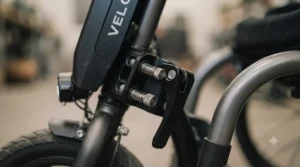
Fitting a Manual Handbike Attachment Wheelchair: Setup & Compatibility Guide
Getting a manual handbike attachment wheelchair setup properly fitted takes more forethought than unboxing and clicking it on, so here’s what genuinely helps before delivery day.
Confirm frame compatibility in writing first. Both the Batec Manual and Rio Mobility Dragonfly 2.0 have specific requirements around tube diameter, seat width and front-leg configuration. Get written confirmation from the supplier that your specific wheelchair model is compatible before ordering, rather than assuming a “most wheelchairs” claim covers yours.
Budget real time for the first fitting. The Rio Mobility Dragonfly 2.0‘s own installation guidance states a 30-to-60-minute setup handled ideally by a wheelchair or bicycle mechanic, not a five-minute DIY job — plan the appointment accordingly rather than expecting to fit it solo in the car park.
Check anti-tip and safety equipment before first use. Manufacturer guidance for handcycle attachments consistently stresses that wheelchairs should have anti-tip devices, seatbelts and wheel locks fitted and engaged before attaching or detaching the handbike, and that users should never attempt to transfer in or out of the chair with the attachment still connected.
Practise the coupling motion somewhere safe before your first real outing. Whether it’s Batec’s clamp-and-lock system or a lift-and-drop hinge design, every reviewer consistently notes that the first few attachment attempts feel clumsier than they will after a week of practice.
Real-World Scenarios: Who Actually Buys a Front-Wheel Drive Handbike
The daily commuter with variable terrain: Someone travelling regularly across mixed pavements, cobbles and the occasional grass verge. A robust electric option like the Batec Electric base model handles that variety without the portability trade-offs of a lighter, smaller-wheeled rival.
The fitness-focused user chasing genuine exercise: Someone specifically wanting structured cardiovascular and upper-body training built into their daily transport. The Batec Manual or Rio Mobility Dragonfly 2.0 deliver exactly that, without a motor diluting the effort.
The occasional off-roader who mostly stays on smooth ground: Someone who wants terrain capability for the odd garden, park or gravel path, without committing to a full powered system. The FreeWheel solves precisely this at a fraction of the cost and complexity of a powered attachment.
The user managing fluctuating energy levels: Someone whose strength or fatigue varies day to day, wanting the option to work hard on a good day and lean on assistance on a harder one. The Batec Hybrid 2‘s dual-mode design was built specifically for this kind of variability.
Common Mistakes When Buying a Handbike Attachment
The single most common mistake is ordering before confirming wheelchair compatibility in writing. Frame tube dimensions, footrest height, and front-leg configuration all vary between models, and a “fits most wheelchairs” claim on a product page is not the same as a confirmed fit for your specific chair.
A second frequent error is underestimating the weight difference between attachment types. Buyers focused purely on speed and range sometimes overlook that a fully loaded electric unit can add well over 20kg to their overall setup — a genuine consideration for anyone loading a car solo on a regular basis.
Third, some buyers skip arranging a demonstration before ordering, which most UK suppliers genuinely offer. Fit, control feel, and coupling ease vary meaningfully between models in ways a spec sheet simply cannot convey.
Finally, a surprisingly common mistake is assuming every attachment qualifies automatically for VAT relief or NHS personal wheelchair budget funding. Eligibility depends on individual circumstances and the specific product, so it’s worth confirming directly with HMRC guidance and your local wheelchair service rather than assuming.
Understanding the Coupling System Handbike Buyers Should Check
The coupling system — how the attachment physically locks onto your wheelchair — is arguably the single most important spec on this entire list, and it’s the one most easily overlooked in favour of flashier numbers like top speed or battery range.
Batec’s Easy-Fix system uses a permanently fitted clamp welded to the wheelchair’s underframe, which reviewers consistently describe as producing a notably solid, confidence-inspiring attachment feel, at the cost of a one-time modification to the chair itself. The Rio Firefly 2.5‘s free-moving steering hinge takes the opposite approach — no permanent modification required, but a genuine practice curve before the lift-and-drop motion feels smooth. Triride‘s coupling system stands out for carrying an actual approved patent, a detail that speaks to genuine engineering investment behind what looks, superficially, like a simple docking clamp.
Based on the spec comparison across all seven products here, the honest takeaway is that there’s no universally “best” coupling system — the right choice depends heavily on your hand dexterity, whether you’re willing to permanently modify your wheelchair frame, and whether you’ll be swapping the attachment between multiple chairs.
Long-Term Value & Maintenance of Handbike Attachments
| Maintenance Area | Typical Interval | Cost Impact |
|---|---|---|
| Tyre and tread inspection | Every 1-2 months | Low — routine consumable cost |
| Battery health check (electric/hybrid models) | Every 3-6 months | Low, unless replacement needed |
| Cable/gear hub servicing | Annually | Moderate — budget as an ongoing cost |
| Coupling/clamp mechanism inspection | Every use, formally every few months | Free (visual check) to low |
Looking at that table, the honest picture is that manual attachments like the FreeWheel and Batec Manual carry noticeably lower ongoing costs than their electric siblings, simply because there’s no battery to degrade and no motor electronics to service. Electric and hybrid units justify their higher running costs through genuinely extended range and reduced physical strain, which for many users is precisely the trade they’re happy to make.
Arm-Powered Cycling: The Fitness Case for a Manual Handbike
Arm-powered cycling through a manual handbike attachment offers genuine cardiovascular benefit through the same mechanism as any repetitive aerobic exercise — sustained arm and shoulder movement raises heart rate and supports circulation over time. This isn’t a substitute for professional medical advice, but the underlying exercise physiology is well understood and broadly consistent with general NHS guidance on staying active, which encourages finding accessible ways to stay physically active regardless of mobility level.
Based on the spec comparison between the Batec Manual and Rio Mobility Dragonfly 2.0, the geared Dragonfly arguably offers a more structured training tool, since varying gear resistance lets users build intensity progressively rather than fighting a single fixed resistance throughout. What most buyers overlook is that arm-powered cycling also strengthens the exact muscle groups used in everyday push-rim wheelchair propulsion, meaning regular handbike use may genuinely support day-to-day wheelchair mobility as a side benefit, not just a standalone workout. Anyone with specific health conditions or recent injury should discuss suitability with a physiotherapist or GP before starting a new exercise routine of this kind.
Safety, Legal Status and VAT Relief for Handbike Attachments in the UK
Getting the legal and financial side right matters just as much as picking the right machine. UK guidance on VAT relief for disabled and older people sets out that goods designed solely for use by disabled people can often be sold VAT-free, and many handbike attachments fall within scope — but eligibility depends on individual circumstances, and it’s genuinely worth confirming directly with the supplier before assuming a quoted price already excludes VAT.
On the legal-status side, UK rules for powered wheelchairs and mobility scooters set out formal speed and pavement-use classes for those specific vehicle categories, though handbike-style attachments occupy a genuinely less clearly defined space in current legislation, with some UK guidance suggesting these attachments sit closer to bicycle and e-bike rules than traditional powered wheelchair classifications. Given that ambiguity, it’s sensible to check directly with the manufacturer and, where relevant, your local authority before assuming a specific speed or usage pattern is automatically permitted in your area — the rules in this space are genuinely still evolving.
On pure safety, manufacturer guidance across this category consistently stresses engaging wheelchair wheel locks before attaching or detaching any handbike unit, confirming anti-tip devices and seatbelts are fitted and functional, and never attempting a transfer in or out of the chair while the attachment remains connected.
Buyer’s Decision Framework
If you want genuine arm-powered exercise without complexity, choose the Batec Manual, because it strips away everything except the crank-driven workout itself.
If you want structured, geared control over varied terrain, choose the Rio Mobility Dragonfly 2.0, because its 8-speed hub genuinely changes what hills and distances feel manageable.
If your main frustration is simply terrain rather than propulsion effort, choose the FreeWheel, because it solves the caster problem directly at a fraction of the cost of a powered system.
If you want lightweight, portable electric assistance for daily pavements and paths, choose the Rio Firefly 2.5, because its low weight makes solo loading and unloading genuinely manageable.
If you need genuine off-road range in the lightest possible electric package, choose the Triride, because its patented coupling and 50km range are built for exactly that brief.
If robustness and daily reliability matter more than portability, choose the Batec Electric, because its larger wheel and permanent anchor system are built for sustained everyday use.
If you want the option to train hard on good days and lean on power on harder ones, choose the Batec Hybrid 2, because its torque-sensor dual-mode design was built specifically for that flexibility.

FAQ
❓ What's the difference between a handbike attachment and a wheelchair power add-on?
❓ Do handbike attachments require permanent modification to my wheelchair?
❓ Are handbike attachments eligible for VAT relief in the UK?
❓ Can I use an electric handbike attachment on the pavement and road?
❓ Is a manual handbike attachment good exercise for wheelchair users?
Conclusion
Choosing between these seven attachments really comes down to an honest read of your terrain, your strength on a typical day, and how much you want the exercise itself to be part of the deal. Buyers chasing genuine arm-powered fitness should look hard at the Batec Manual or the geared Rio Mobility Dragonfly 2.0, while anyone whose main gripe is simply rough terrain rather than propulsion effort will find the humble FreeWheel solves that problem directly and affordably. For portable everyday electric assistance, the Rio Firefly 2.5 and Triride both deliver genuine independence in a light package, while the Batec Electric trades some portability for daily robustness. Anyone wanting both a workout option and a powered safety net has good reason to consider the Batec Hybrid 2.
Whichever handbike attachment wheelchair setup you land on, the fundamentals from this guide hold steady: confirm compatibility with your specific chair in writing, arrange a demonstration before committing, check your VAT relief eligibility honestly, and get clear on the current legal status of powered use in your area. Get those right, and any of the seven options above could genuinely open up routes, distances and independence your current setup makes harder than it needs to be.
Recommended for You
- Front Caster Wheels Wheelchair Guide 2026: 7 Top Picks Reviewed
- Foam Filled Wheelchair Tyres: 7 Best Puncture-Proof Picks 2026
- Puncture Proof Wheelchair Tyres 2026: 7 Never-Flat Picks
Disclaimer: This article contains affiliate links. As an Amazon Associate, I earn from qualifying purchases. If you purchase products through these links, we may earn a small commission at no additional cost to you.
✨ Found this helpful? Share it with your friends! 💬🤗
