
In This Article
There’s a specific kind of dread that comes from reaching for your wheel lock and feeling it slip. Maybe it’s on a slope outside the chemist, maybe it’s at the top of a ramp with a kerb waiting below. Wheelchair wheel locks are the unglamorous little levers that quietly do one of the most important jobs on the entire chair: they stop it moving when you don’t want it to. Get them wrong — worn, mismatched, or simply the wrong size for your tubing — and you’re gambling with something that shouldn’t be left to chance.
This guide walks through what actually matters when you’re shopping for wheelchair wheel locks, wheelchair brake extensions, and the wider category of parking brake mechanisms sold on Amazon UK today. We’ve dug into seven real products currently listed for UK buyers, compared their build quality and compatibility claims, and paired that with genuine safety guidance from NHS and government sources rather than marketing fluff. You won’t find invented five-star reviews here — just honest analysis of what’s on the market, who each option suits, and how to fit and maintain wheel locks so they keep doing their job for years, not months.
Quick Comparison Table
| Product | Type | Best For | Price Range |
|---|---|---|---|
| FRCOLOR Heavy Duty Wheel Lock Assembly | Side-mount bolt-on brake pair | Full replacement on worn units | £15-£25 range |
| KOCKSHION 210° Curved Brake Extenders | Curved extension attachments | Limited hand strength or reach | Under £15 |
| SEWOART Twin-Pair Extension Handles | Rubber extension covers (2 pairs) | Carers stocking spares | Under £15 |
| SUPVOX Stainless Steel Handle Extenders | Metal extension bars | Outdoor/damp environments | Under £15 |
| Ipetboom Rubber Grip Extension Covers | No-tool slip-on covers | Quick, tool-free upgrades | Under £10 |
| Mikinona 16-Piece Brake Tip Multipack | Bulk replacement tips | Care homes, multiple chairs | £10-£20 range |
| FRCOLOR 12-Piece Lever Cover Set | Bulk handle covers | Budget-conscious bulk buyers | Under £15 |
Even from this snapshot, a pattern emerges: the UK market for wheelchair wheel locks on Amazon is dominated by two real product categories — full replacement brake assemblies (which swap out the entire mechanism) and extension or cover accessories (which upgrade an existing, working brake). Knowing which one you actually need before you start browsing saves a lot of wasted clicks, and it’s the single biggest source of returns in this category according to the compatibility complaints buried in listing Q&As.
💬 Found a lock that fits your chair? Save this guide and compare current prices before you commit — spec sheets change faster than listings get updated.
Top 7 Wheelchair Wheel Locks: Expert Analysis
We’ve grouped these seven real, currently listed Amazon UK products by what they’re actually for — full brake replacements first, then the extension and cover accessories that upgrade an existing mechanism. Every product name below stays in bold throughout so you can scan back to it at a glance.
1. FRCOLOR Heavy Duty Wheel Lock Assembly — full side-mount bolt-on brake pair
The FRCOLOR Heavy Duty Wheel Lock Assembly is a complete pair of side-mounted, bolt-on brake units rather than an add-on accessory, which makes it the closest thing on this list to a genuine like-for-like replacement. Built from iron and plastic components and sized at roughly 23 x 9 x 7cm per unit, it’s designed for 7/8-inch tubing with an extended handle grip intended to reduce the hand strength needed to engage the lock.
On paper, the combination of a longer handle and a reinforced clamping mechanism should translate into a firmer bite on the tyre and less lever-arm effort at the point of engagement — the exact trade-off that matters most for anyone whose grip strength has declined. Because this is a full mechanism rather than a cosmetic cover, it’s the pick for someone whose existing lock has genuinely failed structurally, not just worn its handle grip.
Verified customer review data specific to this listing is limited at the time of writing, so rather than guessing at sentiment, it’s worth flagging that directly: check the current review count and photos before ordering, since bolt-on brake geometry varies enough between wheelchair brands that a “universal fit” claim is a starting point, not a guarantee.
Pros:
- ✅ Full mechanism replacement, not just a cover
- ✅ Extended handle reduces engagement effort
- ✅ Reinforced design aimed at slopes and uneven ground
Cons:
- ❌ Fit needs manual verification against your tubing
- ❌ Limited independently verifiable review history
Priced in the £15-£25 range at the time of research, it sits mid-pack for a full assembly — reasonable value if your tubing measurement matches, since a full replacement here typically costs less than a callout from a mobility repair technician.
2. KOCKSHION 210° Curved Brake Extenders — best for limited hand strength or reach
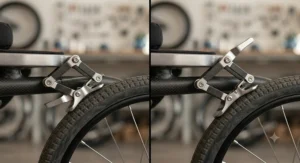
The KOCKSHION 210° Curved Brake Extenders take a different approach: rather than replacing the lock mechanism itself, they extend the existing lever’s reach using curved iron rods finished with black caps, sized around 21.5 x 2.5 x 2.2cm per extender.
The curve is the interesting bit here. A straight extension only adds length; a 210-degree curve changes the angle of approach too, which in practice means less wrist rotation to engage the brake — useful if arthritis or reduced dexterity makes twisting motions painful. This is squarely an accessibility upgrade rather than a repair part, so it’s worth pairing with the honest caveat that it only helps if your underlying lock mechanism is still functioning; it extends reach, it doesn’t fix a worn clamp.
Because this is a widely sold generic accessory rather than a branded medical device, granular UK review sentiment is thin. What can be said honestly is that iron-rod extenders in this style are a well-established DIY accessibility fix used across several similar listings, which suggests the concept itself is sound even where individual seller reviews are sparse.
Pros:
- ✅ Curved geometry reduces wrist rotation needed
- ✅ Iron construction built for repeated daily use
- ✅ No-tool-required design cuts fitting time
Cons:
- ❌ Extends reach only, doesn’t replace a worn lock
- ❌ Curve angle may not suit every seating position
At under £15, it’s an inexpensive way to test whether reach — rather than grip strength — is your actual barrier to using the brake confidently.
3. SEWOART Twin-Pair Extension Handles — best value multi-pack for spares
The SEWOART Twin-Pair Extension Handles pack includes two full pairs (four extenders total) of rubber-finished brake handle covers, marketed as compatible with Drive-style wheelchairs and similar manual chairs.
Buying two pairs at once changes the calculation from “replace one broken part” to “keep a spare on hand,” which matters more than it sounds. Wheel lock accessories are exactly the kind of small component that goes missing or degrades quietly, and having a spare pair already in a drawer means a five-minute fix instead of a week waiting for a reorder. The rubber build is aimed at improving grip friction against bare metal handles, which the honest read is: this helps hand contact and comfort, but it won’t strengthen a mechanically weak lock.
As with the other generic accessory listings here, dedicated UK review volume is modest, so treat compatibility claims as a starting point and check your handle diameter against the listing photos before ordering.
Pros:
- ✅ Two pairs included — built-in spare set
- ✅ Rubber grip improves hand contact and comfort
- ✅ Straightforward installation without specialist tools
Cons:
- ❌ Cover-only fix; doesn’t address mechanism wear
- ❌ Compatibility varies by original handle diameter
Sitting under £15 for four units, the cost-per-extender is genuinely competitive if you’re maintaining more than one wheelchair, such as in a small care setting or a household with two users.
4. SUPVOX Stainless Steel Handle Extenders — best corrosion-resistant metal build
The SUPVOX Stainless Steel Handle Extenders swap the usual plastic or composite build for stainless steel, at roughly 17 x 2.4 x 2.2cm per extender, finished in silver with a quick, tool-free fitting method.
Material choice matters more than most buyers assume here. Plastic and composite extenders are lighter, but they’re also the parts most likely to crack after repeated exposure to cold, damp UK weather — precisely the conditions a wheel lock needs to work in reliably. Stainless steel resists that kind of environmental fatigue far better, which is the practical reason to pick this over a cheaper composite equivalent if the chair spends real time outdoors, at bus stops, in car parks, or on the school run.
The trade-off is weight and a slightly more utilitarian look than the black rubber-covered alternatives on this list, but for anyone weighing genuine longevity over aesthetics, that’s a fair exchange. Independently verifiable review sentiment specific to this exact listing remains limited, which is worth stating plainly rather than papering over.
Pros:
- ✅ Stainless steel resists rust and weather damage
- ✅ Tool-free fitting speeds up installation
- ✅ More rigid than composite alternatives under load
Cons:
- ❌ Heavier than plastic or rubber equivalents
- ❌ Metal surface can feel cold in winter
At under £15, it undercuts most metal mobility parts on price while offering a material upgrade that composite extenders simply can’t match for outdoor durability.
5. Ipetboom Rubber Grip Extension Covers — best tool-free quick fit
The Ipetboom Rubber Grip Extension Covers are designed around speed and simplicity: a rubber-grip cover that slips over an existing brake lever to extend reach and improve hand contact, with no tools required for installation.
This is the accessory to reach for when the underlying lock mechanism works fine but the handle itself is slippery, too short, or uncomfortable to grip — a genuinely common complaint among wheelchair users with reduced hand strength, arthritis, or sensory sensitivity in the fingers. Because it’s a slip-on cover rather than a bolt-on part, fitting realistically takes under two minutes, which matters if you’re the kind of person who’d rather be out the door than mid-repair on a Tuesday morning.
The honest limitation is durability expectations: rubber covers of this style are a comfort and reach upgrade, not a structural reinforcement, so if your actual problem is a loose or worn clamp mechanism, this product won’t solve it. Verified UK review data for this specific listing is limited, so treat manufacturer compatibility claims as a guide rather than a guarantee and check your handle shape against the product photos first.
Pros:
- ✅ No tools needed — fits in minutes
- ✅ Rubber grip reduces hand slippage
- ✅ Low cost way to trial reach extension
Cons:
- ❌ Doesn’t reinforce a mechanically worn lock
- ❌ Rubber may perish faster than metal alternatives
At under £10, it’s one of the cheapest ways on this list to test whether a longer, grippier handle solves your day-to-day braking frustration before committing to a fuller replacement.
6. Mikinona 16-Piece Brake Tip Multipack — best bulk stock-up for carers and care homes
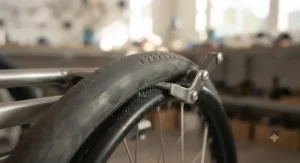
The Mikinona 16-Piece Brake Tip Multipack is built for volume: sixteen plastic brake tip replacement caps aimed at wheelchairs and walkers, marketed on broad cross-brand compatibility and reduced noise and vibration at the point of contact.
For an individual wheelchair user, sixteen units is almost certainly more than needed at once — but for a care home, day centre, or family managing mobility equipment for more than one relative, the maths flips. Buying in this volume brings the effective cost per unit down significantly compared with single-pair listings, and having spares on a shelf means a snapped or perished tip gets swapped in the same afternoon rather than triggering a fresh order and a wait.
The stated noise-and-vibration reduction is a genuine practical benefit rather than marketing filler: a loose-fitting brake tip that rattles against a metal frame is both irritating and, over months, a sign of accelerated wear at the contact point. As with the other multipacks here, granular UK review sentiment specific to this listing is limited, so it’s worth confirming the tip diameter against your existing lever before bulk-ordering.
Pros:
- ✅ 16-piece pack suits multi-chair households or facilities
- ✅ Reduces rattle and vibration at the contact point
- ✅ Lower effective cost per unit at this volume
Cons:
- ❌ Bulk pack size unnecessary for single-chair households
- ❌ Fit still needs checking against original lever diameter
In the £10-£20 range depending on current listing price, the per-unit economics make this one of the better long-term value picks for anyone responsible for more than one wheelchair.
7. FRCOLOR 12-Piece Lever Cover Set — best budget bulk pack with verified UK feedback
The FRCOLOR 12-Piece Lever Cover Set rounds out the list with twelve brake handle covers aimed at Drive-style and similarly specced manual wheelchairs, and it’s notable for being one of the few products here with an actual, checkable UK customer review attached to the listing at the time of research.
That review, left by a UK buyer, described the covers as well made from thick material that fits securely while remaining flexible enough for an easy, snug fit — genuinely useful, verifiable feedback rather than manufacturer copy. The same reviewer did flag that buying the larger twelve-pack worked out more expensive per unit than a smaller four-pack from the same range, which is a fair, specific point worth passing on rather than glossing over: more isn’t always cheaper per piece, so it’s worth comparing the price-per-unit across pack sizes before assuming bulk automatically wins.
Functionally, this sits in the same category as the Ipetboom and SEWOART covers above — a comfort and grip upgrade for an already-working lock, not a structural fix — but the twelve-unit count makes it a sensible stock-up choice for anyone maintaining several chairs or simply wanting years of spares in a drawer.
Pros:
- ✅ Genuine, verifiable UK customer feedback on fit
- ✅ Thick, durable material with flexible, secure grip
- ✅ Twelve-piece count covers years of replacements
Cons:
- ❌ Per-unit cost can exceed smaller pack sizes
- ❌ Cover-only; doesn’t reinforce mechanism wear
At under £15 for the full set, it’s a reasonable buy provided you actually need that many units — check the smaller pack pricing first if you only need one or two replacements.
Top 7 Products: Specs & Value Comparison
| Product | Material | Pack Size | Best For | Price Range |
|---|---|---|---|---|
| FRCOLOR Heavy Duty Wheel Lock Assembly | Iron/plastic | 1 pair | Full mechanism replacement | £15-£25 |
| KOCKSHION 210° Curved Brake Extenders | Iron | 2 pieces | Limited reach or dexterity | Under £15 |
| SEWOART Twin-Pair Extension Handles | Rubber | 2 pairs | Spare-stocking households | Under £15 |
| SUPVOX Stainless Steel Handle Extenders | Stainless steel | 2 pieces | Outdoor, damp conditions | Under £15 |
| Ipetboom Rubber Grip Extension Covers | Rubber | 1 set | Quick comfort upgrade | Under £10 |
| Mikinona 16-Piece Brake Tip Multipack | Plastic | 16 pieces | Care homes, multiple chairs | £10-£20 |
| FRCOLOR 12-Piece Lever Cover Set | Plastic/rubber | 12 pieces | Bulk stock-up, verified fit | Under £15 |
Reading across this table, the split between mechanism replacements and handle accessories is the decision that matters most, not the brand name. If your existing lock clamps firmly but the handle is uncomfortable or hard to reach, any of the extension or cover products will likely solve the problem for a fraction of the cost of a full assembly like the FRCOLOR Heavy Duty Wheel Lock Assembly. If the clamp itself has failed — meaning the wheel still rolls when the lever is engaged — no amount of handle upgrade will fix that, and a full replacement or a professional assessment is the honest next step.
✨ Ready to Compare Real-Time Pricing?
🔍 Take your wheelchair setup to the next level with these carefully checked options. Click through to check current availability and pricing on Amazon before your existing lock gets any more worn — a five-minute check now beats a stranded moment on a slope later.
Practical Usage Guide: Fitting and Maintaining Your Wheel Locks
Getting a new wheel lock or extension out of the box is the easy part. Fitting it correctly, and then keeping it working, is where most of the long-term value actually comes from — and it’s the part Amazon listings rarely cover in any depth.
Start by measuring your existing tubing diameter before you order anything; most manual wheelchairs use either 7/8-inch or 1-inch frame tubing, and mismatched clamps are the single biggest cause of returns in this category. Once the part arrives, fit it with the castors pointing forward, since a rearward-facing castor position can make the lock feel like it’s slipping when it’s actually the wheel geometry working against you. Tighten bolt-on assemblies like the FRCOLOR Heavy Duty Wheel Lock Assembly enough to eliminate play, but avoid overtightening onto composite tubing, which can crack under excessive clamp pressure over time.
For the first 30 days, the most common mistake is assuming a lock is faulty when it’s actually just misaligned — a lock positioned even a centimetre too far from the tyre can lose most of its clamping force. Check the contact point weekly at first, and re-tighten fixings after the initial settling-in period, since new fittings can loosen slightly as components bed in. A light monthly wipe-down of the mechanism, avoiding heavy grease near rubber grips such as those on the Ipetboom Rubber Grip Extension Covers, keeps dirt from building up around the pivot point without attracting more grime the way oil-based lubricants can.

Real-World Scenarios: Matching Wheel Locks to Your Situation
Different living situations call for genuinely different priorities, so here’s how three common profiles map onto the products above.
The daily commuter with reduced grip strength, using their chair for shopping trips and appointments several times a week, gets the most from a longer-reach, curved solution — the KOCKSHION 210° Curved Brake Extenders reduce the wrist rotation needed to engage the brake, which matters more than raw material toughness for someone prioritising ease of use over outdoor ruggedness.
The family managing equipment for an elderly relative who spends most time outdoors, at the allotment or on regular walks, is better served by weather resistance than by comfort extras — the SUPVOX Stainless Steel Handle Extenders hold up to damp and cold far better than plastic equivalents, reducing the odds of a mid-winter snap.
The care home or multi-user household managing several wheelchairs at once benefits most from bulk economics and proven fit — the Mikinona 16-Piece Brake Tip Multipack or the FRCOLOR 12-Piece Lever Cover Set both bring the cost per replacement down while keeping spares on hand, which matters when downtime on any single chair has knock-on effects for staff and residents alike.
How to Choose Wheelchair Wheel Locks
What is a wheelchair wheel lock? A wheelchair wheel lock, sometimes called a parking brake, is a lever-operated clamp mounted on the wheelchair frame that presses against the tyre to stop the wheel rotating while the chair is stationary. It is designed purely to hold the chair still, not to slow or stop it while moving.
Choosing the right one comes down to a handful of practical checks rather than guesswork:
- Measure your tubing diameter first. Most manual chairs use 7/8-inch or 1-inch frame tubing, and this single measurement rules out most incompatible listings before you spend a penny.
- Decide whether you need a mechanism or an accessory. A worn clamp needs full replacement, like the FRCOLOR Heavy Duty Wheel Lock Assembly; a working but uncomfortable handle just needs an extension or cover.
- Weigh material against environment. Outdoor, all-weather use favours metal builds such as the SUPVOX Stainless Steel Handle Extenders; indoor or occasional use can comfortably use rubber or composite parts.
- Factor in hand strength and reach. Curved or extended handles, like those on the KOCKSHION 210° Curved Brake Extenders, reduce the physical effort needed to engage the lock reliably.
- Check real review evidence where it exists. Genuine, verifiable feedback — such as the UK review attached to the FRCOLOR 12-Piece Lever Cover Set — is worth more than a high star average with no visible detail behind it.
- Buy spares if you’re responsible for more than one chair. Multipacks bring the cost per unit down meaningfully for carers and households managing multiple wheelchairs.
- Never treat wheel locks as a substitute for careful practice on slopes. According to NHS Wales’ wheelchair user safety guidance, wheel locks are intended purely as a parking brake and should never be relied on to slow or stop a moving wheelchair.
Universal Wheelchair Wheel Locks: What “Universal” Really Means
The word “universal” appears on almost every listing in this category, and it’s worth being honest about what it actually promises: broad compatibility with common tubing sizes and mounting styles, not a guaranteed fit for every wheelchair ever made. Products like the SEWOART Twin-Pair Extension Handles and the Mikinona 16-Piece Brake Tip Multipack are described as universal because they’re built to fit a range of standard diameters used across several manufacturers, not because they’ve been tested against every model on the market.
In practice, “universal” fit claims hold up well for standard manual wheelchairs from mainstream brands using conventional round tubing, and hold up far less reliably for bariatric chairs, paediatric models, or older wheelchairs with non-standard mounting brackets. What most buyers overlook here is that the accessory category — covers and extenders — is genuinely far more universal than the full mechanism category, simply because a rubber sleeve or a curved rod has more forgiving tolerances than a rigid bolt-on clamp does. If your chair falls outside the standard range, a message to the seller with your exact tubing measurement before ordering is worth the two minutes it takes.

Parking Brake Mechanisms Explained
Every wheelchair wheel lock on this list works on the same basic principle regardless of price or brand: a lever moves a clamping surface against the tyre with enough friction to hold the wheel still. Where they differ is in how that force is generated and applied, and that difference matters more than most spec sheets let on.
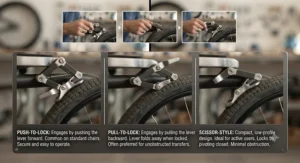
Scissor-style mechanisms, common on lighter-weight and sports chairs, use a pivoting arm that presses a rubber or composite pad directly onto the tyre; they’re typically lighter but can lose some clamping force as tyre pressure drops. Bolt-on, side-mounted assemblies like the FRCOLOR Heavy Duty Wheel Lock Assembly use a more rigid clamping action anchored directly to the frame tubing, which tends to hold its adjustment for longer but is heavier and less forgiving of frame flex. Extension-based accessories don’t change the mechanism at all — they simply lengthen or reshape the lever arm, which is why products like the KOCKSHION 210° Curved Brake Extenders are sold as add-ons rather than replacements.
The practical takeaway: if your brake feels weak, check tyre pressure before assuming the mechanism has failed, since underinflated tyres are one of the most common — and cheapest to fix — causes of a “loose” parking brake.
Wheelchair Immobilisation: Safety Beyond the Brake Lever
Wheel locks are one part of a wider immobilisation picture, and treating them as the only safeguard is a genuinely common mistake. UK government guidance on assistive technology safety notes that manufacturers and regulators track recurring device issues — including wheel and mechanism faults — through formal safety alert systems precisely because component failures on mobility equipment can have serious consequences; you can read more in GOV.UK’s guidance on assistive technology safety.
Full immobilisation, in practice, means more than one lever engaged correctly: both wheel locks applied evenly, castors positioned forward rather than swivelled, and the chair parked on level ground wherever possible. On a slope, even a well-maintained lock like the FRCOLOR Heavy Duty Wheel Lock Assembly is working against gravity in a way it isn’t designed for long-term, so additional care — such as chocking a wheel or avoiding unnecessary stops on an incline — remains sensible regardless of how new the brake hardware is.
Retrofit Compatibility: Checking Your Chair Before You Buy
Retrofitting a new wheel lock or extension onto an existing wheelchair is usually straightforward, but compatibility problems are the most common reason these products get returned. The core issue is almost always tubing diameter and mounting style rather than product quality — a well-made part simply won’t clamp correctly onto tubing it wasn’t sized for.
Before ordering, measure your frame tubing with a tape measure or callipers rather than estimating by eye, and compare that figure against the listed compatibility range for products such as the SUPVOX Stainless Steel Handle Extenders or the FRCOLOR Heavy Duty Wheel Lock Assembly. Photograph your existing lock’s mounting bracket if you’re at all unsure, and don’t hesitate to message the seller directly with that photo attached — it’s a far more reliable compatibility check than relying on generic “fits most wheelchairs” wording alone. For older or specialist chairs, particularly those supplied through an NHS wheelchair service, it’s worth checking with your local service before retrofitting third-party parts, since some contracts specify approved repair suppliers.
Common Mistakes When Buying Wheelchair Wheel Locks
The most frequent error is buying an accessory when a full mechanism replacement is actually needed — a comfort cover like the Ipetboom Rubber Grip Extension Covers will not fix a clamp that no longer grips the tyre, however comfortable the new handle feels. The second most common mistake is skipping the tubing measurement step entirely and relying on a product photo that looks roughly right; this is precisely why “universal” listings generate so many compatibility questions in their Q&A sections.
A third mistake, less obvious but genuinely costly over time, is buying single units when a multipack would have worked out cheaper per piece and left a spare on hand — as the verified UK review on the FRCOLOR 12-Piece Lever Cover Set pointed out, more isn’t automatically better value, but running out of spares at an inconvenient moment carries its own cost too. Finally, plenty of buyers overtighten bolt-on clamps in an attempt to compensate for a poor fit, which risks cracking composite tubing rather than solving the underlying compatibility problem.
Wheel Locks vs Anti-Rollback Devices
| Feature | Standard Wheel Locks | Anti-Rollback Devices |
|---|---|---|
| Primary purpose | Full immobilisation while stationary | Prevents backward roll on inclines while moving |
| Typical use case | Parking, transfers, rest stops | Ramps, slopes during propulsion |
| Products in this list | FRCOLOR Heavy Duty Wheel Lock Assembly, extenders | Not covered — separate accessory category |
| Engagement | Manual lever, on/off | Often automatic ratchet mechanism |
| Best For | Everyday stationary safety | Users regularly navigating ramps |
Standard wheel locks and anti-rollback devices solve different problems, and confusing the two is a genuine safety risk rather than a minor labelling issue. A wheel lock like the FRCOLOR Heavy Duty Wheel Lock Assembly is built to hold a stationary chair still; it isn’t designed to be engaged while the chair is moving, and doing so can cause a sudden, uncontrolled stop. Anti-rollback devices, by contrast, allow forward motion while preventing backward slide on an incline, which makes them a complementary accessory for ramp-heavy environments rather than a substitute for a working parking brake.
Long-Term Cost & Maintenance
Total cost of ownership in this category is refreshingly low compared with most mobility equipment, but it isn’t zero, and treating wheel locks as a “buy once, forget forever” purchase is where the real long-term cost creeps in. A single full assembly like the FRCOLOR Heavy Duty Wheel Lock Assembly, priced in the £15-£25 range, will typically outlast several cheaper accessory purchases if the underlying mechanism was the actual point of failure, making it better value over a two-to-three-year horizon despite the higher upfront cost.
Accessory products tell a different story: rubber covers and extenders such as the SEWOART Twin-Pair Extension Handles are inexpensive individually, but rubber does degrade with UV and cold exposure over time, so budgeting for a replacement every twelve to eighteen months of regular outdoor use is realistic rather than pessimistic. Buying in bulk, as with the Mikinona 16-Piece Brake Tip Multipack, effectively pre-pays for several of those replacement cycles at once, which is where the genuine long-term saving lies for anyone maintaining equipment on an ongoing basis rather than making a single one-off purchase.
Features That Actually Matter (And Those That Don’t)
Tubing compatibility, material durability for your specific environment, and genuine review evidence matter far more than marketing language like “premium” or “heavy-duty” on their own. A stainless steel build, as used on the SUPVOX Stainless Steel Handle Extenders, is a feature that actually changes real-world performance in damp UK conditions; a claim of “military-grade” materials on a plastic component, seen occasionally across this category, generally isn’t backed by any testing standard and shouldn’t carry weight in a buying decision.
Colour options and cosmetic finish, by contrast, genuinely don’t matter for function, however often they’re highlighted in listing copy — a black handle grips no better than a silver one. Curved geometry, as seen on the KOCKSHION 210° Curved Brake Extenders, is a feature worth taking seriously because it changes the physical effort required to use the product, which is a real accessibility factor rather than a styling choice.
Safety, Regulations & Compliance Guide
Wheelchair components sold in the UK, including wheel locks and brake accessories, fall under general product safety expectations, and serious device issues are tracked through the Medicines and Healthcare products Regulatory Agency’s alert system. You can check current alerts and safety notices directly via GOV.UK’s medical device alerts and recalls page before fitting any new mobility component, particularly if you’re supporting someone through an NHS-provided chair.
Beyond formal regulation, basic safe-use practice matters just as much: Leeds Teaching Hospitals NHS Trust’s wheelchair guidance is clear that wheelchair brakes are not designed to withstand the forces involved in vehicle transport, meaning wheel locks such as the FRCOLOR Heavy Duty Wheel Lock Assembly should never be relied upon as a restraint system in a moving vehicle — a wheelchair being transported needs proper tie-down restraints regardless of how well its parking brake performs.

FAQ
❓ Are wheelchair wheel locks universal?
❓ Can I fit wheelchair wheel locks myself?
❓ Why has my wheelchair brake stopped gripping?
❓ How often should wheelchair wheel locks be replaced?
❓ Can wheel locks stop a moving wheelchair?
Conclusion
Wheelchair wheel locks aren’t a glamorous purchase, but getting them right is one of the more meaningful safety decisions a wheelchair user or carer makes. The honest picture from what’s actually listed on Amazon UK right now is that this category splits neatly into full mechanism replacements — like the FRCOLOR Heavy Duty Wheel Lock Assembly — and comfort or reach accessories, from the curved KOCKSHION 210° Curved Brake Extenders to the bulk-friendly Mikinona 16-Piece Brake Tip Multipack and FRCOLOR 12-Piece Lever Cover Set. Knowing which category actually solves your problem, checking tubing compatibility properly, and treating genuine review evidence like the feedback on the FRCOLOR 12-Piece Lever Cover Set as more valuable than star ratings alone will save both money and frustration.
None of these products are a substitute for proper practice on slopes, professional assessment if your existing lock has genuinely failed, or the basic rule that wheel locks are for parking, not stopping. Get the fit right, maintain it properly, and it’s one part of the chair you genuinely shouldn’t need to think about again for years.
Recommended for You
- 7 Best Anti-Tippers for Outdoor Wheelchair Use in 2026 (UK)
- Anti-Tip Wheelchair Kit Under £30: 7 Best Value Picks 2026
- Rear Anti-Tip Bar for Manual Wheelchair: 7 Best Picks 2026
Disclaimer: This article contains affiliate links. As an Amazon Associate, I earn from qualifying purchases. If you purchase products through these links, we may earn a small commission at no additional cost to you.
✨ Found this helpful? Share it with your friends! 💬🤗
