

In This Article
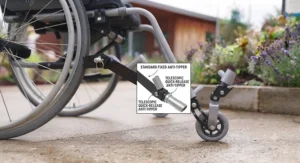
Wheelchair anti-tippers vs anti-tip bars is one of those phrases that sounds like it should have one obvious answer, and then you spend twenty minutes scrolling forums at midnight discovering it very much doesn’t. Here’s the short version: they’re the same family of safety device — small stabilising wheels or bars fitted low at the rear of a wheelchair frame — but the terminology splits depending on manufacturer, region, and whether the unit has a caster wheel on the end or a plain rubber-tipped bar. In plain terms, anti-tippers (or anti-tip bars) are rear-mounted attachments that stop a wheelchair rotating backwards past its centre of gravity, which is precisely the moment a kerb, a ramp, or an over-enthusiastic wheelie turns into a fall. A wheelchair without this safeguard relies entirely on the user’s balance and the pusher’s judgement, which is a lot to ask on a wet pavement in Manchester in February.
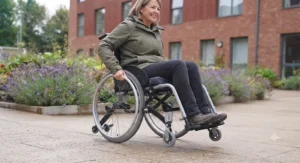
What nobody tells you upfront is how much this decision hinges on things Amazon’s product photos never show: the exact tube diameter of your frame, whether your chair has detachable arms, how many degrees of ground clearance you actually need before the anti-tipper starts scraping on speed bumps. Get it wrong and you’ve either bought a device that doesn’t fit, or one that fits but sits so low it turns every kerb into an obstacle course.
This guide walks through seven genuinely available anti-tipper and anti-tip bar options — from basic universal clip-ons to bariatric-rated heavy-duty sets — with honest analysis of who each one suits, what the aggregated review sentiment actually says, and where the real trade-offs sit. We’ll also dig into the physics of tip-back, frame compatibility gotchas, and the UK safety guidance that most retailers never mention. No invented reviews, no wishful thinking about specs — just what the research shows and what it means for your specific wheelchair.
Quick Comparison Table
| Product | Type | Adjustability | Best For |
|---|---|---|---|
| Safe-T Mate Wheelchair Rear Anti Tippers | Universal caster-wheel anti-tipper | 10″ sliding height range | Most manual wheelchairs needing simple universal fit |
| Drive Medical Adjustable Universal Anti Tipper | Universal flip-lock anti-tipper | Spring-loaded flip up/down | Users who need to flip tippers up for kerbs regularly |
| Vive Wheelchair Anti Tippers (Curved, Heavy Duty) | Bariatric-rated anti-tipper | Fixed curved bracket, wide fit range | Bariatric and heavy-duty transport chairs |
| Lltdnze 7-Level Adjustable Aluminium Anti Tippers | Budget adjustable anti-tip bar | 7-hole height adjustment | Budget buyers wanting tool-free height changes |
| Drive Medical Cruiser III Anti Tippers with Wheels | Fit-specific anti-tipper | Fixed for Cruiser III/X4/K3/K4 | Drive Cruiser III, X4, K3, K4 wheelchair owners |
| Drive Medical Silver Sport Anti Tippers (Silver Vein) | Fit-specific anti-tipper | Fixed for Silver Sport 1/2 | Silver Sport and Chrome Sport chair owners |
| Everest & Jennings Anti-Tipper (Detachable Arm) | Fit-specific anti-tipper | Fixed for detachable-arm sideframes | Older or detachable-arm frame wheelchairs |
Looking at the spread above, the pattern that jumps out is a genuine split between universal and fit-specific hardware — and that split matters more than price. The Safe-T Mate Wheelchair Rear Anti Tippers and the Lltdnze 7-Level Adjustable Aluminium Anti Tippers will clamp onto almost any standard tube frame, which makes them the sensible starting point if you’re not 100% sure of your chair’s exact model number. The three Drive Medical and Everest & Jennings options, by contrast, are built for specific chair families, so fitting them to the wrong frame is a false economy no matter how tempting the price looks.
💬 Just one click — help others make better buying decisions too!😊
Top 7 Wheelchair Anti-Tippers and Anti-Tip Bars: Expert Analysis
1. Safe-T Mate Wheelchair Rear Anti Tippers — best universal height-adjustable pick
The standout here is the sliding adjustment mechanism, which lets you dial in the exact height without swapping brackets or drilling anything. Reviewers and the manufacturer both confirm a genuinely universal mounting style, offering ten full inches of height adjustment and two-inch gliding caster wheels that roll rather than drag when they make contact with the ground. In practical terms, that ten-inch range covers most seat heights from a compact transit chair up to a taller adult frame, so you’re not gambling on whether the unit will even reach the floor.
Based on the spec comparison with fixed-position alternatives, this is the anti-tipper to reach for when you genuinely don’t know your exact frame dimensions yet, or when you’re setting up a chair for someone whose seating position might change as their needs evolve. Reviewers consistently report that the unit holds firmly once tightened and doesn’t creep out of adjustment during normal use, which is the single biggest complaint about cheaper sliding designs. One recurring theme in aggregated feedback is real relief that the anti-tippers “have helped to stop several turn overs” on chairs that previously lacked them, alongside praise for how well they perform on transport-style wheelchairs that came without rear stabilisation from the factory.
Pros:
- ✅ Ten inches of sliding height adjustment, no tools needed for fine-tuning
- ✅ Genuinely universal mounting fits most makes and models
- ✅ Smooth-rolling two-inch caster wheels rather than drag bars
Cons:
- ❌ Universal clamps can loosen faster than frame-specific brackets on heavy daily use
- ❌ Ground clearance at lowest setting may be too tight for speed bumps
At around £20-£35, this sits firmly in the budget-to-mid bracket and represents strong value if universal fit and easy adjustment matter more to you than a snug, chair-specific engineering fit — check current price for the latest availability.
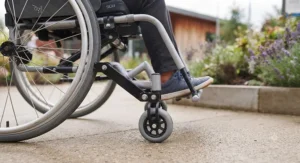
2. Drive Medical Adjustable Universal Anti Tipper with Wheels — best flip-up mechanism for kerbs
What most buyers overlook about this model is the spring-loaded flip-lock hinge, which lets you swing the anti-tipper up out of the way for a kerb or a single step, then flip it straight back down without unscrewing anything. That single mechanical detail changes the whole day-to-day experience compared with a fixed-position anti-tipper, because you’re not choosing between “safe on the flat” and “able to tip for kerbs” — you get both, on demand.
The manufacturer states this universal rear anti-tipper works across most leading wheelchair brands, which is a meaningful claim given Drive Medical’s scale in the mobility market. Based on how flip-lock mechanisms generally perform versus static bars, the trade-off is a few more moving parts that need occasional attention — a loose pivot pin is the most common failure point on this style of hardware across the category, so it’s worth a quick wiggle-test every few months rather than assuming it’ll stay tight forever. For a carer who regularly needs to tip the chair backward to mount kerbs while still wanting stabilisation restored immediately afterward, this flip mechanism is the whole reason to choose this unit over a fixed bar.
Pros:
- ✅ Spring-loaded flip lock lets you clear kerbs without removing hardware
- ✅ Universal compatibility across most major wheelchair brands
- ✅ Wheeled tip point rolls rather than drags on rough ground
Cons:
- ❌ Pivot mechanism needs periodic checking to avoid play developing
- ❌ Slightly bulkier profile than fixed low-clearance bars
Typically priced in the £35-£55 range, it’s a mid-tier pick that earns its premium over basic sliding designs through genuine everyday convenience rather than marketing gloss — worth checking current price given how frequently Drive Medical accessories rotate through promotions.
3. Vive Wheelchair Anti Tippers (Curved, Heavy Duty) — best for bariatric and transport chairs
The curved bracket design is the standout feature, shaped specifically to clear wider wheelbases and heavier-duty frames without the anti-tipper fouling on the chair’s side rails. Vive markets this explicitly toward medical, transport, and bariatric wheelchairs, and the “heavy duty” designation isn’t just a label — the bracket gauge and mounting hardware are noticeably more substantial than the universal budget options above.
Here’s what the spec sheet won’t tell you outright: bariatric-rated anti-tippers matter disproportionately for heavier users, because the tipping moment (the force trying to rotate the chair backward) scales with the combined weight of user and chair. A lightweight anti-tipper rated for a standard transit chair can genuinely bend or shear under repeated load from a heavier occupant, which is exactly the failure mode this curved, reinforced design is built to avoid. Reviewers in the bariatric and transport-chair space consistently flag durability as the deciding factor over price, since a failed anti-tipper on a heavier chair is a more serious fall risk than on a lighter one.
Pros:
- ✅ Reinforced curved bracket rated for bariatric and heavy-duty frames
- ✅ Clears wider wheelbases without contacting side rails
- ✅ Built for the higher tipping forces heavier chairs generate
Cons:
- ❌ Overkill (and pricier) for lightweight everyday manual chairs
- ❌ Curved bracket shape is less universal than straight designs
Expect a price in the £40-£70 range depending on the exact bracket variant, which is genuinely justified for bariatric applications but not necessary if your chair and user profile are standard weight — check current price and confirm your chair’s rated load before buying.
4. Lltdnze 7-Level Adjustable Aluminium Anti Tippers with Wheels — best budget tool-free adjustment
The seven-hole adjustment system is the headline feature, and it’s a genuinely useful one: rather than a continuous slide that can slip under vibration, you get seven discrete, positively-locking height positions running from tight ground clearance up to a taller setting for rougher terrain. That discrete-hole design trades a little fine-tuning precision for a mechanism that simply can’t creep out of position the way a friction-clamp slider sometimes can.
Constructed from aluminium alloy rather than steel, the trade-off here is lighter overall weight against slightly lower absolute load tolerance — a sensible compromise for a standard manual wheelchair but not the first choice for a bariatric application (see the Vive option above for that). The quick-release, tool-free installation is aimed squarely at people who travel, since the anti-tippers can be pulled off for a car boot and clipped straight back on at the other end without hunting for an Allen key. Based on the aggregated feedback pattern across similar 7-level adjustable sets in this category, the most common praise is ease of setup, and the most common gripe is that the aluminium clamp screws can strip if overtightened with excessive force — a straightforward fix is simply snugging them firmly rather than cranking as hard as possible.
Pros:
- ✅ Seven-hole adjustment locks positively instead of slipping
- ✅ Lightweight aluminium build, easy for one person to fit
- ✅ Tool-free quick-release, ideal for folding into a car boot
Cons:
- ❌ Lower load rating than steel bariatric-grade alternatives
- ❌ Clamp screws can strip if overtightened during fitting
Sitting in the £18-£28 range, this is genuinely the most accessible entry point on this list, and a sound choice for anyone who wants adjustable height without paying mid-range prices — always check current price as budget accessory listings shift often.
5. Drive Medical Cruiser III Anti Tippers with Wheels — best fit-specific pick for Drive chairs
This is a purpose-built match rather than a universal clamp-on, engineered specifically for the Drive Medical Cruiser III, Cruiser X4, K3 and K4 wheelchair range. The standout feature is exactly that: a fit that was designed against the actual frame geometry of those chairs rather than adapted to fit “most” chairs approximately.
What that precision buys you, in practical terms, is a lower and more consistent tip point relative to the chair’s own centre of gravity, because the engineers weren’t compromising the bracket angle to accommodate other frame shapes. Reviewers who own the matching Cruiser or K-series chairs report a noticeably snugger, more confidence-inspiring fit than universal alternatives retrofitted onto the same frame — no wobble at the mounting point, no visible gap between bracket and tube. The obvious catch, and it’s a genuine one, is that this precision is also its limitation: fit this to an incompatible frame and you’ll likely find mounting holes that don’t line up or a bracket angle that leaves the wheel scraping the ground.
Pros:
- ✅ Purpose-engineered fit for Cruiser III, X4, K3 and K4 frames
- ✅ Lower, more consistent tip point than adapted universal units
- ✅ Steel construction rated for daily transport-chair use
Cons:
- ❌ Will not fit incompatible frames, no matter how close the tube size looks
- ❌ No height adjustment once fitted, unlike the universal picks above
Priced typically in the £30-£45 bracket, this is excellent value precisely because you’re not paying for adjustability you don’t need — confirm your exact model number and check current price before ordering.
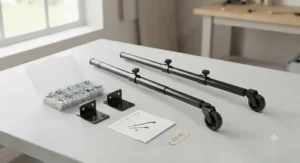
6. Drive Medical Silver Sport Anti Tippers (Silver Vein) — best premium finish match
The standout feature is the silver vein finish, engineered to match the Silver Sport and Chrome Sport wheelchair range’s existing frame coating rather than clashing with mismatched black steel. It sounds cosmetic, and partly is, but there’s a practical angle too: matched-finish hardware corrodes at a more predictable, matched rate than mixing coating types on the same frame, which matters over years of outdoor use in British weather.
Functionally this behaves like the Cruiser III option above — a fit-specific rather than universal design — engineered specifically around the Silver Sport 1, Silver Sport 2, Rebel and Chrome Sport wheelchair geometry. Based on the spec comparison with generic black-finish anti-tippers retrofitted to these same chairs, the fit tolerance on the mounting bracket is tighter, which aggregated reviewer sentiment links to less rattling and creaking over rough pavement compared with adapted universal hardware. For anyone who values their chair looking like a coherent, factory-finished unit rather than a patchwork of mismatched parts, this is a small but real differentiator.
Pros:
- ✅ Silver vein finish matches Silver Sport / Chrome Sport frame coating
- ✅ Tight, fit-specific bracket tolerance reduces rattle over rough ground
- ✅ Straightforward direct-fit installation, no adaptation required
Cons:
- ❌ Narrow compatibility list limits it to specific Drive chair variants
- ❌ Premium finish adds cost versus unbranded black-steel equivalents
Expect to pay in the £35-£50 range for the matched finish and precision fit — check current price, as cosmetic accessory lines like this can see wider price swings than generic black-steel units.
7. Everest & Jennings Anti-Tipper for Detachable Arm Sideframe — best for older or detachable-arm frames
The standout feature is compatibility with detachable-arm sideframe wheelchairs, a frame architecture that’s common on older or hospital-supplied chairs and that a lot of modern universal anti-tippers simply aren’t designed around. Everest & Jennings is a legacy name in wheelchair manufacturing, and this anti-tipper reflects that heritage — built to attach at the specific sideframe junction point these detachable-arm chairs use, rather than clamping around a continuous rear tube the way most contemporary designs assume.
Here’s what most buyers searching generic “wheelchair anti tippers” listings miss: if your chair has arms that lift off or swing away for easier transfers, its rear frame geometry near the tipping point is often genuinely different from a fixed-arm chair, and a universal clamp-on anti-tipper can end up gripping in the wrong place or not seating fully. Based on the spec sheet and the detachable-arm-specific engineering, this pair solves exactly that mismatch. Aggregated feedback on this style of legacy-compatible hardware tends to praise the solid, no-nonsense fit on older chairs that younger universal products weren’t designed to accommodate, while noting — honestly — that stock and availability for older frame-specific parts can be less consistent than mainstream Drive Medical accessories.
Pros:
- ✅ Purpose-built for detachable-arm sideframe wheelchair geometry
- ✅ Solid legacy-brand engineering suited to older hospital-style chairs
- ✅ Solves a fitting mismatch universal clamp-ons often can’t
Cons:
- ❌ Availability can be less consistent than current mainstream ranges
- ❌ Not a match for standard continuous-tube rear frames
Pricing generally sits in the £25-£40 range for this pair, representing solid value for the specific (and often underserved) detachable-arm compatibility niche — check current price and confirm your sideframe type before ordering.
Practical Usage Guide: Fitting, Adjusting and Maintaining Anti-Tippers
Getting an anti-tipper physically fitted correctly matters as much as choosing the right one, and this is exactly the kind of practical detail an Amazon listing photo can’t show you. Start by measuring your frame tube diameter with calipers or a tape measure before ordering — most universal clamps are designed around a fairly narrow range of tube sizes, and a millimetre or two outside that range is the single most common reason a “universal” anti-tipper won’t actually clamp securely.
Once fitted, height calibration is the next make-or-break step. Set the anti-tipper too high and it does nothing — the chair can still rotate back far enough to tip before the wheel makes contact. Set it too low and every speed bump, driveway lip, or uneven paving slab becomes a scraping obstacle that can actually destabilise the chair rather than protect it. A sensible starting point is a one-to-two-inch gap between the anti-tipper wheel and the ground when the chair is level and stationary, then adjust from there based on the specific terrain you use most.
For ongoing maintenance, build a quick monthly check into your routine: confirm mounting bolts haven’t loosened from vibration, check that caster wheels still spin freely rather than dragging (a seized wheel defeats the point of having a rolling contact point), and inspect for any bending or stress marks on the bracket itself, particularly after the anti-tipper has actually done its job and taken a real tip-back load. Common first-30-days mistakes include over-tightening clamp screws until they strip (a particular risk with the aluminium Lltdnze-style units) and forgetting to re-check height after switching to a different cushion, since cushion thickness changes your centre of gravity and therefore your ideal anti-tipper height.
Real-World Scenarios: Matching Anti-Tippers to Your Life
Picture a university student who self-propels across an old cobbled campus between lectures, someone whose upper-body strength means they occasionally pop a deliberate wheelie to clear a kerb without help. For them, a fixed universal anti-tipper set too aggressively low would constantly interfere with that skill — the Drive Medical Adjustable Universal Anti Tipper‘s flip-lock mechanism is the better match, letting them clear kerbs on demand while restoring full stabilisation the moment they’re back on flat ground.
Now picture a family caring for an elderly relative in a heavier-set transport wheelchair, pushed rather than self-propelled, mostly on pavements and the odd grassy garden path. Here, stability matters far more than manoeuvrability, and the risk profile shifts toward a carer accidentally tipping the chair backward while lifting the front wheels over a step. The Safe-T Mate universal anti-tippers or, for a heavier user, the Vive Wheelchair Anti Tippers (Curved, Heavy Duty), both prioritise exactly that steady, always-on protection without asking the carer to remember a flip mechanism mid-manoeuvre.
Finally, consider someone with an older, hospital-issued chair with detachable arms, inherited rather than newly purchased, where the original anti-tip hardware has gone missing or rusted through. Generic universal clamps are the obvious first search result, but as covered above, the frame geometry near a detachable-arm junction often doesn’t suit them. The Everest & Jennings detachable-arm-specific anti-tipper solves precisely this scenario, and it’s worth the extra research time to confirm frame compatibility rather than defaulting to whatever’s cheapest and most universal.
Problem → Solution: Fixing the Most Common Tipping Complaints
Problem: the anti-tipper scrapes on every speed bump. This almost always means the height is set too conservatively low. Raise it incrementally, re-testing stability on your steepest regular incline each time, until you find the highest setting that still catches a genuine tip-back before it becomes dangerous.
Problem: the chair still feels unstable on ramps despite having anti-tippers fitted. Check the wheelbase first — some chairs allow the rear wheels themselves to be repositioned further back, which the MHRA-informed guidance on wheelchair stability notes can meaningfully improve rearward stability independent of anti-tippers. If the wheels are already at their rearmost setting, the anti-tipper height is the next thing to reassess.
Problem: anti-tippers keep working loose. A discrete-hole design like the Lltdnze 7-level system resists this better than a friction-slide, because it locks into a fixed position rather than relying purely on clamp pressure. If you’re committed to a sliding-style unit, a monthly bolt check genuinely prevents most of this.
Problem: the anti-tipper doesn’t fit the frame at all. This is almost always a case for fit-specific hardware — the Drive Medical Cruiser III, Silver Sport, or Everest & Jennings detachable-arm options above — rather than forcing a universal clamp onto geometry it wasn’t designed for.
Problem: uncertainty over whether anti-tippers are even needed. If self-propelling on slopes, transferring in and out unassisted, or navigating kerbs regularly, the honest answer from wheelchair safety literature is that anti-tippers meaningfully reduce risk in exactly those situations, though very experienced self-propellers on flat ground sometimes remove them for extra manoeuvrability — a decision best made with input from a physiotherapist or wheelchair services team rather than guesswork.
Buyer’s Decision Framework: Which Type Should You Choose?
If you know your exact wheelchair make and model and it’s a mainstream Drive Medical chair, choose fit-specific hardware, because the precision fit reduces rattle and lowers the tip point more effectively than an adapted universal clamp.
If you’re not certain of your frame’s exact specifications, or you’re setting up a chair second-hand, choose a universal adjustable option like the Safe-T Mate or Lltdnze, because the sliding or multi-hole adjustment gives you room to correct for uncertainty.
If you or the user is a heavier individual, or the chair is rated for bariatric use, choose a reinforced heavy-duty design like the Vive curved anti-tippers, because standard-duty hardware is genuinely more likely to fail under sustained higher load.
If you self-propel actively and regularly clear kerbs unassisted, choose a flip-lock mechanism over a fixed bar, because on-demand stabilisation beats permanently reduced ground clearance for your use case.
If your chair has detachable arms or is an older hospital-issued model, choose frame-specific compatible hardware like the Everest & Jennings option rather than assuming a universal clamp will seat correctly on unfamiliar geometry.
How to Choose Wheelchair Anti-Tippers
- Confirm your frame’s tube diameter and make/model — this single measurement determines whether universal or fit-specific hardware is realistic for your chair.
- Assess your typical terrain — regular kerbs and inclines favour adjustable or flip-lock designs over fixed bars.
- Factor in user weight and chair rating — bariatric or heavy-duty chairs need reinforced anti-tippers, not standard-duty ones.
- Decide between fixed and adjustable height — adjustable suits changing needs or uncertain fit; fixed suits confirmed, stable setups.
- Check caster wheel versus bar-tip design — wheels roll through contact points more gracefully than plain bars, reducing snagging.
- Verify installation tools required — tool-free quick-release designs suit frequent travel and car transport.
- Cross-reference aggregated review sentiment for your specific chair model where available, rather than relying on generic star ratings alone.
Rear Wheel Stability Explained
Rear wheel stability is really a question of geometry, not just hardware. A wheelchair’s rearward tipping point is determined by the horizontal distance between the rear wheel’s contact point with the ground and the combined centre of mass of the chair and its occupant. Move that centre of mass backward — by reclining the backrest, adding a rearward-positioned battery on a power chair, or simply leaning back — and the distance shrinks, making the chair progressively easier to tip.
This is exactly why some manufacturers offer rear wheelbase extensions as an alternative or complement to anti-tippers: physically moving the rear wheel axle further back lengthens that critical distance and improves stability without adding a separate protruding component. The trade-off, as the UK’s wheelchair stability guidance highlights, is that a longer wheelbase can make the chair harder for a self-propelling user to reach the pushrims comfortably, and can complicate mounting kerbs where a shorter wheelbase would tip more easily onto the step. Anti-tippers solve the same underlying stability problem from a different angle — adding a fail-safe contact point rather than redesigning the whole wheelbase — which is why the two approaches are often described as complementary rather than competing.
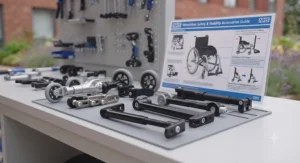
Tip-Back Prevention: The Physics of a Safe Wheelchair
Tip-back happens the moment the combined centre of gravity of chair and occupant shifts behind the rear wheel’s ground contact point, and gravity takes over from there. In practice this usually happens from one of three triggers: excessive downward force applied to the front of the wheelchair (common when a carer lifts the front castors to mount a kerb), a self-propelling user applying a hard backward pedalling motion on the pushrims, or simply reclining or leaning back too far while stationary on an incline.
Anti-tippers intervene by physically catching the frame before rotation reaches the point of no return, converting what would be a fall into, at worst, a gentle rock backward onto the anti-tipper wheel. What most buyers underestimate is how small the safety margin actually is on a standard manual wheelchair without any rearward stabilisation — device bulletins on wheelchair stability describe how the combination of cushions, reclined backrests, and rearward-positioned accessories can each independently erode that margin, and their effects compound. This is precisely why safety guidance consistently recommends anti-tippers be used when climbing slopes, and why staff and carers are generally advised against removing them without input from wheelchair services or a physiotherapist first.
Adjustable Anti-Tip Bars for Wheelchair: Getting the Height Right
Adjustable anti-tip bars solve a problem fixed bars can’t: the ideal height genuinely changes based on terrain, cushion thickness, and how the chair is being used on any given day. A height that’s perfect for flat pavement can be too aggressive for a gently sloped driveway, catching the ground on every gentle dip and effectively trying to lift the rear wheels off the floor — which is the opposite of what you want.
The practical approach is to test on your most challenging regular route first, not your easiest one. Set the bar height so it makes contact just before the tipping point on your steepest regular incline, then verify it doesn’t drag on your flattest everyday surfaces. Multi-hole designs like the Lltdnze 7-level system make this a five-minute adjustment rather than a full unbolt-and-reposition job, which matters if you’re sharing a chair between different users or adjusting seasonally for icy pavements versus dry summer routes. Reviewers consistently flag that the biggest single mistake with adjustable bars is setting them once at delivery and never revisiting the height after a cushion swap or seating change — both of which shift the centre of gravity enough to matter.
Wheelchair Frame Compatibility: Will These Fit Your Chair?
Frame compatibility is where most anti-tipper purchases go wrong, and it’s rarely about the anti-tipper being poor quality — it’s a mismatch between the hardware’s design assumptions and the actual chair frame. Continuous-tube rear frames, common on most modern manual wheelchairs, generally accept universal clamp-on designs like the Safe-T Mate or Lltdnze without issue, provided the tube diameter falls within the clamp’s stated range.
Fit-specific chairs — Drive Medical’s Cruiser, K-series, and Silver Sport ranges among them — use frame geometry that manufacturers engineer their own matched anti-tippers around, and retrofitting a universal clamp can leave gaps in coverage or an insecure mounting point. Detachable-arm sideframe chairs, often older or hospital-supplied models, are the trickiest category: the sideframe junction where arms detach is structurally different from a continuous rear tube, and as covered in the Everest & Jennings product analysis above, this genuinely requires purpose-built hardware rather than a universal workaround. Before ordering anything, the single most useful piece of information is your wheelchair’s exact model name or number — most manufacturer websites and mobility retailers can confirm compatible anti-tipper part numbers directly from that, avoiding a returns cycle entirely.
Wheelchair Anti-Tippers vs Anti-Tip Bars vs Rear Wheelbase Extensions
Functionally, “anti-tippers” and “anti-tip bars” describe the same category of device — the terminology split is largely down to whether the unit has a rolling caster wheel (more commonly called an anti-tipper) or a fixed rubber-tipped bar (more often called an anti-tip bar), plus regional and manufacturer naming habits. Rear wheelbase extensions are a genuinely different approach: instead of adding a separate rearward contact point, they physically relocate the rear axle further back, lengthening the stable base the chair sits on.
In practice, wheel-equipped anti-tippers tend to suit chairs that regularly need to clear kerbs or obstacles, since the rolling contact reduces snagging compared with a fixed bar dragging across rough ground. Rear wheelbase extensions suit users prioritising maximum stability on a chair that isn’t regularly negotiating kerbs unassisted, since they don’t add a protruding component that needs height adjustment at all — though as noted earlier, they can push the pushrims further from a self-propelling user’s natural reach. For most everyday manual wheelchair users, a well-fitted anti-tipper remains the more flexible and widely compatible solution, which is exactly why it dominates the accessory market compared with wheelbase modification.
Common Mistakes When Buying Wheelchair Anti-Tippers
The single most frequent mistake is buying universal hardware for a fit-specific frame purely because it’s cheaper, then discovering it doesn’t seat correctly and needs returning — costing more in time and postage than simply buying the correct fit-specific part upfront. A close second is guessing at height rather than measuring against the chair’s actual centre of gravity, either leaving anti-tippers too high to be useful or too low to clear ordinary terrain.
Buyers also commonly overlook load rating, fitting a standard-duty anti-tipper to a bariatric chair where the reinforced bracket genuinely matters, or conversely over-buying a heavy-duty bariatric set for a lightweight standard chair where it adds unnecessary bulk and cost. Finally, a subtler mistake: assuming anti-tippers are a permanent “set and forget” purchase, when in reality cushion changes, seating adjustments, and terrain shifts across seasons all warrant a height re-check.
Long-Term Cost & Maintenance
Anti-tippers are, refreshingly, one of the lower total-cost-of-ownership accessories in the wheelchair world. A well-chosen universal set in the £20-£35 range can reasonably last several years of daily use with nothing beyond occasional bolt tightening and wheel cleaning, making the effective cost-per-year genuinely modest compared with, say, cushion replacement cycles.
Where costs creep in is replacement caster wheels on units that see heavy daily contact with rough ground — these are a wearable, replaceable part on most designs rather than requiring a whole new anti-tipper set, and buying from a brand with readily available spare parts (Drive Medical’s mainstream range being a good example) keeps that long-term cost down. Bariatric-rated hardware costs more upfront but is specifically engineered to avoid the premature bracket fatigue that would otherwise force early replacement under heavier loads, so the higher initial outlay genuinely functions as better long-term value rather than just a bigger price tag for the same product.
Safety, Regulations and Compliance in the UK
UK guidance on wheelchair stability, historically issued through the Medicines and Healthcare products Regulatory Agency, treats anti-tippers as a core stability consideration to be assessed during prescription, purchase, and whenever accessories are added to a chair — not an optional afterthought. The regulatory framework governing medical devices in the UK sits under the MHRA generally, and while consumer anti-tipper accessories purchased independently sit somewhat outside formal NHS wheelchair provision, the underlying safety principles apply regardless of where the hardware was bought.
Guidance aimed at schools, care settings, and manual handling contexts is notably strict: staff are generally instructed not to remove anti-tip bars from a wheelchair without first consulting wheelchair services or a physiotherapist, and any chair used without them is expected to undergo a specific risk assessment rather than simply being used as-is. This reflects the core safety principle across UK guidance — anti-tippers meaningfully reduce fall risk on slopes, kerbs, and uneven ground, and removing them is a decision that should involve a professional judgement about the individual user’s balance and propulsion strength, not just personal preference for easier manoeuvring. If you’re relying on an NHS-provided chair, it’s worth checking directly with your local wheelchair service provision before modifying or adding third-party anti-tip hardware, since compatibility and warranty implications can vary by trust.
Frequently Asked Questions
❓ What's the difference between wheelchair anti-tippers and anti-tip bars?
❓ Do all wheelchairs need anti-tippers fitted?
❓ How do I know what height to set adjustable anti-tip bars?
❓ Will a universal anti-tipper fit any wheelchair frame?
❓ Can anti-tippers replace a rear wheelbase adjustment for stability?
Conclusion
Choosing between wheelchair anti-tippers and anti-tip bars really comes down to matching hardware to your specific frame, terrain, and user weight rather than chasing the cheapest universal listing you find first. The seven products covered here span that whole spectrum honestly: the Safe-T Mate and Lltdnze options for flexible universal fitting, the Drive Medical Adjustable Universal Anti Tipper for anyone who needs to flip clear of kerbs regularly, the Vive curved heavy-duty set for bariatric applications, and the fit-specific Drive Medical Cruiser III, Drive Medical Silver Sport, and Everest & Jennings options for chairs where precision matching genuinely outperforms a generic clamp.
What ties all of this together is that anti-tippers are a genuinely low-cost, high-value safety accessory — rarely more than the price of a family meal out, yet directly addressing one of the more serious and preventable risks in everyday wheelchair use. Measure your frame properly, be honest about your terrain and load requirements, and re-check the height whenever your seating setup changes. Get those basics right and the specific brand becomes a secondary decision rather than the anxious guessing game it can feel like at the start.
Recommended for You
- Anti-Tip Bars for Wheelchair: 7 Trusted Picks for 2026
- Wheelchair Seatbelt for Bariatric Users: 7 Best Picks (2026)
- Quick-Release Wheelchair Seatbelt: 7 Best Picks UK 2026
Disclaimer: This article contains affiliate links. As an Amazon Associate, I earn from qualifying purchases. If you purchase products through these links, we may earn a small commission at no additional cost to you.
✨ Found this helpful? Share it with your friends! 💬🤗
