In This Article
Elevating leg rests vs standard leg rests is a choice between two ideas of what your legs should do while you sit. Elevating designs lift the lower leg above seat level and cradle the calf. Standard designs park your feet on a fixed plate or low stool. One targets circulation and swelling, the other mostly handles posture and tidy transfers.

Your ankles keep a ledger. The NHS lists standing or sitting in the same position for too long as one of the commonest causes of oedema. Its first piece of self-help advice is to raise your legs on a chair or pillows when you can. That sounds simple until you try it. A dining chair is the wrong height and a cushion slides off. A footplate bolted at 90 degrees isn’t going to help an ankle that has puffed up like a bread roll by teatime.
“Leg rest” also means two different things on the UK market. For wheelchair users it’s the hanger-and-footplate assembly on the chair. For everyone else it’s a footstool, contoured leg rest, foam leg raiser or wedge pillow. This guide covers both, because the decision logic overlaps more than you’d think.
A note on honesty. I haven’t lived with these products and won’t pretend otherwise. Everything below comes from published specifications, specialist-retailer information, independent testing and the buyer feedback I could genuinely find. Where I couldn’t verify reviews, I say so. Prices are ranges only, so check current price before you buy.
Quick Comparison: Elevating Leg Rests vs Standard Leg Rests at a Glance
| Product | Type | Height / angle control | Price range | Best For |
|---|---|---|---|---|
| Aidapt Beaumont Leg Rest | Standard-style footstool | Height only | £35–£50 | Budget armchair use |
| Drive DeVilbiss Carisbrooke Static Adjustable Leg Rest | Adjustable static leg rest | Height and angle | £55–£70 | Everyday swelling routines |
| Drive DeVilbiss Shanklin Mobile Adjustable Leg Rest | Adjustable leg rest on castors | Height and angle | £65–£80 | Easy repositioning |
| Aidapt Adjustable Moulded Leg Rest | Contoured elevating leg rest | Height and tilt | £90–£120 | Contoured single-leg support |
| Aidapt Leg Raiser | Foam leg raiser | Fixed shape | £35–£55 | Lying down, heels free |
| KingPavonini Adjustable Leg Elevation Pillows | Layered foam elevation pillows | Height by layer | £35–£60 | Post-surgery recovery |
| Drive Swing-Away Elevating Legrests | Wheelchair elevating legrests (pair) | Elevating, swing-away | £60–£130 | Compatible Drive wheelchairs |
Ranges are indicative, drawn from specialist-retailer listings at the time of research. Amazon prices vary by seller.
Read the table by type before price. The Aidapt Beaumont Leg Rest is the only genuinely standard-style option here, while the Aidapt Adjustable Moulded Leg Rest and Drive Swing-Away Elevating Legrests are the most clearly elevating. The two Drive DeVilbiss stools sit in the middle, with enough adjustability to behave like either. If you only need your feet supported, the cheapest row wins. If swelling is the point, spend a little more for calf contouring and tilt.
💬 Just one click — help others make better buying decisions too!😊
Top 7 Elevating and Standard Leg Rests: Expert Analysis
I’ve ordered these from budget to premium. For each one I explain what the spec means in practice, who it suits and where it falls short. I’ve also included the genuine review themes I could find.
1. Aidapt Beaumont Leg Rest — simplest wipe-clean budget footstool
Hygiene is the headline. The Aidapt Beaumont Leg Rest, also sold under the VG818 code, has a padded, wipe-clean top with heat-sealed seams. Spills, creams and the odd dressing leak wipe away instead of soaking in.
It’s a two-part, height-adjustable stool. The leg assembly pushes into the padded top without tools, and the top is flat rather than contoured. Flat supports the whole calf evenly and lets you shuffle about. But it won’t cradle one leg, and the angle is essentially fixed. On paper it’s a standard-style rest with a useful height range, not an angle-adjustable one. Check the weight rating on the listing if you’re buying for a larger user.
It suits anyone who wants simple, sturdy lift for an armchair: post-operative rest, a relative with weeping legs, or a spare for the spare room. Buyers on a UK marketplace listing for this stool consistently describe it as sturdy yet light, easy to set to the right height and easy to wipe down. One mentions using it for an elderly father with a leaking leg ulcer.
Pros:
- ✅ Wipe-clean top suits hygiene-sensitive households
- ✅ Tool-free assembly and easy height changes
- ✅ Light yet sturdy, according to buyer reports
Cons:
- ❌ Flat top gives no calf contouring
- ❌ Angle is effectively fixed
Expect roughly the £35–£50 range. Verdict: the best entry point for getting feet up on a budget.
2. Drive DeVilbiss Carisbrooke Static Adjustable Leg Rest — height and angle on a fixed frame
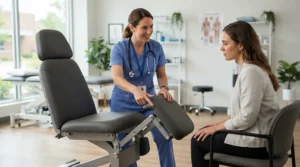
This is the “static” half of the Drive DeVilbiss pairing, and its party trick is the horseshoe clips. They let you change both height and angle, which is exactly the flexibility the cheaper stools lack.
The padded, contoured calf support spreads pressure across the leg instead of concentrating it on one narrow strip. That matters because a bar or edge pressing into the calf is a classic way to turn “relaxing” into “numb”. The vinyl upholstery is fire-retardant to IGM source 5 and wipes clean. With no castors, it stays put when you shift. It’s the sturdier choice for someone who tends to push off from their seat.
Who is it for? People who want proper adjustable elevation angles for daily swelling management, without paying for a mobile frame. Based on the spec comparison, it’s also a sensible first leg rest for someone being advised to raise their legs but unsure of the ideal position, because you can experiment.
I couldn’t find independent buyer reviews for this exact model during research. What I found was manufacturer and specialist-retailer descriptions, so I won’t invent sentiment. Look for recent reviews on the listing itself.
Pros:
- ✅ Clip system adjusts both height and angle
- ✅ Contoured calf pad spreads pressure evenly
- ✅ Wipe-clean, fire-retardant upholstery
Cons:
- ❌ No castors, so it’s harder to shift
- ❌ Independent reviews were hard to find
Expect around £55–£70. Verdict: strong value if adjustable elevation angles matter to you.
3. Drive DeVilbiss Shanklin Mobile Adjustable Leg Rest — castors make it easy to reposition
Same clip-adjusted height and angle as its static sibling, plus four 5cm castors. Those castors are the whole story.
Specs worth translating: the top measures 28cm x 50cm, so it’s a compact surface, and height runs between 39cm and 54cm. That tops out around typical seat height, so don’t expect it to lift your feet above heart level. It supports comfortable seated elevation, not a lie-down-and-drain position. The stated maximum weight is 100kg (16st), and the steel frame is coated for durability.
I’d point this at two buyers. The first is a household that shares a living room and needs the rest out of the way for standing, since castors roll clear in seconds. The second is a carer who repositions it often. The trade-off is stability: wheels move when you don’t want them to, so it suits calm, level floors better than thick carpet or enthusiastic dogs.
As with the Carisbrooke, I couldn’t verify independent buyer reviews for this model. The weight limit and wheeled design suggest it’s aimed at lighter-duty home use. If you’re above 100kg, look elsewhere.
Pros:
- ✅ Castors allow quick repositioning for standing
- ✅ Height and angle adjust via clips
- ✅ Contoured calf support with wipe-clean cover
Cons:
- ❌ 100kg limit excludes heavier users
- ❌ Wheels can shift on slippery floors
Expect around £65–£80. Verdict: worth the small premium if you move it daily.
4. Aidapt Adjustable Moulded Leg Rest — contoured support with independent leg tilt
Contour is the feature here. The moulded surface follows the natural line of the leg, so weight spreads along the calf instead of landing on a flat plank.
Height adjusts with pin clips, and independent leg adjustment allows tilt positioning. In practice you can set each leg slightly differently. That is handy when one ankle is swollen and the other merely sulking. This is the closest thing in the list to a true elevating leg rest in a domestic setting, because it supports the leg rather than just the foot.
It’s for people whose swelling is persistent enough to justify sitting with legs raised for long stretches. That might be someone recovering from a lower-limb procedure or an older adult who spends most of the day in a high-backed chair. The price tells you this isn’t a casual purchase. You’re paying for contour and independent tilt, not for a fancier frame.
Reviews: I couldn’t verify buyer feedback for this exact model, so I’ll leave it blank rather than guess. Treat the first week as a trial. If the contour doesn’t suit your leg length, you’ll know quickly.
Pros:
- ✅ Contoured surface follows the leg’s natural line
- ✅ Independent tilt for each leg
- ✅ Pin-clip height adjustment
Cons:
- ❌ Costs more than simple footstools
- ❌ Independent buyer reviews were hard to find
Expect around £90–£120. Verdict: the right pick when comfort over long sessions matters more than price.
5. Aidapt Leg Raiser — foam wedge for lying down with heels free
Everything so far works when you’re sitting. The Aidapt Leg Raiser is for when you lie down. It’s an ergonomically shaped foam block that supports the feet and lower legs, and a separate replacement cover is sold for it, which is a neat sign of longevity.
The key interpretation: lying with legs raised on a wedge gets the feet above hip level in a way a seated footstool can’t. That is the position NHS leg-ulcer guidance leans towards, so it deserves a place in a post-surgery or oedema routine. Foam also doesn’t tip or roll like a stack of pillows.
The catch is the lack of height adjustment. Shape is fixed, so you’re buying a single angle. Make sure your heels hang clear of the edge so pressure doesn’t sit on the back of the foot. If you want multiple angles, the layered KingPavonini Adjustable Leg Elevation Pillows are the more flexible option.
I couldn’t find independent buyer reviews for this specific model, so I’m sticking to what the specification supports.
Pros:
- ✅ Raises legs above hip level when lying down
- ✅ Replaceable cover available separately
- ✅ Stable foam shape that won’t slide apart
Cons:
- ❌ Fixed angle with no height options
- ❌ Not useful for seated chair use
Expect around £35–£55. Verdict: a solid, no-fuss bed or sofa wedge.

6. KingPavonini Adjustable Leg Elevation Pillows — layered memory foam with adjustable height
Reviewed’s testing named the KingPavonini Adjustable Leg Elevation Pillows the best overall in a US test of eight. That’s a US test, so treat it as a quality signal rather than a UK verdict.
The set is built in layers: a gel memory-foam top that stays cool, and two high-density foam layers beneath that hold structure. Velcro joins the layers and handles let you reposition without wrestling. The contour is wide enough for two legs, even with a cast or knee brace. Height changes by adding or removing layers, which means you can start low and build up.
It suits post-operative recovery, side-by-side use on a sofa and general swelling management where you want to adjust elevation over weeks. Reviewed’s tester noted that the middle layer’s sides may slip with heavier or restless sleepers, and that the covers must be air-dried. Buyers on retailer listings for versions of this pillow describe using it after knee, hip and ankle surgery. One pointed out it needs time to expand fully after unpacking. Exact height settings vary by version, so read the listing.
Pros:
- ✅ Layers let you change height gradually
- ✅ Gel top layer stays cooler than plain foam
- ✅ Two-leg contour fits casts and braces
Cons:
- ❌ Middle layer sides can slip with movement
- ❌ Covers need air-drying, not machine drying
Expect roughly £35–£60. Verdict: the most flexible recovery pillow here.
7. Drive Swing-Away Elevating Legrests — wheelchair elevating pair with swing-away transfers
Now for true elevating leg rests on a wheelchair. The Drive Swing-Away Elevating Legrests are sold as a pair with a textured non-skid plastic footplate, calf pads and tool-free assembly. The swing-away action clears the footplates so a user can stand or transfer.
The headline use is for people who need the leg held out straight. Karma Medical’s guidance explains that elevating rests suit those who can’t bend their knees because of injury or condition, as the calf pad supports the straight leg with no effort from user or carer. Compatibility is the catch. These are listed for Drive chairs such as the Blue Streak, Silver Sport 1 and 2, Chrome Sport, Cruiser III, Cirrus IV and Viper range. Check your chair’s model and hanger spacing before ordering.
A reviewer on a retail listing for a Drive wheelchair fitted with elevating rests said the footplate didn’t extend far enough when raised. That is the classic limitation of non-articulating rests. If you need length to grow as the leg lifts, look for articulating versions. Availability on amazon.co.uk can vary by seller, so check current price and the listing’s compatibility notes.
Pros:
- ✅ Supports a straight leg with calf pads
- ✅ Swing-away design eases transfers
- ✅ Tool-free assembly, sold as a pair
Cons:
- ❌ Only fits specific compatible chairs
- ❌ Fixed length can run short when raised
Expect roughly £60–£130 for the pair, depending on seller. Verdict: right for compatible Drive chairs, but get a professional’s view first.
Elevating Leg Rests vs Standard Leg Rests: What Actually Differs in Everyday Life
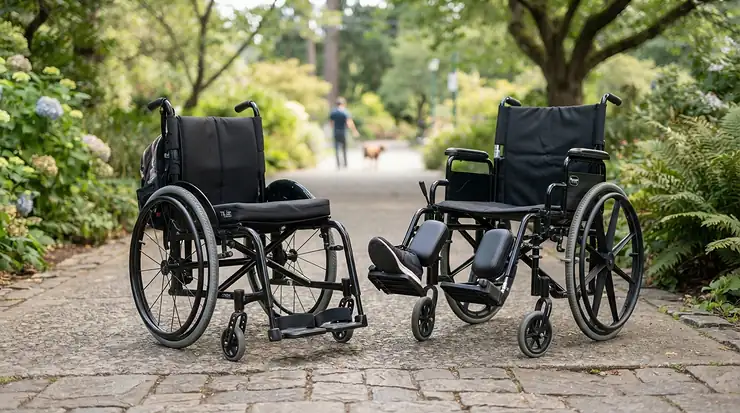
Strip away the marketing and the difference comes down to what your leg needs to do. A standard footrest or footplate holds the foot at a fixed point, usually around 90 degrees. Karma Medical’s UK-facing guidance draws a useful line: a footrest is a hanger and footplate, while a leg rest adds a calf pad that supports the lower leg. In a wheelchair, elevating leg rests are mostly found on tilt-in-space or reclining chairs. Karma says they exist to redistribute pressure, aid circulation, discourage swelling and add comfort.
The same logic applies at home. A flat footstool such as the Aidapt Beaumont Leg Rest is the standard end of the spectrum. A contoured, tilting support such as the Aidapt Adjustable Moulded Leg Rest sits at the elevating end. Between them are mixed designs such as the Drive DeVilbiss Carisbrooke Static Adjustable Leg Rest.
Karma also separates elevating rests from articulating ones. Elevating rests hold a set position, which suits people who must keep a leg straight. Articulating rests lengthen as they lift, which suits people who need to move or bend their legs. That distinction matters more than the headline “elevating” label.
| Feature | Elevating-style (e.g. Drive Swing-Away Elevating Legrests) | Standard-style (e.g. Aidapt Beaumont Leg Rest) |
|---|---|---|
| Leg position | Supports the calf, often straight | Supports the foot at a fixed point |
| Swelling support | Higher potential lift | Limited lift |
| Angle control | Often adjustable | Usually fixed |
| Best For | Persistent swelling, post-surgery positioning | Everyday posture, budget buyers |
Read this table as a spectrum, not a binary. Elevating options give more circulation and swelling benefit but cost more and need more careful fitting. Standard options are cheaper and simpler but only help if your needs are modest. A middle route, such as an adjustable static rest, often fits real life best.
How to Choose Elevating Leg Rests vs Standard Leg Rests
The short answer: match the rest to your condition, your furniture and your daily routine. These six steps give the reasoning.
- Start with your clinician’s advice. If a GP, nurse, physio or occupational therapist has told you how high and how long to raise your legs, that overrules any product label.
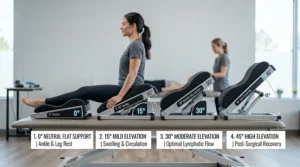
- Decide sitting or lying. A seated stool tops out around seat height. A wedge or foam raiser lifts higher but only when you’re lying down.
- Check adjustable elevation angles. Look for height and tilt controls rather than a single fixed pitch.
- Measure your chair. The rest must clear the seat front and let your knees stay comfortable. Too tall and it tilts your pelvis.
- Check weight, cover and upkeep. Look at the weight limit, removable or wipe-clean covers and whether replacement covers exist.
- Think about transfers. Castors, swing-away hangers and light weight matter if you stand up often.
If steps 1 and 2 point to a straight, fixed leg position, an elevating design is the better fit. If you mostly need comfort and posture, a standard footrest will do.
Circulation and Swelling: What Elevation Can and Can’t Do
Gravity is the cheapest circulation aid you own. When you sit with legs down, fluid pools in the lower leg. NHS advice is to raise swollen legs on a chair or pillows when you can, get some gentle exercise and avoid sitting or standing still for long periods. A good leg rest makes the first of those easy to keep up.
Here’s the honest limit. A seated leg rest rarely lifts your feet higher than seat height. The Drive DeVilbiss Shanklin Mobile Adjustable Leg Rest, for example, tops out at 54cm. That’s helpful for ankle puffiness after a day on your feet, but it isn’t the same as lying with legs above your heart. For more serious swelling, a bed or sofa set-up using the Aidapt Leg Raiser or KingPavonini Adjustable Leg Elevation Pillows gets the legs higher.
Pressure points matter as much as height. A narrow bar under the calf can dig in, which is why contoured calf supports earn their keep. With wedges, a tip from Reviewed’s guidance is to let your heels hang off the end so they aren’t pressed.
Finally, swelling can signal something that needs attention. The NHS lists redness or heat in the swollen area, or swelling with diabetes, as reasons to seek urgent advice. A leg rest manages comfort, not diagnosis.
Adjustable Elevation Angles: Finding Your Sweet Spot
“Adjustable” is a slippery word. Some products adjust height, some adjust tilt, and a few do both. The Drive DeVilbiss Carisbrooke Static Adjustable Leg Rest and Drive DeVilbiss Shanklin Mobile Adjustable Leg Rest use horseshoe clips for both. The Aidapt Adjustable Moulded Leg Rest uses pin clips for height and independent tilt for each leg. The KingPavonini Adjustable Leg Elevation Pillows change height by adding or removing foam layers. The Drive Swing-Away Elevating Legrests raise and lower as a unit.
What does that mean in practice? Adjustable elevation angles let you change position through the day, which helps comfort. Sitting with one fixed pitch for three hours can become its own problem.
A few features earn their place and a few don’t:
- Worth it: calf contouring, wipe-clean or removable covers, a clear weight rating, non-slip feet.
- Mostly marketing: extra “cooling” claims on basic foam, or decorative covers on a product you’ll be wiping down.
- Situational: castors, which are brilliant for repositioning and annoying on slippery floors.
One caution on angle. After knee or hip surgery, your team may give specific instructions on how straight or bent the leg should be. Follow those rather than choosing by comfort alone.
✨ Ready to Put Your Feet Up?
🔍 Compare the seven options above, then click through to check current pricing and availability on amazon.co.uk. A little adjustability now can make evenings a lot easier on your legs.
Medical Footrest Guidance: Safety Checks, Red Flags and Who to Ask
This is where good intentions meet real clinical decisions. Medical footrest guidance should come from the professionals treating you. A leg rest is a support, not a treatment.
For venous leg ulcers, the NHS treatment guidance says sitting and standing still without elevating your legs can make ulcers and swelling worse. It also mentions putting pillows under your legs while you sleep. But compression and nurse-led care are central, and elevation sits beside them, not in their place. If you have ulcers, a diabetic foot or a vascular condition, ask your clinician how high and how long.
Some practical checks:
- Red flags: redness, heat, a sudden one-sided swelling, new pain or breathlessness need prompt medical advice.
- Skin: check heels and calves daily for marks. A rest that digs in isn’t helping.
- Regulation: products sold for medical purposes in Great Britain generally need UKCA or CE marking under medical-device rules. Check the manufacturer’s documentation for what applies to your product.
- Wheelchair fit: leg rests on a wheelchair should be assessed by a therapist or wheelchair service. Karma advises trying before buying with a professional to avoid unnecessary injury.
None of this is a reason to avoid leg rests. It’s a reason to treat them as part of a plan, not a gadget.

Long-Term Cost & Maintenance: Value Over Two Years
Cheap and cost-effective aren’t the same thing. A rest that you actually use daily beats a bargain that sits in a cupboard. Here’s an illustration, assuming three hours of daily use over two years (about 2,190 hours). It’s a thought experiment, not a promise.
| Product | Price range | Approx. cost per hour of use | Best For |
|---|---|---|---|
| Aidapt Beaumont Leg Rest | £35–£50 | about 2p | Simple budget lift |
| Drive DeVilbiss Carisbrooke Static Adjustable Leg Rest | £55–£70 | about 3p | Adjustable everyday use |
| Drive DeVilbiss Shanklin Mobile Adjustable Leg Rest | £65–£80 | about 3p | Frequent repositioning |
| Aidapt Adjustable Moulded Leg Rest | £90–£120 | about 5p | Long seated sessions |
| Aidapt Leg Raiser | £35–£55 | about 2p | Lying-down elevation |
| KingPavonini Adjustable Leg Elevation Pillows | £35–£60 | about 2p | Recovery flexibility |
| Drive Swing-Away Elevating Legrests | £60–£130 | about 3–6p | Compatible wheelchairs |
Even the priciest option costs pennies per hour, so the real question is fit. Foam compresses with use, so the layered pillows may need replacing sooner than a steel-framed stool. Wipe-clean vinyl wins on upkeep, and the Aidapt Leg Raiser has replacement covers available.
On VAT, specialist retailers often supply eligible products VAT-free to people with a long-term illness or disability. HMRC’s guidance on reliefs for disabled and older people says not everything qualifies. Goods generally need to be designed solely for disabled people. Amazon listings may not offer the relief process, so check at checkout.
Practical Usage Guide: Setting Up Your Leg Rest in the First 30 Days
A good leg rest used badly is just furniture. This is the set-up routine that gets the most out of it.
Day 1: set the height. Sit back in your usual chair and adjust until your knee isn’t locked and nothing presses behind it. The calf should be supported, not perched on an edge.
Days 2–7: start short. Use it in sessions your clinician is comfortable with and check your skin afterwards. Dents from a seam or edge mean it needs repositioning.
Weeks 2–4: build the habit. Link it to something you already do, such as the evening news or a cuppa. Pair it with gentle ankle movements if your clinician approves.
Maintenance:
- Wipe vinyl covers weekly and check clips, pins or Velcro are secure.
- On the Drive DeVilbiss Shanklin Mobile Adjustable Leg Rest, check castors for fluff and wobble.
- For the KingPavonini Adjustable Leg Elevation Pillows, air-dry covers as Reviewed’s tester advises.
Common mistakes in the first 30 days:
- Setting the rest too high so your hips tilt.
- Crossing your legs while resting. NHS guidance flags this as bad for circulation.
- Sitting still for hours. Movement matters as much as elevation.
Real-World Scenarios: Three Buyer Profiles
Profile 1: The armchair reader. She’s in her seventies, budget around £60 and her ankles swell by early evening. She sits in one high-backed chair most afternoons. The Drive DeVilbiss Carisbrooke Static Adjustable Leg Rest gives her adjustable height and angle on a stable frame. If she prefers to shove the stool aside to stand, the Drive DeVilbiss Shanklin Mobile Adjustable Leg Rest is the alternative.
Profile 2: The post-surgery recoverer. He’s six weeks out from a knee procedure and sleeps and rests on a sofa and a bed. Budget is about £50. His surgical team has given specific positioning instructions. The KingPavonini Adjustable Leg Elevation Pillows let him build height gradually and fit a brace. The Aidapt Leg Raiser is a simpler alternative if he wants one fixed angle.
Profile 3: The carer. She supports a relative who uses a compatible Drive wheelchair and needs the leg kept straight. After an occupational therapist’s assessment, the Drive Swing-Away Elevating Legrests are worth checking. Compatibility, footplate length and transfers all need confirming first.
Each profile matches the product to environment, frequency and budget instead of chasing the “best” label.
Problem → Solution Guide: Fixing Common Leg Rest Frustrations
Problem: my legs slide off. Slipping is a known issue with smooth covers and lighter foam. Choose a contoured option such as the Aidapt Adjustable Moulded Leg Rest, or secure foam with its straps.
Problem: the rest digs into my calves. Narrow edges concentrate pressure. Contoured calf supports on the Drive DeVilbiss Carisbrooke Static Adjustable Leg Rest spread the load.
Problem: it’s too high or low for my chair. Use height adjustment and re-test. Dining-chair seats and armchairs differ a lot, so one setting rarely fits both.
Problem: I can’t stand up quickly. Choose a mobile rest such as the Drive DeVilbiss Shanklin Mobile Adjustable Leg Rest, or a swing-away design on a wheelchair.
Problem: covers get hot or grubby. Wipe-clean vinyl on the Aidapt Beaumont Leg Rest is the easy option. With foam, wash removable covers as the care label says.

Frequently Asked Questions
❓ Can I fit elevating leg rests to any wheelchair?
❓ Is a leg elevation pillow better than a footstool for sleeping?
❓ How long should I keep my legs raised each day?
❓ Do I need a prescription to buy a medical footrest?
❓ Which is better value, a static or a mobile adjustable leg rest?
Conclusion
Elevating leg rests vs standard leg rests isn’t a contest with one winner. It’s about what your legs need. If you want simple, tidy support, the Aidapt Beaumont Leg Rest does the job at a modest cost. If you want adjustable elevation angles and a calf-friendly shape, the Drive DeVilbiss Carisbrooke Static Adjustable Leg Rest, the Drive DeVilbiss Shanklin Mobile Adjustable Leg Rest or the Aidapt Adjustable Moulded Leg Rest are the stronger picks. For lying-down recovery, the Aidapt Leg Raiser and KingPavonini Adjustable Leg Elevation Pillows lift higher. For compatible wheelchairs, the Drive Swing-Away Elevating Legrests deserve a conversation with your therapist first.
The common thread is that circulation and swelling respond best to a routine, not a purchase. Pair your leg rest with movement, good skin care and clinical advice, and read medical footrest guidance as a plan, not a product label.
Recommended for You
- Wheelchair Leg Rests: 7 Best Picks & Costly Mistakes (2026)
- Footplates For Wide Wheelchairs: 7 Best Picks For UK Users (2026)
- Buy Folding Wheelchair Footplates: 7 Proven Picks For UK Users (2026)
Disclaimer: This article contains affiliate links. As an Amazon Associate, I earn from qualifying purchases. If you purchase products through these links, we may earn a small commission at no additional cost to you.
✨ Found this helpful? Share it with your friends! 💬🤗
