
In This Article
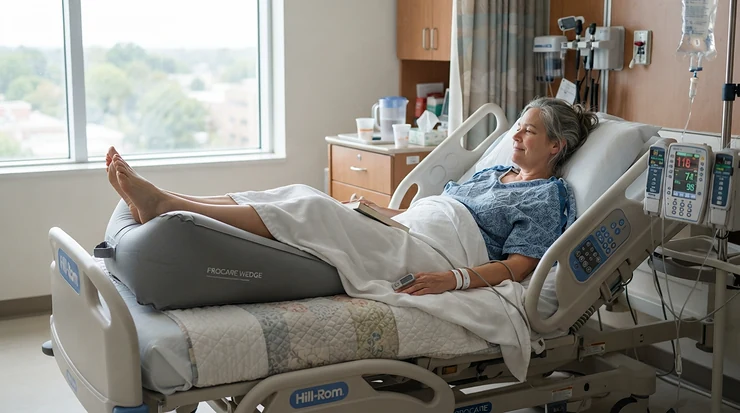
Elevating leg rests for circulation are supports that lift your feet and lower legs, in bed, in a chair or on a wheelchair, so gravity helps fluid and blood drain back towards your heart. They range from foam wedges and adjustable footstools to wheelchair legrest pairs, and they work best when matched to your height, posture and daily routine.

Anyone who has watched their ankles swell like proving dough by teatime knows why this matters. The NHS explains that swollen ankles, feet and legs are often linked to standing or sitting in one position for too long, and that raising your legs on a chair or pillows when you can is a simple self-help step. A tea-towel-and-sofa-cushion arrangement works, but it slides about, flattens and leaves your heels taking the pressure. Purpose-built elevating leg rests for circulation fix those problems.
This guide covers seven real products across budget, mid-range and premium. It also tackles the awkward questions: whether a wheelchair leg rest under £50 is realistic, what peripheral circulation support can honestly deliver, and how swelling reduction and physiotherapist-recommended positioning fit together. Prices are ranges, review comments are aggregated from real sources, and where I couldn’t verify something, I say so. This is general information, not medical advice. If something about your legs worries you, speak to a GP, pharmacist or physiotherapist first.
Quick Comparison: Elevating Leg Rests for Circulation at a Glance
| Product | Type | Price range (check current price) | Best For |
|---|---|---|---|
| Aidapt Foam Leg Raiser (VG885) | Bed wedge | Low-£40s, under £50 | Budget bedtime elevation |
| Aidapt Memory Foam Leg Pillow | Leg pillow | Around £10-£15 | Trying elevation cheaply |
| Aidapt Beaumont Leg Rest | Adjustable footstool | Mid-£40s to around £50 | Seated daytime rests |
| Aidapt 4-in-1 Support Cushion | Multi-use cushion | Not verified, check listing | Flexible, multi-purpose use |
| Putnams Leg Elevation Support Wedge | Bed wedge | Around £80-£90 | Daily long-term bed use |
| Putnams Memory Foam Leg Rest | Memory foam wedge | Low-£90s | Maximum pressure relief |
| Drive Medical Swing-Away Elevating Legrests | Wheelchair legrest pair | UK price not verified, likely above £50 | Compatible Drive wheelchair users |
Looking at the table, the Aidapt Foam Leg Raiser (VG885) and Aidapt Beaumont Leg Rest are the only products here that sit comfortably under £50 and do a proper elevation job. The two Putnams wedges cost roughly double, and the extra money buys UK manufacture, deeper foam and a longer guarantee rather than a different function. The Drive Medical Swing-Away Elevating Legrests serve a different buyer entirely, because they only make sense if you already own a compatible wheelchair.
💬 Just one click — help others make better buying decisions too!😊
Top 7 Elevating Leg Rests for Circulation: Expert Analysis
Every product below is a real, named item. The analysis rests on specifications and genuine review themes rather than claimed hands-on testing. Check current availability on amazon.co.uk, because stock and listings change.
1. Aidapt Foam Leg Raiser (VG885) — contoured bed support well under £50
The Aidapt Foam Leg Raiser (VG885) does one job properly: it props both calves on a gentle slope and leaves the heels clear.
It pairs a high-density polyurethane foam base with a roughly 2cm memory foam topper and a removable cotton twill cover. In practice, the dense base holds its shape under the weight of two legs, while the thin memory layer softens pressure points without sinking so far that the support vanishes. A washable cover matters if you’ll use it nightly for weeks.
Based on the spec comparison, this suits anyone wanting elevating leg rests for circulation at bedtime or during a daytime lie-down, rather than a seated solution. How close to heart level you get depends on your pillows and bed.
I couldn’t find a sizeable pool of verifiable customer reviews for this exact model, so I won’t summarise sentiment. Check the review count on the live listing before buying.
Pros:
- ✅ Dense base keeps its shape overnight
- ✅ Memory foam topper eases pressure
- ✅ Removable, washable cotton cover
Cons:
- ❌ Bed or flat surfaces only
- ❌ Little verifiable review evidence found
Retailer listings during research were in the low £40s including VAT, so expect “under £50” territory. Strong value as an entry point.
2. Aidapt Memory Foam Leg Pillow — cheapest way to test the idea
The Aidapt Memory Foam Leg Pillow costs about as much as a sandwich lunch, which makes it the lowest-risk experiment in this guide.
Its listing describes an ergonomic memory foam shape that supports stiff, sore or swollen legs and encourages a more natural sleeping position. Listing detail is thin, so confirm the dimensions before buying. A pillow-style support typically lifts the legs modestly, so it eases leg heaviness more than it delivers dramatic elevation.
On paper, this suits people who want to know whether raising their legs helps at all before spending more. It also works as a travel companion or as a side-sleeper’s knee pillow. It won’t replace a full wedge if your clinician has asked for sustained, higher elevation.
I couldn’t verify a robust set of independent reviews for this specific pillow, so treat any star rating on the listing with the usual caution.
Pros:
- ✅ Very low cost for a trial
- ✅ Memory foam moulds to leg shape
- ✅ Light and easy to move around
Cons:
- ❌ Likely modest lift compared with wedges
- ❌ Thin listing detail and limited verifiable reviews
Pricing sat at roughly £10-£15 at one specialist retailer. Check current price. A sensible first step.
3. Aidapt Beaumont Leg Rest — adjustable-height footstool for seated rests
The Aidapt Beaumont Leg Rest moves elevation from the bedroom to the armchair, which is where many people spend their swollen-ankle hours.
The frame is height-adjustable (marketplace listings quote roughly 385mm to 535mm), with a padded top, non-slip feet and a wipe-clean vinyl surface with heat-sealed seams. That adjustability matters because the right height changes with your chair and your swelling. A castor version also exists for easier repositioning.
Here’s what the spec sheet won’t tell you: a footstool lifts your feet to around seat height or a touch above. That brings relief rather than full heart-level elevation unless you recline.
Reviewers on UK marketplace listings consistently praise the sturdy build, the adjustable heights and the wipe-clean top. Recurring complaints include a loose end cap on arrival, a lowest setting that was still too high for some users, and a surface that feels tight for two legs lying lengthways.
Pros:
- ✅ Sturdy frame with several height settings
- ✅ Wipe-clean top suits daily use
- ✅ Four non-slip feet for stability
Cons:
- ❌ Footstool height won’t reach heart level
- ❌ Narrow for two legs lengthways
The castor version was in the mid-£40s at one marketplace seller. Check current price. Good value for seated rest.
4. Aidapt 4-in-1 Support Cushion — one memory foam cushion, several jobs
The Aidapt 4-in-1 Support Cushion is the flexible option for people with limited space who’d rather own one decent cushion than three single-purpose ones.
Its listing describes memory foam construction that moulds to the body for comfort and pressure relief, and says it can raise the legs. The “4-in-1” design means it can be repositioned for different tasks. Be realistic, though: a multi-use cushion rarely matches a purpose-shaped wedge at any single job, and I couldn’t verify the exact dimensions.
Based on the listing, this suits occasional elevation, such as feet up on the sofa, plus lower-back support at other moments. It’s an easy gift for a relative who “doesn’t want fuss”. It’s less suited to someone who has been advised to elevate for long, regular sessions.
I couldn’t verify enough independent customer reviews to summarise sentiment, so read the live reviews before buying.
Pros:
- ✅ Memory foam moulds to the body
- ✅ Doubles as general support cushion
- ✅ Stores easily in small homes
Cons:
- ❌ Compromise shape for dedicated elevation
- ❌ Price and dimensions not verified
I couldn’t confirm a current price, so check the listing. Fair value if versatility matters most.
5. Putnams Leg Elevation Support Wedge — British-made contoured wedge
The Putnams Leg Elevation Support Wedge is the grown-up end of the foam-wedge market, with a contoured, UK-made build.
Listings give the size as 66cm long, 50.5cm wide and 20cm deep, so the lift is a substantial 8 inches. The foam is CertiPUR-certified, there’s an optional memory foam top, and the cover is removable and washable. A two-year guarantee and a 14-day returns policy appear on retailer pages. The contouring cradles the calves and eases heel pressure. Retailers also offer a waterproof cover, conforming to BS7175 Crib 5, via enquiry for medical settings.
Retailers state it is recommended and used by the NHS. That’s a manufacturer-side claim I couldn’t independently verify, so treat it as marketing. My take is that the 20cm depth gives more lift than budget wedges, which helps if you struggle to reach a useful angle.
I found no verifiable independent review pool for this wedge, so I can’t summarise sentiment.
Pros:
- ✅ Deep 20cm lift for stronger elevation
- ✅ British-made with two-year guarantee
- ✅ Contoured shape eases heel pressure
Cons:
- ❌ Roughly double the budget wedge cost
- ❌ NHS-use claim unverified
Retailers listed it at around £80-£90. Check current price. Worth it for daily long-term use.
6. Putnams Memory Foam Leg Rest — deluxe memory foam for pressure relief
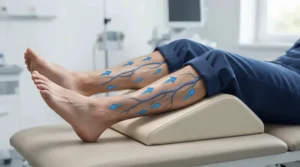
The Putnams Memory Foam Leg Rest (also sold as the Leg Raiser) is the plush upgrade of the standard Putnams wedge, with a 1-inch deluxe memory foam top.
The dimensions match the standard wedge, at 66 x 50.5 x 20cm. The memory foam layer spreads pressure across the calf and lets the heels hang free, which matters if you lie still for hours, as you might after leg, ankle or knee surgery. Heel clearance is the quiet detail that separates a good leg rest from a merely tall one.
Here’s what to weigh: if you only need an hour on the sofa, the premium buys comfort you may never notice. If you’re resting your legs for long stretches after a procedure, the pressure relief is the point.
I couldn’t verify a pool of independent reviews specific to this model. The retailer’s guarantee and returns terms are the best reassurance available.
Pros:
- ✅ Memory foam top spreads calf pressure
- ✅ Heels can hang free
- ✅ Same deep 20cm lift as standard wedge
Cons:
- ❌ Most expensive foam wedge here
- ❌ Overkill for occasional use
Retailer pricing was in the low £90s. Check current price. Best for prolonged recovery rest.
7. Drive Medical Swing-Away Elevating Legrests — wheelchair legrests that swing clear
The Drive Medical Swing-Away Elevating Legrests are the wheelchair-specific pick, and they swing aside so transfers stay safer.
They’re sold as a pair, with a chrome frame, a textured non-skid plastic footplate and nylon calf pads. Listings name compatible chairs such as Blue Streak, Silver Sport and Cruiser III models. UK compatibility may differ, so confirm your exact chair. The elevating mechanism lets users raise the legs during long periods of sitting, and the swing-away design clears the footprint for getting in and out.
Based on the specs, fit is the whole game here. A legrest that doesn’t match your chair’s mounting is a very expensive paperweight. For wheelchair users, it’s one of the few seated options that integrates elevation into the chair itself.
I couldn’t verify UK reviews or a UK price, so check both on the live listing.
Pros:
- ✅ Swing-away design eases transfers
- ✅ Non-skid footplate and calf pads
- ✅ Elevation built into the chair
Cons:
- ❌ Fits specific chair models only
- ❌ Pairs from established brands often cost above £50
I couldn’t confirm UK pricing; expect more than £50 for a pair. Check current price. Valuable only with confirmed compatibility.
Practical Usage Guide: Setting Up Elevating Leg Rests for Circulation Safely
A good setup turns a £40 wedge into a better one and a poor setup wastes a £90 one. Start with your position. For a bed wedge, lie back with your hips close to the wedge so your calves, not just your feet, are supported. Check that your heels hang slightly off the end of the foam, because pressure on the heels is a known skin risk. If you need more lift, add a pillow under the wedge rather than stacking it unstably on its own.
For footstools like the Aidapt Beaumont Leg Rest, set the height first, then sit back and recline slightly. A low footstool with an upright posture does little.
Wheelchair users should lean on professional guidance. The British Red Cross publishes a guide to installing, removing and adjusting elevating leg-rests with safety information for its wheelchair loan service. It’s worth reading before you fit anything yourself.
In the first 30 days, avoid three common mistakes: using a setup that leaves your knees locked straight, ignoring numbness or colour changes in your toes, and skipping the cover wash schedule. Wash covers according to the label every few weeks. Add ankle pumps during each session, since movement and elevation work better together than either alone.

Real-World Scenarios: Matching Leg Rests to Real Lives
These are illustrative profiles, not testimonials. They show how the same logic plays out in different homes.
The evening swellers. Picture a retired teacher with mild ankle swelling after long sofa afternoons. Budget under £50, daily use, living room. The Aidapt Beaumont Leg Rest gives adjustable height in the armchair, and the Aidapt Foam Leg Raiser (VG885) covers bedtime. Total outlay sits around £90, still less than one premium wedge.
The post-op sleeper. Picture someone recovering from knee surgery who has been told to rest with the leg raised. Budget isn’t the limit, comfort is, and use is nightly for weeks. The Putnams Memory Foam Leg Rest earns its premium here, because its deeper lift and pressure relief suit long, still hours in bed. Confirm the positioning with the surgical team.
The wheelchair user. Picture a part-time wheelchair user with a compatible Drive chair who spends long hours seated. The Drive Medical Swing-Away Elevating Legrests make sense only after checking the chair model. A clinician or wheelchair service should confirm the suitability of elevation.
The cautious tester. Someone unsure that elevation helps could start with the Aidapt Memory Foam Leg Pillow and decide later.
✨ Don’t Miss These Exclusive Deals!
🔍 Take your leg-elevation routine to the next level with these carefully selected products. Click on any highlighted item to check current pricing and availability. These supports will help you create genuinely comfortable resting positions your legs will thank you for!
Problem → Solution Guide: Fixing Common Leg Rest Frustrations
Problem: the wedge slides down the bed. Place it against a firm headboard-end pillow or tuck the base under the mattress edge slightly, then use a non-slip mat beneath the Putnams Leg Elevation Support Wedge.
Problem: heels feel sore. That signals heel pressure. Reposition so the heels overhang the foam, as the Putnams Memory Foam Leg Rest is designed to allow, or swap to a softer support.
Problem: the footstool is too high or too low. The Aidapt Beaumont Leg Rest has adjustable heights, but one reviewer found even the lowest setting too high. Measure your seat height before you buy.
Problem: swelling returns by evening anyway. Elevation is one tool, not a cure. Combine it with gentle walking, avoid sitting still for long stretches, and see a GP if swelling persists or worsens.
Problem: wheelchair legrests don’t fit. Never force a mismatch. Check the chair model and ask the supplier or a wheelchair service for compatibility confirmation before buying the Drive Medical Swing-Away Elevating Legrests.
How to Choose Elevating Leg Rests for Circulation
The best choice is the one that matches where you’ll use it, how high you need your legs lifted and how long you’ll stay put. Work through these steps in order:
- Decide the location. Bed, armchair and wheelchair need different products, so a wedge won’t help in a chair.
- Define the target height. If a clinician has asked for heart-level elevation, a low footstool won’t get there.
- Check heel clearance. Heels resting on hard foam for hours can cause pressure problems.
- Test the foam. Dense base foam keeps its shape. Soft foam alone bottoms out.
- Look at the cover. Removable, washable covers save money and hassle over months.
- Confirm size and fit. Measure your bed width, chair height or wheelchair model before ordering.
- Ask a professional. Elevation isn’t suitable for every condition, so check with a GP or physiotherapist.
Wheelchair Leg Rest Under £50: A Reality Check
Searching for a wheelchair leg rest under £50 usually produces disappointment. During research, I couldn’t confirm a reputable-brand pair of true elevating wheelchair legrests listed under £50, and pairs from established brands such as the Drive Medical Swing-Away Elevating Legrests commonly cost more. A cheaper listing might be a single footplate, an off-brand clone or a second-hand part. Fit, locking mechanisms and safety all matter, so treat suspiciously cheap pairs with caution.
There are sensible workarounds. A wheelchair user who wants seated elevation could pair a chair with an Aidapt Beaumont Leg Rest, which sits in the mid-£40s to around £50 range, in front of an armchair when transferring. Another option is the Aidapt Foam Leg Raiser (VG885), placed on a bed or flat surface during rest periods. Neither replaces a properly fitted legrest on the chair itself.
Before spending anything, ask whether short-term loan equipment, an NHS wheelchair service or a charity loan scheme can help. The British Red Cross runs a short-term wheelchair loan service. If you buy privately, never assume universal fit. Always match the model.
Peripheral Circulation Support: What Leg Elevation Can and Can’t Do
Peripheral circulation support is a broad phrase, and it’s worth being precise. Leg elevation mainly assists venous return and fluid drainage. It helps when pooled fluid is the problem, for instance after long periods of sitting. It does not repair damaged veins or arteries, and it isn’t a treatment for underlying conditions.
This matters because some circulation problems, including certain arterial conditions, mean that raising your legs may not be advised. Health-information sources note that elevation isn’t recommended for every condition. That’s why a quick conversation with a GP, pharmacist or physiotherapist beats guessing.
Movement is the other half. NHS-trust leaflets pair elevation with foot exercises and walking, because calf and foot muscles help pump blood towards the heart. A leg rest handles the resting hours, and ankle pumps and short walks handle the rest.
In practice, that makes elevating leg rests for circulation a supportive measure. Think of the Aidapt Foam Leg Raiser (VG885) or a Putnams wedge as comfort and drainage helpers, not circulation cures. Any product claiming to “improve circulation” needs reading with that in mind.
Swelling Reduction: Height, Timing and Realistic Expectations
Swelling reduction comes down to three variables: how high, how long and how often. Higher usually drains better, so the target in much health guidance is raising the swollen area above heart level where practical. A footstool alone rarely achieves that, while a deep wedge in bed gets closer. That’s one reason the 20cm lift on the Putnams Leg Elevation Support Wedge is meaningful.
Timing matters too. Some health-service guidance suggests short sessions several times a day, rather than one marathon, so check with your clinician for yours. Many people find it easiest to anchor elevation to routine moments, such as after lunch and before bed.
Track your progress honestly. Compare how your socks or shoes feel morning versus evening for a week or two. If swelling isn’t improving, or one leg is much worse than the other, don’t wait it out.
The NHS advises seeing a GP if swelling is accompanied by redness or heat, or if you have diabetes. Elevating leg rests for circulation can’t diagnose anything. Treat them as a comfortable, low-risk habit, with professional advice when something looks off.

Physiotherapist-Recommended Positioning: What the Guidance Actually Says
No product is “physiotherapist-recommended” just because a listing says so. Be sceptical of vague endorsement claims, including the manufacturer-side NHS claim on Putnams listings, which I couldn’t independently verify. What you can rely on is published patient guidance.
An NHS trust’s leg management plan from Whittington Health explains that putting your legs up uses gravity to help drain fluid, and that foot exercises and walking help calf and foot muscles pump blood towards the heart. That’s a useful baseline.
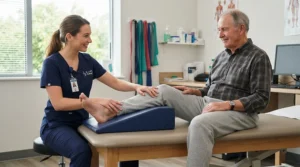
Beyond that, sensible positioning principles are widely shared. Support the whole calf rather than only the ankle, avoid resting weight on the heel, keep the position comfortable rather than forced, and change position regularly. Your own physiotherapist may adjust any of this for your injury, surgery or condition, and their advice outranks anything in a buyer’s guide.
Take this as general, not personalised, information. A physiotherapist can tell you the angle, duration and frequency that suit you, and then you can choose between a Putnams Memory Foam Leg Rest and an Aidapt Foam Leg Raiser (VG885) with that guidance in hand.
Common Mistakes When Buying Elevating Leg Rests for Circulation
Buying on height alone. A tall wedge that pressures your heels can do more harm than a modest one that doesn’t. Contouring matters as much as depth.
Assuming wheelchair parts are universal. The Drive Medical Swing-Away Elevating Legrests list specific compatible chairs. Cheap mismatches cost more in the end.
Trusting “improves circulation” claims. Marketing language isn’t medical evidence. Look for specifics such as foam density, dimensions and guarantee terms.
Ignoring one-sided swelling. Swelling in one leg, especially with pain, warmth or redness, needs prompt medical attention rather than a new cushion.
Skipping the cover and maintenance check. A non-washable surface becomes a hygiene problem fast, which is why wipe-clean tops like the Aidapt Beaumont Leg Rest appeal.
Overbuying. If you’ll use a support twice a week, the Aidapt Memory Foam Leg Pillow may be plenty.
Forgetting weight limits. Always check the supplier’s stated capacity, particularly for footstools and wheelchair parts.
Elevating Leg Rests vs Traditional Alternatives
Stacked pillows and a footstool are the traditional solution, and they’re free. The problem is stability: pillows slump, shift and leave your heels pressing into the mattress. Dedicated supports keep their shape, which is the main reason to pay.
| Option | Strength | Weakness | Best For |
|---|---|---|---|
| Stacked pillows | Free and available now | Slumps and slides | Short-term fixes |
| Footstool | Good for seated rests | Rarely reaches heart level | Aidapt Beaumont Leg Rest users |
| Foam wedge | Stable, contoured lift | Bed or flat use | Putnams Leg Elevation Support Wedge buyers |
| Wheelchair legrests | Built into the chair | Fit-specific, higher cost | Drive Medical Swing-Away Elevating Legrests owners |
The table shows that no single option wins everywhere. If you spend your resting hours in bed, a wedge such as the Aidapt Foam Leg Raiser (VG885) beats pillows on stability for modest money. If your swelling builds in the armchair, a footstool is more practical. Wheelchair legrests solve a separate problem, so don’t buy one to fix a bedtime issue.
Safety, Regulations and When to Seek Advice
Foam wedges and footstools are generally everyday comfort aids, but wheelchair legrests are mobility equipment, so look for sensible assurance. In the UK, check for a recognised conformity mark such as UKCA or CE on medical-type products where relevant, and look at the MHRA’s current guidance, since transition rules have changed over time. For footstools and cushions, fire-retardant covers matter; the Aidapt Beaumont Leg Rest listing, for example, describes a fire-retardant, easy-clean fabric.
The bigger safety point is medical, not regulatory. A blood clot can mimic simple swelling. The NHS describes DVT as a blood clot in a vein, usually in the leg, and says to get medical help promptly if you suspect it. Swelling in one leg, with pain, warmth or redness, isn’t something to treat with a cushion.
Also watch for numbness, colour changes in your toes, skin breakdown or worsening swelling. Stop using the support and seek advice if any of those appear. People with diabetes, heart, kidney or arterial conditions should get personal guidance before relying on elevation. The point of elevating leg rests for circulation is comfort and support, not self-diagnosis.
Long-Term Cost and Value Analysis
Price per use is where cheap and premium products start to look different. A £45 wedge used nightly for a year costs roughly 12p a night, and a £90 wedge about 25p. Neither is extravagant, so the better question is which one you’ll actually keep using.
| Product | Price range (check current price) | Rough cost per night over a year | Best For |
|---|---|---|---|
| Aidapt Memory Foam Leg Pillow | Around £10-£15 | Pennies | Low-risk trial |
| Aidapt Foam Leg Raiser (VG885) | Low-£40s | About 12p | Budget buyers |
| Aidapt Beaumont Leg Rest | Mid-£40s to around £50 | About 12-14p, if used daily | Armchair users |
| Putnams Leg Elevation Support Wedge | Around £80-£90 | About 22-25p | Long-term bed users |
| Putnams Memory Foam Leg Rest | Low-£90s | About 25p | Post-op recovery |
The cost-per-night view shows the real difference between budget and premium is a few pence a night, not a gulf. The Putnams pair justifies their cost through UK manufacture, deeper lift and a two-year guarantee. If you only need short-term support, the Aidapt Foam Leg Raiser (VG885) is the better economic choice. Maintenance is minimal: wash covers per the label, check foam for flattening every few months, and replace if it stops holding its shape.
FAQ
❓ Can elevating leg rests for circulation be used overnight?
❓ Is a memory foam leg raiser worth the extra money?
❓ Do universal wheelchair legrests fit every chair?
❓ Can I borrow wheelchair leg rests before buying?
❓ How do I wash a leg raiser cover?
Conclusion
Elevating leg rests for circulation aren’t glamorous, but they solve a very ordinary problem: tired, puffy legs after too much sitting. The right choice depends on where you rest. The Aidapt Foam Leg Raiser (VG885) is the best-value bed wedge under £50, while the Aidapt Beaumont Leg Rest covers armchair afternoons at a similar price. The Aidapt Memory Foam Leg Pillow is a cheap trial, and the Aidapt 4-in-1 Support Cushion suits tight spaces.
If you need deeper lift or long recovery sessions, the Putnams Leg Elevation Support Wedge and Putnams Memory Foam Leg Rest are the premium choices. Wheelchair users should look at the Drive Medical Swing-Away Elevating Legrests only after confirming chair compatibility, and should be realistic about a wheelchair leg rest under £50.
Remember the limits. Leg elevation is a supportive habit for swelling reduction and comfort, not a medical treatment, and one-sided swelling with pain, heat or redness needs prompt medical attention. Use physiotherapist-recommended positioning as your guide, and ask a clinician before relying on any product for peripheral circulation support. Prices and availability change, so check current listings on amazon.co.uk before you buy.
✨ Ready to put your feet up?
🔍 Browse the highlighted products above to check current pricing and availability, and choose the support that fits your bed, chair or wheelchair. Your legs have earned a proper rest! 🦵
Recommended for You
- Elevating Leg Rests Vs Standard Leg Rests: 7 Proven Picks (2026)
- Wheelchair Leg Rests: 7 Best Picks & Costly Mistakes (2026)
- Footplates For Wide Wheelchairs: 7 Best Picks For UK Users (2026)
Disclaimer: This article contains affiliate links. As an Amazon Associate, I earn from qualifying purchases. If you purchase products through these links, we may earn a small commission at no additional cost to you.
✨ Found this helpful? Share it with your friends! 💬🤗
