
In This Article
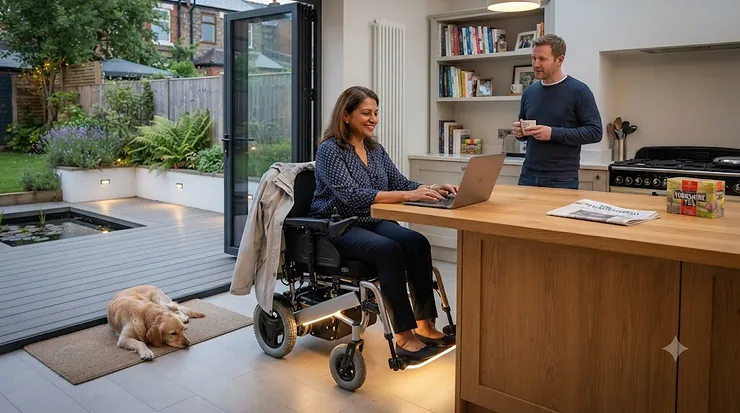
Dusk in Britain has a habit of arriving without much warning, especially between October and February, and if you or someone you love uses a wheelchair, that early darkness changes the whole calculation of getting around safely. LED lights for wheelchair users are small, battery-powered lamps and clip-on units — some mounted on the frame, some threaded through the spokes, some plugged straight into a power-chair’s control system — designed to help you see the pavement ahead and, just as importantly, help drivers, cyclists and pedestrians see you. They’re cheap, they’re quick to fit, and they solve a genuinely dangerous visibility gap that most standard wheelchairs simply don’t address out of the box.
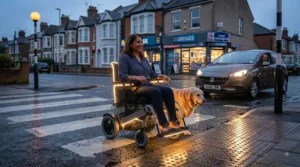
This guide is built around honest research rather than marketing copy. We’ve pulled together seven real products sold in the UK, spanning budget power-chair headlamp controllers through to premium bike-grade rechargeable units, and we’ve weighed up the genuine aggregated feedback from buyers wherever it’s verifiable. You’ll get spec breakdowns that actually explain what the numbers mean for your daily commute, a look at what UK road safety regulations require of powered wheelchairs and mobility scooters, and a practical rundown of how to charge and store battery-powered accessories without creating a fire risk in your hallway.
Whether you’re a manual wheelchair user who wants a couple of quid’s worth of spoke lights for a Tuesday-night trip to the shop, or a power-chair user researching a permanent XLR-mounted headlamp for winter commuting, there’s a section here for you. Let’s start with the quick comparison, then work through the detail.
Quick Comparison Table
| Product | Type | Best For | Price Range |
|---|---|---|---|
| VOANZO Power Wheelchair Controller | XLR power-chair headlamp | Budget power-chair upgrade | Under £15 |
| FILFEEL Electric Wheelchair Light | XLR power-chair headlamp | USB charging bonus | Under £15 |
| HURRISE Electric Wheelchair Light | XLR power-chair headlamp | Wide beam spread | Under £15 |
| CHOYTONG Walker Clip-On Mobility Light | Clip-on torch (2-pack) | Manual chairs, canes, rollators | £10-£20 range |
| TAGVO 4pcs Bike Spoke Light | Wheel spoke lights | Manual wheel visibility | Under £15 |
| Baby Uma LED Pushchair Lights | Clip-on front & rear set | Full 360° manual-chair visibility | £15-£25 range |
| CatEye AMPP 400 | Premium rechargeable headlight | Reliability and brightest beam | £30-£40 range |
Looking at the spread above, the three XLR controllers dominate the budget end because they solve a very specific power-chair problem — most electric wheelchairs simply don’t ship with a factory headlamp, and these plug straight into the existing accessory socket. For manual chairs, the picture flips: clip-on and spoke-based lights win out because there’s no accessory port to plug into in the first place, so anything you add has to clamp, clip or strap on. The CatEye AMPP 400 sits apart from the rest as the only entry from a dedicated cycling-lighting brand, and that pedigree is reflected in the price gap.
💬 Just one click — help others make better buying decisions too!😊
Top 7 LED Lights for Wheelchair: Expert Analysis
1. VOANZO Power Wheelchair Controller — budget-friendly power-chair headlamp
The VOANZO Power Wheelchair Controller is a 3-pin XLR LED lighting controller built specifically to plug into the accessory socket found on most electric wheelchairs, turning a spare port into a working headlamp in a couple of minutes. It includes a USB light port alongside the main LED, an adjustable mounting angle so you can aim the beam down at kerbs and ramps rather than into oncoming traffic, and an IPX5 water-resistant rating that matters a great deal given how often British commuting happens in the rain. Based on the spec comparison with rival XLR units, the adjustable angle is the feature that does the most practical work here — a fixed-angle light either dazzles pedestrians or lights up nothing but the sky, and being able to tilt it properly is what actually makes it useful after dark. This is squarely aimed at power-chair users on a tight budget who want a functional light rather than a showpiece, and reviewers consistently report that the plug-and-play XLR fitting is the standout convenience, since no wiring or soldering is involved. A recurring theme in aggregated feedback is that the connector can be a slightly tight fit on some chair sockets, with a handful of buyers needing to sand the pin down fractionally before it seated properly — worth budgeting five extra minutes for on install day.
Pros:
- ✅ Genuine plug-and-play XLR fitting, no tools required
- ✅ Adjustable angle stops the beam blinding oncoming traffic
- ✅ IPX5 rating copes with typical UK drizzle
Cons:
- ❌ Connector pin can need light sanding to fit some sockets
- ❌ Only compatible with wheelchairs that have a 3-pin XLR accessory port
At under £15, the VOANZO Power Wheelchair Controller is one of the cheapest routes to a genuinely useful power-chair headlamp, and the value proposition holds up provided your chair has the right port to begin with.
2. FILFEEL Electric Wheelchair Light — USB charging port doubles as phone charger
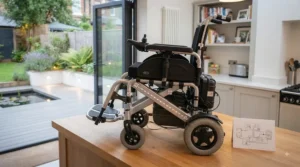
The FILFEEL Electric Wheelchair Light follows the same 3-pin XLR format as our first pick but adds a genuinely handy extra: a standard USB charging port built into the housing, meaning the same unit that lights your way can also top up a mobile phone on a long trip. It’s made from EBS plastic, which is a tougher, more impact-resistant material than the basic ABS used in some rivals, and the listing specifies compatibility with several mainstream Chinese-manufactured wheelchair chassis brands. What most buyers overlook about this model is that the “wide compatibility” claim really means compatibility with a specific cluster of chair manufacturers rather than a universal fit — if your chair is a Pride, Invacare or Permobil unit, it’s worth double-checking the socket pinout before ordering, since UK-market power chairs don’t always use an identical connector layout to chairs built primarily for other markets. The angle-adjustable arm is a genuine strength here, letting you swing the beam from a forward-facing commuting angle to a closer, downward angle for navigating a cluttered hallway at home. Aggregated review sentiment describes the installation as straightforward for anyone whose chair does match the connector, with most complaints centred on brightness feeling modest for genuinely unlit rural lanes rather than well-lit urban pavements.
Pros:
- ✅ Built-in USB port charges a phone on the go
- ✅ Tougher EBS plastic housing than typical budget rivals
- ✅ Angle-adjustable arm suits both indoor and outdoor use
Cons:
- ❌ Compatibility list is narrower than “universal” marketing suggests
- ❌ Beam brightness better suited to lit streets than unlit lanes
If you want a two-in-one accessory and your wheelchair uses a compatible socket, the FILFEEL Electric Wheelchair Light offers solid everyday value in the same under-£15 bracket as our first pick, with the phone-charging perk tipping the balance for anyone who’s ever run low on battery mid-journey.
3. HURRISE Electric Wheelchair Light — widest three-head beam spread
The HURRISE Electric Wheelchair Light takes a slightly different approach with a three-LED head design intended to throw a broader spread of light across the path ahead, rather than the single concentrated beam most XLR competitors use. On paper this means better peripheral illumination for spotting kerb edges and obstacles off to the side, which genuinely matters on the uneven pavements common outside London’s major cities. It shares the same 3-pin XLR connector and EBS plastic build as the FILFEEL Electric Wheelchair Light, and is pitched at the same mainstream wheelchair chassis compatibility list, so the same connector caveat applies. Here’s what to weigh with this one: the aggregated review sentiment is more mixed than for the other two XLR units in this round-up, with a genuine and recurring complaint describing the internal wiring detaching from its welded joint after a period of use, leaving the unit non-functional. That’s a real risk with budget electronics at this price point, and it’s exactly the kind of honest trade-off this guide exists to flag rather than gloss over. For buyers who do get a good unit, the wider beam spread is a noticeable practical upgrade over a single-LED light, but the durability concerns mean it’s worth keeping the proof of purchase somewhere safe.
Pros:
- ✅ Three-LED head gives wider peripheral beam spread
- ✅ USB charging port included for convenience
- ✅ Competitive price in the sub-£15 bracket
Cons:
- ❌ Recurring reports of internal wiring failure after moderate use
- ❌ Build quality feels less consistent than rival XLR units
The HURRISE Electric Wheelchair Light is worth considering for the beam spread alone, but given the durability reports, it makes most sense as a backup light rather than your only source of after-dark visibility.
4. CHOYTONG Walker Clip-On Mobility Light — best for manual wheelchairs, canes and rollators
Unlike the three XLR units above, the CHOYTONG Walker Clip-On Mobility Light isn’t tied to power-chair electronics at all — it’s a genuinely universal clip-on torch designed to attach to canes, crutches, rollators and manual wheelchair frames alike, and it comes as a two-pack, which matters enormously for manual chair users who typically want illumination at both the front and the rear simultaneously. Each unit measures a compact 1.75 x 1.5 x 1.25 inches and offers three lighting modes — steady, strobe and flashing — switched with a single tap, so you can run a steady beam for path-finding and switch to strobe for maximum attention-grabbing visibility at a busy road crossing. Reviewers consistently note the tool-free clip mechanism as the standout convenience, since it genuinely does take seconds to move the light between a wheelchair frame, a walking frame or a walking stick without any screws or brackets. What most buyers overlook about clip-on lights generally is that mounting position matters as much as brightness: clipped too low, the beam gets blocked by your own legs or footplate, so a little experimentation with placement on day one pays off. Based on the spec comparison with the XLR-format lights above, this is the more flexible option for anyone who switches between mobility aids or simply doesn’t have a power-chair accessory socket to plug into.
Pros:
- ✅ Genuinely universal clip fits chairs, canes and rollators alike
- ✅ Two-pack covers front and rear in one purchase
- ✅ Three modes cover both path-finding and attention-grabbing use
Cons:
- ❌ Clip position needs experimentation to avoid beam obstruction
- ❌ Smaller battery than a dedicated power-chair headlamp unit
Priced in the £10-£20 range for the pair, the CHOYTONG Walker Clip-On Mobility Light is arguably the best all-rounder in this list for manual wheelchair users, precisely because it isn’t locked to any one type of mobility equipment.
5. TAGVO 4pcs Bike Spoke Light — most fun way to light up manual wheels
The TAGVO 4pcs Bike Spoke Light set takes an entirely different visibility strategy: rather than mounting a beam on the frame, it clips onto the wheel spokes themselves, so as the wheel turns, the light traces a glowing circle that’s genuinely eye-catching to drivers and cyclists from a distance. The set includes four lights in red, green, blue and a colour-cycling mode, each with three flash patterns — strobe, blinking and solid — and a water-resistant sphere cover that copes with typical British weather. The spec sheet won’t tell you this, but user reports suggest the installation is genuinely easier than most spoke-light products on the market, since the two-slot clip design lets you press the unit directly onto a Φ2mm spoke and secure it further with the supplied strap for a permanent, no-fall-off fit. This is squarely a manual wheelchair accessory rather than a power-chair one, and it works best as a supplementary visibility measure alongside a proper forward-facing light rather than as your primary source of illumination — a spinning spoke light is brilliant for being seen but does very little to actually light your path. Aggregated feedback highlights that the multicolour option is the most popular of the four for genuine road safety use, since a moving, colour-shifting light pattern catches peripheral attention more effectively than a single static colour.
Pros:
- ✅ Spinning-wheel effect is highly attention-grabbing after dark
- ✅ Four lights and three modes give real customisation
- ✅ Easy two-slot clip installation with backup strap
Cons:
- ❌ Doesn’t illuminate the path ahead, only marks your position
- ❌ Individual LED units are small and easy to misplace
At under £15 for a set of four, the TAGVO 4pcs Bike Spoke Light is a genuinely enjoyable and effective add-on for manual wheelchair users, best paired with a front-facing light like the CHOYTONG Walker Clip-On Mobility Light rather than used in isolation.
6. Baby Uma LED Pushchair Lights — full front-and-rear visibility set
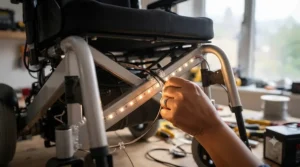
Originally marketed for prams and pushchairs, the Baby Uma LED Pushchair Lights four-pack has quietly become a popular manual wheelchair accessory, and it’s easy to see why: the set includes two white front headlights and two red rear taillights, giving you a complete, road-legal-style lighting arrangement for a single purchase rather than needing to buy front and rear units separately. Each light offers three modes — constant, pulse and strobe — and the universal clip design attaches to standard tubing found on wheelchair frames just as readily as pushchair handles. Here’s what to weigh: the colour-coded front-white, rear-red arrangement genuinely mirrors the lighting logic used on bicycles and mobility scooters, which matters because it’s the visual language other road users are trained to read at a glance — a stray white light at the back of a wheelchair can actually confuse oncoming traffic about which direction you’re travelling. Reviewers consistently report that the four-light set offers noticeably better all-round visibility than a single clip-on torch, particularly useful for wheelchair users who cross side roads regularly, where being seen from multiple angles matters more than raw beam brightness. The trade-off is that four separate lights mean four separate units to charge or battery-check before a journey, which adds a small maintenance overhead compared with a single-unit product.
Pros:
- ✅ Complete front-white, rear-red set in one purchase
- ✅ Colour arrangement matches road-user expectations
- ✅ Three modes suit both commuting and high-visibility use
Cons:
- ❌ Four separate units mean more charging admin
- ❌ Designed primarily for tubing, so fit can vary by chair frame
In the £15-£25 range for the full set, the Baby Uma LED Pushchair Lights offer some of the best value-for-completeness in this round-up, essentially replacing what would otherwise be two separate purchases.
7. CatEye AMPP 400 — premium brand reliability and brightest beam
The CatEye AMPP 400 is the odd one out in this list in the best possible way: it isn’t marketed as a mobility accessory at all, but as a serious rechargeable bicycle headlight from one of the most established names in cycling lights, and that pedigree translates directly into wheelchair use. Built around an aluminium housing, it offers Hi-Lo beam switching and a flashing mode, USB rechargeable operation, and a genuinely bright output that dwarfs the XLR-format units earlier in this list — 400 lumens is enough to properly light an unlit path rather than just mark your position on a well-lit one. Based on the spec comparison with the budget options above, the aluminium build and established brand backing are what justify the price jump: CatEye’s cycling lights carry a long track record of consistent quality control, which stands in useful contrast to the more variable build quality reported for some of the generic XLR units earlier in this guide. It mounts via a standard bar-clamp bracket, meaning it fits neatly onto most manual wheelchair push-rims or frame tubing without needing a dedicated wheelchair-specific mount, and pairing it with CatEye’s own compact rechargeable rear light gives you a matched, genuinely dependable front-and-rear set. This is the pick for anyone doing regular unlit-lane commuting, rural travel, or who simply wants light output and build quality they don’t have to think twice about.
Pros:
- ✅ 400-lumen output properly illuminates genuinely dark paths
- ✅ Aluminium housing and established brand reliability
- ✅ Hi-Lo and flashing modes suit multiple situations
Cons:
- ❌ Noticeably pricier than the dedicated wheelchair-market lights above
- ❌ Bar-clamp mount needs a compatible tube diameter to fit securely
At around £30-£40, the CatEye AMPP 400 costs more than the rest of this list combined, but for wheelchair users who genuinely travel unlit rural routes after dark, the extra brightness and build quality are a defensible investment rather than an indulgence.
Practical Usage Guide: Fitting and Maintaining Your Wheelchair Lights
Getting a new light onto your chair is only half the job — fitting it in the right position and building a quick maintenance habit is what actually keeps you visible when it matters. Start by mounting front-facing lights at roughly waist height on the frame or armrest, angled slightly downward so the beam lights the pavement two to three metres ahead rather than dazzling anyone walking towards you; too high or too flat an angle is the single most common first-time mistake. For clip-on units like the CHOYTONG Walker Clip-On Mobility Light, test the clip on a stationary chair first and check nothing obstructs the beam once you’re actually seated and moving, since footplates and cushions can block a poorly placed light entirely.
Build a simple 30-day habit: check the charge level every few days rather than assuming a light will still have power weeks later, and give lenses a wipe with a damp cloth if you’ve been out in the rain, since road grime dims output surprisingly quickly. For power-chair units like the VOANZO Power Wheelchair Controller or FILFEEL Electric Wheelchair Light, periodically check the XLR connection hasn’t worked loose from vibration over rough pavements — a light that flickers on and off is often a connection issue rather than a failing battery. If you’re running a spoke-mounted set like the TAGVO 4pcs Bike Spoke Light, spin the wheel by hand after fitting to confirm nothing catches on the brake mechanism before you head out on the road.
Real-World Scenarios: Who Needs Which Light
Consider three genuinely different wheelchair users and how their lighting needs diverge in practice. A university student commuting three miles across a city campus after evening lectures, mostly on well-lit main roads, is well served by something compact and low-maintenance like the CHOYTONG Walker Clip-On Mobility Light — the environment is already reasonably lit, so the priority is being seen rather than lighting an unlit path, and the two-pack covers front and rear without adding bulk to a manual chair used indoors all day too.
A retired power-chair user living in a village with unlit country lanes between the house and the local shop faces a very different problem: genuine darkness with no street lighting to fall back on. Here, the brighter, more robust CatEye AMPP 400, or at minimum the wider-beam HURRISE Electric Wheelchair Light paired with a spare, makes far more sense than a low-output clip light, because the goal shifts from “be seen” to “actually see the road surface.” A parent pushing a child in a paediatric wheelchair to and from an after-school club, crossing several side roads along the way, benefits most from the Baby Uma LED Pushchair Lights set, since the front-white, rear-red arrangement communicates direction of travel clearly to drivers at every junction, which matters more here than raw brightness.
How to Choose LED Lights for Wheelchair
- Check your chair type first. Power chairs with a 3-pin XLR accessory socket can use dedicated controllers like the VOANZO Power Wheelchair Controller; manual chairs need clip-on or spoke-based lights instead, since there’s no port to plug into.
- Match brightness to your typical route. Well-lit streets need only a modest beam for visibility, while unlit lanes or rural routes call for genuinely bright options such as the CatEye AMPP 400.
- Prioritise a front-and-rear pairing over a single light. A white front and red rear arrangement, as offered by the Baby Uma LED Pushchair Lights, communicates direction of travel to other road users far more clearly than one light alone.
- Check the water-resistance rating. UK weather makes an IPX5 rating or better a genuine requirement rather than a nice-to-have, particularly for anything mounted low near wheel spray.
- Factor in charging habits realistically. USB-rechargeable units suit anyone happy to plug in overnight; if you’re likely to forget, a light with a longer runtime per charge reduces the risk of setting off with a flat battery.
- Read the compatibility list carefully. XLR-format controllers list specific compatible chassis brands — don’t assume universal fit without checking your own chair’s connector against the listing.
- Buy a spare or a backup mode where possible. Given the durability concerns reported for some budget units, a strobe or flashing backup mode, or a second cheap light kept in a bag, adds real peace of mind for very little outlay.
✨ Don’t Miss These Exclusive Deals!
🔍 Take your wheelchair lighting setup to the next level with these carefully selected products. Click on any highlighted item to check current pricing and availability. These small accessories can make a genuinely reassuring difference to your everyday independence after dark!
Night-Time Visibility: What the Data Actually Shows
Night-time visibility isn’t just a comfort issue for wheelchair users — it’s a genuine, measurable safety gap. Research reviewed by the Cochrane Collaboration on pedestrian and cyclist visibility aids found that fluorescent materials improve driver detection in daylight, while lamps, flashing lights and retroreflective materials measurably improve pedestrian recognition specifically after dark, which is precisely the gap that clip-on and spoke-mounted wheelchair lights are designed to close. A wheelchair sits lower and presents a smaller visual profile than a standing pedestrian or a cyclist, which in practice means the margin for a driver to spot you in low light is genuinely narrower — a static, unlit chair in dark clothing at dusk can be alarmingly hard to pick out against a shadowed pavement or verge.
What the spec sheets on individual products won’t tell you is that flashing or strobe modes generally outperform steady beams for being noticed from a distance, because movement and pattern change catch peripheral vision more readily than constant light — which is exactly why the multicolour, three-mode option on the TAGVO 4pcs Bike Spoke Light tends to be the most effective visibility choice of that set, even though it does nothing to light your actual path. The practical takeaway is to think of visibility and illumination as two separate jobs: a front-facing steady beam to see by, and a flashing or strobe element, front or rear, purely to be seen by.
Road Safety Regulations for Wheelchair and Mobility Scooter Lighting
UK law treats powered wheelchairs and mobility scooters as “invalid carriages” under specific regulations, and the rules genuinely matter if you use yours on the road rather than exclusively on pavements. According to the Highway Code’s guidance for powered wheelchair and mobility scooter users, lights must be used at night if the vehicle is fitted with them, and users are strongly encouraged to make themselves more visible even at dusk and in daylight through reflective clothing or strips, since other road users may not spot a low-profile vehicle in time. Class 2 invalid carriages are limited to 4mph and generally restricted to pavements, while Class 3 vehicles can travel on the road at up to 8mph and must follow the same lighting rules as other road vehicles when fitted with lights.
Manual wheelchairs sit outside this specific regulatory framework since they’re classed as Class 1 invalid carriages and aren’t powered, but that doesn’t mean visibility rules stop applying in practice — a manual wheelchair crossing a road junction after dark faces exactly the same detection risk as a pedestrian, and the general road safety advice that applies to pedestrians and cyclists applies equally here. Reflecting on why one beats another in this context: a flashing light genuinely does more for legal-style compliance and driver detection than a static reflector alone, which is worth bearing in mind if you’re choosing between the reflective-strip and active-light routes for a manual chair.
LED Lights for Wheelchair vs Reflective Clothing and Strips
It’s worth being honest about where powered lights stop being the whole answer. Reflective clothing and strips work passively — they only “light up” when another light source, typically a car headlamp, hits them directly, which means they’re genuinely useless in low ambient light with no vehicles nearby, but extremely effective at the exact moment a driver’s headlights sweep across them. Active LED lights, by contrast, work in complete darkness and don’t depend on another light source at all, but they do depend on a charged battery, which introduces a maintenance dependency that a reflective strip simply doesn’t have.
The honest answer, backed by the general advice from bodies like RoSPA on pedestrian visibility and reflective clothing, is that the two aren’t really competitors — they’re complementary, and the safest set-up combines both. A wheelchair fitted with an active front light like the CatEye AMPP 400, a rear light or spoke set like the TAGVO 4pcs Bike Spoke Light, and simple reflective strips on the frame or a hi-vis element on clothing covers both the “always visible when lit by another vehicle” case and the “visible in genuine darkness” case, without leaving either gap open.
Common Mistakes When Buying Wheelchair Lights
The single most common mistake is buying a light without checking connector or mounting compatibility first — XLR-format controllers like the FILFEEL Electric Wheelchair Light only work with chairs that have the matching accessory socket, and a clip-on unit bought for a frame tube far thicker or thinner than expected simply won’t sit securely. A second frequent error is treating a single light as covering both jobs of illumination and visibility, when in practice a forward beam and a rear or flashing element genuinely serve different purposes and both matter. Buyers also regularly underestimate charging admin: a four-light set like the Baby Uma LED Pushchair Lights is excellent value, but only if you actually build the habit of checking and charging all four units rather than the one you remember.
Finally, don’t assume the cheapest option is false economy or the most expensive is automatically best — the aggregated review evidence in this guide shows genuine durability variance even among similarly priced budget units, which is exactly why reading real feedback patterns, rather than headline star ratings alone, matters more than price when making the final call.
Features That Actually Matter (And Those That Don’t)
Water resistance, mounting security and a genuinely adjustable beam angle are the features that consistently matter in practice, because they directly affect whether the light still works and points the right way after a normal week of British weather and pavement use. A high lumen count matters far more for unlit rural routes than it does for well-lit urban streets, where a modest beam paired with a flashing visibility mode does the job just as well for a fraction of the price.
What matters less than the marketing suggests is an extensive list of colour options or novelty flash patterns beyond the basic steady/strobe/flash trio — genuinely useful variety stops at having a steady mode to see by and a fast, attention-grabbing mode to be seen by, and additional colour cycling beyond that is largely aesthetic rather than functional. Similarly, an oversized housing marketed as “extra bright” doesn’t necessarily correlate with genuinely higher output, since the actual lumen rating and beam angle tell you far more than physical size ever will.
Long-Term Cost & Maintenance
Thinking in terms of total cost of ownership rather than sticker price changes the calculation meaningfully. A budget XLR unit like the VOANZO Power Wheelchair Controller, priced under £15, represents excellent value if it lasts a full winter season, but the aggregated durability concerns noted for units like the HURRISE Electric Wheelchair Light mean a genuinely cost-conscious buyer should factor in the realistic chance of needing a replacement within a year, which can eat into the apparent saving over a slightly pricier, more reliable alternative.
By contrast, the CatEye AMPP 400‘s higher upfront price is offset by an established brand’s typically longer working lifespan and widely available replacement parts and mounts, which matters if you’re the kind of user who’ll still want the same light working reliably in three winters’ time rather than treating it as a single-season purchase. Rechargeable USB units also carry a small ongoing electricity cost that’s genuinely negligible — a full charge cycle on a small LED unit typically costs a matter of pence — so the real long-term cost differentiator between products in this list is replacement frequency, not running cost.
Battery-Powered Accessories: Charging, Runtime and Fire Safety
Every product in this guide runs on either a rechargeable lithium battery or replaceable disposable cells, and charging habits genuinely matter for safety, not just convenience. The London Fire Brigade’s guidance on charging lithium-ion batteries safely — written primarily for e-bikes and e-scooters but directly applicable to any rechargeable mobility accessory — recommends always using the charger supplied with the unit rather than a generic substitute, unplugging once charging finishes rather than leaving it connected overnight, and never using a battery that’s been dropped or shows signs of damage such as swelling, an unusual smell or excessive heat during charging.
For the smaller LED units in this guide, the real-world risk is considerably lower than for a full e-bike or mobility scooter battery pack, simply because the cells involved are much smaller, but the same basic principles hold: charge in a location that doesn’t block an exit route, avoid charging unattended overnight where practical, and stop using any unit that feels unusually hot to the touch during charging. Runtime varies meaningfully across this list — the smaller clip-on units like the CHOYTONG Walker Clip-On Mobility Light are designed for several hours of intermittent use between charges, while a higher-output unit like the CatEye AMPP 400 will drain faster on its brightest setting, so it’s worth getting into the habit of topping up charge after each outing rather than waiting until the battery indicator is critically low.
Problem → Solution Guide
Problem: My power chair doesn’t have an XLR accessory socket. Skip the connector-dependent units entirely and opt for a clip-on solution like the CHOYTONG Walker Clip-On Mobility Light, which attaches to the frame tubing rather than any electrical port.
Problem: I keep forgetting to charge my lights. Choose a set with a longer runtime per charge, or build charging into an existing routine, such as plugging in while your phone charges overnight, so it becomes automatic rather than something to remember separately.
Problem: My light dazzles people walking towards me. This is almost always a mounting-angle issue rather than a product fault — reposition the light lower or angle it further downward, as recommended in the practical usage guide above.
Problem: I need visibility but my budget is genuinely tight. The TAGVO 4pcs Bike Spoke Light at under £15 for four units offers some of the best pound-for-pound visibility improvement in this entire list.
Problem: I travel regularly on unlit rural roads. Don’t compromise on brightness here — the CatEye AMPP 400‘s genuinely higher lumen output is a safety-relevant upgrade over the budget options, not just a nice-to-have.
FAQ
❓ Do wheelchair users need lights by law in the UK?
❓ Can you fit LED lights on a manual wheelchair?
❓ How long do wheelchair LED lights last on a charge?
❓ Are spoke lights safe for wheelchair wheels?
❓ What's the best budget LED light for a power wheelchair?
Conclusion
Choosing the right LED lights for wheelchair use ultimately comes down to matching the product to your chair type, your typical route and how much charging admin you’re realistically willing to take on. Power-chair users with a compatible XLR socket have three solid budget routes in the VOANZO Power Wheelchair Controller, the FILFEEL Electric Wheelchair Light and the HURRISE Electric Wheelchair Light, each with slightly different trade-offs around durability and extra features worth weighing against your own priorities. Manual chair users are generally better served by the flexibility of clip-on and spoke-based options like the CHOYTONG Walker Clip-On Mobility Light, the TAGVO 4pcs Bike Spoke Light and the Baby Uma LED Pushchair Lights, all of which sidestep the connector question entirely.
For anyone genuinely commuting or travelling on unlit routes after dark, it’s worth stretching to the CatEye AMPP 400 rather than compromising on brightness for the sake of saving a few pounds — the safety case for a properly bright, reliable beam on a truly dark lane is hard to argue against. Whichever route you take, remember that illumination and visibility are two separate jobs: pair a forward-facing beam to see by with a flashing or reflective element to be seen by, and build a simple charging habit into your routine so the lights are actually ready when the nights draw in.
Recommended for You
- Wheelchair Wheel Lock for One-Handed Use: 7 Best Picks 2026
- Buy Wheelchair Extension Brakes 2026: 7 Best Picks Under £30
- Wheelchair Security Cable for Travel: 7 Best Picks (2026)
Disclaimer: This article contains affiliate links. As an Amazon Associate, I earn from qualifying purchases. If you purchase products through these links, we may earn a small commission at no additional cost to you.
✨ Found this helpful? Share it with your friends! 💬🤗
