

In This Article
There’s a particular kind of frustration that comes from a brake you can technically reach but can’t quite operate. Not because you’re doing anything wrong — because the standard lever on most manual wheelchairs was designed decades ago for an average hand with average strength, and a lot of hands using wheelchairs today simply aren’t that. Arthritis, stroke recovery, reduced dexterity, or just the natural stiffness that comes with age can all turn a two-second brake lock into a genuine struggle, and that struggle matters more than it sounds — an unlocked brake on a slope or during a transfer is one of the more preventable causes of a wheelchair fall.

A brake lever extension solves a very specific mechanical problem: it lengthens the lever arm, which increases leverage without requiring any more strength from your hand. Physics does the work that your grip used to have to do. What most buyers overlook is that not every extension suits every situation — a rigid steel bar suits someone with reasonable hand closure but limited reach, while a rounded ball-grip head suits someone whose fingers can’t wrap fully around a handle at all. This guide compares seven genuine products currently available, covers exactly who each one suits, and walks through fitting, sizing, and the practical side of self-propelled wheelchair adaptation that most product listings skip entirely. For background on how the NHS supports wheelchair users more broadly, the is a useful starting point.
What Are Wheelchair Brake Extension Levers?
A wheelchair brake extension lever is a rigid attachment that fits over or replaces the existing brake handle on a manual wheelchair, lengthening it so less hand strength and a shorter reach are needed to engage or release the wheel lock.
The mechanism is straightforward leverage, the same principle as using a longer spanner to shift a stiff bolt. Most designs slide directly over the existing brake tip — no tools, no permanent modification, and in most cases fully reversible if the wheelchair is later returned to an NHS wheelchair service or passed on to someone else. They typically come in pairs, since both wheels need locking, and range from simple steel rods to padded, ball-shaped grip ends built specifically for people who struggle to close their fingers around a narrow handle.
Quick Comparison Table
| Extension | Best For | Grip Type | Under £20? | Price Range |
|---|---|---|---|---|
| AliMed Round Tip Brake Lever Extension | High-visibility, easy install | Round tip, slip-on | Yes | Under £20 |
| ENCAREFOR Wheelchair Brake Handle Extensions (Pair) | Budget-first buyers | Straight rod | Yes | Under £20 |
| Rehabilitation Advantage 9-Inch Brake Handle Extensions | Maximum reach and leverage | Steel rod, crimped fit | Around £20–£25 | £20–£25 range |
| Dynarex Wheelchair Brake Lever Extension | Comfort-first daily use | Vinyl-covered metal | Around £15–£20 | Under £20 |
| Drive Medical Wheelchair Brake Handle Extension, Chrome | Established brand reliability | Chrome handle | Around £20–£25 | £20–£25 range |
| Rehabilitation Advantage Ball Grip Brake Handle Extensions (Pair) | Very limited grip strength | Full ball grip | Around £20–£25 | £20–£25 range |
| Generic Stainless Steel Wheelchair Brake Extension Rod | Self-propelled wheelchair users needing durability | Straight steel rod | Yes | Under £20 |
Looking at this spread, the pattern worth noticing is that grip type matters more than price for most buyers. A round-tip or straight rod extension, like the AliMed Round Tip Brake Lever Extension, adds reach and leverage but still needs a functioning pinch grip; a ball-grip design like the Rehabilitation Advantage Ball Grip Brake Handle Extensions is built for hands that can push and pull but can’t close tightly around a narrow bar. Matching that distinction to your actual hand function matters more than any single spec on the packaging.
💬 Just one click — help others make better buying decisions too!😊
Top 7 Wheelchair Brake Extension Levers: Expert Analysis
Seven genuine products, spanning simple budget rods through to specialist ball-grip designs. Prices shown are ranges only — always check the current listing for exact pricing, and note that many of these qualify for UK VAT relief when bought for personal disability use (more on that later).
1. AliMed Round Tip Brake Lever Extension — best high-visibility budget pick
This is one of the simplest and most widely stocked extensions on the market, and its round yellow tip is a genuinely clever bit of design rather than just decoration. The high-visibility colour does double duty: it extends the lever’s reach while also acting as a visual reminder to actually lock the brake, which matters more than it sounds given how often unlocked brakes are simply forgotten rather than physically hard to reach. It slips directly onto the existing lever tip on most standard manual wheelchairs, replacing a worn or low-visibility original tip.
Who is this for? Wheelchair users or carers who have reasonable hand function but need a bit more leverage and a clearer visual cue that the brake is engaged — this is as much a safety-awareness tool as a strength aid. It’s less suited to someone with very limited finger closure, since the round tip still requires a moderate pinch or wrap grip to operate. It genuinely earns its reputation as a straightforward, reliable fix rather than anything flashy.
Pros:
- ✅ High-visibility tip doubles as a safety reminder
- ✅ Slips onto most existing wheelchair brake levers
- ✅ Simple, tool-free installation
Cons:
- ❌ Still requires a moderate pinch grip to operate
- ❌ Sold as tip replacements rather than full-length rods
Priced under £20, the AliMed Round Tip Brake Lever Extension is a sensible entry point for anyone whose main issue is reach and visibility rather than severe grip weakness.
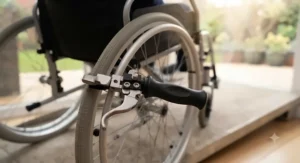
2. ENCAREFOR Wheelchair Brake Handle Extensions (Pair) — best genuine budget option under £20
Sold as a pair, at roughly 8.2 inches per extension, this is a no-frills straight-rod design that installs by removing the existing rubber knob on the brake and sliding the extension into place. There’s nothing complicated about it, which is exactly the point — for a lot of buyers, the existing brake lever isn’t badly designed, it’s just too short, and a straightforward rod extension solves that without adding any extra bulk to the wheelchair’s overall width.
The honest trade-off with a budget straight-rod design is that it doesn’t add any grip assistance beyond length — someone with genuinely limited hand closure will still find it harder to operate than a ball-grip version. But for the specific problem of “I can grip fine, I just can’t reach or generate enough leverage,” this is a cost-effective, uncomplicated fix that does exactly what it says.
Pros:
- ✅ Genuinely under £20 as a pair
- ✅ Simple slide-on fit, no tools required
- ✅ Doesn’t add significant width to the wheelchair
Cons:
- ❌ No enhanced grip surface for weak hands
- ❌ Basic finish compared to branded medical alternatives
At under £20, the ENCAREFOR Wheelchair Brake Handle Extensions genuinely deliver on the “wheelchair brake extension under £20” brief without cutting corners on the core function.
3. Rehabilitation Advantage 9-Inch Brake Handle Extensions — best for maximum reach and leverage
At nine inches per extension, this is one of the longer options available, and that extra length translates directly into extra leverage — useful for anyone whose issue is primarily strength rather than reach or grip shape. The extensions are made from durable steel with a crimped end designed to slide securely over the existing brake tubing, and crucially, they’re designed to be removed easily for travel or to help the wheelchair fit through narrower doorways, which matters more than manufacturers often admit given how many UK homes have tight hallway clearances.
This is a strong pick for anyone who’s found shorter extensions still don’t provide quite enough mechanical advantage. The trade-off is size: nine inches adds noticeably more length to the brake lever’s swing, so it’s worth checking your wheelchair’s clearance around furniture and doorframes before committing. Reviewers consistently note the ease of installation and removal as a standout feature over more permanent-feeling alternatives.
Pros:
- ✅ Longer 9-inch length maximises leverage
- ✅ Removable for travel or tight doorways
- ✅ Durable steel construction with secure crimped fit
Cons:
- ❌ Extra length needs more surrounding clearance
- ❌ Overkill if reach, not strength, is the main issue
In the £20–£25 range, the Rehabilitation Advantage 9-Inch Brake Handle Extensions are the pick for genuinely limited upper-body or grip strength where shorter extensions haven’t been enough.
4. Dynarex Wheelchair Brake Lever Extension — best comfort-first daily-use pick
Dynarex is a long-established medical supply brand, and this extension reflects that with a metal core wrapped in a comfort vinyl grip rather than bare metal. That detail matters more than it might seem: cold, hard metal against a hand with arthritic or sensitive joints can itself be a barrier to regular use, independent of leverage or reach. The vinyl coating adds cushioning and a warmer, more secure feel, particularly useful for anyone operating the brake multiple times a day, every day.
This is a genuinely solid option for daily, heavy-use scenarios — a self-propelled wheelchair user locking and unlocking brakes for transfers throughout the day will notice the comfort grip far more than an occasional user would. The trade-off is that vinyl coatings do wear over time with heavy use, so this is a product to expect to replace every year or two of regular daily use rather than a permanent fixture.
Pros:
- ✅ Vinyl-comfort grip reduces pressure on sensitive joints
- ✅ Attaches to existing brake without modification
- ✅ Well suited to multiple daily operations
Cons:
- ❌ Vinyl coating wears with heavy long-term use
- ❌ Not the longest option for maximum leverage
At around £15–£20, the Dynarex Wheelchair Brake Lever Extension is a strong daily-driver pick where comfort matters as much as function.
5. Drive Medical Wheelchair Brake Handle Extension, Chrome — best for established brand reliability
Drive Medical (also trading in the UK as Drive DeVilbiss Healthcare) is one of the larger, more recognisable names in mobility equipment, and this chrome-finished extension is built specifically for compatibility with a named range of transport and heavy-duty wheelchairs. At around 8.66 inches, it strikes a middle ground on length, and the installation process — removing the existing wheel lock tip, sliding the extension into place, pushing forward to engage, pulling back to release — is genuinely straightforward and well documented.
What most buyers overlook when picking between brands in this category is that fit compatibility varies more than length or grip style. Drive Medical’s extension is specifically sized and shaped for their own wheelchair ranges and several common heavy-duty and bariatric models, which matters if your chair falls into that bracket — a generic extension might technically slide on but sit at an awkward angle. For anyone using a Drive-brand chair, or simply wanting the reassurance of a well-established manufacturer, this is the safer bet.
Pros:
- ✅ Purpose-built for common Drive Medical wheelchair models
- ✅ Durable chrome finish resists wear
- ✅ Well-documented installation process
Cons:
- ❌ Best fit is brand-specific rather than universal
- ❌ Chrome surface is cold to the touch in winter
In the £20–£25 range, the Drive Medical Wheelchair Brake Handle Extension is the pick for anyone prioritising brand reliability and confirmed model compatibility over the cheapest possible option.

6. Rehabilitation Advantage Ball Grip Brake Handle Extensions (Pair) — best for very limited grip strength
This is the specialist pick, and it exists to solve a specific problem that straight-rod extensions genuinely can’t: hands that can push, pull, or swipe but can’t close firmly around a narrow bar. Rather than a rod or tip, the end of the extension is a rounded ball, roughly ten inches from the brake mount, which can be operated with an open palm, the side of a fist, or even a forearm in some cases, rather than requiring a precision pinch grip. This single design choice is what separates it from every rod-style extension on this list.
The relevance here goes beyond convenience — reduced hand function from conditions like osteoarthritis or rheumatoid arthritis is well documented as a major barrier to daily independence, and organisations like Versus Arthritis highlight assistive equipment as one of the most effective everyday adaptations for exactly this kind of task. Installation follows the same slide-on principle as other extensions here, and it’s available in more than one colour, which is a small but genuinely appreciated touch for anyone tired of clinical-looking equipment.
Pros:
- ✅ Ball grip operable without a precision hand-close
- ✅ Ten-inch length adds strong leverage
- ✅ Available in non-clinical colour options
Cons:
- ❌ Bulkier profile than slim rod extensions
- ❌ Higher price point within this product category
At around £20–£25, the Rehabilitation Advantage Ball Grip Brake Handle Extensions are genuinely the right call for limited grip strength specifically, rather than just limited reach.
7. Generic Stainless Steel Wheelchair Brake Extension Rod — best for self-propelled wheelchair durability
Widely available from several smaller specialist sellers, stainless steel extension rods of this type are built primarily for durability under frequent use — a relevant consideration for anyone self-propelling daily, where the brake gets engaged and released many times per outing rather than occasionally. Stainless steel resists the corrosion and wear that a cheaper painted-metal extension can develop over months of regular handling, and the straightforward rod design keeps the overall wheelchair profile compact.
Self-propelled wheelchair adaptation often comes down to small, cumulative details like this one: a brake extension that survives daily use without degrading is worth more, practically, than a slightly more feature-rich option that wears out within a season. This is a solid, unglamorous choice for anyone whose wheelchair is genuinely part of their daily routine rather than an occasional-use item.
Pros:
- ✅ Stainless steel resists corrosion under daily use
- ✅ Compact profile suits regular self-propelling
- ✅ Straightforward, tool-free installation
Cons:
- ❌ No cushioned or ball-grip comfort feature
- ❌ Quality varies more between individual sellers
At under £20, a Generic Stainless Steel Wheelchair Brake Extension Rod is a durable, budget-conscious pick for anyone using their wheelchair heavily and independently, day in, day out.
How to Fit a Wheelchair Brake Extension (Without Guesswork)
Fitting most brake extensions follows the same broad process, though it’s worth checking your specific product’s instructions since tip diameter and lever shape vary between wheelchair manufacturers. Start by identifying whether your existing brake lever has a removable rubber tip or knob — most do. Gently pull or twist this off; it’s usually held on by friction rather than any fixing, so it shouldn’t need tools. Slide the new extension over the exposed lever in its place, pushing it on firmly until it sits snug against the base of the original lever. A loose fit is the most common installation problem, and it’s almost always solved by pushing the extension further on rather than needing any adhesive or additional part.
Once fitted, test the brake through a full cycle — engage it fully, then release it — before relying on it during a transfer or on a slope. Extensions occasionally sit at a slightly different angle than the original lever, and it’s worth a few practice cycles to confirm the new leverage point feels secure and doesn’t catch on clothing or armrests. For anyone self-propelling regularly, it’s also worth checking extension length against your usual parking spots and doorways at home, since the added length changes how much the lever protrudes when engaged.
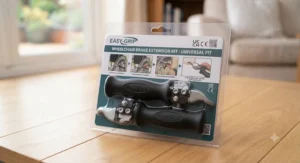
Real Wheelchair Users, Real Extensions: Matching Kit to Need
The user with reduced reach but reasonable grip. Someone recovering from a shoulder injury or with limited torso rotation often finds the brake technically graspable but simply out of comfortable reach. A straightforward option like the ENCAREFOR Wheelchair Brake Handle Extensions or AliMed Round Tip Brake Lever Extension solves this directly — length is the fix, not grip shape.
The user with arthritis or reduced finger closure. Where the issue is genuinely about closing the hand around a narrow bar rather than reaching it, a ball-grip design changes what’s actually possible. The Rehabilitation Advantage Ball Grip Brake Handle Extensions are built precisely around this use case, allowing an open-palm push rather than a precision grip.
The daily self-propelled wheelchair user. For someone operating their brakes multiple times a day, every day, durability and comfort compound over time in a way an occasional user won’t notice. The Dynarex Wheelchair Brake Lever Extension‘s vinyl comfort grip or the Generic Stainless Steel Wheelchair Brake Extension Rod‘s corrosion resistance both address this longer-term wear pattern directly.
Wheelchair Brake Extension Under £20: What You Actually Get
Given how often price sits at the centre of this decision, it’s worth being specific about what genuinely changes — and what doesn’t — between a sub-£20 extension and a pricier one. At the budget end, straight-rod and round-tip designs like the AliMed Round Tip Brake Lever Extension, ENCAREFOR Wheelchair Brake Handle Extensions, and Generic Stainless Steel Wheelchair Brake Extension Rod all deliver the core mechanical benefit — more leverage, easier reach — without cutting corners on basic reliability.
What tends to separate budget from premium in this specific category isn’t safety or core function, it’s comfort refinement and specialist grip shapes. Vinyl or foam-cushioned grips, ball-shaped ends, and longer nine-to-ten-inch lengths generally sit just above the £20 mark, in the £20–£25 range covered by products like the Rehabilitation Advantage 9-Inch Brake Handle Extensions and the Rehabilitation Advantage Ball Grip Brake Handle Extensions. If your hand function allows a moderate grip and your only issue is reach, staying under £20 genuinely doesn’t mean compromising. If grip strength itself is the limiting factor, spending slightly more on a ball-grip design tends to be the better-value decision, because a cheaper option that still can’t be operated isn’t actually cheap at all.
Limited Grip Strength: Why Standard Brake Levers Fail So Many Users
Standard wheelchair brake levers were designed around an assumption of average adult hand strength and full finger closure — a design baseline that simply doesn’t reflect a huge proportion of actual wheelchair users. Conditions affecting grip are common and varied: osteoarthritis and rheumatoid arthritis both directly reduce the ability to close the hand firmly, nerve conditions and stroke can affect fine motor control independent of raw strength, and general age-related muscle loss reduces grip force even without a specific diagnosis.
The practical result is a lever that’s mechanically fine but functionally inaccessible — not because the wheelchair is faulty, but because the interface between hand and lever doesn’t match the hand using it. This is precisely the gap brake extensions are designed to close, and it’s a genuinely well-recognised issue: hand function is consistently highlighted as one of the most impactful barriers to daily independence for people with joint conditions, which is why dedicated ball-grip and vinyl-comfort designs exist alongside simple rod extensions rather than one style trying to serve everyone.
Brake Lever Reach: Getting the Length Right for Your Wheelchair
Reach is a separate problem from grip strength, and it’s worth treating it that way rather than assuming a longer extension automatically solves both. Reach issues typically come from reduced shoulder mobility, limited torso rotation, or simply a wheelchair frame where the brake sits further back than is comfortable for a particular body shape and seating position. In these cases, the priority is length — extending the lever enough that it falls within a comfortable, low-effort arc of motion from a seated position.
A genuinely useful way to judge required length before buying is to sit in the wheelchair as you normally would and note where your hand naturally falls when reaching slightly forward and down — that’s roughly where an extended lever tip needs to land for comfortable, repeatable operation. Extensions in the 6 to 8 inch range, like the Drive Medical Wheelchair Brake Handle Extension or Dynarex Wheelchair Brake Lever Extension, suit moderate reach gaps, while the 9 to 10 inch options, including the Rehabilitation Advantage 9-Inch Brake Handle Extensions, suit more significant reach limitations. Buying based on your actual seated reach, rather than simply choosing the longest available option, avoids ending up with a lever that now protrudes awkwardly into armrests or clothing.
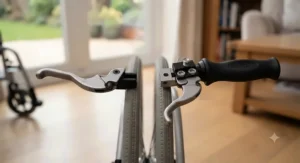
Self-Propelled Wheelchair Adaptation: Small Changes, Real Independence
Brake extensions sit within a much broader category of small, practical adaptations that make self-propelling genuinely sustainable day to day, rather than something that works in theory but gets abandoned in practice. Age UK’s guidance on choosing and using a wheelchair specifically flags upper body strength and comfort as central considerations for anyone deciding whether self-propelling remains realistic long-term, and brake accessibility is very much part of that picture — a chair that’s otherwise easy to self-propel becomes a safety risk if the brakes can’t be reliably engaged at the end of each push.
The wider point worth making here is that adaptations like brake extensions aren’t a sign of a wheelchair being unsuitable, they’re a sign of a wheelchair being properly fitted to the actual person using it, in the same way glasses aren’t a failure of eyesight. Small, targeted changes — a brake extension here, a push-rim grip cover there — often extend genuinely independent wheelchair use by months or years compared with persisting on unmodified standard fittings until self-propelling becomes unsustainable altogether.
✨ Don’t Miss These Exclusive Deals!
🔍 Take your wheelchair comfort to the next level with these carefully selected extensions. Click on any highlighted item to check current pricing and availability. A properly fitted brake extension is a small, inexpensive change that can make a genuinely daily difference.
Common Mistakes When Buying Wheelchair Brake Extensions
The single most common mistake is buying based on price alone without first identifying whether the actual problem is reach or grip strength — a longer rod extension does nothing for someone who can’t close their hand around it, no matter how much leverage it adds. The second common error is skipping a compatibility check against the wheelchair’s specific brake tip diameter and shape; while most extensions are described as universal or near-universal fit, chairs from certain manufacturers, particularly bariatric or heavy-duty models, sometimes need brand-matched extensions like the Drive Medical option rather than a generic alternative.
A third mistake is ignoring surrounding clearance — buying the longest available extension without checking it against doorways, armrests, or transfer routes at home, which can turn a helpful adaptation into a new obstacle. Finally, many buyers don’t realise that VAT relief is available on this category of product: under UK rules, if you’re buying for your own personal use and are chronically sick or disabled, you generally won’t be charged VAT, and most specialist mobility retailers will apply this automatically at checkout with a simple declaration — full detail is available via gov.uk’s guidance on financial help if you’re disabled, which is worth checking before paying full price unnecessarily.
Long-Term Cost and Durability: Which Extensions Actually Last
| Consideration | Budget Rod (Under £20) | Comfort/Ball-Grip (£20–£25) | Brand-Specific (£20–£25) |
|---|---|---|---|
| Typical lifespan | 12–24 months, daily use | 18–30 months, coating wears gradually | 24+ months, purpose-built fit |
| Best For | ENCAREFOR, Generic Stainless Steel Rod | Rehabilitation Advantage Ball Grip | Drive Medical Chrome Extension |
| Comfort over time | Basic, functional | Best for sensitive or arthritic hands | Good, brand-consistent finish |
The pattern here mirrors the running-gear and mobility-aid categories more broadly: cheaper isn’t necessarily false economy, but comfort features do tend to correlate with price for a genuine reason. A rod extension that’s slightly uncomfortable but otherwise functional will likely still get replaced sooner simply because it’s used less willingly, whereas a comfort-grip or ball-grip design that actually gets used every single time tends to outlast its cheaper equivalent in practical terms, even if the raw material lifespan is similar on paper.
Features That Actually Matter (And Those That Don’t)
In this category specifically, length and grip shape matter enormously — they’re the two variables that directly determine whether an extension solves your particular problem. Material durability matters moderately; stainless steel and chrome genuinely outlast basic painted metal under daily use, though this is a secondary concern behind getting length and grip type right first. Colour, by contrast, matters far less functionally, though the high-visibility yellow seen on products like the AliMed extension does add a small genuine safety benefit by making it easier to confirm at a glance that the brake is engaged.
The clearest priority order for most buyers is: first, correctly diagnose whether the core issue is reach, grip strength, or both; second, choose length and grip shape to match that diagnosis specifically; and only third, consider material, finish, and brand reputation as a tie-breaker between otherwise well-matched options.
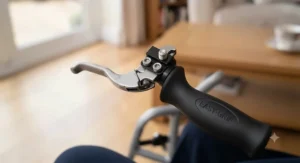
Frequently Asked Questions
❓ Are wheelchair brake extensions easy to fit yourself?
❓ Do brake extensions fit all wheelchairs?
❓ Can I get VAT relief on wheelchair brake extensions?
❓ What's the difference between a rod extension and a ball-grip extension?
❓ Will a brake extension make my wheelchair wider or harder to fit through doors?
Conclusion
There’s no single best wheelchair brake extension, and the products that get recommended most often aren’t necessarily the ones that will suit you specifically — this is a category where matching the product to the actual limitation matters more than chasing the highest star rating. The AliMed Round Tip Brake Lever Extension and ENCAREFOR Wheelchair Brake Handle Extensions cover straightforward reach problems well and stay genuinely under £20; the Rehabilitation Advantage Ball Grip Brake Handle Extensions solve grip strength specifically, in a way rod-style options simply can’t; and the Drive Medical and Dynarex options earn their place through brand reliability and daily comfort respectively.
What matters most is being honest about whether your particular challenge is reach, grip, or daily durability — and buying accordingly rather than defaulting to whichever option has the most reviews. A brake that can actually be engaged confidently, every single time, is a small piece of equipment that does a genuinely outsized job for daily independence and safety.
Recommended for You
- Wheelchair Security Cable for Travel: 7 Best Picks (2026)
- Wheelchair Wheel Locks vs Security Cables: 7 Picks (2026)
- Wheelchair Wheel Locks: 7 Top UK Picks Compared (2026)
Disclaimer: This article contains affiliate links. As an Amazon Associate, I earn from qualifying purchases. If you purchase products through these links, we may earn a small commission at no additional cost to you.
✨ Found this helpful? Share it with your friends! 💬🤗
