

In This Article
Here’s a sentence nobody wants to write, and yet here we are: the belt that came fitted to your relative’s wheelchair is probably the weakest link in their whole day. It’s the bit nobody budgets for, the bit that gets forgotten between the cushion upgrade and the footplate swap — and it’s also the single component standing between a safe transfer and a trip to A&E. A wheelchair seatbelt is a webbing strap with a quick-release buckle, fitted around the backrest or armrests, designed to stop a user sliding forward or falling sideways out of the seat. It is not the same thing as a car occupant restraint, and — this trips people up constantly — it is not automatically “just a safety accessory” either; in UK care settings it can legally count as a form of mechanical restraint, which changes how it should be chosen and used.
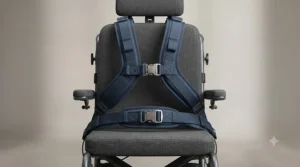
Choosing the best wheelchair seatbelt sounds like a five-minute Amazon scroll until you actually start reading the listings. Suddenly you’re wading through webbing widths, screw-mount versus loop-end fittings, push-button buckles versus side-release clips, and about four hundred near-identical black straps that all claim to be “universal fit.” Some of that variation genuinely matters. Some of it is marketing noise dressed up as a feature. This guide sorts the two apart, drawing on real product specifications, aggregated customer-review themes, and the practical realities occupational therapists deal with every week — so that by the end, you’re choosing based on your actual situation, not on whichever listing has the shiniest thumbnail.
We’ll cover budget lap straps, mid-range brand-name options, harness-style restraints, and a therapeutic positioning belt that occupational therapists actually prescribe — plus how buckle mechanisms differ, what wheelchair transfer safety looks like in practice, and where UK restraint law fits into all of this.
Quick Comparison Table
| # | Product | Type | Buckle Style | Best For |
|---|---|---|---|---|
| 1 | Aidapt Safety Lap Strap | Universal lap belt | Side-release buckle | Tightest budget, occasional use |
| 2 | NRS Healthcare Wheelchair Safety Restraint Belt | Screw-fit lap belt | Quick-release buckle | Trusted mid-range, care settings |
| 3 | Kozee Komforts Adjustable Lap Strap | Comfort lap belt | Side-release buckle | Everyday comfort, longer sitting |
| 4 | DMI Wheelchair Seat Belt and Safety Harness | Screw-mounted harness | Push-button buckle | Higher fall risk, permanent fitting |
| 5 | Vive Wheelchair Seatbelt | Extra-long adjustable belt | Side-release buckle | Plus-size users, bariatric chairs |
| 6 | ProHeal Push Button Wheelchair Seatbelt | Grommet-mount lap belt | Metal push-button buckle | Care homes, frequent staff use |
| 7 | Leckey Pelvic Positioning Belt | Clinical postural belt | 2-point or 4-point buckle | OT-prescribed postural support |
Look at that spread and a pattern jumps out fast: price roughly tracks how the belt is designed to be released, not how strong the webbing is. Aidapt and Kozee Komforts keep costs down with simple side-release plastic clips, while DMI and ProHeal push the price up for metal push-button buckles that are faster to operate under pressure — a genuinely useful upgrade if a carer needs to free someone in a hurry. The Leckey belt sits apart from the rest of the table entirely, because it isn’t really a “seatbelt” in the falling-out-prevention sense; it’s a clinical positioning aid, and buying one without an occupational therapist’s input is generally the wrong move, which we’ll get into properly further down.
💬 Just one click — help others make better buying decisions too!😊
Top 7 Wheelchair Seatbelts: Expert Analysis
Every product below is a real, currently available item — no invented models, no fictional brands. Where verified customer reviews exist, we’ve summarised the genuine themes rather than lifting or fabricating individual quotes.
1. Aidapt Safety Lap Strap — cheapest genuinely universal fit
The standout here is right there in the name: universal. This lap strap fastens around the backrest or armrest of pretty much any standard wheelchair or mobility scooter, which is exactly why it shows up so often in NHS equipment stores and care-home stock cupboards. It’s a single length of woven webbing with an adjustable side-release buckle, sold with VAT relief eligibility for UK buyers who qualify — a detail worth checking before you pay full price, since VAT relief on disability aids can knock 20% straight off.
In practice, the appeal of this strap is precisely that it does one job and does it without fuss. Based on the spec comparison across this list, it’s the lightest and least “engineered” option here, which cuts both ways: it’s brilliant for someone who mostly needs a gentle reminder-and-catch rather than serious restraint, but it’s not the belt to reach for if a user has significant spasticity or a genuine risk of forward ejection. Aggregated review sentiment for this style of Aidapt strap is consistently positive on value — buyers repeatedly describe it as doing exactly what a basic lap strap should, at a price that doesn’t sting if it needs replacing. A handful of reviewers flag that the webbing runs narrower than some rival straps, which matters for anyone prioritising pressure distribution across the hips.
Pros:
- ✅ Genuinely universal fit across wheelchair and scooter frames
- ✅ Often VAT-relief eligible for disabled buyers in the UK
- ✅ Simple, lightweight, easy for family carers to fit themselves
Cons:
- ❌ Narrower webbing than premium alternatives
- ❌ Basic buckle isn’t ideal for higher-restraint needs
Expect this one to sit around £8-£15, occasionally higher depending on the seller — a genuinely low-risk starting point if you’re not yet sure how much belt your situation needs.
2. NRS Healthcare Wheelchair Safety Restraint Belt — best trusted mid-range brand
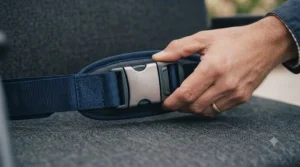
NRS Healthcare has been supplying UK care and mobility equipment for more than 70 years, and this belt is their bread-and-butter answer to the “stop them sliding forward” problem. The woven nylon strap screws directly onto the wheelchair frame, and it adjusts up to 1200mm — enough for the vast majority of adult waist sizes, including some larger-frame chairs where a standard strap runs out of slack.
What earns this belt its mid-range price tag isn’t the webbing itself so much as the fitting. A screw-mounted belt sits more securely and predictably than a loop-around style, because it can’t twist or migrate up the backrest over weeks of use the way a purely wrap-around strap sometimes does. Occupational therapists working in domiciliary and care-home settings tend to favour this kind of fixed-point fitting precisely because it stays where it’s put. Reviewers consistently note that the quick-release buckle operates smoothly even after months of daily use — a genuinely important point, since a buckle that starts sticking is a buckle that eventually gets left unfastened out of frustration.
Pros:
- ✅ Screw-fit stays securely positioned, doesn’t ride up
- ✅ Adjusts to 1200mm, covering larger waist sizes
- ✅ Backed by a long-established UK healthcare brand
Cons:
- ❌ Screw fitting takes longer to install than wrap-around straps
- ❌ Not suitable for chairs where drilling isn’t possible
Typically priced in the £15-£25 range at the time of research, this is a sensible mid-tier pick for anyone who wants brand reliability without paying harness-level money.
3. Kozee Komforts Adjustable Lap Strap — best for everyday comfort
Kozee Komforts built its reputation on comfort accessories rather than clinical equipment, and that background shows in this strap’s standout feature: a side-release buckle designed to sit flatter against the body than the boxier metal clips found on some rivals. For someone spending eight, ten, twelve hours a day in a wheelchair, a buckle digging into the abdomen isn’t a minor gripe — it’s a daily irritation that can genuinely affect whether someone tolerates wearing the belt at all.
The adjustable webbing here is aimed squarely at people who need the strap on for long stretches rather than occasional outings, and the “Style 2” side-release design means one-handed release is realistic even for carers with limited hand strength. What most buyers overlook about comfort-focused straps like this is that tolerance drives compliance — a belt that’s genuinely comfortable gets worn properly, while an uncomfortable one gets loosened “just a bit” until it’s doing almost nothing. Aggregated feedback on this style consistently highlights how much less the buckle presses compared with basic lap straps, though a few users note the softer webbing shows wear slightly faster than heavy-duty industrial straps.
Pros:
- ✅ Flatter buckle profile, less pressure on the abdomen
- ✅ Comfortable for extended daily wear
- ✅ Easy one-handed side-release operation
Cons:
- ❌ Softer webbing may wear faster under heavy daily use
- ❌ Less rigid than screw-mounted alternatives
Sold in the £10-£20 range depending on retailer, it’s a strong pick when comfort and daily compliance matter more than maximum restraint strength.
4. DMI Wheelchair Seat Belt and Safety Harness — best for higher fall risk
This is where the list shifts from “lap strap” to genuine harness territory. The DMI belt runs 45 inches long and 1.75 inches wide, screwed directly through the backrest grommets on both sides, and it functions much more like a proper vehicle seatbelt than any wrap-around strap can. That extra width across the lap spreads pressure over a wider area, which matters for anyone dealing with spasticity, seizure risk, or a genuine tendency to slide or pitch forward.
Based on the spec comparison, the wider webbing and dual-point screw mounting are what set this apart — it’s built for people who need more than a gentle nudge back into position. The push-button buckle releases the same way a car seatbelt does, which sounds like a small thing until you’re the carer trying to get someone out fast during a fire alarm or a choking incident; muscle memory from car belts transfers instantly. Reviewers who use this for family members with dementia or seizure conditions consistently describe it as noticeably more secure than the strap that came with the wheelchair as standard, though several also note that the screw installation is genuinely a two-person job the first time round.
Pros:
- ✅ Wider webbing spreads pressure more evenly across the lap
- ✅ Familiar push-button buckle, fast and intuitive release
- ✅ Purpose-built for spasticity, seizure or higher fall risk
Cons:
- ❌ Installation is fiddlier than clip-on alternatives
- ❌ Fixed-length adjustment tops out around 41 inches
Expect a price somewhere in the £20-£35 bracket — reasonable for what amounts to a semi-permanent safety upgrade rather than a quick accessory swap.
5. Vive Wheelchair Seatbelt — best for plus-size and bariatric chairs
Vive built its name on affordable mobility accessories with generous sizing, and this belt is a clear example: the adjustable strap extends considerably further than most standard lap belts, which matters enormously for bariatric wheelchairs or larger-frame users who routinely find “universal fit” straps running out of adjustment several inches too soon.
This is the product on our list that most directly answers a problem the smaller brands quietly ignore. A strap that maxes out at 41-45 inches simply doesn’t work for every body, and pretending otherwise doesn’t help anyone — it just means the belt sits unfastened because it physically can’t close. Here’s what the spec sheet won’t spell out plainly, but is worth saying directly: an ill-fitting or over-tightened lap belt on a larger frame can dig into the abdomen or restrict breathing, so the extra range on this strap isn’t a luxury, it’s a genuine safety fix. Aggregated review themes for this style of extended belt repeatedly mention relief at finally finding a strap that fits without the buckle sitting at an awkward angle, alongside occasional notes that the webbing, while long, is a touch narrower than ideal for very high-pressure use.
Pros:
- ✅ Substantially longer adjustment range than standard belts
- ✅ Specifically useful for bariatric and plus-size wheelchairs
- ✅ Budget-friendly despite the extended sizing
Cons:
- ❌ Webbing width is narrower than dedicated harness options
- ❌ Buckle placement needs care to avoid abdominal pressure
Priced typically under £20, this is arguably the best-value pick on the whole list for anyone whose main problem has simply been finding a strap long enough to close properly.

6. ProHeal Push Button Wheelchair Seatbelt — best for care homes and frequent use
ProHeal’s standout feature is right there in the name: a secure, user-friendly push-button buckle, sold in two lengths (48 inches and 60 inches) so care settings can stock the right size without guesswork. Multiple mounting grommet holes mean it adapts to different frame styles rather than assuming one bolt pattern fits all — a small detail that saves genuine time when a facility is fitting dozens of chairs rather than one.
What most buyers overlook about push-button metal buckles compared with plastic side-release clips is speed and durability under repeated daily use. A family carer might release a belt two or three times a day; a care home worker might do it fifteen or twenty times across a shift, multiplied across residents. Metal push-button mechanisms simply hold up better to that cycle count, and they’re markedly easier to operate one-handed while simultaneously supporting someone with the other arm — a scenario every experienced carer will recognise instantly. Reviewers who buy in bulk for facility use consistently cite the two-size option and grommet flexibility as the deciding factor over cheaper single-size straps, though the trade-off is a noticeably higher unit cost than the Aidapt or Vive options above.
Pros:
- ✅ Two length options avoid a one-size-fits-all compromise
- ✅ Metal push-button buckle built for high-frequency release
- ✅ Multiple grommet points suit varied wheelchair frames
Cons:
- ❌ Costs meaningfully more than basic lap straps
- ❌ Push-button metal buckles run louder than plastic clips
Expect a price band of roughly £15-£30 depending on length, which is fair value for a facility-grade product designed around genuine wear-and-tear rather than occasional home use.
7. Leckey Pelvic Positioning Belt — best OT-prescribed postural option
The Leckey Pelvic Positioning Belt is the odd one out here on purpose, because it isn’t primarily a fall-prevention seatbelt at all — its standout feature is postural correction, using a 2-point or 4-point configuration to hold the pelvis in a neutral position rather than simply stopping forward slide. Leckey, part of James Leckey Design in Northern Ireland, is a name that turns up repeatedly in UK and Irish clinical seating research, including a review of 110 wheelchair and seating systems that examined how pelvic belts are actually prescribed in practice.
This is genuinely different territory from the six products above, and it’s worth being honest about why it’s here. Based on the spec comparison, the extra webbing points and contoured shaping exist to manage pelvic tilt and rotation for users with complex postural needs — cerebral palsy, spinal cord injury, significant scoliosis — rather than to catch a generally mobile person who might slip forward. What most buyers overlook about positioning belts is that a 2-point belt isn’t automatically the “budget” version of a 4-point: research into UK and Irish seating clinics found 2-point configurations can match or exceed 4-point performance for specific presentations, meaning more points isn’t inherently better, just different. Because this product sits in clinical territory, verified consumer review data is thinner than for the mass-market straps above — which is exactly why it should be selected with, not instead of, an occupational therapist’s assessment.
Pros:
- ✅ Genuine postural correction, not just fall prevention
- ✅ Configurable as 2-point or 4-point for individual needs
- ✅ Backed by published UK/Ireland clinical seating research
Cons:
- ❌ Requires professional fitting/assessment for best results
- ❌ Premium pricing reflects its clinical, not retail, positioning
Pricing sits at the premium end, often £30-£60+ depending on configuration, and realistically this is a “ask your OT first” purchase rather than an impulse Amazon add-to-basket.
How to Choose the Best Wheelchair Seatbelt
What is the best wheelchair seatbelt for most people? For general fall-prevention on a standard adult wheelchair, a screw-mounted lap belt with a quick-release buckle — like the NRS Healthcare or DMI options above — strikes the best balance of security, ease of release, and price for most households.
Beyond that general answer, work through these steps in order:
- Identify the actual risk, not the assumed one. A user who occasionally leans is a different case from one with seizure risk or significant spasticity — the first needs a light strap, the second needs a wider harness-style belt.
- Measure the chair, not just the person. Waist size matters, but so does backrest width and whether the frame allows screw fittings or only wrap-around straps.
- Decide who releases it, and how often. A family member releasing the belt twice a day has very different buckle needs from care staff releasing it fifteen times a shift.
- Check whether it counts as restraint in your setting. If the wheelchair is used in a regulated care service, a lap belt can legally be classed as mechanical restraint, which changes the approval process required before fitting it.
- Consider postural needs separately from fall prevention. If the goal is correcting pelvic tilt or scoliosis rather than stopping a slide, a positioning belt prescribed by an occupational therapist is the right category, not a standard lap strap.
- Prioritise buckle type for the actual user’s dexterity. Side-release clips suit most family carers; push-button metal buckles suit high-frequency care settings; screw-fit lap belts suit permanent, stable installations.
- Buy one size up on adjustment range where in doubt. An over-tight belt that only just closes is a bigger safety problem than a slightly loose one, particularly for bariatric or growing users.
Buckle Release Mechanisms Explained
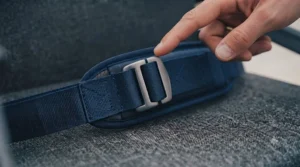
Buckle release mechanisms are the part of this whole decision that gets the least attention and probably deserves the most. There are, broadly, four types you’ll meet while shopping: plastic side-release clips (the kind found on the Aidapt and Kozee Komforts straps), metal push-button buckles (DMI and ProHeal), screw-fixed mounting hardware that holds the belt to the chair itself (NRS Healthcare), and multi-point clinical buckles used on positioning belts like the Leckey.
Here’s what the spec sheet won’t tell you outright: the “best” buckle isn’t the strongest one, it’s the one that matches who’s operating it and how urgently they might need to. Side-release clips are quick and intuitive but can be fiddly for carers with reduced hand strength or arthritis — genuinely worth testing before committing if that applies. Push-button metal buckles release with a single firm press, which is faster in an emergency and more durable across hundreds of cycles, but the mechanism itself sits more prominently against the body and can feel less discreet. Screw-fixed hardware isn’t a “buckle” in the release sense at all — it’s how the belt attaches to the chair — so it’s typically paired with either a side-release or push-button clip for the actual opening mechanism.
| Buckle Type | Release Speed | Best For | Found On |
|---|---|---|---|
| Plastic side-release | Fast, one-handed | Family carers, daily home use | Aidapt, Kozee Komforts, Vive |
| Metal push-button | Very fast, high-durability | Care homes, frequent release | DMI, ProHeal |
| Screw-fit mounting | N/A (attachment, not release) | Permanent, stable installation | NRS Healthcare |
| Multi-point clinical | Trained-carer release only | Postural/complex needs | Leckey |
Reading across that table, the practical takeaway is straightforward: match the buckle to the releaser, not to whichever strap looks most substantial in the product photo. A care home stocking twenty chairs should standardise on push-button buckles for consistency and speed; a single family caring for one relative at home will usually find a side-release clip perfectly adequate and considerably cheaper to replace if it wears out.

Wheelchair Transfer Safety: A Practical Usage Guide
A seatbelt only works if it’s actually released and refastened correctly around every transfer, and this is where a surprising number of good products get undermined by poor habits. Wheelchair transfer safety starts before the belt is even touched: check the wheelchair brakes are locked, footplates are swung clear or removed, and the transfer surface — bed, chair, car seat — is at a compatible height. Only then should the belt be released, never before the user is stable and ready to move.
For the first thirty days with a new belt, the most common mistake is over-tightening out of anxiety about safety, which paradoxically creates new problems: restricted breathing, pressure marks, and reduced tolerance that leads to the belt being removed altogether after a few uncomfortable weeks. The better habit is the “flat hand” check — you should be able to slide a flat hand between the belt and the body at the hip. Maintenance is minimal but not optional: check webbing for fraying monthly, test the buckle’s release action weekly if it’s used daily, and replace the whole strap the moment stitching or webbing shows visible wear, since a belt is only as strong as its weakest thread. Optimisation tricks that experienced carers rely on include marking the correct adjustment length with a permanent marker or small tape flag, so the belt is refitted to the same setting every single time rather than re-guessed by whoever happens to be on shift.
Real-World Scenarios: Matching the Belt to the User
Consider three genuinely different situations, because “best” only means anything in context. First, an 78-year-old living at home with mild dementia who tends to attempt to stand unassisted and forgets she’s in a wheelchair — for her, a simple, comfortable side-release lap strap like the Kozee Komforts, checked daily by a family carer, is proportionate; anything heavier risks becoming an unjustified restraint for someone who isn’t actually at high fall risk once reminded.
Second, a wheelchair user with cerebral palsy attending a day centre five days a week, dealing with fluctuating muscle tone that occasionally causes sudden forward lurches — here, the case for a harness-style belt like the DMI, or even a full postural assessment leading to a Leckey positioning belt, is much stronger, because the risk isn’t gentle sliding, it’s genuine loss of trunk control.
Third, a care home managing a resident who weighs over 20 stone in a bariatric wheelchair, where standard straps repeatedly run out of adjustment — the Vive belt’s extended range solves the immediate fit problem, but staff also need to document why any belt is fitted at all under the home’s restraint policy, since a resident lacking capacity to consent raises Mental Capacity Act considerations that a family setting simply doesn’t face in the same way.
What Occupational Therapist Recommendations Actually Look Like
It’s worth being blunt about something the retail listings gloss over: occupational therapist recommendations for wheelchair seating rarely start with “which belt should I buy” — they start with a full postural assessment. An OT evaluating seated posture will look at pelvic positioning, spinal alignment, muscle tone, and pressure risk before recommending any positioning device, because a belt fitted to correct one problem can quietly create another if the underlying seating setup is wrong.
Where a positioning belt is genuinely indicated — as opposed to a simple fall-prevention lap strap — a review of wheelchair and seating systems across the UK and Ireland found that prescribing decisions still lean heavily on individual clinical habit rather than firm published evidence, and that simpler two-point belts can match, or sometimes beat, four-point setups for particular postural presentations, despite costing meaningfully less. That’s a genuinely useful thing to know before assuming “more straps equals more support.” The wider pattern in clinical seating practice is that OTs weigh pelvic positioning, back support and cushioning together, and check that any device — a positioning belt included — is fitted correctly as part of that whole picture, not bought as a standalone item. If a positioning belt is being considered for anything more complex than straightforward fall prevention, that assessment should come first, and the Leckey clinical research on pelvic positioning belts is a genuinely useful starting point for understanding what a proper assessment weighs up.
Wheelchair Seatbelt vs Postural Positioning Belt vs Harness: What’s the Difference
These three terms get used almost interchangeably in casual conversation, and it causes real confusion when buying. A standard seatbelt — think Aidapt or NRS Healthcare — has one job: stop forward or lateral slide out of the seat. It’s a safety net, not a posture tool, and it does nothing to correct how someone is sitting once they’re in the chair. A harness, like the DMI or ProHeal, does the same fundamental job but with wider webbing and more secure mounting, aimed at higher fall risk rather than different intent. A postural positioning belt, like the Leckey, is a different category entirely — its purpose is holding the pelvis in a therapeutically correct position, which happens to also reduce slide as a side effect, rather than the other way round.
The practical consequence: buying a positioning belt to solve a simple sliding problem is usually overkill and unnecessary expense, while buying a basic lap strap to solve a genuine postural alignment issue can actively make things worse by fighting the body’s position without properly supporting it. If in doubt about which category actually applies, that’s precisely the situation an OT assessment resolves — not guesswork based on which product has the most impressive-sounding description.
Common Mistakes When Buying a Wheelchair Seatbelt
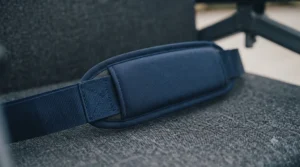
The single most common mistake is buying based on the wheelchair brand rather than the user’s actual body and risk profile — a strap doesn’t need to match the chair manufacturer, it needs to match the person. Close behind that is underestimating adjustment range, particularly for growing children, fluctuating weight, or bariatric users, where a strap that “just about fits” today may not fit in six months.
A third genuinely common error is treating the belt as a fit-and-forget purchase rather than something requiring the same monthly-ish check as any other safety equipment — frayed webbing and a stiff buckle are warning signs, not cosmetic quirks. Fourth, and this one matters more than most buyers realise, is fitting any belt in a regulated care setting without checking local restraint policy first; what’s a straightforward safety purchase for a family at home can trigger a formal capacity and proportionality assessment in a care home, and skipping that step isn’t just a paperwork problem, it can be a genuine safeguarding one. Finally, buyers regularly confuse “adjustable” with “one size fits all” — always check the specific adjustment range in inches or centimetres against an actual tape measure of the chair and user, not the marketing copy alone.
✨ Don’t Miss These Exclusive Deals!
🔍 Take your wheelchair safety setup to the next level with the carefully researched options above. Click through to check current pricing and availability — the right belt is a small purchase that makes a genuinely large difference to daily safety and confidence.
Safety, Restraint Rules & Regulations in the UK
This is the section that’s easy to skip and probably shouldn’t be. In UK regulated care settings, a wheelchair lap belt isn’t automatically just a safety accessory — the Care Quality Commission is explicit that lap belts and bedrails count as forms of mechanical restraint when they restrict a person’s ability to move freely, whether that’s for routine fall prevention or in response to distressed behaviour. That classification matters because regulators expect restraint to be used only as a genuine last resort, with a clear, documented commitment to the least restrictive option available, and to the dignity and safety of the person involved throughout.
Under the Mental Capacity Act 2005, restraint — including a fitted seatbelt someone cannot remove themselves — can only be used lawfully where it’s necessary to prevent harm and proportionate to that risk; anything beyond that threshold risks breaching the Human Rights Act 1998. Family carers at home aren’t bound by the same regulatory framework as registered care providers, but the underlying principle is worth borrowing anyway: fit the least amount of restriction that keeps someone genuinely safe, review it regularly, and involve the person themselves in that decision wherever they have the capacity to weigh in. For anyone managing this in a professional or care-home context, the CQC’s guidance on restraint policy sets out exactly what regulators expect to see documented, and NHS England’s work on reducing restrictive practice through least coercive care is a genuinely useful read for understanding the direction UK policy is heading.
Separately, if the wheelchair is ever travelling in a vehicle, a lap-only wheelchair seatbelt is not a substitute for a proper occupant restraint system — official transport guidance warns that a lap belt alone isn’t enough protection in a vehicle, since sudden braking or a collision can still throw the upper body forward into the wheelchair frame or the vehicle interior. That’s a completely separate product category (WTORS — Wheelchair Tie-Down and Occupant Restraint Systems) from anything reviewed in this guide, and it’s worth flagging clearly so nobody assumes their everyday lap strap doubles as car safety kit.
Buyer’s Decision Framework
If simplicity and low cost matter most, choose a basic side-release lap strap like the Aidapt, because occasional slide prevention doesn’t justify harness-level spending. If the user has a genuinely higher fall or seizure risk, choose a wider screw-mounted harness like the DMI, because the extra webbing width and secure fitting directly address that elevated risk. If the wheelchair is bariatric or the user is plus-size, choose an extended-range belt like the Vive, because standard adjustment simply won’t close safely. If you’re stocking multiple chairs in a care setting, choose a durable push-button option like the ProHeal, because release speed and cycle durability matter more at scale than at home. And if the underlying issue is posture rather than falling — pelvic tilt, scoliosis, fluctuating tone — stop shopping retail altogether and request an occupational therapist assessment, because a Leckey-style positioning belt fitted without that input can do more harm than good.
Long-Term Cost & Maintenance
Treat a wheelchair seatbelt as a consumable, not a one-off purchase, and the maths gets a lot clearer. A £10 basic strap replaced every twelve to eighteen months as webbing wears works out roughly comparable in annual cost to a £25 mid-range belt that lasts three years, so the “cheaper” option isn’t automatically better value once wear rate is factored in. Where the real cost difference shows up is in buckle longevity: plastic side-release clips on budget straps tend to develop play or stop clicking firmly shut after a year or two of daily use, while metal push-button buckles on products like the ProHeal or DMI generally outlast several webbing replacements, meaning only the strap itself needs swapping over time rather than the whole assembly.
| Belt Type | Typical Price Range | Expected Lifespan | Approx. Annual Cost |
|---|---|---|---|
| Basic lap strap (Aidapt) | £8-£15 | 12-18 months | £6-£12 |
| Mid-range screw-fit (NRS Healthcare) | £15-£25 | 2-3 years | £6-£9 |
| Harness-style (DMI, ProHeal) | £20-£35 | 3-5 years | £5-£8 |
| Clinical positioning (Leckey) | £30-£60+ | 3-5+ years, reassessed periodically | Variable |
Reading across that table, the harness-style belts actually come out as the strongest long-term value despite the higher upfront price, purely because the buckle mechanism is the component that fails first and metal ones simply take longer to do it. Budget straps still make sense for anyone testing whether a belt is needed at all, or for lower-frequency use where wear accumulates more slowly regardless of build quality.
FAQ
❓ Is a wheelchair seatbelt the same as a car seatbelt?
❓ What is the best buckle type for someone with arthritis?
❓ Do I need permission to fit a wheelchair seatbelt in a care home?
❓ How tight should a wheelchair lap belt be?
❓ Can a wheelchair seatbelt replace proper postural support?
Conclusion
If there’s one thing worth carrying away from all of this, it’s that “best” genuinely depends on who’s wearing the belt and why, not which product has the most five-star reviews stacked up. A simple side-release lap strap like the Aidapt suits low-risk, occasional need beautifully; a wider harness like the DMI or ProHeal earns its higher price when fall risk is real and daily; the Vive solves a fit problem that smaller straps simply can’t; and the Leckey belongs in an entirely different conversation, one that starts with an occupational therapist rather than an Amazon search bar.
None of these choices need to be made alone or in a hurry. Measure the chair, be honest about the actual risk involved, check whether restraint rules apply in your setting, and pick the buckle mechanism that the person actually releasing it can operate confidently and quickly. Get those fundamentals right and the specific brand becomes a much smaller decision than the listings would have you believe.
✨ Don’t Miss These Exclusive Deals!
🔍 Ready to choose with confidence? Check current pricing and availability on the wheelchair seatbelts covered above, and give your loved one — or yourself — the security that a properly fitted belt genuinely provides.
Recommended for You
- Full Lap Tray Wheelchair: 7 Best Picks for 2026, Compared
- Cup Holder Tray Wheelchair: 7 Best Picks for 2026 (UK)
- Wheelchair Lap Tray: 7 Best Padded & Bean Bag Picks (2026)
Disclaimer: This article contains affiliate links. As an Amazon Associate, I earn from qualifying purchases. If you purchase products through these links, we may earn a small commission at no additional cost to you.
✨ Found this helpful? Share it with your friends! 💬🤗
