
In This Article
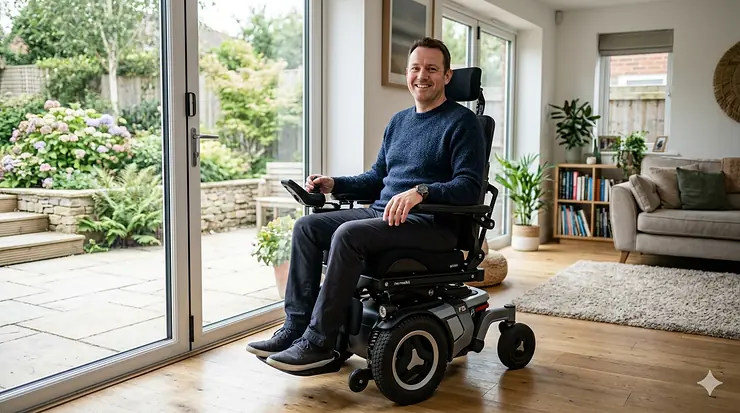
There’s a particular kind of freedom that arrives quietly — the moment you stop depending on someone else to push you through a doorway and start steering yourself. For the estimated 50,000 people living with a spinal cord injury in the United Kingdom, choosing the right electric wheelchair for spinal cord injury isn’t just a shopping decision. It’s a life decision.
And it’s a complicated one. A spinal cord injury — whether it’s an incomplete C5 fracture from a rugby match in Swansea or a T10 lesion from a road accident on the M6 — places wildly different demands on a powerchair. The tetraplegic user who relies on sip and puff controls has almost nothing in common, functionally speaking, with the paraplegic who can drive a standard joystick with ease. Yet both searches often land on the same overcrowded corner of Amazon.co.uk, where the listings blur together in a fog of “500W motors” and “airline-approved” stickers.
This guide cuts through the noise. We’ve researched what’s actually available on Amazon.co.uk in 2026, cross-referenced with NHS wheelchair pathway guidance and feedback from UK SCI communities, and applied a layer of honest, practical commentary that a product listing simply cannot provide. We cover chairs for high-level cervical injuries, mid-level thoracic users, travel scenarios, indoor navigation in compact British flats, and everything in between.
What is an electric wheelchair for spinal cord injury? At its most straightforward, it is a motorised chair that compensates for the loss of voluntary motor function caused by damage to the spinal cord — typically providing propulsion via electric motors controlled through a joystick, head array, chin control, or breath-operated (sip and puff) interface, depending on the level and completeness of the injury.
Whether you’re navigating a narrow terraced house in Leeds, boarding a train at Manchester Piccadilly, or simply trying to have a conversation without craning your neck upward, the right SCI powerchair makes an enormous difference. Let’s find yours.
Quick Comparison: Top Electric Wheelchairs for Spinal Cord Injury (UK 2026)
| Model | Best For | Drive Type | Weight | Price Range (GBP) | Amazon.co.uk |
|---|---|---|---|---|---|
| Sunrise Medical Quickie Jive F | Clinical mid-level SCI | Mid-wheel drive | ~78 kg | £2,500–£4,000+ | ✅ Available |
| Drive DeVilbiss Titan FWD Powerchair | Active paraplegic, outdoor | Front-wheel drive | ~96 kg | £1,500–£2,500 | ✅ Available |
| ByteTecpeak D04 Electric Wheelchair | Travel/backup, lower SCI | Rear-wheel | 14.9 kg | £400–£600 | ✅ Prime eligible |
| Free To Be Mobility 600W Powerchair | Indoor/outdoor, UK seller | Rear-wheel | 24 kg | £700–£1,100 | ✅ UK Seller |
| Juodkeo Reclining Electric Wheelchair | Pressure relief, longer sits | Rear-wheel | ~22 kg | £450–£700 | ✅ Available |
| Drive DeVilbiss AirFold Carbon Fibre | Portable travel backup | Rear-wheel | 13.5 kg | £1,800–£2,500 | ✅ Available |
| Motion Healthcare Foldalite Trekker | Outdoor terrain, active users | Rear-wheel | ~22 kg | £700–£1,100 | ✅ Available |
From the comparison above, the Quickie Jive F and Drive Titan represent the most clinically capable options for complex SCI needs — including tilt-in-space and recline functionality — while the ByteTecpeak D04 and AirFold Carbon offer brilliant portability for lower-level injuries or as travel companions. The mid-range Juodkeo and Free To Be models occupy a practical sweet spot for budget-conscious buyers who still need meaningful recline and comfort for longer-duration use. Budget buyers should note that lightweight travel chairs like the D04 sacrifice clinical seating features for their lower price — a trade-off that could matter significantly for anyone with postural support requirements.
💬 Just one click — help others make better buying decisions too! 😊
✨ Don’t Miss These Exclusive Deals!
🔍 Take your mobility to the next level with these carefully selected powerchairs. Click on any highlighted item to check current pricing and availability on Amazon.co.uk. These picks will help you find exactly what you need for your SCI journey!
Top 7 Electric Wheelchairs for Spinal Cord Injury: Expert UK Analysis
1. Sunrise Medical Quickie Jive F Electric Powered Wheelchair
The Quickie Jive F from Sunrise Medical is perhaps the most recognisable name in clinical powerchairs for UK SCI users — and for good reason. If you’ve spent any time in an NHS spinal cord injury centre, you’ve almost certainly seen one rolling down the corridor.
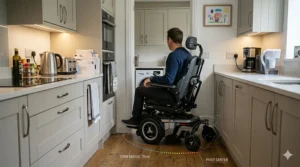
The mid-wheel drive configuration is the key spec to understand here. Mid-wheel drive places the main powered wheels beneath the user’s centre of gravity, which translates into a turning radius tight enough to navigate the average British kitchen (roughly 60 cm), negotiate a disabled loo with the door still closing behind you, and spin round in a lift without giving yourself or anyone else palpitations. For thoracic and lower cervical injuries where joystick use is retained, this chair’s Shark joystick interface is smooth and intuitive — not the clunky, input-lagged feel you get with cheaper units. The Jive F is configurable for a range of seating systems, including specialised pressure-relieving cushions critical for preventing pressure sores, which remain one of the most serious secondary complications for SCI users.
It’s not inexpensive. The £2,500–£4,000+ price range reflects its clinical-grade engineering. However, it’s worth noting that many UK buyers access this chair through the NHS Personal Wheelchair Budget (PWB) scheme, topping up for a preferred model. If you’re at the stage of private purchase as a supplement or replacement, this is the benchmark against which everything else should be measured.
Customer feedback from UK buyers is consistently positive about its reliability and turning radius, with some noting the weight makes car loading tricky without a hoist.
✅ Mid-wheel drive for exceptional indoor manoeuvrability
✅ NHS-familiar, clinically configurable seating
✅ Robust build quality for everyday full-time use
❌ Weight makes transport without a vehicle hoist challenging
❌ Premium price — best accessed via NHS PWB or specialist funding
Price range: £2,500–£4,000+ on Amazon.co.uk — check current price for the latest availability.
2. Drive DeVilbiss Titan Front Wheel Drive Powerchair
Drive DeVilbiss is about as close to a household name as mobility equipment gets in the UK — their products show up in NHS community equipment stores, independent mobility shops, and on Amazon.co.uk alike. The Titan FWD is their workhorse powerchair for users who spend significant time outdoors.
The front-wheel drive system is worth understanding practically: it tends to push through obstacles rather than climbing them, making it stable on smooth outdoor surfaces like council pavements, supermarket floors, and park paths. The dual motors support users up to 136 kg (approximately 21 stone), which is a realistic capacity for many adults including those who may carry additional equipment or have changed body composition post-injury. The adjustable backrest recline is particularly relevant for SCI users — being able to shift your spinal loading throughout the day isn’t comfort theatre, it’s pressure sore prevention, and it matters enormously.
For paraplegic users (roughly T1 and below) who retain good trunk balance and upper limb function, the Titan FWD’s joystick placement and armrest configuration feel natural. It won’t win any prizes in narrow Victorian terraced housing — the turning radius is wider than mid-wheel alternatives — but for someone primarily using their chair outdoors and in modern open-plan settings, it’s a solid, reliable choice.
UK reviews highlight the build quality and the reliability of the electronics, with some feedback noting it handles wet British pavements without protest.
✅ Robust dual motors, outdoor-capable
✅ Recline function supports postural health
✅ Trusted UK brand with local service availability
❌ Wider turning radius — less ideal for compact spaces
❌ Heavy for loading without access equipment
Price range: £1,500–£2,500 on Amazon.co.uk — check current pricing and Prime delivery eligibility.
3. ByteTecpeak D04 Foldable Electric Wheelchair
Right, let’s be clear about what the ByteTecpeak D04 is and, equally importantly, what it isn’t. This is not a clinical-grade SCI powerchair. It doesn’t offer tilt-in-space, it doesn’t support sip and puff controls, and if your injury requires complex postural management, this won’t be your primary chair. What it is, however, is a genuinely excellent lightweight travel powerchair for lower-level SCI users — paraplegics, those with incomplete injuries, or anyone who needs a compact backup for journeys.
At 14.9 kg without the battery (18.6 kg with), it weighs roughly what a large carry-on bag does — remarkable when you consider it houses a 500W motor and a removable 10Ah lithium battery delivering approximately 20 km of range. For reference, that’s enough to cover a full day of mixed indoor/outdoor use in a city like Bristol or Edinburgh without sweating about charging. The folding mechanism is genuinely one-handed — pull a lever, it collapses — which matters enormously if you’re loading it into a car boot independently.
For a British SCI user who can drive a joystick and wants a chair that fits in a taxi, slides under an aeroplane seat, or stores in a flat with approximately the floor space of a generous wardrobe, this chair punches well above its price bracket. Amazon Prime delivery makes it accessible quickly.
UK customer reviews on Amazon.co.uk are overwhelmingly positive, particularly praising the fold mechanism and the handling on pavements.
✅ Ultra-lightweight at 14.9 kg — car-boot friendly
✅ 20 km range covers a full UK day out
✅ Airline-approved, folds in seconds
❌ No clinical seating options — not for complex postural needs
❌ Smaller frame may not suit larger users
Price range: £400–£600 range on Amazon.co.uk — excellent value at this tier.
4. Free To Be Mobility Equipment Aluminium Powerchair (600W Dual Motors)
There’s something rather appealing about a product sold directly by a UK mobility specialist on Amazon.co.uk — faster support, easier returns under the Consumer Rights Act 2015, and the sort of practical buying experience that a grey-market import simply can’t offer. The Free To Be Mobility 600W Dual-Motor Powerchair ticks those boxes emphatically.
The dual 600W motors — a combined output significantly more powerful than most single-motor alternatives — give this chair a notably confident feel on inclines and less-than-perfect surfaces. For SCI users living in hillier parts of the UK (Sheffield, Edinburgh, Brighton, parts of Bristol), this matters. A chair that struggles on a 5% gradient is a chair that limits your world. The aluminium frame keeps weight at approximately 24 kg — manageable with a car hoist or a helpful companion, though not a featherweight.
Two batteries are supplied as standard, which is a thoughtful touch: charge one, use one, and you’re never unexpectedly marooned. The seating is functional rather than clinical — this won’t substitute for a prescribed NHS chair with bespoke postural supports — but it offers decent adjustment and is perfectly serviceable for lower-level injuries or as a second powerchair. UK Seller status on Amazon.co.uk means you’re covered under UK consumer protection and 14-day cooling-off under the Consumer Contracts Regulations.
UK reviews note the value for money and the confidence of the dual-motor system on hills.
✅ Dual 600W motors — genuinely capable on inclines
✅ Two batteries included — extended daily range
✅ UK Seller — strong consumer protection coverage
❌ 24 kg — heavier than portability-focused alternatives
❌ Functional rather than clinical seating
Price range: £700–£1,100 on Amazon.co.uk — check current price for UK Seller stock status.
5. Juodkeo Reclining Electric Wheelchair
Pressure sore prevention is the unglamorous, critically important reality of life after spinal cord injury. A powerchair that allows positional change throughout the day isn’t a luxury — it’s preventative healthcare. The Juodkeo Reclining Electric Wheelchair, available on Amazon.co.uk with Prime delivery to UK addresses, offers remote-controlled recline and an adjustable headrest at a price point that doesn’t require a second mortgage.
The 500W motor, 12Ah lithium battery, and roughly 22 kg frame place it squarely in the mid-range utility category. The remote control operation of the recline is genuinely useful for users with limited upper limb function — you don’t need to reach awkwardly behind yourself to shift position. The headrest support is meaningful for anyone with cervical weakness or fatigue. The range of approximately 15–20 km covers most domestic and community journeys without anxiety.
What sets this apart from the cheaper fixed-seat alternatives is the reclining capability combined with a headrest at this price tier. For SCI users managing pain, spasticity, or autonomic dysreflexia triggers, the ability to alter sitting angle mid-journey is more than convenience. That said, be aware the seating isn’t clinical-grade: if you’re dealing with significant postural challenges or you’re at high pressure sore risk, you’ll want a specialist pressure-relief cushion added separately (the ROHO or Jay ranges are worth investigating).
UK buyers highlight the reclining system and headrest comfort, with some noting the control interface is intuitive even for users with limited hand function.
✅ Remote-controlled recline — functional positioning without effort
✅ Headrest included — relevant for cervical SCI users
✅ Competitively priced for reclining functionality
❌ Not clinically prescribed — add specialist cushion separately
❌ Limited outdoor capability on rough terrain
Price range: £450–£700 range — check current Amazon.co.uk price.

6. Drive DeVilbiss AirFold Carbon Fibre Powerchair
The AirFold Carbon Fibre from Drive DeVilbiss is something of a triumph of materials science applied to everyday British life. At 13.5 kg total, it’s one of the lightest powerchairs available on Amazon.co.uk — lighter than some manual chairs, which is a genuinely remarkable engineering achievement. The carbon fibre frame comes with a 5-year warranty, which is the manufacturer saying, confidently, that they expect it to last.
For SCI users specifically, the value proposition here is as a second chair: the travel companion that goes where your primary clinical chair cannot. Think National Rail journeys, holidays abroad, day trips to cities where you don’t want to risk your fully-specified NHS chair, or simply a lighter chair for days when you know you’ll be loaded in and out of a car several times. The off-board charging capability — charging the battery on a kitchen worktop while the folded chair sits in the hallway — is exactly the kind of practical thinking that makes a difference in a compact British flat.
The performance-to-weight ratio means the motors work harder than heavier alternatives to deliver smooth movement, but Drive DeVilbiss has calibrated this well. You won’t mistake it for a clinical chair — the seating is travel-grade rather than postural management grade — but for a mobile, active lower-level SCI user who values independence and portability over clinical complexity, this is a near-flawless option.
✅ 13.5 kg — extraordinary lightness, true car-boot independence
✅ Carbon fibre frame with 5-year warranty
✅ Off-board charging — practical for UK flat living
❌ Travel-grade seating — not for complex postural needs
❌ Higher price than basic alternatives — you’re paying for the carbon fibre
Price range: £1,800–£2,500 on Amazon.co.uk — check current Drive DeVilbiss availability and Prime status.
7. Motion Healthcare Foldalite Trekker Powerchair
The Motion Healthcare Foldalite Trekker is a well-regarded name in UK mobility circles, and its presence on Amazon.co.uk makes it accessible to buyers who prefer the convenience of the platform alongside the reassurance of a British healthcare brand. The treaded rear tyres — the feature the name nods toward — are the standout practical difference from smoother-tyred alternatives.
For SCI users navigating the UK outdoors, “outdoor use” covers a fairly enormous range of scenarios: the relatively smooth tarmac of a suburban shopping centre, the slightly less smooth pavement of a market town, and the actively challenging surface of a National Park path or coastal route. The Trekker’s treaded tyres handle the first two confidently and make a reasonable attempt at the third, which is more than most competitors at this price point. The folding mechanism works genuinely quickly and the chair handles standard British kerb drops (most are 10–15 cm post-DDA lowering) without drama.
For paraplegic users who want to stay active and aren’t prepared to have their world shrunk to smooth surfaces only, this is a sensible choice. The build quality inspires confidence and the UK brand means spare parts and service aren’t sourced from a warehouse in Shenzhen with a six-week lead time.
UK user feedback is positive about the outdoor confidence and the folding convenience.
✅ Treaded tyres — genuine all-terrain credibility for UK outdoor use
✅ UK brand — reliable parts and service availability
✅ Practical fold for car boot and public transport
❌ Heavier than carbon-fibre alternatives at ~22 kg
❌ Seating comfort on very long journeys may require cushion upgrade
Price range: £700–£1,100 on Amazon.co.uk — check current availability for Prime delivery eligibility.
How to Match Your SCI Level to the Right Powerchair
This is where most buying guides fail you. They list products alphabetically or by price and leave you to do the matching yourself. That’s not especially useful when the difference between a C4 and a T6 injury changes almost everything about what “the right chair” means.
Here’s a practical framework.
High-level cervical injuries (C1–C4): At this level, hand function is limited or absent. The standard joystick control is off the table. What you need is a chair configurable for alternative access — head array, chin joystick, or sip and puff breath control. None of the Amazon.co.uk consumer-grade chairs reviewed here accommodate these controls out of the box; this is where specialist NHS prescription through the Wheelchair Service pathway becomes critical. If you’re supplementing an NHS chair, the AirFold Carbon or a similar ultra-light travel chair suits as a portable secondary option if a carer is assisting.
Mid-cervical injuries (C5–C7): Partial hand and wrist function may allow modified joystick use, often with a specialised joystick interface (ball, T-bar, or reduced-sensitivity joystick). The Quickie Jive F at this level is an excellent candidate — it supports joystick adaptations and the mid-wheel drive handles the indoor environments where C5–C7 users typically spend most of their time. A thorough OT assessment is essential before committing.
Thoracic injuries (T1–T12): Full upper limb function means a standard joystick is workable. The widest range of chairs applies here. The Titan FWD for active outdoor use, the ByteTecpeak D04 or AirFold Carbon for travel, and the Free To Be Mobility 600W for everyday general use all represent sensible options depending on lifestyle and budget.
Lumbar and sacral injuries: Many users at these levels can propel manual chairs independently. An electric chair may still be preferred for fatigue management, longer journeys, or managing secondary conditions. The Foldalite Trekker and ByteTecpeak D04 both serve well here.
One principle applies universally: never purchase a primary powerchair for spinal cord injury without an occupational therapist (OT) assessment. The NHS Wheelchair Service, accessed through GP referral, provides this free of charge, and it can make the difference between a chair that genuinely supports your health and one that quietly causes harm.
Real-World UK Scenarios: Which Chair for Which Life?
Profile 1: James, 34, T6 injury, central London
James was injured in a cycling accident two years ago. He uses his NHS-prescribed Quickie Jive F as his primary chair but needs something lighter for frequent Tube journeys and the odd Eurostar trip to Brussels. His flat in Bethnal Green has a narrow hallway and limited storage. The Drive DeVilbiss AirFold Carbon Fibre is almost exactly what James needs: 13.5 kg, folds to fit in his hallway cupboard, airline-approved for the Brussels trips, and light enough to manage on his own. The price in the £1,800–£2,500 range is a meaningful sum, but access to Work funding through his employer may cover part of it — worth a conversation with HR.
Profile 2: Margaret, 62, incomplete C6 injury, rural Shropshire
Margaret had a car accident eighteen months ago and uses a modified joystick. She lives in a bungalow with wide doorways but spends time outdoors on paths around her village. The NHS has provided a basic powerchair but she wants something more capable outdoors. The Drive DeVilbiss Titan FWD handles the outdoor terrain confidently, has a recline for afternoon comfort, and supports her 78 kg weight with ease. At £1,500–£2,500, it’s a significant but reasonable private supplement for her quality of life. She should add a specialist ROHO pressure cushion, available separately on Amazon.co.uk.
Profile 3: Ravi, 27, T12 incomplete injury, Birmingham suburb
Ravi is highly active — he works part-time, goes to the gym (with a PT who specialises in SCI), and needs a chair that can do everything from the office to a weekend trip to see family in Leicester. He’s on a tighter budget. The ByteTecpeak D04 at £400–£600 gives him the lightweight portability for commuting and train travel, while his NHS chair handles full days at home. The 20 km range and one-second fold match his lifestyle almost perfectly.
How to Choose an Electric Wheelchair for Spinal Cord Injury in the UK: 7 Key Criteria
Buying a powerchair for SCI isn’t like buying a laptop. Get it wrong and the consequences are measured not in frustration but in postural complications, pressure sores, autonomic dysreflexia triggers, and loss of independence. Here’s a structured approach.
1. Injury level and control interface first. Before looking at any product, establish what control interface you can use. High-level cervical injuries require alternative access (head array, sip and puff) that most consumer-grade chairs don’t support. This shapes your entire search before price or brand enters the conversation.
2. Primary vs. secondary chair. Are you looking for a full-time, all-day primary powerchair or a travel and backup chair? Primary chairs need clinical seating, postural management, and reliable durability. Secondary chairs prioritise portability and convenience. Confusing the two categories is one of the most common and costly mistakes UK SCI buyers make.
3. Seating and postural support. Tilt-in-space and recline aren’t comfort features — they’re pressure ulcer prevention. If you’re spending six or more hours per day in a chair, these functions are clinically important. The NHS Wheelchair Service can prescribe chairs with these features; consumer-grade Amazon.co.uk chairs often lack them or offer simplified versions.
4. Indoor vs. outdoor use. British pavements are not engineered for wheelchair users (a generous understatement). Kerb drops, uneven surfaces, dropped kerbs that somehow slope the wrong way — you need a chair with adequate ground clearance and appropriate tyres. Mid-wheel drive excels indoors; front-wheel drive tends to be more stable outdoors.
5. Weight and portability. If you drive, how will the chair get in and out of your car? A 95 kg powerchair requires a vehicle hoist. A 14 kg chair can be lifted manually. If public transport is your primary mode, lighter and foldable is non-negotiable. London’s Overground and National Rail both have wheelchair spaces, but manoeuvring through barriers and onto platforms rewards smaller, more agile chairs.
6. Battery range for your actual day. Don’t trust the headline range figure. In real UK conditions — stop-start urban use, damp weather reducing battery efficiency by roughly 10%, hilly terrain — assume 70–75% of the manufacturer’s claimed range. Plan your day accordingly, or choose a model with a removable/dual battery.
7. Budget and funding pathway. Private purchase, NHS provision, Personal Wheelchair Budget top-up, charity grants (Aspire, Spinal Injuries Scotland, Back-Up Trust), Access to Work — the options are more varied than most people realise. Don’t buy privately until you’ve explored NHS entitlement.
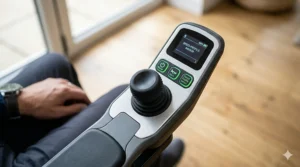
The NHS, Personal Wheelchair Budgets, and What Amazon.co.uk Actually Solves
Let’s be direct about something most buying guides gloss over: the NHS remains the primary route for full-time clinical powerchairs for spinal cord injury in the UK. The NHS Wheelchair Service, accessed through GP referral, assesses clinical need and can prescribe — free of charge — electrically powered wheelchairs suitable for indoor and outdoor use when the clinical case is established.
What’s changed significantly is the Personal Wheelchair Budget (PWB) scheme, which NHS England updated with a quality framework in April 2025. PWBs allow you to take the value of what the NHS would provide and top it up privately for a preferred model — meaning if the NHS would fund a £2,000 chair and you want a £3,500 model, you pay the difference. This has meaningfully opened access to better chairs for those who know it exists (many don’t — ask your OT or wheelchair service coordinator explicitly).
Where Amazon.co.uk genuinely shines for SCI users:
- Travel and backup chairs: Lightweight, foldable powerchairs that supplement a primary NHS chair for journeys, holidays, and situations where the full chair is impractical.
- Accessories and upgrades: Specialist pressure-relief cushions (ROHO, Vicair, Jay), wheelchair bags, tray tables, cup holders, anti-tip modifications — all available on Amazon.co.uk, often with Prime next-day delivery.
- Private primary chairs for lower-level injuries: Paraplegic users with good joystick function and lower clinical complexity who prefer the convenience of direct purchase.
- Those not yet in the NHS pathway: Newly injured users awaiting assessment, or those who’ve moved between ICBs and are in a gap in provision.
For funding beyond the NHS, the Aspire charity provides grants to UK residents with SCI for mobility equipment. Spinal Injuries Scotland serves Scottish residents. The Back-Up Trust and WheelPower both provide equipment funding for those within five years of injury.
Common Mistakes When Buying a Powerchair for Spinal Cord Injury
A few patterns emerge again and again when UK SCI buyers make decisions they later regret.
Buying for the injury they had, not the life they’re building. An acute injury at discharge looks very different from life six months post-rehabilitation. Muscle function can continue recovering (especially with incomplete injuries). Lifestyle builds back. The chair that suited a bed-to-bathroom reality may not suit a return-to-work, back-on-trains reality. Think ahead.
Ignoring the seating system entirely. The chair’s frame and motors get all the attention. The cushion and backrest system get almost none. This is backwards. Sitting in a powerchair for eight hours on a poor cushion is the clinical equivalent of wearing shoes three sizes too small — except the consequences include stage 3 pressure ulcers rather than blisters. Budget separately and seriously for a specialist pressure-relief cushion.
Assuming UK and US/EU models are identical. Several powerchair brands sell different regional variants. Voltage compatibility (UK: 230V/50Hz), plug type (UK Type G), UKCA marking (the post-Brexit equivalent of CE marking required for UK market), and even seating dimensions can differ. Always verify UK-specific model availability before purchasing. Some chairs appearing on Google Shopping comparison sites are US models not approved for UK use.
Skipping the OT assessment. An occupational therapist doesn’t just recommend a chair — they measure your posture, assess your sitting balance, evaluate your home environment, identify seating requirements, and can refer you to specialist postural management services if needed. This assessment is free through the NHS and is almost always worth doing before any significant purchase.
Underestimating battery degradation in British weather. Lithium batteries deliver noticeably reduced range in cold conditions. A chair rated for 25 km in a controlled lab environment will manage closer to 17–20 km on a damp November day in Manchester when the temperature is hovering around 5°C. This isn’t a defect — it’s electrochemistry. Factor it into your planning.
UK Regulations, Safety Standards, and Legal Considerations
There’s less regulation around purchasing powerchairs privately than many UK buyers assume, which cuts both ways.
UKCA marking: Since Brexit, products sold in Great Britain must carry the UKCA (UK Conformity Assessed) mark rather than the EU’s CE mark. Medical devices — which powered wheelchairs are classified as — must meet the UK Medical Devices Regulations 2002 (as amended). In practice, many established brands continue to carry CE marking under transitional arrangements, but buyers should be aware of the distinction and check with sellers if purchasing higher-specification clinical equipment.
Road use: Powerchairs in the UK are classified as invalid carriages under the Road Traffic Act 1988, which means they can be used on pavements and roads (with a maximum speed of 8 km/h on pavements, 12 km/h on roads). They are exempt from road tax, MOT, and driving licence requirements. There is no legal requirement for insurance, though third-party liability cover is strongly recommended — several specialist insurers including Able2 and various brokers offer affordable policies.
VAT relief: Disabled people are entitled to purchase mobility equipment (including powerchairs) VAT-exempt in the UK. This represents a 20% saving — not insignificant when a chair costs £2,000+. On Amazon.co.uk, you can declare eligibility at checkout. The HMRC guidelines on disability VAT relief are available at gov.uk.
Access rights: The Equality Act 2010 provides legal protections for powerchair users accessing public spaces, transport, and services. The Disabled Persons Transport Advisory Committee (DPTAC) sets transport accessibility standards. If you encounter access failures on National Rail or bus services, the relevant operators have legal obligations to provide reasonable adjustments.
FAQ: Electric Wheelchairs for Spinal Cord Injury (UK)
❓ Can I get an electric wheelchair for spinal cord injury free through the NHS?
❓ What powerchair controls are available for tetraplegic (quadriplegic) users?
❓ Are electric wheelchairs from Amazon.co.uk VAT-exempt for SCI users?
❓ What is tilt-in-space and do I need it for my spinal cord injury?
❓ Can I use an electric wheelchair on UK public transport?
Conclusion
Choosing an electric wheelchair for spinal cord injury is, in the end, an exercise in understanding yourself as much as understanding the products. Your injury level, your daily routine, your home environment, your transport habits, the hills between you and anywhere you want to go — all of these shape which chair is genuinely right for you, and none of them appear on a spec sheet.
What we’ve tried to give you here is an honest, practical UK-focused framework: the clinical options for complex needs (Quickie Jive F, Drive Titan FWD), the outstanding travel companions for active lower-level injuries (ByteTecpeak D04, AirFold Carbon), the sensible mid-range options for everyday use (Free To Be Mobility 600W, Juodkeo Reclining, Foldalite Trekker), and — critically — the context around NHS funding, VAT relief, and OT assessment that can save you thousands of pounds and months of frustration.
Don’t skip the occupational therapist. Don’t underestimate the cushion. And don’t buy a travel chair and expect it to be a primary chair, or vice versa. The right powerchair, chosen carefully, doesn’t just get you from room to room — it gets you back to the life you’re building.
✨ Ready to Find Your Perfect Powerchair?
🔍 Check current pricing and availability on Amazon.co.uk for all seven chairs reviewed above. Prices change regularly — click any highlighted product name to see today’s price and Prime delivery options. You deserve the right chair. Go find it.
Recommended for You
- Best Electric Wheelchair for Cerebral Palsy UK 2026: Top 7 Picks
- Tilt in Space vs Reclining Wheelchair: 7 Best UK Picks for 2026
- Best Reclining Electric Wheelchair UK 2026: Top 7 Picks
Disclaimer: This article contains affiliate links. As an Amazon Associate, I earn from qualifying purchases. If you purchase products through these links, we may earn a small commission at no additional cost to you.
✨ Found this helpful? Share it with your mates! 💬🤗
