
In This Article
There’s a quiet, unglamorous crisis happening in living rooms, hospital corridors, and care homes across Britain. Every day, wheelchair users — whether freshly discharged from an NHS ward, managing a long-term condition, or simply getting on with life — sit for hours on surfaces never truly designed to protect them. The result? Pressure ulcers. Or, to use the clinical term, wheelchair-acquired pressure injuries. They’re painful, potentially life-threatening, and — here’s the part that stings — almost entirely preventable.

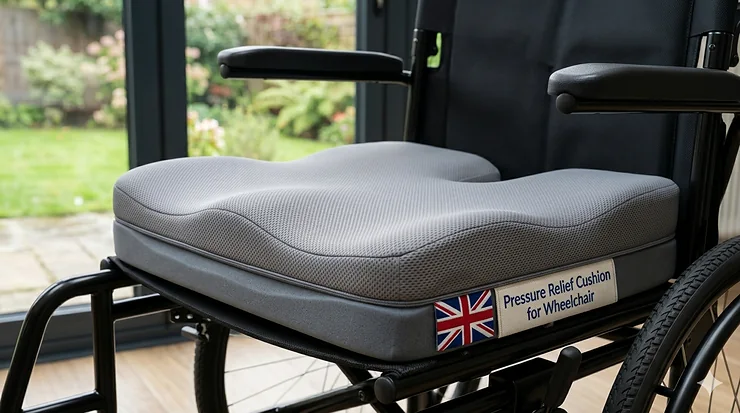
The right pressure relief cushion for wheelchair use isn’t a luxury. It’s closer to a medical necessity. A well-chosen cushion redistributes your body weight away from bony prominences like the ischial tuberosities (your sitting bones), the coccyx, and the sacrum — the key sites of sacral offloading. It manages shear forces when you shift position. And it keeps the skin aerated enough so that the slow, invisible damage of prolonged compression doesn’t accumulate into something far worse.
So what actually works? In 2026, the market ranges from sub-£20 foam pads that are essentially slightly upgraded sofa cushions, all the way up to clinical-grade air cell systems used by NHS community nurses and seating specialists. Knowing which one your situation calls for — and which features are genuine engineering versus marketing fluff — is exactly what this guide is for.
We’ve researched the top options currently available on Amazon.co.uk, verified UK availability and delivery, and stress-tested the specs against what real users in Britain actually need. Whether you’re managing a moderate risk of pressure sores, recovering from surgery, or seeking a ROHO cushion alternative that doesn’t require a second mortgage, read on.
Quick Comparison: Top 7 Pressure Relief Cushions for Wheelchairs (UK, 2026)
| Product | Type | Dimensions (approx.) | Risk Level | Best For | Price Range |
|---|---|---|---|---|---|
| Aidapt Memory Foam Vinyl Covered Cushion | Foam | 46 x 41 cm | Low | Daily comfort, care homes | Under £25 |
| PEPE Mobility Wheelchair Cushion 16.5″ | Viscoelastic foam | 42 x 42 cm | Low–Medium | Value seekers, light daily use | £25–£40 |
| AUVON Memory Foam Wheelchair Seat Cushion | Memory foam + U-cutout | 46 x 41 x 7.5 cm | Low–Medium | Coccyx & tailbone pain | £25–£45 |
| Aidapt Gel Cushion with Fleece Cover | Gel + memory foam | 42 x 42 cm | Medium | Warmth-sensitive users, all-day sitting | £25–£45 |
| ROHO Mosaic Wheelchair Cushion | Air cells (PVC) | 46 x 41 cm | Low–Medium | Active users, portable use | £30–£55 |
| ROHO High Profile Quadtro Select | Air cells (4-quadrant) | Available in multiple sizes | High | Clinical, high-risk, full-time users | £130–£180 |
| JAY J2 Wheelchair Cushion | Fluid tripad + contoured foam | Multiple sizes | Medium–High | Postural support + pressure relief | £150–£250 |
The pattern here is telling: budget and mid-range options serve users at lower risk who still need meaningful daily comfort, while the premium tier — the ROHO Quadtro and JAY J2 — exists for people where pressure ulcer prevention is a genuine clinical priority. Don’t automatically reach for the cheapest option if you’re a full-time wheelchair user. Equally, don’t assume you need a £200 clinical cushion if you’re using a wheelchair part-time and your skin integrity is good.
💬 Just one click — help others make better buying decisions too!😊
✨ Don’t Miss These Exclusive Deals!
🔍 Ready to protect your skin and transform your sitting comfort?Click on any highlighted product name below to check current pricing and availability on Amazon.co.uk. These carefully selected picks cover every budget and risk level — find the one that fits your situation!
Top 7 Pressure Relief Cushions for Wheelchairs: Expert Analysis
1. Aidapt Memory Foam Vinyl Covered Wheelchair Cushion
Aidapt is a genuinely British mobility brand — with manufacturing and design operations in the UK — and this memory foam cushion is their no-fuss, workhorse option for wheelchair users who need reliable everyday support without complexity.
The cushion uses a closed-cell memory foam core with a wipe-clean vinyl cover, secured by fixing straps that attach directly to the wheelchair frame. Dimensions are typically around 46 x 41 cm, fitting most standard NHS-issued and high-street wheelchairs. The vinyl cover is a practical choice for British care settings: it can be wiped down with a damp cloth, handles the occasional spillage, and won’t trap moisture in the way fabric covers sometimes do in humid environments. The foam density is modest — this isn’t a clinical high-density product — but it softens pressure on the ischial area and provides a more stable sitting surface than the standard sling seat found on most transit wheelchairs.
Who is this for? Honestly, it’s the sensible choice for low-risk users: someone spending a few hours a day in a wheelchair post-surgery, a care home resident who needs basic cushioning, or a carer looking for a replacement pad that won’t require a specialist prescription. The Aidapt is not a pressure ulcer prevention cushion in the clinical sense — it’s a comfort cushion that incidentally reduces everyday pressure — but at this price point, it performs its job well.
UK reviewers consistently describe it as “firm but comfortable,” with several noting it’s ideal for older relatives who’ve found gel cushions too cold on British winter mornings. Eligible for VAT relief for qualifying disabled users in the UK.
✅ Wipe-clean, hygienic vinyl cover — great for care settings
✅ UK brand with local customer support
✅ VAT relief eligible for qualifying users
❌ Not suitable for high-risk users or full-time wheelchair use
❌ No breathability — can feel warm during long sitting periods
Price range: Under £25 — outstanding value for basic comfort needs, though you’ll want something more advanced for all-day use.
2. PEPE Mobility Wheelchair Cushion 16.5″
This one has quietly become one of the most reviewed wheelchair cushions on Amazon.co.uk, with over 6,000 ratings — not because it’s flashy, but because it reliably does what it says. Made in Europe (which matters post-Brexit, more on that later), the PEPE Mobility cushion uses viscoelastic foam — the same pressure-contouring material found in medical mattresses — inside a waterproof, removable ZIP cover.
The “16.5 inch” designation refers to the seating width, making it a good fit for standard transit and self-propelling wheelchairs. The viscoelastic foam has a slow-recovery characteristic: when you press your hand in, it takes a second to spring back. That slow recovery is the key — it means the foam is continuously conforming to your body’s shape rather than pushing back against it, which is what cheaper standard polyfoam does. This characteristic is sometimes called “immersion,” and it meaningfully reduces peak pressure at the ischial tuberosities compared to regular foam cushions.
The removable ZIP cover is genuinely useful. Unlike the Aidapt’s wipe-clean vinyl, you can unzip this, pull it off, and machine wash it — important if you’re managing incontinence, which a significant proportion of wheelchair users are. The waterproof layer beneath protects the foam core. European manufacture means consistent foam density quality, and this cushion has UKCA certification for UK market compliance.
UK users particularly praise it for the depth of the cushion (around 10 cm), which meaningfully raises the sitting position — useful for shorter individuals who struggle to reach the ground comfortably. A couple of reviewers with larger frames note it compresses more than expected at higher body weights, so if you’re over 100 kg, bear that in mind.
✅ 6,000+ UK reviews — genuinely trusted product
✅ Washable ZIP cover — hygiene is manageable
✅ Viscoelastic foam is a step above standard polyfoam
❌ May compress quickly for heavier users
❌ Zip cover can be fiddly to reattach cleanly
Price range: £25–£40 — very strong value for a viscoelastic foam cushion at this price point.
3. AUVON Memory Foam Wheelchair Seat Cushion
AUVON has built a solid reputation in the UK mobility accessory market, and this memory foam cushion shows exactly why. The standout design feature is the U-shaped cutout at the rear — that open channel where the coccyx and lower tailbone sit, floating free of the cushion surface entirely. It sounds counterintuitive (shouldn’t you be supported everywhere?) but for users with coccyx pain, tailbone injuries, or sacral offloading needs, this design genuinely works. There’s no upward pressure on the coccyx at all.
Dimensions are 46 x 41 x 7.5 cm — that 7.5 cm (3 inch) thickness provides meaningful cushioning. The memory foam responds to body heat, so it moulds gradually to your individual shape over the first few minutes of sitting. The cover uses a breathable upper layer combined with a waterproof membrane underneath — the kind of dual-layer approach that keeps you from overheating while still protecting the foam from moisture. There’s also a detachable safety strap to prevent the cushion from sliding forward, which matters if you’re doing transfers in and out of the chair.
This cushion is at its best for part-time to moderate wheelchair users dealing with tailbone or lower back discomfort — perhaps someone recovering from spinal surgery, or managing a condition that causes sacral sensitivity. The breathability is genuinely appreciated in Britain’s variable climate: summers do occasionally get warm, and a cushion that traps heat under you for eight hours is no fun in July.
UK customers highlight the quality of the cover stitching and the firmness as particular strengths. The non-slip bottom prevents the frustrating sideways migration that plagues cheaper cushions on vinyl wheelchair seats.
✅ U-cutout provides real coccyx and sacral offloading
✅ Breathable + waterproof cover combination
✅ Non-slip base and detachable securing strap
❌ Memory foam can feel firm initially until warmed by body heat
❌ Not a clinical-grade solution for high-risk pressure ulcer prevention
Price range: £25–£45 — solid mid-range choice for tailbone pain or post-surgical recovery.
4. Aidapt Gel Cushion with Removable Fleece Cover
Where foam absorbs and redistributes pressure through density, gel does something slightly different: it flows. The viscous gel layer in this Aidapt cushion moves laterally as your weight presses down, redistributing load across a wider surface area. Sit on a gel cushion and then on a foam cushion of similar thickness — you’ll immediately notice the difference. Gel feels almost liquid beneath you, which is exactly the point.
This cushion combines a gel layer (the pressure-redistributing component) with a memory foam base (the structural support component), topped with a removable fleece cover. The fleece is a thoughtful choice for British conditions: it’s warm in winter, soft against the skin, and machine washable. There’s something rather pleasant about a cushion that doesn’t feel like medical equipment — and that matters more than people admit when you’re using something every single day.
The gel in this product is described as viscous rather than simply soft, meaning it maintains its shape-shifting properties throughout the day rather than settling flat after a few hours. Aidapt specifies it as suitable for scooter and wheelchair use, and the dimensions fit most standard UK-market wheelchairs (including the popular Drive Medical and Days Transit models stocked at Boots and Argos).
The spec sheet won’t tell you this, but gel cushions tend to feel noticeably cooler on the skin than foam — which is wonderful in summer and rather bracing on a cold January morning in Yorkshire. The fleece cover largely mitigates this in winter, but it’s worth knowing. Also worth knowing: gel is heavier than foam of equivalent volume, so if you’re lifting the cushion in and out of a bag regularly, you’ll notice the weight.
✅ Gel layer provides genuine pressure redistribution — not just comfort
✅ Fleece cover is warm and washable — ideal for UK winters
✅ VAT relief eligible for qualifying UK users
❌ Heavier than foam equivalents — less portable
❌ Gel can feel cold initially in cool environments
Price range: £25–£45 — the fleece cover makes this particularly well-suited to cooler British conditions year-round.
5.ROHO Mosaic Wheelchair Cushion
ROHO invented interconnected air cell cushion technology in the 1970s, and the Mosaic is their entry-level model: the gateway drug to what the company calls “Dry Flotation.” Rather than a solid substrate trying to redistribute your weight, the Mosaic uses dozens of small interconnected polyvinyl air cells that shift air laterally as your body moves. Every time you breathe, adjust your position, or simply reach for something, the cells redistribute the air and — crucially — the pressure beneath you.
The Mosaic cells are 7.5 cm (3 inches) tall, providing genuine immersion into the cushion surface. A hand pump is included for inflation, and you adjust firmness by adding or releasing air until you can just slide your hand beneath your sitting bone — the standard clinical test for correct ROHO inflation. Get it right and you’ll feel noticeably less pressure in the ischial area than on any foam cushion at this price. Get it wrong (over-inflated) and it’s essentially a rubbery plank.
This is confirmed available on Amazon.co.uk, Prime eligible, and confirmed shipping to UK addresses. The non-skid cover is machine washable. Weight limit is 143 kg (315 lbs), covering the vast majority of UK adult users. For a ROHO cushion alternative or introduction to air cell technology, this is the most accessible price point ROHO offers.
Where most UK buyers go wrong with the Mosaic is inflation. They inflate it like a bicycle tyre — as hard as possible — and then wonder why it’s uncomfortable. The cushion should be soft enough that you can feel yourself settling into it, not sitting on top of it. Five minutes of proper setup makes an enormous difference.
✅ Genuine ROHO air cell technology at entry-level price
✅ Adjustable firmness — personalised to your weight and build
✅ Lightweight and portable — easy to carry between wheelchair and chair
❌ Requires correct inflation setup — there’s a learning curve
❌ Air cells can occasionally develop micro-punctures over time (repair kit included)
Price range: £30–£55 — a significant step up in pressure redistribution from foam, and worth every penny for moderate-risk users.
6. ROHO High Profile Quadtro Select Wheelchair Cushion
If the Mosaic is ROHO’s introduction, the Quadtro Select High Profile is the serious article. This is the cushion that NHS community nurses recommend, that seating specialists prescribe for spinal cord injury patients, and that occupational therapists reach for when someone’s skin integrity is genuinely at risk. It’s available in multiple sizes on Amazon.co.uk (confirmed available at the time of research), and while the price sits in the £130–£180 range, the clinical pedigree is real.
The key difference from the Mosaic is the four-compartment (quadtro) design. The cushion is divided into four independently adjustable quadrants — left front, right front, left rear, right rear — each of which can be inflated to a different pressure using ROHO’s ISOFLO Memory Control system. Why does that matter? Because your body isn’t symmetrical. Many wheelchair users have pelvic obliquity — one hip is higher than the other — or asymmetrical weight distribution from hemiplegia or scoliosis. A single-chamber cushion ignores this entirely. The Quadtro compensates for it, actively adjusting to hold your pelvis level.
The air cells are 10 cm (4 inches) deep in the high profile version — providing significantly more immersion than the Mosaic’s 7.5 cm. Full immersion means your ischial tuberosities are essentially floating in air, with virtually zero direct pressure on the skin. The clinical evidence for ROHO air cell technology in reducing Grade II and III pressure ulcer risk is well-established — the NHS describes pressure ulcer prevention as a priority for all immobile patients, and products like this are central to that effort.
✅ Four-compartment independent adjustment — addresses pelvic obliquity
✅ 10 cm air cells for maximum immersion and pressure redistribution
✅ Clinical-grade: used by NHS seating specialists and OTs
❌ Requires a fitting session with an occupational therapist for optimal results
❌ Premium price — but justified for high-risk users
Price range: £130–£180 — an investment, but if you’re at genuine risk of pressure ulcers, the maths are straightforward: this costs less than treating a single pressure wound.
7. JAY J2 Wheelchair Cushion
JAY is a division of Sunrise Medical, one of the world’s leading wheelchair and seating manufacturers, and the J2 represents a different engineering philosophy to ROHO’s air cell approach. Instead of air, it uses the JAY Flow fluid tripad — a three-section viscous fluid insert that sits within a contoured, closed-cell foam base. Think of it as a very sophisticated waterbed-style pressure redistribution system that also holds your pelvis in a biomechanically optimal position.
The fluid pad conforms to your individual sitting shape and maintains that conformation even as you shift position — the viscosity of the fluid means it moves slowly and deliberately rather than sloshing around. This is particularly relevant for users with spinal cord injuries, muscular dystrophy, or neurological conditions affecting trunk control, because the JAY J2 provides postural stability as well as pressure redistribution. You’re not just floating on it — you’re being held correctly.
Available in multiple sizes on Amazon.co.uk, the J2 is confirmed Prime eligible. Physical therapists at NHS rehabilitation units and private neurological centres frequently recommend this cushion for patients with spinal injuries or acquired brain injuries where posture and pressure management need to be addressed simultaneously. UK reviewers — including one who described the relief for a family member with crushed vertebrae as transformative — consistently praise the combination of postural support and reduced pain during long sitting sessions.
The foam base can be modified by a skilled therapist to accommodate individual positioning needs — lateral supports, pelvic wedges, adductor pads — making it a rehabilitation platform as much as a cushion.
✅ Fluid tripad + contoured foam: addresses posture AND pressure simultaneously
✅ Highly configurable with positioning components
✅ Trusted by NHS rehabilitation professionals
❌ Premium price — requires occupational therapist assessment to get full benefit
❌ Heavier than air cell alternatives — less convenient for frequent transfers
Price range: £150–£250 — the most clinically complete option on this list for users with complex postural and pressure management needs.
Setting Up Your Pressure Relief Cushion: A Practical UK Guide
The First 48 Hours Matter More Than You Think
Getting a new pressure relief cushion isn’t like buying a new pair of slippers. There’s a break-in process — particularly for memory foam and air cell products — and how you handle the first couple of days determines whether you get the performance you paid for.
For air cell cushions (ROHO Mosaic, ROHO Quadtro), the inflation setup is everything. Start by fully deflating the cushion. Sit on it. Then gradually inflate using the pump until you can slide your hand — palm down — beneath your sitting bones with moderate resistance. If your hand passes through easily, add more air. If you can barely fit your hand beneath you, release some. This is called the “hand check” and takes about three minutes once you’ve done it once.
For memory foam cushions (Aidapt, AUVON, PEPE Mobility), the foam needs a day or two to adapt to your sitting pattern. New memory foam is often firmer than it will eventually become. Don’t judge it on day one.
Cover Care in British Conditions
The UK climate’s dampness is a cushion’s enemy in ways that go beyond the obvious. Moisture beneath the cover — from perspiration, light rain, or splashing — will degrade foam density over time if not managed. Wipe covers down after use. Machine-wash removable covers fortnightly at a minimum.
If you’re storing a wheelchair cushion in a conservatory, garage, or boot of a car overnight, be aware that significant temperature variation can affect foam resilience and air cell pressure. Gel cushions are particularly sensitive to cold — a cushion left in a cold car overnight can feel alarmingly firm in the morning, before warming back to normal.
Moving Between Seats
One thing most product pages don’t tell you: if you’re doing regular transfers from wheelchair to car seat, office chair, or sofa, take the cushion with you. The pressure relief benefit doesn’t just apply to the wheelchair. A user who does four hours in a wheelchair and then two hours on a standard dining chair without cushioning has undermined half the day’s protection.
UK Buyer Profiles: Which Pressure Relief Cushion Fits Your Situation?
Profile 1: Margaret, 74, Lichfield — Post-Hip Replacement, Part-Time Wheelchair User
Margaret uses a transit wheelchair for roughly two to three hours a day during her recovery, pushed by her husband. She’s at low risk of pressure ulcers (good nutrition, intact skin, relatively short sitting periods) but experiences tailbone discomfort on the standard cushion that came with the chair. Her occupational therapist has suggested a basic pressure-redistributing cushion.
Best fit: The PEPE Mobility Wheelchair Cushion — the viscoelastic foam provides noticeable comfort improvement over standard foam without complexity or cost. The ZIP cover makes laundry easy. At £25–£40 on Amazon.co.uk, it arrives next-day with Prime and requires no setup.
Profile 2: Damien, 34, Leeds — Spinal Cord Injury, Full-Time Powered Wheelchair User
Damien has a T6 complete spinal cord injury and cannot perform independent pressure relief lifts. He sits in his powered wheelchair for twelve-plus hours a day. His tissue viability nurse has flagged him as high-risk, and he’s had one Stage II pressure ulcer on the left ischium in the past. He’s currently using an older ROHO that needs replacing.
Best fit: The ROHO High Profile Quadtro Select — the four-compartment independent adjustment addresses his slight pelvic obliquity, and the 10 cm air cells provide the immersion depth his risk level requires. He should have this assessed and set up by his OT or seating specialist; buying on Amazon.co.uk is convenient for reordering and accessories.
Profile 3: Sonia, 59, Bristol — Multiple Sclerosis, Part-Time Self-Propelling Wheelchair
Sonia uses a self-propelling wheelchair on her worse MS days — perhaps four or five days a week, for variable durations. She experiences some sacral sensitivity and wants a wheelchair cushion for pressure ulcer prevention that’s portable enough to move between her wheelchair, car seat, and work chair without faff. She’s at medium risk.
Best fit: The ROHO Mosaic — portable, adjustable, and genuinely effective at medium risk prevention. The lightweight air cell design means Sonia can carry it in her bag without adding noticeable weight. The learning curve on inflation is worth the ten minutes it takes to learn.
How to Choose a Pressure Relief Cushion for Wheelchair Use in the UK
Choosing the right cushion isn’t simply a matter of budget. Risk level, sitting duration, and body type all play significant roles — and in the UK, there’s the added practical consideration of VAT relief, which can make clinical-grade products significantly more accessible.
- Assess your pressure ulcer risk level first. The Waterlow Score, used across NHS trusts, provides a framework. Low-risk users (score under 10) can use comfort foam or basic gel cushions. Medium risk (10–14) warrants a gel or viscoelastic foam product. High risk (15+) should be looking at air cell or fluid-based clinical cushions.
- Consider daily sitting duration. Under four hours a day? A well-chosen foam cushion like the PEPE Mobility is likely sufficient. Over eight hours? You need air cell technology or a clinical-grade fluid cushion — the JAY J2 or ROHO Quadtro.
- Match the cushion to your wheelchair. Measure your wheelchair seat width (typically 40–48 cm for standard UK models) before ordering. Many Amazon listings offer multiple size options — it’s worth spending two minutes with a tape measure. A cushion that overhangs the seat edges creates pressure on the thighs; one that’s too narrow creates instability.
- Check VAT relief eligibility. In the UK, disabled or chronically sick individuals can purchase qualifying medical products VAT-free. Several cushions on Amazon.co.uk — including Aidapt products — carry VAT relief eligibility declarations. This can reduce the effective price by 20%, making mid-range and premium options more accessible.
- Consider the cover before you buy. Wipe-clean vinyl (Aidapt foam) suits care environments where rapid hygiene turnaround matters. Removable ZIP or fleece covers (PEPE, Aidapt gel) are better for home users managing laundry. Air cell cushions (ROHO) require separate cover washing. Whichever you choose, the cover should be washable at 40°C or above.
- Ask your GP or occupational therapist. For high-risk users, a cushion should really be part of a wider seating assessment. NHS community OT services — while sometimes stretched — can provide this free of charge. A ten-minute assessment might save you buying the wrong cushion twice.
- Factor in portability. Full-time wheelchair users who also transfer to cars, beds, and armchairs benefit from lighter, portable cushions. Air cell cushions (ROHO Mosaic) excel here. Fluid cushions (JAY J2) are clinical workhorses, but they’re heavier.
Common Mistakes When Buying a Wheelchair Pressure Cushion
Buying the cheapest foam cushion and assuming it provides clinical pressure relief. Standard polyfoam — the kind in cheap Amazon listings under £15 — compresses under body weight and provides very little meaningful pressure redistribution after a few hours. It’s a comfort cushion. Don’t confuse comfort with pressure relief.
Ignoring foam density rating. Foam density is measured in kg/m³. For pressure-redistributing wheelchair use, you want a minimum of 40–50 kg/m³. Many budget cushions are 25–30 kg/m³ — they’ll feel plush on day one and flat by day ten. The PEPE Mobility and AUVON products both use higher-density viscoelastic or memory foam that maintains its properties over time; budget options often don’t.
Buying a US-spec product that doesn’t ship to the UK. Amazon.com and Amazon.co.uk are different platforms, and several cushions — including some ROHO models — have different model numbers or size variants for the UK market. Always verify you’re purchasing from Amazon.co.uk with UK warehouse dispatch. Check the seller location and confirm “Dispatched from Amazon” is listed.
Over-inflating ROHO cushions. This is perhaps the single most common mistake with air cell products. An over-inflated ROHO is harder than the original sling seat and provides negative pressure relief. Fifteen minutes of correct setup transforms the experience.
Neglecting to reassess as your condition changes. A cushion that was appropriate twelve months ago may not be right now. Weight changes, altered sitting patterns, skin changes, and changes in seating equipment all affect what you need. An annual reassessment — even just a conversation with your GP or district nurse — is sensible practice.
Pressure Relief Cushion vs Standard Wheelchair Foam Seat
| Standard Sling/Foam Seat | Basic Foam Cushion | Viscoelastic/Gel Cushion | Air Cell (ROHO/JAY) | |
|---|---|---|---|---|
| Pressure redistribution | ❌ Minimal | ⚠️ Moderate | ✅ Good | ✅✅ Excellent |
| Postural support | ❌ Poor | ⚠️ Basic | ✅ Moderate | ✅ Moderate–Good |
| Breathability | ⚠️ Variable | ⚠️ Variable | ✅ With covers | ✅ Excellent (air) |
| Portability | ✅ Built-in | ✅ Easy | ⚠️ Medium (weight) | ✅ Lightweight |
| Maintenance | ✅ None | ✅ Simple | ✅ Washable cover | ⚠️ Inflation upkeep |
| Suitable for high risk | ❌ No | ❌ No | ⚠️ Medium risk only | ✅ Yes |
| Typical UK price | — | Under £25 | £25–£50 | £30–£250 |
The gap between a standard sling seat and even a basic foam cushion is real. The gap between a basic foam cushion and a properly inflated ROHO Mosaic is larger still. And for users at high risk of wheelchair-acquired pressure injury, the gap between a mid-range foam option and a clinical air cell system is the difference between intact skin and a hospital admission for wound treatment. These are not trivial distinctions.
✨ Don’t Miss These Exclusive Deals!
🔍 Compare these cushions side by side on Amazon.co.uk and check current pricing. Whether you need a simple comfort upgrade or a clinical-grade pressure management system, the right option is just a click away.
Long-Term Cost & Maintenance in the UK
People often compare cushion prices in isolation and conclude that a ROHO Quadtro at £150 is “expensive” and a foam cushion at £20 is “affordable.” That calculation changes significantly when you factor in the full picture.
A Grade III pressure ulcer typically requires several weeks of district nursing visits, specialist wound dressings costing between £15–£80 per dressing change, and sometimes a hospital admission for debridement or surgery. The cost to the NHS — and to you in lost mobility, quality of life, and potential complications — is orders of magnitude higher than any cushion on this list. The NHS Long Term Plan explicitly identifies pressure ulcer prevention as a key safety priority, which tells you something about how seriously clinicians take the risk.
From a pure product longevity perspective: quality air cell cushions (ROHO range) last three to five years with proper care. The covers wear before the cells; replacement covers for ROHO products are available on Amazon.co.uk for around £20–£40. Viscoelastic and memory foam cushions typically maintain meaningful performance for 18 months to three years before the foam begins to bottom out under sustained use. Budget polyfoam cushions may need replacing in under 12 months.
Gel cushions are durable but can be susceptible to puncture; avoid placing them near sharp objects during transfer. Air cell cushions should be checked monthly for cell integrity and inflated to correct pressure. A small pressure drop over time is normal — a sudden flat spot suggests a micro-puncture, and the repair kit included with ROHO products handles this in about five minutes.
Maintenance checklist for UK users:
- Monthly air cell pressure check (ROHO users)
- Fortnightly cover wash at 40°C or above
- Quarterly foam inspection for permanent compression or bottoming-out
- Annual reassessment of cushion suitability against any changes in health status or seating equipment
UK Regulations, VAT Relief & Safety Standards
Wheelchair seating products sold in the UK must comply with applicable product safety regulations. Since Brexit, the relevant marking for UK market is UKCA (UK Conformity Assessed), which has replaced CE marking for products sold in Great Britain (England, Scotland, Wales). Products bearing CE marking may still be sold in the UK in certain circumstances, but for medical devices — which pressure ulcer prevention cushions can fall under — compliance with UKCA requirements is increasingly the standard.
VAT relief is a significant and underutilised benefit for UK wheelchair users. Under HMRC rules, individuals who are “chronically sick or disabled” can purchase certain mobility and medical products without paying the standard 20% VAT. Several cushions on Amazon.co.uk — including Aidapt products — explicitly note VAT relief eligibility in their listings. This can reduce the effective price by a fifth, making a £150 clinical cushion closer to £125 in real terms. More information is available on the HMRC website.
For users in Northern Ireland, note that CE marking requirements may differ from Great Britain’s UKCA rules due to the Windsor Framework — products sold into the NI market may still need to comply with EU medical device regulations.
The MHRA (Medicines and Healthcare products Regulatory Agency) governs classification of medical devices in the UK. High-risk pressure ulcer prevention cushions — those marketed specifically as medical devices for wound prevention — may require MHRA registration. This is worth checking if you’re purchasing for clinical or NHS use.
Finally: Consumer Contracts Regulations 2013 gives you 14 days to return any online purchase, no questions asked. This is stronger than the equivalent US consumer protection and applies to all Amazon.co.uk purchases. If a cushion arrives and doesn’t perform as expected, you can return it for a full refund within that window.
Frequently Asked Questions
❓ What is the best pressure relief cushion for wheelchair use for high-risk users in the UK?
❓ Can I get a wheelchair pressure cushion on the NHS?
❓ Are wheelchair cushions eligible for VAT relief in the UK?
❓ How often should I replace a wheelchair pressure cushion?
❓ What size wheelchair cushion do I need for a standard UK wheelchair?
Conclusion
Pressure ulcers don’t announce themselves with fanfare. They begin quietly — a patch of reddened skin, a spot of unusual tenderness — and by the time they’re visible, the damage beneath the surface is already done. The right pressure relief cushion for wheelchair use doesn’t just add comfort to your day; it changes the trajectory of your health. That’s not hyperbole. It’s the considered medical consensus, reflected in NICE guidelines, NHS seating services, and decades of clinical research.
What this guide should make clear is that “wheelchair cushion” is not a monolithic category. A £20 foam pad and a £160 ROHO Quadtro are both sold as “wheelchair cushions” on Amazon.co.uk — but they’re as different as a plaster and a surgical dressing. Your job is to match the product to your actual risk level, sitting duration, and lifestyle: not to assume the most expensive is always necessary, and not to assume a budget product will do if your risk level warrants something more.
The seven cushions reviewed here represent the range currently available on Amazon.co.uk, from Aidapt’s dependable budget foam options (with the welcome bonus of UK brand support and VAT eligibility) to the JAY J2’s clinical-grade fluid and foam engineering. There’s a right answer for almost every situation within that range — and if you’re genuinely unsure where you fall on the risk spectrum, a conversation with your GP, district nurse, or community OT is the best five minutes you could spend before clicking “add to basket.”
✨ Don’t Miss These Exclusive Deals!
🔍 Ready to choose your pressure relief cushion? Click on any of the highlighted product names throughout this article to check current pricing, availability, and Prime delivery options on Amazon.co.uk. Your skin will thank you.
Recommended for You
- Best Electric Wheelchair for Spinal Cord Injury: 7 Top UK Picks 2026
- Best Electric Wheelchair for Cerebral Palsy UK 2026: Top 7 Picks
- Tilt in Space vs Reclining Wheelchair: 7 Best UK Picks for 2026
Disclaimer: This article contains affiliate links. As an Amazon Associate, I earn from qualifying purchases. If you purchase products through these links, we may earn a small commission at no additional cost to you.
✨ Found this helpful? Share it with your mates! 💬🤗
