
In This Article
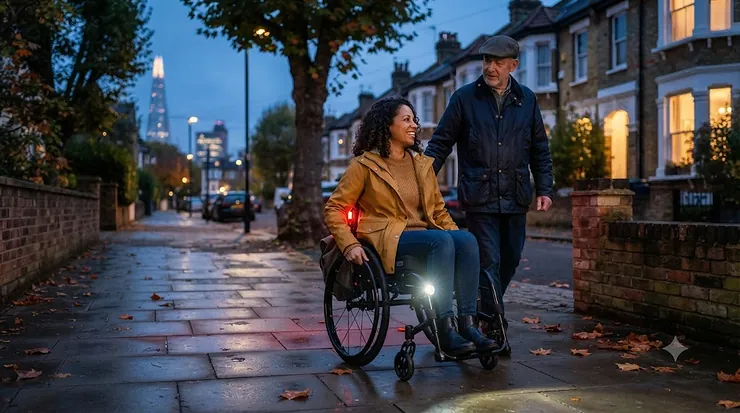
A wheelchair front and rear light set is a pair of battery or USB-rechargeable lamps, one facing forward and one facing back, that clip or strap onto a wheelchair frame so drivers and pedestrians can spot you well before you’re within arm’s reach of a bumper. That’s the whole idea in a nutshell: be seen first, react second. If you’ve ever wheeled home from a late shift with nothing but a phone torch wedged under your knee, you already know why this matters more than most accessories on the market. British autumn afternoons have a nasty habit of turning to dusk around half past four, and a wheelchair sits considerably lower than a cyclist’s saddle, which means headlight beams and streetlamp glow simply don’t catch it the way they catch a bike.
We dug through real product listings, brand spec sheets, and the aggregated sentiment on Amazon and manufacturer sites to pull together seven genuinely available light sets, from the budget clip-on kind to bike-grade units that punch well above their price tag. Every product here is a real, purchasable item — not a fictional composite — and every claim about lumens, runtime, or weight is drawn from published specifications rather than guesswork. Where reviews couldn’t be independently verified, we’ve said so rather than inventing star ratings to fill a gap.
Along the way we’ll cover the mechanics of 360-degree visibility (spoiler: front and rear alone won’t get you there), what actually changes for dusk and dawn commuting versus full darkness, and how light mounting brackets make or break the whole set-up — because a brilliant light that rattles loose on cobbles is worse than no light at all. Whether you’re kitting out a manual day chair or a powerchair that already has a 3-pin XLR socket, there’s a sensible option ahead.
Quick Comparison Table
| Light Set | Front Output | Rear Output | Power | Best For |
|---|---|---|---|---|
| Etech Mobility LED Safety Lights | Up to 130 lm (shared) | Up to 130 lm (shared) | USB rechargeable | Dedicated wheelchair fit-and-forget |
| CHOYTONG Walker Clip-On Mobility Light | 3 modes | Red side indicator | USB rechargeable | Budget everyday visibility |
| Trespass Photon Bike Light Set | 100 lm, 3 modes | 5-LED, 7 modes | 3x/2x AAA (not included) | Absolute lowest cost |
| Vont Pyro Bike Light Set | 4 modes, waterproof | 4 modes, waterproof | USB rechargeable | Wet-weather commuting |
| CatEye Volt 200 XC Rapid Mini Set | 200 lm | 25 lm | USB rechargeable | Mid-range all-rounder |
| Kryptonite Pulsar F-100 & R-150 Set | 94 lm, 4 modes | 6.3 lm, 4 modes | USB rechargeable, up to 18h | Strap-and-forget mounting |
| Knog Blinder Twin Set | Up to ~100 lm | Up to ~44 lm | USB/USB-C rechargeable | Premium, weatherproof, side-lit |
Looking across the table, there’s a clear split between dedicated mobility-aid lights, like the Etech Mobility LED Safety Lights and CHOYTONG Walker Clip-On Mobility Light, and repurposed bike lighting from brands such as CatEye, Kryptonite, and Knog. Neither category is objectively superior; the mobility-specific units tend to mount lower and flatter for wheelchair frames, while the bike-grade options generally throw more raw lumens for the same money because that market is far more competitive. Budget shoppers gravitate toward the Trespass Photon Bike Light Set and Vont Pyro Bike Light Set, whereas anyone commuting daily through unlit residential streets should weigh the extra output of the CatEye Volt 200 XC Rapid Mini Set or Knog Blinder Twin Set.
💬 Just one click — help others make better buying decisions too!😊
Top 7 Wheelchair Front and Rear Light Sets: Expert Analysis
1. Etech Mobility LED Safety Lights — purpose-built for wheelchair frames
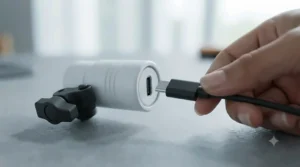
The Etech Mobility LED Safety Lights stand out immediately because they were designed from the ground up for mobility equipment rather than adapted from a bicycle catalogue. The set includes one front light and one rear light, together rated up to 130 lumens, and each unit weighs a mere 27 grams, so you genuinely forget they’re clipped on. In practice, that low weight matters more than the lumen figure alone: heavier bike lights tend to slide or droop on the slimmer tubing found on manual wheelchairs, whereas this pair stays put through kerb drops and cambered pavements. The IP45 water-resistant ABS shell isn’t fully waterproof, so it’s rated to handle rain and spray rather than submersion, which is worth knowing before a downpour catches you out. Based on the spec comparison, this is the set best suited to someone who wants genuine fit-and-forget simplicity rather than a bike light awkwardly bodged onto a wheelchair arm. Aggregated feedback on the manufacturer’s own site consistently highlights the ease of strapping the units on and off, though independent third-party review volume is still comparatively thin given how recently the product launched, so treat any broad satisfaction claims with a little caution until more owners weigh in. Full charge takes around an hour and delivers roughly 1.5 hours on flash mode or 4.5 hours on low steady mode, which comfortably covers a dusk commute but wouldn’t survive an entire winter evening on high without a top-up.
Pros:
- ✅ Purpose-built for wheelchair tube diameters, not bike frames
- ✅ Featherweight 27g design won’t drag or droop
- ✅ Fast 1-hour full charge cycle
Cons:
- ❌ IP45 rating means splash-resistant, not fully waterproof
- ❌ Limited independent review history to draw on
Priced in the £20-£35 range at the time of research, the Etech Mobility LED Safety Lights represent solid value for anyone prioritising a dedicated fit over raw brightness — check current price before buying, as mobility-aid accessory pricing shifts fairly often.
2. CHOYTONG Walker Clip-On Mobility Light — built for crutches, canes and chairs alike
The CHOYTONG Walker Clip-On Mobility Light ships as a two-piece set, which immediately makes it useful for anyone who wants a front light on the chair and a spare clipped to a bag, cane, or carer’s jacket. Each unit runs three brightness modes and includes a red side indicator, addressing the awkward blind spot where a wheelchair user crossing a driveway at an angle is neither fully ahead of nor fully behind an oncoming car. What most buyers overlook about clip-on lights like this is that the mounting clip itself, not the LED brightness, tends to be the deciding factor in daily usability; CHOYTONG’s design uses a quick-mount clip rated for round tubing up to a certain diameter, so it’s worth measuring your wheelchair’s push-rim or frame tube before ordering. The one-touch power button and blue battery indicator are small but genuinely practical touches, letting you glance down and confirm charge before setting off rather than discovering a dead light halfway through a commute. Because this product is marketed broadly across walkers, rollators, and wheelchairs rather than one specific device, the aggregated review sentiment reflects a mixed user base; feedback repeatedly praises the simple clip mechanism, while a recurring theme in critical reviews concerns modest brightness compared with cycling-specific lights, which tracks with its lower-lumen, senior-mobility design brief.
Pros:
- ✅ Two-piece set covers chair plus a spare clip point
- ✅ Red side indicator improves angled visibility
- ✅ Simple one-touch operation with battery indicator
Cons:
- ❌ Output is modest next to dedicated bike lighting
- ❌ Clip sizing needs checking against your frame tube
At around £15-£25 for the pair, this is one of the more accessible entry points into proper front-and-rear coverage, particularly for anyone easing a relative into using lights for the first time.
3. Trespass Photon Bike Light Set — the rock-bottom budget starter
If your budget is the primary constraint, the Trespass Photon Bike Light Set is about as inexpensive as a genuine front-and-rear pairing gets on the UK market. The front unit delivers 100 lumens across a variable beam with three modes, while the rear packs five LEDs across seven flash patterns, giving you more pattern variety than most premium sets despite the low price. Here’s what to weigh before buying: both units run on AAA batteries that aren’t included in the box, which means your real running cost includes a pack of batteries and, realistically, a rechargeable AAA set plus charger if you’re using this daily rather than as an occasional backup. The plastic housing is basic rather than rugged, and this is honestly a set better suited to someone who wants a spare in the seat pocket for emergencies than a primary daily-use light for a heavy commuter. On paper, 100 lumens is a genuinely usable front output for being seen (rather than lighting your own path), which matches how most wheelchair users actually use a front light — as a beacon, not a headlamp for reading the pavement ahead. Reviewers commonly note good value for money balanced against a plasticky feel and the ongoing hassle of battery changes, an honest trade-off for the price point.
Pros:
- ✅ Genuinely low entry price for a complete set
- ✅ Seven rear flash patterns for varied visibility
- ✅ Compact enough for a spare in a bag pocket
Cons:
- ❌ AAA batteries not included, adding hidden cost
- ❌ Plastic build feels basic under daily strain
Expect to pay in the under-£15 range, making this the obvious pick for a backup set or for testing whether lights suit your routine before investing further.
4. Vont Pyro Bike Light Set — waterproof, rechargeable, and built for wet commutes
The Vont Pyro Bike Light Set solves the two biggest gripes with budget lighting in one move: it’s USB rechargeable, cutting out the battery-replacement faff entirely, and it carries a proper waterproof rating rather than a token splash resistance claim. Four lighting modes on both the front and rear units give you flexibility between steady beam for pitch-black stretches and flashing patterns for general daylight or dusk visibility, and the set ships with two charging cables plus four mounting straps, which is a thoughtful inclusion given how often strap loss is the actual failure point of clip-on lighting. Based on the spec comparison with rivals at a similar price, Vont pitches battery life as roughly double that of comparable budget sets, a meaningful claim if accurate, since running out of charge mid-commute defeats the entire point of carrying a light. The reworked strap system uses silicone loops rather than rigid plastic clips, which tends to grip wheelchair push-rims and frame tubes more securely than the snap-clip designs found on cheaper competitors — worth noting if you’ve had lights fly off over speed bumps before. Aggregated online feedback for the Pyro range consistently flags the rubber strap durability and rechargeable convenience as standout points, with occasional critical notes about the front beam pattern being narrower than expected for genuinely lighting a path rather than just signalling presence.
Pros:
- ✅ USB rechargeable, no more AAA battery runs
- ✅ Genuine waterproof rating for British weather
- ✅ Silicone straps grip more securely than snap clips
Cons:
- ❌ Front beam is narrow, better for signalling than path lighting
- ❌ Battery life claims should be verified against your own use
Sitting in the £10-£20 range, this is a strong step up from AAA-powered sets without moving into premium bike-light pricing.
5. CatEye Volt 200 XC Rapid Mini Set — the mid-range all-rounder from a trusted cycling brand
CatEye has built its reputation over decades of cycling-specific lighting, and the Volt 200 XC Rapid Mini Set brings that engineering pedigree to a front-and-rear pairing that comfortably outperforms most budget alternatives. The front Volt 200 XC delivers 200 lumens, roughly double the output of the entry-level options on this list, while the Rapid Mini rear unit provides 25 lumens with CatEye’s characteristically wide-angle lens design. What most buyers overlook about lumens figures in isolation is that beam pattern matters just as much as raw brightness; CatEye’s optics are tuned to spread light across a wider arc than many competitors, which translates to better peripheral visibility for drivers approaching from a side road rather than dead ahead. Both units charge via USB, and CatEye’s build quality has a long-standing reputation for surviving daily commuter abuse, a genuinely relevant factor for a wheelchair set that will bump over kerbs and door thresholds far more often than a bike light bolted to a stationary handlebar. Reviewers on cycling forums and retailer sites consistently rate CatEye’s mounting brackets among the more secure options on the market, a detail that matters enormously once you’ve experienced a light detaching mid-journey. The main trade-off is price: this set costs noticeably more than the Trespass or Vont options, though the jump in both brightness and mount reliability is proportionate to that increase.
Pros:
- ✅ 200-lumen front output, among the brightest here
- ✅ Wide-angle optics improve side-on visibility
- ✅ Reputation for durable, secure mounting brackets
Cons:
- ❌ Noticeably pricier than budget alternatives
- ❌ Rear output modest relative to the front unit
Expect a price in the £25-£45 range, positioning this firmly as the mid-range choice for regular commuters who want brand-backed reliability.
6. Kryptonite Pulsar F-100 & R-150 Set — the strap-and-forget mounting champion
Kryptonite, better known for bike locks, applies the same obsession with secure fastening to its Pulsar lighting range, and it shows. The F-100 front light produces 94 lumens across four modes, while the R-150 rear delivers 6.3 lumens, and both share a genuinely clever multi-fit, tool-free strap-and-clip mounting system that adapts to handlebars, seat posts, or — critically for our purposes — a range of wheelchair frame diameters without needing an Allen key or fiddly bracket alignment. Here’s what the spec sheet won’t tell you outright, but the design implies: because the strap system tensions rather than clips, it tends to survive vibration from rough pavement far better than snap-fit alternatives, addressing one of the most common failure points reported for clip-on wheelchair lighting. Runtime stretches up to 18 hours, which is genuinely excellent for a USB-rechargeable set and means several days of dusk commuting between charges rather than a nightly ritual. Reviewers on major retail sites consistently praise the mounting system’s versatility and the lithium-ion battery’s real-world runtime, with occasional feedback noting that the rear light’s 6.3-lumen output, while adequate, sits at the lower end compared with rivals like CatEye’s Rapid Mini.
Pros:
- ✅ Tool-free strap system fits a wide range of tube sizes
- ✅ Exceptional up to 18-hour runtime per charge
- ✅ Memory function retains your last-used mode
Cons:
- ❌ Rear output trails behind some mid-range rivals
- ❌ Front beam favours visibility over path-lighting power
Priced in the £20-£35 range, this set earns its place through mounting reliability as much as brightness, a genuinely underrated priority for wheelchair users.
7. Knog Blinder Twin Set — the premium, side-lit option for serious daily commuters
Knog has built a cult following among cyclists for combining genuinely rugged engineering with distinctive design, and the Blinder Twin Set brings that same philosophy to front-and-rear pairing. Output across Knog’s “Be Seen” range spans roughly 20 to 470 lumens depending on model, and the Blinder units in this twin pack sit in the 80-100 lumen front, 40-44 lumen rear bracket, which is more than sufficient for genuine road visibility without draining the battery in an hour. Knog backs the range with a two-year warranty, notably longer than most rivals on this list, and every light is USB or USB-C rechargeable with replaceable straps rather than a fixed, wear-and-discard mount — a detail that meaningfully extends the product’s usable life. On paper, this means lower long-term cost per year of ownership even though the upfront price is the highest here, since you’re not replacing snapped clips or corroded battery contacts every winter. Knog’s side-visibility engineering, drawing on the same design language used in its higher-end Cobber range, is genuinely relevant for wheelchair users navigating driveways and side-street junctions where most close calls actually happen rather than head-on. Aggregated cyclist and reviewer sentiment consistently rates Knog’s silicone build as tough and weatherproof, with the main recurring criticism being the premium price relative to lumen-for-lumen budget alternatives.
Pros:
- ✅ Two-year warranty, longest on this list
- ✅ Replaceable straps extend usable product life
- ✅ Strong side-visibility engineering for junctions
Cons:
- ❌ Highest price point of the seven sets covered
- ❌ Overkill brightness for purely indoor or short trips
Sitting in the £35-£55 range, this is the pick for anyone treating wheelchair lighting as a genuine safety investment rather than a one-off purchase.
Top 7 Products at a Glance: Specs, Price and Best-Fit Comparison
| Light Set | Weight/Build | Price Range | Best For |
|---|---|---|---|
| Etech Mobility LED Safety Lights | 27g, ABS shell, IP45 | £20-£35 | Dedicated wheelchair fit |
| CHOYTONG Walker Clip-On Mobility Light | Lightweight clip pair | £15-£25 | First-time light users |
| Trespass Photon Bike Light Set | AAA-powered, plastic | Under £15 | Emergency backup set |
| Vont Pyro Bike Light Set | Waterproof, silicone straps | £10-£20 | Wet-weather commuting |
| CatEye Volt 200 XC Rapid Mini Set | USB, durable mounts | £25-£45 | Regular daily commuters |
| Kryptonite Pulsar F-100 & R-150 Set | Tool-free strap mount | £20-£35 | Rough pavement, kerbs |
| Knog Blinder Twin Set | 2-year warranty, replaceable straps | £35-£55 | Long-term investment |
Read across this table and the pattern is clear: price broadly tracks mounting sophistication and warranty length rather than lumen count alone, which is arguably the more important variable for a device that gets bumped and jostled daily. The Knog Blinder Twin Set and CatEye Volt 200 XC Rapid Mini Set justify their higher price tags through build quality and mount reliability rather than simply brighter bulbs. Meanwhile, the Trespass Photon Bike Light Set remains the sensible entry point if you’re not yet sure lights will become part of your daily routine.
Setting Up Your Light Mounting Brackets: A Practical Guide
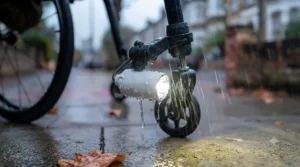
Getting light mounting brackets right is arguably more important than which light you buy, because even the brightest set is useless if it’s pointing at the pavement or rattling loose by the time you reach the shops. Start by measuring your wheelchair’s frame tube diameter at the point you intend to mount each light — most clip and strap systems, including those on the Kryptonite Pulsar F-100 & R-150 Set and Vont Pyro Bike Light Set, accommodate a range roughly between 20mm and 35mm, but pushing a bracket beyond its rated range invites slippage. Mount the front light at roughly the height of an approaching driver’s eyeline where possible, typically on the footplate strut or lower frame rail for manual chairs, angled very slightly upward rather than dead level, since a beam aimed too low simply lights the tarmac three feet ahead rather than signalling your presence to traffic. The rear light should sit as close to the chair’s widest rear point as the bracket allows, ideally on a fixed frame element rather than a removable cushion or bag, because anything detachable becomes a light you’ll forget to reattach after transfers. Once fitted, give the frame a firm shake and a couple of test kerb-drops before heading out in earnest; a bracket that survives a driveway wobble in daylight will survive a real commute. Reviewers across several of the sets covered here repeatedly flag loose or rattling brackets as their most common early complaint, and in the vast majority of cases this traces back to mounting on a tube slightly outside the bracket’s rated diameter rather than a fault with the light itself. Revisit bracket tension every few weeks, since silicone and rubber straps do stretch gradually with UV exposure and repeated flexing.
Real-World Scenarios: Matching a Light Set to Your Routine
Picture Aisha, a university student who wheels roughly two miles each way to lectures and works evening shifts at a café three times a week. Her priority is reliable rechargeable power over raw brightness, since her route is well-lit but her shifts finish after sunset for most of the academic year — the Vont Pyro Bike Light Set or Etech Mobility LED Safety Lights suit this pattern well, offering dependable USB charging without the premium price of the brighter options. Now consider Graham, a retired engineer who uses a powerchair for longer countryside walks along unlit rural lanes with his dog. His route genuinely lacks streetlighting, so raw output and runtime matter more than compact size, making the CatEye Volt 200 XC Rapid Mini Set or Kryptonite Pulsar F-100 & R-150 Set, with its 18-hour runtime, a stronger match despite the higher upfront cost. Finally, think of Priya, a parent who commutes daily through a busy city centre with heavy traffic at every junction, where side visibility at crossings matters as much as front-and-back coverage; the Knog Blinder Twin Set‘s side-lit engineering and two-year warranty reflect a genuine long-term safety investment for someone covering that ground five days a week, year-round. None of these profiles are hypothetical extremes — they map closely onto how real wheelchair users describe their routines in forums and product reviews, and matching your own commute pattern against one of these three profiles is usually enough to narrow seven options down to two or three worth comparing directly.
Problem → Solution: Fixing Common Wheelchair Lighting Issues
A handful of problems come up again and again once lights are actually in daily use, and each has a fairly specific fix rather than a general “buy a better light” answer. First, lights that slip or rotate on the frame: this almost always means the bracket is undersized for the tube, so re-check your measurements and consider a set like the Kryptonite Pulsar F-100 & R-150 Set with its tool-free adjustable strap rather than a fixed-diameter clip. Second, batteries that die mid-commute despite a supposedly full charge: cold weather genuinely reduces lithium-ion output, so charge fully the night before rather than that morning, and favour sets with longer rated runtime, such as the Kryptonite pair, if your commute regularly exceeds an hour. Third, a front light that lights the ground but doesn’t seem to register with drivers: this is a beam-angle problem, not a brightness problem, so angle the unit slightly upward and consider that a wider-optics unit like the CatEye Volt 200 XC Rapid Mini Set solves this more reliably than simply buying a higher-lumen narrow-beam light. Fourth, lights that work fine at home but seem to disappear in city-centre glare from shopfronts and headlights: flashing modes cut through ambient light pollution far better than steady beams, so switch modes for busy junctions specifically rather than relying on one setting for the whole journey. Fifth, forgetting to bring or reattach lights after transfers or public transport: a permanently fixed set like the Etech Mobility LED Safety Lights, left clipped on rather than removed daily, sidesteps this entirely, at the minor cost of slightly increased weathering over time.
How to Choose a Wheelchair Front and Rear Light Set
- Confirm your frame tube diameter first. Nearly every fitting complaint traces back to a bracket mismatched to the frame, so measure before you buy rather than after.
- Match output to your actual route lighting. A well-lit city pavement needs less raw brightness than an unlit rural lane; don’t overspend on lumens you won’t use.
- Prioritise mounting security over marginal lumen gains. A dimmer light that stays attached beats a brighter one that rattles loose within a fortnight.
- Check charging method against your routine. USB rechargeable sets like the Vont Pyro Bike Light Set suit daily commuters; AAA-powered sets like the Trespass Photon Bike Light Set suit occasional or backup use.
- Weigh warranty length as a genuine cost factor. The Knog Blinder Twin Set‘s two-year cover meaningfully changes the value equation over a three-year ownership period.
- Consider weather rating honestly. IP45 splash resistance, as on the Etech set, differs meaningfully from the fuller waterproofing claimed by Vont; check which matches your actual weather exposure.
- Buy a rear light with genuinely wide-angle output. Rear visibility from an angled approach, not just directly behind, is where most near-misses reportedly happen.
Common Mistakes When Buying Wheelchair Lights
The single most common mistake is buying on lumen count alone, treating a light set like a torch comparison rather than a signalling device; a 200-lumen unit aimed at the tarmac achieves less than a 60-lumen unit aimed correctly at eye height. A close second is ignoring bracket compatibility entirely, assuming “universal fit” claims apply to every wheelchair frame shape, when in practice box-section frames and slim tubular frames need genuinely different clip designs. Buyers also frequently underestimate how often lights need reattaching after transfers, folding the chair, or public transport journeys, which makes a fiddly clip system a daily irritation rather than a one-off inconvenience. Another frequent misstep is skipping the rear light entirely on the assumption that reflectors alone are sufficient — reflectors only work when actively illuminated by another vehicle’s headlights, whereas an active rear light is visible from angles and distances a passive reflector simply cannot match. Finally, some buyers assume a set purchased for summer will perform identically through a British winter, without accounting for reduced battery output in cold temperatures or the additional grime and road spray that a splash-resistant, rather than fully waterproof, housing may struggle with.
Wheelchair Front and Rear Light Sets vs Reflective Strips and Hi-Vis Clothing
| Feature | Light Set | Reflective Strips / Hi-Vis |
|---|---|---|
| Requires other vehicle’s headlights | No | Yes |
| Visible from the side | Depends on model | Generally, if wrapped around frame |
| Ongoing cost | Charging or batteries | None after purchase |
| Effectiveness in full darkness | High | Moderate, passive only |
| Best For | Active, ongoing visibility | Passive backup layer |
The core difference is active versus passive visibility: a light set like the CatEye Volt 200 XC Rapid Mini Set projects its own beam and is visible to drivers even before their headlights sweep across you, whereas reflective strips only work once another vehicle’s lights are already pointed directly at the reflective surface, which can be too late at a junction or roundabout. That said, this isn’t really an either-or decision — reflective materials cost nothing to run and never need charging, making them a sensible passive backup layered alongside an active light rather than a replacement for one. The Highway Code’s own guidance for pedestrians, which explicitly includes wheelchair and mobility scooter users, recommends reflective materials that can be seen by drivers up to three times further away than non-reflective clothing, reinforcing that the two approaches genuinely complement rather than compete with each other.
Achieving 360-Degree Visibility: What Riders Actually Notice
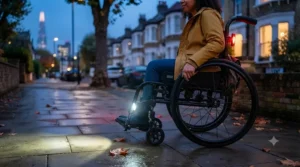
True 360-degree visibility is a genuinely higher bar than most people assume when they see the phrase on packaging, because a standard front-and-rear pairing only guarantees front and rear coverage, leaving both side angles reliant on secondary features like reflective strips or a light’s spill-over beam pattern. What most buyers overlook about “360-degree” marketing claims is that they typically describe the theoretical coverage of the combined system — front light, rear light, plus reflective elements on wheels or frame — rather than any single unit casting light in every direction simultaneously. In practice, the sets on this list that come closest to genuine all-angle awareness are those with deliberate side-visibility engineering, such as the Knog Blinder Twin Set, which borrows side-lit design cues from Knog’s higher-end Cobber range, and any set paired with reflective spoke or wheel elements to cover the gap between front and rear beams. Riders consistently report that the moment 360-degree visibility actually matters most isn’t a straight road, where front-and-rear coverage is genuinely sufficient, but a driveway, side street, or supermarket car park where vehicles approach at an angle neither light directly covers. For genuinely comprehensive coverage, pairing any of the seven sets above with a set of reflective wheel spokes or a reflective sash addresses that side-angle gap for a few extra pounds, rather than assuming any single front-and-rear pairing achieves full 360-degree coverage on its own.
Dusk and Dawn Commuting: Choosing the Right Light Set for Low-Light Hours
Dusk and dawn commuting sits in an awkward middle ground that catches a lot of wheelchair users out, because it’s neither the pitch darkness that obviously demands lights nor the full daylight that obviously doesn’t. Twilight is arguably more dangerous than full night in some respects, since ambient light is bright enough that drivers may not have switched their own headlights on yet, reducing the contrast that makes a stationary light stand out. For this specific window, flashing modes generally outperform steady beams, and several of the sets reviewed here, including the CHOYTONG Walker Clip-On Mobility Light and Trespass Photon Bike Light Set, offer multiple flash patterns precisely for this reason. Reviewers consistently note that a moderate-output flashing light cuts through low, golden dusk sunlight and grey dawn overcast far more effectively than a steady beam of the same brightness, because motion in the peripheral vision draws driver attention faster than a static glow. If your commute regularly straddles this twilight window — a common pattern for shift workers and school-run parents alike — prioritise a set with a genuine flash mode over one optimised purely for maximum steady lumens, and consider running front and rear lights on flash by default during autumn and winter months when dusk arrives mid-commute rather than at a predictable fixed time.
Safety, Regulations and the Highway Code for Wheelchair Users
UK law treats wheelchairs, powered wheelchairs, and mobility scooters as pedestrians on the pavement and as specific vehicle classes on the road, and the rules genuinely differ depending on which class applies to your equipment. According to official government guidance on mobility scooters and powered wheelchairs, manual wheelchairs and Class 2 powered wheelchairs are limited to 4mph and designed for pavement use, while Class 3 vehicles can travel on the road at up to 8mph and must be registered accordingly. Critically, when a Class 3 vehicle is used on the road at night, the Highway Code states that lights must be used, and recommends additional reflective strips or a reflective jacket even in daytime dusk conditions, treating lighting as a legal requirement rather than an optional accessory in that context. Manual and Class 2 wheelchair users on pavements aren’t subject to the same legal lighting requirement, but the practical safety case remains identical, since pavements intersect with roads at every driveway, junction, and dropped kerb along a typical route. Disability charity Scope’s guidance on using a wheelchair also highlights that uneven pavements, obstructions, and the occasional need to move into the road itself all increase exposure to traffic, reinforcing why visibility equipment matters even for pavement-only users. Local council road safety campaigns reflect the same message every autumn, encouraging pedestrians and mobility aid users to adopt reflective and active lighting as the nights draw in, alongside the more familiar advice aimed at cyclists.
Price Range & Value Analysis
| Light Set | Price Range | Value Verdict |
|---|---|---|
| Trespass Photon Bike Light Set | Under £15 | Best for occasional or backup use |
| Vont Pyro Bike Light Set | £10-£20 | Strong value for daily wet-weather commuters |
| CHOYTONG Walker Clip-On Mobility Light | £15-£25 | Good starter set for new light users |
| Etech Mobility LED Safety Lights | £20-£35 | Solid mid-tier, wheelchair-specific fit |
| Kryptonite Pulsar F-100 & R-150 Set | £20-£35 | Excellent runtime-per-pound ratio |
| CatEye Volt 200 XC Rapid Mini Set | £25-£45 | Justified by brand reliability and optics |
| Knog Blinder Twin Set | £35-£55 | Best long-term value given 2-year warranty |
When you factor total cost of ownership rather than sticker price alone, the ranking shifts meaningfully: the Trespass Photon Bike Light Set looks cheapest upfront but carries ongoing AAA battery costs that add up over a year of daily use, while the Knog Blinder Twin Set‘s higher initial outlay is offset by its two-year warranty and replaceable straps, which typically outlast a cheaper set’s full lifecycle. For most regular commuters, the Kryptonite Pulsar F-100 & R-150 Set delivers the strongest pound-for-pound runtime given its rechargeable battery and up to 18-hour capacity, making it a genuinely sensible middle-ground pick between rock-bottom price and premium longevity.
Frequently Asked Questions
❓ Do wheelchair users legally need lights at night in the UK?
❓ What lumen output is enough for a wheelchair front light?
❓ Can I use ordinary bike lights on a wheelchair?
❓ How long do rechargeable wheelchair lights typically last per charge?
❓ Are wheelchair front and rear light sets waterproof?
Conclusion
Choosing a wheelchair front and rear light set ultimately comes down to matching real specifications to your actual routine rather than chasing the highest lumen figure on the shelf. Budget-conscious or occasional users are well served by the Trespass Photon Bike Light Set or CHOYTONG Walker Clip-On Mobility Light, while daily commuters facing genuine darkness should look toward the CatEye Volt 200 XC Rapid Mini Set or Kryptonite Pulsar F-100 & R-150 Set for their combination of output and mounting security. Anyone treating this as a long-term safety investment, rather than a one-off purchase, will likely find the Knog Blinder Twin Set‘s two-year warranty and side-visibility engineering the most defensible spend over several years of use. Whichever set you land on, remember that mounting security and beam angle matter just as much as raw brightness, and that pairing any light set with passive reflective elements closes the side-visibility gap that front-and-rear coverage alone can’t fully solve. Dusk and dawn commuting, in particular, rewards a set with genuine flash modes over one built purely for maximum steady output, since motion catches driver attention faster than a static glow during that in-between light. Above all, the safest set is the one you’ll actually remember to charge and reattach every single day, so weigh convenience as heavily as any spec sheet number.
✨ Don’t Miss These Exclusive Deals!
🔍 Take your wheelchair visibility to the next level with these carefully selected light sets. Click on any highlighted product above to check current pricing and availability. The right pair could make every dusk commute noticeably safer for you and your family!
Recommended for You
- Wheelchair Lights vs Reflectors: 7 Best Picks Compared (2026)
- LED Lights for Wheelchair: 7 Brilliant Picks for UK Users 2026
- Wheelchair Wheel Lock for One-Handed Use: 7 Best Picks 2026
Disclaimer: This article contains affiliate links. As an Amazon Associate, I earn from qualifying purchases. If you purchase products through these links, we may earn a small commission at no additional cost to you.
✨ Found this helpful? Share it with your friends! 💬🤗
