
In This Article
Your feet do a lot of quiet, thankless work. In a wheelchair they hang, slide and sweat, and by mid-afternoon they’ve often puffed up like proving dough. Elevating footrests for wheelchair frames exist to fix exactly that. Yet the listings that promise to do it are a jumble of “universal” parts, single-side sales and near-identical product photos.
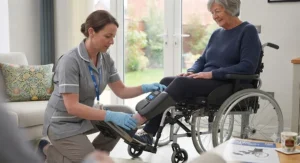
The case for bothering is sensible rather than dramatic. The NHS lists standing or sitting in the same position for too long among the everyday causes of swollen ankles, feet and legs. Its self-help advice starts with raising your legs on a chair or pillows when you can. For someone who sits most of the day, that raises an awkward practical question: where do the legs actually go? Elevating footrests for wheelchair users are one answer. Free-standing leg-rest stools and wedge pillows are the others.
This guide compares seven real, UK-available options: three wheelchair-mounted leg rests, one foam footplate extender, two free-standing stools and one wedge pillow. Each gets a plain-English read on what the specs mean in practice, plus a summary of what genuine reviewers say. A few boundaries apply. Nobody here has handled these products, so there are no invented “I tried it” stories. This is general information, not medical advice. Your GP, occupational therapist or NHS wheelchair service should set the angle and timing. Prices are ranges from the time of research, so check the current price before you buy.
Quick Comparison: Elevating Footrests for Wheelchair Users at a Glance
Here’s the whole field on one screen. Ratings are snapshots from Amazon UK listings and will drift.
| Product | Type | Price range | Rating snapshot | Best For |
|---|---|---|---|---|
| Drive Devilbiss Elevating Leg Rest for Enigma | Wheelchair-mounted (per side) | Around £45–£85 per side | About 3.5/5 (c. 30 ratings) | Owners of compatible Drive/Enigma chairs |
| ENCAREFOR Non-Padded Elevating Legrests | Wheelchair-mounted (pair) | Around £35–£40 | About 4.4–4.5/5 (c. 220–240) | Budget upgrade for standard chairs |
| OZTYSGXM Universal Leg Rest with Padded Footrest | Wheelchair-mounted, 90°–180° | Roughly £30–£50 | 4.3–5.0, but only a handful of ratings | Padded comfort with wide angle range |
| Yuehuamech Wheelchair Foot-Rest Extender Elevating Pad | Foam footplate extender | Mid-£30s | About 3.1/5 (6 ratings) | Dangling or sliding feet |
| Aidapt Beaumont Leg Rest | Free-standing stool | Around £45–£55 | About 4.4/5 (850+ ratings) | Armchair and desk elevation |
| Aidapt Beaumont Leg Rest with Castors | Free-standing stool on castors | Mid-£40s | About 4.3/5 (c. 430) | Frequent repositioning |
| Coopers of Stortford Leg Elevating Pillow | Wedge pillow | Low-to-mid £20s | Independent rating not verified | Bed and sofa evenings |
Looking at the comparison above, Aidapt Beaumont Leg Rest has by far the deepest review pool, which makes it the safest bet for evening elevation. ENCAREFOR Non-Padded Elevating Legrests posts the strongest rating among the wheelchair-mounted options at a modest price. Owners of Drive Enigma chairs should weigh Drive Devilbiss Elevating Leg Rest for Enigma on compatibility rather than stars. Treat the tiny-sample ratings for OZTYSGXM Universal Leg Rest with Padded Footrest and Yuehuamech Wheelchair Foot-Rest Extender Elevating Pad as open questions, not answers.
💬 Just one click — help others make better buying decisions too!😊
Top 7 Elevating Footrests for Wheelchair: Expert Analysis
Every entry follows the same pattern: what the specs mean, who it suits, what real reviewers report and what it costs. That way you compare like with like.
1. Drive Devilbiss Elevating Leg Rest for Enigma — brand-matched fit for compatible Drive chairs
Nothing beats hardware designed for the chair it’s bolted to, and that’s this leg rest’s whole pitch.
The aluminium model (ELR002R, sold per side) offers infinite angle adjustment plus a tool-free, height-adjustable calf pad and footplate. A UK retailer lists the Drive range as extending across roughly 45–52 cm. “Infinite” angle means you can dial in a gentle lift or a near-horizontal leg without hunting for the next notch. Tool-free height changes let a carer retune it in seconds. Drive itself advises using the angle adjustment with caution to avoid injury, a fair reminder that this is a mechanism, not a toy.
Based on the spec comparison, this is the sensible pick if you own a compatible chair. The listing names the XSAW, XS2, SD2 and XSSW K-chair models, and fit is where universal parts most often go wrong. What most buyers overlook is reach: 52 cm suits average legs but may fall short for taller users.
Amazon UK reviewers give the listing around 3.5 out of 5 from roughly 30 ratings. One long-term user reports it holding up through almost two years of daily use. Another says it’s too short for long legs. The listing was flagged as currently unavailable at the time of research, so check stock.
Pros:
- ✅ Designed to match compatible Drive chairs
- ✅ Tool-free height and infinite angle adjustment
- ✅ Quick-release, swing-out action eases transfers
Cons:
- ❌ Sold per side, so a pair costs double
- ❌ Reviewers report it can be short for tall users
Expect roughly £45–£85 per side depending on frame material and retailer (check current price). It’s fair value if it matches your chair and poor value if you’re guessing.
2. ENCAREFOR Non-Padded Elevating Legrests — sturdy universal pair with a 6-inch reach
For anyone whose fixed footrests need to become elevating ones, a universal pair is the cheapest ticket in.
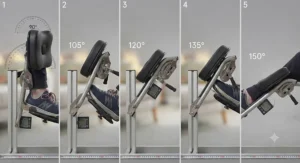
The listing describes a manually adjusted extension of up to about 6 inches (15 cm), composite footplates and an aluminium build weighing roughly 1.7 kg. The bullet points also mention steel, so confirm the material with the seller. A rigid, non-padded calf support gives firm backing when the leg is raised. A hard surface under the calf can wear thin over long sessions, so many users add a soft sleeve.
The spec sheet won’t tell you this, but “universal” is a promise about the majority, not everyone. Fit depends on hanger style and mounting-pin spacing, so measure first. The listing also carries an Amazon Global Store label, which can mean different delivery and returns arrangements. Read them before ordering.
The UK listing averages around 4.4–4.5 out of 5 from roughly 220–240 ratings. Review-analysis tools summarising ENCAREFOR’s wider legrest range on US listings describe happy fit reports. They also flag split views, including broken parts and calf support that some adults find inadequate.
Pros:
- ✅ Strong rating from a sizeable review pool
- ✅ Up to 6 inches of manual extension
- ✅ Lightweight at roughly 1.7 kg
Cons:
- ❌ No calf padding for longer sessions
- ❌ Fit depends on your chair’s mounting style
Around £35–£40 per pair (check current price). Good value if your chair’s mounting matches.
3. OZTYSGXM Universal Leg Rest with Padded Footrest — padded comfort with a 90°–180° angle range
Padding is the feature people miss until they’ve spent an afternoon on a hard calf bar.
This leg rest advertises adjustable angles from 90° to 180°, a padded footrest and an easy-clean PU surface. The listings claim it fits most standard wheelchairs. The 180° end-point means a fully horizontal leg, the furthest any leg rest can go, but range isn’t always a virtue. An Invacare clinical fact sheet notes that elevating leg rests used alone can stretch the hamstrings, tilt the pelvis backwards and encourage sliding and shear, which is why they’re usually paired with recline. Translation: use the extreme end sparingly and with clinical guidance.
Here’s what to weigh. The padding suits people who keep their legs raised for longer stretches, while the wide angle range mainly benefits those with flexible hips. Some listings are per side and others per pair, so check the count before comparing prices.
Ratings look glowing, roughly 4.3 to 5.0, but rest on only about 3–6 reviews per listing. That’s too thin to trust. The seller’s near-identical “multifunctional composite” padded pairs sit much lower, around 2.2–2.9 stars on similarly small samples. Keep the return window in mind.
Pros:
- ✅ Padded footrest for longer comfort
- ✅ Wide 90°–180° angle range
- ✅ Wipe-clean PU surface
Cons:
- ❌ Very small review pool per listing
- ❌ Single-side and pair listings easily confused
Roughly £30–£50 depending on the listing (check current price). It’s promising but unproven, so buy with an easy returns route.
4. Yuehuamech Wheelchair Foot-Rest Extender Elevating Pad — a foam lift for sliding, dangling feet
Not every problem needs a mechanism. Sometimes it needs a cushion.
This 16 × 20 × 1 inch pad (about 41 × 51 × 2.5 cm) is PU leather over cotton fill. It sits across the footplates, adds an inch or two of lift and cushions the calf against the chair. It’s also designed to stop feet slipping behind the pedals. One inch of lift is postural support, not leg elevation. It won’t do the job of true elevating footrests for wheelchair frames, and on its own it isn’t swelling management.
What the spec sheet won’t tell you is fit. A fixed-size pad assumes your footplate spacing and seat width cooperate. Where it earns its keep is comfort for people whose feet dangle above hard plates or slip backwards, particularly on loaned chairs where changing hardware isn’t an option. If pressure areas are a concern, ask a clinician before using any pad.
The Amazon UK listing shows about 3.1 out of 5 from six ratings. That’s too small a pool to draw conclusions, and no consistent themes could be verified.
Pros:
- ✅ Adds a gentle inch or two of foot lift
- ✅ Cushions calves against chair contact
- ✅ Easy-clean PU leather cover
Cons:
- ❌ Far too little lift for real elevation
- ❌ Tiny, mixed review sample
Around the mid-£30s (check current price). That’s a little steep for foam, so treat it as a comfort add-on rather than a substitute.
5. Aidapt Beaumont Leg Rest — best-reviewed free-standing stool for evening elevation
Once you’ve transferred out of the chair, a good stool does what no wheelchair-mounted leg rest can: it lets your leg settle at a sofa-friendly angle.
The specs: variable height of 385–535 mm, an epoxy-coated frame with non-slip rubber feet, and a wipe-clean vinyl top with heat-sealed seams. It weighs about 4.2 kg and arrives flat-packed. The manufacturer notes that this Beaumont has a flat top rather than a contoured one. At its top setting, 535 mm lands at or just above typical wheelchair seat height (an Enigma chair lists roughly 480 mm). That puts the leg roughly level, not above the heart. It’s useful for easing the pooling that comes from dependent legs, though not a full elevation solution. Adjustment is manual rather than motorised, so set it once and leave it.
Reviewers consistently rate it well. The listing sits at about 4.4 out of 5 from over 850 ratings, and one snapshot showed roughly two-thirds giving five stars. One reviewer calls it better than expected for the money. Another says their physio recommended elevating a leg under the desk to stop daytime swelling, and finds it comfortable for the whole lower leg.
Pros:
- ✅ Deep review pool with a strong rating
- ✅ Wide 385–535 mm height range
- ✅ Wipe-clean top and non-slip feet
Cons:
- ❌ Flat top offers no calf contouring
- ❌ Doesn’t attach to the wheelchair itself
Around £45–£55 (check current price). Strong value for an evening routine.
6. Aidapt Beaumont Leg Rest with Castors — the same stool, but on wheels
Wheels turn a stool from furniture into mobile kit.
The height range (385–535 mm), epoxy-coated frame and vinyl finish match the rubber-footed version. The difference is castors, which one retailer describes as lockable. In practice, you can glide it into place without lifting, which is handy if reaching down to drag a stool is hard. But wheels carry a cost: unlocked castors and transfers don’t mix. Lock them every time before weight goes on.
Based on the spec comparison, choose the castor version if you reposition often or a carer moves it between rooms. Pick the rubber-footed version if the stool mostly stays put, because fixed feet grip and won’t drift.
Amazon UK ratings sit around 4.3 out of 5 from roughly 430 ratings, slightly below its rubber-footed sibling but still solid. One retailer review praises freely rolling castors, though that’s a single voice.
Pros:
- ✅ Castors make repositioning effortless
- ✅ Same generous height range
- ✅ Solid rating from hundreds of buyers
Cons:
- ❌ Unlocked castors are a transfer hazard
- ❌ Slightly lower rating than the fixed-foot version
Around the mid-£40s (check current price). Worth it when the stool’s mobility matters.
7. Coopers of Stortford Leg Elevating Pillow — a gentle foam wedge for bed and sofa
When the day ends and the chair is parked, gravity becomes an ally, and this wedge helps you use it.
It’s made from high-density foam and measures roughly 62 × 43 cm, standing 17 cm tall at the high end and tapering to 11 cm. It weighs about 945 g and has a zip-off washable cover and a non-slip design. A retailer listing shows a one-year guarantee. That makes it light and easy to carry, with a gentle incline. A 17 cm rise won’t lift a seated leg above the heart. Lying on a bed, though, it supports the whole calf at a steady angle, steadier than a stack of slithering pillows. The NHS suggestion to raise legs on pillows is the everyday version of this.
Be clear about the role: it isn’t wheelchair-mounted. It’s the after-hours partner to the products above.
An independent rating breakdown couldn’t be verified on Amazon UK. The brand’s own site displays testimonials, but those are marketing rather than independent evidence. The listing ranks around #106 in Amazon’s Leg Positioner Pillows category at the time of research, which hints at a modest but real sales base.
Pros:
- ✅ Firm high-density foam holds its shape
- ✅ Removable, washable cover
- ✅ Light at under 1 kg
Cons:
- ❌ Can’t be used while seated in the chair
- ❌ No independent review data verified
Roughly the low-to-mid £20s (check current price). Good value as a bedtime companion.
✨ Ready to Compare Current Options?
🔍 Take your seating routine to the next level with these carefully selected products. Click on any highlighted product name above to check current pricing and availability on Amazon UK. Your legs will thank you for the extra support! 🦵
Fitting and Maintaining Elevating Footrests for Wheelchair Frames: Your First 30 Days
Elevating footrests for wheelchair frames only help when they fit properly, so treat installation as a small project rather than a two-minute job. Here’s the practical timeline that listings never give you.
Before you order. Note your chair’s make, hanger style and mounting-pin spacing, plus your seat width. Measure lower-leg length from behind the knee to the heel, adding a little for shoes. This single step prevents the most common complaints: “doesn’t fit” and “too short”.
Day one: fit and test. Fit one side at a time. Check that the swing-away action releases and re-latches cleanly. Set the height so the calf is cradled without shoving the knee upward. If the adjustable height mechanisms bind, stop rather than force them.
Days 2–14: build up gradually. Start with short sessions at lower angles. Check skin for redness or pressure marks. Ask a GP, occupational therapist or NHS wheelchair service how high and how long suits you. The most common first-month mistake is raising legs too far, too fast.
Days 15–30: review. Re-tighten fixings, look for pad wear and note whether ankles feel less tight by evening.
Ongoing. Wipe down monthly with mild detergent, check PU and vinyl pads for cracks, and keep the instructions handy for the next carer.
Real-World Scenarios: Matching Elevating Footrests for Wheelchair Users to Real Lives
These are illustrative profiles built from the specs and reviews above, not case histories.
Scenario 1: Recovering from ankle surgery, Enigma chair, budget around £100
Use is daily at home, and the clinician-guided plan calls for one leg extended. Since Drive Devilbiss Elevating Leg Rest for Enigma is sold per side, buying one for the affected leg fits both the plan and the budget. Compatibility is already confirmed, which removes the biggest risk.
Scenario 2: Occasional user, generic transport chair, budget around £40
Hospital visits and days out happen roughly weekly. ENCAREFOR Non-Padded Elevating Legrests offer a sizeable review pool at a low price. The catch is checking pin spacing first and adding a soft calf sleeve, since these are non-padded.
Scenario 3: Full-time user, evening swelling, budget around £100
This person spends eight to ten hours a day in the chair, then moves to an armchair and bed. Aidapt Beaumont Leg Rest with Castors handles the sofa, and Coopers of Stortford Leg Elevating Pillow handles bedtime. For daytime elevating footrests for wheelchair use, they’d ask their wheelchair service whether recline or tilt is more suitable than a bolt-on leg rest.
What Are Elevating Footrests for Wheelchair Users?
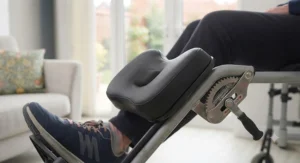
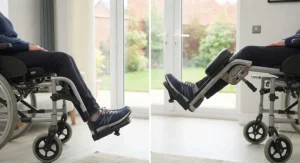
Elevating footrests for wheelchair users are leg supports that swing upward so the knee straightens and the lower leg rises toward hip height, instead of hanging at ninety degrees. They typically combine a calf pad, a flip-up footplate and adjustable height mechanisms, and they’re used mainly for swelling management, circulation support, post-operative positioning and pressure relief.
Three families exist. Wheelchair-mounted leg rests swing up and stay with the chair. Footplate extenders add a little lift. Free-standing stools and wedges work once you’ve transferred. An Invacare clinical fact sheet lists lower-limb oedema and related pain among the most common reasons elevating leg rests are prescribed. It also names orthostatic hypotension, lower-limb pressure injuries and contractures.
One subtlety most buyers overlook is pivot position. On conventional designs the hinge sits below the knee, so raising the leg can lift the thigh off the seat. Articulating designs lengthen as they rise to avoid that, and budget universals rarely do. Ask what your clinician recommends.
Circulation Support: What Elevation Can and Cannot Do
Circulation support is the headline promise on almost every listing, so it’s worth separating physics from marketing. When legs hang for hours, gravity makes it harder for blood and lymph to travel back up. Raising them eases that burden. But as the charity Legs Matter explains, the lymphatic system relies on regular muscle and skin movement, and temporary swelling often settles once you get moving.
So elevating footrests for wheelchair users deliver circulation support best alongside movement. Think ankle circles, foot pumps and regular position changes, rather than a permanent set-and-forget posture. The Invacare fact sheet adds a caution: elevating leg rests used alone can pull the pelvis backwards and create shear, so pairing them with recline is often better.
Padding matters too. Broad, soft calf pads spread pressure, while narrow, hard supports can press into the calf. That’s why buyers of ENCAREFOR Non-Padded Elevating Legrests often add a soft sleeve, and why the padded OZTYSGXM Universal Leg Rest with Padded Footrest appeals for longer sessions. The Drive Devilbiss Elevating Leg Rest for Enigma offers fine angle control, which makes gradual position changes easy. Whichever you choose, treat circulation support as a daily habit rather than a one-off gadget.
Swelling Management: Getting the Height Right
Swelling management starts with knowing what you’re managing. The NHS describes oedema as fluid build-up, often linked to sitting or standing still for too long, certain medicines, varicose veins or problems with the heart, kidneys or liver. Its everyday advice includes raising your legs on a chair or pillows and getting gentle exercise.
Height is where expectations meet reality. The Invacare fact sheet says elevating legs about 300 mm above the left atrium is generally recommended for oedema. That’s above heart level, which is hard to achieve while seated. One retailer guide makes the same point bluntly: even at full lift, the leg is nowhere near heart height. For daily swelling management, elevating footrests for wheelchair frames are therefore a helpful partial measure, best combined with recline, tilt or bedtime raising.
Product mapping helps. Aidapt Beaumont Leg Rest gets a leg roughly level. Coopers of Stortford Leg Elevating Pillow supports a raised leg in bed. Yuehuamech Wheelchair Foot-Rest Extender Elevating Pad doesn’t count as elevation at all.
Watch the timeline, too. Legs Matter notes that swelling lasting over three months, or not fully clearing overnight or with elevation, may indicate chronic oedema. That’s a reason to see a GP.
Adjustable Height Mechanisms: What to Look For
Adjustable height mechanisms decide whether a leg rest fits you at all, and whether you’ll actually use it. Broadly, four designs turn up:
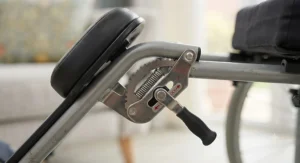
- Tool-free push-button or lever systems. The Drive approach.
- Click-lock telescoping tubes. The Enigma Expedition manual describes lifting an anti-rattle collar, pushing brass buttons, sliding to height until it clicks, then re-locking the collar.
- Manual extension tubes. The ENCAREFOR style.
- Fixed cushions. No adjustment at all.
What to prioritise: a positive lock with no rattle, smooth release and operation that you or your carer can manage. One clinical-supplier guide notes that independent use means bending sideways, pressing a lever and lifting both leg and rest in one move. That’s fine for some and impossible for others.
| Product | Adjustment method (per listings) | Range | Best For |
|---|---|---|---|
| Drive Devilbiss Elevating Leg Rest for Enigma | Tool-free height; infinite angle | c. 45–52 cm (range listing) | Carers who adjust often |
| ENCAREFOR Non-Padded Elevating Legrests | Manual length extension | Up to c. 6 in | Occasional adjusters |
| OZTYSGXM Universal Leg Rest with Padded Footrest | Angle adjustment | 90°–180° | Users needing wide angles, with clinical guidance |
| Yuehuamech Wheelchair Foot-Rest Extender Elevating Pad | None (fixed) | 1–2 in lift | Simple foot support |
| Aidapt Beaumont Leg Rest | Variable-height frame | 385–535 mm | Set-once evening use |
| Aidapt Beaumont Leg Rest with Castors | Variable-height frame plus castors | 385–535 mm | Frequent repositioning |
| Coopers of Stortford Leg Elevating Pillow | None (fixed wedge) | 17 cm tapering to 11 cm | Bed and sofa |
This table shows why Drive Devilbiss Elevating Leg Rest for Enigma suits people who tweak positions through the day, while Aidapt Beaumont Leg Rest rewards a set-and-forget routine. The wide angle on OZTYSGXM Universal Leg Rest with Padded Footrest looks generous but is only as useful as your hips and hamstrings allow. Fixed products such as Coopers of Stortford Leg Elevating Pillow trade adjustability for simplicity.
How to Choose Elevating Footrests for Wheelchair Users: 7 Steps
To choose elevating footrests for wheelchair use, confirm the clinical need, match your chair’s mounting, measure your legs, then pick a design that you or your carer can adjust comfortably.
- Get clinical input first. A GP, occupational therapist or NHS wheelchair service can advise on angle and duration, which matter more than any product feature.
- Identify your chair’s mounting. Note the make, model, hanger style and pin spacing, because “universal” rarely means everything.
- Measure your legs. Knee-crease-to-heel length, plus shoe allowance, prevents the “too short” complaint.
- Decide mounted, free-standing or both. Mounted parts travel with you, while stools such as Aidapt Beaumont Leg Rest suit armchairs.
- Match the adjustment to the operator. Tool-free adjustable height mechanisms suit carers, and manual tubes suit occasional tweakers.
- Check calf support. Padded suits long sessions, while non-padded needs a soft sleeve.
- Check the money side. Confirm per-side versus pair pricing, VAT relief eligibility and the returns policy.
Common Mistakes When Buying Elevating Footrests for Wheelchair Frames
Most regrets trace back to a handful of avoidable slips. Here they are, each with a fix.
Buying one when you need two
Problem: the Drive Devilbiss Elevating Leg Rest for Enigma is sold per side, and some universal listings are singles. Fix: read the “1 pair” wording, and compare cost per pair.
Trusting “universal”
Problem: reviewers across the category report fit surprises. Fix: verify pin spacing and hanger style before ordering.
Expecting a pad to be a leg rest
Problem: Yuehuamech Wheelchair Foot-Rest Extender Elevating Pad lifts feet an inch or two, and that’s all. Fix: treat it as comfort, not elevation.
Elevating without recline
Problem: elevating leg rests alone can drag the pelvis backwards, per the Invacare fact sheet. Fix: ask your wheelchair service about combining recline or tilt.
Over-trusting tiny review pools
Problem: five-star ratings from three buyers prove little, as with OZTYSGXM Universal Leg Rest with Padded Footrest. Fix: weigh review volume, and keep the returns window handy.
Elevating Footrests for Wheelchair vs Alternatives: Which Wins?
Elevating footrests for wheelchair frames aren’t the only way to get legs up, and each option has a niche.
| Option | Elevation reach | Portability | Typical cost | Best For |
|---|---|---|---|---|
| Wheelchair-mounted elevating footrests | Moderate | Travels with the chair | Around £35–£85 | Drive Devilbiss Elevating Leg Rest for Enigma, ENCAREFOR Non-Padded Elevating Legrests |
| Standard fixed footplates | None | Built in | Included | Users without swelling |
| Free-standing leg-rest stools | Moderate (about seat height) | Carry or roll | Around £45–£55 | Aidapt Beaumont Leg Rest, Aidapt Beaumont Leg Rest with Castors |
| Wedge pillows | Higher (in bed) | Easy | Low-to-mid £20s | Coopers of Stortford Leg Elevating Pillow |
| Tilt or recline wheelchairs | Highest | Fixed to the chair | Substantially higher | Clinician-prescribed needs |
Looking at the comparison above, mounted leg rests win on convenience because they never leave the chair. Stools and wedges win on comfort once you’re settled. Tilt and recline systems sit at the top for reach but aren’t casual purchases. Many people sensibly combine two or three, using Aidapt Beaumont Leg Rest by day and Coopers of Stortford Leg Elevating Pillow by night.
Long-Term Cost and Maintenance
Cost-per-use is the honest way to compare. A leg rest costing around £40 and used daily for two years works out at roughly 5p a day. A cheaper part that fails in three months doesn’t.
VAT can also matter. GOV.UK explains that if you’re disabled or have a long-term illness, VAT relief can apply to products designed or adapted for your personal use. It says this covers spare parts and accessories, but you must meet the definition and confirm it in writing. People who are elderly but not disabled, or only temporarily disabled, don’t qualify. Not every online seller applies relief, so ask before paying.
| Product | Price range | Value verdict | Best For |
|---|---|---|---|
| Drive Devilbiss Elevating Leg Rest for Enigma | Around £45–£85 per side | Good if compatible | Enigma owners |
| ENCAREFOR Non-Padded Elevating Legrests | Around £35–£40 | Strong for the price | Budget upgrades |
| OZTYSGXM Universal Leg Rest with Padded Footrest | Roughly £30–£50 | Unproven | Cautious padding seekers |
| Yuehuamech Wheelchair Foot-Rest Extender Elevating Pad | Mid-£30s | Modest | Comfort add-on |
| Aidapt Beaumont Leg Rest | Around £45–£55 | Strong | Evening elevation |
| Aidapt Beaumont Leg Rest with Castors | Mid-£40s | Strong | Mobile repositioning |
| Coopers of Stortford Leg Elevating Pillow | Low-to-mid £20s | Good | Bedtime support |
The value story here is straightforward. Aidapt Beaumont Leg Rest and Coopers of Stortford Leg Elevating Pillow deliver the most proven comfort per pound. ENCAREFOR Non-Padded Elevating Legrests is the mounted bargain if fit checks out. Maintenance costs little: wipe-downs, pad checks and the occasional replacement fixing.
Safety, Regulations and When to See a GP
Start with the red flags. The NHS says swelling in only one ankle, foot or leg with no known cause needs urgent advice. So does swelling that is severe, painful, sudden, hot or red, or swelling in someone with diabetes. Pain, swelling and tenderness in one calf can also signal a blood clot, and NHS hospital guidance on deep vein thrombosis lists warmth and redness as warning signs. Don’t try to fix that with a leg rest.
On regulation, wheelchairs are medical devices. CE marking is still being accepted on the Great Britain market during the current transition period, with UKCA the UK’s own mark, so check current MHRA guidance if you’re unsure. In practice, look for clear English instructions and manufacturer details, and be wary of listings offering neither.
Mechanical safety matters too. Mixing brands can affect compatibility and warranty. Elevated leg rests lengthen the chair, which makes tight turns and lifts trickier. Locking castors on Aidapt Beaumont Leg Rest with Castors before every transfer is non-negotiable. If skin, sensation or circulation is a concern, involve your wheelchair service before using elevating footrests for wheelchair frames at all.
FAQ
❓ Will elevating footrests for wheelchair frames fit any wheelchair?
❓ How much do elevating footrests for wheelchair users cost in the UK?
❓ Can I buy VAT-free elevating footrests for wheelchair use?
❓ Do elevating footrests for wheelchair users help swelling management on their own?
❓ Is a leg-rest stool better than elevating footrests for wheelchair frames?
Conclusion
Elevating footrests for wheelchair users aren’t glamorous, but they’re one of those small upgrades that changes an entire afternoon. The honest picture is that no single product wins everywhere. If you own a compatible chair, Drive Devilbiss Elevating Leg Rest for Enigma removes the fit gamble. If you need a budget universal option, ENCAREFOR Non-Padded Elevating Legrests offers the strongest mounted rating, though you’ll want a soft calf sleeve. OZTYSGXM Universal Leg Rest with Padded Footrest promises padding but needs a cautious approach until its review pool grows. Yuehuamech Wheelchair Foot-Rest Extender Elevating Pad is comfort, not elevation. For evenings, Aidapt Beaumont Leg Rest and Aidapt Beaumont Leg Rest with Castors are the best-evidenced choices here, and Coopers of Stortford Leg Elevating Pillow handles bedtime.
Keep three lenses in mind. Circulation support comes from elevation combined with movement, swelling management depends on realistic height and clinical guidance, and adjustable height mechanisms determine whether you’ll actually use the thing. Bring your clinician into the decision, measure twice and order once.
✨ Ready to Put Your Feet Up?
🦵 Take the guesswork out of comfort with these carefully selected products. Click on any highlighted product name above to check current pricing and availability on Amazon UK, and give your legs the support they deserve! 💬
Recommended for You
- Swing-Away vs Elevating Footrests: 7 Top Picks Compared (2026)
- Best Wheelchair Footrests: 7 Proven UK Picks for 2026
- Wheelchair Umbrella for Wind Resistance: 7 Best Picks (2026)
Disclaimer: This article contains affiliate links. As an Amazon Associate, I earn from qualifying purchases. If you purchase products through these links, we may earn a small commission at no additional cost to you.
✨ Found this helpful? Share it with your friends! 💬🤗
