
In This Article
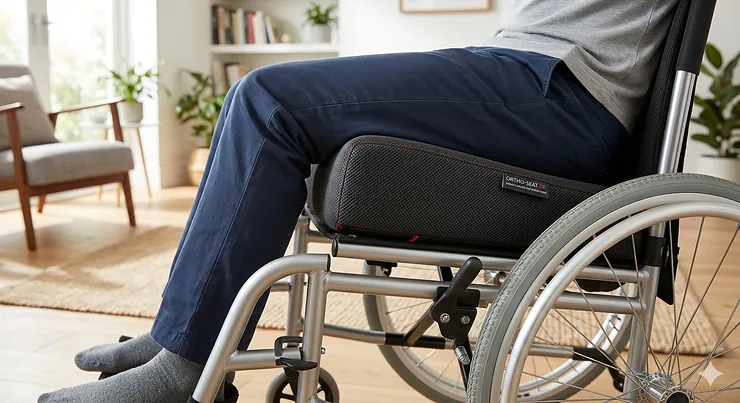
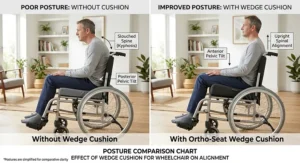
There’s a specific kind of misery that comes from sitting in a wheelchair for hours on end without proper support. Your pelvis tilts back, your spine curves forward like a question mark, and by lunchtime you’re sliding halfway off the seat as though the chair itself has given up on you. It is, frankly, undignified — and entirely preventable. A good wedge cushion for wheelchair use changes the equation entirely, nudging the pelvis into a gentle anterior tilt, reducing pressure on the sacrum and coccyx, and giving the whole body a fighting chance at something resembling decent posture.
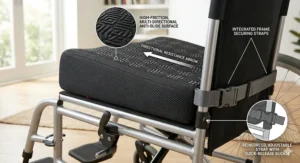
What is a wedge cushion for wheelchair? In essence, it’s a triangular seat insert — thicker at the back, tapering toward the front — that angles the sitting surface so the knees sit slightly lower than the hips. This seemingly small shift discourages forward sliding, takes strain off the lower back, and encourages the spine to stack more naturally. According to guidance from the NHS’s long-term conditions seating resources, prolonged poor seating posture can contribute to pressure ulcers, respiratory difficulties, and musculoskeletal complications — none of which you want anywhere near your everyday routine.
In this guide, we’ve researched and reviewed the seven best options currently available on Amazon.co.uk, spanning budget-friendly foam wedges to premium British-made orthopaedic cushions. Whether you’re a full-time wheelchair user, a carer sourcing equipment for a family member, or an occupational therapist looking for a reliable everyday option for a client, there’s something here for you. We’ve tested each one against real-world British conditions — which is to say, the kind of prolonged indoor sitting that British winters inevitably demand — and assessed them not just on specs, but on genuine usability.
Quick Comparison: Best Wedge Cushions for Wheelchairs UK 2026
| Product | Type | Key Material | Best For | Price Range |
|---|---|---|---|---|
| ProHeal Foam Wedge Wheelchair Seat Cushion | Foam wedge | High-density foam | Sliding prevention, hospital/care settings | £30–£55 |
| SNUGL Coccyx Wedge Cushion | Memory foam wedge | Visco-elastic foam + latex blend | Everyday home/office/wheelchair use | £25–£40 |
| MargGona Memory Foam Wedge Cushion | Memory foam wedge | High-density memory foam | Budget buyers, car & wheelchair crossover | £20–£35 |
| Putnams 8 Degree Seat Wedge (Coccyx Cut Out) | Foam wedge | High-density orthopaedic foam | Posture correction, coccyx issues | £30–£50 |
| Putnams Sero Pressure Relief Cushion | Pressure relief cushion | Specialist foam, waterproof cover | Pressure sore prevention, clinical use | £45–£75 |
| Gima 47095 Air-Filled Balance Wedge | Air cushion | Hypoallergenic flexible material | Active sitting, lightweight portability | £20–£35 |
| AUVON Anti-Slip Wheelchair Wedge Cushion | Ergonomic wedge | Memory foam, waterproof fabric | Sciatica, tailbone pain, daily wheelchair use | £25–£45 |
The table above tells a useful story — and not just the obvious one about price. Notice that the two British-made Putnams options sit at different ends of the same brand’s range: one optimised for straightforward pelvic correction, the other for clinical-grade pressure management. If you’re primarily trying to stop someone sliding forward, the ProHeal and AUVON options offer the best structural anti-thrust geometry. If skin integrity is the concern — a real consideration for full-time wheelchair users — the Putnams Sero’s waterproof cover is doing far more work than the price difference might suggest.
💬 Just one click — help others make better buying decisions too!😊
✨ Don’t Miss These Exclusive Deals!
🔍 Ready to improve your seating comfort? Click any highlighted product below to check current pricing and availability on Amazon.co.uk — and find exactly the right wedge cushion for your needs!
Top 7 Wedge Cushions for Wheelchair: Expert Analysis
1. ProHeal Foam Wedge Wheelchair Seat Cushion (Bariatric)
The ProHeal is one of the few wedge cushions on Amazon.co.uk genuinely designed from the ground up for wheelchair use rather than repurposed from an office chair range — and that distinction matters more than you might think.
The high-density foam construction is notably firm without being punishing, measuring 22 x 18 x 4–2 inches (approximately 56 x 46 x 10–5 cm) in the bariatric version — comfortably covering most standard NHS-specification wheelchair seats. The wedge gradient runs from 10 cm at the rear to 5 cm at the front, which creates a proper anti-sliding slope without raising the user so high they struggle with transfer. A non-slip base and attached safety buckle strap keep the cushion exactly where it’s placed, which carers and OTs will appreciate during patient repositioning.
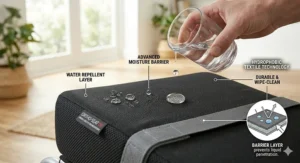
The stretch nylon cover is fluid-resistant — a polite way of saying incontinence-resistant — which is a practical reality that many product listings dance around. This one doesn’t. For full-time wheelchair users, especially in care home settings or those with reduced sensation, that fluid-resistance is non-negotiable.
UK buyers should note it ships from Amazon’s European fulfilment network, so Prime delivery times apply for most mainland UK postcodes. Customer feedback highlights consistent firmness over time — a known weak point in cheaper foam wedges that compress to near-flat within a few weeks.
✅ Stays firm after extended daily use
✅ Proper bariatric sizing — covers full wheelchair seat
✅ Fluid-resistant cover suits incontinence management
❌ Cover could be more breathable in warmer months
❌ Heavier than foam-only alternatives
Price range: around £30–£55 — solid value for a product built specifically for wheelchair use rather than adapted from office furniture.
2. SNUGL Coccyx Wedge Cushion
SNUGL is a genuinely British brand — their support team is UK-based and available seven days a week — which rather refreshingly means you’re not navigating a foreign returns process if something goes wrong. The cushion itself combines visco-elastic memory foam with a natural latex blend, a pairing that gives you the pressure-contouring of memory foam without the notorious heat retention that makes standard memory foam unpleasant after an hour or so.
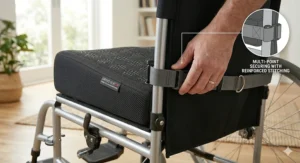
The dual adjustable strap system with buckle clips is one of the better fastening solutions on the market at this price point. Unlike single-strap designs that allow the rear to lift during transfers, the dual strap wraps properly around the seat back and prevents the cushion shifting even during active manoeuvring — useful for manual wheelchair users who spend time propelling.
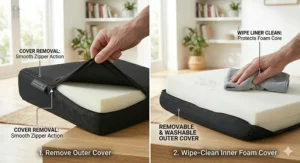
At approximately 43 x 36 cm and around 7 cm at the rear taper, the SNUGL sits slightly on the larger end of standard sizes. It works beautifully for 18-inch-wide wheelchair seats but may overhang narrower transport chairs. The velvet cover is machine-washable, which is more than can be said for several competitors, and the hypoallergenic inner lining adds a layer of reassurance for users with sensitive skin.
UK reviewers specifically mention using it across wheelchairs, car seats, and recliner chairs — which speaks to versatility. However, as a posture-correction wedge primarily, it lacks the dedicated anti-thrust geometry of the ProHeal; better for chronic back pain and general comfort than acute sliding prevention.
✅ UK brand with responsive customer support
✅ Dual strap system genuinely prevents shifting
✅ Memory foam and latex blend reduces heat build-up
❌ May overhang narrower wheelchair seats
❌ Less suited to severe forward-thrust positioning problems
Price range: around £25–£40 — exceptional value with a 60-day return guarantee and 12-month warranty.
3. MargGona Memory Foam Wedge Cushion
If the budget is the primary consideration — and for many carers managing household equipment costs out of their own pockets, it honestly is — the MargGona delivers a competent wedge solution without pretending to be anything it isn’t.
The 100% high-density memory foam construction is 48 cm wide at 7.5 cm rear height, and the tapered wedge shape raises the hips while keeping the front edge lower, which is exactly the geometry you want for pelvic tilt correction. The silicone non-slip base and extendable adjustable strap do a reasonable job of keeping it in place, and the polyester mesh outer cover is removable and washable — an important consideration that cheaper competitors often omit entirely.
What the MargGona does well is serve as a crossover product: equally comfortable on a wheelchair, in a car, or on a dining chair. For someone managing a family member who transitions between a wheelchair and standard seating throughout the day, having one cushion that works in both contexts has genuine practical value. The mesh cover also performs surprisingly well in summer — British summers being what they are, one still has to prepare for the occasional warm day.
One honest caveat: the foam is softer than clinical-grade options, and heavier users may find it compresses more than they’d like. UK reviewers mention it works well for lighter frames and those using the wheelchair part-time rather than full-time. For all-day, every-day use, the ProHeal or AUVON would serve better.
✅ Budget-friendly without sacrificing basic function
✅ Versatile — works across wheelchair, car, and dining chairs
✅ Mesh cover breathes well, supports warmer periods
❌ Softer foam may compress under heavier or full-time users
❌ Not built for clinical or high-dependency wheelchair use
Price range: around £20–£35 — best value for part-time wheelchair users or as a secondary/travel cushion.
4. Putnams 8 Degree Seat Wedge with Coccyx Cut Out
Made in Devon since 1979. That’s not marketing copy — that’s just a fact, and in a market flooded with products of uncertain provenance, it carries real weight. Putnams manufacture their wedge cushions using high-density orthopaedic foam in their own UK facility, which means quality control is consistent and the product complies with relevant British standards.
The 8-degree wedge angle is calibrated specifically for wheelchair and chair use — gentler than the 11-degree version (also available), which makes it more comfortable for extended sitting without the “perched on a slope” sensation that some steeper wedges create. The coccyx cut-out redistributes pressure away from the base of the spine, which is genuinely useful for anyone with a history of coccydynia, tailbone injury, or sacral pressure sensitivity. Occupational therapists regularly recommend Putnams wedges for exactly this reason.
The grip-right velour cover is a thoughtful detail — it resists slipping on smooth chair upholstery without requiring straps, though an adjustable removable strap is included for wheelchair use where more security is needed. The cover unzips and washes, and the foam is CertiPUR certified, which gives peace of mind regarding chemical safety. Available in black, blue, grey, and beige if the aesthetics of mobility aids matter to you (they do to some people, and rightly so).
Sold and dispatched by Putnams England directly on Amazon.co.uk, so delivery and returns are straightforward. The washable cover at 95°C is optionally available for hospital and nursing home use, conforming to BS7175 fire retardancy standards.
✅ Genuinely made in the UK (Devon)
✅ Coccyx cut-out specifically reduces sacral pressure
✅ CertiPUR foam certified safe for sensitive users
❌ 8-degree angle may be insufficient for severe sliding prevention
❌ Velour cover less suitable for incontinence management without upgrade
Price range: around £30–£50 — premium feel at mid-range price; a standout for value among British-made options.
5. Putnams Sero Pressure Relief Cushion with Waterproof Cover
Where the Putnams 8 Degree Wedge is an everyday posture correction tool, the Sero is the brand’s more clinically focused offering — and it shows in construction, cover material, and intended use case.
The Sero cushion features a waterproof PU cover as standard, which can be machine-washed at higher temperatures (conforming to BS7175 Crib 5, making it suitable for NHS, care home, and hospital environments). The foam formulation is specifically engineered for pressure redistribution, with the coccyx cut-out option providing targeted relief for users at risk of skin breakdown. For individuals who are assessed as being at medium-to-high risk of pressure ulcers — a category that includes many full-time power-wheelchair users — this level of specification is not optional; it’s clinically indicated.
What’s worth noting is that the Sero is available in multiple size configurations on Amazon.co.uk, including an armchair/deluxe variant. This is useful where the standard seating dimensions don’t match. Putnams will also produce bespoke sizes for medical use, though that falls outside the Amazon listing.
UK reviewer feedback highlights that the Sero holds its shape remarkably well over months of daily use — a meaningful differentiator from cheaper foam options that flatten within weeks. Carers and occupational therapists citing use in domiciliary care settings rate it consistently well.
One honest note: the clinical-grade waterproof cover is less comfortable against bare skin than velour, and on warm days it can feel warmer than you’d like. For users in care settings this is typically not the concern; for independent users managing their own comfort, the trade-off is worth knowing about.
✅ Clinical-grade waterproof cover, BS7175 compliant
✅ Purpose-built for pressure ulcer prevention
✅ Holds shape reliably over months of daily use
❌ Waterproof cover warmer than velvet/velour alternatives
❌ Higher price point than general-purpose wedges
Price range: around £45–£75 — worth every pound for full-time wheelchair users or those at pressure ulcer risk.
6. Gima 47095 Air-Filled Balance Wedge Cushion
The Gima takes a fundamentally different approach to the wedge cushion concept — instead of rigid foam, it uses a flexible air-filled construction that introduces a small amount of dynamic instability. This engages the core postural muscles subtly while seated, which sounds counterintuitive for wheelchair use but has real applications for users with sufficient core awareness who want to maintain muscle activation during prolonged sitting.
Made from hypoallergenic, non-toxic flexible material and certified free from latex, PVC, phthalates, and chloride — this is a significant specification for users with latex allergies, which are more prevalent in healthcare populations than the general public. The cushion is also notably lightweight and portable, which makes it attractive for wheelchair users who transfer frequently or travel regularly. Slipping it into a bag between uses is a genuine possibility in a way that foam wedges simply aren’t.
The air-fill design allows minor inflation adjustment, which means you can modulate the wedge’s firmness to suit body weight and preference. This adaptability is something static foam cushions cannot offer. On the downside, any air-filled product carries the theoretical risk of slow leaks, and it lacks the anti-sliding security of cushions with rigid foam bases and safety straps.
For wheelchair users with some active trunk control — perhaps those with incomplete spinal cord injuries, MS, or other conditions where some neuromuscular engagement is present and desirable — the Gima offers a refreshingly different kind of seating support. For individuals with minimal trunk control or high falls risk, the more structurally stable foam options are the wiser choice.
✅ Latex, PVC, and phthalate-free — safe for allergy-sensitive users
✅ Adjustable inflation for personalised firmness
✅ Lightweight and portable; great for frequent travellers
❌ Air-fill means potential for gradual deflation
❌ Less anti-sliding security than foam wedge alternatives
Price range: around £20–£35 — unusually good value for an air-cushion product with strong allergy-safe credentials.
7. AUVON Anti-Slip Wheelchair Cushion (Ergonomic Wedge Design)
The AUVON has earned something of a cult following among wheelchair users on Amazon.co.uk — and with over a thousand UK reviews collectively across their seating range, the feedback is too consistent to dismiss. The anti-slip wheelchair cushion features a front-high, rear-low ergonomic contour with a raised rear hump, which works differently to a conventional anterior wedge: it discourages sacral sitting by raising the posterior contact point, rather than purely angling the surface.
The memory foam construction is paired with a cooling, waterproof silk-effect fabric outer cover that feels noticeably more premium than the stretch nylon found on most competitors. The anti-slip bottom and detachable safety strap provide solid retention during daily use. Crucially, AUVON includes a removable, washable cover as standard — a baseline expectation that several manufacturers still fail to meet.
What makes the AUVON particularly well-suited to British buyers is the combination of pressure relief and anti-sliding geometry in a single product, at a price point that doesn’t require a referral through an OT’s equipment budget. Many UK users with sciatica, disc issues, or post-surgical seating sensitivity have found it provides meaningful relief during the lengthy indoor periods that British winters inevitably produce.
The sizing — around 51 x 41 x 10 cm — suits standard adult wheelchairs well. Prime-eligible on Amazon.co.uk with next-day delivery available for Prime members, which matters when you’re waiting on equipment.
✅ Waterproof cooling fabric cover — genuinely premium feel
✅ Combined anti-thrust and pressure relief geometry
✅ Strong, consistent UK reviewer feedback
❌ Rear-hump design suits some postures better than others
❌ Memory foam can stiffen in cold rooms (common British issue in winter)
Price range: around £25–£45 — one of the best all-rounders on the list.
How to Set Up and Actually Use Your Wheelchair Wedge Cushion
Buying the right cushion is one thing. Using it correctly is where most people quietly go wrong, and it’s worth addressing directly because even the best wedge cushion in the world does nothing for you installed backwards.
Orientation matters enormously. The thicker end of the wedge goes at the back of the seat — beneath your buttocks. The tapered, thinner edge faces forward, beneath your thighs. This creates the anterior pelvic tilt that is the whole point of the exercise. Installing it the other way round (easy to do when the cushion arrives in the post and you’re not thinking about it) actively worsens sliding — you’d essentially be tilting yourself forward off the seat.
Allow a settling-in period. Most foam wedge cushions arrive vacuum-packed and require 24–72 hours to fully expand before use. This is especially true for high-density options like the Putnams and ProHeal ranges. Using a compressed cushion before it has expanded will give you an inaccurate sense of its actual support profile.
Check the strap placement. The safety strap should pass under the wheelchair seat pan, not over it. Threading it over the seat frame creates a bump that can cause pressure points against the underside of the thighs. A few extra seconds of correct setup pays dividends over the course of a long day.
Maintenance in British conditions. British homes are frequently damp, particularly through autumn and winter. Keep removable covers washed at the recommended temperature — usually 40°C for velour, higher for clinical waterproof covers — and allow them to dry fully before replacing. A damp cover sitting against skin is a pressure ulcer risk that no foam wedge can compensate for. If the foam itself gets wet (spills, incontinence), allow it to air-dry in a warm room — not near a direct radiator, which can degrade foam integrity. A storage position standing upright against a wall promotes airflow and prevents the foam from taking a permanent set.
Real-World Scenarios: Which Wedge Cushion Fits Your Situation?
Wedge cushions are not a one-size-solves-all solution. The right pick depends very much on who is using the wheelchair, for how long, and in what context.
Margaret, 74, Sheffield — part-time manual wheelchair user, mild scoliosis, manages independently at home. Margaret uses her wheelchair primarily in the mornings and during outings. She transfers independently to a dining chair and her car seat. The SNUGL Coccyx Wedge is a strong match: the dual strap keeps it secure during transfer moments, the memory foam–latex blend offers comfort during two-to-three-hour sitting periods without overheating, and its versatility means she can move it between the wheelchair and her car for GP appointments. The 60-day return guarantee removes the financial risk of trying it.
James, 42, Bristol — full-time power wheelchair user, incomplete spinal cord injury, some trunk control. James is seated for eight or more hours daily. Skin integrity is a clinical concern, and his OT has flagged pressure ulcer risk. The Putnams Sero with waterproof cover is the clinically appropriate choice — the BS7175-compliant cover, the pressure-redistributing foam, and the coccyx cut-out address his specific risk factors. The higher price is justified when weighed against the cost (financial and physical) of pressure ulcer treatment.
Aisha, 32, London — ambulant part-time wheelchair user, chronic sciatica, uses wheelchair for longer outings and commuting via accessible transport. Aisha needs something lightweight and portable that she can fold flat or slip into a bag when not seated. The Gima Air-Filled Balance Wedge is unusually well-suited here: it’s lightweight, latex-free (she has a latex sensitivity), and the mild dynamic instability works well given that she maintains meaningful trunk muscle activity. Its portability means it can move from wheelchair to bus seat to café chair without drama.
The Bailey family, Birmingham — caring for elderly father, 81, long-term care home day visit, limited budget. The MargGona offers reliable everyday support at an accessible price point. For shorter sitting periods — a few hours at a family visit — it performs its function without requiring a clinical specification. Should the situation change and full-time use become necessary, upgrading to the ProHeal Bariatric or Putnams Sero is a logical step.
How to Choose the Right Wedge Cushion for Wheelchair in the UK
With seven solid options in front of you, here is a practical framework for making the right call.
1. Identify the primary goal. Are you trying to prevent forward sliding (anti-thrust priority)? Correct pelvic tilt (postural priority)? Relieve pressure ulcer risk (skin integrity priority)? These goals overlap, but each has a best-suited product type. Anti-thrust: ProHeal or AUVON. Postural correction: Putnams range. Pressure management: Putnams Sero or AUVON with clinical cover.
2. Assess hours of use per day. Part-time users (under four hours daily) can manage well with mid-range memory foam options. Full-time users — eight or more hours — need high-density, shape-retaining foam or clinical-grade cushions. Foam that compresses under sustained load within weeks is genuinely worse than no wedge at all by that point; it creates irregular pressure points on a now-uneven surface.
3. Consider transfer independence. If the user transfers independently to other seating surfaces multiple times daily, a portable, lightweight cushion with secure strapping (SNUGL, Gima) reduces friction in daily life. If a carer assists with all transfers, a heavier, more robust clinical cushion is manageable.
4. Check your wheelchair seat width. Standard adult NHS wheelchairs seat at 45 cm (18 inches). Bariatric chairs run wider. Always match the cushion to the seat width — a cushion that overhangs the frame creates lateral pressure points, and one that’s too narrow leaves unsupported areas that increase sliding risk.
5. Waterproofing: clinical necessity or personal preference? For users managing incontinence, a waterproof cover is non-negotiable. For users without this concern, a breathable velour cover will typically be more comfortable during the long British indoor season.
6. Budget in GBP. Budget range (under £35): MargGona, Gima. Mid-range (£35–£55): SNUGL, ProHeal, Putnams 8 Degree. Premium (over £55): Putnams Sero. The clinical options represent genuine long-term value when the alternative is treating pressure complications through the NHS.
Common Mistakes When Buying a Wedge Cushion for Wheelchair
Buying a car cushion and calling it a wheelchair cushion. Many products on Amazon.co.uk are marketed for both uses, but car-specific wedges (like the MargGona) are designed for the dynamic sitting of driving — not the static, prolonged sitting of wheelchair use. They may lack proper safety straps or adequate size coverage for wheelchair seat pans. The distinction matters for full-time users.
Ignoring foam density ratings. High-density foam is categorised by weight per cubic metre. Clinical wheelchair cushions typically use foam rated at 35–45 kg/m³ or above. Budget cushions rarely specify this, and when they don’t, it’s usually because the density is low. Low-density foam compresses within weeks under daily use, leaving you effectively sitting on a thin, uneven rubber mat.
Overlooking the cover specification. A foam cushion without a removable, washable cover is a hygiene concern from day one. Some Amazon listings sell the cushion without a cover as a separate purchase — read the product description carefully, particularly for medical-grade options. On Amazon.co.uk, this is occasionally an issue with products listed by US-based sellers whose product descriptions may not accurately reflect UK bundle contents.
Assuming any wedge will solve a complex positioning problem. If a wheelchair user is experiencing significant pelvic obliquity, kyphosis, or spasticity, a standard wedge cushion may help, but a formal seating assessment through an NHS wheelchair service or private occupational therapist is the appropriate first step. The British Association of Occupational Therapists maintains guidance on accessing specialist seating assessment services across England, Scotland, Wales, and Northern Ireland.
Underestimating the importance of regular replacement. Even the best foam wedge cushion has a finite life. Most manufacturers suggest reassessment at 12–18 months for daily users. Leaving a compressed, degraded cushion in service because “it looks fine” is one of the most common and most harmful mistakes in wheelchair seating management.
Wedge Cushion vs Flat Cushion vs Pressure Relief Cushion: What Actually Differs?
| Feature | Flat Foam Cushion | Wedge Cushion | Pressure Relief Cushion |
|---|---|---|---|
| Prevents forward sliding | ❌ No | ✅ Yes | Partial |
| Corrects pelvic tilt | ❌ No | ✅ Yes | Partial |
| Pressure ulcer prevention | Limited | Moderate | ✅ Primary purpose |
| Suitable for long-term use | Limited | Yes (high-density) | ✅ Yes |
| Ease of transfer | ✅ Simple | Moderate | Moderate |
| Typical price range (GBP) | £10–£25 | £20–£75 | £50–£200+ |
| UK availability (Amazon.co.uk) | Wide | Good | Moderate |
The table makes the decision logic reasonably clear: flat cushions are comfort add-ons, not seating solutions. Wedge cushions address posture and sliding — which covers the majority of everyday use cases for wheelchair users who aren’t at acute pressure ulcer risk. Pressure relief cushions (alternating air, gel, or complex foam systems like ROHO) address skin integrity as their primary function and are typically prescribed rather than purchased independently.
For most people reading this guide — carers, independent users with postural or comfort concerns, or individuals recently prescribed a wheelchair — a good-quality wedge cushion is the right and sufficient intervention. If your situation involves formal pressure ulcer risk assessment, that conversation belongs with your GP, district nurse, or wheelchair service, not Amazon.
Features That Actually Matter (And the Marketing Fluff to Ignore)
Matters: foam density and documented longevity. The spec sheet won’t always tell you how long a cushion holds its shape under daily use. Reviews from verified UK purchasers after six or more months of use are the most reliable guide here.
Matters: washable, removable cover. Non-negotiable. A cushion you cannot wash is a liability, not a benefit.
Matters: wedge angle and gradient. Too steep (over 12 degrees) creates postural instability; too shallow (under 6 degrees) provides insufficient pelvic tilt correction. The sweet spot for most users is 7–11 degrees — which is exactly what the Putnams range specifies.
Marketing fluff: “orthopedic quality” without specification. This phrase appears on products across the price spectrum and means precisely nothing without a supporting foam density, material certification, or clinical endorsement.
Marketing fluff: “patented design” for standard foam shapes. Wedge geometry is not proprietary. If a listing emphasises a patent on a triangular cushion without explaining what specifically is novel, it’s decorative language.
Matters: anti-slip base. Sling-seat wheelchairs create the hammock effect — a slight concavity to the seat that standard flat-bottomed cushions slide around in constantly. A dedicated non-slip base or safety strap that attaches properly beneath the seat frame is essential, not optional.
FAQ: Wedge Cushions for Wheelchair Use in the UK
❓ What does a wedge cushion for wheelchair actually do?
❓ Can I get a wheelchair wedge cushion on NHS prescription?
❓ How long do foam wedge cushions last with daily wheelchair use?
❓ Are wedge cushions available with next-day delivery in the UK?
❓ Is a wedge cushion safe for a wheelchair user with spasticity or high muscle tone?
Conclusion: The Right Wedge Makes a Real Difference
Here is the honest summary: most wheelchair users who are uncomfortable, sliding, or experiencing back pain are sitting on the wrong cushion — or no cushion at all. The wedge cushion for wheelchair is not a luxury or an afterthought; it’s a fundamental component of safe, dignified seating. The British NHS recognises this, occupational therapists routinely prescribe it, and yet the equipment often gets overlooked until discomfort becomes a problem rather than addressed before it does.
For most everyday users, the AUVON or SNUGL options offer the best balance of performance, convenience, and price. For anyone at pressure ulcer risk or in full-time use, the Putnams Sero is worth the investment — as is a conversation with your occupational therapist. For British-made quality at a sensible mid-range price, the Putnams 8 Degree Wedge is difficult to argue against.
The difference between a good day and a difficult one in a wheelchair can come down to something as straightforward as the angle of a foam insert. That’s worth attending to.
✨ Don’t Miss These Exclusive Deals!
🔍 Find your perfect wedge cushion on Amazon.co.uk — click any highlighted product in this guide to check current pricing, availability, and delivery options. Prime members can enjoy next-day delivery on most options!
Recommended for You
- Best Coccyx Wheelchair Cushion UK 2026: 7 Expert Picks for Real Tailbone Relief
- Memory Foam vs Gel Wheelchair Cushion: 7 Best UK Picks 2026
- Best Gel Seat Cushion for Wheelchair Users UK 2026 (Top 7 Picks)
Disclaimer: This article contains affiliate links. As an Amazon Associate, I earn from qualifying purchases. If you purchase products through these links, we may earn a small commission at no additional cost to you.
✨ Found this helpful? Share it with your mates! 💬🤗
