
In This Article
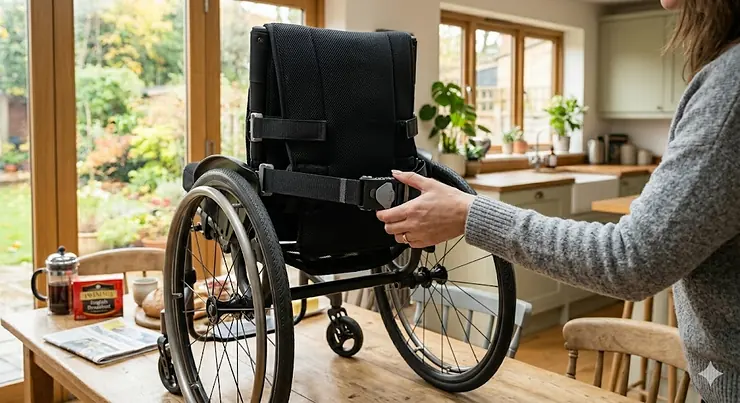
Let’s be blunt about something the brochure won’t tell you: the standard sling back on most wheelchairs is, in the long run, a disappointment waiting to happen. It ships taut, feels acceptable for a few months, and then — slowly, inevitably — it sags. The fabric stretches, the lumbar support disappears, and suddenly you’re sitting in something that resembles a hammock strung between two poles. Not exactly the clinical seating solution your spine deserves.
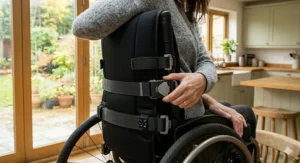
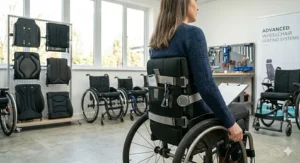
A tension adjustable wheelchair back exists precisely to solve this problem. At its core, it’s a back support system featuring a series of horizontal adjustment straps — typically three to five — that allow you to independently tune the firmness, contour, and lumbar curve of the backrest to match your own anatomy. Tighten a strap near your lumbar spine, leave another slightly looser across the shoulders, and the result is a customised, corset-like shape that accommodates your posture rather than fighting it. According to NHS Wheelchair Services, occupational therapists routinely assess posture, pressure care, and back support quality during wheelchair reviews — and a sagging sling back is one of the most common issues they encounter.
This guide covers seven genuine options available to UK buyers on Amazon.co.uk, from budget-friendly back cushions to wheelchairs with tension adjustable systems built in as standard. All prices are given as ranges in GBP, and we’ve given every product the analysis it deserves — because listing specs without context is about as useful as a waterproof watch you’re afraid to get wet.
Quick Comparison: Tension Adjustable Wheelchair Back Options at a Glance
| Product | Type | Best For | Price Range (GBP) | Prime Eligible |
|---|---|---|---|---|
| Drive DeVilbiss Enigma K-Chair | Full Wheelchair | Long-term daily users | £££ (mid-high range) | ✅ |
| Drive DeVilbiss Enigma Self-Propel | Full Wheelchair | Active users, outings | ££ (mid-range) | ✅ |
| Drive Medical Tension Adj. Back Cushion | Back Cushion Add-on | Existing chair upgrade | £ (budget) | Check listing |
| Aidapt Memory Foam Back Cushion | Foam Back Cushion | Comfort upgrade | £ (budget) | ✅ |
| PYC All Purpose Adjustable Strap | Tension Strap System | DIY back tensioning | £ (budget) | ✅ |
| Everlasting Comfort Gel Foam Cushion | Foam/Gel Back Support | Pressure relief focus | £–££ | ✅ |
| Drive DeVilbiss Vinyl Wheelchair Cushion | Replacement Upholstery | Direct sling replacement | £ (budget) | ✅ |
From the table above, a clear pattern emerges: if you’re looking for a fully integrated tension adjustable backrest, your best route is a wheelchair that includes one as standard — the Enigma K-Chair being the standout example on Amazon.co.uk. If you already own a chair and simply need to address sag, budget add-on cushions and strap systems offer a surprisingly capable stopgap. The key distinction is whether you’re upgrading a chair or upgrading to a new chair entirely — a decision worth spending five minutes on before reaching for the “Add to Basket” button.
💬 Just one click — help others make better buying decisions too! 😊
✨ Don’t Miss These Exclusive Deals!
🔍 Take your seating comfort to the next level with these carefully selected products. Click on any highlighted item to check current pricing and availability on Amazon.co.uk. These picks will help you find exactly what you need!
Top 7 Tension Adjustable Wheelchair Back Options: Expert Analysis
1. Drive DeVilbiss Enigma K-Chair with Tension Adjustable Backrest
The Enigma K-Chair is perhaps the most compelling option on Amazon.co.uk for buyers who want tension adjustment built into the chair from day one. It features padded seat and back cushions as standard, combined with a tension adjustable backrest — meaning the customisation is already there before you’ve even unpacked the footrests.
The aluminium frame keeps weight genuinely manageable, which matters when you’re navigating the narrow pavements and tight shop doorways that define so much of British everyday life. The half-folding back mechanism is a thoughtful touch: it collapses down for transport without requiring you to dismantle half the chair first. Desk-style padded armrests allow users to get close to kitchen tables and work surfaces — a detail that sounds minor until you’ve spent six months struggling to reach your dinner plate.
What most UK buyers overlook about the K-Chair is the combined value proposition: you’re getting a tension adjustable back and a suspension system in a single package. The suspension element means uneven pavement surfaces — and let’s be honest, British pavements are rarely smooth — absorb rather than jar. UK customer reviews consistently highlight comfort and ease of folding for car boot storage.
✅ Tension-adjustable backrest built in as standard
✅ Half-folding back, compact for car travel
✅ Aluminium frame — light enough for regular outings
❌ Mid-to-premium price range may stretch tighter budgets
❌ Specific colour/configuration may vary by stock on Amazon.co.uk
Price range: mid-to-upper tier — check current price on Amazon.co.uk. Prime-eligible; VAT relief may apply for qualifying individuals.
2. Drive DeVilbiss Enigma Aluminium Self-Propelled Wheelchair
The self-propelled variant of Drive DeVilbiss’s Enigma range brings independence to the equation. If the person using the chair has sufficient upper body strength to propel themselves, this is the model worth considering — it shifts the dynamic entirely from “being pushed around” to “going where you choose.”
The adjustable footrest system is a standout practical feature: five height positions, tool-free adjustment, and the ability to swing them out of the way for transfers. That last point is rather more important than it might first appear. Getting on and off a wheelchair smoothly is something healthcare professionals at NHS wheelchair assessment clinics specifically evaluate, and footrests that obstruct transfers are a genuine safety consideration.
The rear stepper tubes — allowing carers to safely negotiate kerbs — reflect a real-world British design reality. Dropped kerbs aren’t universal, particularly outside city centres, and the stepper tube detail adds useful versatility for rural or older suburban settings. Puncture-proof front wheels mean one less maintenance headache.
✅ Five-position tool-free footrest adjustment
✅ Self-propel configuration for user independence
✅ Rear stepper tubes for kerb management
❌ Standard sling back (not tension-adjustable as built-in feature on this variant)
❌ May benefit from an add-on back support for longer sitting durations
Price range: mid-range — check current price on Amazon.co.uk. VAT relief may apply.
3. Drive Medical Adjustable Tension Back Cushion (Model 14300)
This is the dedicated tension adjustable wheelchair back cushion in the truest sense — a purpose-built add-on rather than a complete chair. Drive Medical’s 14300 features five horizontal adjustment straps across the back of the cushion, each independently tunable to create a contoured shape tailored to the individual user. High-density foam padding sits beneath a fluid-resistant, breathable cover that wipes clean — sensible for anything used in a healthcare or care home context.
The practical beauty of this design is that it fits directly over the wheelchair canes, adding structural stability rather than simply floating in place. It also folds with the chair, meaning you don’t have to remove it every time the chair goes in the car boot. Available in two size variants to suit wheelchairs from 40 cm up to approximately 66 cm seat width — worth measuring before ordering.
For someone experiencing back fatigue from a sagging standard sling, this represents a genuinely cost-effective intervention before pursuing a full chair replacement. It won’t replicate a bespoke seating assessment, but for mild-to-moderate positioning needs, it does real work. UK buyers should check availability via third-party sellers on Amazon.co.uk; some may qualify for VAT relief as a disability aid.
✅ Five tension straps for customised lumbar contouring
✅ Folds with the wheelchair — no removal needed
✅ Fluid-resistant cover for easy cleaning
❌ Two size variants only — check compatibility before purchase
❌ Not a substitute for complex postural needs requiring clinical assessment
Price range: budget-friendly — check current price on Amazon.co.uk.
4. Aidapt Memory Foam Vinyl-Covered Wheelchair Cushion
Aidapt is one of those UK mobility brands that doesn’t shout about itself particularly loudly, but turns up reliably in care homes, NHS discharge equipment rooms, and everyday wheelchair setups across the country. Their memory foam back cushion features a soft-touch vinyl cover — wipe-clean in practice, which anyone who’s tried to launder fabric covers in a hurry will appreciate enormously.
The memory foam itself is the key selling point. Unlike standard foam that compresses uniformly, memory foam responds to body heat and distributes pressure across a wider surface area. For users at risk of pressure sores or skin breakdown — a genuine clinical concern outlined in NHS pressure ulcer prevention guidance — this matters. It won’t provide the same degree of active tension adjustment as dedicated strap systems, but as a comfort and pressure-relief layer atop an existing back, it performs well above its price point.
Fixing straps keep it secure, and the vinyl surface handles the inevitable daily contact with moisture without degrading quickly. A solid, no-fuss option for carers or family members seeking an immediate improvement without navigating complex sizing specifications.
✅ Memory foam distributes pressure more evenly than standard foam
✅ Wipe-clean vinyl cover — practical for daily care settings
✅ Wide UK availability; Prime delivery
❌ Passive comfort rather than active tension adjustment
❌ Not suitable as a standalone back replacement for complex positioning needs
Price range: budget — check current price on Amazon.co.uk.
5. PYC Wheelchair Upholstery All Purpose Adjustable Strap
PYC is a small British business selling via Amazon.co.uk — precisely the kind of specialist supplier that gets overlooked while shoppers scroll past flashier listings. Their All Purpose Adjustable Strap is a genuinely versatile piece of kit: designed to attach to the upright tubes of a wheelchair frame, it can function as a lap strap, waist belt, chest restraint, or — with some ingenuity — an auxiliary back tension strap for supplementary support.
The length memory feature is worth noting: once you’ve set the strap to the right length, it maintains that sizing consistently rather than requiring readjustment every single use. That’s a small quality-of-life detail that adds up significantly over repeated daily use. Suitable for wheelchairs and mobility scooters alike, and available on Amazon.co.uk with Prime-eligible delivery.
This is most useful as a supplementary tension solution rather than a primary back support — think of it as a way to add targeted support at a specific spinal level when your existing chair back needs a bit of help holding position. Not a cure for significant sling sag, but a practical addition to the toolkit.
✅ Length “memory” for consistent sizing
✅ Multi-purpose: lap, waist, chest, auxiliary back
✅ UK small business — supports British commerce
❌ Supplementary rather than primary back support solution
❌ Requires existing chair back structure to attach to
Price range: budget — check current price on Amazon.co.uk.
6. Everlasting Comfort Gel Memory Foam Wheelchair Cushion
The Everlasting Comfort cushion takes a gel-foam hybrid approach that has earned it a following among UK wheelchair users seeking pressure relief alongside back comfort. The gel layer within the foam construction addresses one of the key weaknesses of standard memory foam: heat retention. In a British climate, this is admittedly less of a problem than it might be in, say, Arizona, but for users spending extended hours in a chair indoors, a cooler sitting surface makes a genuine difference to comfort and skin health.
Available on Amazon.co.uk with Prime delivery, this cushion targets users who need improved airflow and pressure distribution in the back region, particularly those with circulation concerns or who are at elevated risk of tissue breakdown. The anti-slip base keeps it correctly positioned without constant repositioning — a practical feature often absent from cheaper alternatives.
Suitable for most standard wheelchair frames, though buyers should verify fit dimensions before purchasing. UK reviewers frequently comment positively on the reduction in back discomfort during longer outings.
✅ Gel-foam hybrid for improved pressure distribution and airflow
✅ Anti-slip base
✅ Climate Pledge Friendly product designation on Amazon.co.uk
❌ Comfort-focused rather than tension-adjustment focused
❌ Check dimensions carefully against your specific wheelchair back panel
Price range: mid-budget — check current price on Amazon.co.uk.
7. Drive DeVilbiss Vinyl Wheelchair Back Cushion (Replacement Upholstery)
Sometimes the simplest intervention is the most effective. Drive DeVilbiss’s vinyl wheelchair back cushion is a direct replacement upholstery option — designed to swap out a worn, saggy, or damaged back panel with a fresh, firm surface. It’s not tension adjustable in the strap sense, but a new vinyl panel with proper density foam underneath is categorically firmer and more supportive than a stretched sling that’s lost its shape.
The vinyl cover is the practical hero here: easy to clean, moisture-resistant, and durable enough for daily use in demanding environments. Drive DeVilbiss is a UK-established brand operating across the NHS supply chain, which means replacement parts are generally easier to source here than with lesser-known imports.
For carers managing a chair that’s structurally sound but has degraded upholstery, this is the most direct solution — replace what’s worn rather than purchasing an entirely new chair. Worth confirming compatibility with your specific Drive DeVilbiss model before ordering.
✅ Direct replacement for worn or sagging back upholstery
✅ Vinyl — wipe clean, moisture resistant
✅ Drive DeVilbiss — established UK/NHS-linked brand
❌ Not a tension-adjustable system (fixed firmness)
❌ Compatibility check essential before purchase
Price range: budget — check current price on Amazon.co.uk.
The Sling Back Problem: Why Tension Adjustment Matters More Than You Think
Standard sling backrests have been the wheelchair industry’s default for decades — and the reason is largely practical rather than ergonomic. A sling back allows the chair to fold. That’s it. That was always the primary design driver. The user’s spine came second.
The clinical evidence on sling back wheelchair upholstery is rather damning: sling-style backs sag over time, reducing lumbar and pelvic support, encouraging posterior pelvic tilt, and contributing to the kyphotic posture (the rounded “humpback” curve) that occupational therapists spend considerable effort trying to prevent. Poor seated posture isn’t merely a comfort issue. It affects breathing efficiency, upper limb function, skin integrity, and long-term spinal health. Sitting in a slumped position for hours each day is, to put it plainly, doing quiet damage.
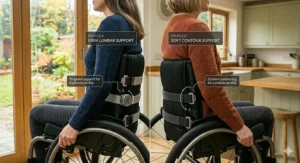
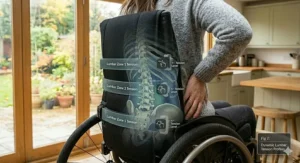
A tension adjustable wheelchair back addresses this by essentially recreating what a well-fitted custom back does — contouring to the natural curves of the spine rather than imposing a uniform flat or concave surface. The horizontal straps, adjusted independently, create a lumbar curve in the lower section, relative neutrality across the mid-back, and appropriate upper back support. It’s the seating equivalent of a well-tailored coat: the fit is the function.
The NHS provides wheelchair seating assessment services — if you haven’t accessed one, a referral via your GP is the correct route, particularly if you’re experiencing postural difficulties or skin-related concerns from extended wheelchair use.
How to Adjust Your Tension Back for Proper Support: A Practical Guide
Getting the most from a tension adjustable wheelchair back requires a few minutes of calibration that most people skip entirely. Here’s what to actually do.
Step 1 — Start with all straps at equal, medium tension. Don’t tighten anything to maximum from the outset. Equal medium tension gives you a baseline to build from.
Step 2 — Sit in the chair in your normal position. Have someone observe or use a mirror to check your posture before making adjustments.
Step 3 — Adjust the lumbar strap first. The strap positioned at approximately the small of your back (lumbar region, typically the second or third from the bottom) should be tightened slightly more than the others. This is where most of the postural work happens. You’re looking for a gentle inward curve — your back should be supported, not pushed forward aggressively.
Step 4 — Work upwards progressively. Slightly loosen the strap at mid-back (around thoracic level) to allow natural spinal curvature. The upper back strap near shoulder height typically needs lighter tension.
Step 5 — Check for pressure hotspots. Sit for five to ten minutes and note any areas of concentrated pressure. Re-adjust the nearest strap to redistribute.
Step 6 — Reassess every six to eight weeks. Tension settings are not permanent; your posture, condition, and the strap material itself change over time. A brief check-in keeps the support optimal.
A UK-specific note: Many manual wheelchairs in Britain are stored in garages, car boots, or hallway cupboards — environments that can be damp, particularly in winter. Periodically check strap condition for mildew or degradation, especially on less-expensive nylon systems. If straps show signs of fraying or loss of tensile strength, replace them. This isn’t a component to run to failure.
Real-World Scenarios: Which Option Fits You?
Wheelchair users in the UK are not a monolithic group, and the right tension adjustable back solution varies dramatically depending on your situation.
The retired resident in a Lincolnshire market town. Lives in a bungalow, uses a wheelchair primarily for longer outdoor journeys and occasional trips to the GP surgery. Doesn’t need the chair to fold flat very often, and prefers not to fiddle with complex adjustments. Best fit: Drive Medical Adjustable Tension Back Cushion on an existing chair, or the Enigma K-Chair as a new purchase if a replacement is overdue.
The full-time wheelchair user in Birmingham. Active daily user, propels independently, spends eight-plus hours in the chair. Uses public transport regularly. Posture and pressure management are clinical priorities. Best fit: Speak with NHS wheelchair services first. Alongside clinical input, a Drive DeVilbiss Enigma Self-Propel with an aftermarket tension back cushion layer may offer improved daily comfort. A formal seating assessment is the correct path here.
The family carer managing an elderly parent. A mum or dad who uses a wheelchair intermittently, lives in a semi-detached with limited storage, and the chair needs to fold into the car boot for hospital appointments. The parent has mild kyphotic posture and complains of back discomfort after twenty minutes in the chair. Best fit: Aidapt Memory Foam Cushion as an immediate upgrade, with the Drive Medical Tension Back Cushion as a medium-term investment. Neither requires professional fitting.
How to Choose a Tension Adjustable Wheelchair Back in the UK
Buying a tension adjustable wheelchair back is not complicated, but a few criteria genuinely matter.
- Assess whether you need a cushion add-on or a new chair. If your existing chair frame is sound and fits correctly, a tension adjustable back cushion is a cost-effective route. If the whole chair is due replacement, buying one with tension adjustment built in makes more sense.
- Check compatibility dimensions before purchasing. Back cushions list compatible seat widths — 40 cm to 53 cm (16–21 inches) is most common. Measure your chair’s seat width and back height accurately.
- Consider your primary concern. Tension adjustment, pressure relief, and postural correction are related but distinct goals. A gel-foam cushion prioritises pressure distribution; a strap-based tension system prioritises postural contouring. Some products address both; many address only one.
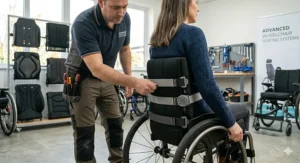
- Factor in the carer’s role. If adjustments will be made by a carer rather than the user, ease of strap access matters. Rear-facing straps can be difficult to adjust single-handedly. Choose systems where the adjustment points are accessible.
- VAT relief. Most mobility aids sold to people with disabilities or chronic health conditions in the UK qualify for VAT relief — meaning you pay at 0% rather than 20%. This applies on Amazon.co.uk where products are marked eligible. Check the HMRC guidance on VAT relief for disabled people before purchasing.
- Consult your occupational therapist or physiotherapist. Particularly for users with complex postural needs — kyphosis, scoliosis, increased muscle tone, or history of pressure sores — a professional assessment should precede product selection. The NHS wheelchair service (accessible via GP referral) provides this at no cost to eligible patients.
- Think about maintenance in the British climate. Nylon straps, foam, and vinyl all degrade in damp conditions faster than manufacturers’ claims suggest. Wipe-clean covers and moisture-resistant materials are worth prioritising.
Common Mistakes When Buying a Tension Adjustable Wheelchair Back
Buying without checking seat width compatibility. It sounds obvious. It remains the most common return reason. Measure the chair.
Assuming a new cushion replaces a clinical assessment. A tension adjustable cushion is a comfort and mild postural aid. It is not a substitute for a specialised seating system prescribed following clinical evaluation. If you or a family member has significant positioning needs, the NHS wheelchair service is the appropriate first contact.
Ignoring VAT relief eligibility. UK buyers with qualifying disabilities can purchase mobility equipment VAT-free, saving 20% instantly. Many buyers miss this on Amazon.co.uk simply because they don’t notice the VAT relief option at checkout.
Buying US voltage products. Less common in wheelchair accessories than electronics, but worth being aware of: any electrically powered component (powered back recline mechanisms, heated back pads) must be 230V compatible for safe UK use. Standard manual wheelchair backs have no voltage concern, but verify if purchasing anything with any powered element.
Neglecting strap maintenance. Adjust, check, and occasionally replace tension straps. A strap that’s lost elasticity or integrity is providing no support — you just can’t easily see that it’s failed.
Tension Adjustable Back vs Standard Sling Back vs Rigid Back: What Actually Wins?
| Feature | Standard Sling | Tension Adjustable | Rigid Back System |
|---|---|---|---|
| Postural Support | Poor (degrades over time) | Good (customisable) | Excellent (fixed contour) |
| Adjustability | None | High | Low–moderate |
| Weight | Light | Moderate | Heavier |
| Foldability | ✅ Folds easily | ✅ Most fold | ❌ Usually removed for folding |
| Cost | Low | Low–moderate | Moderate–high |
| Maintenance | Low | Low–moderate | Low |
| Best For | Short-term/infrequent use | Daily use, mild-moderate needs | Complex postural needs |
The tension adjustable back occupies the most useful middle ground for the majority of UK wheelchair users. A standard sling back is fine for infrequent use — the occasional trip to a hospital appointment, for instance. A rigid or moulded back system is the right answer for users with complex postural needs, but typically requires prescription via an occupational therapist and comes at considerably higher cost. For the broad middle — daily users who need better support than a sling provides but don’t require a fully bespoke solution — tension adjustable systems offer genuinely good value in the £40–£200 range depending on approach.
✨ Don’t Miss These Exclusive Deals!
🔍 Explore the full range of tension adjustable wheelchair back options, back cushions, and seating accessories available right now on Amazon.co.uk. Click on any highlighted product to check the latest pricing and availability.
Long-Term Cost and Maintenance in the UK
The economics of wheelchair back support are fairly straightforward once you work through them.
A standard sling back typically degrades within twelve to eighteen months of regular use — sometimes faster if the user is active or heavier. Replacing the entire chair every time the back sags is obviously wasteful. A tension adjustable back cushion in the £40–£80 range, replaced every two to three years when straps lose their elasticity, costs roughly £15–£40 per year. Over a five-year period, that’s a meaningful saving over either repeated full chair replacements or the pain management costs that can arise from chronic poor posture.
Higher-quality tension systems — particularly those integrated into premium wheelchairs like the K-Chair — have longer service lives and may cost more upfront but less over time. The straps themselves can often be replaced independently without replacing the entire back, extending the lifespan further.
For users receiving NHS-provided wheelchairs and equipment, maintenance is typically covered under the service agreement. However, privately purchased accessories remain the user’s responsibility. Keep the receipt, note the purchase date, and set a reminder to assess condition every six months. Under the Consumer Rights Act 2015, goods must be of satisfactory quality and fit for purpose — a strap system that fails within weeks of normal use may entitle you to a repair or replacement under UK consumer law.
FAQ
❓ What is a tension adjustable wheelchair back and how does it work?
❓ Can I fit a tension adjustable wheelchair back myself or do I need an occupational therapist?
❓ Are tension adjustable wheelchair backs available on Amazon.co.uk with VAT relief?
❓ How do I know which size tension adjustable back cushion to buy for my wheelchair?
❓ Will a tension adjustable wheelchair back help with kyphosis or pressure sores?
Conclusion
The standard sling back on most wheelchairs has been doing a quiet disservice to users for a very long time. It folds conveniently — and that’s about where its virtues end, once the fabric has stretched past its functional prime. A tension adjustable wheelchair back, whether built into a quality folding chair or fitted as an aftermarket cushion, addresses the root problem: support that can be shaped to the person using it, not the other way around.
The right choice depends on budget, existing equipment, and clinical context. For immediate improvement on a tight budget, a Drive Medical Tension Adjustable Back Cushion or Aidapt Memory Foam option represents genuine value. For those purchasing a new chair, the Drive DeVilbiss Enigma K-Chair’s built-in tension adjustable back makes it arguably the most complete package currently available on Amazon.co.uk. And for anyone with complex postural needs, the most sensible first step remains a GP referral to the NHS wheelchair service — professional assessment before product purchase is always time well spent.
Check current pricing and availability on Amazon.co.uk, take advantage of VAT relief where eligible, and don’t underestimate the difference that properly adjusted back support makes to daily comfort and long-term health.
✨ Don’t Miss These Exclusive Deals!
🔍 Ready to upgrade your seating support? Browse the full range of tension adjustable wheelchair backs, back cushions, and related accessories on Amazon.co.uk. Click any highlighted product to see current pricing, delivery options, and whether Amazon Prime next-day delivery applies to your postcode.
Recommended for You
- 7 Best Adjustable Wheelchair Backrests UK Users Rate in 2026
- Best Lumbar Support Cushion Wheelchair UK 2026: 7 Top Picks
- Best Back Cushion for Wheelchair Users: 7 Expert Picks UK 2026
Disclaimer: This article contains affiliate links. As an Amazon Associate, I earn from qualifying purchases. If you purchase products through these links, we may earn a small commission at no additional cost to you.
✨ Found this helpful? Share it with your mates! 💬🤗
