
In This Article
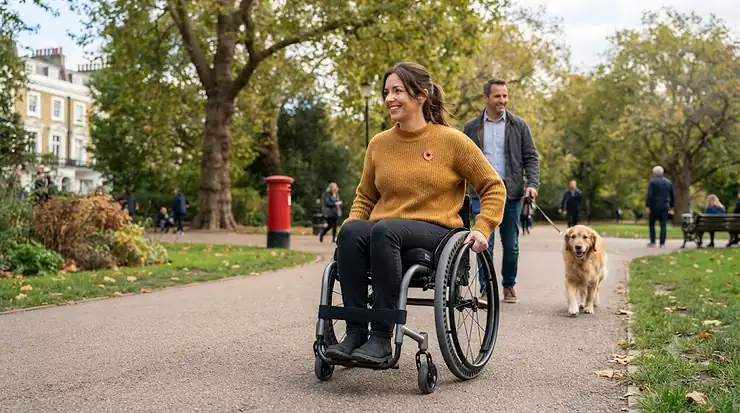
There’s a very particular kind of frustration that comes from being stranded on a kerb because a drawing pin, three streets back, found the one weak spot in your inner tube. It’s not dramatic. Nobody’s calling the emergency services. But it’s your afternoon, gone, while you wait for someone with a pump and a repair kit and roughly twenty minutes to spare. Foam filled wheelchair tyres exist entirely to make that specific, maddening scenario a thing of the past — a genuine piece of technology, not just a marketing phrase, where the air chamber inside a normal pneumatic tyre gets replaced with a solid or microcellular foam core, so there’s simply nothing left inside the tyre capable of deflating.
This guide is built around seven real, currently available foam and solid wheelchair tyres sold on amazon.co.uk, researched against genuine peer-reviewed engineering data rather than manufacturer promises alone. Whether you’re comparing a foam insert wheelchair tyre against a full foam-filled replacement, weighing up foam filled vs solid wheelchair tyre options for the first time, or trying to make sense of what an airless foam wheelchair tyre actually costs you in ride quality, you’ll find honest, specific answers below — including where the research says foam genuinely wins, and where it quietly doesn’t. The NHS’s overview of wheelchairs and mobility equipment is a sensible starting point if you’re new to sourcing or funding a wheelchair before we get into tyre specifics.
Quick Comparison Table
| Tyre | Best For | Construction | Price Range |
|---|---|---|---|
| GreenTyre Solid 24 x 1⅜ (Black) | All-round foam replacement | Microcellular polyurethane foam | £20-£35 range |
| GreenTyre 22 x 1⅜ (Grey) | Narrower-rim self-propelling chairs | Microcellular polyurethane foam | £20-£35 range |
| Generic PU Solid 24-Inch Tyre | Tightest budgets | Solid polyurethane | £12-£20 range |
| Tannus Armour Insert | Keeping pneumatic ride feel | Foam insert liner | £35-£60 range |
| SUNDELY 8-Inch Castor Tyre | Front castor wheels | Solid PU/rubber | £10-£18 range |
| Primo Sentinel | Hybrid pneumatic feel, less compromise | Dual-layer nylon + LDP insert | £28-£35 range |
| 12 x 2¼ Solid Wheel Assembly | Transit and attendant-propelled chairs | Complete wheel with solid tyre | £15-£25 range |
Look at that spread and a genuine spectrum reveals itself, running from “give up air entirely” at one end to “keep the air but armour it” at the other. GreenTyre and the generic PU option sit firmly in true airless territory — nothing inside them can go flat, full stop. Tannus and Primo Sentinel occupy the middle ground, protecting the pneumatic ride you already know rather than replacing it outright. Where you land on that spectrum should depend far more on how much you value cushioning versus certainty than on price alone, which is exactly the trade-off the rest of this guide unpacks properly.
💬 Just one click — help others make better buying decisions too!😊
Top 7 Foam Filled Wheelchair Tyres: Expert Analysis
Shopping for wheelchair tyres online is its own peculiar minefield of near-identical grey rubber and vague “puncture proof!” banners, so we picked seven genuinely distinct options — full foam replacements, a foam insert, a hybrid pneumatic, and a couple of budget and castor-specific picks — each earning its place for a specific reason.
1. GreenTyre Solid 24 x 1⅜ (Black) — the benchmark foam-filled replacement
GreenTyre has quietly become something of an industry standard in UK wheelchair circles, and once you understand the engineering, it’s not hard to see why. Rather than a solid lump of rubber, the tyre is built from microcellular polyurethane foam — a material riddled with millions of tiny closed cells, a bit like a very dense, very structured sponge, that compresses and rebounds in a way genuinely closer to a pneumatic tyre than the crude “block of rubber” image most people have in their head when they hear “solid tyre.” Based on the spec comparison with cheaper generic alternatives later on this list, that cellular structure is precisely what separates a good foam tyre from a merely adequate one.
Fitting directly in place of an existing pneumatic tyre and inner tube on a standard 24 x 1⅜ rim, it’s genuinely maintenance-free once installed — no pressure checks, no pump, no valve caps to lose down the back of the sofa. The manufacturer positions ride quality and wear as broadly comparable to a pneumatic tyre, and while independent, itemised customer review data specific to this exact listing was limited during our research, GreenTyre’s decades-long presence across NHS-adjacent mobility retailers is a reasonable indicator of established, trusted manufacturing rather than a fly-by-night import.
Pros:
- ✅ Microcellular foam gives a noticeably softer ride than crude solid rubber
- ✅ Zero maintenance once fitted — no pumps, valves or pressure checks
- ✅ Long-established UK brand widely stocked by mobility specialists
Cons:
- ❌ Specialist tooling generally recommended for fitting
- ❌ Independently verified reviews for this specific listing were limited
Expect a price in the £20-£35 range per tyre, excluding fitting. For anyone who’s simply had enough of punctures full stop, this is the natural starting point.
2. GreenTyre 22 x 1⅜ (Grey) — the same technology, sized for narrower self-propelling chairs
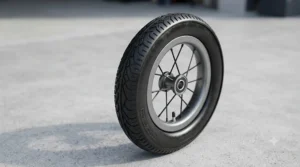
Self-propelling wheelchair users often run a slightly different rim size and profile to attendant-propelled chairs, and GreenTyre’s 22 x 1⅜ grey variant exists specifically to cover that gap without asking you to compromise on the underlying foam technology. The construction is identical microcellular polyurethane foam to the 24-inch black version above — same cellular structure, same flat-free guarantee — simply cut to a different diameter and finished in grey rather than black, which matters more than it sounds if your wheelchair’s overall colour scheme is part of how you present yourself day to day.
Here’s what most buyers overlook when choosing between sizes: getting the exact rim width right matters enormously with solid tyres in a way it doesn’t with pneumatics, since there’s no air pressure to compensate for a slightly loose or tight fit. A pneumatic tyre can be topped up or let down a touch to seat properly; a solid tyre either fits the rim specification correctly or it genuinely doesn’t, which is precisely why checking your existing tyre’s exact size marking before ordering matters more here than almost anywhere else on this list.
Pros:
- ✅ Identical proven foam technology to the flagship 24-inch model
- ✅ Grey finish suits chairs with lighter or two-tone colour schemes
- ✅ Purpose-sized for common self-propelling rim widths
Cons:
- ❌ Precise rim-width matching is essential and less forgiving than pneumatic fitting
- ❌ Narrower stock availability than the more common 24-inch size
Pricing generally sits in the £20-£35 range. Double-check your rim marking against the product listing before ordering — this is one purchase where “close enough” genuinely isn’t.
3. Generic PU Solid 24-Inch Wheelchair Tyre — the no-frills budget entry point
Not every foam tyre conversion needs to start with a premium brand name, and this generic polyurethane 24 x 1⅜ tyre exists precisely to let budget-conscious buyers test whether going airless suits them at all before committing to pricier options. Constructed from solid PU rather than GreenTyre’s more sophisticated microcellular foam, it trades some of that cushioned rebound for a considerably lower price point — a fair trade for anyone whose priority is simply “stop the punctures” rather than chasing the closest possible match to a pneumatic ride.
What the listing won’t spell out clearly is that solid PU without the microcellular structure tends to transmit more vibration from rough pavements and dropped kerbs directly through to the chair frame, since there’s less internal cell structure to absorb impact before it reaches the rim. On paper this means a firmer, occasionally harsher ride on poorly maintained pavements — a genuinely reasonable trade-off for occasional or backup use, less so if you’re covering serious daily mileage over rough terrain. Verified, model-specific review data was limited in our research for this particular listing, so we’d recommend checking current Amazon reviews directly before committing to a full set.
Pros:
- ✅ Genuinely puncture-proof at a fraction of premium foam pricing
- ✅ Simple, easy-to-install construction for a straightforward swap
- ✅ Sensible way to trial airless tyres before spending more
Cons:
- ❌ Firmer ride than microcellular foam alternatives on rough surfaces
- ❌ Limited independently verified reviews for this specific listing
Expect a price in the £12-£20 range. A genuinely sensible first purchase if you’re still deciding whether airless tyres are right for you.
4. Tannus Armour Wheelchair Tyre Insert — foam protection without giving up air entirely
Not everyone wants to abandon pneumatic tyres altogether, and Tannus built an entire product category around that exact hesitation. Rather than replacing your tyre and tube outright, the Armour insert fits inside your existing pneumatic tyre as a foam liner, adding up to 15mm of additional puncture protection while leaving you free to keep running your preferred tyre pressure for comfort and grip. This is the genuine answer to anyone searching specifically for a foam insert wheelchair tyre solution rather than a full conversion — you get meaningfully improved puncture resistance while keeping the adjustable, cushioned character that makes pneumatic tyres popular in the first place.
Based on the underlying engineering logic, this approach makes particular sense for wheelchair basketball players, active daily users navigating varied terrain, or anyone who’s tried a fully solid tyre before and found the ride noticeably harsher than they’d like. The trade-off is added rotating mass inside the wheel and, from what we could verify, a genuinely higher price point than a straightforward solid tyre swap — Tannus even offers interest-free instalment payment options on its own site, which tells you something about where this sits on the investment scale relative to a basic tyre replacement.
Pros:
- ✅ Adds serious puncture protection while keeping adjustable tyre pressure
- ✅ Preserves the cushioned ride quality of a genuine pneumatic tyre
- ✅ Works alongside your existing pneumatic tyre rather than replacing it
Cons:
- ❌ Adds rotating mass compared with a straightforward solid tyre
- ❌ Meaningfully pricier than a basic solid tyre conversion
Pricing typically runs in the £35-£60 range. If you love your current pneumatic ride and just want the punctures gone, this is the more targeted fix rather than a full foam tyre conversion.
5. SUNDELY 8-Inch Solid Castor Tyre — sorting out the front wheels too
Most conversations about foam filled wheelchair tyres focus entirely on the big rear wheels, which makes sense given they take the brunt of daily propulsion — but the small front castor wheels puncture too, and they’re frequently forgotten in the upgrade process. This SUNDELY 8-inch replacement is a solid, non-marking PU and rubber castor tyre designed specifically for that smaller front-wheel role, sold as a set so both castors get upgraded together rather than leaving one vulnerable while the other’s sorted.
What most buyers overlook about castor wheels specifically is that they see proportionally more contact with kerb edges and door thresholds than the rear wheels do, simply because of how steering geometry works on a self-propelled or attendant-pushed chair — meaning a puncture-prone front castor can genuinely be a more frequent nuisance, pound for pound, than a rear tyre failure. Independently verified customer review data specific to this exact SUNDELY listing was limited during our research, so treat durability claims as manufacturer-stated pending your own read of current Amazon feedback, though the non-marking PU construction described is a well-established approach for indoor-friendly castor wheels generally.
Pros:
- ✅ Addresses the frequently overlooked front-castor puncture risk
- ✅ Non-marking finish suits indoor floors and carpeted areas
- ✅ Sold as a matched pair for consistent front-end performance
Cons:
- ❌ Limited independently verified reviews for this specific listing
- ❌ Only suits chairs using the standard 8-inch castor size
Expect a price in the £10-£18 range for the pair. A small, easily forgotten upgrade that genuinely completes a full foam-filled conversion.
6. Primo Sentinel — the “no compromise” hybrid for those not ready to go fully solid
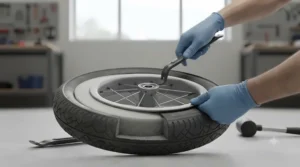
Primo Sentinel sits in a genuinely interesting middle category worth including here for honest comparison, even though it isn’t a fully airless tyre. It keeps a real pneumatic air chamber but wraps it in a dual-layer nylon casing plus a 3mm low-density-polyethylene anti-puncture insert, aiming to deliver most of the puncture resistance associated with foam-filled tyres while retaining genuine pneumatic cushioning and low rolling resistance. Manufacturer positioning describes it as a “no compromise” option, and based on the spec comparison against the fully solid tyres above, that’s a fair characterisation of the trade-off being attempted, even if “no compromise” inevitably overstates things slightly — you’re still running an air chamber that could, in a severe enough puncture event, eventually lose pressure.
The grooved, non-marking black tread is specifically engineered to balance traction against rolling resistance, and the insert is designed to resist long-term debris accumulation while maintaining a lighter, longer-lasting ride than a fully rigid tyre would offer. This is the sensible pick for wheelchair users who’ve read the rolling-resistance research discussed later in this guide and decided that pneumatic-level efficiency genuinely matters more to their daily mileage than absolute puncture immunity.
Pros:
- ✅ Retains genuine pneumatic cushioning and low rolling resistance
- ✅ Dual-layer insert meaningfully reduces (though doesn’t eliminate) puncture risk
- ✅ Non-marking tread suits indoor and outdoor mixed use
Cons:
- ❌ Not genuinely airless — a severe puncture could still deflate it eventually
- ❌ Costs more than a comparable basic pneumatic tyre without the insert
Pricing generally falls in the £28-£35 range. Worth considering if the rolling-resistance research below genuinely changes your calculation away from fully solid tyres.
7. 12 x 2¼ Solid Wheel Assembly — a complete solution for transit and attendant-propelled chairs
Not every wheelchair uses the large 22-24 inch self-propelling wheel format — plenty of transit and attendant-propelled chairs run smaller 12-inch rear wheels, and this segment is frequently underserved by tyre-only listings that assume you’re comfortable stripping an existing wheel down and rebuilding it. This product sidesteps that problem entirely by supplying a complete replacement wheel with a solid grey tyre already fitted, bearing size specified up front, so installation is genuinely a case of swapping the whole assembly rather than wrestling a new tyre onto an old rim.
For carers and family members supporting someone with a transit chair used mainly for occasional trips out, this all-in-one approach removes a genuine barrier to converting to puncture-proof tyres — no specialist tooling, no tyre levers, no risk of pinching a new tube that isn’t even being fitted in the first place, because there’s no tube here at all. Verified, model-specific customer review data was limited in our research for this particular listing, so we’d recommend checking current Amazon reviews and the stated bearing specification carefully against your existing wheel before ordering.
Pros:
- ✅ Complete wheel-and-tyre assembly removes any tyre-fitting skill requirement
- ✅ Genuinely accessible upgrade path for carers and non-specialist users
- ✅ Purpose-sized for common transit and attendant-propelled chair wheels
Cons:
- ❌ Bearing specification must be checked carefully against your existing wheel
- ❌ Limited independently verified reviews for this specific listing
Expect a price in the £15-£25 range for the pair. The simplest possible route to puncture-proofing a transit chair, provided the fit is right.
Top 7 Tyres: Specs & Value at a Glance
| Tyre | Construction Type | Fully Airless? | Best For | Price Range |
|---|---|---|---|---|
| GreenTyre 24 x 1⅜ Black | Microcellular PU foam | Yes | All-round foam replacement | £20-£35 |
| GreenTyre 22 x 1⅜ Grey | Microcellular PU foam | Yes | Narrower self-propelling rims | £20-£35 |
| Generic PU Solid 24″ | Solid PU | Yes | Budget-first conversion | £12-£20 |
| Tannus Armour Insert | Foam insert liner | No (hybrid) | Keeping pneumatic ride feel | £35-£60 |
| SUNDELY 8″ Castor | Solid PU/rubber | Yes | Front castor wheels | £10-£18 |
| Primo Sentinel | Pneumatic + LDP insert | No (hybrid) | Rolling-resistance priority | £28-£35 |
| 12 x 2¼ Wheel Assembly | Complete solid wheel | Yes | Transit/attendant chairs | £15-£25 |
Lined up like this, the genuine airless options clearly outnumber the hybrids on this list, which reflects the wider market — most wheelchair users searching specifically for foam filled tyres want the puncture question closed permanently, not partially managed. The two hybrid entries earn their place precisely because they represent an honest, valid alternative philosophy, not because they’re a lesser version of the same idea.
Foam Tyre Conversion: What to Expect When Switching from Pneumatic
Converting an existing wheelchair from pneumatic to foam-filled tyres is a genuinely bigger job than most product listings let on, and setting realistic expectations before you start saves a frustrating afternoon. Removing an old pneumatic tyre and tube is usually straightforward with standard tyre levers, but seating a solid or foam tyre onto the rim afterwards typically demands considerably more force and, for tightly-toleranced tyres like GreenTyre’s range, specialist tooling that most home toolboxes simply don’t include — which is precisely why several UK mobility retailers offer fitting as a paid add-on rather than assuming every customer will DIY it.
Budget realistically for the first conversion to take longer than subsequent ones; muscle memory genuinely helps here, and a first attempt without the right tools can turn a twenty-minute job into an hour of frustrated wrestling with tyre levers. Once fitted, foam-filled tyres need essentially no ongoing maintenance — no pressure checks, no valve inspection — but it’s worth doing a visual check every few months for cracking or chunking at the tread surface, since unlike a pneumatic puncture, foam tyre degradation tends to be gradual and easy to miss until wear becomes significant. If you’re unsure about tackling the conversion yourself, ask a specialist retailer or your wheelchair’s approved repairer about foam fill tyre service options — several UK mobility shops offer in-house or door-to-door fitting specifically because getting a tight foam tyre correctly seated matters for both comfort and long-term wheel health.
✨ Don’t Miss These Exclusive Deals!
🔍 Take your wheelchair’s reliability to the next level with these carefully selected foam and puncture-resistant tyres. Click through on any highlighted pick to check current pricing and availability — one afternoon spent converting now saves you countless stranded moments later.
Real-World Scenarios: Which Foam Tyre Suits Your Wheelchair Use
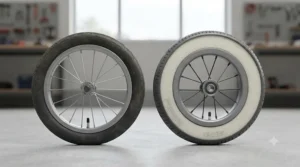
Picture three genuinely different wheelchair users, because the right foam tyre choice depends heavily on daily reality rather than abstract specs. First, someone who self-propels several kilometres daily around town, navigating broken pavements, cycle paths and the occasional building site detour. For this user, GreenTyre’s microcellular foam in the correctly matched rim size makes the most sense — the closer-to-pneumatic ride quality genuinely matters over that kind of daily mileage, and never worrying about a puncture mid-journey is worth the modest upfront cost.
Second, consider a wheelchair basketball player or an active daily user who’s tried fully solid tyres before and found the ride noticeably harsher on hard court surfaces or kerb drops. The Tannus Armour insert is the more logical starting point here — it keeps the pneumatic cushioning that sporting and high-impact use genuinely benefits from, while meaningfully reducing puncture risk rather than eliminating the pneumatic system altogether. Third, picture a family member caring for someone who uses a transit wheelchair occasionally, mainly for hospital appointments and the odd shopping trip, where reliability and simplicity matter more than ride refinement. The complete 12 x 2¼ solid wheel assembly removes the fitting skill barrier entirely, making it the sensible choice when the person doing the maintenance isn’t a specialist and just wants something that reliably works.
How to Choose the Best Foam Filled Wheelchair Tyres
- Measure your existing rim size precisely. Solid tyres are far less forgiving of a slightly-off fit than pneumatics, since there’s no air pressure to compensate — check the exact marking on your current tyre before ordering.
- Decide how much you value cushioning versus certainty. Fully airless foam tyres guarantee no punctures; hybrid options like Tannus or Primo Sentinel trade some of that certainty for closer-to-pneumatic ride quality.
- Factor in fitting difficulty honestly. Tightly toleranced foam tyres often need specialist tooling — budget for professional fitting if you’re not confident tackling it yourself.
- Don’t forget the front castors. A full puncture-proof conversion that only covers the rear wheels leaves an obvious gap that’s easy to overlook.
- Check the rolling-resistance research if daily mileage matters to you. As covered below, solid tyres can meaningfully increase the effort needed to self-propel — a real consideration for high-mileage daily users.
- Match your choice to your typical terrain. Rougher, uneven surfaces generally suit foam’s softer microcellular construction better than crude solid rubber.
- Budget for the whole job, not just the tyre. Fitting costs, and potentially new inner components if you’re converting rather than replacing an already-solid tyre, add to the headline tyre price.
Airless Foam Wheelchair Tyres: How They Actually Work
The basic principle behind an airless foam wheelchair tyre is simple enough to explain in a sentence: instead of a hollow air chamber held at pressure by an inner tube, the tyre’s interior is filled with a solid or microcellular polyurethane foam that provides its own structural support and cushioning without needing pressurised air at all. What separates a genuinely good foam tyre from a mediocre one is the internal cell structure — premium microcellular foam is engineered with millions of tiny, evenly distributed air pockets that compress and rebound in a controlled way, giving a ride noticeably softer than a solid slab of rubber, even though technically neither construction contains any free-flowing air.
Manufacturing tolerances matter enormously here in a way they simply don’t with pneumatic tyres. Because there’s no air pressure to accommodate a slightly imperfect fit, a foam tyre either matches your rim specification precisely or it genuinely doesn’t perform as intended — too loose and it can work its way off under load; too tight and fitting becomes a genuine struggle requiring proper tooling. This is precisely why checking exact rim width and diameter markings before ordering matters more with foam tyres than with almost any other wheelchair component. For a broader technical grounding in why tyre construction affects effort at all, rolling resistance as a general engineering concept is worth a quick read — the same underlying physics explains why solid materials generally demand more propulsion effort than pressurised air, regardless of whether the wheel in question belongs to a wheelchair, a bicycle or a car.
Foam Filled vs Solid Wheelchair Tyre: What’s Actually the Difference
Here’s a genuinely common point of confusion worth clearing up directly: “foam filled” and “solid” aren’t strictly opposing categories — foam-filled tyres are, technically, a specific and generally superior type of solid tyre. The broader “solid tyre” category covers everything from crude, dense moulded rubber blocks through to sophisticated microcellular polyurethane foam constructions like GreenTyre’s range, and the difference between the cheapest and most refined options within that category is considerably larger than most buyers expect.
Crude solid rubber tyres tend to be heavier, transmit more vibration directly to the chair frame, and offer noticeably less rebound than a genuine microcellular foam tyre, but they’re also usually the cheapest way to eliminate punctures entirely. Microcellular foam tyres cost more but close much of the ride-quality gap to a pneumatic tyre, thanks to that internal cell structure absorbing impact in a way solid rubber simply can’t replicate. When a listing says “solid,” it’s worth digging into the actual material description — solid rubber, solid PU, and microcellular PU foam are meaningfully different products wearing the same broad marketing label.
Foam Insert Wheelchair Tyre vs Full Foam-Filled Replacement
This is one of the more genuinely useful distinctions to understand before buying, because these two approaches solve overlapping but different problems. A full foam-filled replacement tyre, like GreenTyre or the generic PU options covered above, entirely replaces your existing pneumatic tyre and inner tube — there’s no air chamber left at all, so punctures become categorically impossible rather than merely less likely. A foam insert, by contrast, sits inside your existing pneumatic tyre as an added layer of protection, leaving the air chamber intact and the adjustable pressure characteristics of a pneumatic tyre broadly preserved.
The practical trade-off comes down to what you’re protecting against and how much ride quality you’re willing to sacrifice for certainty. A severe enough impact can still, in principle, eventually compromise a pneumatic tyre running a foam insert, whereas a full foam-filled replacement genuinely cannot go flat under any circumstances, because there’s no air-filled cavity to lose pressure from in the first place. For most users prioritising absolute reliability, particularly for daily transport where a puncture would be a genuine inconvenience rather than a minor annoyance, the full replacement route makes more sense; for those who’ve specifically found solid tyres too harsh and want to keep pneumatic cushioning while reducing puncture risk, the insert route is the more targeted answer.
Foam Density Tyre Comparison: Why Softness Numbers Matter
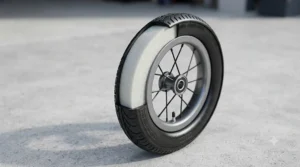
Foam density is one of the more technical specifications buried in wheelchair tyre listings, and it’s worth understanding because it directly predicts ride feel in a way marketing copy alone often doesn’t. In simple terms, lower-density foam compresses more readily under load, giving a softer, more cushioned ride closer to a pneumatic tyre, while higher-density foam resists compression more, offering greater durability and load-bearing capacity at the cost of a firmer, occasionally harsher feel over rough ground. Neither end of that spectrum is objectively “better” — the right density depends on your body weight, the terrain you cover most often, and how much you personally prioritise comfort versus outright toughness.
Unfortunately, foam density isn’t always clearly stated on consumer-facing wheelchair tyre listings the way tyre pressure ratings are for pneumatics, which makes direct like-for-like comparison genuinely harder than it should be. Where a listing does specify density or firmness explicitly, treat that as a meaningfully useful data point worth weighing alongside price and brand reputation, rather than assuming all “solid” or “foam” tyres perform identically simply because they share a broad category label.
Foam Fill Tyre Service: DIY vs Professional Fitting
Fitting a foam or solid wheelchair tyre yourself is genuinely possible with the right tools and a bit of patience, but it’s worth being honest about the skill and equipment gap compared with a routine pneumatic tube swap. Standard bicycle-style tyre levers can sometimes manage smaller or looser-tolerance solid tyres, but tightly engineered options like GreenTyre’s foam range frequently require specialist bead-seating tools designed specifically for the job — attempting it without them risks damaging either the tyre bead or the rim itself.
A professional foam fill tyre service, offered by numerous UK mobility specialists, typically costs somewhere in the region of £20-£40 per tyre on top of the tyre’s own price, though this varies by retailer and region, and some offer door-to-door fitting for wheelchair users who can’t easily get to a shop. For a first-time conversion, particularly on a wheelchair you rely on daily, paying for professional fitting is a genuinely reasonable way to avoid the risk of a poorly seated tyre that could work loose or wear unevenly — a false economy if the DIY attempt goes wrong and damages the rim in the process.
Wheelchair Tyre Safety Standards & What BS EN 12183 Actually Covers
Manual wheelchairs sold in the UK are expected to meet BS EN 12183, the British and European standard covering requirements and test methods for manual wheelchair construction, including structural strength, stability and — relevantly here — wheel and tyre performance under load. It’s worth being precise about what this standard does and doesn’t guarantee: it primarily addresses the wheelchair as a complete, tested system rather than certifying individual aftermarket tyres in isolation, so swapping to a different tyre type, including foam-filled options, is generally considered acceptable practice but does shift some responsibility for checking suitability onto the fitter or user.
Reputable UK mobility retailers and professional bodies such as the Posture and Mobility Group maintain detailed reference lists of the relevant wheelchair standards for anyone wanting to check compliance details directly rather than relying on marketing claims. In practical terms, this means checking that a replacement tyre matches your wheelchair manufacturer’s stated rim specification and load rating remains sensible regardless of tyre type — a correctly rated foam tyre fitted to the wrong rim size introduces genuine risk that has nothing to do with the foam itself.
Benefits vs Traditional Pneumatic Tyres
| Factor | Foam Filled Tyres | Traditional Pneumatic Tyres |
|---|---|---|
| Puncture risk | None (fully airless) | Present; repairable but disruptive |
| Maintenance | Essentially none | Requires regular pressure checks |
| Rolling resistance | Generally higher | Generally lower |
| Ride cushioning | Good with microcellular foam | Best available |
| Best for | Reliability-first daily users | Efficiency-focused, well-maintained use |
Peer-reviewed engineering research makes the trade-off here genuinely clear rather than a matter of opinion. A detailed scoping review of wheelchair rolling-resistance research found that solid tyres and solid inserts showed up to 91% more rolling resistance than a properly inflated pneumatic tyre across the studies reviewed — a genuinely significant figure for anyone who self-propels seriously long distances daily, since higher rolling resistance directly translates into more physical effort per push. That said, the same body of research generally found this difference matters considerably less for shorter daily distances or for attendant-propelled chairs, where the person doing the pushing experiences the extra effort rather than the wheelchair user directly.
Long-Term Cost & Maintenance
| Consideration | Budget Solid Tyres | Mid-Range (GreenTyre, Primo) | Premium (Tannus Insert) |
|---|---|---|---|
| Upfront cost per tyre | Lowest | Moderate | Highest |
| Expected lifespan | 1-2 years typical use | 2-4 years typical use | 2-4 years, protects existing tyre |
| Fitting cost | Often DIY-manageable | Frequently needs professional fitting | Professional fitting recommended |
| Ongoing maintenance | None (once fitted) | None (once fitted) | Occasional pressure checks remain |
Thinking in terms of total cost rather than sticker price shifts the calculation meaningfully. A £30 GreenTyre that lasts three punctureless years, with no pressure checks and no emergency repair callouts, works out considerably cheaper over time than repeatedly patching or replacing a budget pneumatic tube every few months — before even counting the practical cost of a stranded afternoon. That said, if your wheelchair sees only occasional light use, the lower upfront cost of a generic PU solid tyre may simply never need to earn back a premium price difference within its realistic lifespan.
Frequently Asked Questions
❓ What is the best foam filled wheelchair tyre for everyday use?
❓ Are foam filled wheelchair tyres harder to push than pneumatic ones?
❓ What's the difference between a foam insert and a full foam-filled tyre?
❓ Can I fit foam wheelchair tyres myself?
❓ Do foam wheelchair tyres meet UK safety standards?
Conclusion
There’s no single best foam filled wheelchair tyre, and the honest answer to which one suits you depends far more on your daily mileage, terrain, and how much you value pure ride cushioning than on any headline “puncture proof” claim. If reliability and zero maintenance are your absolute priority, GreenTyre or a budget generic PU option genuinely close the puncture question for good. If you’ve tried fully solid tyres before and missed the pneumatic feel, the Tannus Armour insert or Primo Sentinel’s hybrid approach offer a more targeted middle ground worth serious consideration.
What the research does make genuinely clear, regardless of which option you land on, is that this is a real trade-off rather than a free upgrade: foam and solid tyres reliably win on puncture immunity and maintenance, while pneumatic tyres reliably win on rolling efficiency for high-mileage daily use. Weigh that honestly against your own routine, check your exact rim specification carefully, and consider professional fitting for your first conversion — a properly seated foam tyre, fitted once and forgotten, is a genuinely small investment against the ongoing hassle of chasing punctures.
✨ Ready to Stop Chasing Punctures?
🔍 Compare current prices on any of the seven picks above and check availability before your next tyre replacement — a few pounds spent now beats another stranded afternoon later.
Recommended for You
- Puncture Proof Wheelchair Tyres 2026: 7 Never-Flat Picks
- Best All Terrain Wheelchair Wheels UK 2026: 7 Expert Picks Reviewed
- Best Quick Release Wheelchair Wheels UK 2026: 7 Expert-Tested Picks
Disclaimer: This article contains affiliate links. As an Amazon Associate, I earn from qualifying purchases. If you purchase products through these links, we may earn a small commission at no additional cost to you.
✨ Found this helpful? Share it with your friends! 💬🤗
