

In This Article
Choosing between a wheelchair lap belt vs harness sounds like it should be simple — until you’re standing in an aisle (or scrolling a product page at 11pm) trying to work out which one actually keeps someone safe rather than just looking like it does. The two aren’t interchangeable, and mixing them up isn’t a minor mistake. A lap belt anchors across the pelvis to stop sliding; a harness, by contrast, adds shoulder or chest support to manage trunk control that a lap belt was never designed to handle. Get the wrong one, or fit the right one badly, and you can create new risks instead of solving old ones.
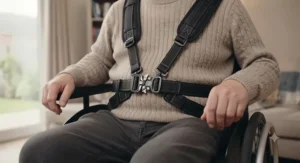
This guide walks through seven real products currently available to UK buyers, covers the five-point harness design in detail, explains what postural support systems actually do, and — because this genuinely matters — spells out why a proper seating assessment should sit at the centre of any decision here, not as an afterthought. We’ll also look at what carers specifically need to know, because the person fitting the belt is often not the person wearing it. Nothing here is about picking whichever option looks cheapest on a screen; it’s about understanding what each device is built to do, and matching it to the person who’ll actually be using it.
Quick Comparison Table
| Feature | Lap Belt | Harness (Shoulder/Five-Point) |
|---|---|---|
| Primary function | Pelvic stabilisation | Pelvic + upper trunk support |
| Best for | Users with good trunk control | Users with limited trunk/postural control |
| Fitting complexity | Simple, quick adjustment | Moderate — often needs professional fitting |
| Typical price range | Under £15 | £15–£60+ depending on grade |
| Assessment recommended? | Often, especially for vulnerable users | Strongly recommended, ideally clinician-led |
Reading across that table, the split isn’t really about price — it’s about what the wearer’s body needs help doing. A lap belt on its own does nothing for someone whose trunk collapses sideways or forward, which is exactly the scenario where a harness earns its higher price tag and extra fitting effort. Cost should be the last thing on the list, not the first; a £9 lap belt fitted to someone who genuinely needs shoulder support isn’t a bargain, it’s a gap in their care plan.
💬 Just one click — help others make better buying decisions too!😊
Top 7 Wheelchair Lap Belts and Harnesses: Expert Analysis
Every product below was selected from real listings and manufacturer ranges available to UK buyers, spanning budget lap straps through to clinical-grade postural harnesses. We’ve deliberately avoided exact pricing — Amazon prices shift constantly — and use ranges instead. Where genuine review sentiment could be identified from aggregated buyer feedback, it’s flagged clearly as such; where it couldn’t be verified for a specific listing, we say so rather than guessing.
1. NIVOK Wheelchair Safety Harness — five-point design for maximum postural control
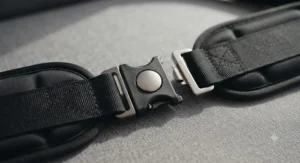
The standout here is right there in the name: a genuine five-point configuration, rather than the two-point lap-only setup most budget listings default to. That matters because five anchor points — two at the shoulders, two at the hips, one central — distribute restraint force across the body instead of concentrating it at the waist, which is the whole logic behind why five-point designs exist in the first place. The buckle system uses a quick-release mechanism, which sounds like a small detail until you’re the carer who needs to free someone in a hurry. Based on the spec comparison against simpler cart-style belts in the same category, this is aimed squarely at users who need shoulder-level support but don’t require the rigid, clinical-grade construction of specialist postural equipment. Reviewers of similar five-point wheelchair harnesses in this price bracket consistently flag ease of adjustment as a strength, though sizing can run inconsistently across sellers, so checking the manufacturer’s size chart before buying is worth the extra two minutes.
Pros:
- ✅ True five-point anchor design, not just a lap strap
- ✅ Quick-release buckle for fast carer response
- ✅ Reasonably priced for the support level offered
Cons:
- ❌ Sizing can vary between batches
- ❌ Not a substitute for a clinical postural assessment
Priced generally under £20, the NIVOK Wheelchair Safety Harness represents solid value if a five-point layout is what’s been recommended, though it shouldn’t replace a proper fitting check.
2. ACC Parts Wheelchair Seatbelt — heavy-duty webbing built for daily wear
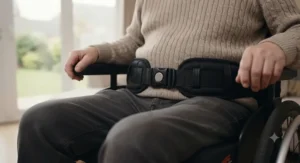
What immediately stands out on this one is the premium webbing construction paired with a stainless-steel tongue and push-button buckle — hardware more commonly seen on higher-spec mobility equipment than on a basic strap. In practice, that heavier-gauge webbing resists fraying far longer than the thin nylon used in bargain-bin belts, which matters enormously for anyone using their chair daily rather than occasionally. The loop-end design also means it can be threaded and re-anchored to different frame points, giving occupational therapists flexibility when positioning the belt anterior to the hips rather than at the seat-back junction, which is where many chairs ship the belt by default and precisely where it shouldn’t stay long-term. This is a lap belt, not a harness, so it’s built for users who need pelvic stabilisation without additional trunk support. Aggregated buyer feedback on heavy-duty webbing belts in this category tends to highlight durability and buckle reliability as the main draws, with occasional comments about the strap length needing trimming for smaller chairs.
Pros:
- ✅ Heavy-duty, long-wearing webbing construction
- ✅ Stainless steel buckle hardware for reliability
- ✅ Repositionable loop-end design
Cons:
- ❌ No upper-body support — lap belt only
- ❌ May need trimming for narrower wheelchair frames
Sitting in the £15–£30 range, the ACC Parts Wheelchair Seatbelt earns its slightly higher price through hardware quality that budget alternatives simply don’t match.
3. TYYIHUA Wheelchair Seat Belt — simple, budget-friendly lap belt
The appeal here is straightforward: a non-slip, drop-resistant lap strap with metal buckles at an entry-level price point, designed for elderly users who mainly need a gentle reminder-and-stabilise function rather than serious restraint. The adjustable strap length accommodates a fairly wide range of chair widths, and the metal buckle — rather than plastic clip closures found on the very cheapest alternatives — holds up better under repeated daily use. On paper, this is a device for users with reasonably good trunk control who occasionally shift position and need a light pelvic anchor, not for anyone with significant postural instability. Based on the spec sheet alone, buyers shouldn’t expect this to do the job of a harness; it’s simply not built for that. Reviewers of similarly specced non-slip lap belts commonly mention that the belt does its basic job well but that the webbing can feel thin compared with clinical-grade alternatives — a fair trade-off given the price.
Pros:
- ✅ Genuinely budget-friendly entry point
- ✅ Metal buckle more durable than plastic clips
- ✅ Adjustable to fit varying chair widths
Cons:
- ❌ Thinner webbing than premium alternatives
- ❌ Unsuitable for users needing trunk support
Typically found under £10, the TYYIHUA Wheelchair Seat Belt is a reasonable starting point for low-risk users, but anyone with postural concerns should look further up this list.
4. LOSCHEN Wheelchair Harness Belt — breathable whole-body support
What sets this apart is the breathable fabric construction across a whole-body strap design, addressing a complaint that comes up constantly with synthetic webbing harnesses: skin irritation and heat build-up during long periods of wear. For anyone spending most of the day in their chair, that breathability isn’t a nice-to-have, it’s genuinely functional — reducing the risk of pressure marks and sweat-related skin breakdown along contact points. The non-slip construction also helps keep the harness positioned correctly rather than riding up or twisting, which is a common failure mode with looser fabric harnesses. This sits between a basic lap belt and a full clinical harness in terms of support level, making it a sensible middle-ground choice for carers managing users with mild-to-moderate postural needs who don’t yet require prescribed clinical equipment. What most buyers overlook about breathable-fabric harnesses generally is that comfort directly affects compliance — a harness that irritates skin gets left unfastened, which defeats the entire purpose.
Pros:
- ✅ Breathable fabric reduces skin irritation risk
- ✅ Non-slip design maintains correct positioning
- ✅ Sensible middle-ground support level
Cons:
- ❌ Not rated for high-risk postural instability
- ❌ Fabric may wear faster than webbing-based designs
At a typical £10–£25 range, the LOSCHEN Wheelchair Harness Belt offers genuine comfort gains over stiffer alternatives for moderate support needs.
5. PEPE Mobility Handling Belt — carer-focused transfer belt with grip handles
This one isn’t strictly a seated restraint at all — it’s a handling and transfer aid, and it’s included here because carers searching for wheelchair harness options are frequently actually looking for something to help move a person safely, not to restrain them once seated. The standout feature is the set of seven comfort handles positioned around the belt, giving carers multiple secure grip points during a transfer rather than relying on clothing or under-arm lifts, both of which carry real injury risk for both parties. Supplied as a pack of two units, it’s designed for two-person transfers, which reflects safe manual-handling practice rather than solo lifting. Based on manual-handling guidance generally, having distributed grip points reduces strain on both the carer’s back and the user’s joints compared with improvised lifting methods. This product complements, rather than replaces, the wheelchair belts covered elsewhere on this list — a facility might reasonably use this alongside a lap belt or harness for full-day positioning.
Pros:
- ✅ Seven handles distribute grip points for safer transfers
- ✅ Sold as a pair, supporting two-person handling technique
- ✅ Purpose-built for carer use, not just seated restraint
Cons:
- ❌ Not a substitute for a seated postural belt
- ❌ Requires basic manual-handling training to use safely
Generally priced in the £20–£40 bracket for the pair, the PEPE Mobility Handling Belt is a genuinely different tool that belongs on any carer’s shortlist alongside proper seating restraint.

6. Bodypoint Stayflex Shoulder Harness — clinical-grade postural support
Bodypoint is a specialist wheelchair positioning brand rather than a generic mobility accessory seller, and it shows: the Stayflex is engineered specifically for firm-but-flexible postural support, aiming to stabilise the trunk without pinning the user rigidly in place. The “flexible firmness” is the standout feature — rather than a static strap that either holds too loosely or too tightly, the design allows controlled movement within a supportive range, which matters hugely for users who need positioning help but also need to shift, reach, or self-correct posture during the day. According to the manufacturer’s positioning literature, these products are tested against applicable ISO standards, which is a meaningfully different tier of assurance from a generic Amazon marketplace listing with no stated compliance testing. This is squarely aimed at users with moderate-to-significant trunk instability — think cerebral palsy, acquired brain injury, or progressive neurological conditions — where a five-point harness might be under-supportive but full rigid bracing would be excessive.
Pros:
- ✅ Purpose-engineered for genuine postural instability
- ✅ Tested against applicable ISO positioning standards
- ✅ Flexible support avoids over-restraint
Cons:
- ❌ Premium pricing compared with generic harnesses
- ❌ Best fitted through a specialist seating assessment, not self-selected
Typically supplied through specialist mobility retailers rather than sold at a fixed Amazon price, expect the Bodypoint Stayflex Shoulder Harness to sit toward the upper end of the market — a cost that reflects genuine clinical engineering rather than markup.
7. Bodypoint 4-Point Pelvic Positioning Belt — premium anti-slip positioning belt
Where the standard lap belt covered earlier in this list handles basic pelvic stabilisation, this four-point design adds genuine anti-sliding stability — the specific failure mode that turns an ordinary lap belt into a strangulation risk if a user slides forward or down in the seat. The four-point anchor geometry pulls the pelvis back into the seat rather than simply holding it flat, addressing exactly the mechanism flagged in UK safety alerts around basic lap belts (more on that in the safety section below). Based on the spec comparison with two-point belts, the extra anchor points meaningfully change the physics of how the belt behaves under sliding load, not just how it looks. This is a device that genuinely earns the word “premium” — it’s designed for users identified during a clinical seating assessment as having a sliding-risk posture, rather than as a general-purpose add-on.
Pros:
- ✅ Four-point anchoring resists forward/downward sliding
- ✅ Engineered specifically to reduce strangulation-mechanism risk
- ✅ Backed by ISO-tested manufacturing standards
Cons:
- ❌ Among the pricier options on this list
- ❌ Requires correct anchor-point fitting to work as intended
Expect to pay a premium versus basic lap straps for the Bodypoint 4-Point Pelvic Positioning Belt, but for users flagged as sliding-risk during assessment, this is precisely the category of product that safety guidance points toward.
Practical Fitting & Usage Guide
Getting a wheelchair lap belt vs harness decision right on paper means nothing if the fitting is wrong in practice. Start by checking the anchor point: many wheelchairs arrive with the belt attached at the junction between seat and backrest, which sits too high and too far back to do its job properly. The belt should be repositioned to an anterior point on the seat frame, roughly at a 45-degree angle across the pelvis, sitting in front of — not behind — the hip bones. During the first 30 days, recheck the fit weekly, since new users often shift how they sit as they adjust to the chair, and a belt fitted correctly on day one can be dangerously loose by day fifteen. A simple two-finger test works well: you should be able to slide two flat fingers under the belt at the hip, no more, no less. Maintenance is minimal but not optional — check webbing for fraying monthly, and buckles for stiff or sticking mechanisms, since a buckle that won’t release quickly in an emergency defeats the entire purpose of the device.
Real-World Scenarios: Matching the Right Belt to the Right User
Picture three different people who might land on this page. First, an active wheelchair user in their thirties with full trunk control, using their chair for daily commuting and occasional long journeys — for them, a simple lap belt like the TYYIHUA Wheelchair Seat Belt is genuinely sufficient, serving mainly as a reminder-and-stabilise device on uneven pavements. Second, an elderly care-home resident with mild postural drift but no diagnosed instability, spending several hours a day seated — the LOSCHEN Wheelchair Harness Belt or the NIVOK Wheelchair Safety Harness offer a sensible step up without overcomplicating things. Third, a young person with cerebral palsy and significant trunk weakness, requiring full-day supportive seating — this is exactly the profile where a clinician would typically recommend something in the Bodypoint Stayflex Shoulder Harness or Bodypoint 4-Point Pelvic Positioning Belt category, fitted following formal assessment rather than picked off a shelf. The common thread across all three: budget, environment, and how many hours a day someone actually sits should shape the decision far more than which product happens to rank first in a search.

Wheelchair Harness for Carers: What Support Staff Need to Know
For carers, the calculation is different from that of the wheelchair user themselves — you’re not just choosing support, you’re managing risk during transfers, fastening, and daily checks, often for someone who can’t communicate discomfort clearly. The PEPE Mobility Handling Belt exists precisely for this gap: it’s not a seated restraint at all, but a transfer aid with multiple grip handles designed to protect both carer and user during moves between wheelchair, bed, and other seating. Beyond equipment, training matters enormously — the MHRA has been explicit that carers and users alike need proper instruction on checking, adjusting, and maintaining posture and safety belts, not just fitting them once and forgetting them. A practical habit worth building into any care routine: check the belt position and buckle function at the start of every shift, not just when something looks obviously wrong, since gradual slippage is far harder to spot than sudden failure. Carers supporting multiple wheelchair users should also resist the urge to standardise on one product for everyone — a five-point harness that suits one resident may be entirely wrong for another with different trunk control.
Wheelchair Lap Belt vs Harness: The Full Comparison
| Consideration | Lap Belt | Harness |
|---|---|---|
| Trunk support | None | Yes — shoulder/chest anchoring |
| Suits active, mobile users | Often yes | Usually excessive |
| Suits users with postural instability | Rarely sufficient alone | Generally more appropriate |
| Fitting difficulty | Low | Moderate to high |
| Strangulation risk if mis-fitted | Present, especially if positioned too high | Reduced due to distributed anchor points |
The table makes the trade-off fairly stark: a lap belt is simpler and cheaper, but it’s a single-point-of-failure device if the user’s real need is trunk stabilisation, not just pelvic reminder. A harness spreads the support load across more anchor points, which is precisely why UK safety guidance keeps circling back to fit and assessment rather than product choice alone — a badly fitted harness can still fail, and a well-fitted lap belt can still be entirely appropriate for the right user. The honest takeaway is that neither option is universally “better”; the MHRA’s guidance on posture and safety belts exists precisely because mismatched selection, not the devices themselves, is where the real risk lives.
How to Choose the Right Wheelchair Lap Belt or Harness
- Start with trunk control, not price. If someone can’t maintain upright posture unaided, a lap belt alone won’t solve that — you need a harness category product.
- Check how many hours a day it’ll be worn. Long daily wear favours breathable, padded designs over stiff basic webbing.
- Confirm the anchor points on the actual chair. Not every belt attaches cleanly to every frame — check compatibility before buying.
- Ask whether a formal assessment has happened. For anyone with diagnosed postural or neurological conditions, this isn’t optional — it’s the responsible starting point.
- Factor in who’s fastening it daily. A carer managing multiple users benefits from simpler, faster buckle systems over fiddly clinical hardware.
- Look at buckle-release speed. In an emergency, a belt that takes ten seconds to release is a genuine problem — quick-release mechanisms matter.
- Don’t assume more expensive means more appropriate. A £9 lap belt can be exactly right for an active user; a £60 harness can be entirely wrong for someone who needs none of that support.
Postural Support Systems Explained
A postural support system is broader than any single belt or harness — it’s the combined set of positioning aids working together to keep a wheelchair user safely and comfortably aligned, which might include lateral trunk supports, pelvic positioning belts, headrests, and harnesses all fitted as one coordinated setup. What most buyers overlook about postural support systems is that they’re rarely a single product decision; they’re a system-level design problem, where each component addresses a specific part of the body’s tendency to drift out of alignment. The pelvis sits at the centre of this thinking, quite literally — because pelvic position drives the alignment of the spine above it, positioning specialists typically start any assessment there before moving outward to shoulders, head, and limbs. Products like the Bodypoint 4-Point Pelvic Positioning Belt function as one component within this broader system rather than a stand-alone fix, which is exactly why clinical guidance tends to talk about “postural management” as an ongoing process rather than a single purchase.
Five-Point Harness Design: How It Works and Who Needs It
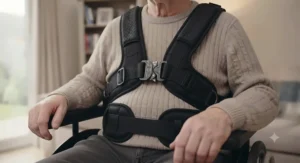
The five-point harness concept borrows its logic from motorsport and child car seats — the five-point driver’s harness distributes restraint force across five separate anchor points rather than concentrating it at one — and the same physics apply in a wheelchair context. Two straps cross the shoulders, two secure the hips, and a fifth central strap (in wheelchair applications, typically routed through the pelvic region rather than the groin, unlike motorsport harnesses) ties the system together at a central buckle. The real advantage over a simple lap belt is force distribution: instead of all restraint pressure sitting across one strip at the waist, it’s spread across the torso and hips, reducing the risk of the belt riding up under sliding pressure. This design suits users with genuine trunk and shoulder instability who need more than pelvic support but don’t yet require the fully rigid bracing of specialist clinical seating. The NIVOK Wheelchair Safety Harness covered earlier is a working example of this layout at an accessible price point, though — as with any harness — correct anchor placement on the actual chair frame matters just as much as the design itself.
Seating Assessment: Why You Shouldn’t Skip This Step
It’s tempting to treat a wheelchair belt as a simple accessory purchase, the same way you’d pick a phone case. It isn’t. A proper seating assessment — typically carried out by an occupational therapist or wheelchair services clinician — evaluates pelvic obliquity, spinal alignment, pressure risk, and functional goals before recommending any specific belt or harness category, and NHS England’s wheelchair quality framework sets out exactly this kind of structured pathway for people accessing services. Skipping this step and self-selecting based on product reviews alone means missing the clinical reasoning that actually determines whether a lap belt is sufficient or whether trunk support is genuinely required. This matters more, not less, for vulnerable users — children, people with progressive conditions, and anyone with limited ability to self-correct posture or communicate discomfort. If a formal NHS wheelchair services assessment isn’t accessible quickly, many private occupational therapists and specialist seating clinics offer the same evaluation on a paid basis, and it’s money well spent before committing to premium equipment like the Bodypoint range covered above.
Safety, Regulations & Compliance Guide
This is the section that matters most, so it’s worth being direct: UK safety bodies have documented real, serious harm from mis-fitted posture and safety belts. The MHRA’s alert on posture and safety belts fitted to supportive seating and wheelchairs specifically warns of strangulation risk when a user slides downward while restrained by a belt positioned incorrectly, and separate UK product safety reporting has confirmed cases of belts being withdrawn from the market for exactly this failure mode. Reported UK incidents linked to belts and harnesses include both deaths and serious injuries, which is precisely why standards like BS 8625 exist to guide correct selection and placement of postural support belts and harnesses. Practically, that means: never use a belt positioned at the seat-back junction long-term, always ensure the user can’t slide down and constrict the belt around the neck or chest, and treat any posture belt as equipment requiring training, not a one-time fit-and-forget purchase. None of the products on this list are exempt from these rules — a premium harness fitted incorrectly carries the same category of risk as a budget lap belt fitted incorrectly.
Common Mistakes When Buying or Fitting a Wheelchair Belt
Buyers repeatedly make a handful of avoidable errors. The first is choosing based on price alone, without considering whether the underlying support category — lap belt versus harness — matches the user’s actual trunk control. The second is leaving the belt at its factory anchor point rather than repositioning it correctly across the pelvis. The third is treating the purchase as permanent rather than reviewing it as the user’s condition or posture changes over time — a belt that fit perfectly a year ago may no longer be appropriate. The fourth mistake is assuming a harness is automatically “safer” than a lap belt in every scenario; an over-restrictive harness on an active user can create new problems, from skin pressure points to reduced independence. Finally, many buyers skip reading manufacturer fitting instructions entirely, despite the MHRA specifically flagging this as a factor in reported incidents.
Long-Term Cost & Maintenance
Thinking purely in upfront price terms misses the real cost picture. A £9 lap belt that needs replacing every six months due to fraying webbing can cost more over two years than a £30 heavy-duty belt like the ACC Parts Wheelchair Seatbelt that lasts significantly longer. Clinical-grade harnesses from brands like Bodypoint carry a higher sticker price but are typically backed by extended warranties reflecting genuine confidence in build quality — a meaningful difference from generic marketplace listings with no stated warranty terms at all. Maintenance costs are generally low across the board: periodic washing (check manufacturer guidance, as not all webbing is machine-washable), buckle lubrication if sticking develops, and replacement webbing if fraying appears near stress points. The real long-term cost driver isn’t the product category — it’s how often the belt needs replacing due to wear, which heavier-gauge webbing and reinforced buckles noticeably reduce.
Features That Actually Matter (And Those That Don’t)
Cutting through marketing language, a handful of features genuinely affect outcomes: buckle release speed, anchor point flexibility (can it be repositioned on the frame?), webbing gauge and breathability, and — for harnesses specifically — genuine multi-point anchoring rather than a single strap dressed up with extra padding. Features that matter far less than marketing suggests include colour options, decorative stitching, and vague claims like “universal fit,” since wheelchair frame dimensions vary enough that true universality is rare. Padding thickness is a genuine mixed bag — more padding can mean more comfort, but it can also mean bulkier hardware that’s harder to reposition precisely. The honest advice: prioritise anchor flexibility and buckle reliability over anything cosmetic, every time.
FAQ
❓ What's the difference between a wheelchair lap belt and harness?
❓ Is a wheelchair harness the same as a five-point harness?
❓ Do I need a professional assessment before buying a wheelchair belt?
❓ Can a wheelchair lap belt be dangerous if fitted incorrectly?
❓ How often should a wheelchair harness be checked or replaced?
Conclusion
The wheelchair lap belt vs harness question doesn’t have a single universal answer, and honestly, anyone promising you one is oversimplifying a genuinely individual decision. What the research consistently points toward is this: match the device category to the person’s actual trunk control and postural needs, get a proper seating assessment where conditions warrant it, and treat fitting and maintenance as ongoing responsibilities rather than one-off tasks. Whether that means the straightforward TYYIHUA Wheelchair Seat Belt for an active user with full trunk control, or the clinically engineered Bodypoint Stayflex Shoulder Harness for someone with significant postural needs, the products covered here span that entire spectrum honestly, without pretending one size fits everyone. Safety guidance from the MHRA and standards bodies exists precisely because getting this wrong carries real consequences — so take the extra half-hour to check anchor points, buckle function, and whether an assessment might be worthwhile before finalising a purchase.
🛒 Ready to Compare Options for Yourself?
🔍Take a closer look at the products covered above and check current pricing and availability before you decide. The right fit — for trunk control, comfort, and daily practicality — matters more than any single spec on a page.
Recommended for You
- Best Wheelchair Seatbelt 2026: 7 Safest Picks Compared
- Half Tray for Wheelchair: 7 Best UK Picks for 2026
- Full Lap Tray Wheelchair: 7 Best Picks for 2026, Compared
Disclaimer: This article contains affiliate links. As an Amazon Associate, I earn from qualifying purchases. If you purchase products through these links, we may earn a small commission at no additional cost to you.
✨ Found this helpful? Share it with your friends! 💬🤗
